Color Activities for Preschool That Stick

Some links here are affiliate links. If you buy through one, I may earn a small commission at no extra cost to you. As an Amazon Associate I earn from qualifying purchases. I only point to things I'd actually use with my own two.
The color activities for preschool that actually teach colors are the hands-on ones that drill a single color at a time, not the rainbow craft that touches every shade at once and lands none. I’m Nora Hayes, a former preschool aide who’s run hundreds of color activities for preschool with my own two kids and our local sensory group, and the pattern is always the same: one color, lots of repetition, then move on.
You’ll find the color teaching sequence, sorting games, art projects, and mixing experiments to build recognition, plus what to do when a child keeps stalling.
Why One Color at a Time Beats the Rainbow Approach
There’s a gap between what a toddler’s eyes can do and what their brain can say. That gap is exactly why color lessons stall. Understanding it changes how you teach.
How Preschoolers Actually Learn to See Color
Here’s what catches most parents off guard: young children can see colors long before they can name them. Research on early color perception in young children found that even infants discriminate and categorize colors well, yet consistent, correct color naming develops surprisingly late. The early errors aren’t perceptual, they’re neurological. The visual discrimination is there; the language connection isn’t wired yet.
In practice, a three-year-old who calls a blue cup “red” isn’t colorblind. She just hasn’t locked the word to the property. According to the OT Toolbox, color milestones follow a clear sequence:
- Matching colors starts around 18 months
- Reliably identifying most basic colors happens between ages 3 and 4
- Catching subtle shade differences comes closer to 5
When you hold up a single red apple and say “red,” you’re giving her one thing to attach the word to, a manageable perceptual task. Toss in green, yellow, and orange at the same session, and you’ve turned it into a guessing game her brain isn’t equipped to win yet.
The Mistake That Stalls Most Color Lessons
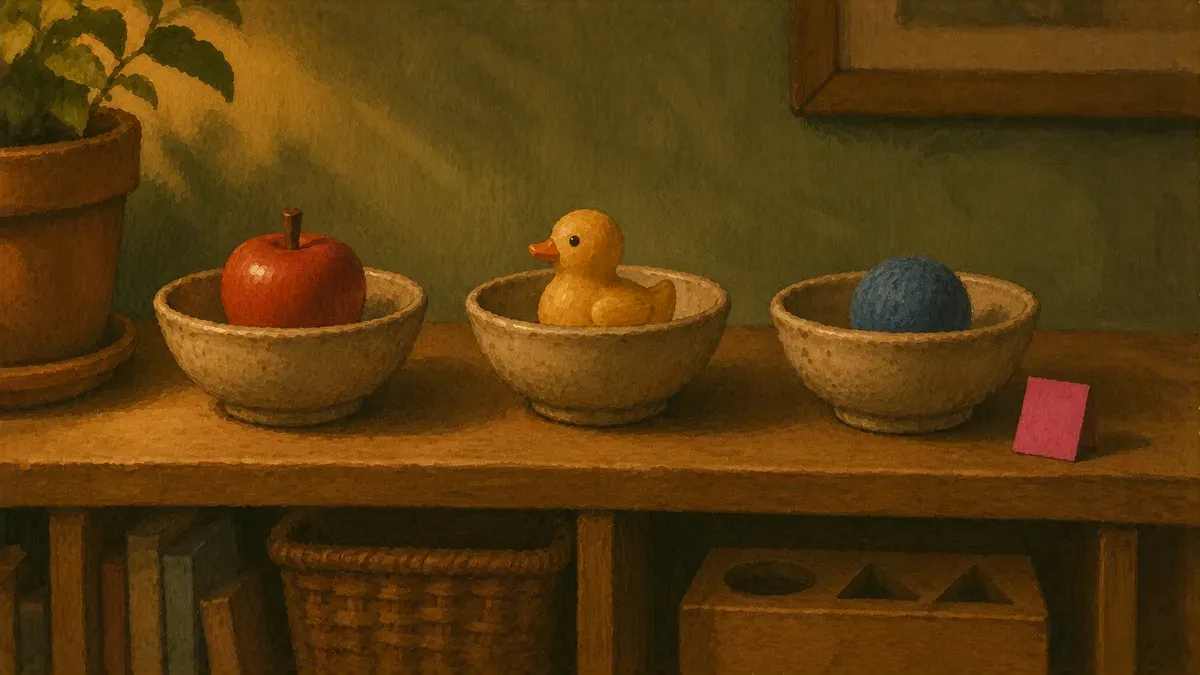
The rainbow approach feels intuitive. You’ve got a full set of crayons, so you name them all. But Scientific American points to a real obstacle in color learning: when a child hears “red” in a typical room, multiple other colors are visible at the same moment, making it genuinely hard to isolate which object property the word refers to. That problem disappears when only one color is present.
One color on the table. One word to learn.
Once red is solid, once she picks it out unprompted and notices it on the cereal box, then you add the next one.
- Wait until she picks the color out unprompted before introducing the next one
- Learning colors do a dot works well here: one color per page, zero distraction
- Preschool colors click when you strip the visual noise, not when you pile more on
Meeting a child at her actual developmental milestone matters more than racing through a checklist.
Which Colors to Teach First (and the Order That Works)
Start with red, then add yellow and blue, then layer in the rest. Here’s why that order works and which color pairs trip kids up along the way.
Start With Bold, Distinct Primary Colors
Red first. It’s the loudest color to a young brain, and that’s exactly what you want. Newborns orient to saturated red in over 75% of trials, which makes it the most visually salient color to open with, per PubMed Central research on infant color vision.
From there, move to yellow and blue. By four months, babies already discriminate red, yellow, and blue at an adult-like level, so those three give you the easiest early wins.
Three things make primary colors the right starting point:
- They look nothing alike, so a kid can tell them apart before any naming has to happen.
- That visual gap is the real first skill, not the word “red” or “blue.”
- Bold, distinct colors give the brain the cleanest runway to build on.
When I point new parents to colors for childrens first lessons, I tell them to pick one primary, live with it for a week, then add the next. Color recognition builds when the choices are obvious, not crowded.
Colors Preschoolers Confuse and How to Pace Them
Some pairs are genuinely hard, and it isn’t your kid being stubborn. Among hues, green and red are the toughest for children to tell apart, while orange and yellow are the easiest, per a 1972 study in the Journal of Experimental Child Psychology.
So space the confusable ones out. If green just landed, don’t introduce red the same week, and vice versa. Let one settle before the look-alike shows up.
The sequence after primaries follows a simple logic:
- Secondary colors (green, orange, purple) come next, since each one is just two primaries mixed.
- Brown and gray come dead last; kids tend to learn those neutral names later than any others.
That paced sequence carries straight into kindergarten colors. By the time formal color identification and color matching show up in a kindergarten classroom, a child who learned them slowly already has the whole set in place, right on track with the usual developmental milestones.
If you want the full primary-first sequence laid out, here’s our guide to the best colours for childrens first lessons. The order is the quiet part that does most of the work.
Hands-On Color Activities for Preschoolers
The order tells you what to teach next; hands do the teaching. Here are the three setups my kids and the group come back to most: sorting and matching, sensory bins, and color hunts that get everybody off the couch.
Color Sorting and Matching Games
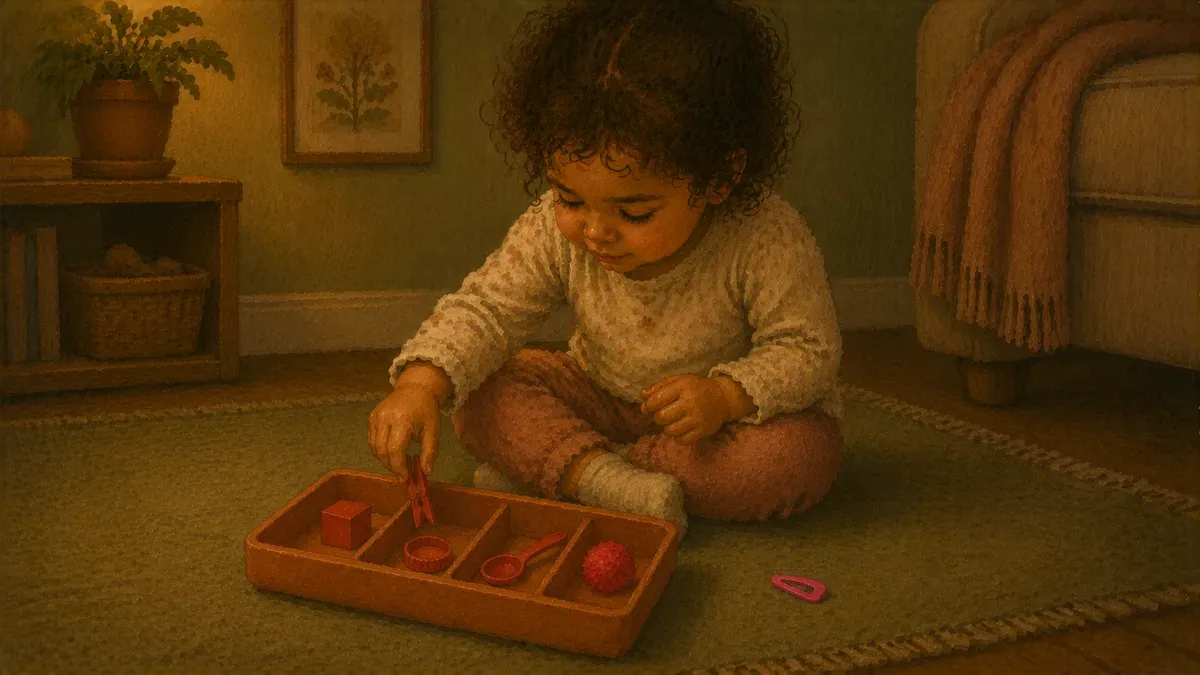
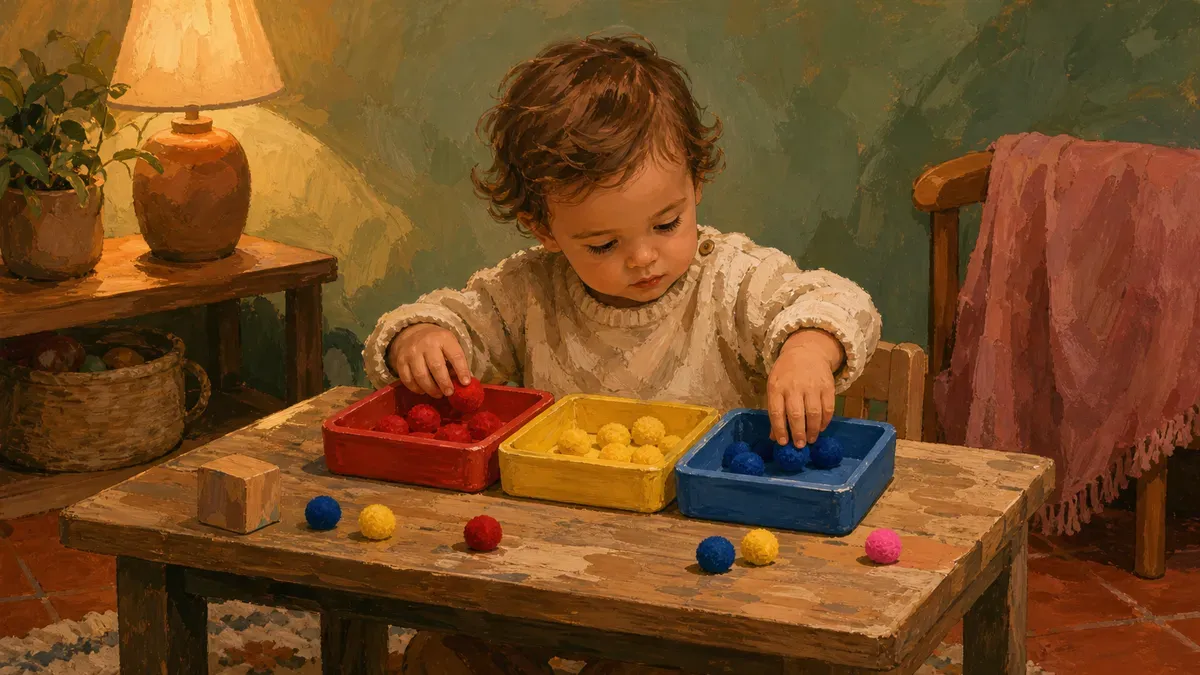
Dump a handful of red objects on the table next to one red cup, and ask your kid to find every red thing. That’s the whole activity. Pom-poms, bottle caps, buttons, mismatched socks, a bowl of crayons, whatever you already own works fine for these color activities for preschoolers.
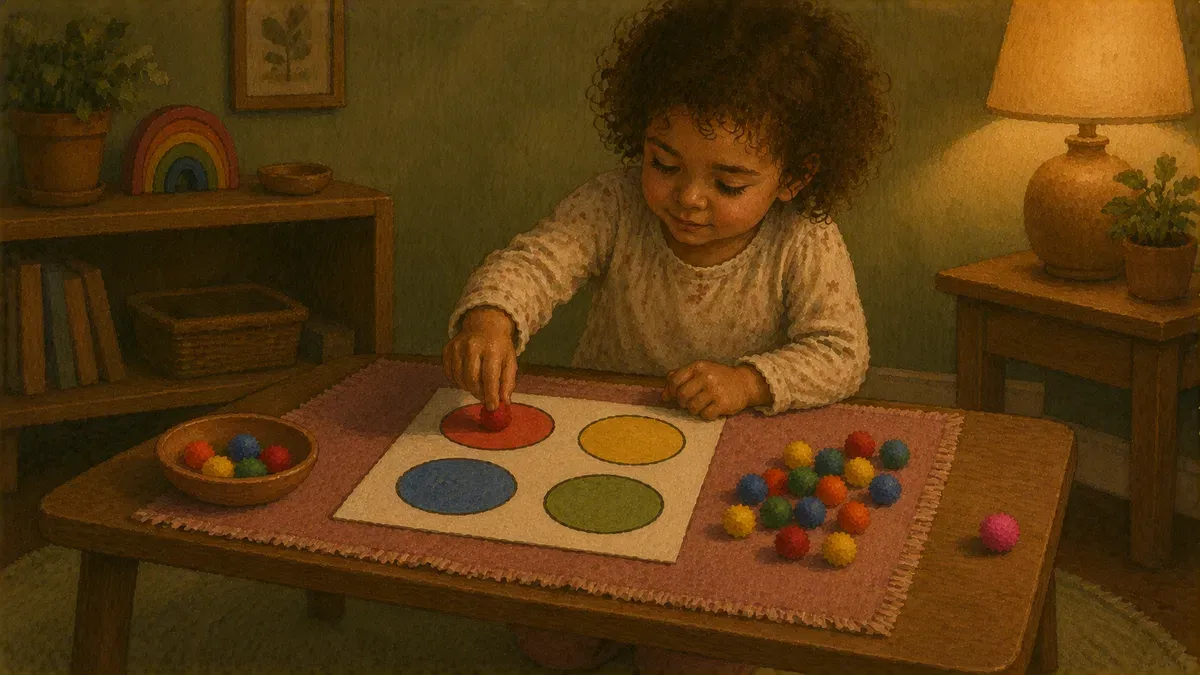
Printable sorting mats make it even lower-prep: one mat shows a red circle, your kid drops red pom-poms on it, done.
OTs lean on this for a reason. The OT Toolbox describes color sorting as building visual discrimination, form constancy, working memory, and visual scanning, the same perceptual skills kids later need for reading and math.
Keep matching to one color until it’s automatic, then add the next. If you want a stack of ready-to-go preschool color activities, here are color activities you can set up fast with stuff from the junk drawer.
Sensory Bins and Multisensory Play
A single-color sensory bin is exactly what it sounds like. Dyed rice, all red. A few red scoops, red cups, a couple of red toys buried in it. Your kid digs, pours, hides, and the whole time their hands and eyes are soaking in one color.
The touch part matters more than it looks. Lillio notes that when kids use several senses at once, it builds nerve pathways between neurons in the brain and strengthens what sticks, which is exactly what a tactile color bin is doing.
No light table at home? You don’t strictly need one. An upturned clear bin with a flashlight under it turns translucent red counters and gel beads into something they’ll stare at for about four bucks. The one light gadget I stopped DIY-ing is the table itself: a kids light table for sensory play is an Amazon’s Choice with 600-plus parents rating it 4.7 stars, and it holds up across every color you’ll ever run, not just red. Either way you get multisensory, hands-on learning, the kind of colour activities for nursery and home that don’t need a shelf of supplies.
Color Hunts and Active Games
Some days a sit-still bin is a hard no. That’s when you send them moving instead. “Find me something red” turns the whole house into the activity, and a sensory-seeker who has to wiggle before they can focus eats it up.
Call a color, they sprint off and come back with a red sock, a red block, a red apple. Outside, hunt for red on a walk: a car, a stop sign, a flower. You’re stacking gross motor skills on top of color identification without it feeling like a lesson, which is the best kind of hands-on learning there is.
A few quick ways to keep this color activity for preschoolers going:
- Color scavenger hunt: name a color, race to find three things that match.
- Red light, green light: the classic, now doing double duty as color practice.
- Toss to the color: call a color, they throw a beanbag onto the matching paper plate.
None of these need prep, and they’re the move on the days when nothing on a table will hold. Let them run the color out of their system, then circle back to the quiet stuff tomorrow.
Color Art and Mixing Activities
Art is where color learning gets messy in the best way, and it’s the kind of mess that earns its keep. Two ways in: art that drowns a kid in one color, then the magic-trick moment where two colors make a third.
Single-Color Art Projects
Pick a color and let it take over the whole afternoon. Red day means a red collage: tear up red construction paper, hunt the recycling for red labels and bottle caps, glue it all onto a paper plate. No rules about staying in the lines, which is the point.
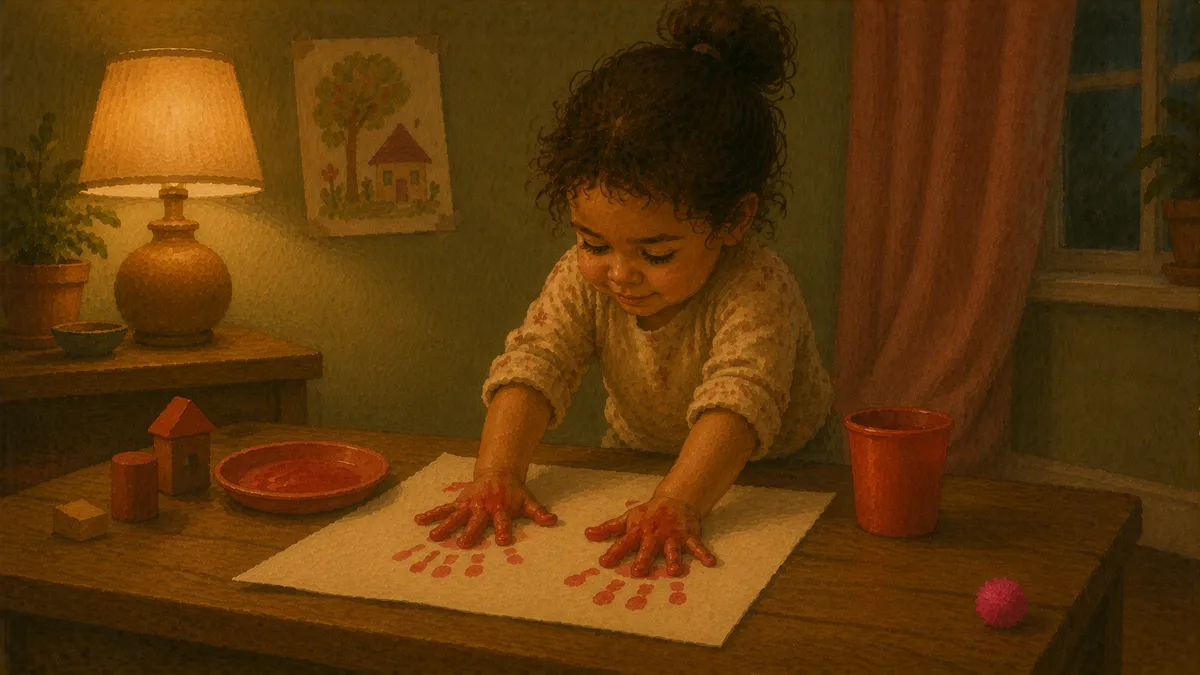
Blue painting day is even lower lift. One pot of blue, one brush, one big sheet, and a kid going to town. When they’re only working with a single shade, the color is all there is to notice, so it sticks.
On the days even one pot of paint is more than you can face, dot markers are the shortcut. Hand over just the red one, give them a page of circles to fill, and let them stamp; the color still takes over, the cleanup doesn’t. The set I keep in the craft bin, these dot markers for toddlers, is an Amazon’s Choice with 4,000-plus reviews, and the ink actually washes off skin, which is the only spec I check at 4pm.
These color art activities for preschoolers do double duty. The tearing, gluing, and pinching build fine motor skills while the color learning happens in the background, no flashcards required. Tape the finished thing to the fridge and you’ve got the day’s win.
Color Mixing Experiments Step by Step
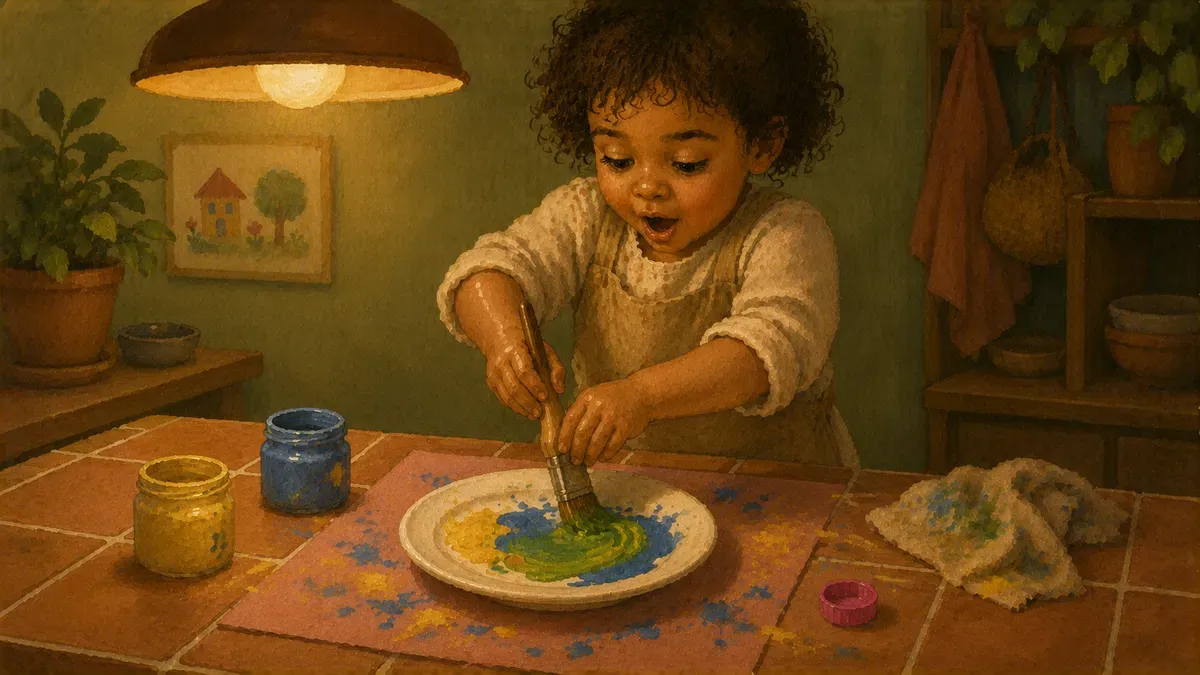
Now the part kids actually gasp at. Color mixing for preschool works because it turns a fact into a thing they watched happen with their own hands.
- Put a blob of red and a blob of yellow on a plate, hand over a brush, and let them stir until orange appears.
- Try yellow and blue next. Green shows up fast.
- Blue and red together make purple.
Same lesson, sink-friendly cleanup.
These color mixing activities for preschoolers fold sensory play right into the science. For more themed versions, try these seasonal color crafts preschool kids love when you want a holiday spin on the same idea.
Books, Songs, and Printables That Reinforce Colors
All that mixing and sorting builds the concept. These resources lock in the names.
Color Books and Songs Worth Repeating
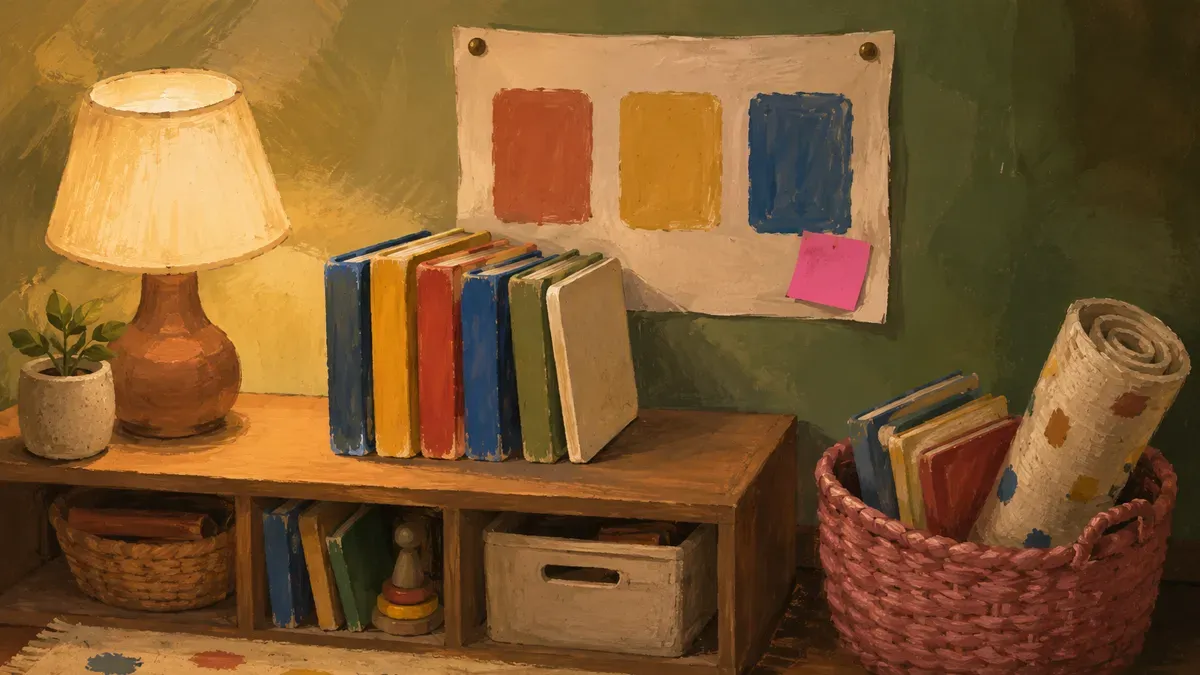
The books that last are the ones your kid begs for by title on the fifth night in a row. These four have earned that at my house or in the group, and the ratings say plenty of other kids agree.
| Book | Pages | Parents’ rating | Best for |
|---|---|---|---|
| Brown Bear, Brown Bear, What Do You See? | 28 | 4.9★, 56,000+ reviews | Color names through a chant they memorize |
| Mouse Paint (Ellen Stoll Walsh) | 32 | 4.8★, 2,000+ reviews | The read-aloud after a paint day |
| A Color of His Own (Leo Lionni) | 32 | 4.8★, 2,800+ reviews | Kids working through being different |
| Little Blue and Little Yellow (Leo Lionni) | 48 | 4.8★, 500+ reviews | Color mixing, told sideways |
Brown Bear, Brown Bear is the one I’d buy first. It’s a #1 best seller with more than 56,000 reviews sitting at a near-perfect 4.9 stars, and once you’ve read it aloud you get why: the refrain and Eric Carle’s collage hit each color name in the same rhythm, over and over, until it sticks. Mouse Paint is the natural follow-up. Three white mice climb into pots of paint and discover mixing, told about as simply as it can be told, so it lands best the day after you’ve made a real mess with paint. Then there are the two Lionni books, which do something stranger. A Color of His Own is quiet and a little sad, a chameleon who just wants one color to keep, and kids working through feeling different hold onto it. Little Blue and Little Yellow is odder still: two torn-paper blobs hug and turn green. It shouldn’t work on a three-year-old. It does, every time.
For color songs, “I Can Sing a Rainbow” gets the job done at circle time, and YouTube has dozens more that layer color names over tunes kids already know. Both kinds are earworms by design. A song heard 40 times is a color name learned.
Free and Printable Color Resources
Printables fill the gap between book time and the floor. A color poster on the wall at kid height gives a child a reference point they can find on their own. Swap it out when you move to the next color so it reads as a teaching tool, not wallpaper.
For hands-on practice, grab a free color matching printable that pairs a color square with everyday objects in that color. Print, laminate if you have a few minutes, and pull it out at the table. It’s low-prep and works well for preschool-age colors work without needing a full kit.
- Color sorting mats: print one per color and set beside your object collection.
- Dot-marker pages: one color per page, dot only that color. Minimal mess.
- Flashcards: color on one side, the word on the other, for when they’re close to naming.
When a Child Is Struggling: Troubleshooting and Progress
All those activities are a starting point. Knowing when to relax and when to shift gears matters just as much.
Signs It Is Just Normal Timing
Mixing up color names at two or three is not a developmental gap. It is just Tuesday.
The CDC lists “names a few colors of items” as a cognitive milestone for 4-year-olds, which means getting it wrong before four is normal, not a warning sign. Color recognition (pointing to the right block) comes before color naming (saying the word) almost every time. A child who finds the red cup when asked but calls it “blue” out loud is right on track.
Research published on PubMed found that girls generally acquire color names faster than boys, so the spread among typical kids is wide.
Your son taking longer than his cousin tells you almost nothing on its own.
Watch for progress over weeks, not perfection in one sitting. If your child is not consistently naming a handful of colors by their fourth birthday, mention it to the pediatrician then, not before.
Adjusting Activities for Kids Who Need More Support
Some kids need more repetition, more texture, or more movement before color names stick. That is a signal to adjust the input, not a failure of the activities.
Pull the focus down. One object, one color, one sense at a time. A multisensory approach, touching, seeing, and hearing the color word together, builds the connection faster than flashcards alone. For kids who need to move before they can absorb anything, pair color names with the body: “jump on the red square,” “stomp to the yellow plate.” Matching before naming is always the right order, and our full do-a-dot color learning guide is a low-prep way to build that bridge.
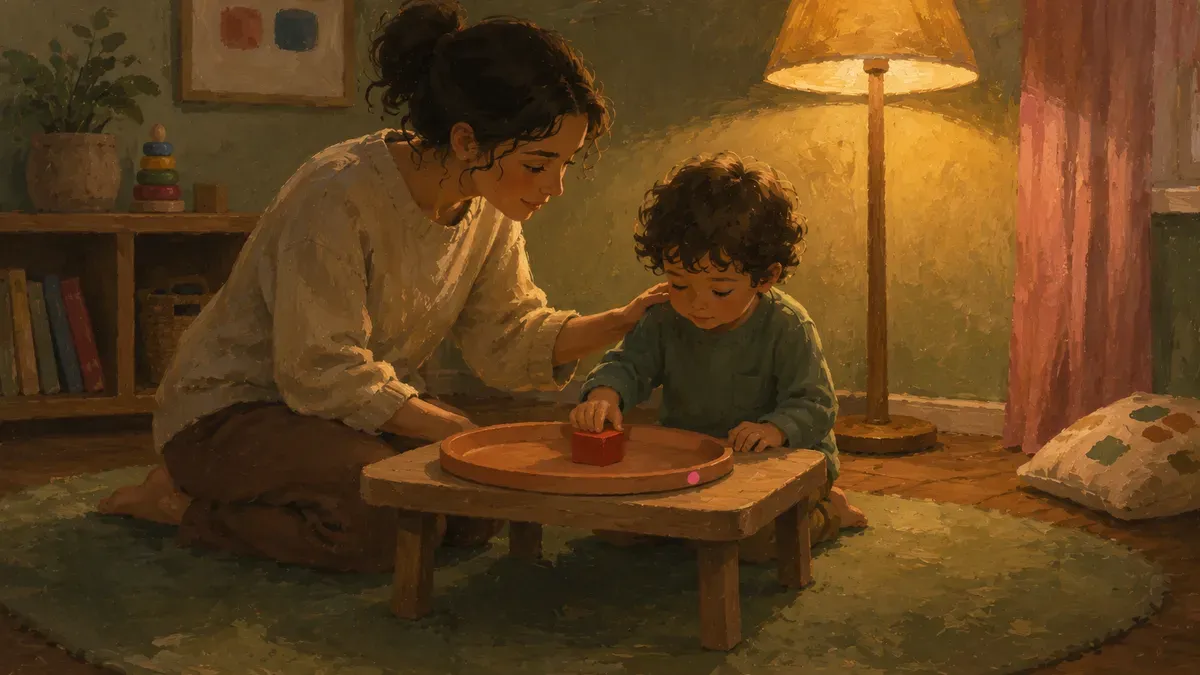
For autistic kids or children with ADHD, consistent language matters as much as the activity. My son’s OT reinforced that: same word, same object, every time.
Keep sessions short, end on a win rather than a correction, and use a simple tally (one mark each time your child independently matches a color) to show yourself the movement even when it feels invisible.
For deeper strategies, our guide on teaching colors autistic kid covers adjustments for sensory-seekers and kids who need more processing time.
Found this useful? Save it for the next rough afternoon.
Questions parents ask me about this
What are the best color activities for preschool age kids?
Sorting and matching beat flashcards at this age. Give your child a handful of objects in two colors and a sorting tray and let them do the separating. Color hunts around the house, single-color sensory bins, and painting days focused on one color at a time all build recognition faster than drilling names because they pair sight with touch and movement.
At what age should a preschooler know their colors?
Most children reliably name basic colors around age four, though recognizing and matching colors happens earlier. Getting colors wrong before four is completely typical. If your child is past five and still mixing up most colors consistently, a conversation with their pediatrician is worthwhile.
How many colors should you teach a preschooler at once?
One at a time. Stick with a single color across multiple activities and days until your child matches it without hesitation, then add the next one. Introducing a handful at once splits their attention and slows down how quickly any one color becomes automatic.
Why does my preschooler keep getting colors wrong?
Usually it is a naming lag, not a vision problem. Children recognize colors before they can reliably attach the right word to them, so the matching is there but the label is still catching up. Staying consistent with the same word for the same object, and giving more exposure before quizzing, tends to smooth this out over a few weeks.
What is the easiest color for a preschooler to learn first?
Red is a strong starting point because it is highly visually distinct and shows up everywhere in a child's world. Yellow and blue work well as the next two. Keeping the first few colors far apart visually, rather than starting with pairs like orange and yellow that look similar, makes each one easier to lock in.
How do you teach colors to a child who won't sit still?
Move the learning with them. Color hunts where they run to find something red, tossing a colored beanbag when you call a color, or stamping dot markers while standing at a low table all work better than seated practice for active kids. Pairing the color name with a physical action builds the memory through movement rather than fighting it.
Are color activities good for fine motor skills?
Yes, when the activity involves hands. Sorting small objects, using tongs to move colored pompoms, painting, or pressing dot markers all build grip strength and hand control at the same time color learning is happening. The activity does double duty without any extra setup on your end.
Written by
Nora Hayes
Mom of two and a former preschool aide. I share the screen-free sensory play and calm-down ideas I test at my own kitchen table, plus what the moms in my little meet-up swear by. A parent passing on what works, not a doctor or a therapist.
More about NoraKeep going
All Learning Colors-
 Learning Colors
Colours for Childrens: The Order to Teach Them
Teaching colours in a random order slows toddlers down. Get the exact order to teach colours for childrens, plus activities that stick. Start today.
-
 Learning Colors
Color Activities for Kindergarten Kids Who Hate Sitting
Got a kid who won't sit still? These 10 color activities for kindergarten get them moving, learning, and laughing. Try them now.
-
 Learning Colors
Color Activities: 20 No-Buy Ideas From Your Home
Color activities you can set up in 2 minutes with household stuff. 20 no-prep sorting, matching, and mixing ideas kids love. Try one today.
-
 Learning Colors
Color Activity That Clicked for My 2-Year-Old
This 5-minute color activity finally clicked for my 2-year-old when nothing else did. See the setup, why it works, and what to try when it flops.