
Framed by the tool, not a label
Visual tools that help a kid be heard
Social stories, AAC cards, and visual supports, sorted by the tool, never a diagnosis.
Visual supports
[vizh·oo·uhl suh·ports]noun
Social stories, communication cards, and visual supports are the everyday tools that help a kid know what is coming and tell you what they need. A short picture script that walks them through the haircut before you go. A board they point to for more or all done while the words are still catching up. A row of pictures that turns I have no idea what happens next into I can see my whole morning.
Pick the tool you need
Sorted by what the tool does: prepping a kid for the thing before it happens, giving them a way to communicate, or making the day's order something they can see.
Social stories
Picture-based scripts that walk a kid through the thing before it happens, the haircut, the dentist, the drop-off. Fewer surprises, fewer meltdowns.
-
 Social Stories
Social Stories for Kids With Autism: 20 Essentials
Social stories for kids with autism, made simple. Master the 6-step method and build the 20 essentials every autistic child needs.
-
 Social Stories
Social Story Templates: Edit Them to Truly Fit Your Kid
Free PDF social stories rarely fit your child. Learn to edit social story templates in minutes so every word, photo, and step is truly yours.
-
 Social Stories
No Hitting Social Story for Hands That Won't Listen
Hands that hit, bite, and push aren't bad, they're overwhelmed. This no hitting social story teaches safe hands and what to do instead.
Communication & AAC cards
Communication boards, picture cards, and conversation starters that give a kid a way to be heard while they are still finding their words.
-
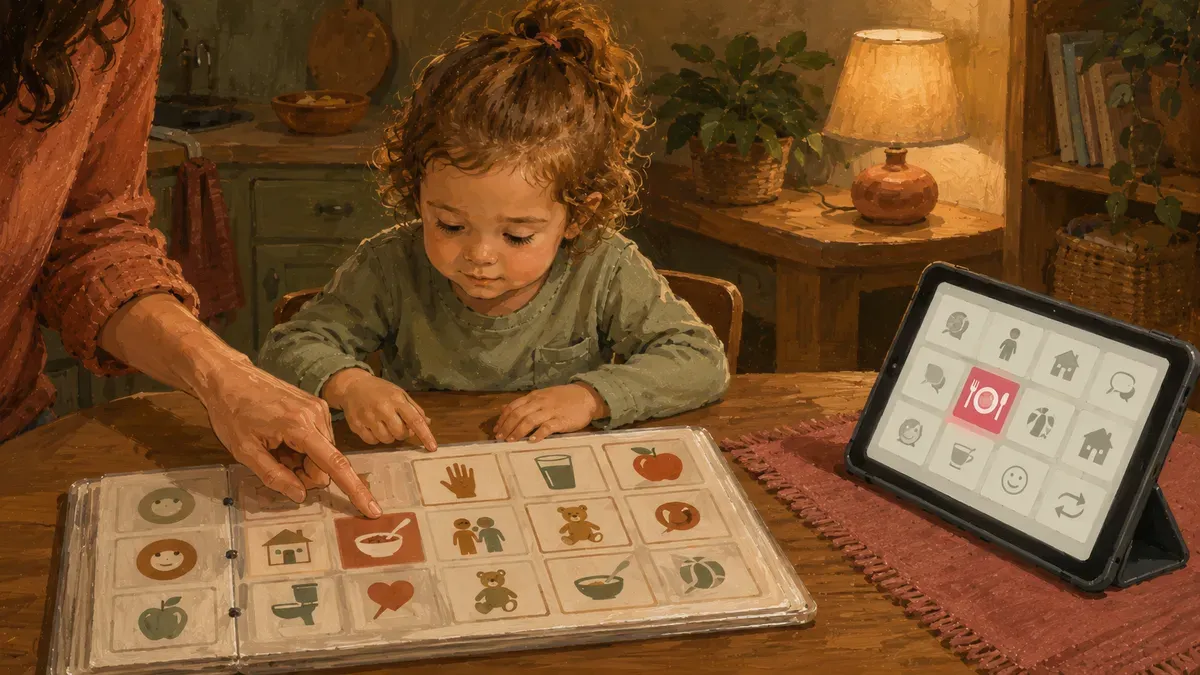 Communication & AAC
AAC Devices vs. PECS vs. Cards: Which Comes First
AAC devices, PECS, or cards first? See what each does, what it costs, and how to pick the right starting point for your child.
-
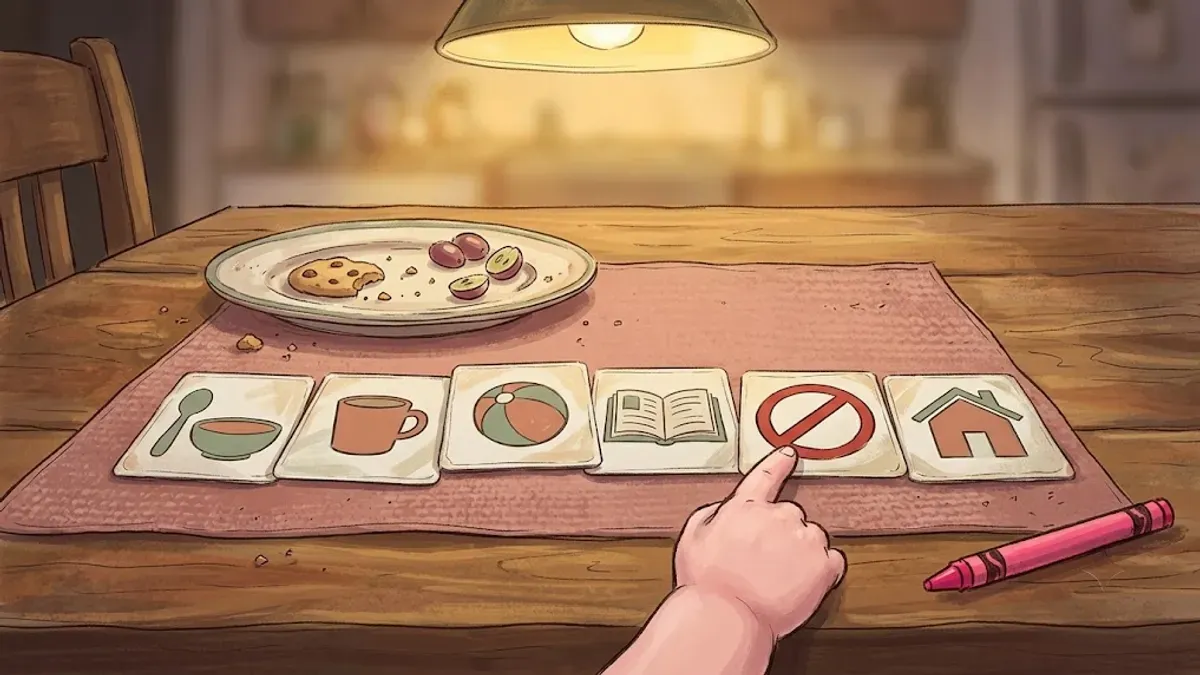 Communication & AAC
All Done PECS: 6 First-Word Cards to Cut Meltdowns
The all done PECS card is often a toddler's first word, and one of 6 first-word cards that halved our meltdowns. Print your own set free.
-
 Communication & AAC
Games for Speech Therapy: Picks for Late Talkers
Most speech games target school-age kids. These games for speech therapy pull words out of late-talking toddlers. Start playing tonight.
Visual supports & schedules
Picture schedules and first-then boards that make the day predictable and take the fight out of transitions. The same visual tools, here for support at home.
-
 Visual Schedules
Visual Schedule Printable: 20 Picture Cards + Free PDF
Visual schedule printable with the 20 picture cards every toddler home needs. Free PDF to download, print, and start using tonight.
-
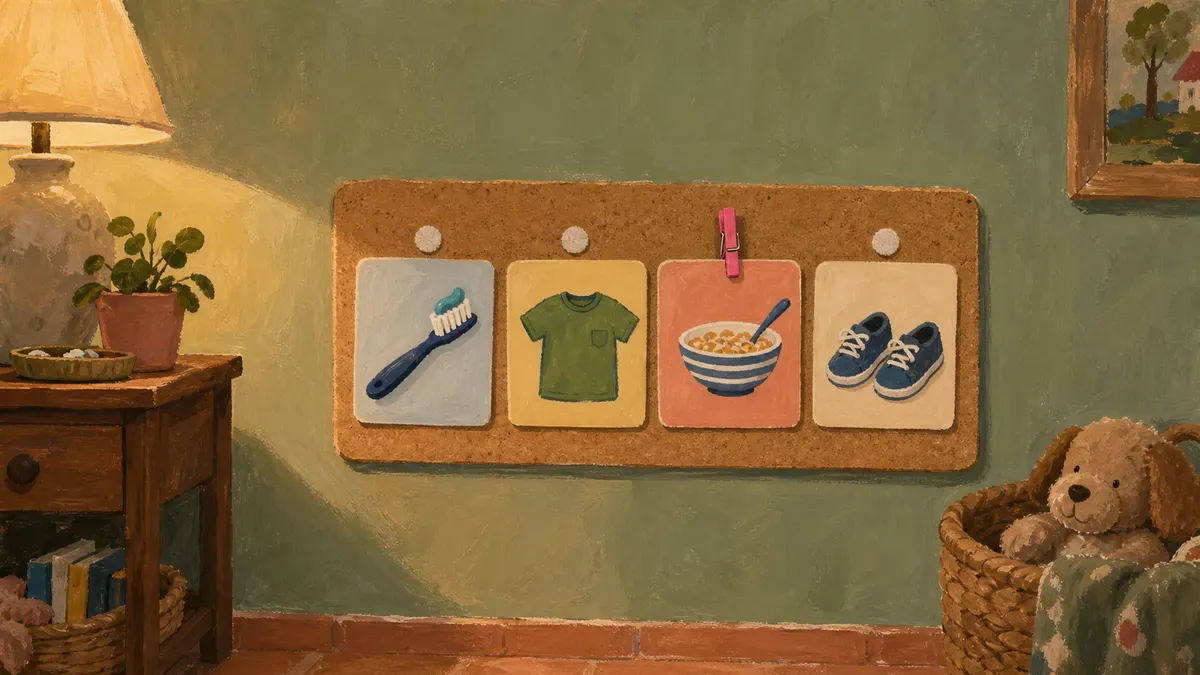 Visual Schedules
Visual Schedules: A Beginner's Guide for Parents
Most visual schedules fail before day three. Learn how they work and build your first board in 5 steps your child will actually follow. Start today.
-
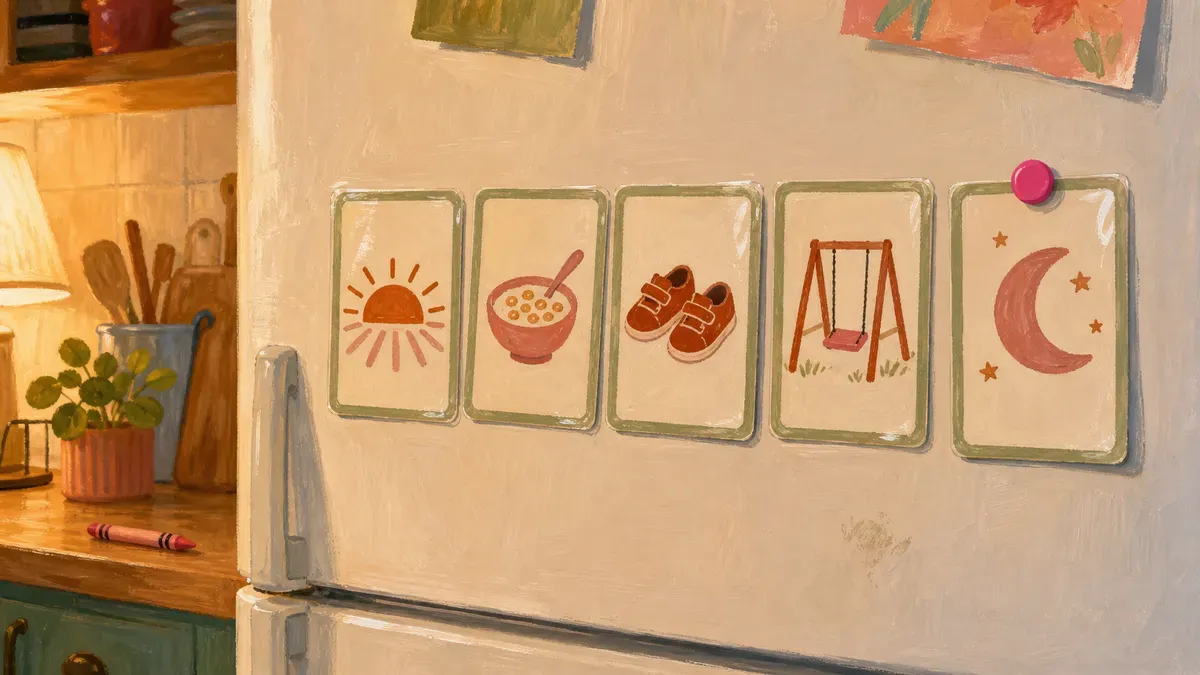 Visual Schedules
Toddler Schedule: Build One With Picture Cards
Your 2-year-old can't read a clock yet. Build a toddler schedule with picture cards in 5 steps that stop nap fights and meltdowns. Start today.
Pick the tool for the problem
Start with the thing that is hardest right now. Each one is a different job, so go by what you are actually trying to fix tonight.
Start here if you are not sure where to start
The tools parents come back to most. One from each corner, all used in my own home, and shaped by the professionals we work with.
- Social Stories
Social Stories for Kids With Autism: 20 Essentials
Social stories for kids with autism, made simple. Master the 6-step method and build the 20 essentials every autistic child needs.
- Communication & AAC
AAC Devices vs PECS vs Communication Cards
AAC devices, PECS, or cards first? See what each does, what it costs, and how to pick the right starting point for your child.
- Visual Schedules
Visual Schedule Printable: 20 Cards Every Toddler Home Needs
Visual schedule printable with the 20 picture cards every toddler home needs. Free PDF to download, print, and start using tonight.
Where to start without overhauling anything
None of this is therapy and none of it is a diagnosis, so I never frame a tool by a label. I frame it by the job it does at your kitchen table. These supports help a lot of kids, autistic kids and late talkers especially, but plenty of three-year-olds settle better when the day is something they can see instead of something sprung on them.
I am a mom who has used every one of these, not a clinician. So treat what follows as the been-there version. If a tool keeps falling flat, or you are weighing whether your kid needs more than a printable, that is a conversation for your pediatrician, an OT, or a speech therapist, not a blog.
Pick the one moment that goes sideways most. The drop-off, the dinner table, the meltdown when an activity ends. Start there, not with a binder of supports for the whole week.
Match the tool to the moment. A new or scary event wants a social story. A kid who cannot get the word out wants a communication card or board. A day that falls apart at transitions wants a visual schedule.
Make it small and make it real. Three pictures, not thirty. Use a photo of your actual bathroom or your actual car, because a kid recognizes their own world faster than a stock drawing.
Use it before the moment, every time, while everyone is calm. These tools teach when nobody is melting down. Pulling out a card mid-storm rarely lands.
Give it a couple of weeks before you judge it. Some kids latch on in a day. Most need the same script or the same board on repeat before it clicks, and that slow part is normal, not a sign it failed.
What these tools tend to buy you
- Fewer surprises, which usually means fewer meltdowns. A kid who can see what is coming has less to brace against, and that predictability is the whole reason visual supports are a recognized strategy for autistic kids.
- A way to be heard sooner. Handing a kid a way to point at what they need lowers the frustration that boils over when a body has more to say than mouth can manage yet.
- A bridge to words, not a detour around them. The worry that a picture board makes a kid stop trying to talk is one the research does not back up. If anything, giving a kid a way to communicate tends to come alongside more speech, not less.
- Calmer transitions. Seeing first toothbrush, then story takes the fight out of the moment a kid has to stop one thing and start another, because the next step is already on the wall instead of a fight waiting to happen.
Questions parents ask about this
What is a social story, really?
It is a short, personalized picture script that walks a kid through a situation before it happens, so the haircut or the dentist is something they have already seen coming. The format goes back to Carol Gray, who started writing them in 1989, and the heart of it is describing what will happen and how it tends to go, not bossing a kid into behaving. You are filling in the gaps about what to expect, calmly and in plain words.
Will a communication board stop my kid from talking?
This is the fear I hear most, and the research does not support it. Giving a kid pictures or a board to point at does not switch off speech. If anything, studies on autistic kids suggest it comes alongside more talking, not less, because it takes the pressure off and gives them a way to communicate while the words are still coming. Think of it as a bridge, not a replacement. That said, your speech therapist is the right person to set up the system that fits your kid.
How are visual supports different from a regular chart?
A reward chart nudges a behavior. A visual support shows information: what is happening, in what order, what comes next. A row of picture cards for the morning, a first-then board, a checklist your kid can actually read before they can read words. They lean on the strong visual processing a lot of kids have, and they are a recognized strategy because a day you can see is a day you can brace less against.
My kid is not diagnosed. Are these tools still for us?
Yes. None of this requires a label, and I never frame a tool by a diagnosis anyway. A social story helps any nervous kid face a new thing. A picture schedule helps any kid who melts down at transitions. Plenty of typically developing toddlers settle better with the day laid out in pictures. Use what helps your kid and skip what does not.
When should I stop using a printable and see a professional?
When the tool keeps falling flat, when you are worried about how your kid is talking or coping, or when you just want a real plan, that is the moment to bring in a pediatrician, an OT, or a speech therapist. These supports are a parent sharing what worked at home, not a diagnosis, an evaluation, or a treatment. If your gut says something needs more than a picture board, trust it and get a professional in your corner. There is no prize for waiting.
Do I have to buy special supplies to make these?
No. A social story is a few stapled pages with photos from your phone. A communication board is pictures in a binder sleeve or taped to the fridge. A visual schedule is index cards and a strip of Velcro. The printables save you the design time, but the tool itself is cardstock, a laminator if you have one, and pictures of your kid's own world.
Where this connects
These tools rarely work alone, and they were never meant to. A social story that calms a kid before a hard moment is doing the same job as the calm-down corner. The picture schedule that smooths your morning lives over in routines. And the sensory bin that helps a wound-up kid settle is often part of the same wider plan, the one you build with a pro, not off a single page.
My oldest is autistic, and these tools are not a topic to me, they are how we get through a Tuesday. A social story is what got us through his first dentist visit without a scene. Picture cards gave him a way to ask for things back when the words would not come, and they never once slowed his talking down. I lean on his OT and his speech therapist for the why, I share what helped us at home, and I will always tell you when a question belongs to them and not to me.
I'm not an OT, an SLP, or a doctor, and I won't pretend to be. When something belongs to a professional, I say so and point you to one. What I can give you is the been-there version: what we tried, what flopped, and what bought us a calmer afternoon. More about Nora Hayes
Free printables, coming soon
Want these as printables?
I am slowly turning activities like these into free print-and-go pages. Tell me where to send them and you will get an email the day each one is ready.
One email when there's something worth printing. Unsubscribe anytime.