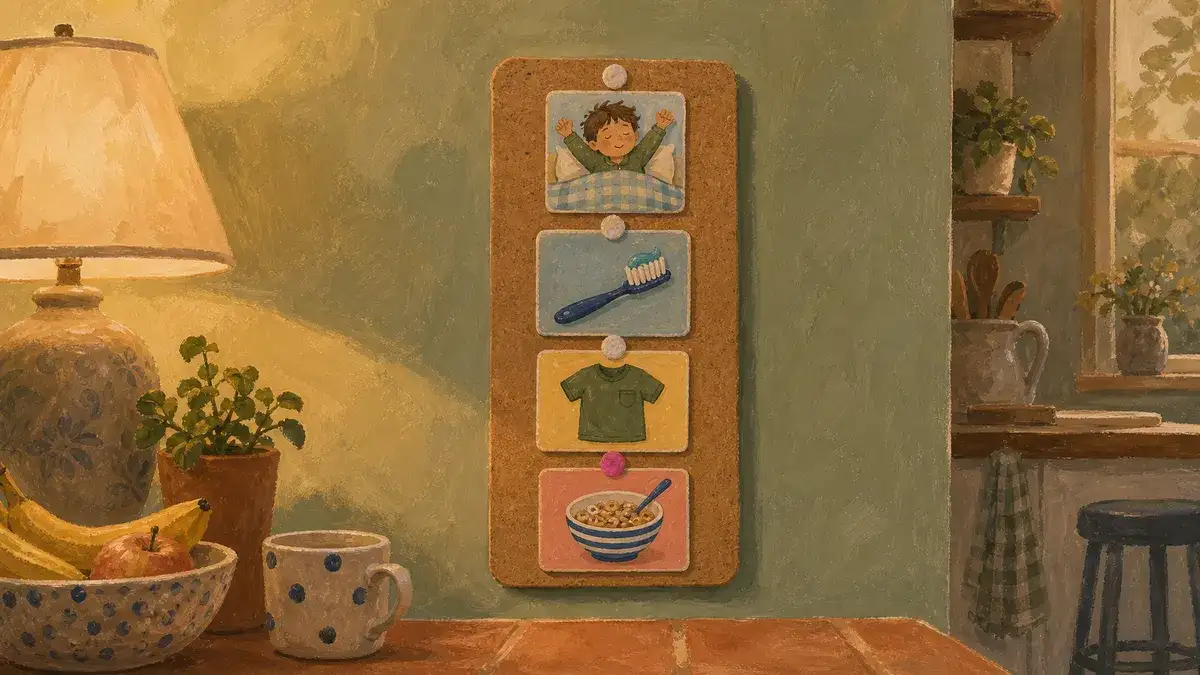
Less nagging, more pointing at the chart
Charts that take the fight out of transitions
Picture schedules, reward charts, and potty charts, all printable and tested at my table.
Visual schedule
[vizh·oo·uhl skej·ool]noun
A visual schedule is the day laid out in pictures instead of words, so your kid can look at the wall and know what happens next. Wake up, get dressed, breakfast, shoes. A chart is the same idea pointed at one habit: a row of squares your kid fills in when they brush, go potty, or help clear the table. Both swap your hundredth reminder for something they can see and do on their own.
Pick the chart you need
Three kinds of structure, depending on whether you are smoothing out transitions, nudging a new habit, or surviving potty week.
Visual schedules & routine cards
Picture schedules, first-then boards, and morning and bedtime routine cards for the kid who does better when they can see what comes next.
-
 Visual Schedules
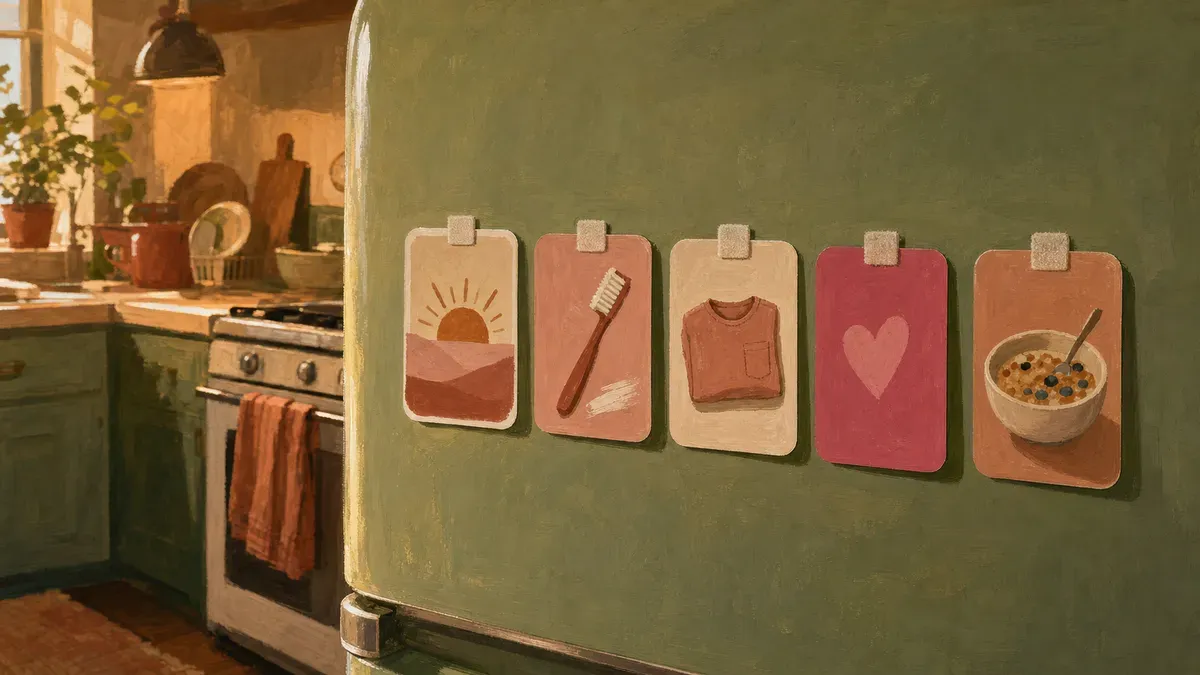
Visual Schedule Printable: 20 Picture Cards + Free PDF
Visual schedule printable with the 20 picture cards every toddler home needs. Free PDF to download, print, and start using tonight.
-
 Visual Schedules
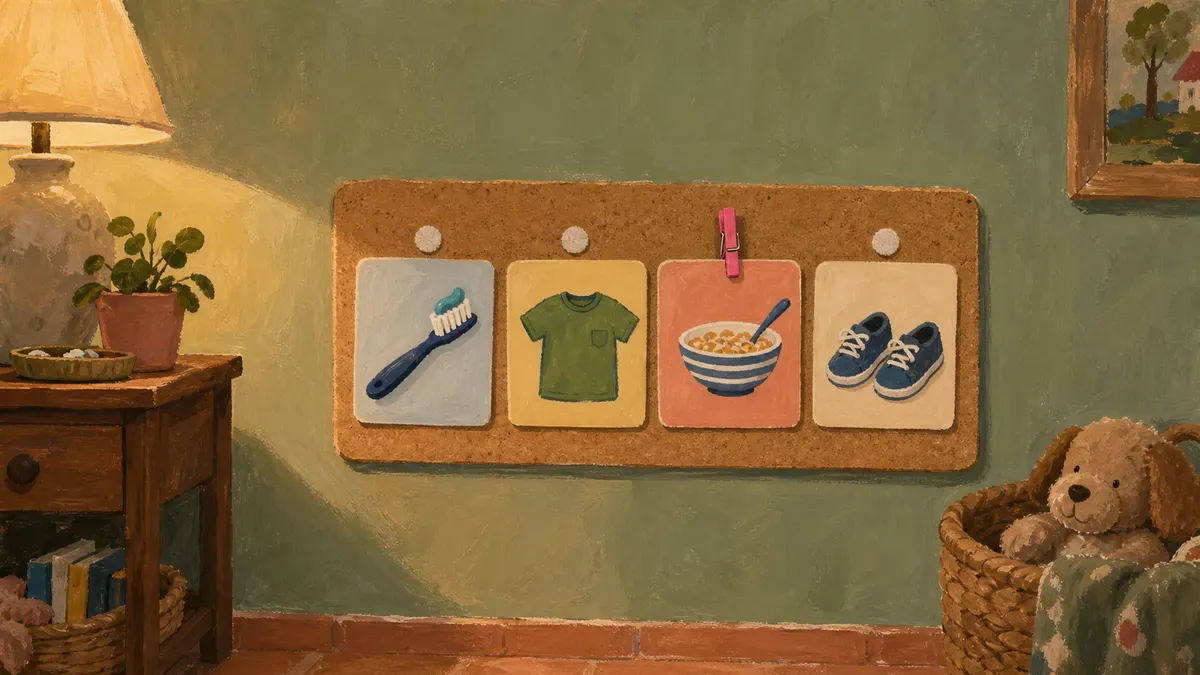
Visual Schedules: A Beginner's Guide for Parents
Most visual schedules fail before day three. Learn how they work and build your first board in 5 steps your child will actually follow. Start today.
-
 Visual Schedules
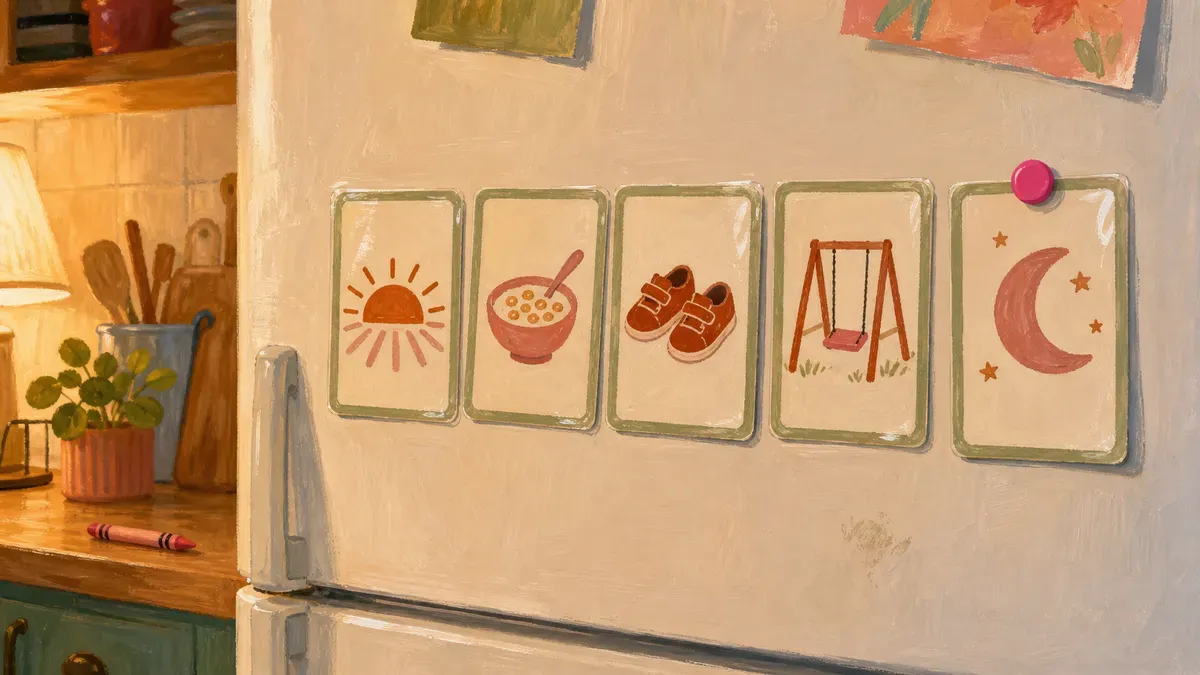
Toddler Schedule: Build One With Picture Cards
Your 2-year-old can't read a clock yet. Build a toddler schedule with picture cards in 5 steps that stop nap fights and meltdowns. Start today.
Reward & chore charts
Sticker charts, responsibility charts, and token boards that turn good habits into something a kid actually wants to chase. The gentle nudge that runs the day.
-
 Reward & Chore Charts
Age Appropriate Chores by Age (Toddler to Teen)
Most kids handle real chores younger than you think. Get age appropriate chores by age, from 3-year-olds to teens, and start building habits today.
-
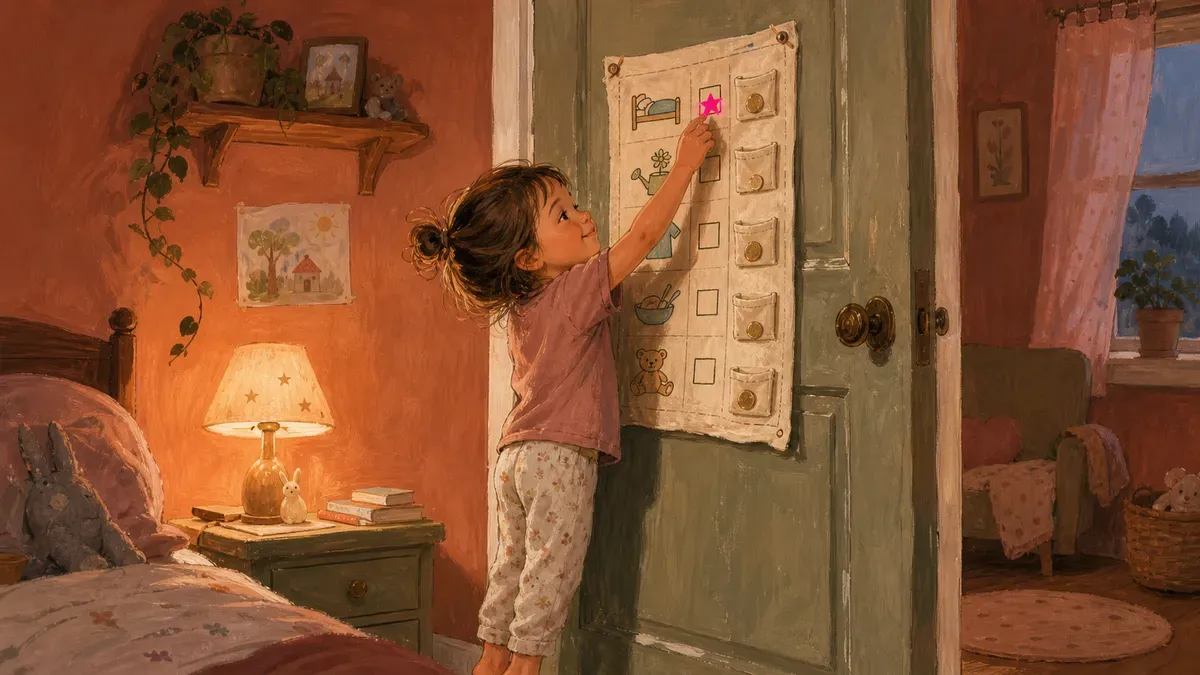 Reward & Chore Charts
Allowance Chore Chart: How to Start With Little Kids
Set up an allowance chore chart that ties money to effort: paid-vs-unpaid rules, prices by age, 100 chore ideas, and the best charts. Start today.
-
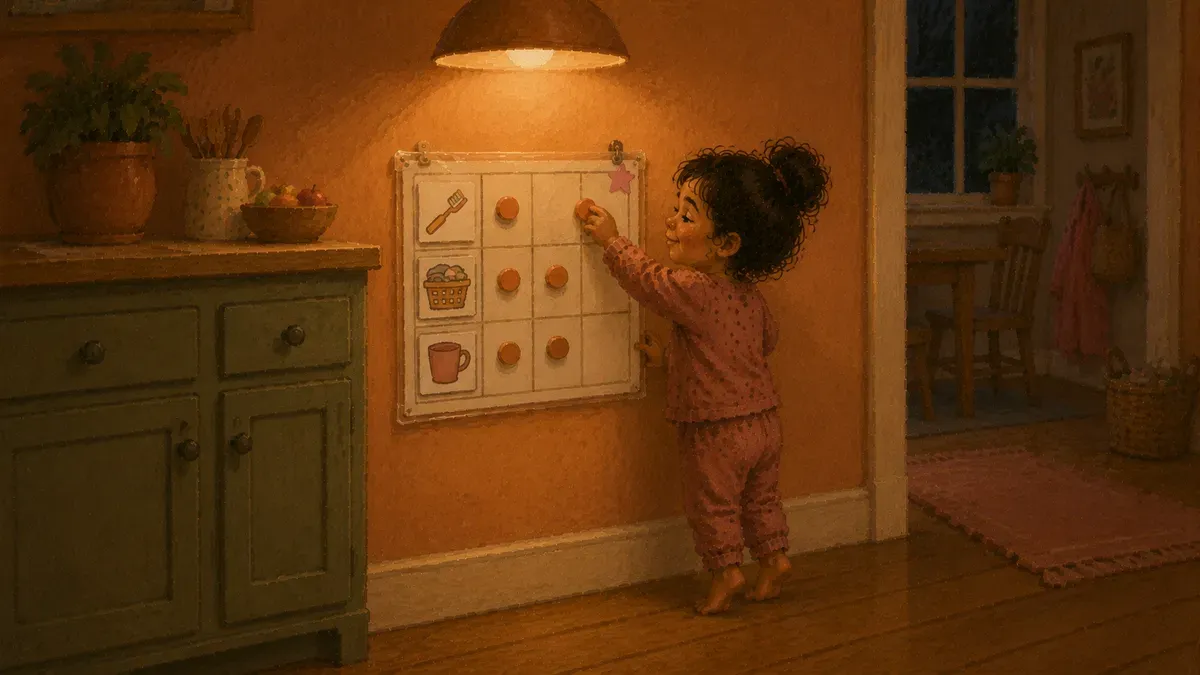 Reward & Chore Charts
Childrens Chore Chart Printable with Pictures
Pre-readers can't follow word lists, but they can follow pictures. Free printable chore chart for toddlers and preschoolers, ready to laminate.
Potty training charts
Step-by-step potty visuals and sticker charts that keep a toddler motivated past day two. Boy and girl versions for the week life revolves around the bathroom.
-
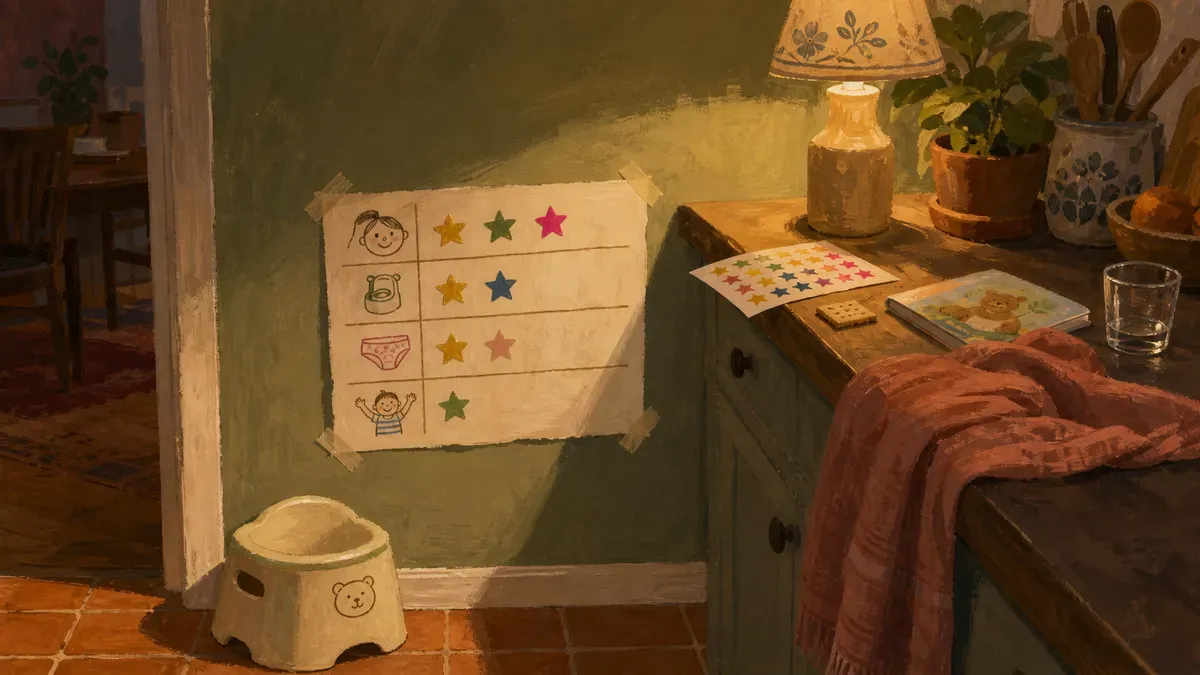 Potty Training
Potty Training Reward Chart: 20 Ideas Under $3
Skip the toy aisle: build a potty training reward chart with 20 ideas under $3 you already own. Grab the plan that motivates a stubborn toddler.
-
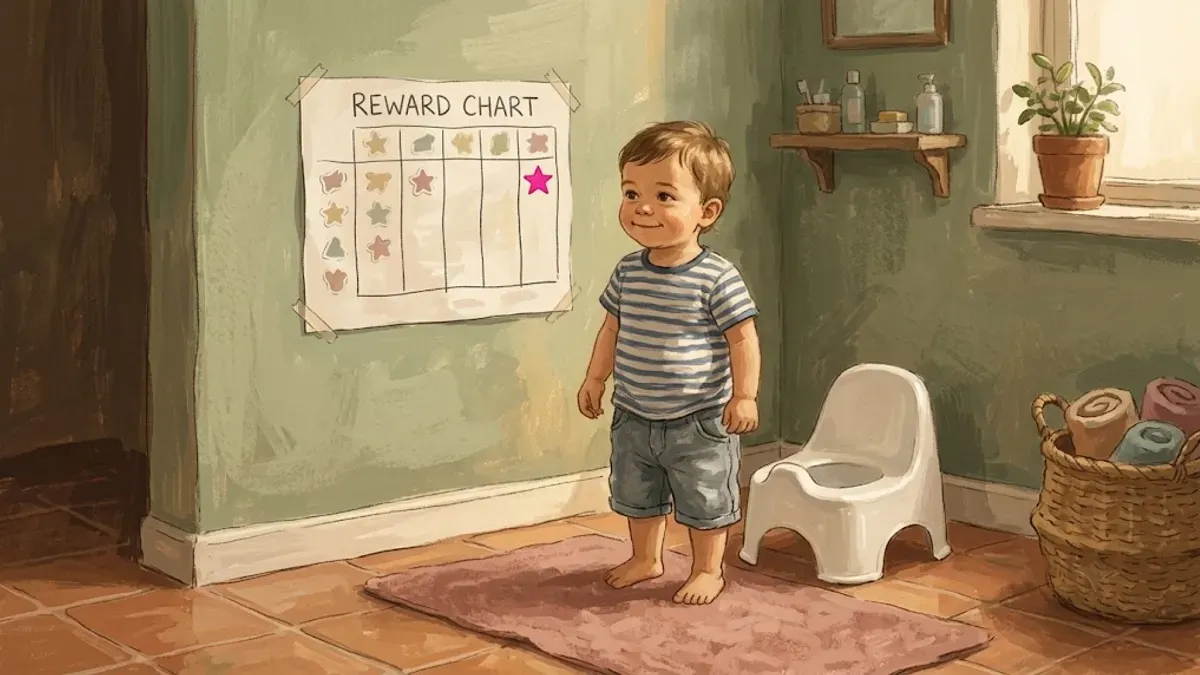 Potty Training
How to Potty Train a Boy (and How a Girl Differs)
How to potty train a boy in 3 to 6 months: the readiness signs, the step-by-step method, and the small things that differ for girls.
-
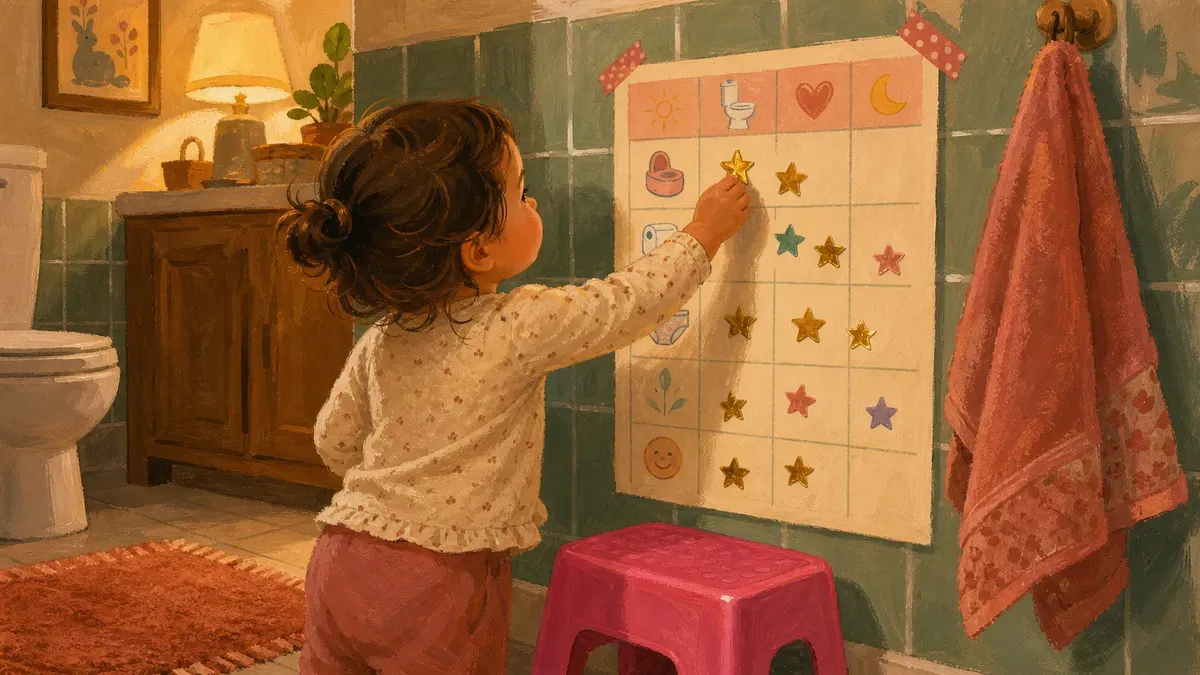 Potty Training
Potty Training Sticker Chart Printable (Free Download)
Free potty training sticker chart printable that survives travel and routine resets. Print, sticker, reward, reuse anywhere. Download now.
Pick where to start
Three corners, depending on what you are trying to smooth out. Go straight to the one that matches tonight.
Start here if the day feels like one long battle
The charts parents come back to most. One from each corner, all tested at my house before it landed here.
- Visual Schedules
Visual Schedule Printable: 20 Cards Every Toddler Home Needs
Visual schedule printable with the 20 picture cards every toddler home needs. Free PDF to download, print, and start using tonight.
- Reward & Chore Charts
Age Appropriate Chores, Toddlers to Teens
Most kids handle real chores younger than you think. Get age appropriate chores by age, from 3-year-olds to teens, and start building habits today.
- Potty Training
Potty Training Reward Chart: 20 Cheap Rewards
Skip the toy aisle: build a potty training reward chart with 20 ideas under $3 you already own. Grab the plan that motivates a stubborn toddler.
How to put one up tonight
This helps the kid who melts down every time you switch gears, the one who needs to see what is coming before they will go along with it, and the toddler you are trying to nudge toward a new habit without nagging. Visual supports are a recognized way to make the day more predictable and lean less on you repeating yourself. None of this fixes anything or replaces a pro. It cuts the friction on the parts of the day that always seem to blow up, and most of it you can print tonight.
Pick the one stretch that always goes sideways. Mornings, bedtime, the after-dinner scramble. One routine to start, not the whole day.
List the four to six steps in order, the way they actually happen. Wake up, potty, get dressed, breakfast, brush teeth, shoes. Keep it short enough that a kid can scan it.
Give each step a picture. A photo of your own kid doing the thing works best, a simple drawing or a printable card is fine too. Words alone do not land for a kid who is not reading yet.
Hang it at their eye level, not yours, right where the routine happens. Fridge, bathroom door, by the bed. Walk through it with them the first few mornings so it becomes the thing you point to instead of the thing you say.
Add a way to mark a step done. A clip that slides down the list, a flap that covers what is finished, a sticker in the square. That little "I did it" is half of why charts work.
What it actually buys you
- Fewer fights at the switch points. When a kid can see that shoes come after breakfast, you stop being the bad guy announcing it, and the picture takes the heat instead.
- A kid who runs more of the routine themselves. Seeing the steps in order means they start checking the chart instead of waiting for you to prompt every single move.
- A calmer kid, because the day stops being a string of surprises. Knowing what comes next takes the edge off for a lot of kids who get thrown by transitions.
- A habit that sticks without the nagging. Filling in a square or moving a clip gives a small, immediate win, and chasing that win is what carries a new routine past the first hard week.
Questions parents ask about this
What is a visual schedule, exactly?
It is the order of the day shown in pictures so a kid can see what happens next instead of having to remember it or wait to be told. A vertical strip of cards, a row of photos on the fridge, a first-then board with just two steps. The point is that your kid can read it without reading, which is why it works before they know their letters.
What age are visual schedules and charts for?
Roughly two through early elementary, with the format changing as they grow. A two-year-old does best with two or three picture steps or a simple first-then. A four-year-old can follow a full morning strip. Once a kid reads, you can move to a written checklist. Younger than two, keep it to one or two pictures and a lot of doing it together.
Do these only help autistic or ADHD kids?
No. Visual supports got popular because they help neurodivergent kids a lot, and they genuinely do, but a picture schedule smooths transitions for just about any toddler or preschooler. Most little kids handle the day better when they can see it coming. If your kid has bigger needs, an OT or teacher can help you shape these into a plan that fits them.
When should we start potty training?
Go by signs, not the calendar. The American Academy of Pediatrics points to somewhere around 18 to 24 months as the window many kids are ready, but plenty are not until closer to three, and that is normal. Look for staying dry a couple of hours, noticing when they need to go, following simple directions, and being able to pull pants up and down. A chart helps with the motivation once they are ready, not as a way to rush a kid who is not.
Do reward charts actually work, or do they just bribe?
They work as a short-term nudge to get a new habit off the ground, and that is the right way to use one. Keep the goal small and the payoff quick, especially at first, because a sticker now beats a prize on Friday for a young kid. Once the habit runs on its own, let the chart fade. I treat them as training wheels, not a permanent system, and I would not hang one for a behavior a kid cannot actually control yet.
My kid ignores the chart after a few days. Now what?
Usually it is too long, too high on the wall, or the reward is too far off. Cut it to three or four steps, move it to their eye level where the routine happens, and shrink the payoff to something they get today. Walking through it with them instead of just pointing helps too. If it still flops, drop it for a few weeks and come back. Not every kid needs one, and that is fine.
Where this connects
Routines rarely fix the hard moment on their own. When a transition still tips your kid over the edge, the calm-down corner is the other half of the plan. The picture cards that run your schedule are the same visual supports a lot of families lean on for bigger needs, and the steady rhythm a chart builds frees up everyone for the play that is actually fun.
Charts and picture schedules are what got my house running without me repeating myself forty times before nine a.m. My oldest is autistic, and a first-then board was often the difference between a smooth shoes-on and a floor meltdown. I have made a lot of these, watched plenty get ignored after three days, and kept the handful that my own two and the moms in my group actually stuck with.
I'm not an OT, an SLP, or a doctor, and I won't pretend to be. When something belongs to a professional, I say so and point you to one. What I can give you is the been-there version: what we tried, what flopped, and what bought us a calmer afternoon. More about Nora Hayes
Free printables, coming soon
Want these as printables?
I am slowly turning activities like these into free print-and-go pages. Tell me where to send them and you will get an email the day each one is ready.
One email when there's something worth printing. Unsubscribe anytime.