Real shelves in real homes
Montessori activities and toys that earn their price
Practical-life setups and the toys worth buying by age, real shelves, real homes.
Montessori by age
noun
Montessori by age is not a shopping list, it is a question: what is my kid actually working on right now? A one-year-old is learning that objects still exist when they vanish. A three-year-old wants to pour their own water and zip their own coat. Match the activity to that, not to the age on the box, and the tray gets used instead of dumped.
Learning & Fine Motor, the latest
-
 Montessori
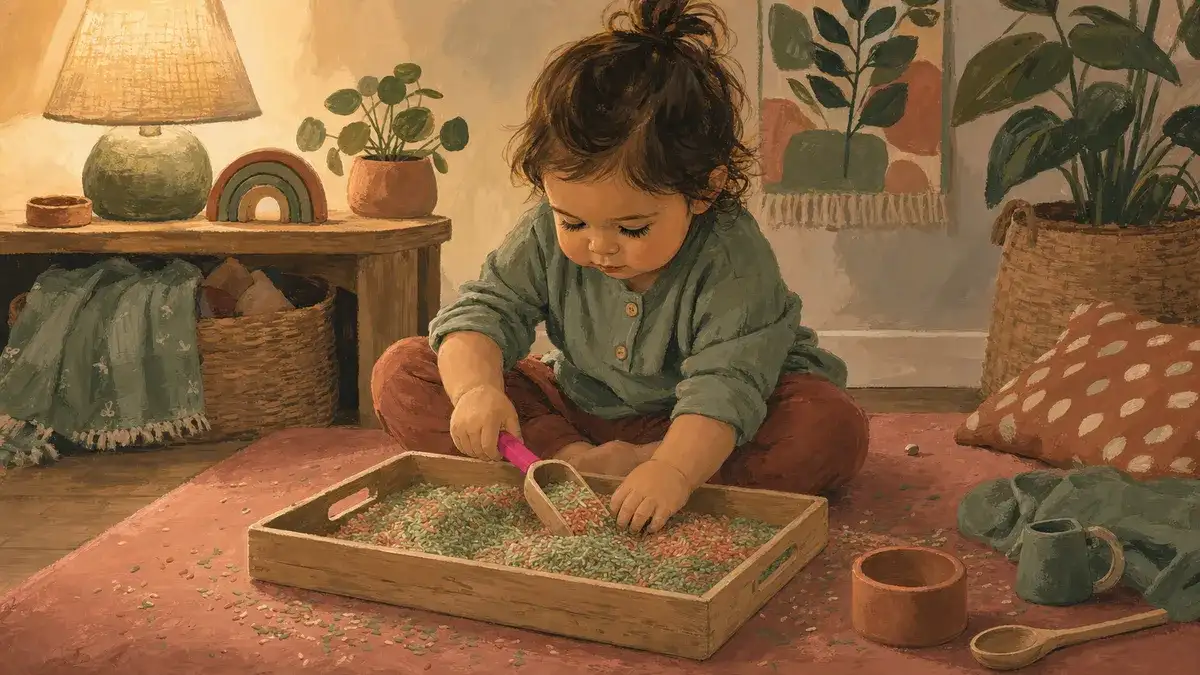
Montessori Activities for 3 Year Olds That Build Skills
At 3, kids crave real work, not toys. These Montessori activities for 3 year olds build focus, coordination, and independence. Start one today.
-
 Montessori
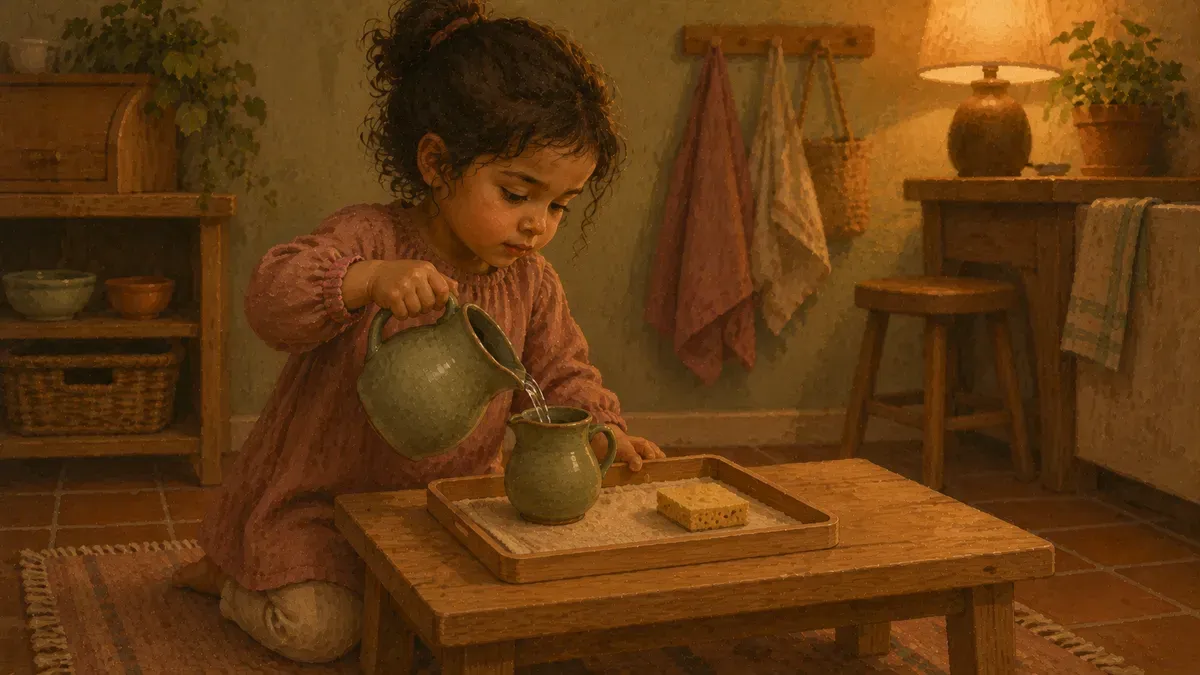
Step by Step Montessori 3-Part Cards Walkthrough
Confused by 3-part cards? This step by step Montessori walkthrough shows the exact order to present them so your child matches and self-corrects.
-
 Montessori
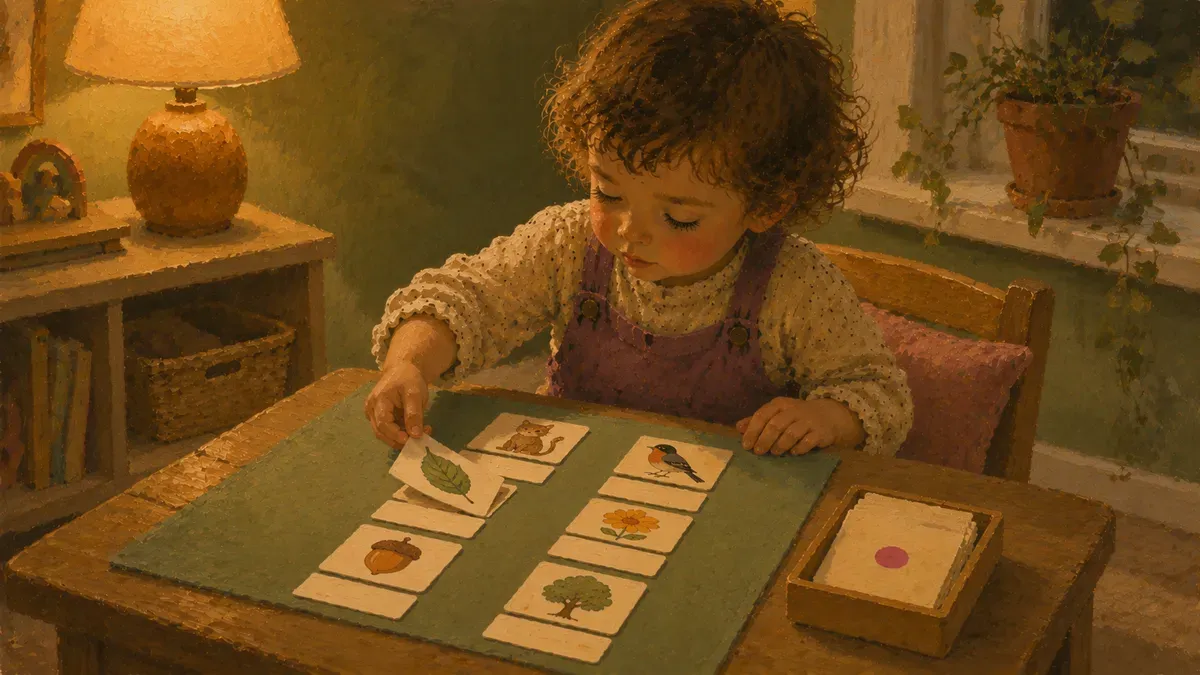
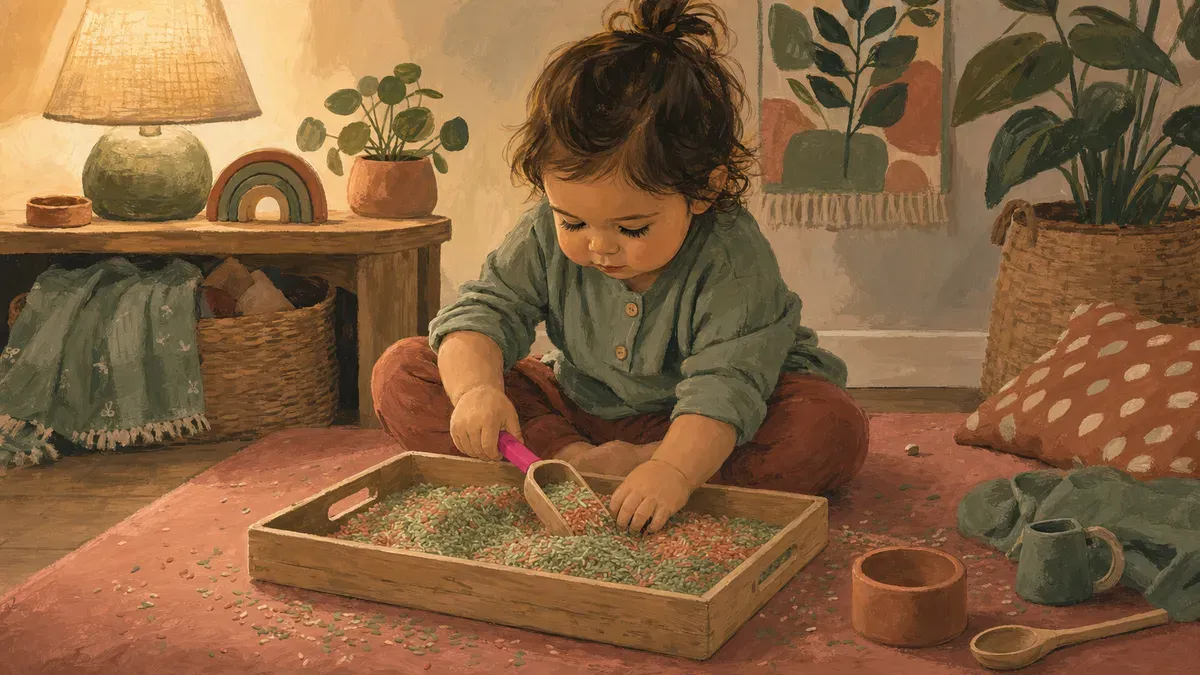
Sensorial Montessori Activities That Calm Toddlers
Sensory-seeking toddler heading for a meltdown? These 10 sensorial Montessori activities calm and refocus little hands fast.
-
 Montessori
Practical Life Montessori: 20 Kitchen Activities
Practical life Montessori starts in your kitchen. Get 20 no-buy activities using spoons, jars, and bowls you own. Set up a tray today.
-
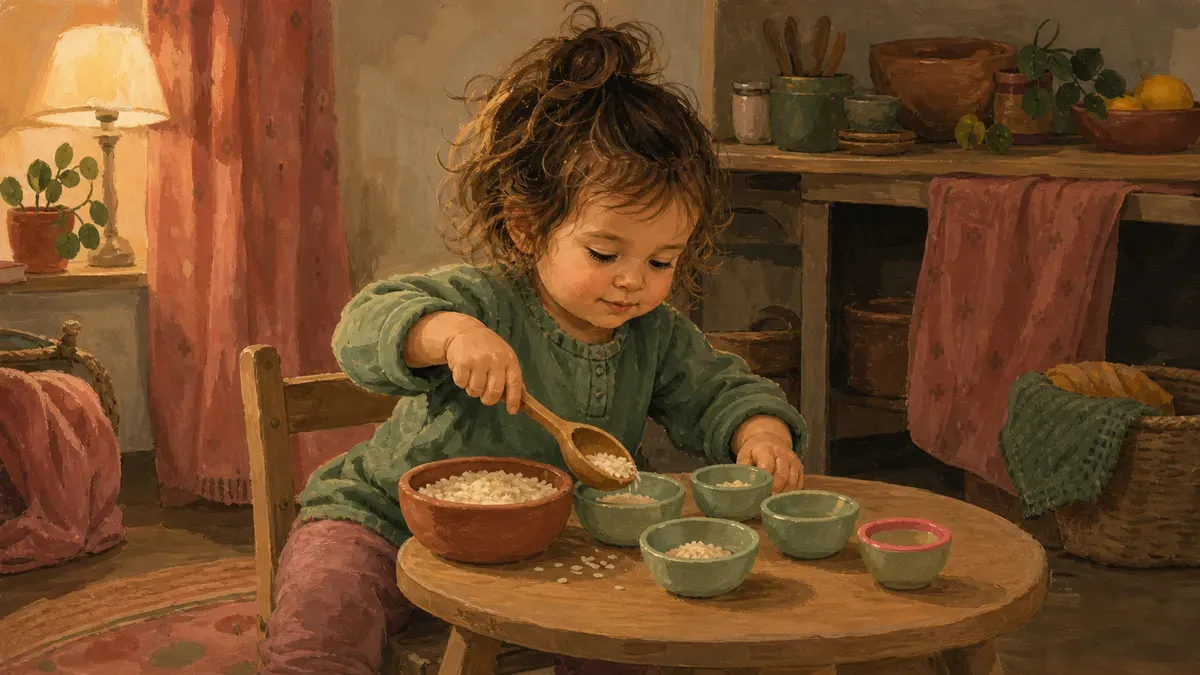 Montessori
Montessori Activities for 2 Year Olds: 30 Ideas
30 Montessori activities for 2 year olds, sorted by mess level. Pick a no-mess tray or a sensory bin and set it up tonight.
-
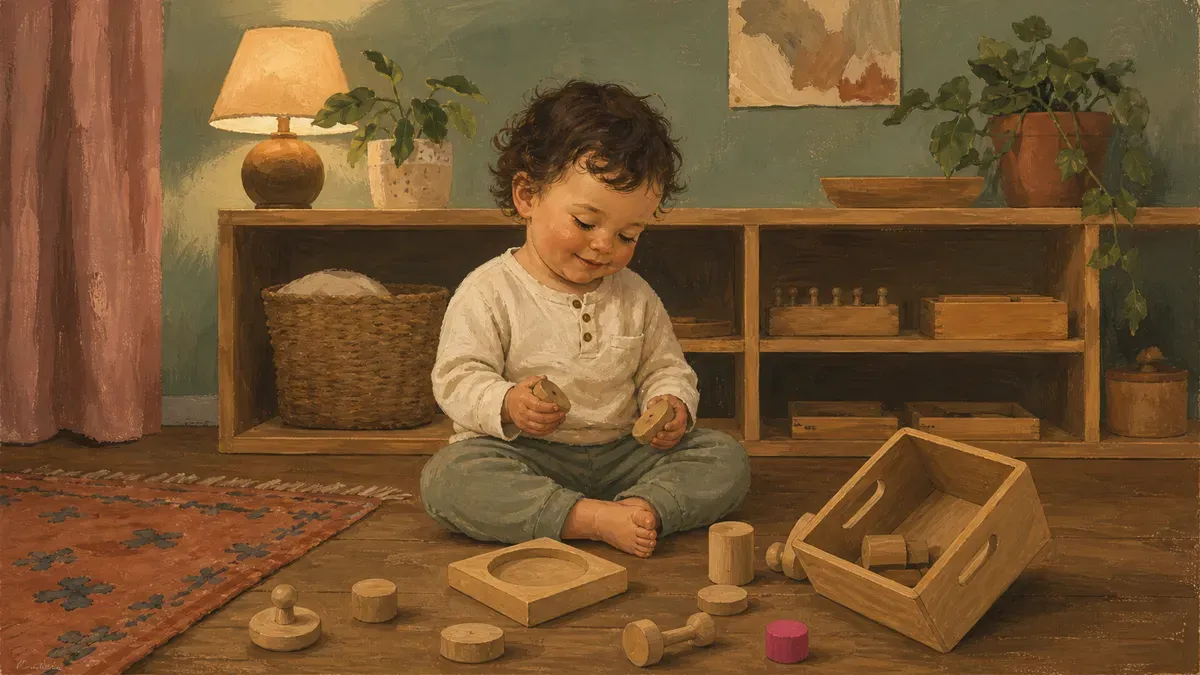 Montessori
Why We Left Montessori: 5 First-Year Mistakes
Why we left Montessori nearly happened over 5 rookie mistakes my first year at home. See what went wrong and how to fix each before you quit.
-
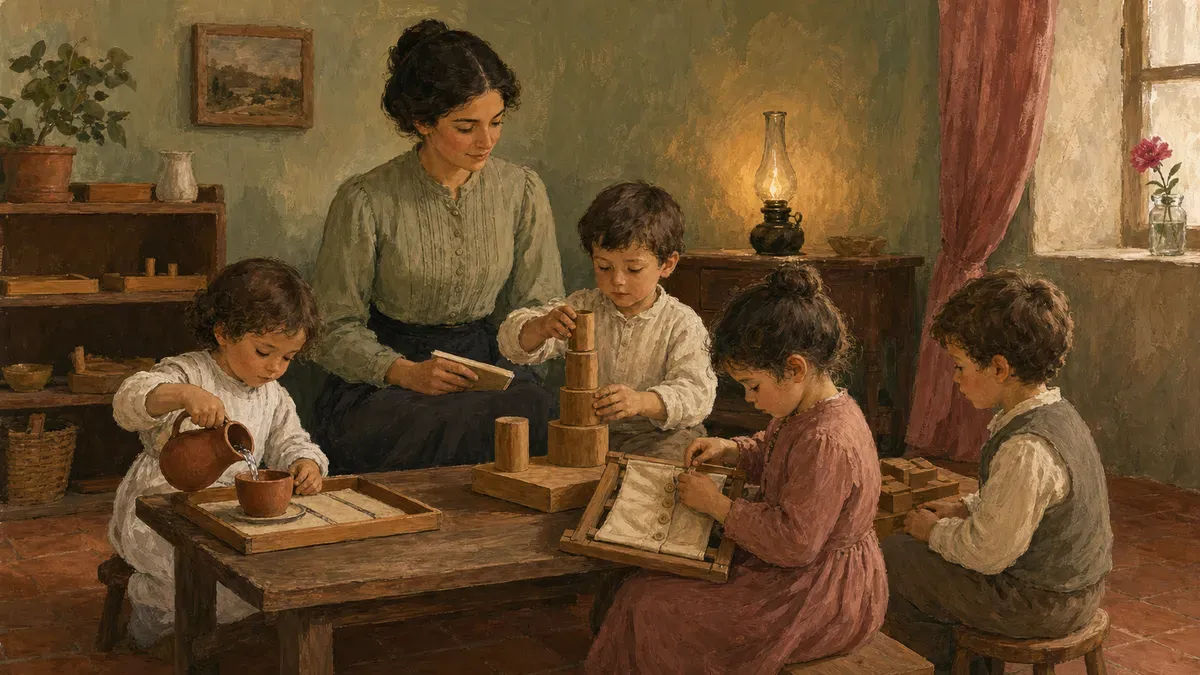 Montessori
Maria Montessori Theory: What It Really Means
Maria Montessori theory isn't about wooden toys. Learn the 6 principles, planes of development, and what 'follow the child' really means.
-
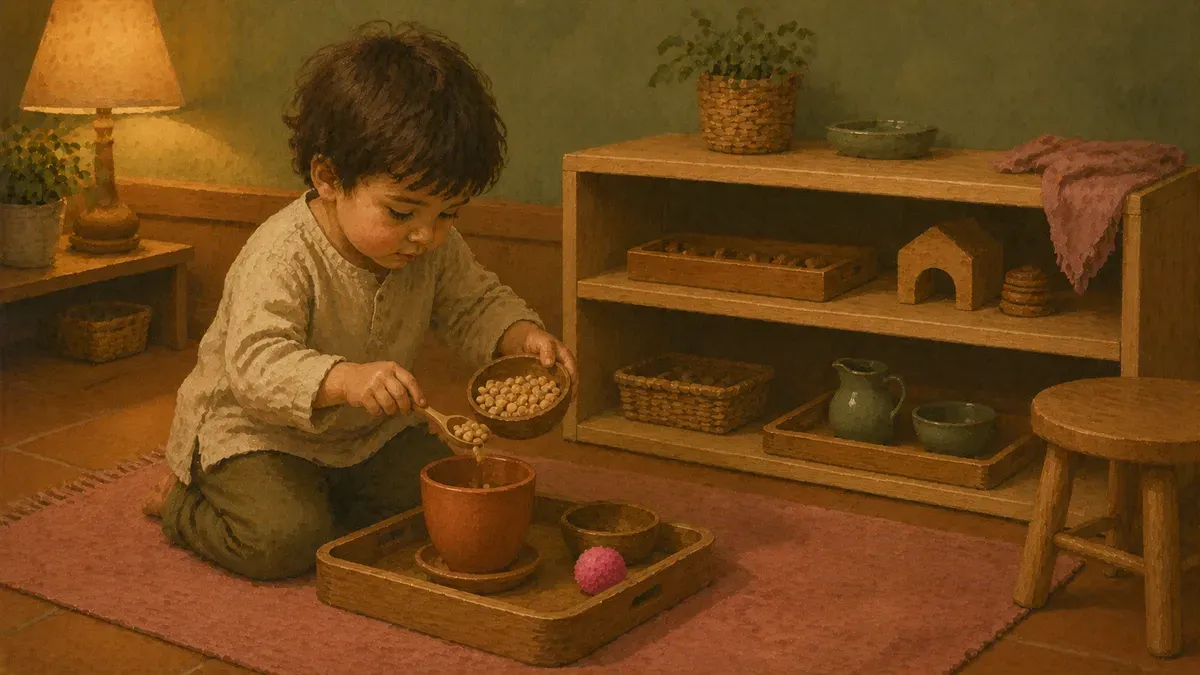 Montessori
Is Montessori Good for ADHD? A Parent's Honest Take
Is Montessori good for a child with ADHD? After 3 years at home, see what actually helped focus, movement, and meltdowns.
-
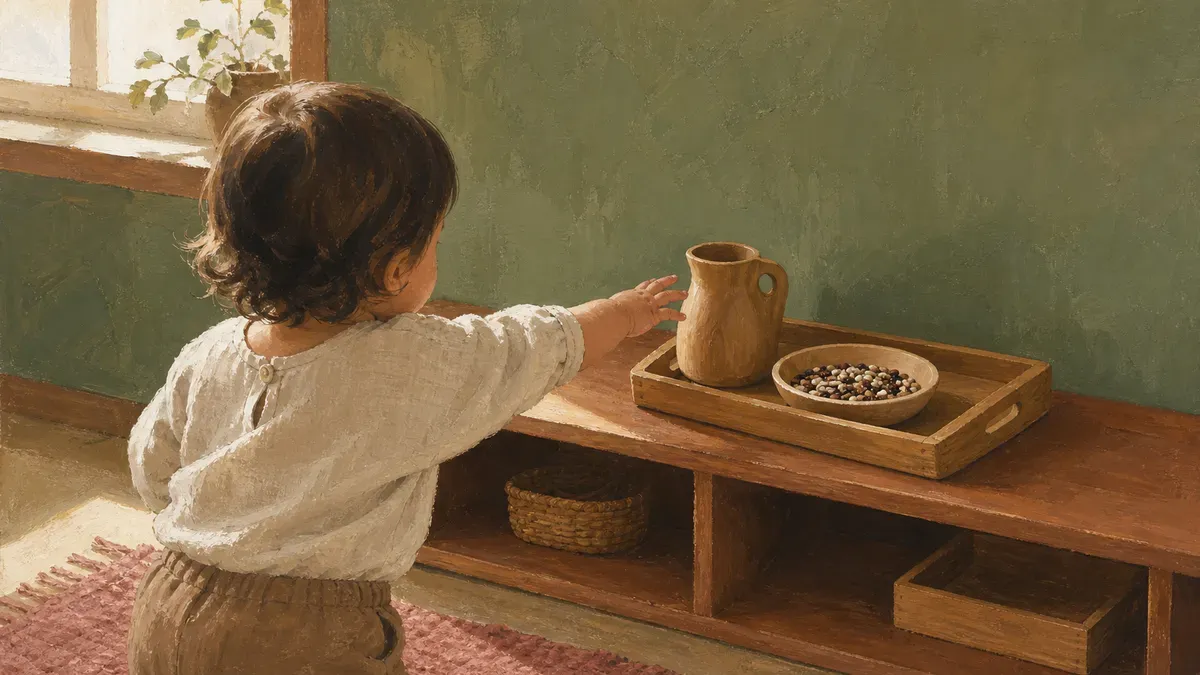 Montessori
What Is Montessori? How to Start at Home This Week
What is Montessori? Learn the method, the key materials, and 5 beginner trays to set up at home this week—then start today.
-
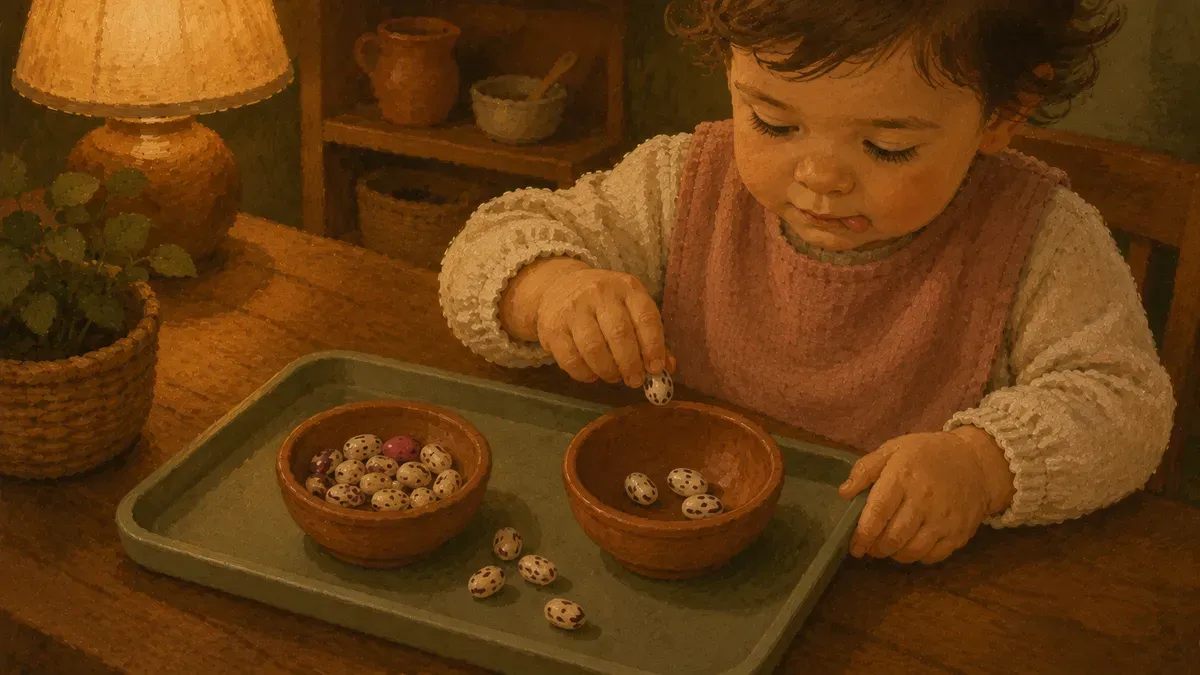 Montessori
Montessori Practical Life Activities by Age (1–5 Years)
Which Montessori practical life activities fit each age? A clear 12-month-to-5-year guide to what works—and what to skip. See the breakdown.
-
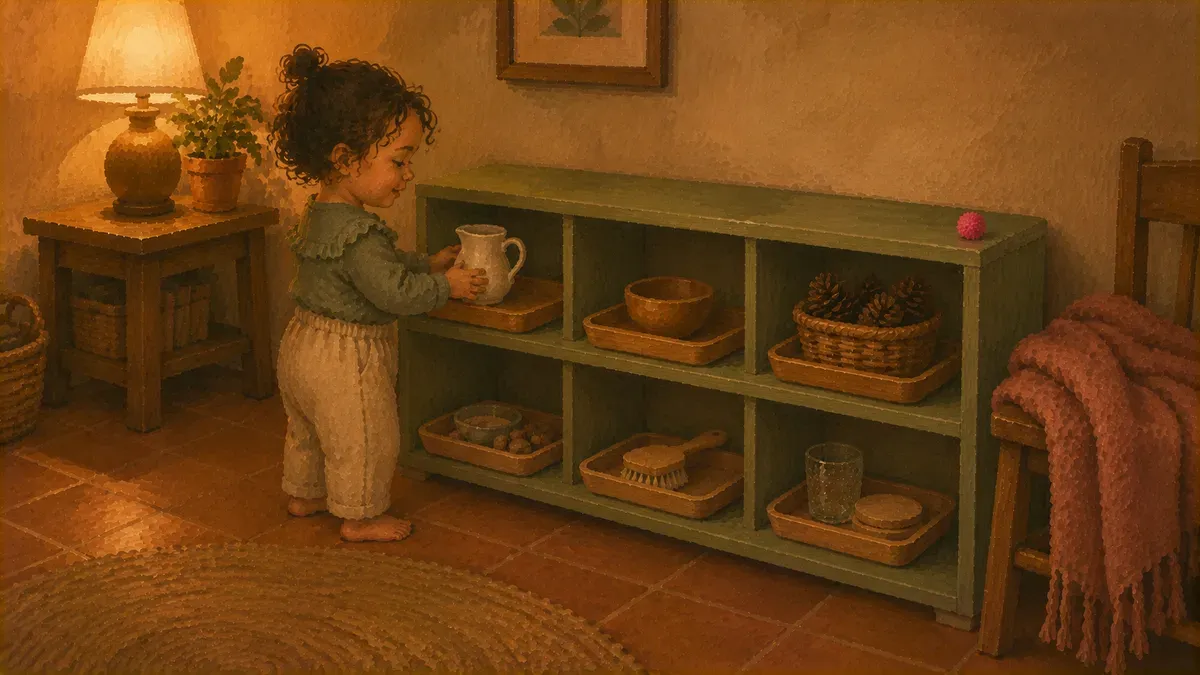 Montessori
Montessori Environment at Home on a Real Budget
Build a montessori environment at home with toys you already own. No shopping required. See the 6-item shelf setup that actually gets used.
About this guide
This page sorts it out by stage: what holds a young toddler, what a two-year-old will repeat ten times, what a three-year-old who craves real work will actually finish. You will get a shelf you can set up by age, materials grouped from babies up, and the one safety rule that decides what is even allowed near a kid under three. The fancy wooden toy matters far less than whether it meets your kid where they are.
How to set up a Montessori shelf that fits your kid's age
Watch before you buy. For a week, notice what your kid does on repeat: dumping and filling, opening every latch, lining things up, carrying heavy stuff around. That repeated move is the skill they are working on, and it tells you the stage better than any age label.
Put out a few trays, not the whole cabinet. Four to six choices on a low, open shelf, each one a single activity a kid can carry off and do start to finish. A crammed shelf reads as noise to a toddler, and they walk away from noise.
Match the challenge to the stage. Young toddlers want grasp-and-discover (shape sorter, object box). Around two it is dump, fill, and pour. By three they want the real job: spooning, dressing frames, sorting. Slightly hard is the sweet spot. Too easy gets ignored, too hard gets abandoned.
Pick self-correcting over flashy. The best Montessori materials let a kid see their own mistake and fix it without you stepping in, like a knobbed puzzle where the piece only fits one hole. That quiet do-over is where the focus and the confidence get built.
Set it at their height and keep it real. Low shelf, real (small) tools, a tray that holds everything in one trip. The whole point is a kid who can start and finish a job without asking, so the setup has to let them reach it and reset it alone.
Rotate when interest dies, not on a schedule. When a tray gets ignored for a few days, swap it for the next small step up. Same shelf, one new challenge, and it feels brand new without a single purchase.
Montessori materials by age, from babies to preschool
- Babies, around 6 to 12 months:simple grasping toys, a treasure basket of safe household objects, an object permanence box, soft rattles and natural-texture balls. The work here is grasp, mouth, and discovery, so everything has to be taste-safe and too big to swallow.
- Young toddlers, 12 to 24 months:shape sorters, large knobbed puzzles, stacking cups, a low peg board, simple threading on a thick dowel. They are refining their grip and learning how objects work, and they will repeat the same fit-it-in move endlessly.
- Two-year-olds:pouring sets (start dry, then water), big-bead threading, a posting box, basic matching cards, a transfer tray with a spoon or tongs. Dump, fill, pour, repeat. This is the age that practical life really clicks, and there are twenty practical-life kitchen activities you can run straight from your own cupboards.
- Three and up:dressing frames (buttons, zips, snaps), spooning and water transfer, sorting by color or size, 3-part cards, sequencing cards, food-prep jobs like spreading or peeling. Threes crave real, finishable work over toys, and they can finally see a job through to the end.
The one rule that overrides the age band: if a kid is still mouthing things, keep small parts out of reach. The CPSC small-parts cylinder is about 1.25 inches across, roughly the throat of a child under three, and any toy or piece that fits all the way inside is a choking risk and banned in toys made for under-threes. Trust your own kid over the label on the box: plenty mouth past their second birthday. Stay within arm's reach, save the tiny beads and loose parts for when the mouthing phase is genuinely done, and for any real choking or medical worry, your pediatrician is the call, not a blog.
Quick answers on this one
At what age can a child start Montessori activities at home?
Birth, honestly, though it does not look like trays yet. With a baby it is a treasure basket of safe objects and a lot of watching. Real trays a kid carries off and does alone tend to land around 12 to 18 months, once they can sit, grasp on purpose, and follow a simple sequence. There is no late start here. You meet the kid where they are today.
How do I know if a Montessori toy is right for my child's age?
Look at the move, not the years on the box. If your kid is dumping and filling everything, they want pouring and transfer work. If they are opening every latch, a posting box or shape sorter fits. The right material is a little bit hard, the kind they have to concentrate for but can still pull off. Too easy and it gets ignored. Too hard and it gets thrown.
Are small Montessori materials safe for toddlers?
Only once the mouthing phase is genuinely over, and that is later than the box claims for a lot of kids. The CPSC test for a choking risk is simple: if a piece fits inside a cylinder about 1.25 inches wide (roughly the throat of a child under three), it is too small for a kid who still mouths things. Hold the loose beads, gems, and tiny pegs until you are sure, and stay within arm's reach until then.
Do I need to buy expensive wooden Montessori toys?
No, and this is the part the pretty Pinterest shelves skip. Most of the early work is practical life, which runs on what you already own: spoons, jars, bowls, a sponge, a pitcher of water. A toddler pouring beans between two cups is doing the exact same hand-eye work as a forty-dollar set. You can set up a Montessori shelf on a real budget and buy the real materials later, for the specific skills that need them. The kitchen comes first.
What is the difference between Montessori activities for a 2 and a 3 year old?
Two is about the repeated action: dump, fill, pour, post, do it again. Three is about the finished job. A three-year-old wants real, purposeful work they can see through to the end, like dressing frames, sorting, or spreading their own toast, and they can manage a few steps in a row now. Same shelf idea, one step harder, with the payoff shifting from the doing to the done.
Free printables, coming soon
Want these as printables?
I am slowly turning activities like these into free print-and-go pages. Tell me where to send them and you will get an email the day each one is ready.
One email when there's something worth printing. Unsubscribe anytime.