For the feelings that come in loud
A calm down corner for big, loud feelings
A pit stop before the meltdown, not a punishment chair. Calm tools you can print tonight.
Calm down corner
[kahm down kor·ner]noun
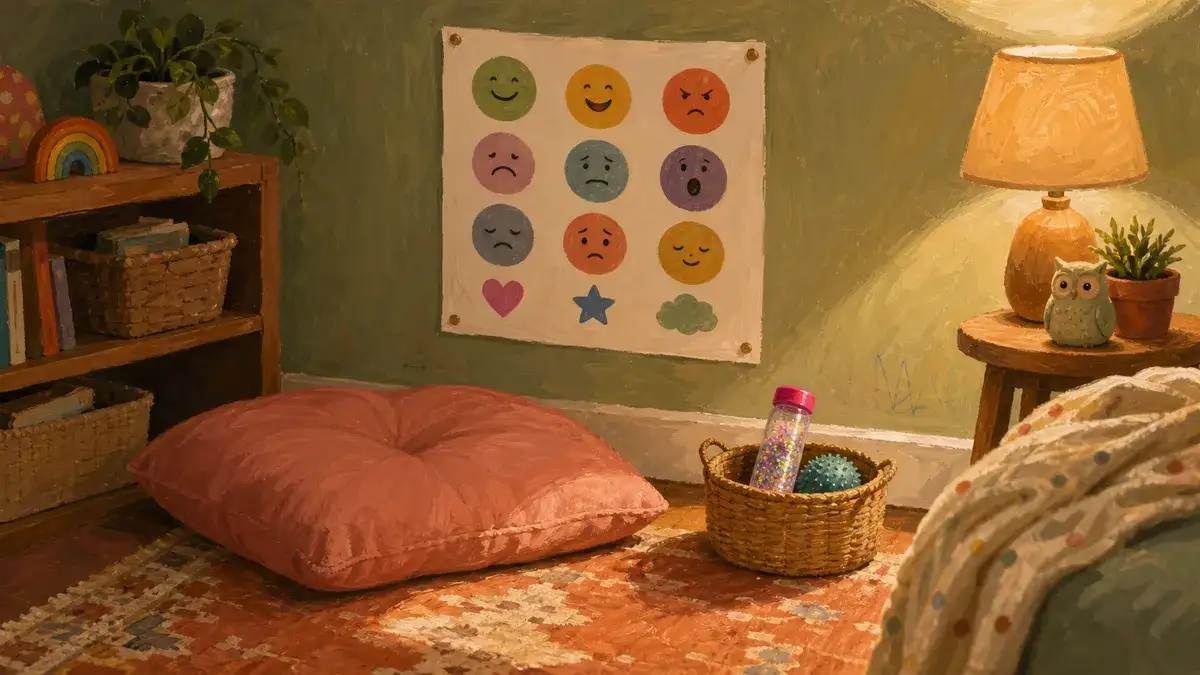
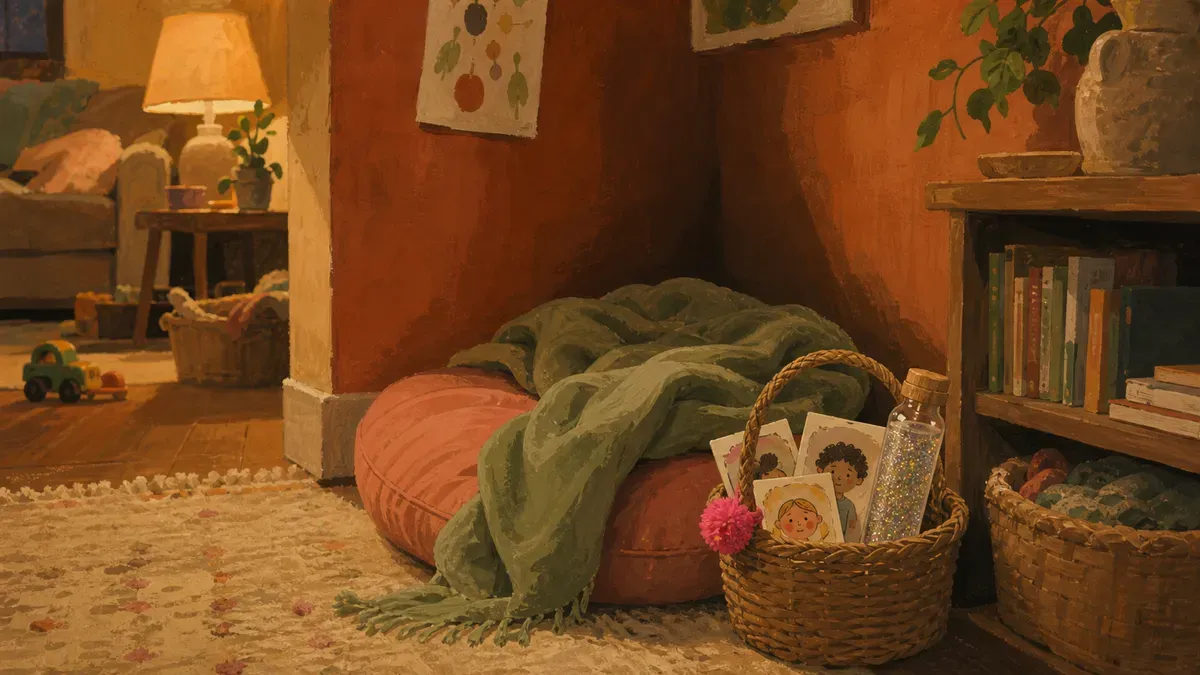
A calm down corner is a cozy spot your kid heads to before a meltdown hits category five. A floor cushion, a soft blanket, a calm-down bottle to shake, maybe a feelings card to point at. That is the whole thing. The job of the corner is to give big feelings somewhere to go that is not the middle of the kitchen floor.
Two ways to calm a hard moment
Build the cozy corner, or give the storm a name with zones of regulation.
Build the calm down corner
What to put in the cozy spot, the feelings and coping cards a kid can point to, and the resets that bring a wound-up kid back down. A pit stop before the meltdown, not a time-out chair.
-
 Calm & Big Feelings
Emotional Regulation Activities for Kids That Work
Most calming tricks fail mid-meltdown. These emotional regulation activities for kids work when nothing else does. Find the one that fits your child.
-
 Calm & Big Feelings
Calm Corner Ideas: 25 Picks Under Your Coffee Budget
Skip the $200 setups. These 25 calm corner ideas cost less than a latte and soothe big feelings. Build one your kid loves this week.
-
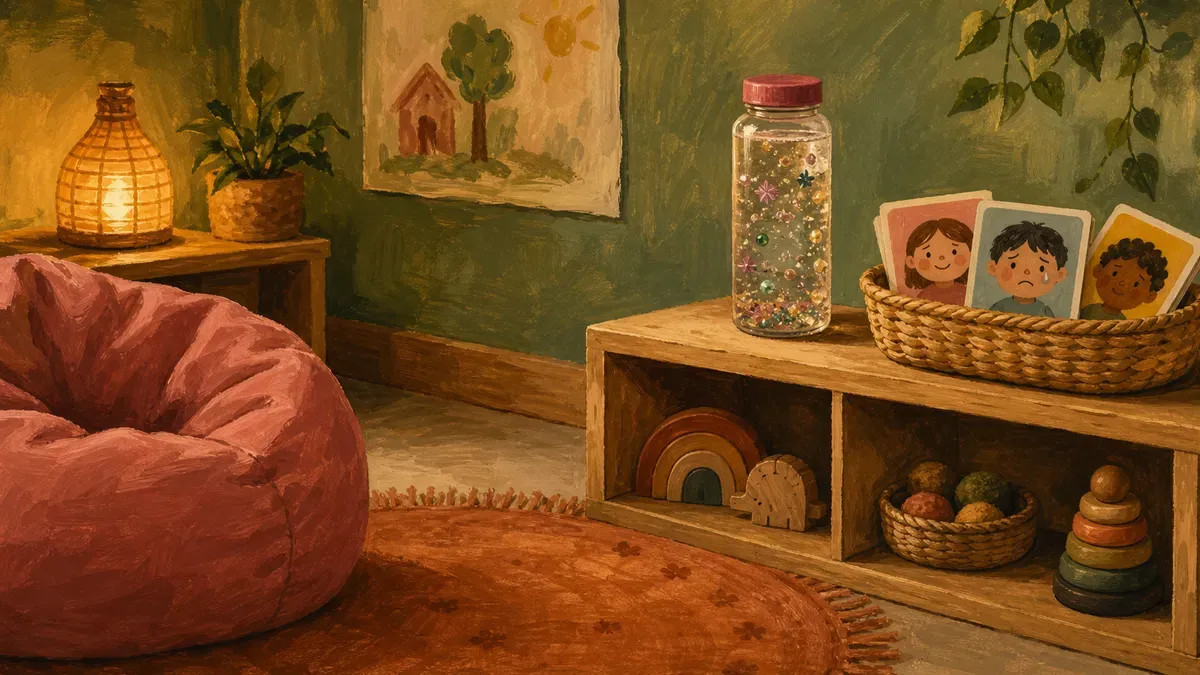 Calm & Big Feelings
Cozy Corner Preschool: Calm Down Ideas for Throwers
Throwing the calm-down tools? Build a cozy corner preschool space that survives big feelings, with throw-proof tools and steps that work.
Every calm-down corner idea I've written up
- Calm & Big Feelings
Emotional Regulation Activities for Kids That Work
Most calming tricks fail mid-meltdown. These emotional regulation activities for kids work when nothing else does. Find the one that fits your child.
- Calm & Big Feelings
Calm Corner Ideas: 25 Picks Under Your Coffee Budget
Skip the $200 setups. These 25 calm corner ideas cost less than a latte and soothe big feelings. Build one your kid loves this week.
- Calm & Big Feelings
Cozy Corner Preschool: Calm Down Ideas for Throwers
Throwing the calm-down tools? Build a cozy corner preschool space that survives big feelings, with throw-proof tools and steps that work.
-
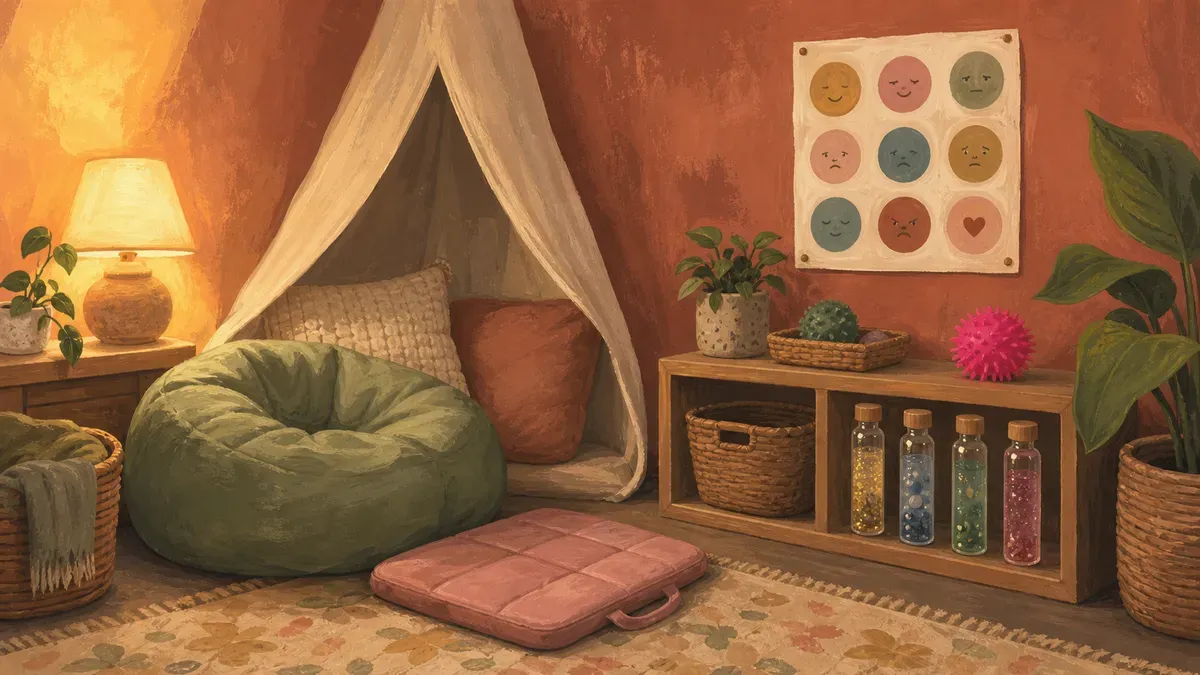 Calm & Big Feelings
Calm Corner Classroom Setup for Autistic Kids
Most calm corners fail autistic kids because they skip the sensory profile. Build a calm corner classroom that works in 5 steps. Start here.
-
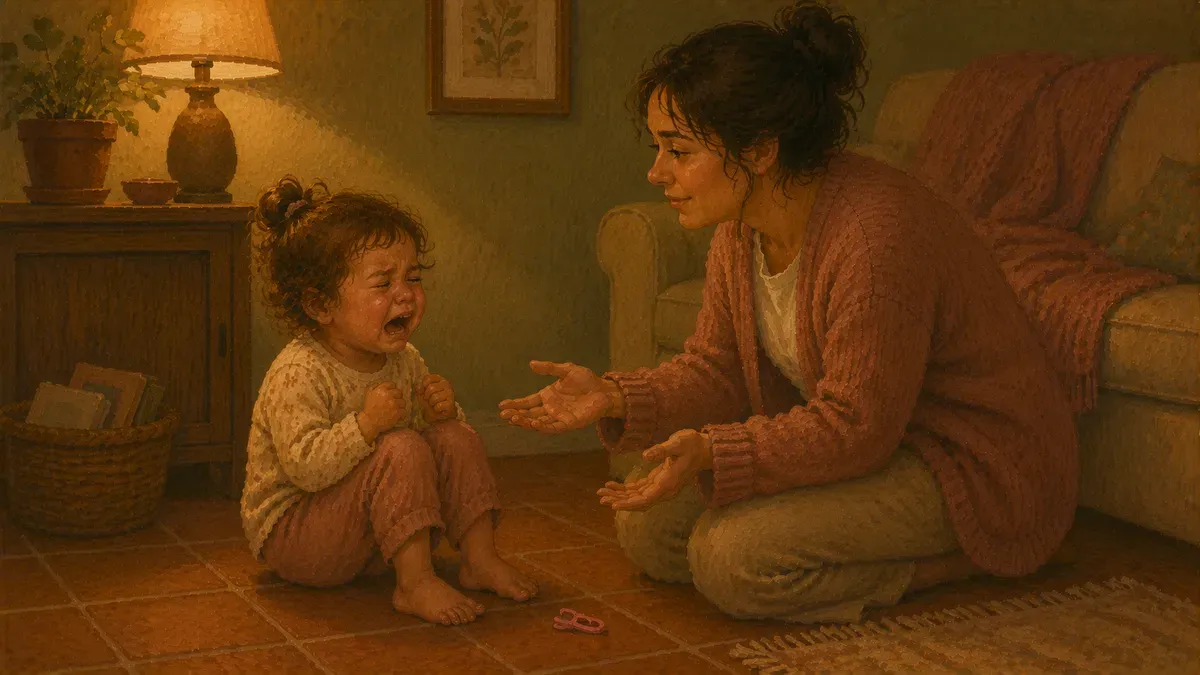 Calm & Big Feelings
Zones of Regulation Red Zone: A Parent's Plan
Your kid is in the zones of regulation red zone and nothing works. Here's what to say, what to skip, and how to ride out the worst 10 minutes.
-
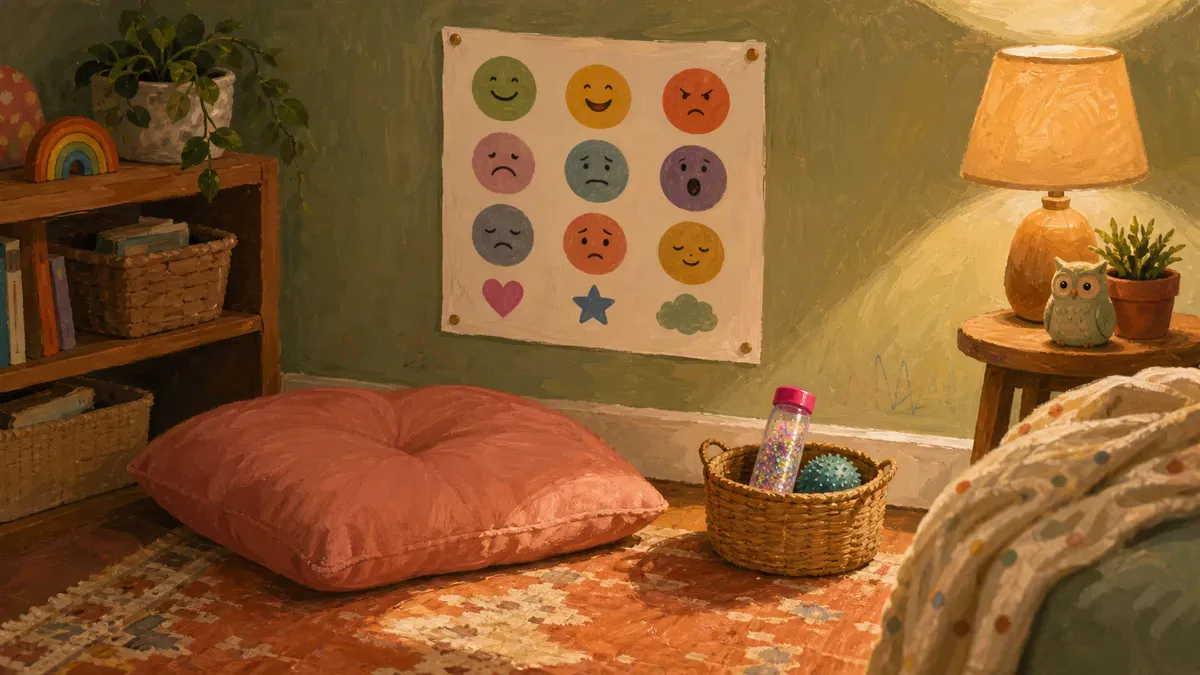 Calm & Big Feelings
Calming Center Checklist: What Actually Belongs
Most calming center stuff just becomes clutter. Here's the exact checklist of tools that actually help kids regulate. See what to keep.
-
 Calm & Big Feelings
Calm Down Corner Kit: DIY vs Pre-Made, No Guilt
DIY a calm down corner kit for under $30 or buy the printable pack? Honest cost-and-effort breakdown so you can pick the right one today.
-
 Calm & Big Feelings
Social and Emotional Learning Curriculum in the IEP
Most IEPs skip the one accommodation that stops meltdowns. See how a social and emotional learning curriculum gets a calm-down corner written in.
-
 Calm & Big Feelings
Calm Down Corner Poster: What to Hang at Eye-Level
A calm down corner poster only works if kids can read it. Learn what to hang, at what height, and how to make it stick. Start with these steps.
-
 Calm & Big Feelings
Reflection Rules vs Time-Out: What Builds the Skill
Reflection rules teach kids to calm down for real, while time-out just buys quiet. See what actually builds the skill, and where each one fails.
-
 Calm & Big Feelings
Zone of Regulation: What Each Zone Looks Like at Home
Most charts show feelings, not toddlers. See what each zone of regulation looks like at home, with real examples. Start today.
-
 Calm & Big Feelings
Learner Zone for a 3-Year-Old: Making It Stick
Toddlers nod at zone colors but can't name a feeling. Use learner zone steps, scripts, and toddler visuals that actually stick. Start today.
-
 Calm & Big Feelings
Feelings Zones: Build a Chart Your Kid Will Use
Most feelings charts gather dust. Learn how feelings zones map emotions to colors so your kid can name what they feel and pick a fix. Start today.
-
 Calm & Big Feelings
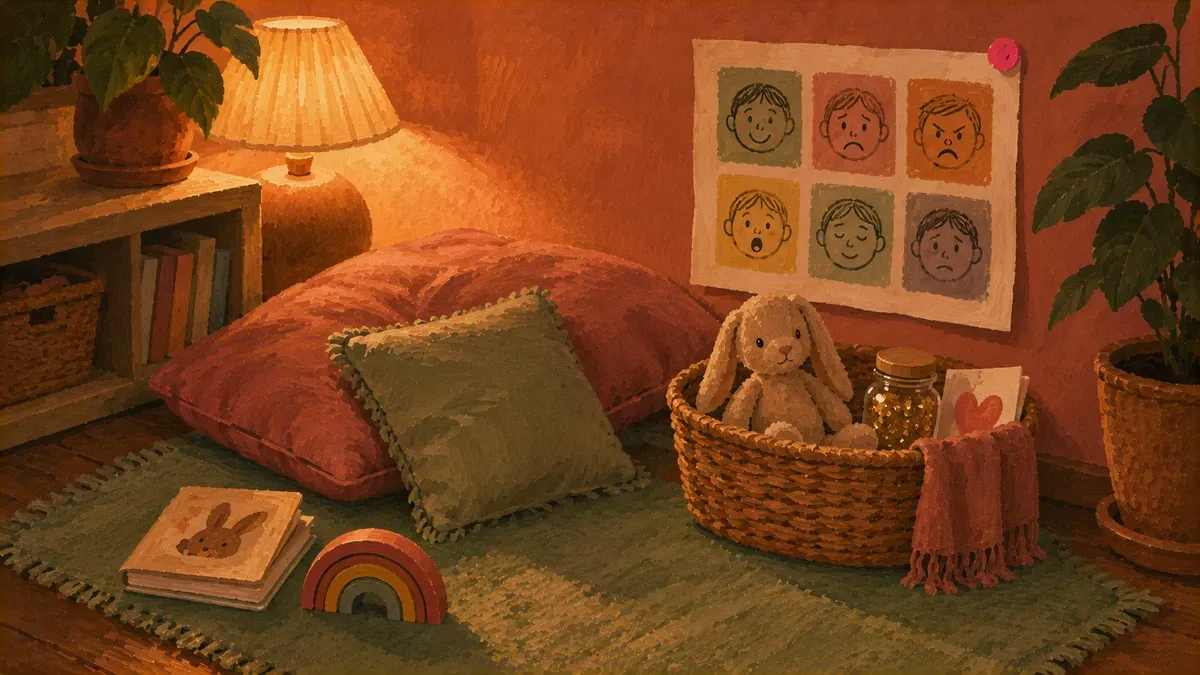
Calm Down Corner: Set One Up at Home for Free
No bean bag, no budget? Build a calm down corner with stuff you already own. Five steps, five minutes, and your kid has a space that works.
-
 Calm & Big Feelings
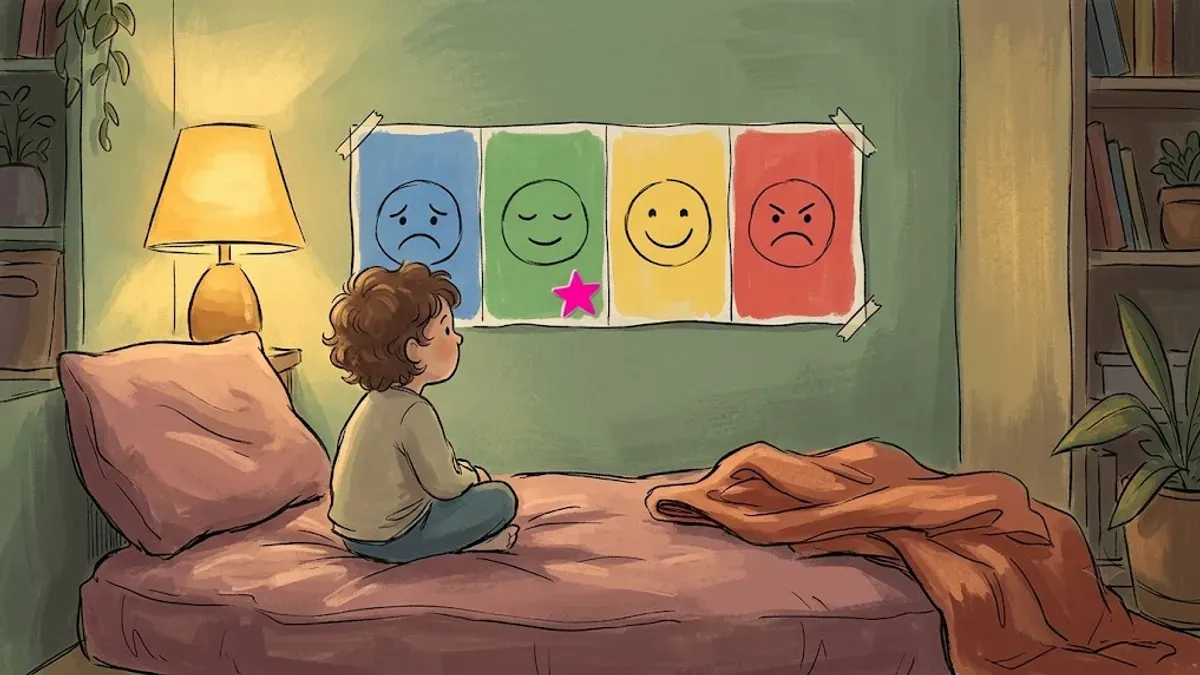
Zones of Regulation: A Parent's Plain-Language Guide
Never heard of zones of regulation? Learn the 4 color zones and exactly what to say when your kid melts down, no jargon required.
How to set one up this weekend
Here is the part that trips people up. It is not a time-out chair with a nicer name. A time-out is somewhere you send a kid as a consequence, usually alone. The corner is somewhere a kid goes, often with you sitting right there, to come back down. One is a punishment. The other is a pit stop. Build it as the pit stop, because a kid who learns to walk toward calm is learning something a chair never teaches.
It helps the wound-up three-year-old who goes from zero to screaming with no warning, the kid who melts down every day at pickup, and the one who needs a quiet place to land when the room gets too loud. No corner fixes a hard feeling or replaces a professional. It buys you and your kid a softer five minutes, and on a rough afternoon that is plenty.
Pick the spot with your kid, not for them. A corner of the bedroom, the end of a hallway, a nook behind the couch. Letting them choose is half of why they will actually use it.
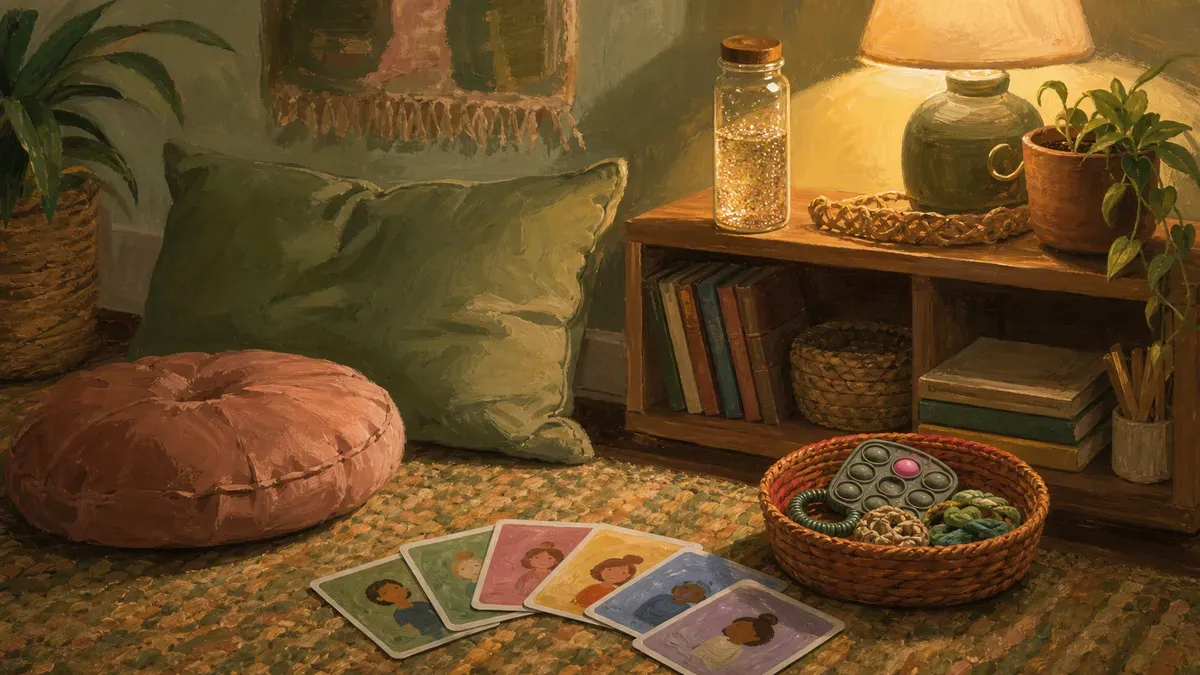
Make it cozy and a little walled-off. A rug or a couple of cushions to mark the edges, a pillow or a beanbag, a soft blanket. A small tent or a sheet over two chairs blocks the busy room out, and that calms a lot of kids on its own.
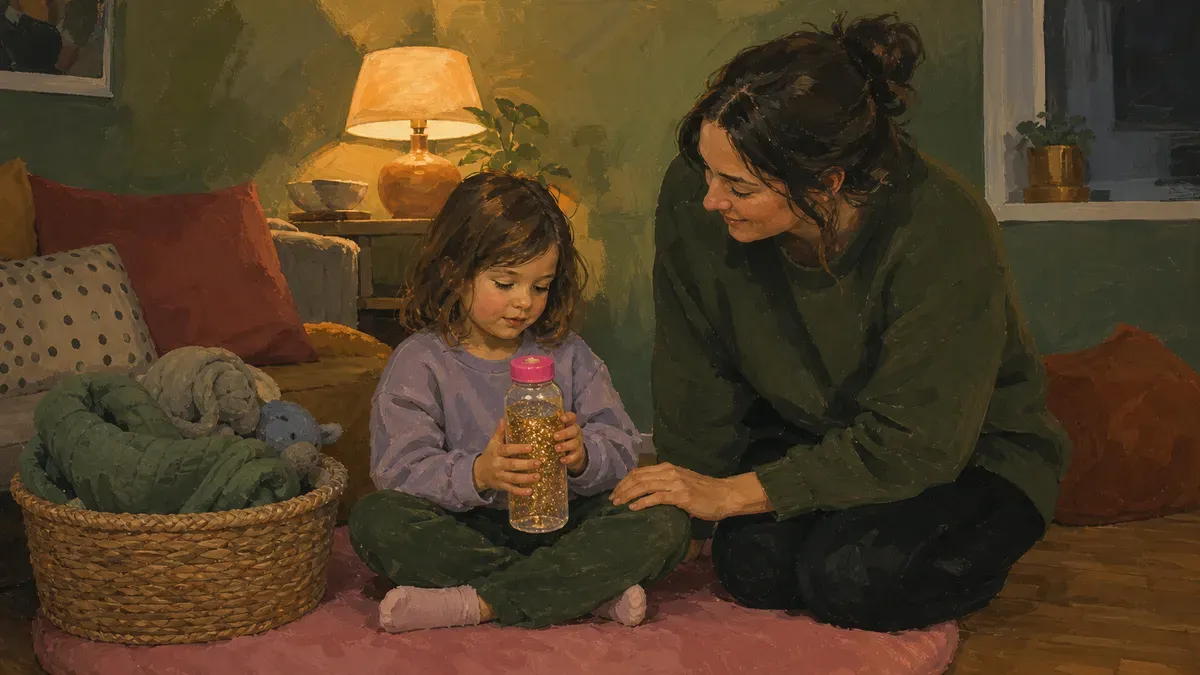
Add two or three calm-down tools, not ten. A calm-down bottle (clear glue, warm water, glitter, lid glued shut) to shake and watch, a pinwheel or bubbles for slow breathing, a couple of fidgets. Less is more here, because a fried kid cannot pick from a pile.
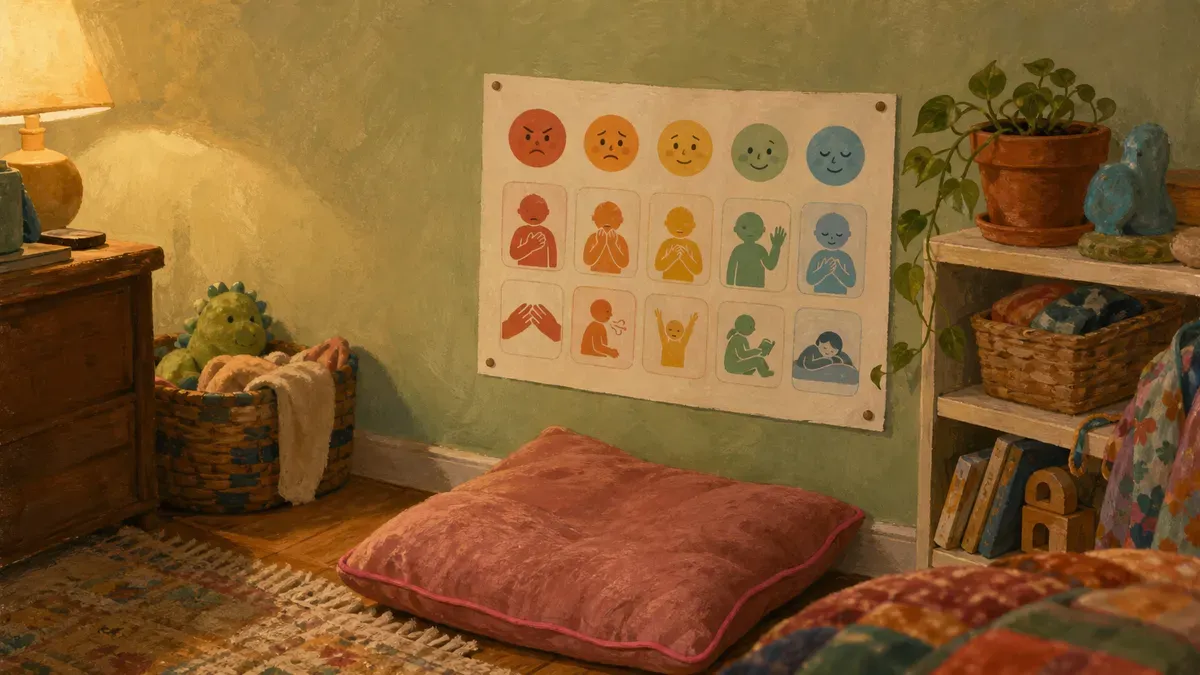
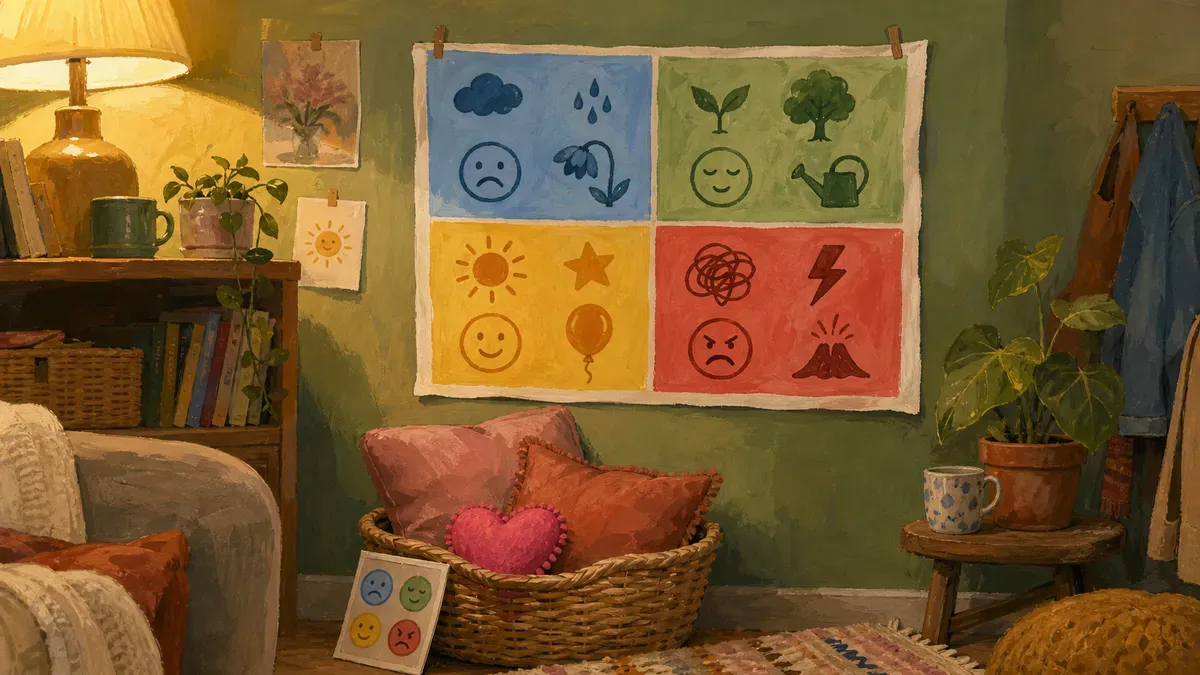
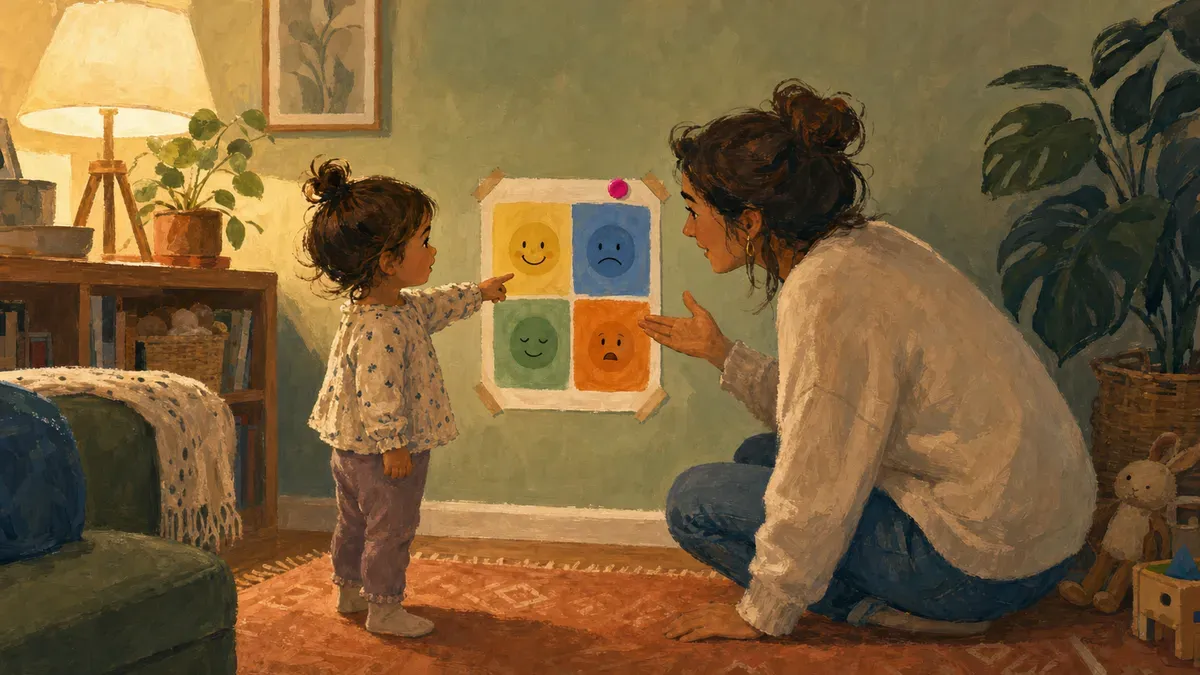
Put up something to point at. A simple feelings poster or a few coping cards, so a kid with no words yet can show you mad, sad, or too loud, and pick what to try. This is the piece that turns a beanbag into a corner.
Practice it when everyone is calm, never first in the storm. Sit in it together on a good day, shake the bottle, read a book. A corner introduced mid-meltdown reads as a punishment. One practiced on a Tuesday afternoon becomes the place they go on their own.
Why it works
- Little kids cannot calm themselves down alone, and that is not them being difficult. The brain that runs emotional brakes is still under construction for years. They borrow your calm first, which is why you sitting nearby does more than any tool in the basket.
- It gives a feeling a name and a plan. Pointing at a card for too loud, then shaking a bottle, hands a kid the two things a meltdown steals: words for what is happening and one small thing to do about it.
- A glittery bottle or a pinwheel is breathing in disguise. Watching the glitter fall or keeping a pinwheel spinning stretches the out-breath without you ever saying take a deep breath, which most kids ignore anyway.
- Over time it builds a habit they keep. A kid who has walked to the corner a hundred times starts heading there before the scream, and that early catch is the actual skill, not the cushions.
Questions parents ask about this
Is a calm down corner the same as a time-out?
No, and treating it like one is the fastest way to wreck it. A time-out sends a kid away as a consequence, usually to sit alone until a timer beeps. A calm down corner is a place a kid chooses to go, often with you right beside them, to settle big feelings. One is about a behavior you want to stop. The other is about a feeling you want to help with. Build it, name it, and use it as the second kind.
What age is a calm down corner for?
Toddlers on up, with the setup growing with them. A two-year-old needs you in the corner doing the calming with them and a bottle to shake. A four or five-year-old can start pointing at a feelings card and walking over on their own, though they still need you close. Under three especially, plan to be the main tool. They are not stalling, their brains genuinely cannot do this part solo yet.
What do I actually put in it?
Keep it to a cozy base plus two or three tools, not a stuffed bin. The base is a cushion or beanbag, a soft blanket, and something to mark the space like a rug or a little tent. For tools, pick a calm-down bottle, a pinwheel or bubbles for breathing, a few fidgets, and a feelings card or poster to point at. A couple of quiet books are fine too. An overwhelmed kid cannot choose from ten things, so a short menu beats a full toy box every time.
How do I get my kid to actually use it?
Build it together and practice it cold, never spring it on them mid-scream. Sit in the corner on a calm afternoon, shake the bottle, read a book, let it feel like a good place and not a penalty box. When a feeling starts rising, walk over with them instead of ordering them there. It takes weeks, not days, and plenty of kids need you to model it dozens of times before they head there alone. That slow build is normal.
My kid trashes the corner when they are angry. Now what?
That happens, and it usually means the corner has too much in it or got introduced as a punishment. Strip it back to soft, throwable-safe things, a cushion and a blanket and one bottle, and skip anything that breaks or hurts when it flies. Stay with them and keep your own voice low, because they are borrowing your calm and a raised voice gives them nothing to borrow. If hard days keep stacking up, that is a conversation for your pediatrician or an OT, not a corner to solve alone.
Does it have to be a whole corner, or can it be small?
Small is completely fine, and honestly often better. A basket you carry room to room, a pillow under a table, a designated chair with a blanket and a bottle, all of it counts. The walled-off, cozy feeling matters more than the square footage. Renters, small apartments, and families who move a lot do this with a tote bag and it works.
Where this connects
Big feelings rarely sit in one tidy box, and the corner leans on the rest of the house to do its job. A wound-up kid often needs to move their body or get their hands busy before any cushion helps, which is sensory play. The meltdown that lands at the same point every day usually eases once the day itself is predictable, which is routines. And for a kid whose feelings run bigger or whose sensory needs are part of the picture, the corner is one piece of a plan you build with a pro.
Our first calm down corner was a beanbag wedged behind the couch, built the year Eli started melting down at every pickup. It flopped twice before it stuck, mostly because I kept reaching for it mid-storm instead of practicing it on the calm days. What finally worked came from his OT and from the moms at my table, and I have set up a dozen versions since, in our house and theirs, keeping the few things kids actually walk toward and ditching the pretty stuff that just sat there.
I'm not an OT, an SLP, or a doctor, and I won't pretend to be. When something belongs to a professional, I say so and point you to one. What I can give you is the been-there version: what we tried, what flopped, and what bought us a calmer afternoon. More about Nora Hayes
Free printables, coming soon
Want these as printables?
I am slowly turning activities like these into free print-and-go pages. Tell me where to send them and you will get an email the day each one is ready.
One email when there's something worth printing. Unsubscribe anytime.