Point at the chart, not the tenth reminder
Visual schedules for the kid who needs to see what comes next
Picture schedules and first-then boards for the kid who hates surprises.
Visual schedules
noun
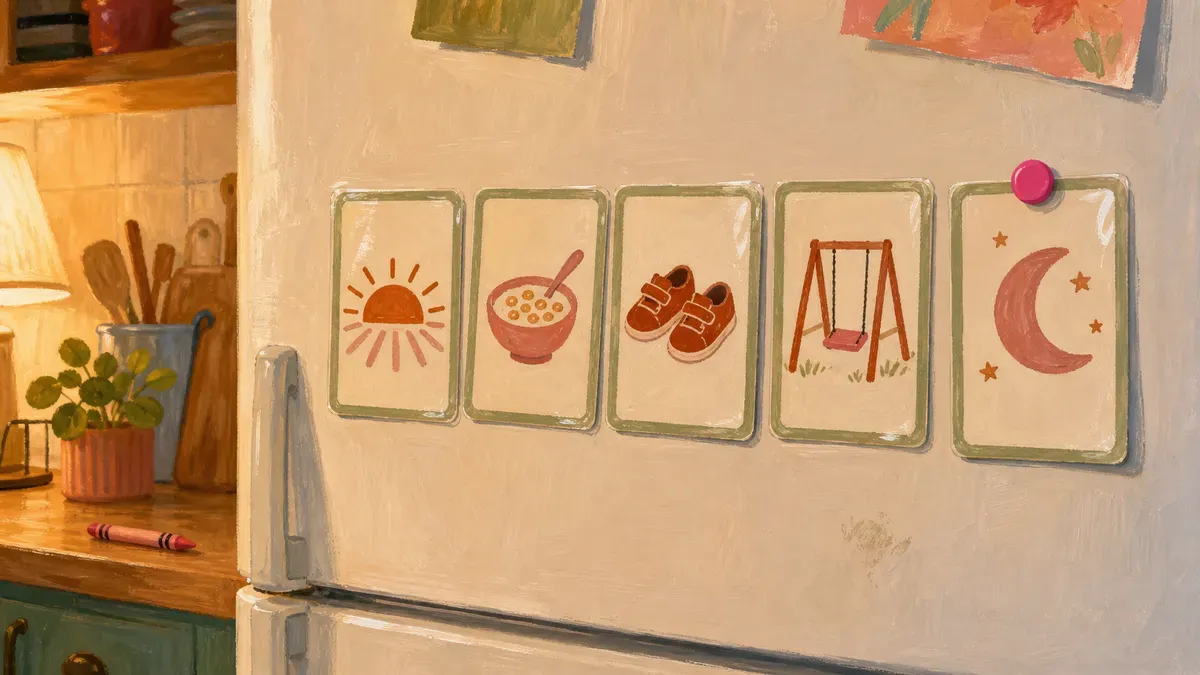
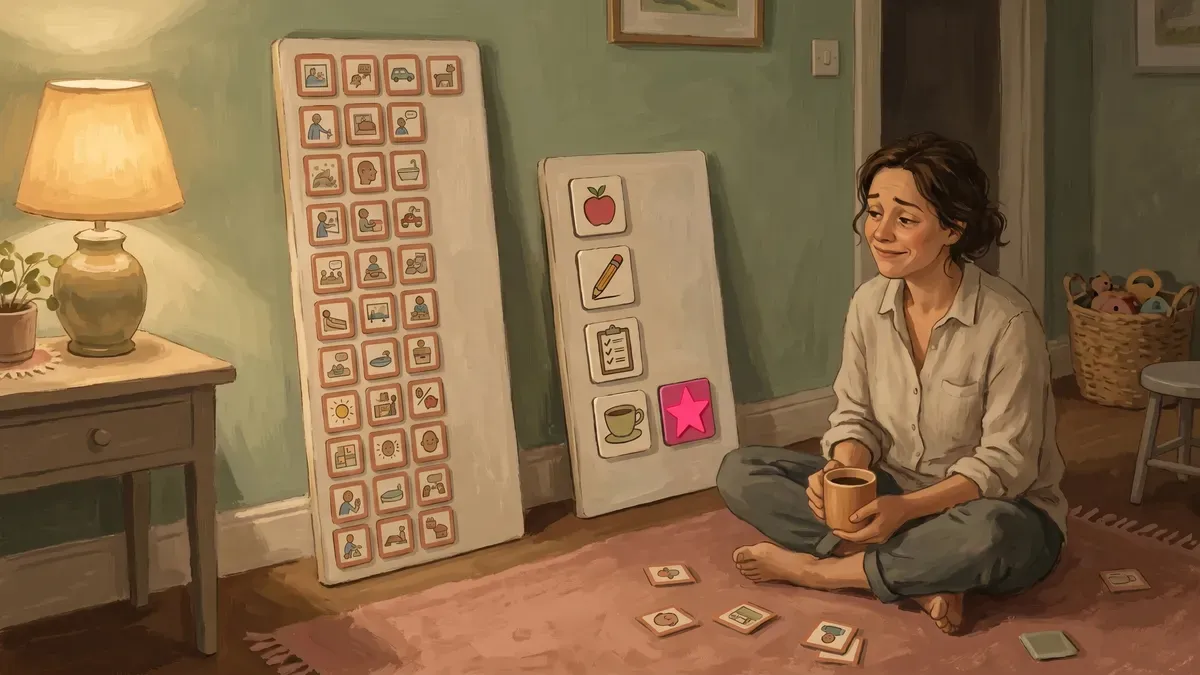
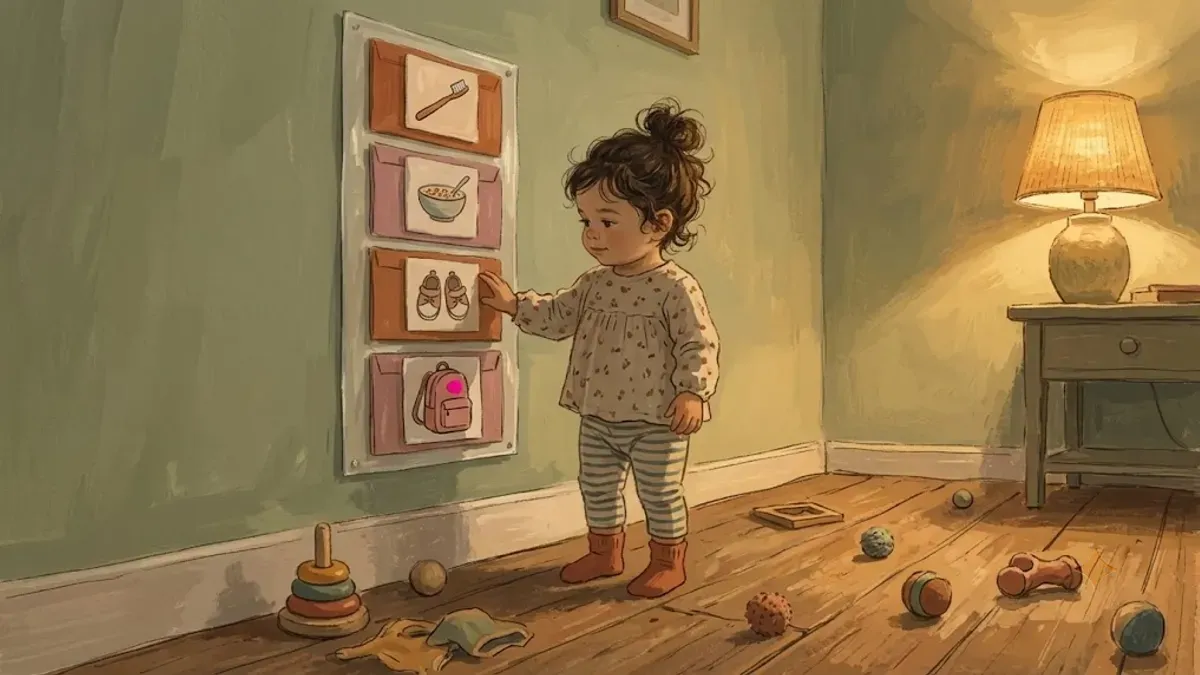
A visual schedule is your kid's day in pictures, lined up in the order it happens. One card for breakfast, one for shoes, one for the door, left to right or top to bottom, so a toddler who cannot read a clock or a list can still see what is coming next. Routine cards are the same idea in single pieces you can shuffle: get dressed, brush teeth, pack the bag, snap them up in whatever order your morning actually runs.
Routines & Charts, the latest
-
 Visual Schedules
Visual Schedule Printable: 20 Picture Cards + Free PDF
Visual schedule printable with the 20 picture cards every toddler home needs. Free PDF to download, print, and start using tonight.
-
 Visual Schedules
Visual Schedules: A Beginner's Guide for Parents
Most visual schedules fail before day three. Learn how they work and build your first board in 5 steps your child will actually follow. Start today.
-
 Visual Schedules
Toddler Schedule: Build One With Picture Cards
Your 2-year-old can't read a clock yet. Build a toddler schedule with picture cards in 5 steps that stop nap fights and meltdowns. Start today.
-
 Visual Schedules
Free Printable Daily Routine Chart Kids Will Follow
Grab a free printable daily routine chart your child will actually follow, plus picture cards and tips to make any routine stick. Download now.
-
 Visual Schedules
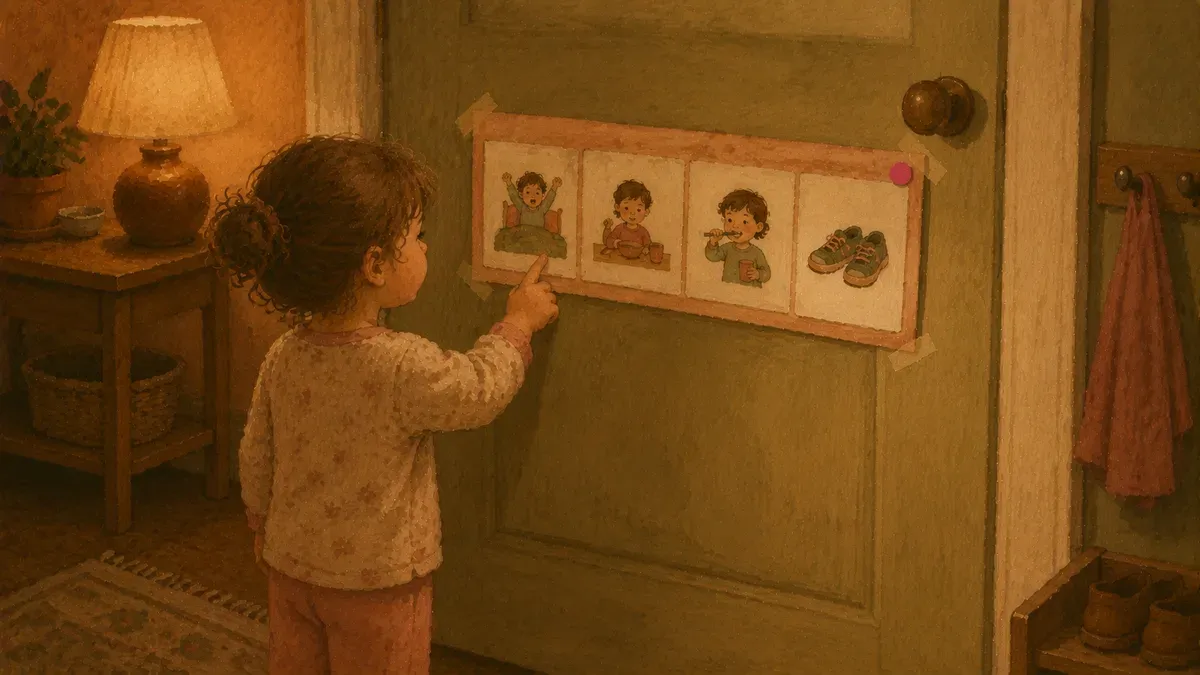
Morning Routine Printable: Make One Kids Follow
Stop the morning yelling. This morning routine printable gets kids out the door on their own in 15 minutes. Grab the free chart and build it today.
-
 Visual Schedules
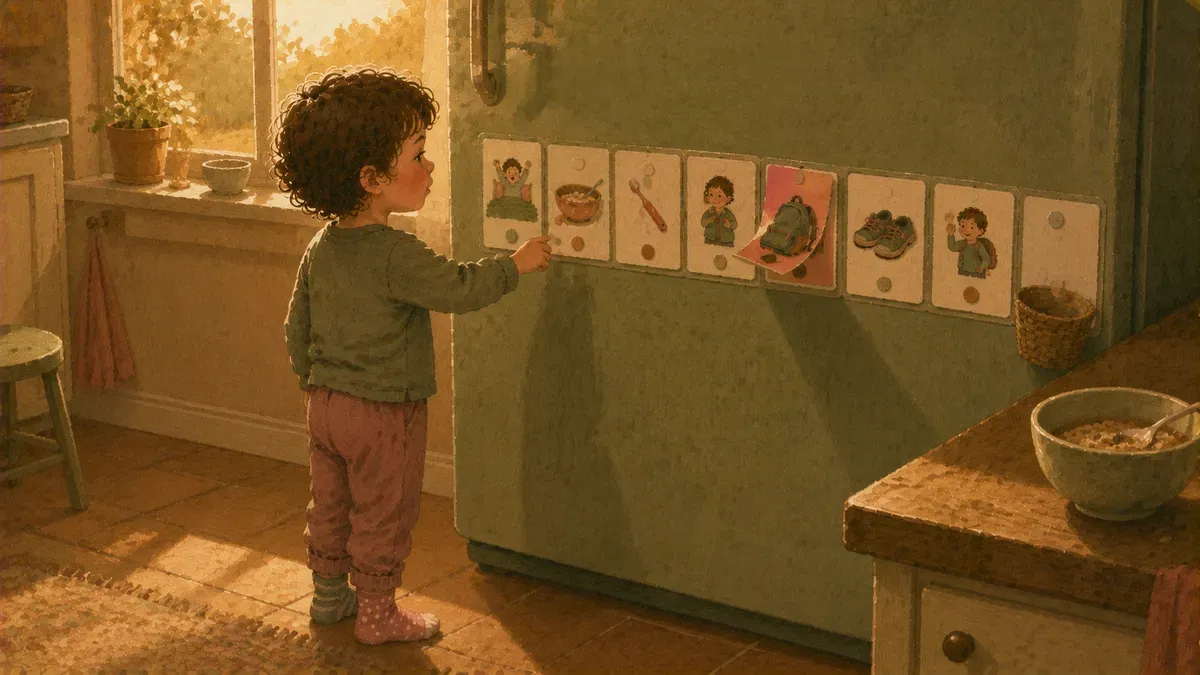
Children's Morning Routine Chart: 7-Card Setup
Our get-out-the-door meltdowns dropped by half. Build a children's morning routine chart with 7 picture cards toddlers actually follow. Start today.
-
 Visual Schedules
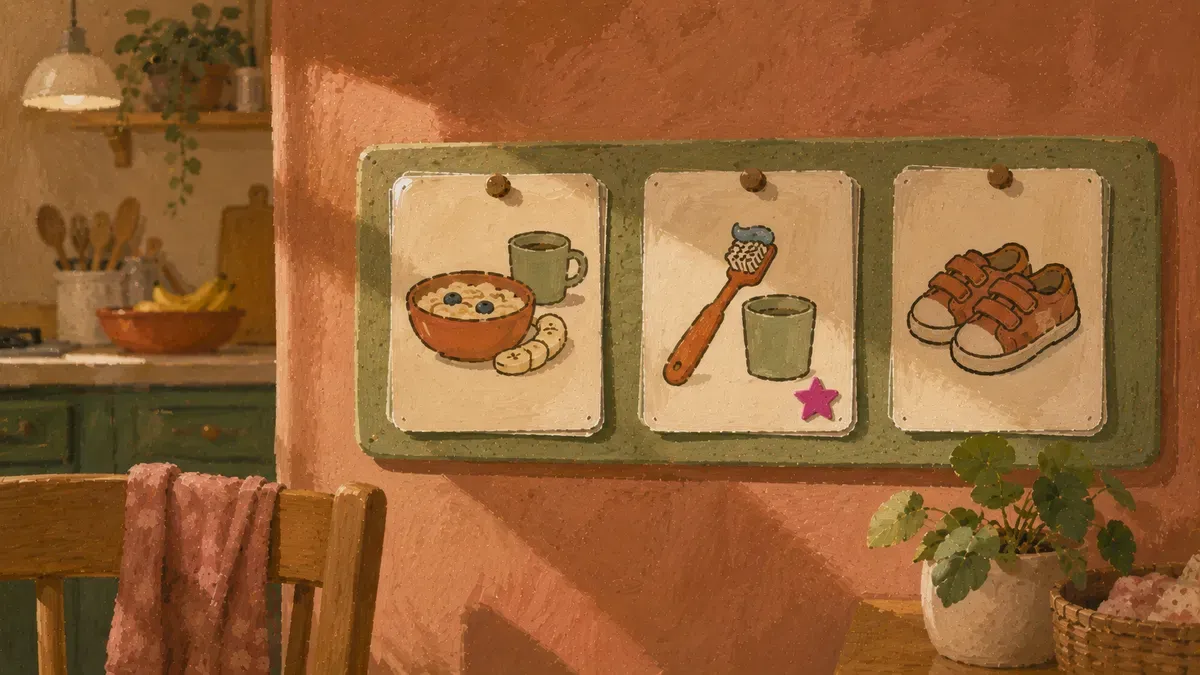
Picture Schedule for Toddlers: 25 Cards That Work
A picture schedule turns daily chaos into a routine toddlers can follow. Get 25 everyday cards worth printing and learn how to set yours up today.
-
 Visual Schedules
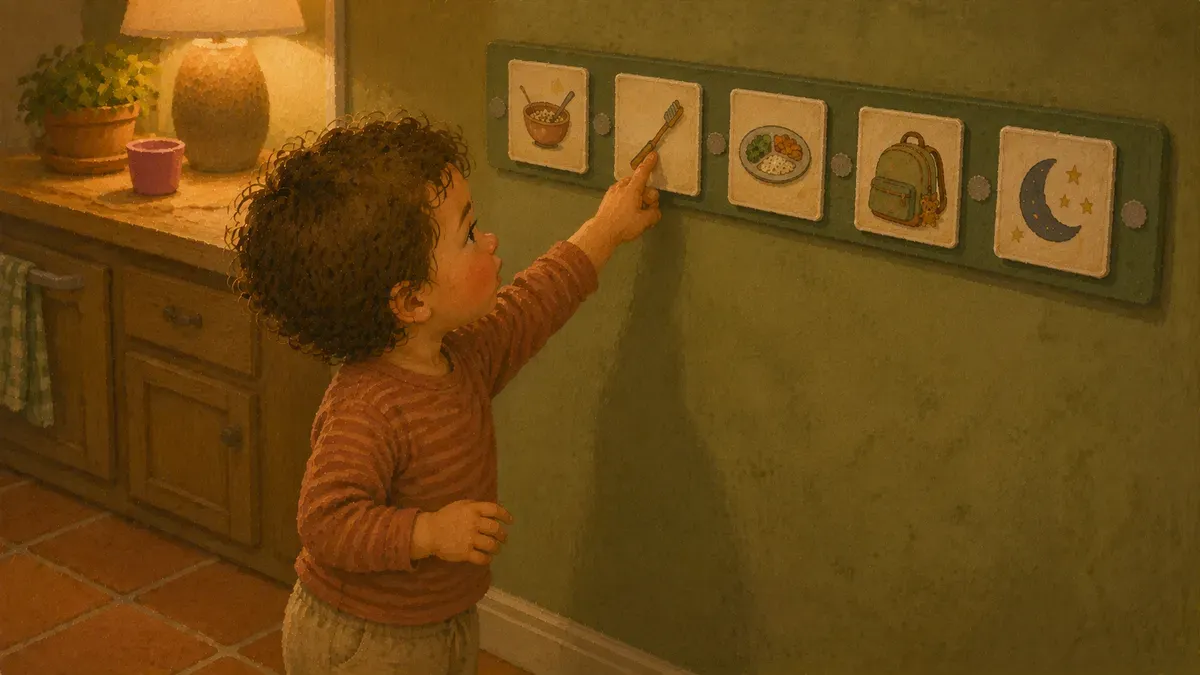
Visual Schedule Autism Home Setup: No-Overwhelm Guide
Visual schedules calm autism home routines. Learn to set up a picture schedule in 3 steps. No overwhelm, no fancy tools.
-
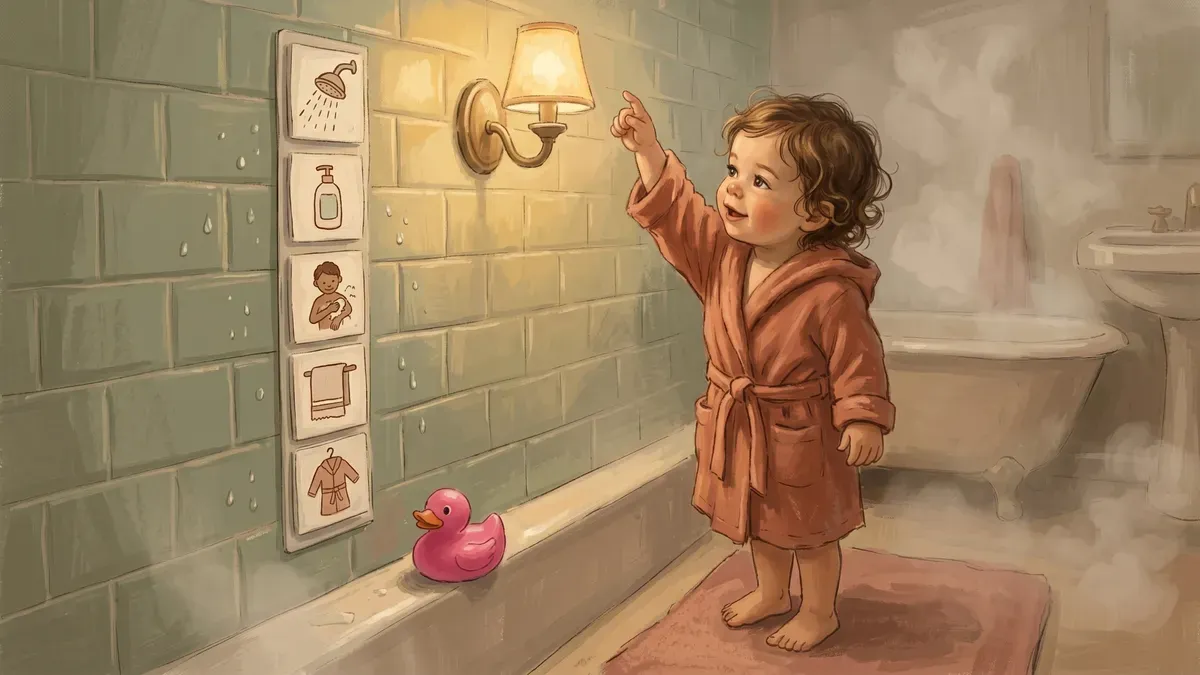 Visual Schedules
Free Printable Shower Visual Schedule for Therapy at Home
Grab a free printable shower visual schedule that reinforces your child's speech and OT goals at home. Build it, laminate it, and start tonight.
-
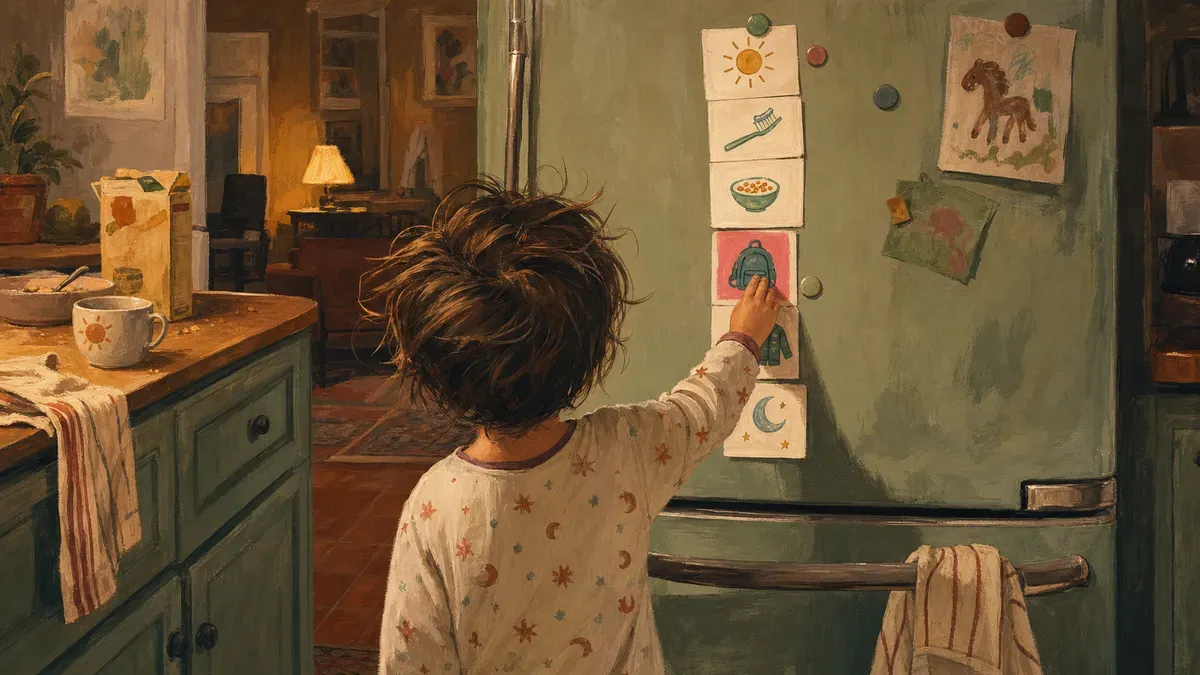 Visual Schedules
Children's Schedules: Cut Back-to-School Stress
Mornings turning into battles? Build children's schedules with a routine chart that lowers stress fast. Start the 5-step reset tonight.
-
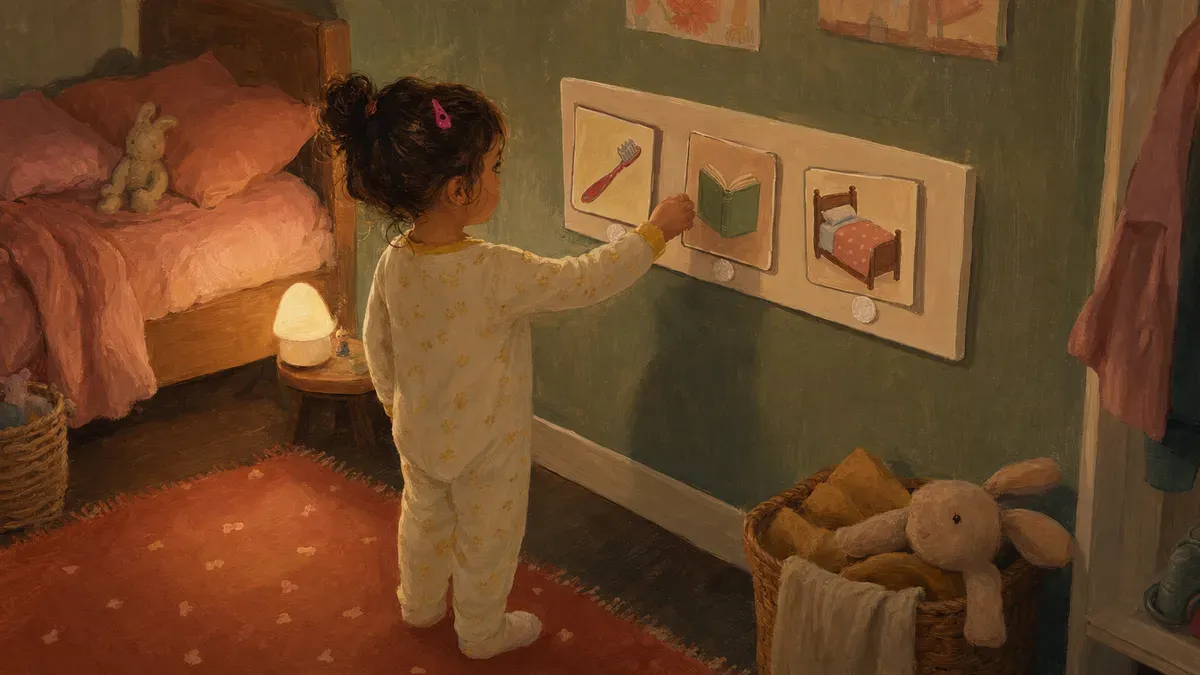 Visual Schedules
Bedtime Routines for 4 Year Olds: A Chart That Works
Your 4-year-old fights sleep? Build bedtime routines for 4 year olds in 6 steps with a picture chart that ends the nightly battles.
-
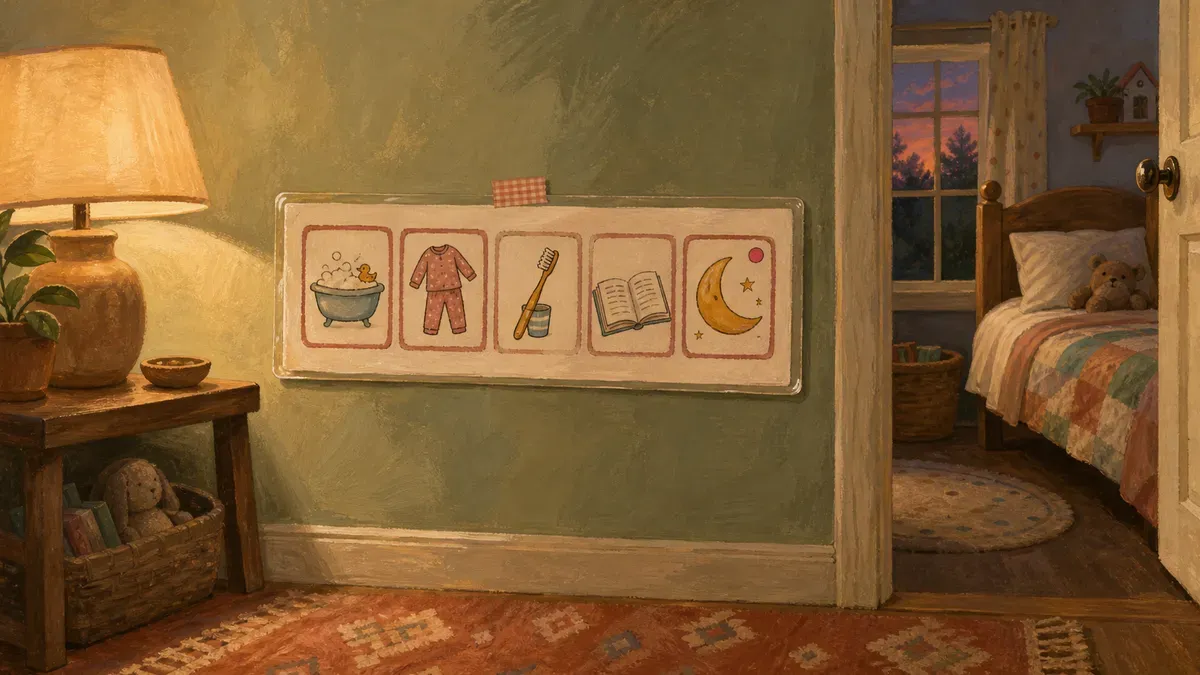 Visual Schedules
Bedtime Routines for 3 Year Olds That Actually Stick
Why does every bedtime routine chart fail after a week? Here's the toddler bedtime routine that finally worked — and how to make it stick.
-
 Visual Schedules
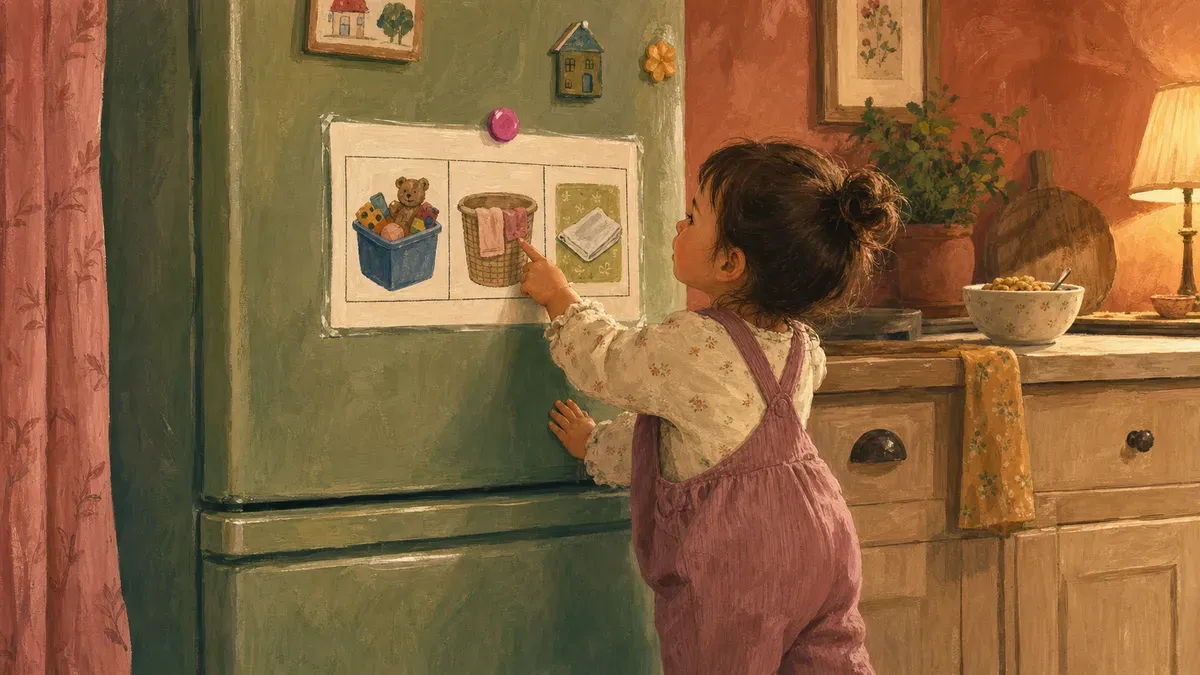
Chore Chart for Kids: A Preschooler Setup That Sticks
Turn 'help mommy' into steps a 4-year-old can do. Build a picture chore chart for kids in 4 moves, with age-by-age tasks. Start tonight.
-
 Visual Schedules
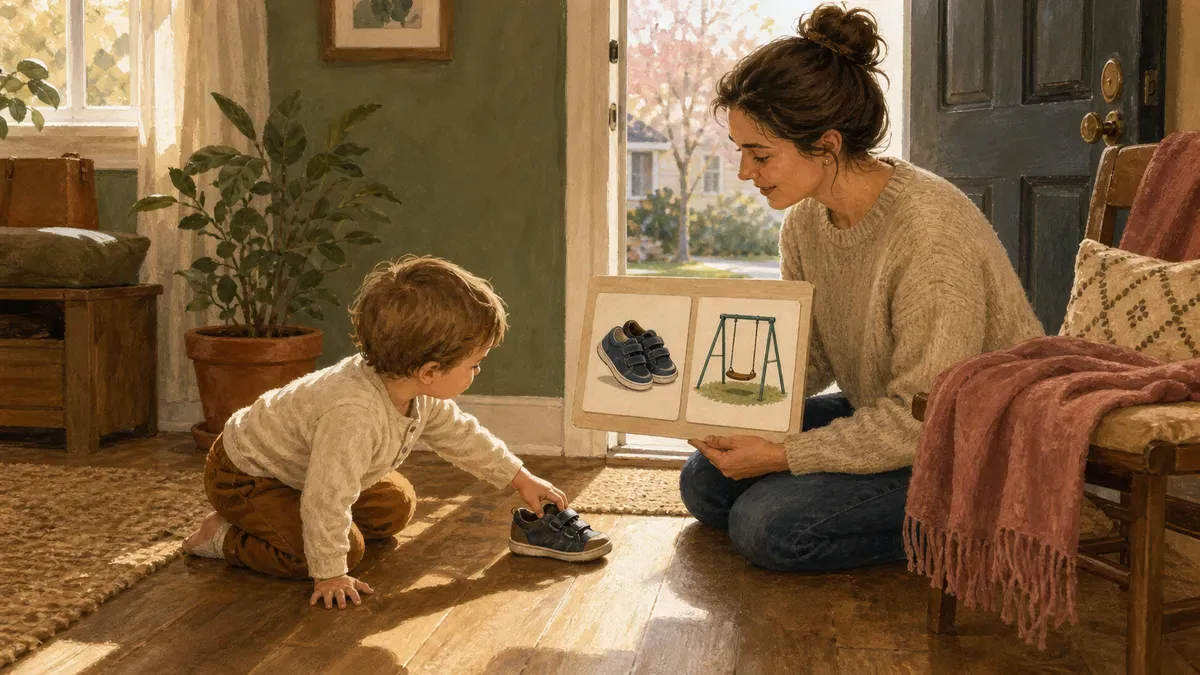
Printable First Then Board: How to Use One in Minutes
Two cards beat a full schedule on hard days. See how a printable first then board cuts meltdowns, how to build one fast, and exact words to say.
-
 Visual Schedules
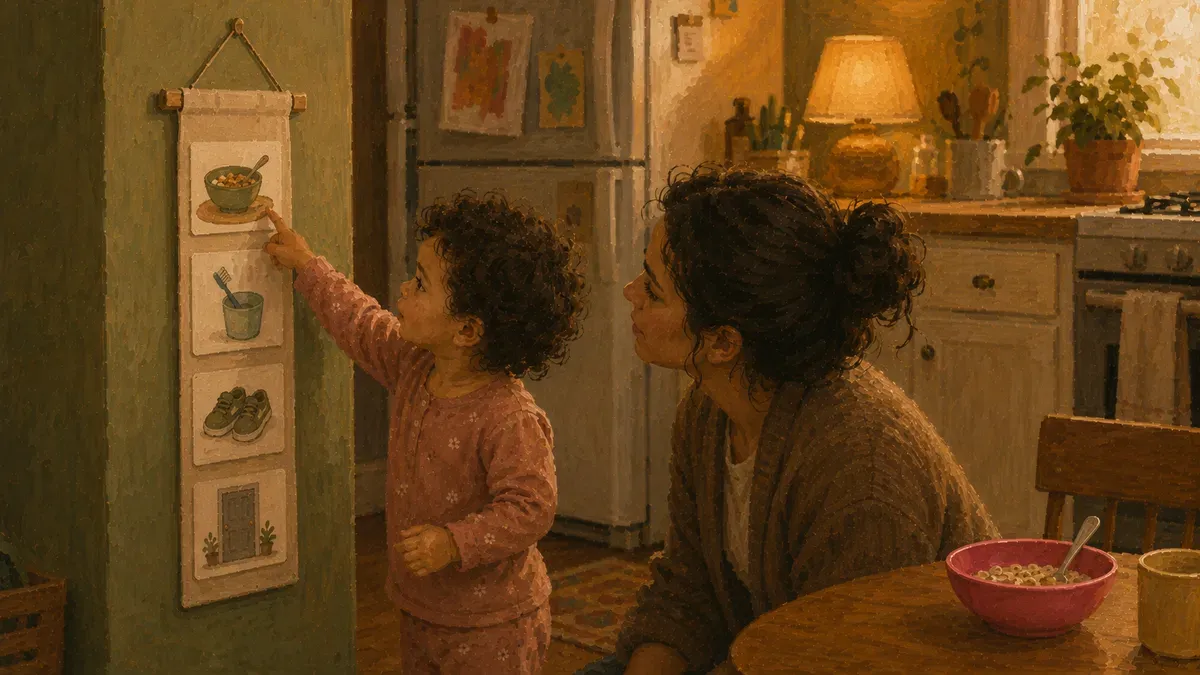
Visual Schedule Template for Toddlers: 5 Steps
Most toddler schedules get ignored by day three. Build a visual schedule template that sticks in 5 steps — materials, layout, and what to do when it stalls.
-
 Visual Schedules
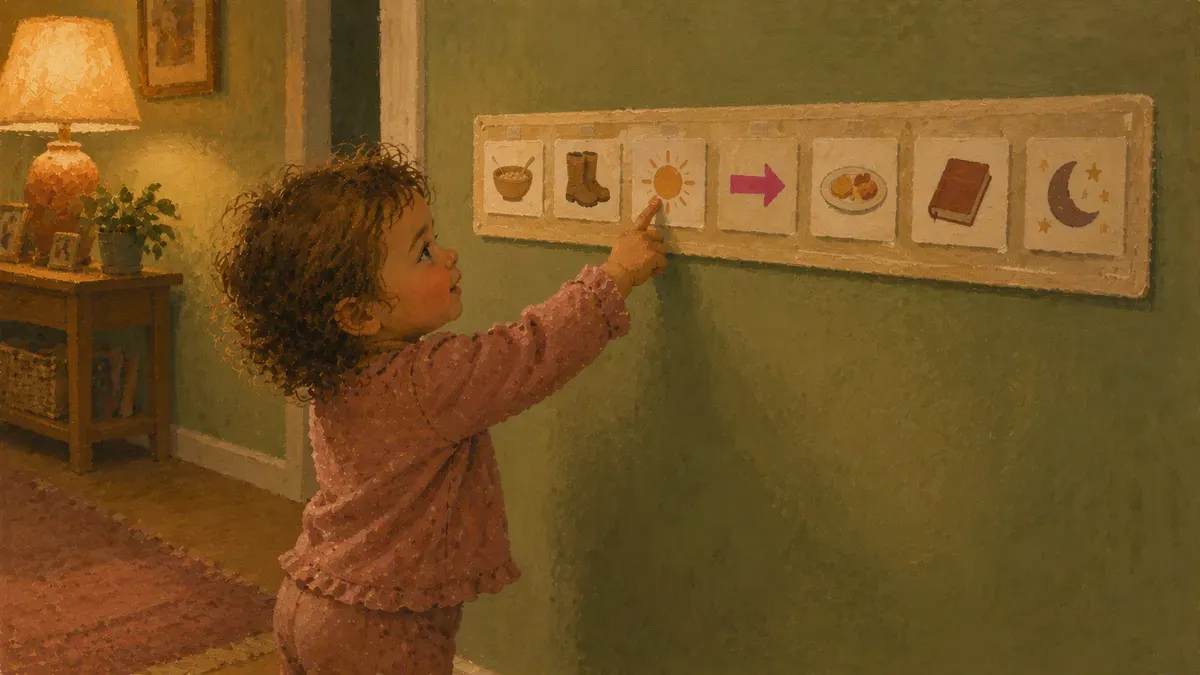
3 Year Old Schedule: Build One They Actually Follow
Build a 3 year old schedule your toddler follows alone. Turn the timetable into a visual board that moves them from pointing to doing. Start today.
-
 Visual Schedules
Visual Schedules for ADHD vs. Autism: What Changes
The same chart that calms an autistic child can stall a kid with ADHD. Build visual schedules for ADHD that fit each brain in 4 steps. Start today.
-
 Visual Schedules
Autism Visual Schedule: What Works for Your Kid
Most autism visual schedules fail because nobody adapts them to the child. Here's how to build one that cuts meltdowns and sticks. Start today.
About this guide
That is the whole trick. Kids melt down at transitions because the change feels like it came out of nowhere. Put the steps where they can see them and the day stops ambushing them. Therapists and OTs lean on this because it is simple and it works: seeing the sequence laid out gives a child a sense of what is next, which takes a lot of the fight out of stopping one thing to start another.
This page is the board, start to finish: how to build your first one in an afternoon, the card sets worth printing for mornings, bedtime, and the dreaded in-between, and the two-card shortcut for the days a full schedule is too much. Toddlers from around two are the easy starting point. It works just as well for an autistic kid or a sensory-seeker who needs to know the plan before they will move.
How to make a visual schedule your kid will actually follow
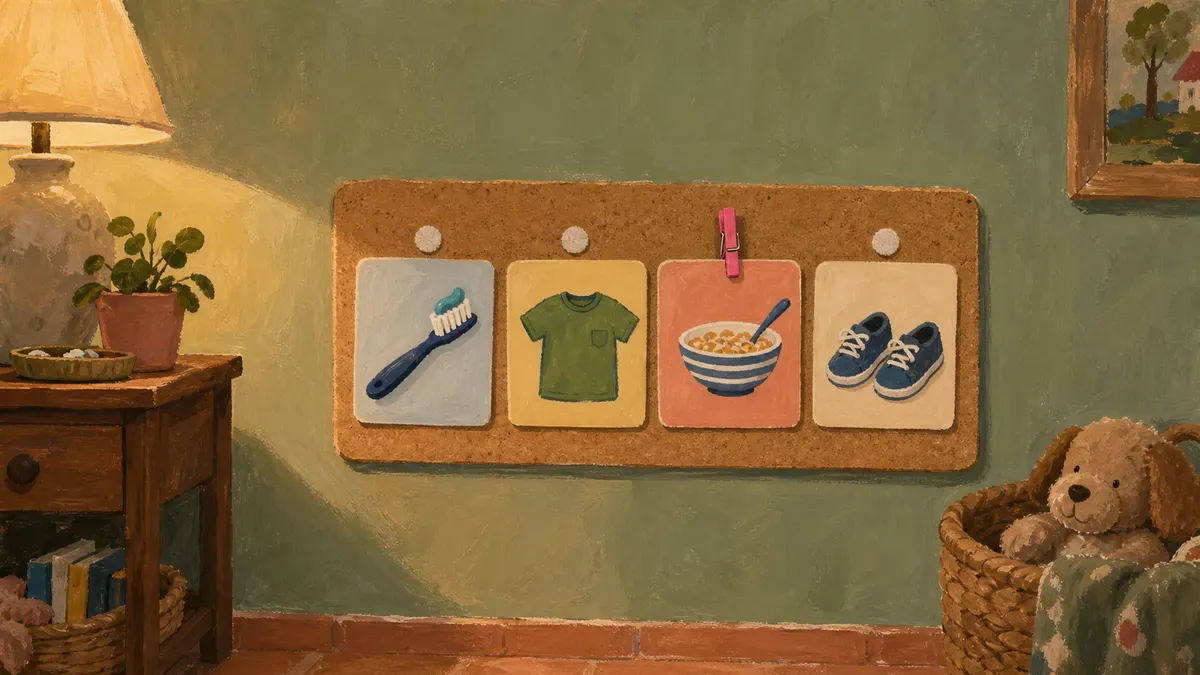
Pick one routine, not the whole day. Mornings or bedtime, whichever one is currently a war. A board that covers every hour looks like homework and gets ignored by day three. Nail one stretch first.
Break it into three to five steps. Wake up, potty, get dressed, shoes, door. Fewer cards than you think. A toddler can hold a short sequence; a fifteen-step chart just becomes wallpaper they stop seeing.
Get a picture for each step. A real photo of your kid doing the thing beats a clip-art icon, because they recognize themselves instantly. Phone snaps printed four to a page work great. Simple drawings or a ready-made set of picture cards are fine too, especially for a child who is not reading yet.
Mount it so the cards move. Velcro dots, a magnet strip, or a pocket chart so each card comes off or flips when the step is done. That little physical action, moving the card, is half of why it sticks. Tape it at your kid's eye level, not yours.
Walk through it together the first few times. Point to the card, name it, do the step, move it. You are teaching them to read the board, not handing them a chart and hoping. Say it the same way every morning: first shoes, then door.
On the hard days, drop to two cards. First this, then that. When everything is falling apart, a full schedule is too much, and a printable first-then board carries the moment instead. Same tool, smaller ask.
Routine card sets worth printing first
- The two-card first-then board:the one to make before any full schedule. One card for the non-fun thing, one for what comes after: first shoes, then park. It carries the meltdown moments a whole chart cannot, and it is the gentlest place for any kid to start.
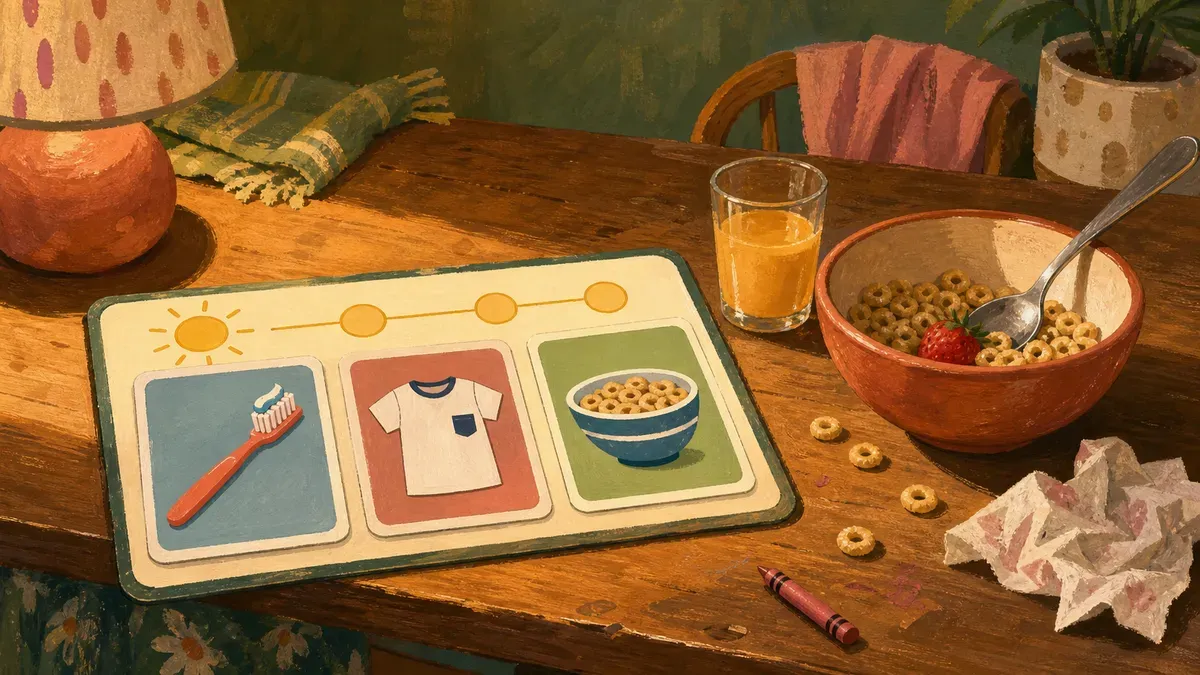
- Morning and out-the-door cards:wake up, potty, get dressed, breakfast, teeth, shoes, backpack, door. Six or seven cards covers most homes. This is the set that turns get-out-the-door yelling into a board your kid can run mostly on their own.
- Bedtime wind-down cards:bath, pajamas, teeth, books, lights out. A short fixed order at night signals the body it is time to slow down, and it ends the nightly negotiation over what comes next because the cards already answered it.
- Single everyday cards to mix in:wash hands, snack, clean up, nap, shoes on, get in the car. The everyday verbs you reach for across routines. Print a stack of these "anytime" cards and you can build a fresh sequence for any part of the day in a minute.
A visual schedule is a support, not a fix, and it is not a substitute for any plan your child's OT, SLP, or pediatrician has put in place. If laminating, run the pouches through a cool laminator yourself and keep finished cards (and the small velcro dots) out of reach of any baby or toddler who still mouths things, since a thin laminated card or a loose dot is a choking risk. For any question about your child's development or behavior, the professional who knows your kid is the call, not a printable.
Quick answers on this one
What age can a child start using a visual schedule?
Around two is the easy starting point, once a kid follows simple picture pointing and one-step directions. Plenty of families start younger with a two-card first-then board, which is the simplest version there is. The trick at any age is keeping it short, real photos and three to five steps, so it matches what your kid can actually hold in their head.
Should I use real photos or drawings on the cards?
Real photos win for most toddlers and a lot of autistic kids, because a picture of your own child doing the step gets recognized instantly with no decoding. Simple line drawings or a clean printable work well too, especially if your kid responds better to clear symbols than busy photos. Use whichever your child reads fastest, and if you are not sure, try both and watch which board they actually follow.
Why does my visual schedule stop working after a few days?
Usually it was too long, or it became wallpaper nobody touched. A chart with fifteen steps turns into background your kid stops seeing by day three. Cut it to one routine and a handful of cards, make sure each card physically moves or flips when the step is done, and walk through it with them every time at first instead of expecting them to run it solo. The movement and the daily narration are what make it stick.
What is the difference between a first-then board and a full visual schedule?
A first-then board is two cards: the thing your kid has to do, then the thing they want. A full visual schedule is the whole sequence of a routine, five or six cards in order. First-then is for the hard moment right in front of you (first shoes, then park); the full schedule is for teaching a kid to move through a stretch of the day on their own. Most homes use both, and first-then is the better place to start.
Free printables, coming soon
Want these as printables?
I am slowly turning activities like these into free print-and-go pages. Tell me where to send them and you will get an email the day each one is ready.
One email when there's something worth printing. Unsubscribe anytime.