Second Step at Home: 15 Moments That Teach Big Feelings

I am a parent sharing what worked at my house, not medical advice. For anything to do with your child's development or sensory needs, talk to your OT or doctor.
Some links here are affiliate links. If you buy through one, I may earn a small commission at no extra cost to you. As an Amazon Associate I earn from qualifying purchases. I only point to things I'd actually use with my own two.
Second Step is the social-emotional curriculum your kid probably already does at school, and the same skills, naming feelings, calming down, being kind, get practiced at home in the ordinary moments you’re already living. I’m Nora Hayes, a former preschool aide raising an autistic seven-year-old and a busy three-year-old, and the lessons that actually stick aren’t the ones from a worksheet, they’re the ones you catch on the drive home or at the dinner table.
This article turns 15 everyday routines into low-effort SEL practice you can do without a single printable or a calm-down kit you don’t have time to build.
What Second Step and Social-Emotional Learning Actually Mean
Before you turn a single routine into a teaching moment, it helps to know what schools are actually doing when they say SEL, and where the classroom program fits. Two quick pieces: what the program is, and the five skills underneath it that you’ll start spotting everywhere once you know their names.
How the Second Step Program Teaches Big Feelings
The program is a classroom curriculum that teaches kids how to handle their own feelings and get along with other people. Schools run it as short weekly lessons, and most kids meet it somewhere between kindergarten and 5th grade, in what teachers often call the 2nd step curriculum.
It isn’t loose, either. The curriculum is built around 22 to 25 weekly lessons in four units: Skills for Learning, Empathy, Emotion Management, and Problem Solving, with the older lessons running about 25 minutes each. A teacher might read a story, name what the character is feeling, then practice what to do with that feeling.
That structure is why these lessons travel home so well. The program’s whole approach is naming emotions out loud and practicing a response, which is exactly what you’re already doing when your kid loses it over the wrong cup.
You don’t need the step program binder to do the work it’s built on. You need the moments you already have.
Naming feelings, self-regulation, social awareness, taking turns. Those are the skills, and a Tuesday afternoon at your kitchen table is as good a classroom as any.

The Five Skills Every SEL Curriculum Builds
Strip away the program name and SEL is pretty simple. The sel meaning underneath any sel curriculum, school-run or homemade, comes down to five social and emotional skills that show up in everyday moments.
CASEL, the group whose framework defining the five SEL competencies is used in schools across the country, lays them out like this:
- Self-awareness: your kid knowing they’re mad before the cup goes flying
- Self-management: taking a breath instead of throwing it
- Social awareness: noticing a friend looks sad, the start of empathy
- Relationship skills: sharing, taking turns, making up after a fight
- Responsible decision-making: choosing what to do when nobody’s watching
That’s the whole socioemotional picture. Not abstract emotional intelligence, just five things a three-year-old practices a dozen times before lunch.
You’ll spot them once you’ve got the names. The grocery-line wait is self-management. The hug for a crying sibling is social awareness. If you want to go deeper on the friendship and turn-taking piece, that’s the heart of communication social skills, and it’s where a lot of the everyday practice in this guide ends up living.
Naming Big Feelings During Everyday Routines
Kids can’t manage a feeling they can’t name yet, so the first job is just putting words on it. Here’s how to slip that practice into meals, bedtime, and the spaces in between, where it sticks far better than any sit-down lesson.
Feeling Check-Ins at Meals and Bedtime
Dinner and bedtime are already happening every single day, which makes them the easiest place to start. At our table, we go around with one tiny question: “What was a happy part and a grumpy part of your day?” That’s it. Your kid names two emotions, you name yours, and nobody calls it a lesson.
Bedtime works the same way, just softer. As the lights go down, ask what their body feels like right now, tired, wiggly, calm, sad. Naming it out loud is the whole point. You’re building self-awareness one sleepy sentence at a time, and these are the social emotional learning activities that survive a chaotic week because they ride on routines you already keep.
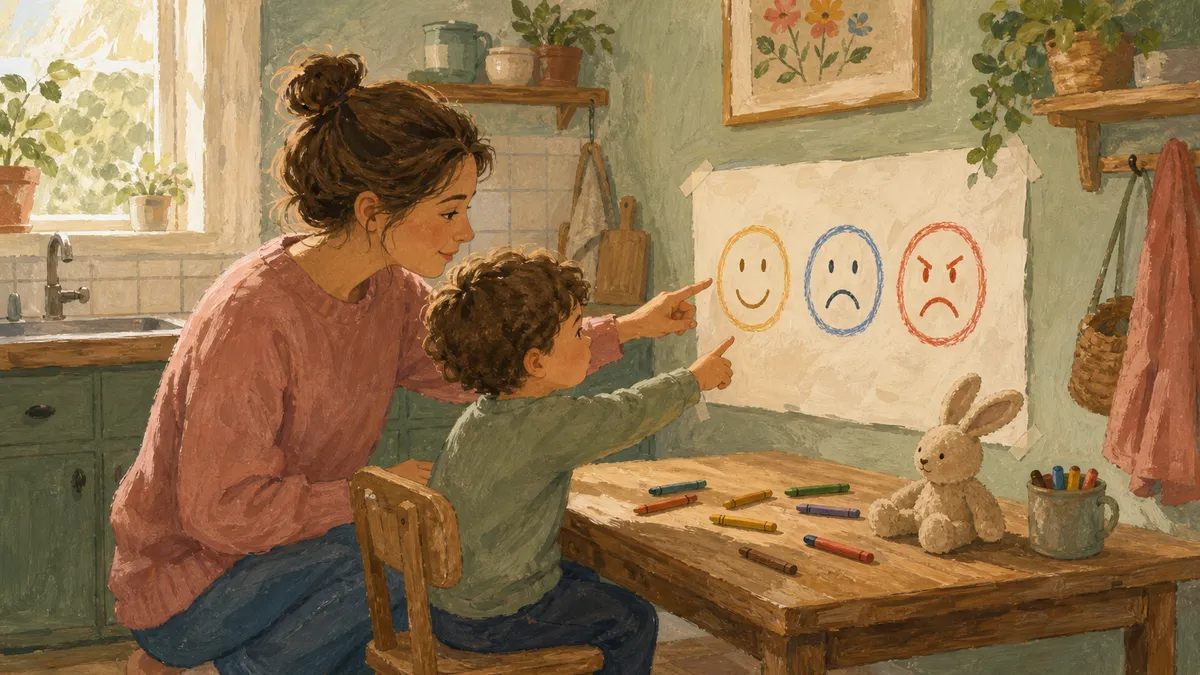
A feelings chart on the fridge gives a kid who’s stuck a place to point when words won’t come.
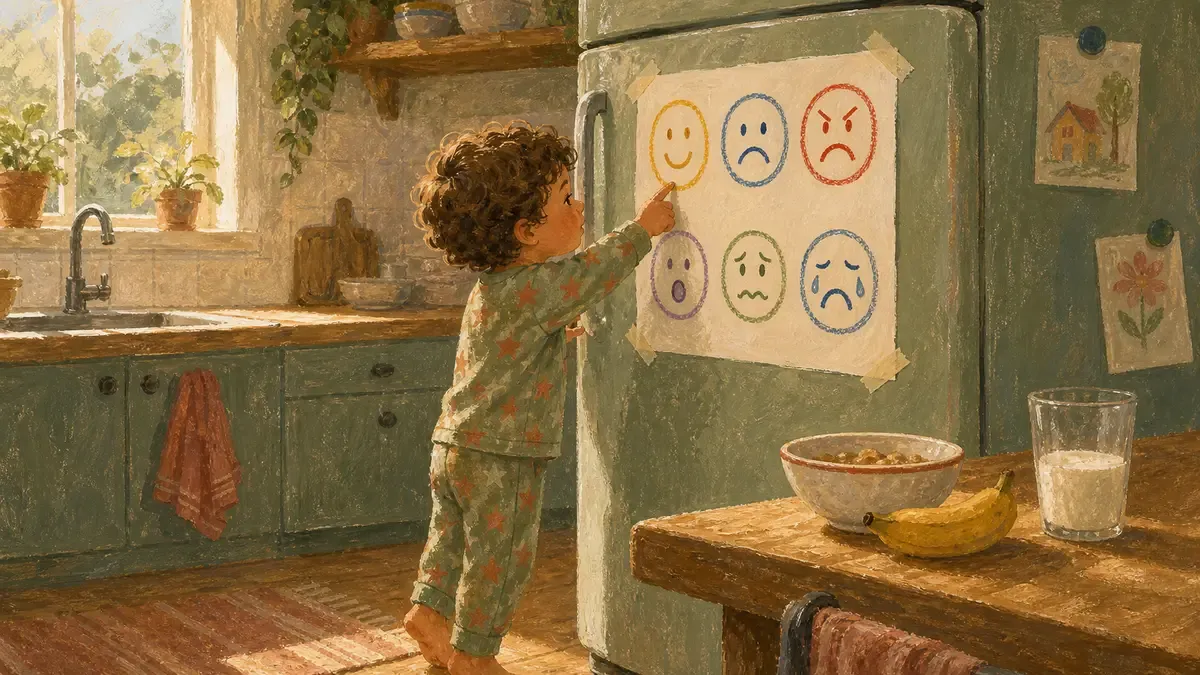
A few sel activities that need zero prep:
- A “high/low” game in the car, each person shares the best and worst moment of their day
- A bedtime feelings scan, head to toes, naming what the body’s doing
None of this is about getting it perfect. Some nights you’ll get a shrug, and that’s fine. The repetition is what builds emotional regulation over time, not any single golden answer.
Reading Faces and Bodies Together
Naming your own feelings is half of it. The other half is reading everyone else’s, and that’s where social awareness starts. Little kids miss the cues we take for granted, so you point them out loud.
On a walk, try “what’s that person feeling?” Point out the signals your kid might miss:
- Slumped shoulders
- A big grin
- Crossed arms
You’re not psychoanalyzing strangers, you’re labeling body language so your kid learns the code.
Read-alouds are gold for this. Pause on a page and ask, “How do you think she feels? How can you tell?” Picture books actually move the needle here. An 8-week study of preschoolers found that kids who read social-themed picture books twice a week scored higher on both empathy and prosocial behavior, with empathy carrying the whole effect.
Then let them practice it. Role play turns this into a game: take turns making a face and guessing it.
- Mad face
- Scared face
- Proud face
Mirrors help younger ones see their own expressions. Build enough of these social and emotional activities into ordinary play and the skills start to stick without anyone calling it work.
Calming Big Feelings When Meltdowns Hit
Noticing a feeling is one thing. Riding it out when your kid is on the floor screaming is another, so this part covers the tools you reach for in the moment and the talk you have once it’s over.
Breathing and Body Tools for the Moment
A child mid-meltdown can’t hear a lecture. Their thinking brain has left the building. What works is something physical and simple enough to do without thinking, and bubble breathing is my go-to.
You pretend to blow a slow bubble: big breath in through the nose, long gentle breath out so the imaginary bubble doesn’t pop. That slow exhale is doing real work. An 8-week trial on slow-paced diaphragmatic breathing in children found measurable drops in anxiety scores, heart rate, and breathing rate compared to kids who didn’t practice it.
The other tool is a place to go. A calm-down corner is a cozy spot, not a time-out chair: a pillow, a sensory bottle, a few feelings cards. Your kid heads there before the meltdown hits category five, not as a punishment.
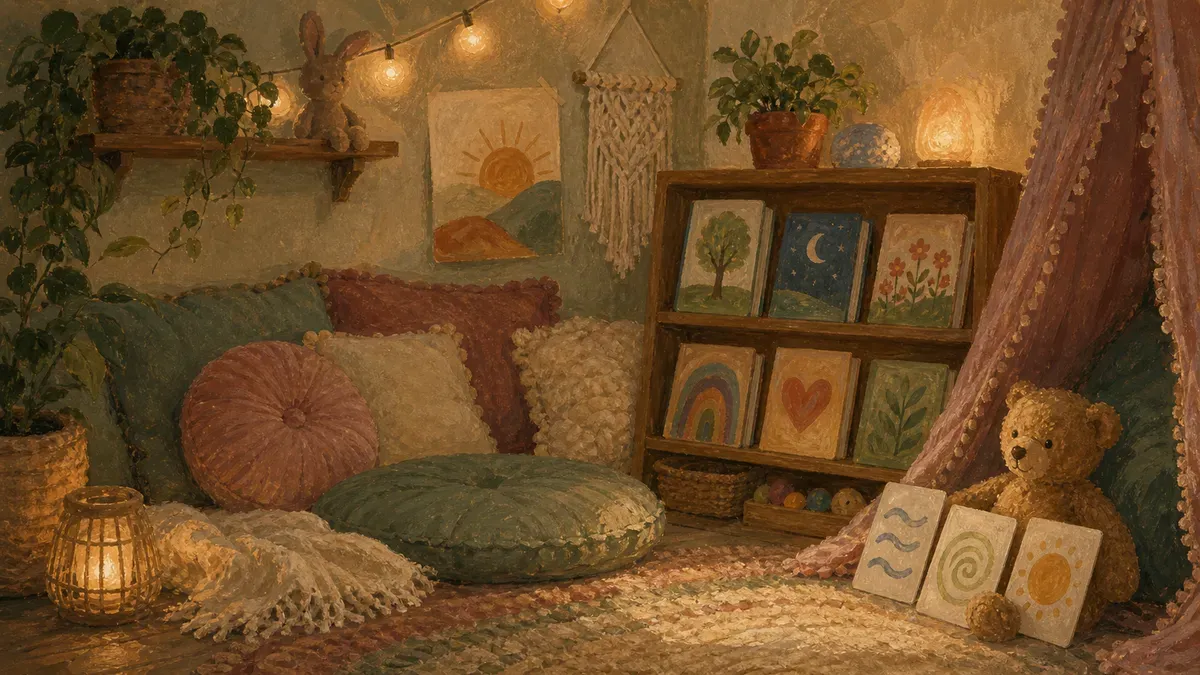
Keep the self-regulation tools few and findable. With Eli, a weighted lap pad and one breathing card beat a basket overflowing with options he ignored. Five pounds is the sweet spot, heavy enough to feel like a steady hand on his legs, light enough that he doesn’t fight it, and the one we use is an Amazon’s Choice pick with 500-plus parents landing it at 4.6 stars.
- A sensory bottle to watch until the glitter drops
- One or two feelings or breathing cards, not ten
- Something for heavy input, like that lap pad or a squeeze toy
The sensory calm-down bottle is the one gadget I think earns a spot in the corner, and even then a DIY glitter jar does the same job. It gives a spun-up kid’s eyes something slow to follow while the rest of the body catches up. The set I keep around comes as four (one for the corner, one for the car, two that inevitably wander off) and carries an Amazon’s Choice badge with 2,000-plus reviews at 4.7 stars, so check the current price on Amazon and decide if it beats a mason jar.
If you want a print-and-go version, here’s how to build calm down corner card set without overthinking it. These small coping skills, practiced when everyone’s calm, are what your kid actually reaches for when the anxiety spikes.
What to Do After the Storm Passes
The meltdown ends. Don’t pile on. 1. Give it a few minutes, get a snack or some water into them, let the body settle before you say a word.
- Name what happened in plain language: “You got really mad when the tower fell. That’s a big feeling.” You’re connecting the feeling to the moment, no shame attached.
- Gently link it to the choice: “Next time the tower falls, what could we try instead of hitting?” Even a wobbly answer counts.
This is where emotional regulation turns into self-management, one tiny bit of problem-solving at a time.
Keep these chats short and frequent. Resilience isn’t built in one heart-to-heart. It’s built by naming the storm, every time, until your kid starts naming it first.
Building Kindness, Empathy, and Social Skills Through Play
Knowing what you feel is a starting point. Caring about what someone else feels, and choosing kindness because of it, is the deeper work, and kids pick it up fastest when it sneaks in through a story or a game. Two of my favorite ways to grow it: a good read-aloud, and a game that only works if the kids cooperate.
Read-Alouds That Spark Empathy
A picture book is the easiest empathy tool you own, because the hard conversation belongs to a character, not your kid. My go-to is What If Everybody Did That? by Ellen Javernick. Every page asks one question: what happens if everyone littered, cut in line, or fed the bears? Javernick spent more than twenty years teaching second grade, and it shows in how naturally the book lands.
The trick with any read-aloud is the pause, and it takes about three seconds of nerve to pull off:
- Stop before the answer and wait.
- Ask: “What if everyone did that on the playground?”
- Let them sit with it. That gap is where empathy happens, not in the words on the page.
Keep it light. Eli, my seven-year-old, started spotting the everybody-did-that pattern in real life within a week of us reading it on repeat. You’re building character development and feelings vocabulary one silly scenario at a time, and the kindness piece arrives on its own.
Cooperative Games and Conversation Starters
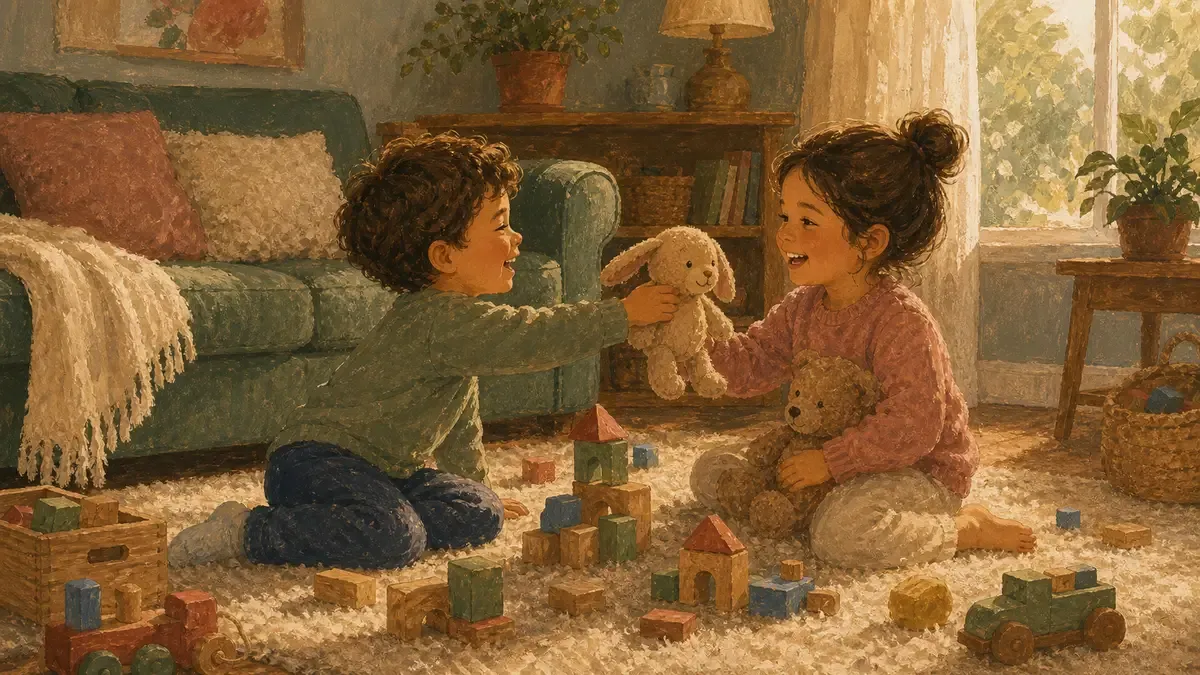
Most kids’ games crown a winner. Cooperative play flips that: everyone wins together or nobody does, so the whole table has to talk it out. That structure is doing real work. Cooperative gameplay gives kids built-in practice with negotiation, turn-taking, and conflict resolution, the bones of social competence, and a 2021 review found children hold onto those behaviors most when a caregiver models them mid-game.
You don’t need a fancy box. A team puzzle, building one tower together, or “we have to get all the animals across the river” counts. These socialisation activities sneak in boundaries and problem-solving while it just feels like play.
Then there are conversation starters, the quiet hero of social skills for kids. One real question at dinner does more than a worksheet ever will:
- “What’s something kind someone did for you today?”
- “When did you feel left out, and what helped?”
- “Who needed a friend today?”
For a tween who’s gone quiet, a deck of prompts can break the ice when you can’t. If you’d rather not invent them on the spot, a boxed set like these conversation starter cards for tweens and teens hands you 150 questions already written, and the Amazon’s Choice deck sits at 4.6 stars with 1,800-plus parents leaning on it for exactly these dinner-table stalls. Want the free route? Our own conversation cards for teens - communication cards to build confidence do the same job with a printer and a pair of scissors. Promoting socio-emotional and relationship skills isn’t a curriculum. It’s turn-taking, a question, and showing your kid what kindness looks like up close.
Growing Confidence With Gratitude and Positive Self-Talk
Confidence isn’t a pep talk you give once. It’s built in the small, repeated moments, and two of the easiest to slip into a normal day are noticing what’s good and changing how your kid talks to themselves when things go sideways.
Daily Gratitude and Growth-Mindset Habits
Gratitude sounds soft until you watch it actually land. At our house it’s three questions at the dinner table:
- One good thing
- One hard thing
- One kind thing someone did
June draws hers. Eli says his. That’s the whole ritual.
Research led by Robert A. Emmons found that kids who regularly practiced gratitude journaling reported more life satisfaction, more optimism, and fewer negative physical symptoms. You can read the studies on gratitude practices in children for the full picture, but the takeaway is simple: noticing the good, on purpose, builds resilience and a sturdier sense of self-esteem.
Growth-mindset language is the other half, and homework or chores are where it lives. The shift is one word: “yet.” Not “I can’t do this,” but “I can’t do this yet.”
- “You worked hard on that” beats “you’re so smart.”
- “What’s one part that got easier?” beats “good job.”
- “That was tricky, and you kept going” names the effort, not the result.
Praising effort over outcome is one of the SEL lessons that quietly props up academic skills too, because a kid who believes practice works will sit with a hard math sheet a little longer.

Turning Self-Talk From Harsh to Helpful
Kids narrate themselves, usually out loud, often cruelly. “I’m bad at this.” “Everybody hates me.” Your job isn’t to argue them out of it. It’s to model a kinder version they can borrow.
Try giving the phrase a name so it becomes a shared tool. Something like ‘the restart voice,’ the kinder internal voice that kicks in when the first attempt falls apart. Once your kid has a name for it, they can ask for it themselves: ‘Can I use my restart voice?’ That move from parent-prompted to self-prompted is the whole goal.
That reframe, from harsh to helpful, is exactly what good-character SEL programs lean on when they teach kids to be good people who are also good to themselves.
Positive self-talk isn’t a fix. It’s a small, steady tool.
Positive self-talk isn’t pretending the hard thing is easy. It’s a small steady tool for emotional regulation, and it grows the same confidence and resilience gratitude does, just from the other side.
Making SEL Stick: Modeling, Tracking, and Choosing a Program
None of this sticks if it only lives in the lessons. The two things that actually make it last are you (what your kid watches you do) and a little patience to notice the slow wins, plus, if you want one, a program that travels home.
Model the Skills You Want to See
Kids learn self-regulation by watching, not by being told, and your own out-loud coping is the most powerful tool in the house. When I lose the thread, I say it: “I’m getting frustrated, so I’m going to take three breaths before I answer.” June has parroted that back at me, breaths and all.
- Name your own feelings out loud
- Point out when you got something wrong and apologized
- Hold a boundary calmly instead of yelling it
That’s regulation and empathy modeled in real time. It does more for a kid than any poster on the wall.
If you want a framework for this, Conscious Discipline (sometimes searched as concious discipline), created by Dr. Becky Bailey, is built around the adult regulating first. It’s certified by SAMHSA’s National Registry of Evidence-Based Programs, and Conscious Discipline’s own evidence and certification page details the program’s credentials.
Conscious Discipline’s core move, calm the adult first, is the piece that travels best to a home setting.
Two social-emotional learning curricula get recommended most for home use.
- Second Step: low-barrier and ready to use, fits both home and classroom.
- TRAILS: draws on CBT and mindfulness across four grade bands, but it’s classroom-facing and currently active in Colorado and Michigan, so home use is a workaround.
Most packaged programs are built for a school team or an SEL committee to run schoolwide. At home, take the simplest piece and leave the rest.

Tracking Progress and Picking a Curriculum
Progress here is sneaky slow, so you have to watch for it on purpose. Not a chart. Just the small stuff: the meltdown that ended in five minutes instead of twenty, the “I’m sad” that used to be a thrown shoe. Jot a line in your phone when one lands. Three months back, those notes are your proof it’s working, and they shore up your own resilience on the rough weeks.
Whatever you choose, the conversation skills underneath all of it matter most. Start with our full guide to building communication and social skills, then layer a program on top if you want the structure.
Found this useful? Save it for the next rough afternoon.
Questions parents ask me about this
How can I teach social emotional learning at home?
The simplest way is to weave it into what you already do. Name feelings during meals, pause a picture book to ask what a character might be feeling, and let your kids watch you work through frustration out loud. You don't need a curriculum or a lesson plan. The ordinary moments are the practice.
At what age should kids start social-emotional learning?
It starts the moment a baby reads your face, which means there's no minimum age. Kids that age can usually name a feeling, wait their turn, and spot when a friend looks upset. That's what you're laying the groundwork for. Toddlers build on that fast. By preschool, most can name feelings, take turns, and check in on a sad friend.
What is the difference between Second Step and Conscious Discipline?
Second Step runs on weekly grade-band lessons a teacher delivers on a school-wide schedule, so the scope and pacing are built in. Conscious Discipline starts with the adult: you regulate first, then address the child's behavior, which flips the usual instinct. At home, that adult-first approach is actually easier to apply, because you don't need a committee or a lesson sequence to start.
What should I do when my child refuses to do SEL activities?
Drop it and come back later. A child who is already dysregulated cannot absorb a lesson about feelings. That's exactly the wrong moment. Try again when they're calm and fed, or fold the idea into a game instead of a sit-down conversation. Following their lead isn't giving up; it's good timing.
How do I know if my child's social-emotional skills are improving?
You won't see a finish line. You'll see a meltdown that wraps up faster than it did last month. Look for the small stuff: they used a word for a feeling instead of throwing something, they tried one breath before melting down, they noticed a friend was upset. Mastery isn't the goal at this age. Small, steady shifts are what the research actually points to.
Does social-emotional learning really help with academic skills?
Kids who can regulate their emotions find it easier to focus, persist when work gets hard, and recover from mistakes. The connection makes sense: a child who can manage frustration is better equipped to push through a difficult problem. SEL and academic readiness reinforce each other, which is why it matters well beyond the feelings chart on the fridge.
What are some quick SEL activities for busy parents?
A feelings check-in at dinner (everyone names one good thing and one hard thing) takes two minutes and costs nothing. Pausing a picture book to ask 'how do you think she feels?' adds thirty seconds to reading you're already doing. Cooperative games where nobody wins alone, a short breathing routine before bed. Most of the best SEL work fits inside the day you already have.
Written by
Nora Hayes
Mom of two and a former preschool aide. I share the screen-free sensory play and calm-down ideas I test at my own kitchen table, plus what the moms in my little meet-up swear by. A parent passing on what works, not a doctor or a therapist.
More about NoraKeep going
All Communication & AAC-
 Communication & AAC
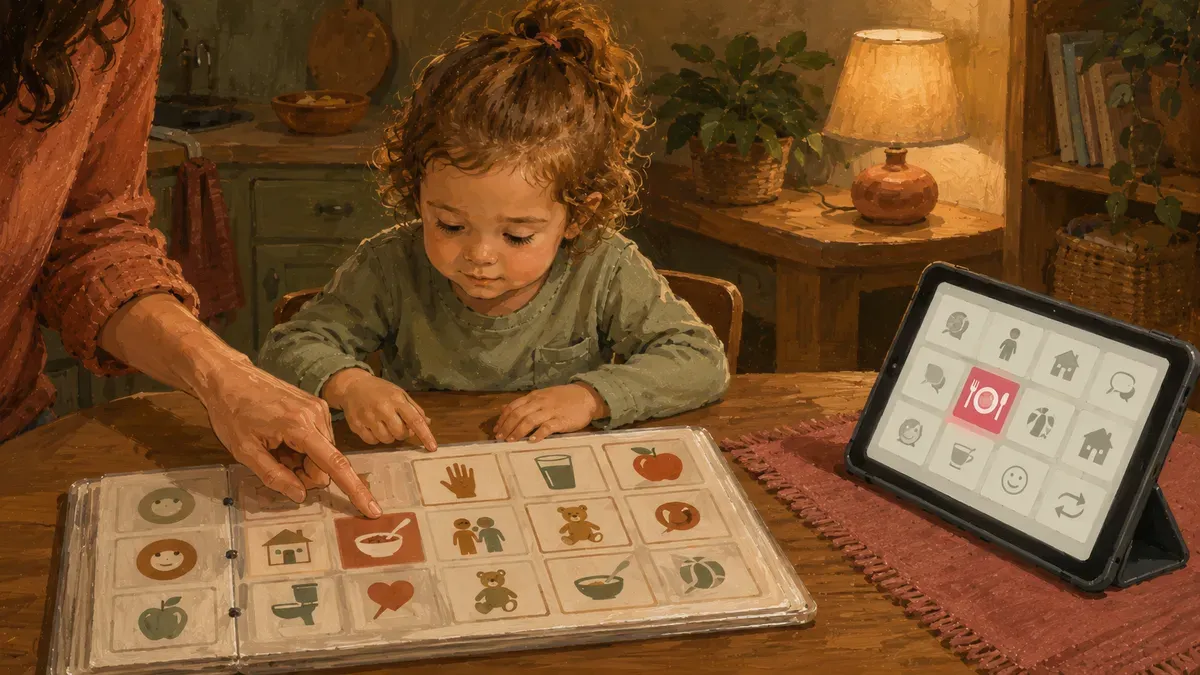
AAC Devices vs. PECS vs. Cards: Which Comes First
AAC devices, PECS, or cards first? See what each does, what it costs, and how to pick the right starting point for your child.
-
 Communication & AAC
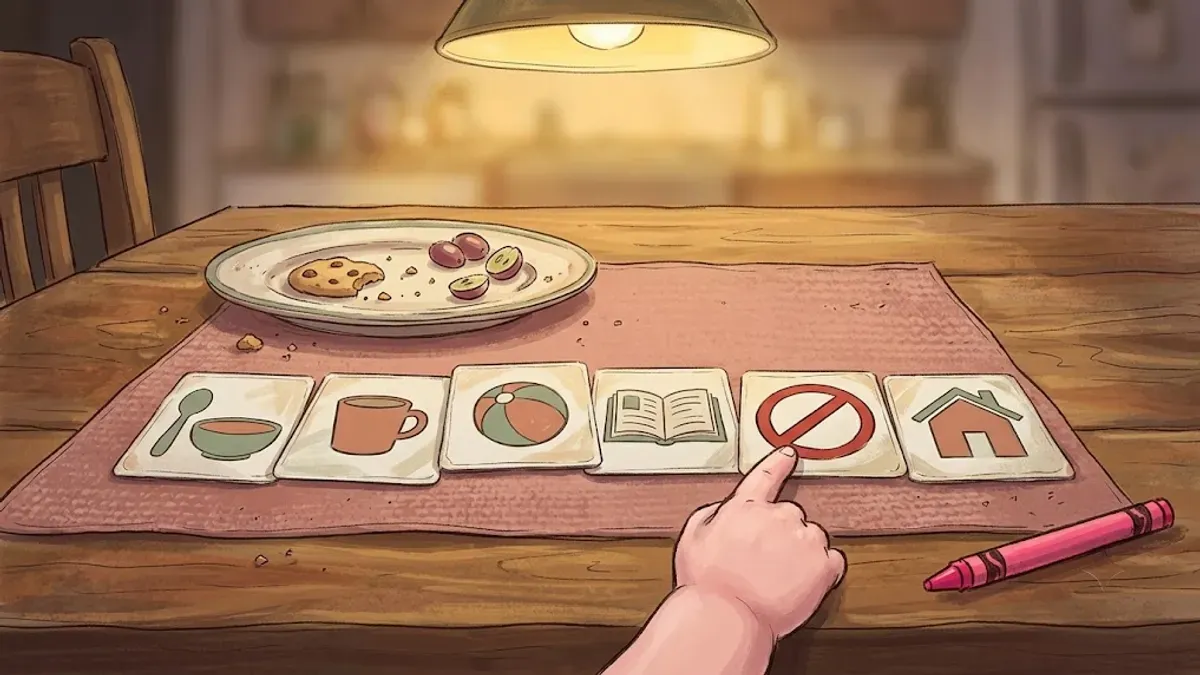
All Done PECS: 6 First-Word Cards to Cut Meltdowns
The all done PECS card is often a toddler's first word, and one of 6 first-word cards that halved our meltdowns. Print your own set free.
-
 Communication & AAC
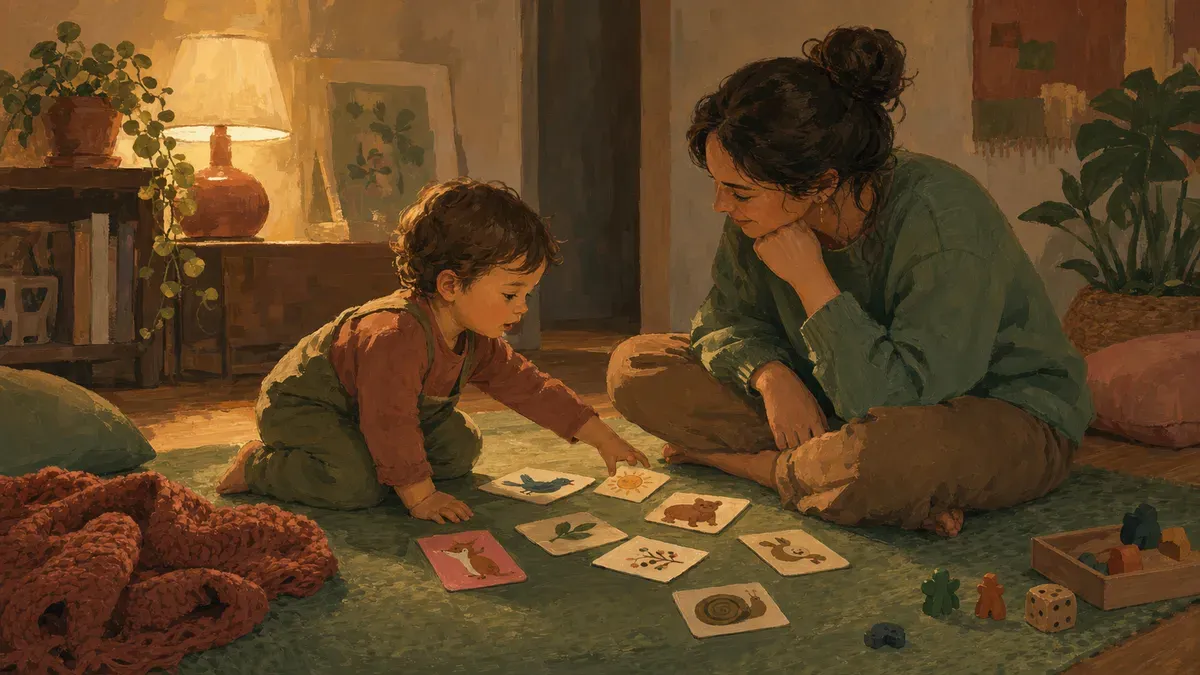
Games for Speech Therapy: Picks for Late Talkers
Most speech games target school-age kids. These games for speech therapy pull words out of late-talking toddlers. Start playing tonight.
-
 Communication & AAC
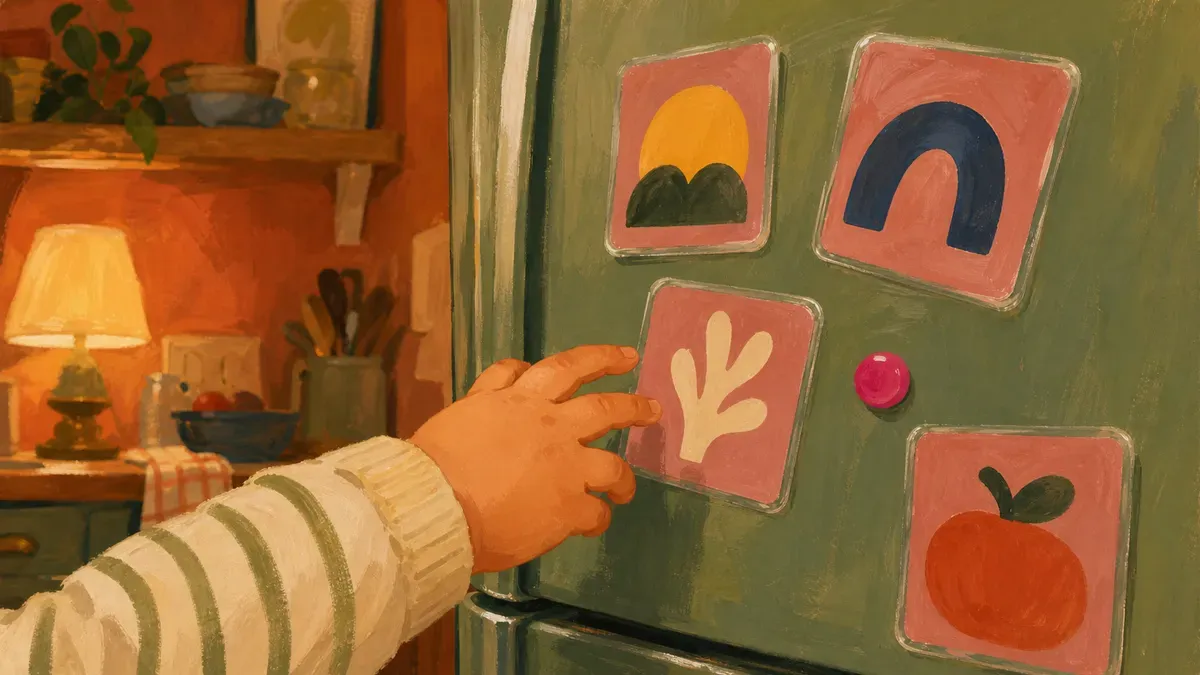
Nonverbal and Verbal: 12 Toddler Communication Cards
Your nonverbal and verbal toddler can point before they speak. See the 12 communication cards every fridge needs to cut meltdowns. Start today.