Toddler Activity Book: 25 Quiet Page Ideas

Some links here are affiliate links. If you buy through one, I may earn a small commission at no extra cost to you. As an Amazon Associate I earn from qualifying purchases. I only point to things I'd actually use with my own two.
The best pages in any toddler activity book each have one job: zip the zipper, match the snap, thread the bead. That single-task structure keeps a toddler focused long enough to actually finish a page, which is the whole point of a quiet book. I’m Nora Hayes, former preschool aide and mom of two, and this covers 25 quiet book page ideas, the felt-versus-printable question, how many pages to bind, and what keeps the book off the floor by week two.
The plan in brief:
- Cut each page from stiff 1.5mm wool-blend felt, sized 8x8 inches.
- Add one interactive element per page: Velcro, KAM snaps, or a zipper.
- Bind 6 to 10 finished pages on 1-inch binder rings.
Build a Quiet Book Page in 5 Steps
Those three lines are the whole map. Here’s the same plan slowed down into the actual steps, so you can sit at the kitchen table tonight and finish one page start to finish.
- Set out your materials before you cut anything
- Slice the 8x8-inch base and prep your shapes with a freezer-paper template
- Layer the shapes on the base
- Add one moving part, nothing more
- Punch the left-edge hole, thread onto a ring, and you’re done
Gather Your Felt, Closures, and Rings
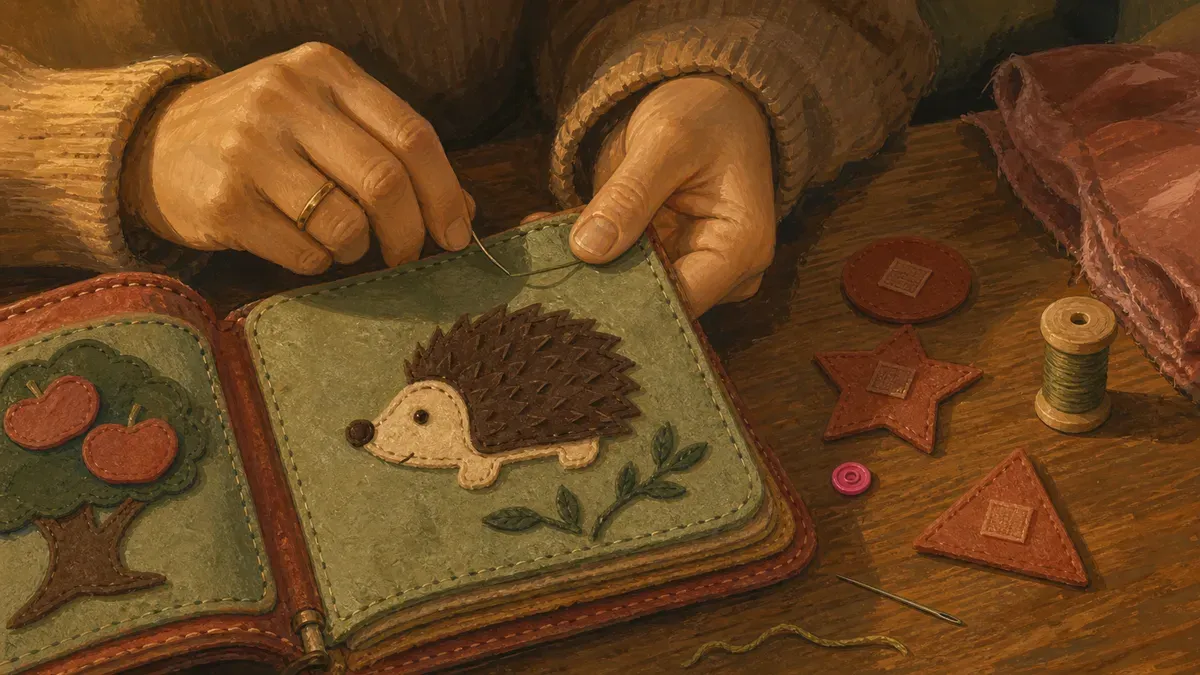
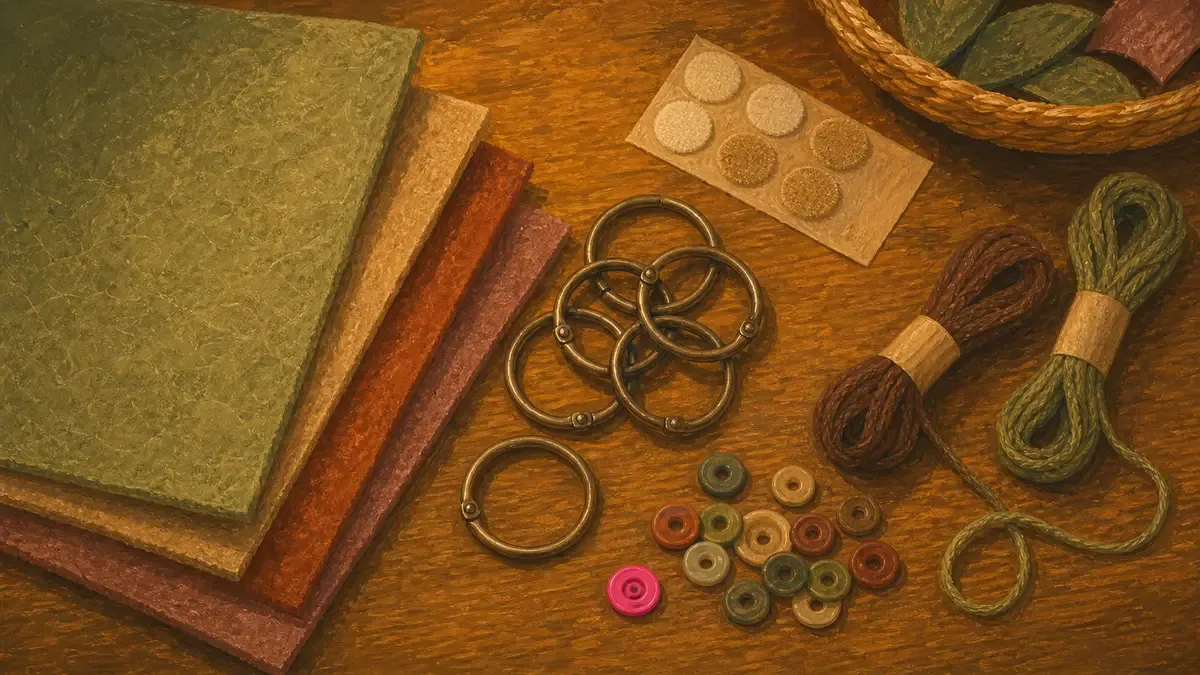
Lay everything out before you cut a thing. For one page you need a square of stiff wool-blend felt, one closure, and thread.
- Stiff felt for the base and shapes (a wool blend holds up to little hands far better than the bargain-bin synthetic stuff)
- One interactive closure: a strip of Velcro, a set of KAM snaps, or a short zipper
- Embroidery thread and a needle for stitching
- 1-inch binder rings to hold the finished pages
If you own a snaps press, KAM snaps add a satisfying click toddlers chase. The KAM Snaps Hand Pliers Press Starter Kit is the one I reach for: an Amazon’s Choice pick rated 4.7 stars by 2,800-plus buyers, and it ships with the pliers plus 360 lead-free snaps, enough to outlast a whole stack of books. Check the current price on Amazon before you commit. No sewing tonight? A hot glue gun handles everything except high-stress spots like zippers. Glue the felt shapes, stitch only the parts that get yanked.
Cut and Layer the Background
Start every page the same way so they stack neatly later. Cut an 8x8-inch felt base, the size most quiet book tutorials use to keep pages uniform and ready to assemble.
Then layer felt shapes on top: a pond, an apple, a row of buttons. The trick that makes this look store-bought is freezer paper. Iron a paper template shiny-side-down onto your felt at medium heat, no steam, and it grips just long enough to cut a clean shape along the pencil line, then peels off with no residue.
That one move gives you repeatable cuts every time, which matters when you want six matching circles and not six wonky ones. No fancy fabric cutter needed. If you do own a Cricut, it cuts felt too, but the iron-and-scissors method costs nothing and works on the kitchen counter.
Attach the Interactive Element and Bind
One moving part per page. That’s the rule that keeps a toddler focused instead of flipping past in two seconds. Sew or glue a single element, a flap that lifts, a snap that closes, a shape that Velcros into place, and resist the urge to cram in three.
Punch an eyelet on the left edge of each page so the 1-inch binder rings have a clean hole to thread through. One 100-pack of the nickel-plated kind outlasts every book you’ll build, since a single ring holds up to 175 sheets, and 4,200-plus reviewers rate them 4.7 stars. Once you’ve built six to ten pages, that’s a full book.
Thread them onto the rings in order and the book lies flat, open on the floor, which is exactly how a 3-year-old uses it. If you want the bigger picture before you start a stack, here’s how to make a quiet book from scratch end to end, plus more quiet books busy books layouts to borrow from. One page tonight, one more tomorrow. That’s the whole method.
25 Quiet Book Page Ideas Toddlers Sit Still For
Knowing how to build a page is one thing. Knowing which page your kid will actually stay on is another, so here are 25 that have held up at my kitchen table, sorted by what they’re secretly teaching while your toddler thinks they’re just playing.
Fine Motor and Practical Life Pages
These are the workhorses. Every one strengthens little hands while practicing a skill your kid needs at the door, at the table, or at bedtime. The win is sneaky: they’re getting dressed faster without a single nag from you.
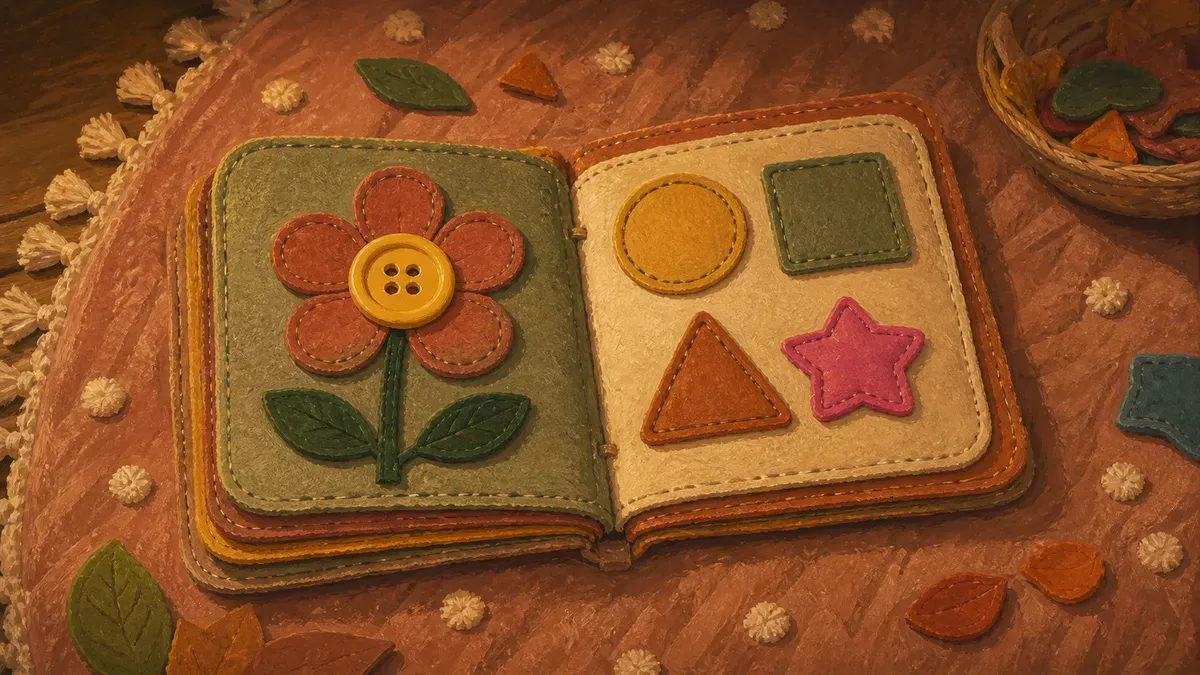
Start with a fat plastic zipper sewn onto a felt jacket or a fish’s mouth. A toddler who can zip a page can zip their own coat, and that’s not wishful thinking. Research on fine motor skill development in toddlers notes that 2-to-3-year-olds can start managing zippers, and 3-to-4-year-olds graduate to larger buttons, which is exactly the order I build these pages in.
Fine motor pages worth a spot in any busy book:
- Zipper page: a felt coat or a grinning fish that opens and closes
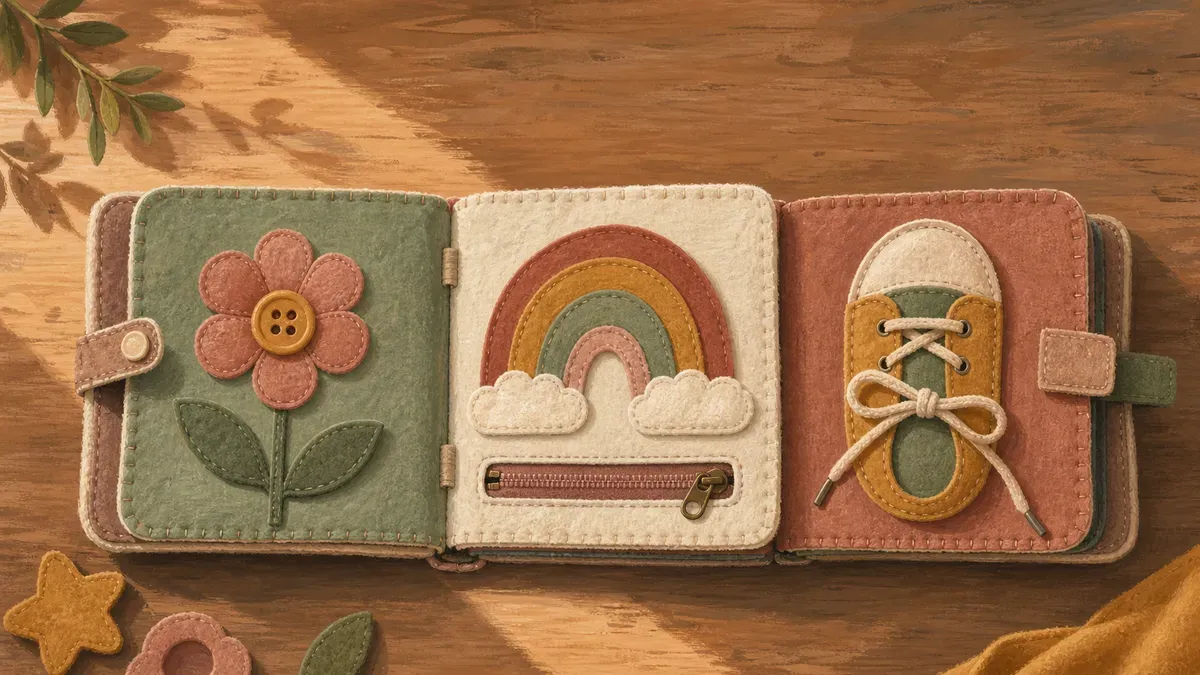
- Button-flower page: fat buttons that pop through felt petals
- Lace-up shoe: a sneaker shape with punched holes and a real shoelace
- Snap page: KAM snaps holding flaps shut, satisfying click and all
- Buckle strap: a salvaged backpack buckle for the kid who loves a click
The snap and buckle pages are the ones June begged to redo. That tactile click is its own reward, and the practical life skills come free. June couldn’t snap her own cardigan when she first started on the snap page. She got there, mostly because she’d worn out that page first.
Counting, Color, and Shape Pages
From dressing skills to early math, this batch teaches without ever feeling like a lesson. These are my go-to activity book ideas for the kid who’s curious about numbers but won’t sit for a worksheet, because matching a felt shape to its outline is a puzzle, not homework.
Velcro is the hero of this whole category. A bag of self-adhesive Velcro dots does the work: stick a row of the hook-side dots on the page, back your shapes with the loop side, and every piece turns removable, re-placeable, and quietly addictive. You get 500 pairs to a pack, so one order dots out a whole book with plenty to spare, and at 4.7 stars across 2,500-plus reviews, they’re the peel-and-stick I trust to actually stay put.
Three that earn their spot:
- Counting-bead caterpillar: felt segments your kid Velcros on while counting aloud
- Color-match laundry line: tiny felt socks matched to color-coded clothespins
- Shape sorter: circle, square, triangle, and star that snap into matching outlines
The counting beads aren’t just busywork. Montessori primary classrooms hand kids colored bead stairs around three and a half to four for counting and color recognition, and a felt counting page chases the same idea for the price of scrap fabric. If you want to lean harder into that approach, I broke down a full set of Montessori busy book pages you can follow step by step.
Color-match pages are where I’d start a younger toddler. Sorting before counting is the natural order, and a kid who can match a red sock to a red peg is building the visual discrimination that counting rests on. Keep the colors bold and the pieces big.
Sensory, Pretend, and Calm-Down Pages
The last group is for the restless kid, the one who needs to feel and pretend and reset, not sort and count. These pages do the quiet emotional work, and they’re the reason busy books earn a spot in a calm-down corner, not just the diaper bag.
Start with texture. A sensory page is a grid of fabric scraps, corduroy, faux fur, satin, burlap, sewn down for little fingers to rub. No moving parts, no rules, just input for a kid who’s vibrating out of their skin.
The pretend-and-regulate lineup I keep coming back to:
- Peekaboo window: felt flaps that lift to reveal a hidden animal
- Dress-the-doll: a felt figure with swappable outfits for imaginative play
- Feelings faces: Velcro mouths and brows the kid arranges into happy, sad, or mad
- Texture squares: a sampler of fabrics with nothing to do but touch
The peekaboo page does more than entertain. Lifting a flap to find the hidden duck taps into object permanence, the same understanding babies build around eight or nine months and keep refining for years. Toddlers still love the reveal, and now they narrate it back to you.
The feelings-face page is the one I’d hand a parent navigating big meltdowns. Building a sad face, then a happy one, gives a kid a way to name what’s roaring inside before they can find the words. It’s not a fix, and I’d never sell it as one. It’s a tool, a calm starting point on a hard afternoon.
That’s your 25. Build the one your kid will actually reach for, not the one that photographs best. The right page is the one that buys you ten quiet minutes, and any page that does that has earned its felt.
Felt vs Printable: Choosing Your Page Method
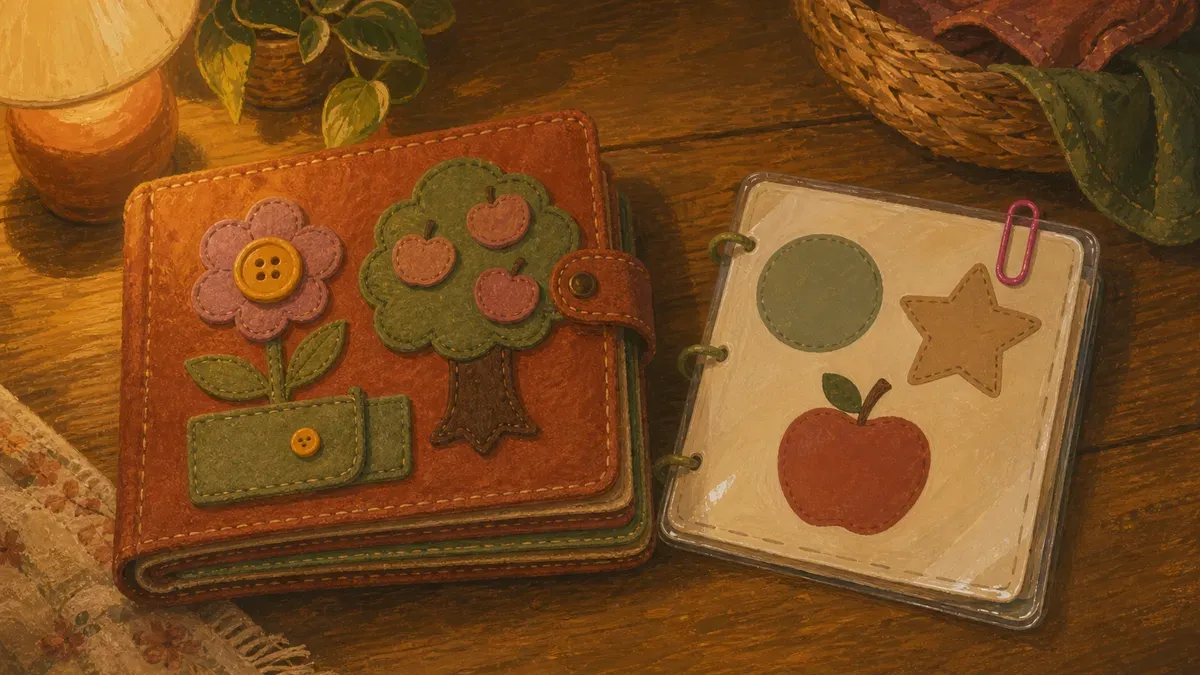
Before you cut a single shape, pick your lane: sewn felt or laminated printable. One rewards patience, the other rewards a parent who needs a finished book by bedtime, and your honest answer about how much you’ll actually sew decides which.
Here’s the short version before the two camps:
| Method | Best for | Key supply to buy | Parents’ rating | Durability |
|---|---|---|---|---|
| Sewn felt | Daily home use, chewers, texture | Wool-blend felt sheets | 4.6★, 600+ reviews | Years |
| No-sew printable | Travel, gifts, fast turnaround | Thermal laminating pouches | 4.9★, 100,000+ reviews | Months |
When Felt and Fabric Win
Felt wins the long game. Quiet books made from fabric pages take the abuse a toddler dishes out, the tugging, the chewing, the bend-it-backward grip, and come out the other side still usable a year later.
Cloudcraft notes that acrylic felt is thin and prone to stretching out of shape, so the felt you pick matters.
- Craft felt: cheap and widely available, but seams stretch and tear with repeated tugging
- Wool-blend felt: holds together when small hands pull; the 35% wool sheets (made in USA) shrug off the pilling that makes cheap felt look tired, and they’re worth it for a book in daily use
- Chew factor: for a page that gets gnawed, wool-blend is the only real option
The catch is you. Felt means stitching, and even simple DIY pages ask for steady hands and a little patience at the machine. You don’t need to be a seamstress, but you do need an evening and the willingness to redo a wonky seam. The payoff is a richer, more interactive book that feels like something, soft squares, lift flaps, a doll you actually dress.
When No-Sew Printables Win
No time, no thread, no problem. A laminated printable busy book is the fastest, cheapest route to a finished page, and for travel or a last-minute gift, it beats felt on every count that matters in a hurry.
For a busy board book, the whole process breaks down simply:
- Print the PDF on standard cardstock
- Laminate with thick pouches or back with adhesive vinyl for sturdier pages
- Cut and bind: an afternoon is plenty
If a page gets juiced or torn, reprint it for pennies instead of resewing it.
You don’t have to design from scratch, either. Family Edventures and Teachers Pay Teachers both offer free printable busy-book PDFs covering matching, counting, shapes, and color, a real no-cost template to start from tonight. My full felt busy book comparison lays the two side by side if you’re still torn.
How Many Pages and Which Materials Hold Up
Method settled, two questions decide whether the book survives a year of toddler hands: how thick to make it, and what it’s built from. Here’s where I land on both.
Right Page Count for a Toddler’s Attention
Keep it short. Six to ten pages is the sweet spot, because a fat book turns into something a toddler flips past instead of plays with.
There’s a reason behind the number. A 2-to-3-year-old can stay with one activity for roughly five to eight minutes, per general attention-span ranges for that age, and a compact book gets finished in one of those sittings instead of abandoned halfway. A thinner book is also lighter on the binder rings, which matters when small hands do the page-turning.
Start at the low end. For a younger toddler, six pages of felt is plenty, and you can leave a couple of the rings empty for later.
Add pages as the child grows, not all at once.
That’s the quiet upside of binder rings over sewn binding: you slot in a new, age-appropriate page when the old ones get easy. A book that begins at six pages can grow one ring at a time as new skills emerge, so you’re never rebuilding from scratch. For a fuller breakdown by age and developmental benefits, here’s many pages should quiet book have to guide you.
Durable, Toddler-Safe Materials
The page count keeps the book usable. The materials keep it alive. Stiff wool-blend felt is the backbone, because it holds its shape through chewing and washing where flimsy craft fabric goes limp in a week. Most of my pages survive a cold-water hand wash and a flat dry, so build them to take it.
Now the part that actually matters. Anything small, a bead, a button, a loose felt apple, gets sewn down hard, not glued. A glued button is a choking hazard waiting to pop off in a toddler’s mouth.
Here’s the rule I sew by:
- If a part fits inside a toilet-paper tube, it’s too small to leave loose for an under-3.
- Sew small parts with doubled thread, knotted twice, on the back.
- Skip beads and buttons entirely for the under-2 crowd; use Velcro shapes and KAM snaps instead.
That tube test isn’t me being paranoid. It mirrors the official small-parts choking hazard guidelines for young children, which size a hazard against the throat of a child under three. Build activity books for toddlers to those safety guidelines and you can hand the book over without hovering.
Tips to Keep Toddlers Engaged With Their Book
The book is done. Now comes the part nobody talks about: convincing your toddler it’s more interesting than the remote control.
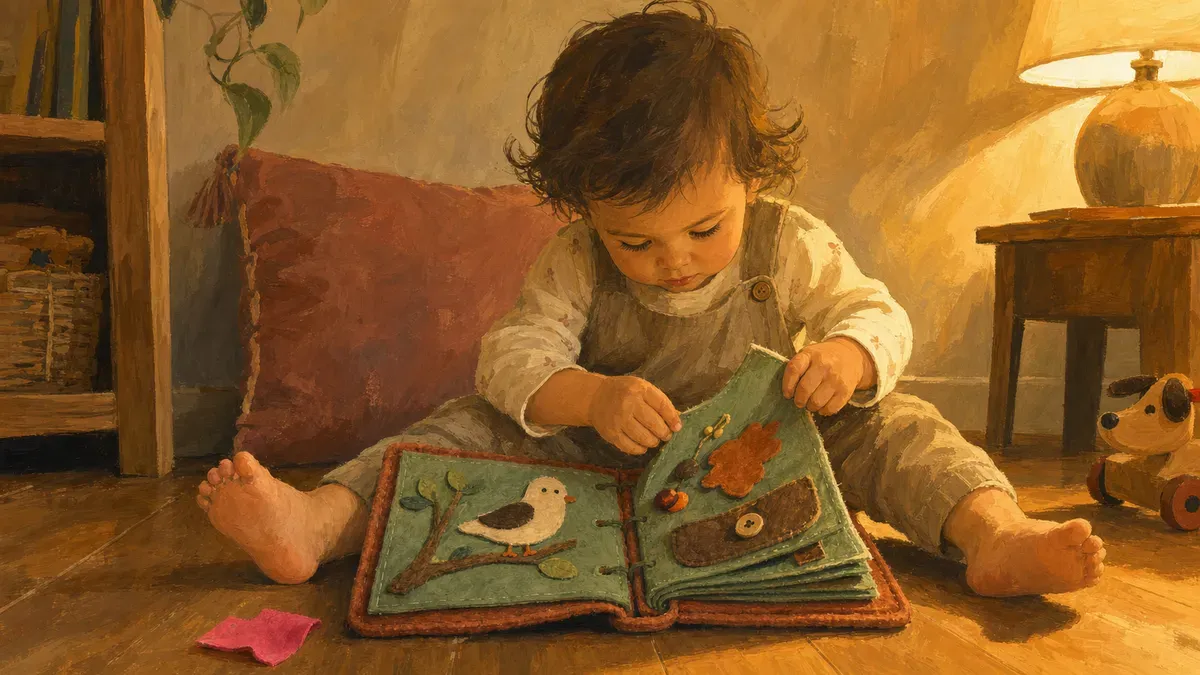
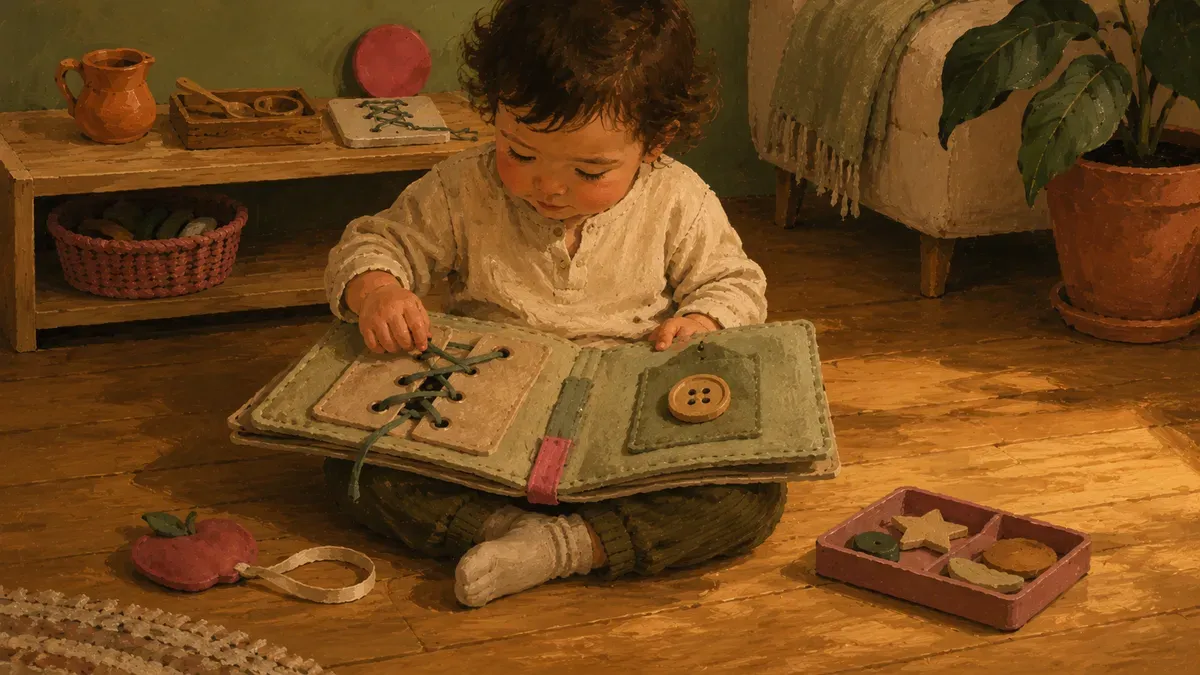
Most kids need a warm intro. The first time you pull the book out, sit with them and work one page together. Open the zipper. Match the color. Count the beads aloud. You’re not teaching, you’re showing that this thing is fun. Two or three sessions side by side and most toddlers will grab it on their own.
Novelty wears off faster than you think. Rotate the book into the mix rather than leaving it out every day. A book that disappears for a week feels new when it comes back. Same learning activities, fresh excitement.
Here’s where personalization pays off. A page with your kid’s name in Velcro letters, a photo of your dog behind a felt flap, or the family car matched to a garage pocket. Those pages get revisited more than generic ones. The interactive element is the same, but the content belongs to them.
- Match page to moment. A sensory-heavy page (texture squares, the bead caterpillar) works better right after a busy stretch when they need to land. A skills page (zipper, buckle) lands better mid-morning when focus is there.
- Short is fine. Two minutes of real engagement beats ten minutes of fidgeting and flipping. Developmental benefits don’t require a long session.
- Add one new page when interest dips. A single fresh page resets the whole book. Check the toddler’s busy book roundup for age-matched ideas when you’re ready to grow it.
For a deeper look at what makes these books click long-term, our complete quiet book and busy book guide covers matching content to each developmental stage. The short version: let them lead. The page they keep coming back to is the one that’s working, and that’s all the signal you need.
Found this useful? Save it for the next rough afternoon.
Questions parents ask me about this
What are good toddler activity book ideas to make at home?
Start with pages that have one clear job: a zipper to zip, snaps to fasten, a shape to sort, a color to match. Fine motor pages like lace-up cards and buckle straps are perennial favorites because toddlers return to them again and again. Add one sensory or pretend-play page, like a dress-the-doll spread or a feelings-faces page, and you've got a book that covers several types of play without being overwhelming.
What age is a quiet book best for?
Most kids engage meaningfully between ages two and four, though a simpler book with large Velcro pieces can work for younger toddlers. Zipper pages suit ages two to three; button pages fit ages three to four, as those closures align with where fine motor skills are developing. The sweet spot is matching the page to what your child is almost but not quite mastering, just enough challenge to hold attention without tipping into frustration.
Do you have to sew a quiet book?
No. Laminated printable pages are a solid no-sew option: print, laminate, cut, and bind with binder rings. They won't survive a determined chewer the way sewn felt will, but they're faster, cheaper, and easy to reprint when a page wears out. If you want felt pages without sewing, hot glue holds reasonably well for kids who don't mouth things heavily. Just press the pieces firmly and give it time to cure.
How do you wash a felt quiet book?
Spot-clean first with a damp cloth and a drop of dish soap for most everyday messes. If the whole book needs a wash, use cold water on a gentle cycle inside a mesh laundry bag, then lay it flat to dry. Skip the dryer. Heat can warp closures and shrink tightly-woven felt. Wool-blend felt holds up to washing better than acrylic, which tends to pill and lose its shape over repeated cycles.
What is the cheapest way to make a quiet book?
Print-laminate-and-bind is the lowest-cost route. A stack of laminated pages costs just a few dollars in materials, and free printable PDFs are widely available online. Felt books cost more upfront in fabric and supplies, but the pages last longer. If you go the felt route, a starter snap kit, basic wool-blend sheets, and binder rings will cover most of the pages you'll ever make.
What kind of felt is best for quiet book pages?
Wool-blend felt (with a meaningful wool content, not just a token amount) is the durability pick. It's stiffer than pure acrylic, holds its shape after washing, and survives chewing far better than the cheap craft-store sheets. Pure acrylic felt costs less and works fine for pages a child won't mouth, but it pills quickly and goes limp with handling. For a book meant to outlast one child, the extra cost per wool-blend sheet is worth it.
Are quiet book pages safe for toddlers who put things in their mouth?
They can be, with a few simple rules. Skip loose beads and buttons for children under two, and test any small embellishment with the toilet-paper-tube check. If it fits through the tube, it's a choking hazard. Sew decorative pieces down firmly rather than gluing them. Velcro and snaps are the safest closures for heavy mouthers, and wool-blend felt is non-toxic and stiff enough to resist easy tearing.
Written by
Nora Hayes
Mom of two and a former preschool aide. I share the screen-free sensory play and calm-down ideas I test at my own kitchen table, plus what the moms in my little meet-up swear by. A parent passing on what works, not a doctor or a therapist.
More about NoraKeep going
All Quiet & Busy Books-
 Quiet & Busy Books
Quiet Book Patterns: A Beginner's First Felt Page
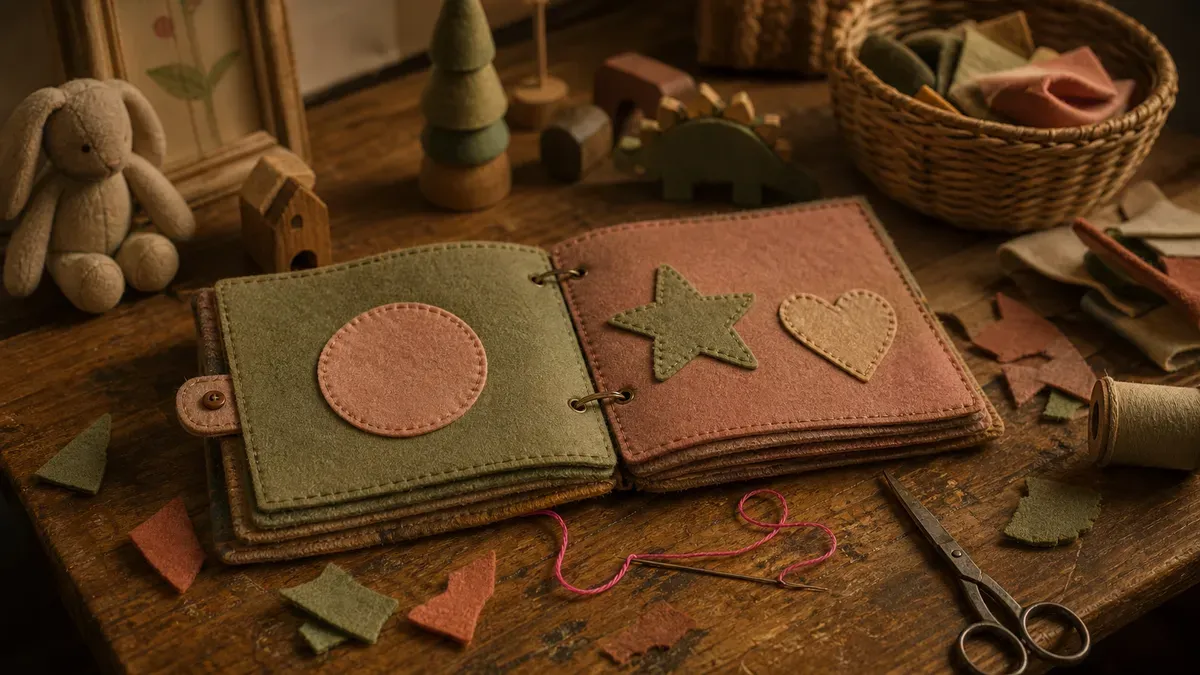
New to felt? These beginner quiet book patterns walk you through your first page step by step, with real costs and rookie mistakes. Start today.
-
 Quiet & Busy Books
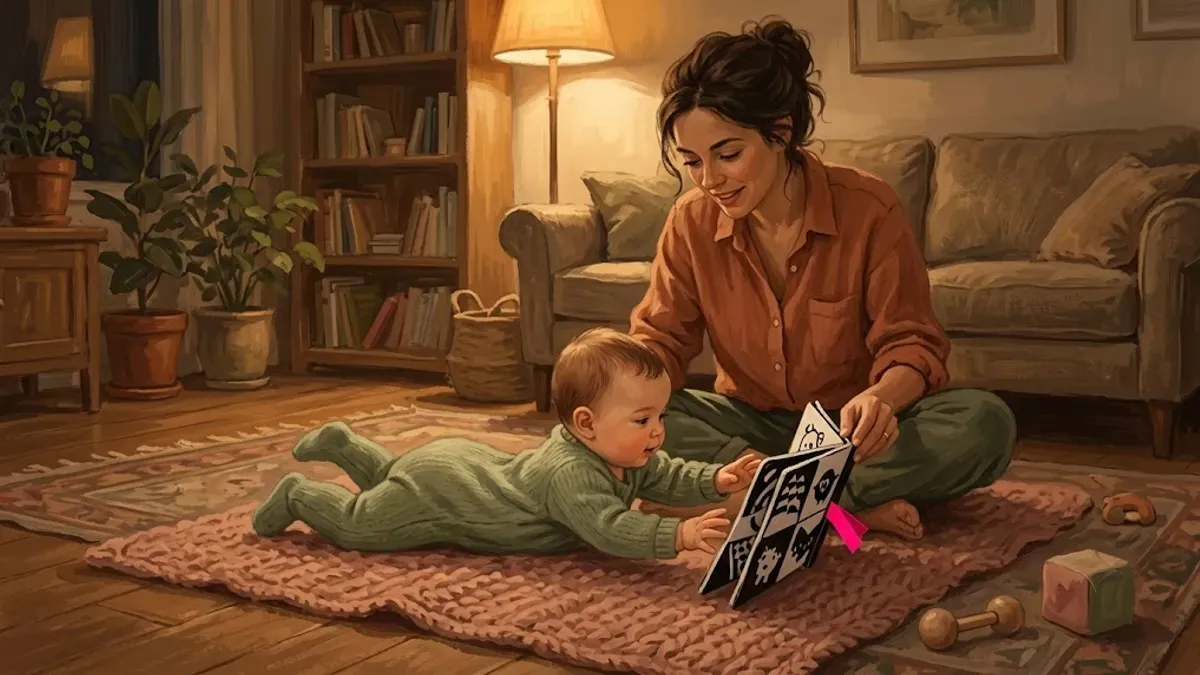
Infant Busy Book: Best Soft, Safe First Picks
Most busy books are built for toddlers. Here's the infant busy book that's truly newborn-safe: soft pages, high contrast, washable.
-
 Quiet & Busy Books
Quiet Book DIY: How to Make One From Scratch Fast
Make a quiet book from scratch this weekend, even if you've never sewn. Get the materials, page count, and step-by-step build. Start today.
-
 Quiet & Busy Books
Montessori Busy Book Picks That Follow the Child
A Montessori busy book should match your child, not an age label. See which pages fit each stage and the pick parents keep coming back to.