Toddler's Busy Book: 8 Pages That Hold a 2-Year-Old

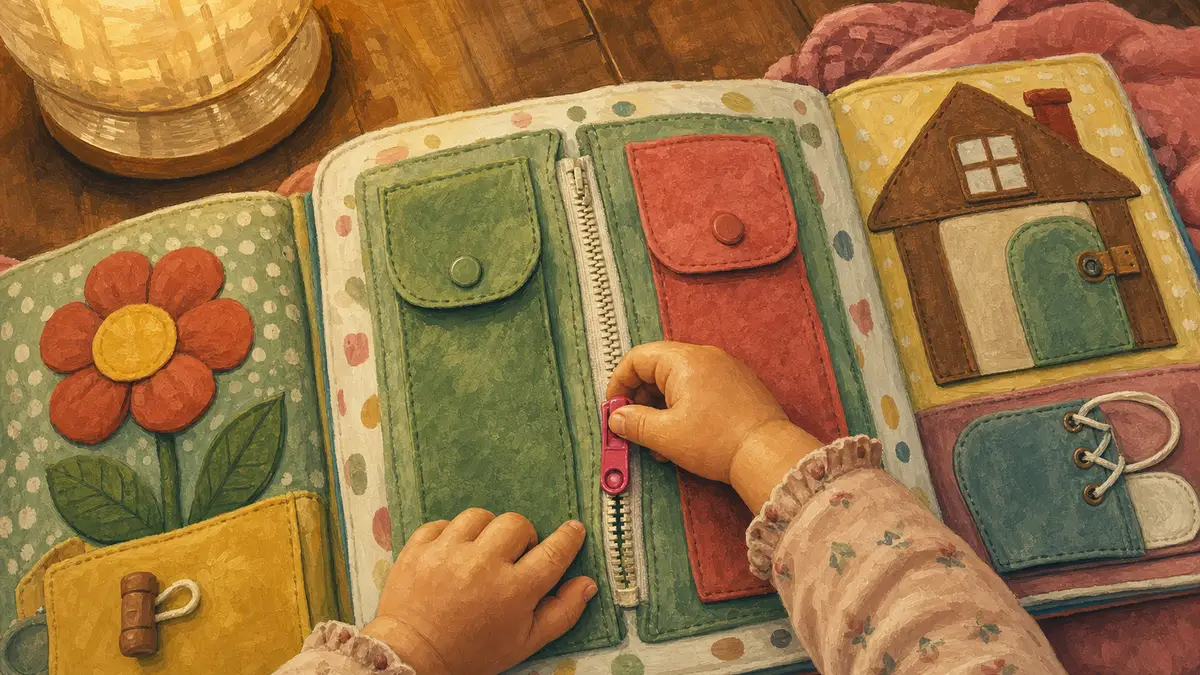
A toddler’s busy book for a 2-year-old works best with six to eight pages. I’m Nora Hayes, a former preschool aide, and this guide walks you through the eight pages, what each one teaches, themed swaps for travel and church and big feelings, plus how to toddler-proof the whole thing so it survives real hands.
The plan in brief:
- Start with 6 to 8 pages, no more, because a thick book overwhelms a 2-year-old.
- Build pages around one action each: zip, snap, match, feed, sort, trace.
- Bind it on a single ring so you can swap pages as skills change.
Build a Busy Book for a 2-Year-Old in 5 Steps
The ring binding is the finish line, not the start. Before you cut a single page you settle three things: how many pages, what they’re made of, and how they fasten shut.
- Cap the book at 6 to 8 pages so the whole thing fits one short sitting.
- Settle on a single theme before you start cutting anything.
- Decide how you’re making the pages: cutting felt, sewing fabric, or printing and laminating.
- Secure every movable piece tightly to its page, since small hands test everything.
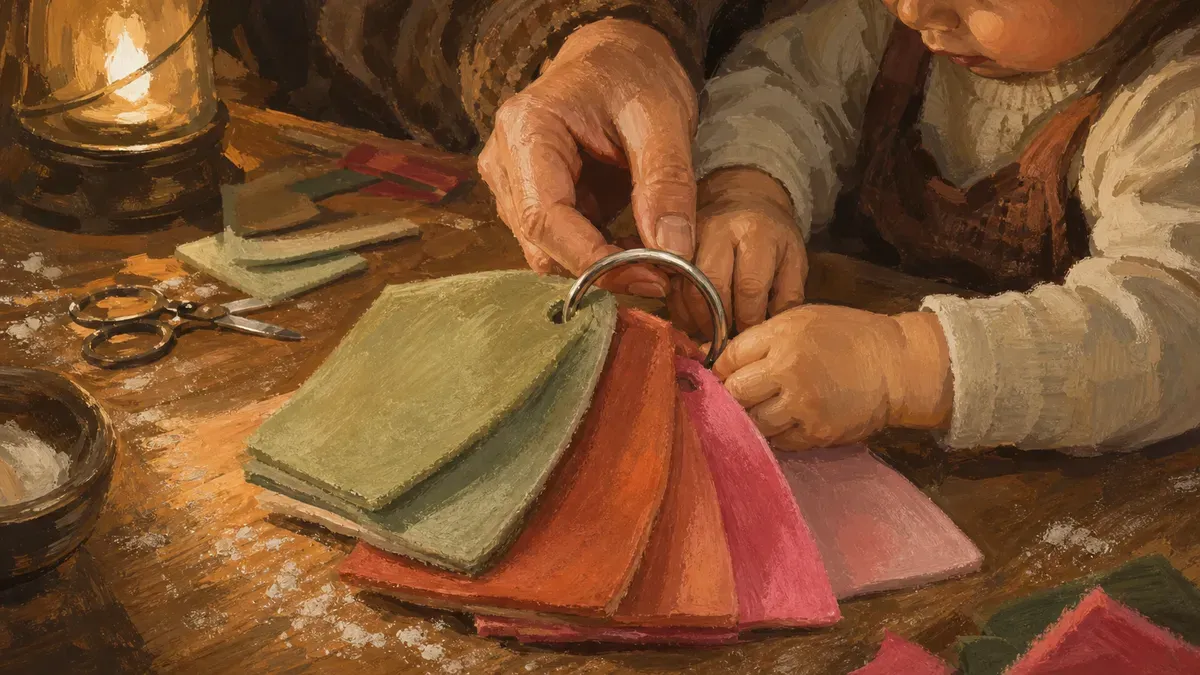
- Run a single ring through every page hole to finish the book, no glue needed.
Pick a Page Count and Theme First
Pick one loose theme to tie the pages together, such as:
- Barnyard or jungle animals
- A dressing routine (zip, button, snap)
- Color-match activities
That shared theme gives your toddler something to anticipate, and two-year-olds love knowing what comes next. Keep it to 6 to 8 pages and you’ve matched the book to the kid instead of fighting it.
Pick a theme that lines up with what your kid is working on right now. If she’s obsessed with zippers, getting-dressed pages are age-appropriate and they hit a real milestone. The book holds longer when every page answers something she’s already curious about.
Choose Felt, Fabric, or Printable Pages
Material decides two things: how long the book survives, and how much of your evening it eats to make.
Felt is the workhorse. Acrylic craft felt is cheap, colorfast, and washable, and it’s honestly fine for nearly any busy book, though it does pill with hard use. Wool felt holds up better and feels nicer, but you pay for it. The folks at Cloudcraft reckon acrylic handles about 90% of craft projects, and a busy book is squarely one of them. Pieces stick to felt on their own, so closures get simple.
- Acrylic or wool felt: the workhorse option, inexpensive and easy to find at any craft store
- Sewn fabric pages: hold up the best but need a sewing machine and more of your evening
- Printed and laminated: fastest build if you’d rather skip cutting and sewing entirely
Printable pages are the shortcut. Grab a Canva template, print, and laminate. For toddler hands, 5 MIL lamination holds up on flat pieces handled all day, while 3 MIL stays bendy enough for pages that fold. If you’d rather build the whole thing yourself piece by piece, my walkthrough on how to make a quiet book from scratch takes the felt path step by step.
Felt for durability with the least sewing, printables for the least prep, fabric only if you already sew.
Add Closures, Then Bind on a Ring
Now the moving parts. Sew or hot-glue your closures onto each page: velcro for the easiest open-and-shut, snaps for pieces a toddler shouldn’t pop off, buttons for the kid who’s ready to practice them.
- Velcro (hook and loop): opens and closes in a second, even one-handed, but loosens after months of hard yanking
- Snaps: last longer and harder for little fingers to undo by accident, which is exactly what you want on a page that shouldn’t come apart
Double-check safety before anything goes on. Every button, bead, and loose piece has to be stitched down hard, because at two everything still ends up near the mouth.
Then bind it all on one loose ring binder, no spine, no glue. A single ring lets you pull a page that’s gotten boring and drop in a harder one as she grows. Want more ready-made page ideas to swap in? Browse our quiet books busy books collection and lift the ones that fit your kid.
8 Busy Book Pages That Hold a 2-Year-Old
Swapping pages only works if the pages earn their spot, so here are the eight activity pages that actually hold a two-year-old’s hands, grouped by what they do: four that build finger control, three that sneak in early learning, and one open-ended pair for pretend play.
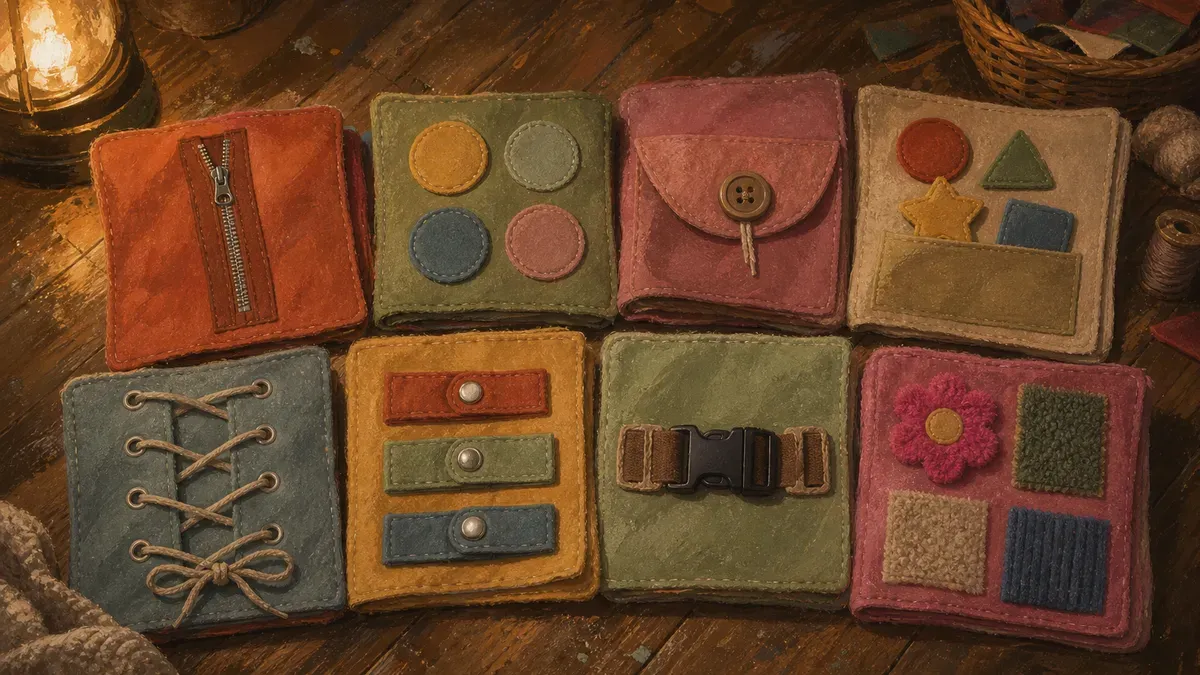
- Pages that train the fingers: zipping, snapping, lacing, and button-feeding, each one harder than the last
- Pages that build early concepts: matching colors, sorting shapes, and counting to five without any flashcard pressure
- Pages with no right answer: one barnyard scene and one feeding game where the play is the whole point
Fine Motor Pages: Zip, Snap, Lace, Button
Start with the four pages that make little fingers work, because at two, fine motor skills are the whole game.
Next, snap flowers. A felt bloom that snaps onto a stem teaches the press-and-click pinch, though snaps are genuinely hard at this age. Sit beside her and let her push while you line it up; she does the work, you do the aim. Real talk: developmental dressing data from Collaborative Corner puts snapping with help closer to 3.5, so the page is a stretch goal, not a flop.
- Zipper strip: pull up to close, pull down to open; cause and effect in one motion, and a wound-up kid will run it twenty times
- Snap flowers: press-and-click pinch practice; genuinely hard at two, so expect to assist
The lacing card is the patience builder: a thick cord and three big holes. Both are fine.
- Lacing card: slow and rhythmic thread-and-pull; builds the same grip needed for holding a crayon
- Button-feeding monster: chunky buttons through a felt mouth slit; grip practice with a story attached, and the first dressing skill most two-year-olds succeed at
Buttons and snaps stay aspirational at two, so stitch them down hard and treat any success as bonus, not the bar.
Learning Pages: Colors, Shapes, Counting
Three learning pages slide pre-academic skills in sideways, with zero flashcard pressure. A color-matching page comes first: velcro circles in red, blue, and yellow that she sticks onto matching dots, landing right in the 29-to-33-month window when kids nail primary colors.
- Color matching: three primary colors, velcro onto dots; right on milestone at 29-33 months
- Shape sorting: circles, squares, triangles into outline slots; cap at three shapes or the page gets shoved aside
- Counting: one to five, felt objects moved one at a time; touching objects counts, reciting to ten does not
These pages teach by matching, not memorizing, and that’s the whole point. She handles the colours, lines up the shapes, moves the count, and the learning rides along underneath the play.
Pretend-Play Pages: Animals and Feed-the-Face
The last two pages do the most with the least, because they don’t have a right answer. Naming the animals matters more than placing them correctly, and that lines up with the CDC’s 2-year milestones, where pointing to and naming animals in a book is right on track.
June fed the same felt frog his lunch for a solid month and never tired of it.
- Barnyard animal-match: felt cow, pig, sheep, and duck, each with a velcro home; low-stakes, open-ended, no wrong answer
- Feed-the-face: a felt mouth and a pocket of foods (strawberry, cookie, carrot) that feed in and pull back out; interactive and endlessly re-themeable
These two are the pages that grow pretend play and language at once, the open ones with no finish line. If you’re leaning all-fabric, our felt busy book breakdown shows which of these eight stitch up cleanest.
Narrate while she plays. The cow says moo, the pig is hungry, the carrot is crunchy. That running commentary is where the naming and the talking actually take hold.
What These Pages Teach a Two-Year-Old
All that naming and playing is doing quiet work under the surface. Two things grow on these pages: the hands, and the head behind them.
Fine Motor and Hand Strength
Every zip, snap, and lace is a tiny workout for the muscles that run a toddler’s hands. Pinching a zipper pull, threading a lace through a hole, tugging a snap apart, all of it trains the pincer grip, that thumb-and-index pinch a 2-year-old leans on for everything from picking up peas to holding a crayon.
The pincer grasp is usually in place by the first birthday, and according to Cleveland Clinic’s guide to fine motor milestones for two-year-olds, it’s essential for self-feeding, self-dressing, and later learning to grasp a pencil.
- Reps on these pages build toward real dressing, real eating, real pencil-holding.
- The book makes those reps happen because a toddler will actually sit with it.
The busy book just gives that grip somewhere to practice.
All four actions work the same pincer grip, stacking reps before any of it matters.
That steady motor control is the kind of developmental groundwork you can’t rush. You give them reps, and the busy book makes reps fun.
Early Thinking and Independent Focus
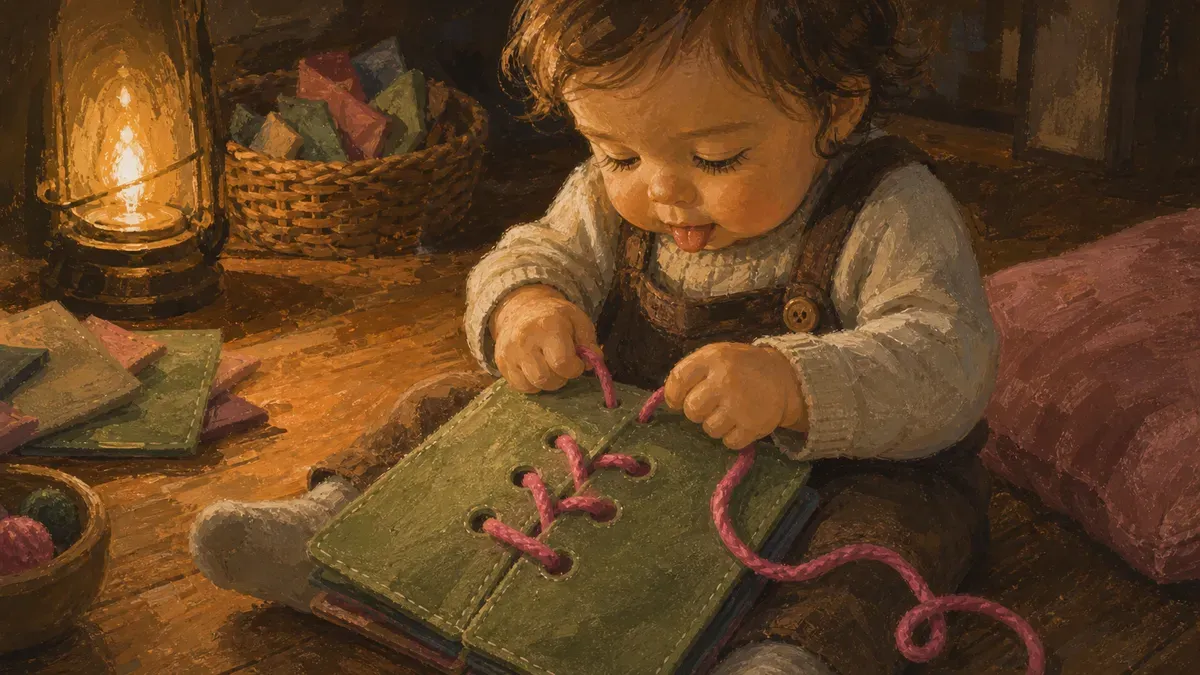
The matching and sorting pages train a different muscle, the one between the ears. When a 2-year-old hunts for the felt cow that belongs in the barn, or sorts circles from squares, they’re problem solving in real time. Cause-and-effect pages teach the same lesson fast: pull this flap, something happens. That little click of figuring it out is cognitive work dressed up as play.
The bigger win is focus. A busy book is one of the few screen-free things a busy toddler will sit with alone, and there’s real weight to fewer, simpler choices.
- Fewer pages, one page at a time: that contained choice is what lets a toddler settle in.
- Matching, sorting, cause-and-effect: each page is a complete little problem with an answer.
A University of Toledo study published in the Journal of Infant Behavior and Development found toddlers played twice as long, and in more complex ways, with four toys than with sixteen, which is exactly why a busy book for 1 year old or a two beats a tub of clutter every time.
That quiet stretch of independent learning, just your kid and a page, is the calm a fried afternoon needs. A small, finite task your kid can finish on their own is the whole point. Two minutes counts. Ten is the dream.
Themed Pages for Travel, Church, and Big Feelings
Some days the busy book isn’t about finishing a tidy little task at home. It’s about surviving a four-hour flight or twenty quiet minutes in a pew, so a couple of pages earn their spot by what they don’t do.
Quiet Pages for Planes and Pews
The travel page has one job: keep little hands busy without making a sound. That rules out velcro, which rips loud enough to turn heads three rows back, and it rules out anything that drops.
Build these as sewn felt scenes, not pick-up-and-place pages. A felt tree your kid “decorates” by smoothing leaves stitched on at one end. A finger maze with a channel to trace. A barn door that opens to a peek-a-boo animal underneath. Nothing comes off, so nothing rolls under the seat in front of you mid-takeoff.
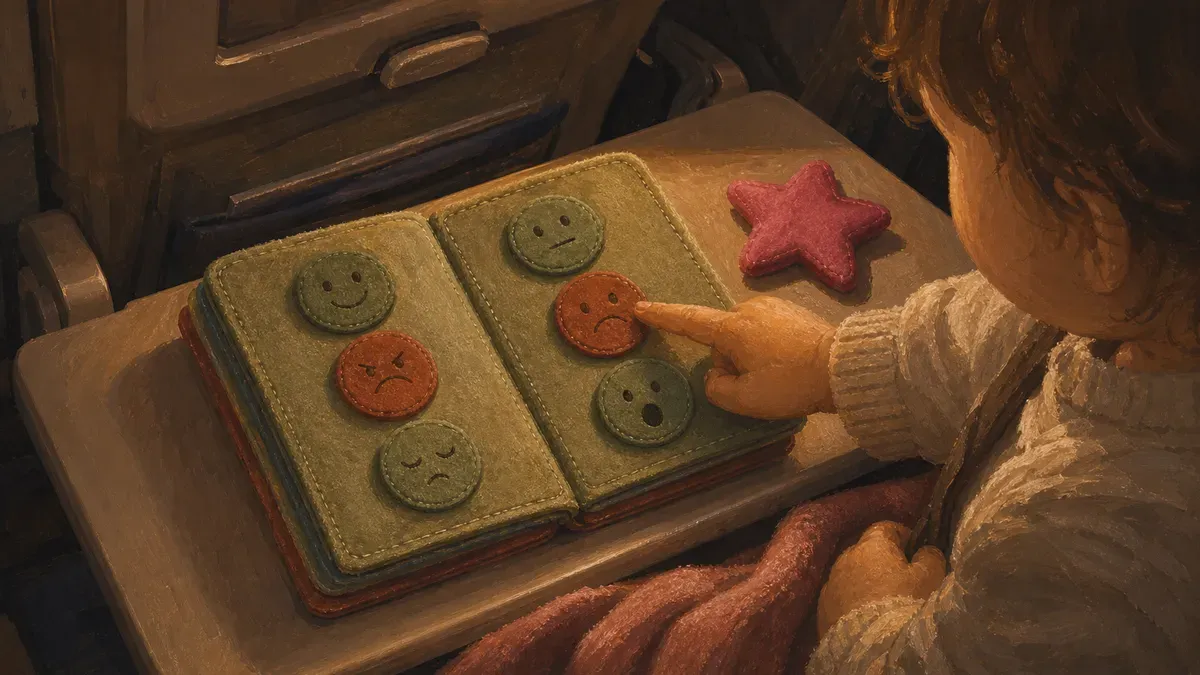
For church or any keep-it-calm spot, that no-loose-piece rule doubles as a safety win. No tiny part to lose down a pew, no scramble on the floor in your good clothes. Pick muted, themed colors over the loud primaries you’d use at home. Quiet page, quiet kid, that’s the whole point.
An Emotions Page for the Tantrum Years
Two is the age the big feelings show up before the words do. The American Academy of Pediatrics notes on HealthyChildren.org that toddlers this age feel a wide range of emotions but can’t regulate them yet, so anger and frustration “erupt suddenly in the form of crying, hitting or screaming.”
A feelings page won’t stop that. What it does is give a kid a way to point at “mad” or “sad” when the word is stuck behind the cry. Two good builds for this page:
- A felt face with swappable mouths and brows on a single backing, so your kid rearranges the pieces to show how they feel.
- A row of small emotion cards stitched flat, so your toddler points to the face that matches their mood.
The move that makes it stick is naming it out loud with them: “You look frustrated. That’s okay.” If you want a ready-made version, these emotions feelings quiet book pages naming save you the cutting. It’s interactive, it’s calm, and it grows with them well past the tantrum stage.
Toddler-Proofing: Make It Last and Keep It Safe
A toddler’s busy book gets gnawed, yanked, and stress-tested daily, so it has to be both safe in the mouth and tough in the hands. Two checks cover most of it: nothing small enough to choke on, and nothing flimsy enough to rip free.
Choke-Safe Pieces and Secure Closures
The quick rule: if a piece fits inside an empty toilet-paper tube, it is too small for a two-year-old to keep. The toddler choking-hazard size guidelines are stricter than that, defining a small part as anything that fits a test cylinder 2.25 inches long by 1.25 inches wide, banned for kids under 3. The tube test is the toddler-proof shortcut.
Then lock everything down. Run a quick safety pass before it goes in the rotation:
- Every loose felt shape, button, and bead double-stitched to the page, not glued.
- Buttons and snaps big enough to grab but too big to swallow, and any free pieces age-appropriate for where she is on the dressing milestone.
- Velcro tabs sewn flat with no peeling corners she can pick at and pocket.
For the closures themselves, my rule is reachable but not removable. If you are weighing your options there, our velcro snaps buttons choosing closures toddler guide walks through every type.
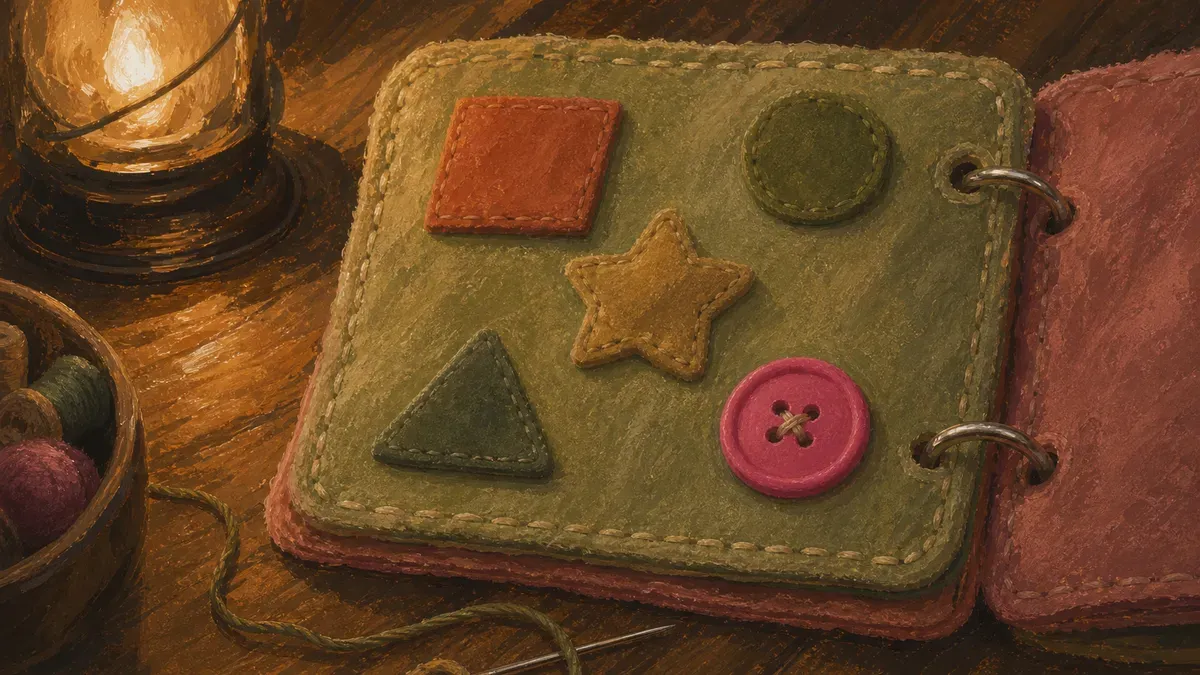
Construction That Survives a Ripper
Safe is half of it. The other half is building something a determined two-year-old cannot pull apart in a week.
The construction approach differs by format:
- Printable pages: laminate every sheet, then stitch the edges. Fingers find the corner that lifts, and a stitched edge buys you months.
- Felt: skip the hot glue and machine-stitch everything. Medium-thick felt (1.5 to 2 mm) holds a stitch best, frays less than the thin stuff, and stays stiffer than cotton, which stretches and goes floppy with handling.
Reinforce the ring holes before they tear, not after. A grommet, or a few stitches around each punched hole, stops the page pulling off the ring the first hard yank. For more build tricks across every age and format, browse our full library of quiet book guides.
Found this useful? Save it for the next rough afternoon.
Questions parents ask me about this
What pages should I put in a busy book for a 2-year-old?
A good mix covers the three things a two-year-old is actively working on: fine motor practice, matching and sorting, and pretend play. Color-match, a simple lacing card, a zipper pull, and a felt animal scene are solid starting points. Add a feelings page if your kid is in a big-emotions phase, or a no-velcro travel version if you need something quiet for church or car rides. Build around what your child is already drawn to, not what looks prettiest on a checklist.
How many pages should a busy book for a 2-year-old have?
Six to eight pages is the sweet spot for this age. Fewer and the book runs out before their attention does; more and it becomes overwhelming to swap between activities. Keep it loose, and swap out a page when it stops getting touched.
Are busy books good for a 1-year-old too?
They can work, but you need to redesign for the age. Everything that goes in front of a one-year-old will go in their mouth first, so taste-safe materials only, zero small pieces, and nothing that peels or tears easily. Skip buttons, snaps, and exposed velcro tabs entirely. A simple crinkle page or a mirror panel is a safer starting point than a full activity layout.
What is the cheapest way to make a toddler busy book?
Start with printable pages, a home laminator, and a single binder ring. Print your activity pages, laminate them flat, punch a hole in the corner, and clip them together. Felt costs almost nothing at a craft store if you buy a few sheets, and most fasteners like a zipper from an old jacket or large buttons from a jar you probably already have. Total cost stays very low if you use what is on hand.
Should I use felt or printable pages for a busy book?
Felt holds up longer and handles rough toddler use better, but printables are faster to make and easy to swap when a theme stops working. A laminated printable page sewn into a felt surround gets you both: quick to produce and tough enough to last. If you are just getting started, printable-and-laminate is the lower-effort entry point; felt becomes worth the extra time once you know which page types your kid actually uses.
How do I clean and store a felt busy book?
Spot-clean felt with a damp cloth and mild soap; avoid soaking because felt can shrink and lose its shape. Laminated pages wipe clean in seconds with just a damp cloth. Store the book flat or hung on a hook out of direct sunlight to keep the colors from fading. Loose pages on a single ring are easy to pull apart for cleaning and just as easy to reassemble.
Can a busy book help a toddler who won't sit still?
It can buy a stretch of focused quiet for a lot of kids, including ones who are generally on the move. The key is matching the page to where your child is that day. A zipper or lacing card gives a sensory-seeker something to do with their hands, while a calmer matching page works better for a kid who has already wound down a notch. No single activity holds every child every time, but starting with what your kid is already interested in gives it the best shot.
Written by
Nora Hayes
Mom of two and a former preschool aide. I share the screen-free sensory play and calm-down ideas I test at my own kitchen table, plus what the moms in my little meet-up swear by. A parent passing on what works, not a doctor or a therapist.
More about NoraKeep going
All Quiet & Busy Books-
 Quiet & Busy Books
Toddler Activity Book: 25 Quiet Page Ideas to Make
25 toddler activity book page ideas your kid will actually sit still for, plus the felt, Velcro, and binder-ring steps to build each one at home.
-
 Quiet & Busy Books
Quiet Book Patterns: A Beginner's First Felt Page
New to felt? These beginner quiet book patterns walk you through your first page step by step, with real costs and rookie mistakes. Start today.
-
 Quiet & Busy Books
Infant Busy Book: Best Soft, Safe First Picks
Most busy books are built for toddlers. Here's the infant busy book that's truly newborn-safe: soft pages, high contrast, washable.
-
 Quiet & Busy Books
Quiet Book DIY: How to Make One From Scratch Fast
Make a quiet book from scratch this weekend, even if you've never sewn. Get the materials, page count, and step-by-step build. Start today.