Montessori Busy Book Pages That Follow the Child

Some links here are affiliate links. If you buy through one, I may earn a small commission at no extra cost to you. As an Amazon Associate I earn from qualifying purchases. I only point to things I'd actually use with my own two.
Pick a Montessori busy book by what your kid can actually do right now, not the age printed on the box, because a two-year-old who’s deep in lacing will ignore the same pages a four-year-old breezes through.
I’m Nora Hayes, a former preschool aide and mom of a sensory-seeker, and I’ve watched the right page buy a calm twenty minutes while the wrong one gets flung across the room.
Here’s how to read the pages that matter, the one busy board that’s earned a permanent spot in my bag, and how to match a book to the stage your child is in today.
What Makes a Busy Book Truly Montessori
A busy book earns the Montessori label when every page mirrors a real skill your child is working to master, not a cartoon stuck on felt. The format you pick, soft book or fixed board, decides where it actually saves you.
Follow-the-Child, Not the Age Label
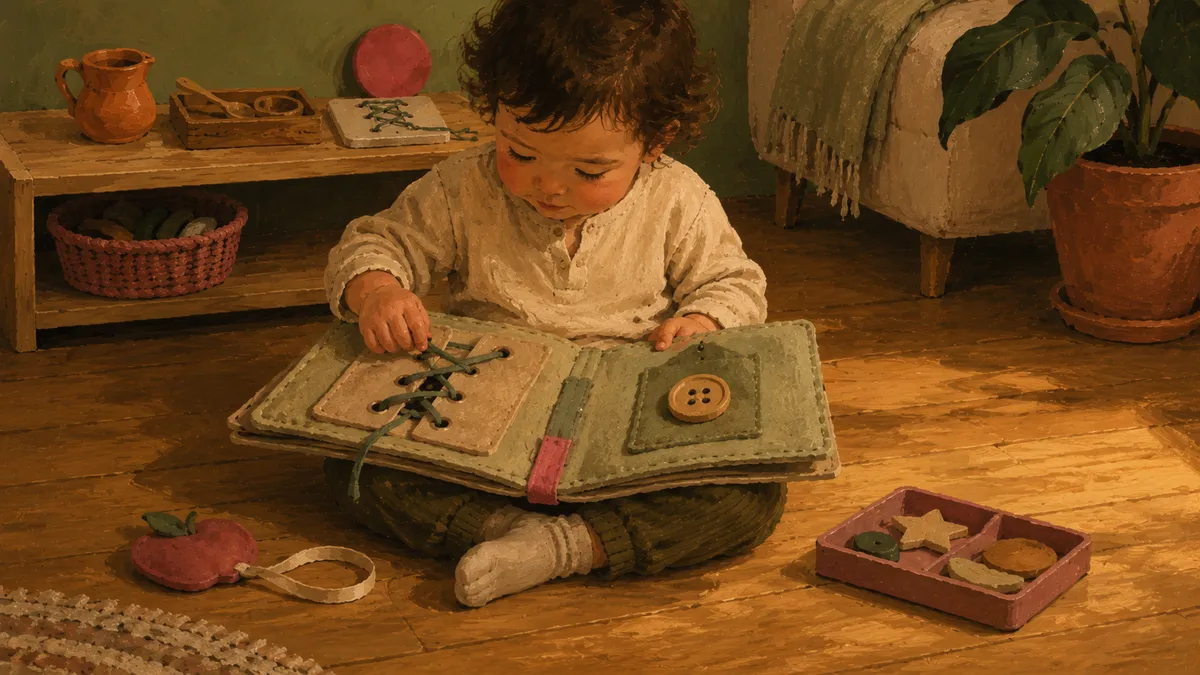
Forget the “ages 2-4” printed on the box. A Montessori-aligned book starts with watching your kid: the one obsessed with zippers, the one shoving spoons in jars, the one who buckles and unbuckles the high chair forty times a day. That’s the page that holds them.
That instinct has a name, the follow-the-child Montessori principle, in plain clothes. The AMI archives describe sensitive periods as windows when a child shows extraordinary pull toward one specific skill, and they close once it’s mastered. So match the page to the developmental milestone in front of you, not a generic chart of child development.
Busy Book vs Busy Board
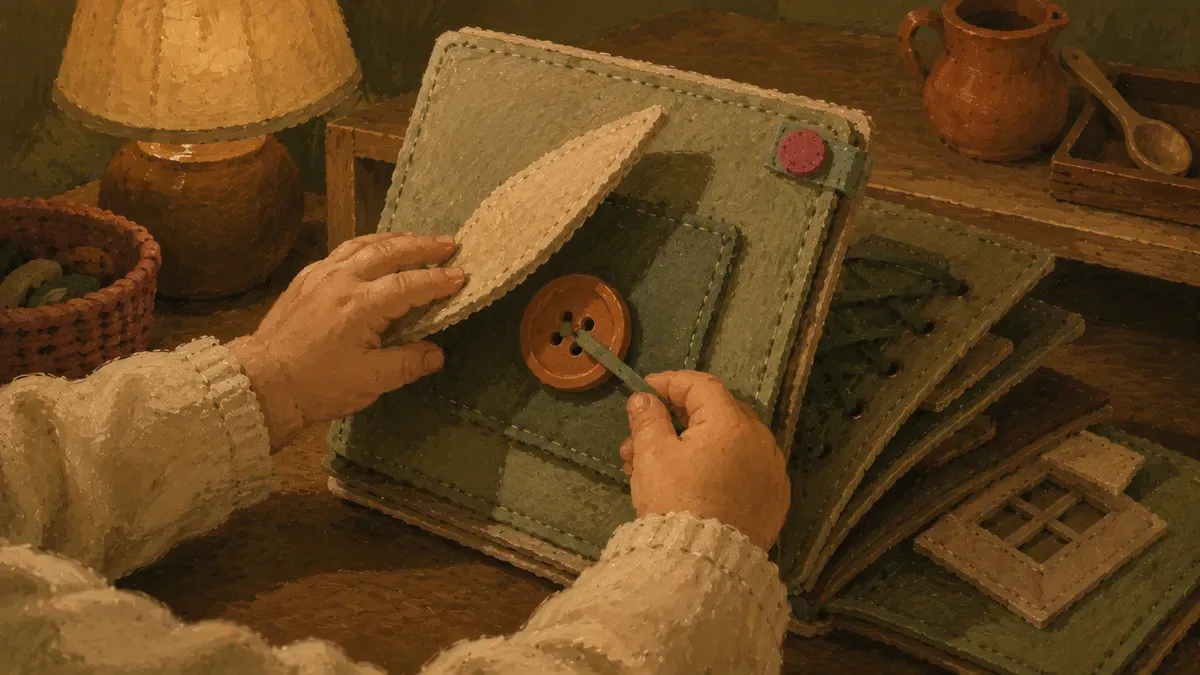
Format is the part most parents get wrong. A busy book is the soft fabric kind with tethered pieces sewn or clipped to each page, so nothing skitters under the airplane seat. A busy board is a fixed wooden panel with manipulatives bolted on: heavier, parked on the floor or wall, not a travel toy.
For the diaper bag, choose the book. For a corner of the playroom, the board wins. Still torn between them? Our deeper quiet books busy books breakdown walks through both. I keep one folding hybrid, the Toddla, in my car, since its swappable activity pages cover either job.
How to Choose a Montessori Busy Book
Before anything goes in the cart, three things tell you whether a book earns its spot in the diaper bag or quietly gets ignored: the skills the pages actually train, how the thing is built, and how easily it travels.
Skill Match and Page Types
Good pages don’t just keep little hands busy. Each one isolates a single real skill, the way research on fine motor skill development in early childhood describes the classic dressing frames doing. So scan the page list for the jobs you actually want practiced:
- Lacing and threading: wrist control and pincer grip, the same muscles behind holding a crayon
- Buttons: pushing one through a buttonhole, slow and fiddly on purpose
- Zipper pages: pull-and-pinch coordination, plus a satisfying sound
- Sorting and color matching: early problem-solving, not just fine motor
- Practical-life dressing frames: buckles, snaps, and ties that map straight onto getting dressed alone
Match those to your kid, not to the box. A toddler around two will mostly unbutton; buttoning three of them comes closer to three, and full independence with every fastener lands around five or six, per the Pediatric Movement Center. A book heavy on practical life skills suits a child reaching for real-world tasks; one leaning on activity pages with sorting suits a child still building those fine motor skills.
Materials, Safety, and Durability
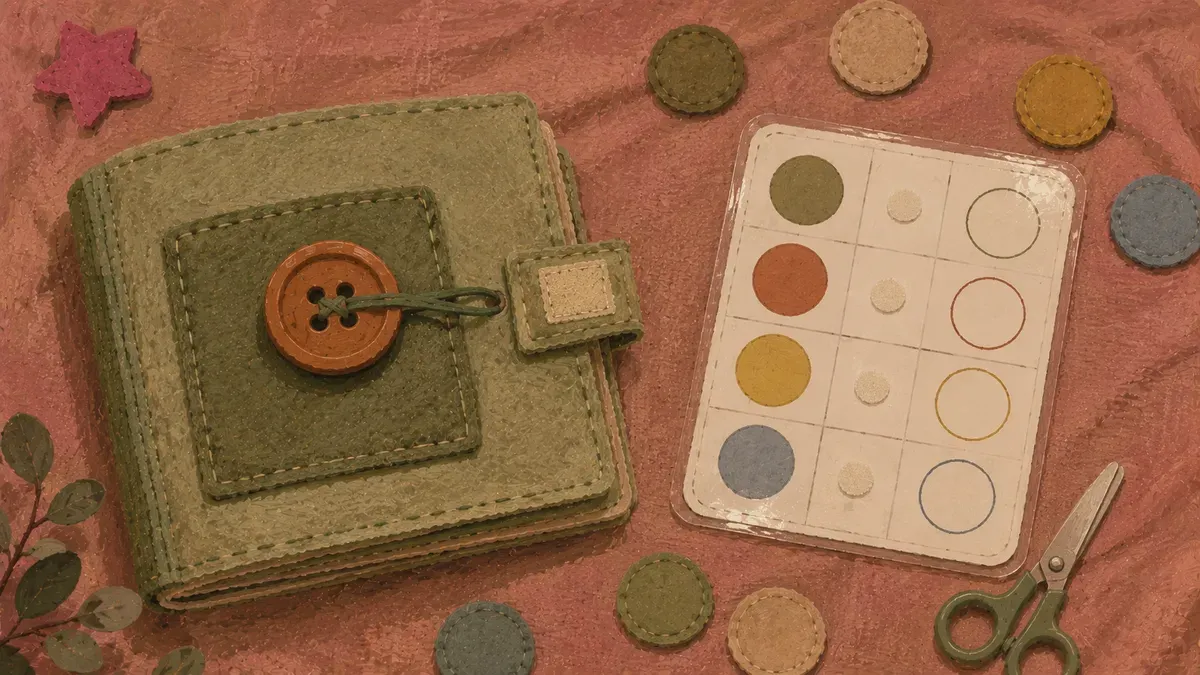
Construction is where the cheap ones fall apart, sometimes in a week. A soft felt busy book with thick stitched pages outlasts a printable laminated one almost every time, and it stays quiet, which matters more than you’d think during sensory activities at the kitchen table.
Run this quick check before buying:
- Tethered pieces: every small part sewn or strung on, nothing loose to swallow or lose
- Velcro and edges: strong velcro that won’t fray, double-stitched edges that survive a determined chewer
- Washable surface: felt you can spot-clean, because snack hands are not optional
- Material sourcing: non-toxic, ideally sustainably made fabric, since it goes near a mouth
Portability and Travel Use
The whole reason a busy book beats a busy board on a plane comes down to weight and noise. A light one slides into a zipper bag, opens flat on a tray table, and the quiet-play design means no batteries and no judgmental looks from seat 14C.
A solid travel toy stays light, packs roughly eight to twelve pages of interactive learning, and prices out around the cost of two airport snacks. On June’s first flight to my sister’s in Tampa, a felt quiet book bought me the entire descent without a single screen. That’s the bar I now hold every book to.
The Best Montessori Busy Books We Recommend
Five picks, sorted by how most parents shop: the do-it-all favorite, the travel-and-swap options, and the multi-book sets that stretch a small budget.
Here is how the five stack up on the things that decide a meltdown:
| Book | Format | Best for | Skill range | Parents’ rating |
|---|---|---|---|---|
| deMoca Busy Book | Felt, zipper bag | Everyday all-rounder | Broad | 4.6★, 4,000+ reviews (Amazon’s Choice) |
| Curious Columbus Away We Go | Cotton, 10 pages | Travel | Focused | 4.7★, 1,800+ reviews |
| Toddla swappable board | Removable pages | Swapping activities | Wide | |
| Quiet Book Club | Soft fabric | Growing with one kid | Staged | |
| MIKNEKE 4-pack | Multi-book set | Multiple ages, one buy | Broad |
Best Overall Pick
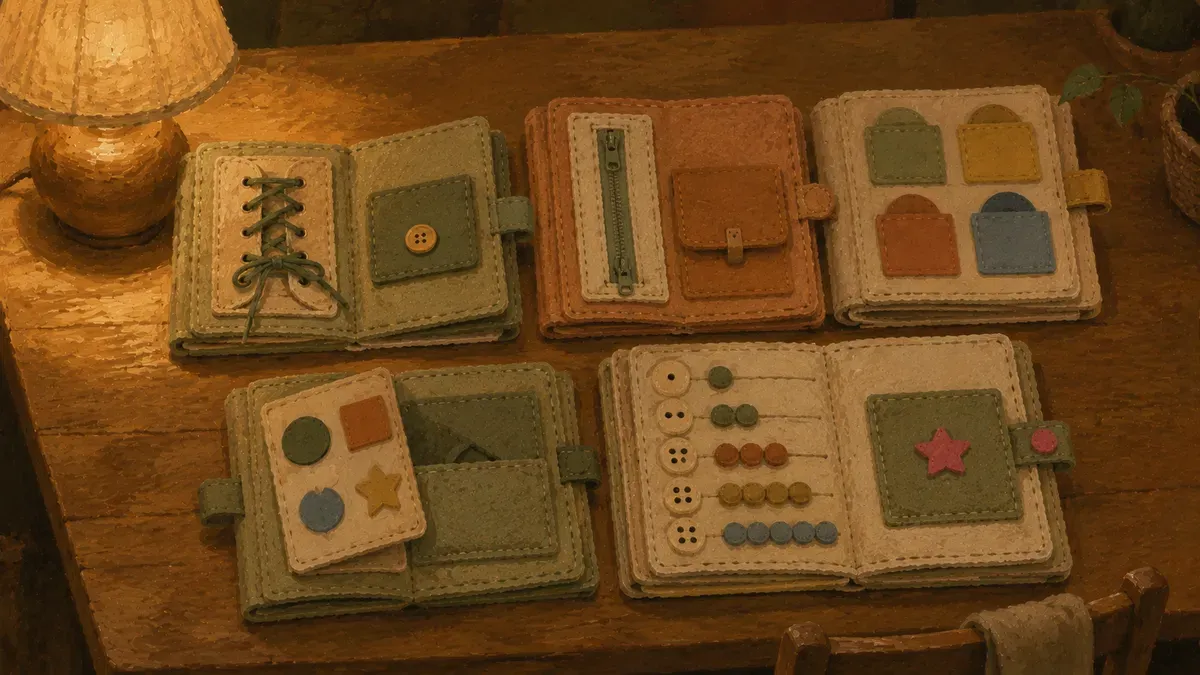
If you buy one book and stop reading, make it the deMoca Montessori busy book. The pieces are tethered, so the felt apple doesn’t vanish under the couch on day two, and that one detail is the difference between a toy you keep and a toy you toss. Nine felt activities live in a single zipper bag: buttoning, lacing, matching, counting, the lot. It’s an Amazon’s Choice pick, and the 4,000-plus reviews sitting at 4.6 stars say the tethering holds up in more houses than mine.
June spent a solid fifteen minutes on the shape-sort page in the pediatrician’s waiting room, which for a three-year-old is basically a standing ovation. As a first educational toy that earns its shelf space, this is the clearest yes on this list.
Best for Travel and Removable Boards
When the whole point is packing light, two picks split the job. The Curious Columbus Away We Go is the slim travel toy I’d throw in a diaper bag without a second thought: ten fabric pages with 3D pop-ups and removable pieces, built for tray tables and car seats, not the living room floor. Parents rate it 4.7 stars across 1,800-plus reviews, and it’s aimed at ages three and up, so hold it back until the small pieces won’t head straight for a mouth.
The other route is a swappable board like the Toddla, where the activity pages pop out so you carry only the two your kid is actually obsessed with this week. Fewer pages, less weight, no dead pages they’ve outgrown. If you want a deeper bench of page ideas to rotate through, my toddler activity book roundup pairs nicely with either of these learning boards.
Best Value Multi-Book Sets
More kids or a wider age gap, and the math changes. The Quiet Book Club book grows with one child, its staged pages staying useful as a toddler climbs through fine motor milestones.
The MIKNEKE 4-pack is the budget hero for siblings: four washable montessori busy books in one order, so the two-year-old and the four-year-old each get their own without you buying four times. Spreading the interactive learning across a set beats one fancy book everybody fights over. For a busy household, the 4-pack is the easiest yes on this list.
Matching Pages to Your Child’s Stage
A 4-pack covers a wide age spread, but inside any book the page that lands depends on what your kid can actually do right now. Here’s how the pages sort out by stage, youngest first.
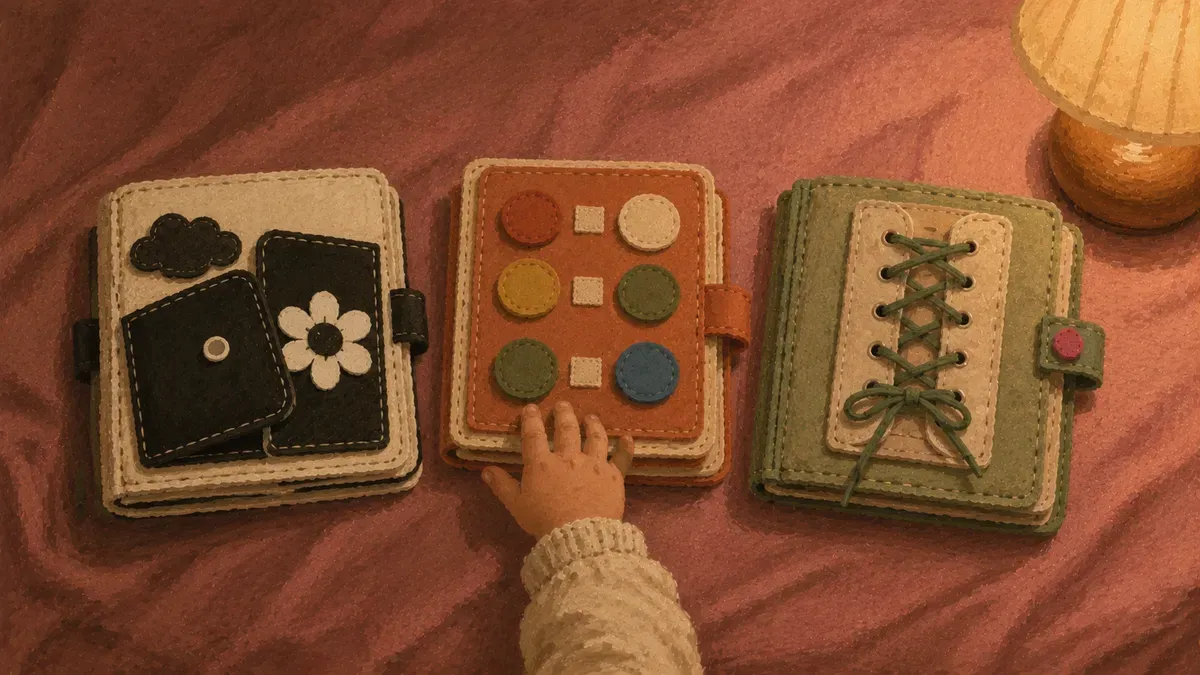
Babies and One-Year-Olds
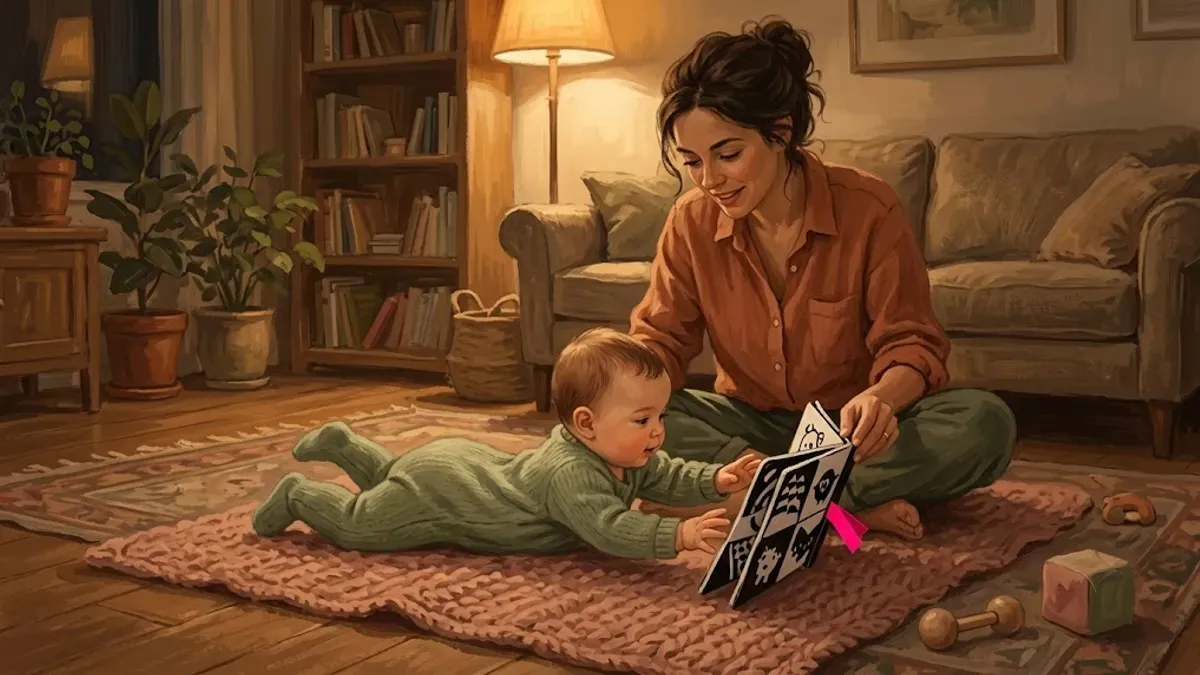
At this age, skip anything fiddly. Babies are drawn to bold contrast before they see full color, and they’re busy grabbing things and figuring out where stuff goes when it disappears. The winning pages are big, high-contrast, and built for a whole-fist grab.
- A chunky felt flap that hides a face
- A fabric ball on a ribbon
- A peekaboo pocket
The pincer grasp, the thumb-and-finger pinch, doesn’t really show up until around 9 to 10 months, per Cleveland Clinic, so don’t expect tiny snaps to work yet. Object permanence is the real game here, and a flap that reveals a hidden shape buys a surprising amount of do-it-again sensory activities without a single small part.
The first-stage pick:
Our pick for this stage leans toward a simple infant busy book with flaps over anything with loose pieces, and it checks the early developmental milestones box through plain hands-on learning.
Two-Year-Olds
Now the pinch is solid, and your toddler wants to make things go where they belong. This is sorting and matching season. Two-year-olds can typically place a couple of shapes in the right spots and start grouping by color, according to Brown Health, which is exactly the brain your matching pages are feeding.
Reach for color-match dots, simple shape sorters, and the first easy fasteners: a big button through a wide felt loop, a chunky zipper pull, a single snap. These are the practical life skills that feel like play, and the fine motor skills get a real workout. Meet the pinch where it is.
Three- and Four-Year-Olds
Preschoolers crave a challenge and can finally stick with one for a while. The AMS names refinement of movement and concentration as distinct sensitive periods for this age in its early childhood developmental milestone guidance, and the right pages lean into both.
Pages that earn their keep at this stage:
- Lacing cards
- Dressing frames with real buckles and laces
- Counting strips
- Early-literacy flaps
A preschool busy book packed with these is what kept Eli busy on long car rides when nothing simpler held him. If a page gets mastered and tossed aside, that’s a win, not a fail. Swap it for a harder one and let the climbing continue.
Buy a Busy Book or Make Your Own
Making your own is cheaper on paper and a sweet thing to hand down, but it eats a weekend you probably don’t have. I learned that the hard way. One January I cut felt fish at my kitchen table for three nights running, glue gun in one hand, and ended up with four wobbly pages June barely touched.
A glued DIY busy book runs around six hours start to finish, while a fully sewn one can swallow roughly 40 hours, with sourcing the felt and snaps alone eating about eight hours of hunting. That’s a real trade. Here’s the honest split:
Making your own makes sense if:
- You sew, or you genuinely enjoy the project for its own sake
- You want one specific skill nobody sells (a particular zipper, your kid’s name in buttons)
- The keepsake matters more than the speed
Buy if:
- You need it this week, not next month
- You want tethered pieces and stitching that survives a toddler
- Your time is worth more than the felt you’d save
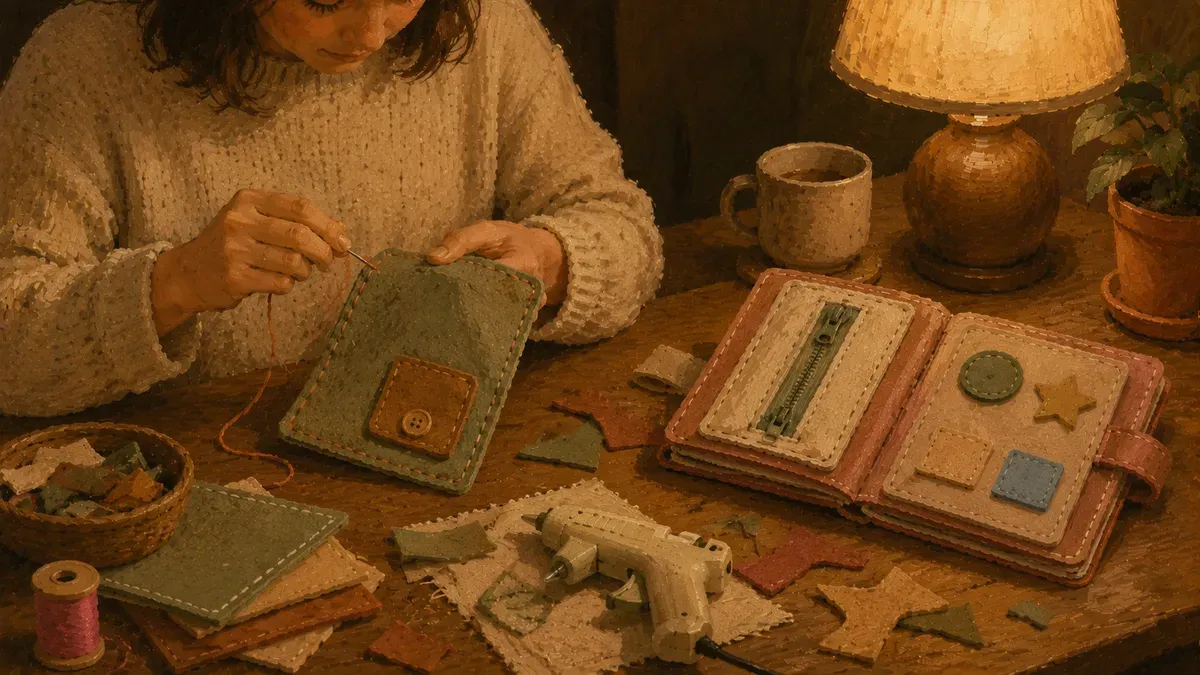
Where store-bought wins is the small stuff that’s hard to DIY well: snug velcro, edges that hold up to chewing, pages that actually fold flat. A swappable option like the Toddla board sidesteps the whole debate, since you add new activity book pages as your kid grows instead of building a fresh one.
The rule I land on: follow the child, then follow your own bandwidth. If crafting fills your cup, make your own quiet book from felt and enjoy it. If you’re running on fumes, buy the thing tonight and spend that saved weekend on the floor playing instead. Either way, our complete quiet book and busy book guide walks you through both paths. There’s no wrong door here.
Found this useful? Save it for the next rough afternoon.
Questions parents ask me about this
How do I make a Montessori-style busy book for toddlers?
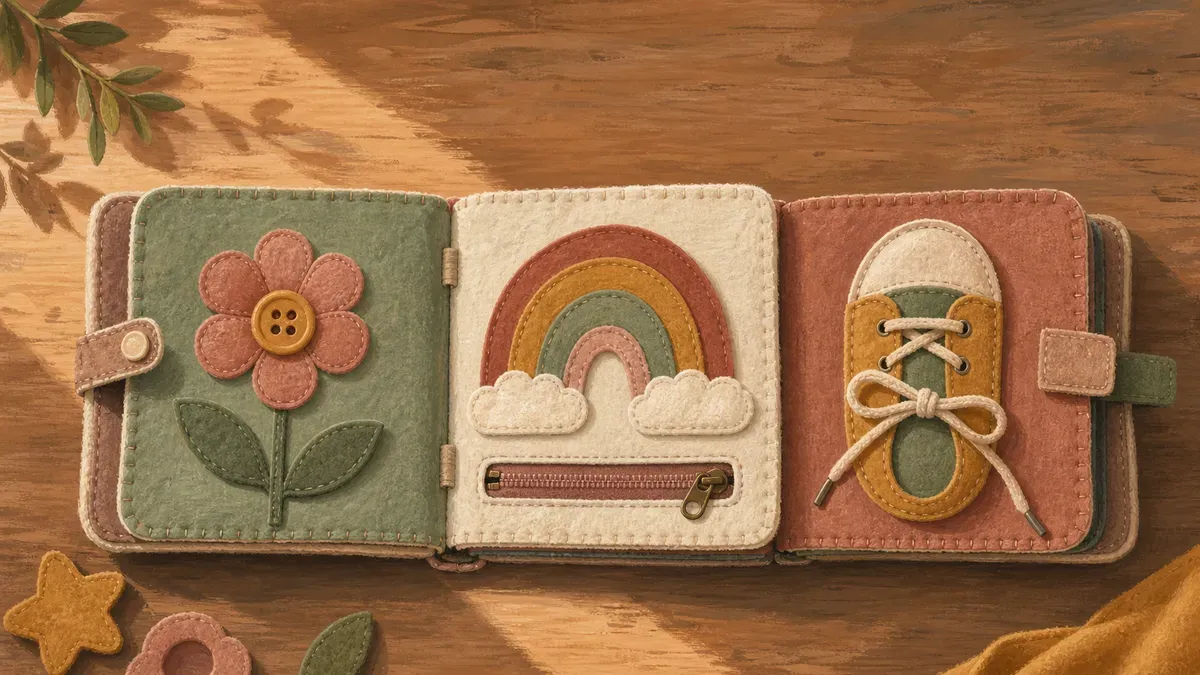
Start with felt pages because felt is quiet, durable, and pieces stay put with velcro. Pick two or three skills your child is actively working on right now (buttons, color sorting, shape matching) and make one page per skill. Tether every loose piece with a short ribbon so nothing gets lost. Expect to spend six or more hours on a glued version; a sewn book runs much longer, so begin small and add pages as your child shows interest.
What age is a Montessori busy book best for?
Most kids engage meaningfully with busy books somewhere between 12 months and 5 years, but the right fit depends on the specific pages, not the child's age. Babies do best with large flaps, high-contrast images, and object-permanence pages with no small parts. Two-year-olds are ready for basic sorting and matching and easy first fasteners. Preschoolers can handle lacing, dressing frames, and counting pages. Choose by what your child is actually practicing, not what the box says.
Are felt or printable busy books better for Montessori?
Felt wins for daily use. It's quieter, the pieces don't tear, and it survives being stuffed in a bag and pulled out at a restaurant. Printable books cost less to make and can be swapped out quickly, but laminated pages crack at the folds and the whole thing tends to fall apart after a few weeks of real kid contact. If you're making one to last, felt is worth the extra effort.
How is a busy book different from a busy board?
A busy book is a soft fabric binder with activity pages, tethered pieces, and a spine you can fold flat. It's light enough to go in a zip bag, quiet in a waiting room, and easy to pack on a plane. A busy board is a fixed wooden panel with mounted hardware like locks, latches, and switches. It doesn't travel because it's heavy. Both teach real-world skills, but a busy book is the portable option and a busy board is more of a home station.
How do I clean a fabric Montessori busy book?
Spot-clean with a damp cloth first. Most messes come out that way without any fuss. For a full wash, check whether the book has a sewn spine or just velcro closures; sewn spines usually need a gentle hand wash or a mesh laundry bag on a delicate cycle. Air dry flat so the pages don't warp. Avoid the dryer unless the label says otherwise, since heat can weaken velcro and cause felt to pill.
Are Montessori busy books actually aligned with Montessori principles?
The best ones are. Montessori principles ask that materials mirror real-world skills a child is actively developing, isolate one concept per activity, and let the child work independently to a natural conclusion. A busy book page that teaches an actual button, uses real fabric, and lets a toddler fasten and unfasten without help checks those boxes. Pages that are purely decorative, require adult coaching at every step, or combine too many concepts at once drift away from Montessori and toward ordinary craft kits.
How many pages should a Montessori busy book have?
Eight to twelve pages is the sweet spot for most toddlers. Fewer than six and the book gets boring fast; more than fifteen is usually past what a two- or three-year-old can focus on in one sitting. For travel, a slimmer book is easier to manage. For home, rotating pages in and out as skills develop works better than one giant book your child outgrows all at once.
Written by
Nora Hayes
Mom of two and a former preschool aide. I share the screen-free sensory play and calm-down ideas I test at my own kitchen table, plus what the moms in my little meet-up swear by. A parent passing on what works, not a doctor or a therapist.
More about NoraKeep going
All Quiet & Busy Books-
 Quiet & Busy Books
Toddler Activity Book: 25 Quiet Page Ideas to Make
25 toddler activity book page ideas your kid will actually sit still for, plus the felt, Velcro, and binder-ring steps to build each one at home.
-
 Quiet & Busy Books
Quiet Book Patterns: A Beginner's First Felt Page
New to felt? These beginner quiet book patterns walk you through your first page step by step, with real costs and rookie mistakes. Start today.
-
 Quiet & Busy Books
Infant Busy Book: Best Soft, Safe First Picks
Most busy books are built for toddlers. Here's the infant busy book that's truly newborn-safe: soft pages, high contrast, washable.
-
 Quiet & Busy Books
Quiet Book DIY: How to Make One From Scratch Fast
Make a quiet book from scratch this weekend, even if you've never sewn. Get the materials, page count, and step-by-step build. Start today.