Potty Training Sticker Chart Printable That Travels With You

Some links here are affiliate links. If you buy through one, I may earn a small commission at no extra cost to you. As an Amazon Associate I earn from qualifying purchases. I only point to things I'd actually use with my own two.
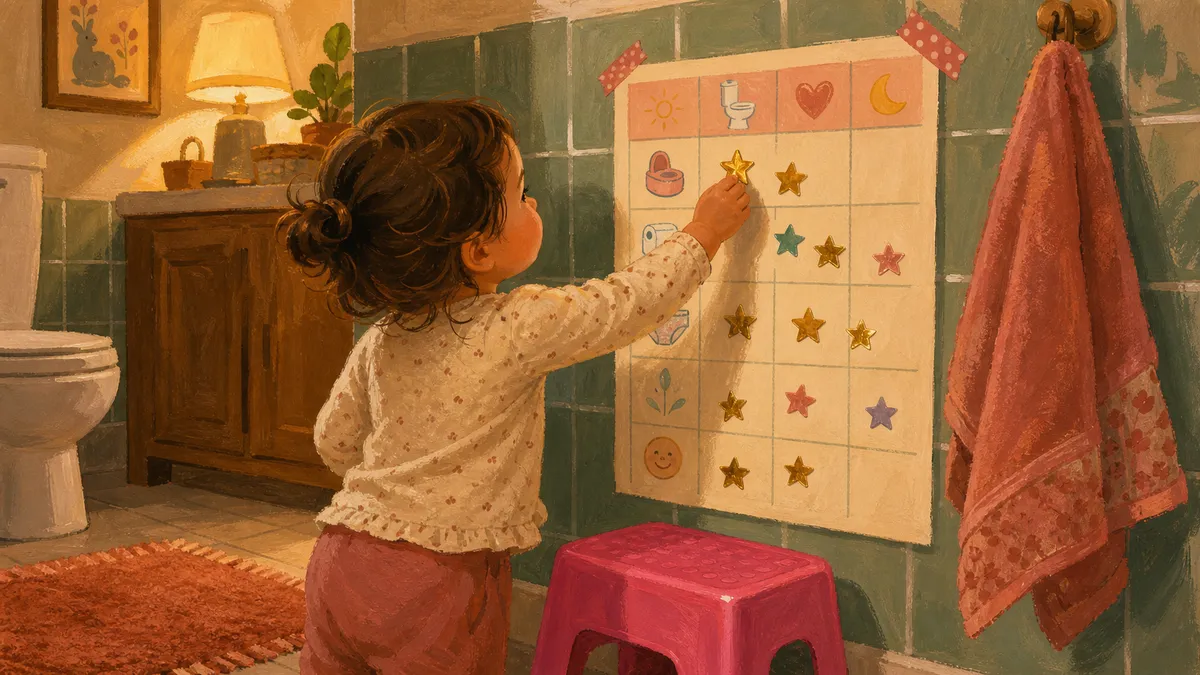
I’m Nora Hayes, a former preschool aide and mom who’s been through potty training twice, and yes, a free potty chart is the fastest thing you can put up today. Toddlers move faster when they can see their own progress, and a sticker chart at eye level by the toilet does more work than any amount of reminding. This covers the four-step setup, how to pick a chart style and stickers your kid will actually care about, and what to do when the chart stops landing.
The plan in brief:
- Print the free chart and tape it at your child’s eye level by the toilet.
- Add one sticker the second a potty success happens, every single time.
- Trade a full row of stickers for a small reward, then wipe the chart clean and start over.
Get Your Free Printable Chart and Set It Up in 4 Steps
The whole method fits in one breath: print it, tape it at your kid’s eye level, hand over a sticker every time they go, and trade a full row for the reward they’re actually chasing.
The download link is at the bottom of this page. It’s a free potty chart, no email wall, no hoops. Print it on regular paper, and if you’ve got a sleeve protector or a strip of laminate, even better, because this thing will live next to a splash zone.
Four steps and you’re running:
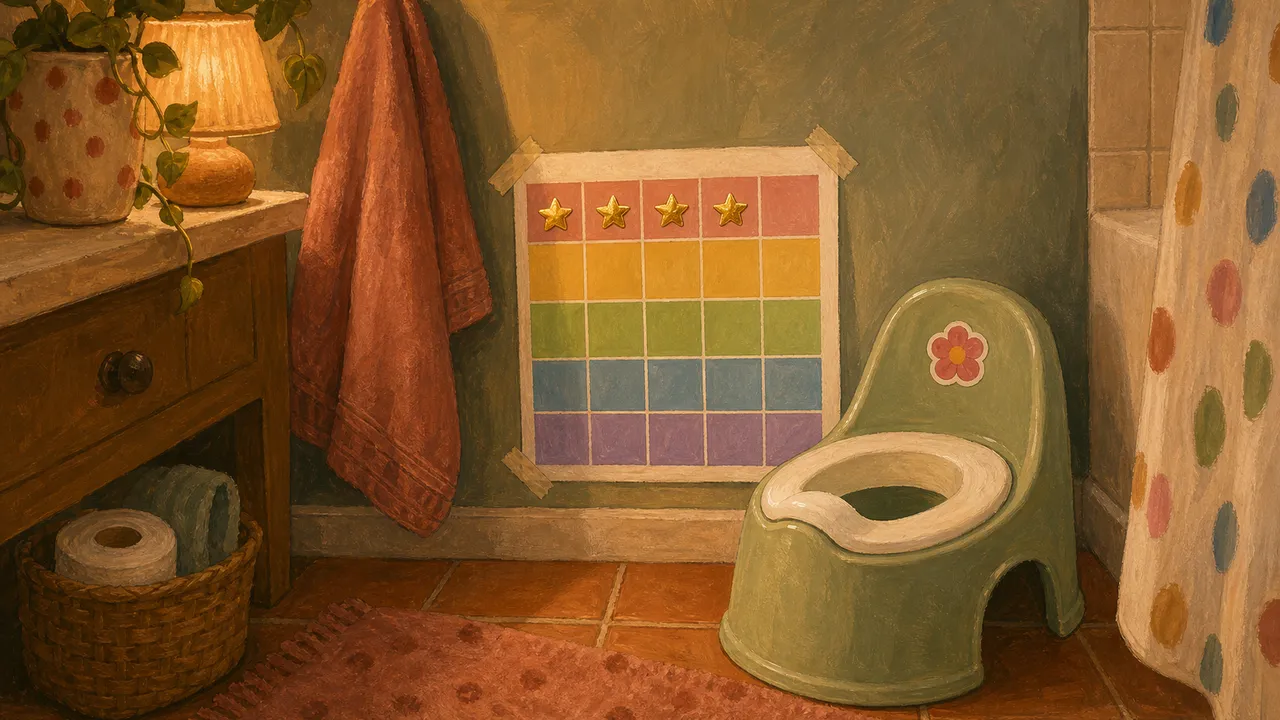
- Print and place it. One page, plain printer paper. Tape it on the wall right beside the potty, low, where a three-year-old’s eyes actually land. Up by the light switch does nothing. They need to see their own progress without looking up.
- Hand over a sticker on every success. Pee, poop, even a solid try that ends in a near-miss counts in the early days. Let your kid pick the sticker and press it on themselves. That tiny bit of control is half the reason this works.
- Trade a full row for the reward. Decide the prize before you start, write it on the chart so it’s a promise and not a maybe. A full row earns it. Keep the goal short at first, three or four boxes, so the win comes fast enough to mean something.
- Reset and keep going. Once they cash in, start a fresh row. Reprint the page whenever it gets gross or your kid wants a clean start. That reset is its own small motivator.
That’s the entire potty training chart template, free and printable, doing its one job: turning an invisible win into something your kid can see, touch, and brag about.
A quick word on the sticker chart itself. It is positive reinforcement, plain and simple, the same trick preschool teachers have leaned on for decades. I used these on classroom floors before I ever used one on my own kids, and the kids who lit up weren’t chasing the sticker. They were chasing the proof that they’d done it.
When it stalls:
- Day one flops? That’s normal. Put it back up tomorrow.
- Don’t take a slow start as a verdict. The chart only works if it’s still on the wall the morning after a rough night.
- Most kids find their stride by the third or fourth try.
If you’re just starting the whole journey, our full potty training guide walks through readiness signs and timing before you ever print a chart.
Choosing the Right Chart Style for Your Child
The right chart layout does half the motivating for you, so it’s worth picking one that fits where your kid actually is right now. A wide-open beginner grid suits a first-timer who needs an easy win, while a themed or weekly tracker keeps an older toddler invested once the novelty wears off.
Beginner Charts for First-Time Learners
For a kid who has never sat on the potty, fewer boxes win. A grid with three or four spaces gives them something they can finish in a morning, and finishing is the whole point. A 30-box chart looks impressive on the wall and quietly tells a first-timer the goal is forever away.
Start small, then build. Once they fill that first short row without much fuss, you size up to a longer tracker or one of the themed paw patrol potty training charts and other themes that keep an older toddler hooked.
Readiness matters more than the chart, though. The AAP notes that toilet-training skills usually show up between 18 and 24 months, and starting before 18 months rarely gets you finished any sooner. A chart can’t rush a kid who isn’t there yet.
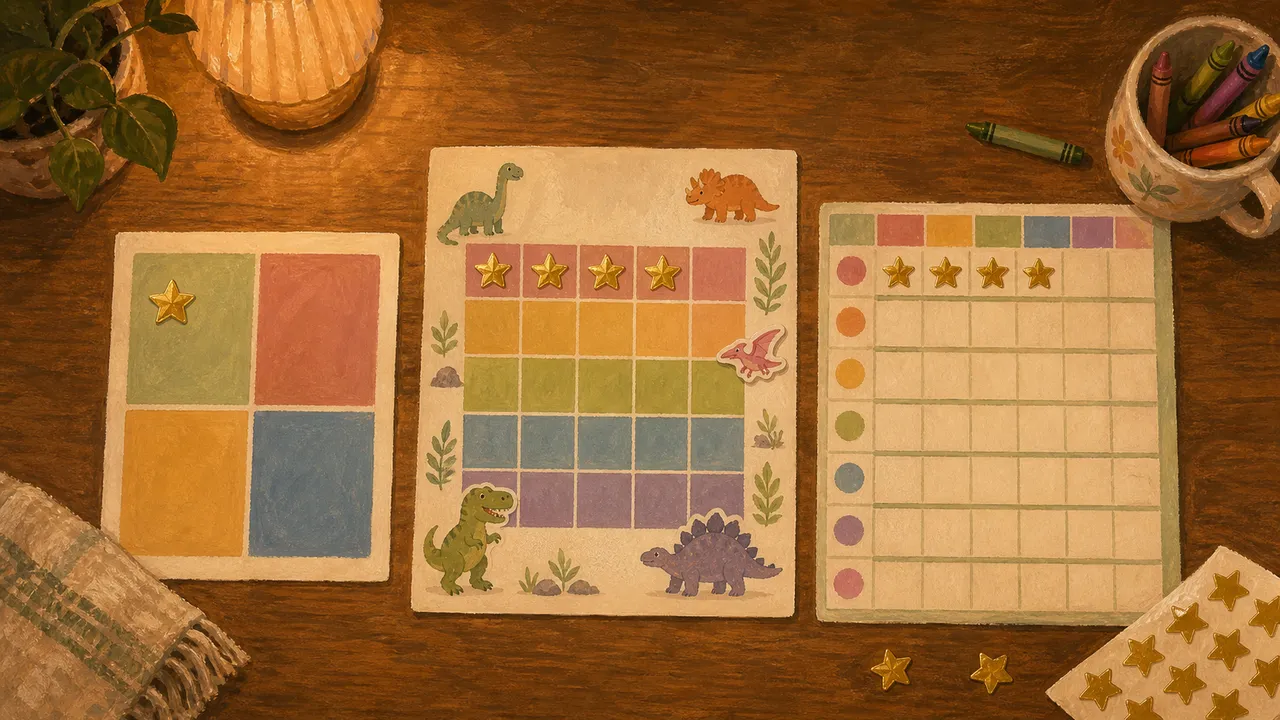
| Chart style | Boxes | Best for | First win lands |
|---|---|---|---|
| Beginner grid | 3-4 | Total first-timers | Same morning |
| Themed tracker | 10-15 | Past the novelty stage | A few days in |
| Weekly chart | 7+ per week | Routine-builders | End of week |
Pair it with a potty training sticker chart reward and you’ve got accidents counting as tries, not failures.
Themed and Weekly Tracking Options
Once the basics click, a themed design gives a reluctant kid a new reason to try again. Swapping a generic box for a dinosaur potty chart, a fleet of trucks, or a princess castle is usually all it takes to reset their interest.
For an older toddler past the first-win stage, switch the goal from “this morning” to “this week.” A potty training calendar tracks seven days at a glance, so the visual progress builds across the week instead of resetting every full row.
Good candidates for the themed and weekly route:
- A kid who’s bored of the beginner grid but still has accidents
- A toddler chasing a longer goal, like a sticker every day for a week
- A child who lights up over one specific character or theme
Print the bigger potty training poster or weekly potty training sheets, tape it somewhere they pass all day, and let the steady progress tracking do the nudging.
Picking Stickers and Rewards That Actually Motivate
A chart only nudges if the kid wants what’s at the end of it. The trick is keeping that payoff small enough to repeat without turning every potty trip into a negotiation, and knowing when to quietly retire the stickers before they become the whole point. Below: reward ideas that stay cheap and low-drama, plus how to fade the chart out once the habit sticks.
Reward Ideas That Keep It Small
Big prizes backfire. Promise a toy for one dry day and you teach your kid to negotiate, not to use the potty. Keep the incentive tiny and the win stays the win.
Stuff that costs almost nothing and still lands:
- An extra bedtime story or one more song
- A sticker on the back of their hand to show Grandpa
- Five minutes of a favorite playlist, dancing in the kitchen
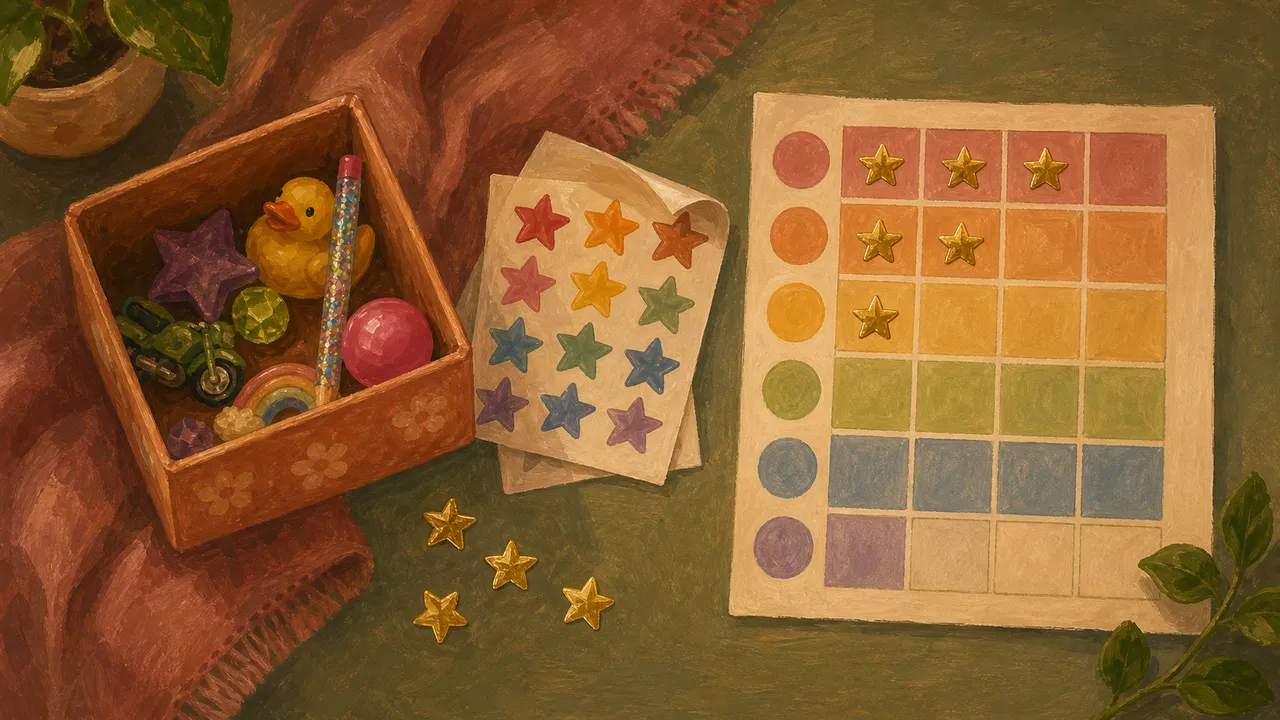
- A potty prize box of dollar-store trinkets, one pick per full row
- A printed certificate for the big milestones, like a whole dry week
Pediatrician Dr. Amy Sniderman at Cleveland Clinic advises, in her guidance on potty-training rewards, that these incentives last about a month at most, leaning on stickers and small trinkets over big prizes, and slowly raising how many stickers it takes to earn one. That’s your gentle off-ramp built right in. Want a longer menu? I keep a running potty training reward chart of ideas under a few dollars. The sticker does the heavy lifting; the prize is just an occasional bonus.
How to Phase Out Stickers Over Time
The fade is the part most charts skip. A sticker for every trip works on day three; by week three it’s just a habit your kid forgot they were being rewarded for. That’s your cue. Once the potty stops being the event, start spacing rewards out instead of celebrating every visit.
Stretch it gradually so they barely notice the motivation shifting off the chart:
- Sticker every trip, then every other, then a couple a day, then only the ones that surprise you
- Swap the sticker for a quick “you did that all by yourself” more and more often
- Let a full row earn the reward less frequently as the weeks go on, until the row itself quietly disappears
- Keep a sheet handy for an off day; a backslide isn’t failure, it’s a Tuesday
The skill is the goal, not the sticker. When the habit holds without the chart, you’ve hit the real milestone. Retire it without making a ceremony of stopping.
Keeping the Chart Working While Traveling or On the Go
Even a habit that’s holding can wobble the second you leave the house. A weekend at Grandma’s, a road trip, a week the whole schedule blows up, and the kid who’d been nailing it is suddenly having accidents again.
The chart still holds on the road, even when the schedule goes sideways.
That’s what the next two parts cover: a travel-friendly setup you can throw in a bag, and how to ease back in after a few off days without starting from scratch.
Packing a Reusable Chart and Portable Potty
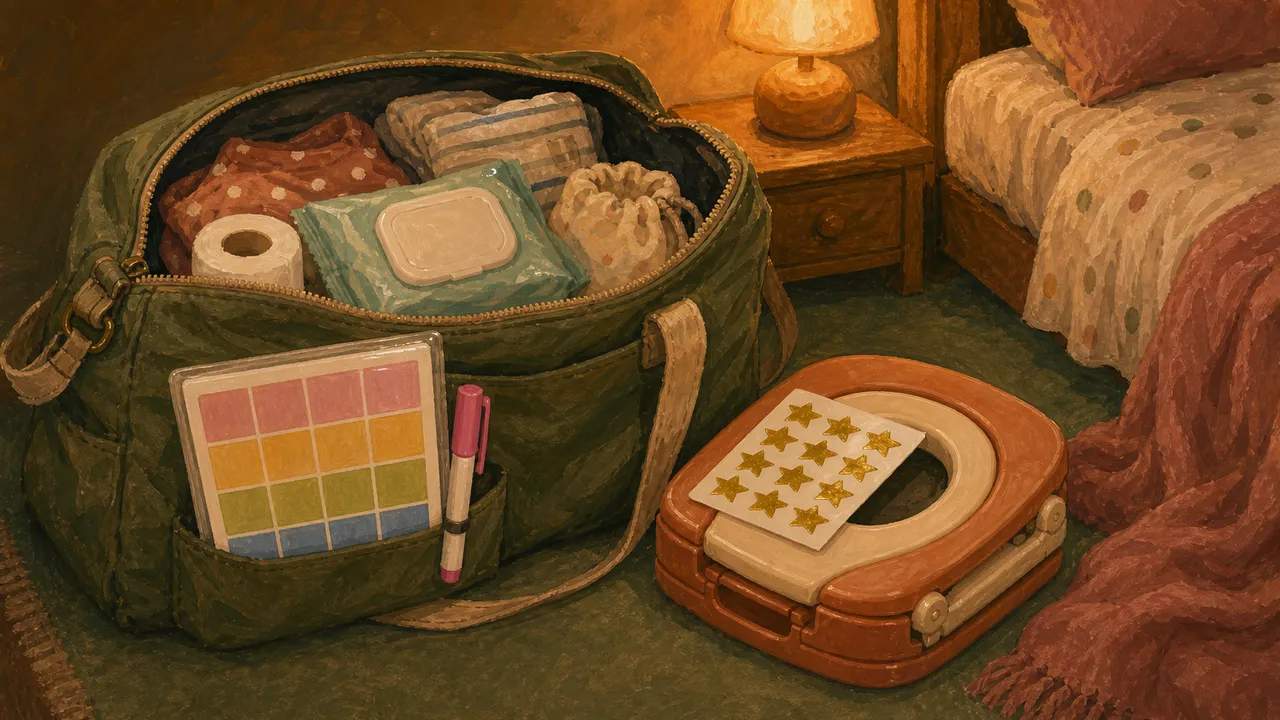
A new place is where the chart earns its keep. Grandma’s house, a hotel, the back of the car on a road trip, the kid still wants the same sticker, the same row, the same little payoff they get at home. Give it to them. Pack a second copy and the routine travels with you.
The trick is making that copy last through the whole trip:
- Run it through a laminating pouch and the chart turns into a wipe-clean surface that shrugs off juice, sunscreen, and whatever else lives in a diaper bag. The Scotch letter-size pouches come 100 to a box, they’re an Amazon’s Choice pick, and more than 100,000 parents (and office workers) have left them 4.9 stars, so you’re not betting on a mystery brand.
- On the road, skip the sticker sheet and let your kid draw the star in with a fine-tip dry-erase marker, then wipe it off at night for a clean row in the morning. I keep the low-odor EXPO 4-pack in the bag, 12,000-plus reviews at 4.7 stars, and no marker fumes in a cramped hotel bathroom.
- One laminated sheet covers the whole trip. No printer, no second copy, no scrambling to find somewhere that’ll print for you at 8pm.
Then the seat itself. A folding model like the OXO Tot 2-in-1 Go Potty weighs 1.2 lbs and collapses flat for a stroller or trunk. Check the current price before you buy. That’s the whole portable potty training kit: a wipeable chart, a packable seat, the same reward waiting on the other end.
Heading somewhere sunny for a week? Our summer potty training toilet routines guide picks up where this leaves off.
Restarting After a Routine Falls Apart
Reprint the chart. That’s the whole move.
Common disruptions that break a streak:
- A new baby at home
- A week at the lake or relatives
- The first month at a new daycare
Any of those can wipe out the streak, and the fix is the same: tape up a fresh sheet, start a clean row, say nothing about the gap.
You are not back at square one. The skill is still in there; the disruption just buried it for a bit. HealthyChildren.org names a new sibling, travel, and a new childcare center as common reasons potty training regression shows up, and notes most kids pick up where they left off after a few days or weeks.
- Treat the restart as a do-over, not a demotion
- Lower the bar for a morning or two
- Sticker the near-misses again until the trips start landing on their own
The milestone you already hit doesn’t un-happen because a road trip rattled it. Give it a few days. Your kid finds the rhythm faster than you’d guess.
Troubleshooting When the Chart Stops Motivating
Sometimes the chart just goes stale. That’s not the chart failing you, and it’s not your kid failing either.
Signs the Chart Needs a Reset or a Break
- Stickers stop landing or the full row gets a shrug
- The reward has lost its pull
- Accidents start creeping back
A bored kid is the easy one. If the design has gone stale, swap it for a fresh theme or a new layout, and dig through some potty training chart ideas until one clicks. Shrink it, change it, or move the prize to something they actually want this week.
A short slide is just regression. But if accidents keep climbing and the potty turns into a fight, readiness is the real issue. Expert advice on handling potty training setbacks from Mayo Clinic guidance says to pause when a child resists, since pushing an unready kid builds a power struggle.
Pause, breathe, and circle back in a few weeks. For the bigger picture, lean on our full potty training guide to spot when readiness has truly returned.
Found this useful? Save it for the next rough afternoon.
Questions parents ask me about this
Where can I find a free printable potty training sticker chart?
Scroll down to find the free download waiting at the end of this page. It prints on plain paper, no special supplies, and you can have it taped beside the potty in about two minutes. Print the small beginner grid for a first-timer, or the weekly tracker once your kid has outgrown the novelty.
What is a normal age for a child to be potty trained?
Most kids start showing the skills to train somewhere between 18 and 24 months, and plenty aren't fully there until well into age three. Earlier isn't better, and a late starter isn't behind. Readiness, not a birthday, is what tells you it's time.
What are the signs of potty training readiness?
Watch for the body and the interest lining up: staying dry for a couple of hours, telling you when a diaper is wet or dirty, hiding to poop, and curiosity about the toilet. Pulling pants up and down on their own helps too. If most of those are showing up, the chart has a real shot. If none are, wait a few weeks.
How many stickers should my child earn before getting a reward?
Start tiny, three or four stickers for the very first reward, so the first win lands the same morning and the chart feels worth it. Once the routine sticks, slowly raise the number needed before a prize. That gentle stretch is how you fade the rewards out without a fight.
Can I use the same potty chart for nighttime training?
Keep the daytime chart for daytime wins. Staying dry overnight is a separate skill that depends on your child's body, not on motivation or effort, so a sticker can't really reward it. Master the daytime habit first, then handle nights on their own timeline.
How do I keep the chart clean and reusable for multiple kids?
Laminate a printed copy, or slide it into a clear sleeve, and a dry-erase marker turns it into something you can wipe clean and use again. Wipe it clean at the end of a row, or at the end of a kid, and the same sheet carries the next one.
What should I do if my child loses interest in the sticker chart?
First figure out what fizzled. If they're bored, swap the plain grid for a themed chart with a character they love. If they shrug at a full row, shrink or change the reward. And if accidents are creeping back, that's usually a readiness signal, so ease off and try again in a few weeks rather than pushing through.
Written by
Nora Hayes
Mom of two and a former preschool aide. I share the screen-free sensory play and calm-down ideas I test at my own kitchen table, plus what the moms in my little meet-up swear by. A parent passing on what works, not a doctor or a therapist.
More about NoraKeep going
All Potty Training-
 Potty Training
Potty Training Reward Chart: 20 Ideas Under $3
Skip the toy aisle: build a potty training reward chart with 20 ideas under $3 you already own. Grab the plan that motivates a stubborn toddler.
-
 Potty Training
How to Potty Train a Boy (and How a Girl Differs)
How to potty train a boy in 3 to 6 months: the readiness signs, the step-by-step method, and the small things that differ for girls.
-
 Potty Training
Potty Training Certificate: A Just-Do-This Guide
Charts skip the finish line. Make a potty training certificate that gets your toddler over the line for real. Print yours tonight.
-
 Potty Training
Poop in the Toilet: Why Kids Pee Fine but Won't Poop
Kid pees fine but won't poop in the toilet? Here's why it happens, plus the exact steps that fix it without a fight. Start tonight.