Allowance Chore Chart: Start It Without the Weirdness


Some links here are affiliate links. If you buy through one, I may earn a small commission at no extra cost to you. As an Amazon Associate I earn from qualifying purchases. I only point to things I'd actually use with my own two.
An allowance chore chart works when you split the jobs into two piles, money jobs and just-because-you-live-here jobs, so your 3-to-6-year-old earns for real effort instead of bargaining over every single ask. I’m Nora Hayes, a former preschool aide and mom of two, and I’ve run a money chore chart at my kitchen table long enough to know the trick is keeping it dead simple, not Pinterest-pretty.
This guide walks you through the setup, which chores pay and which don’t, how much to hand over by age, a hundred chore ideas, the charts and apps that run it for you, and how to keep the whole thing alive once the shine wears off.
The plan in brief:
- Split chores into two lists: unpaid family jobs and 3 to 5 paid extras
- Price each paid chore 25 cents to 1 dollar, and cap the week at your child’s age in dollars
- Pay out every week on a fixed payday, using a chart your kid can see and check off
Set Up Your Allowance Chore Chart in 6 Steps
The whole thing comes down to three moves: decide what earns money and what doesn’t, build a chart your kid can actually read, then pick a payday and run a single week to prove it works. Here’s how each one goes at the kitchen table.
- Divide chores into unpaid family duties and a short list of paid extras.
- Build a picture-based chart your child can mark themselves.
- Pick one payday, run a single week, and pay out exactly what was earned.

Split Chores Into Paid and Unpaid Jobs
Grab a piece of paper and draw a line down the middle. On the left go the unpaid chores, the household duties everyone does because they live here: clearing their own plate, putting shoes by the door, tossing dirty clothes in the basket. Those are family responsibilities, not a paycheck.
The Center for Parenting Education makes the case that keeping everyday contributions unpaid helps kids see themselves as real members of the household, not hired hands. Treat that left column as non-negotiable.
The right side stays short on purpose. Three to five paid chores, the extra above-and-beyond stuff: wiping baseboards, matching socks, watering plants. With my three-year-old I started with exactly two. A toddler doesn’t need ten ways to earn. She needs one clear job she can finish and feel proud of.
Choose a Chart Format Your Child Can Read
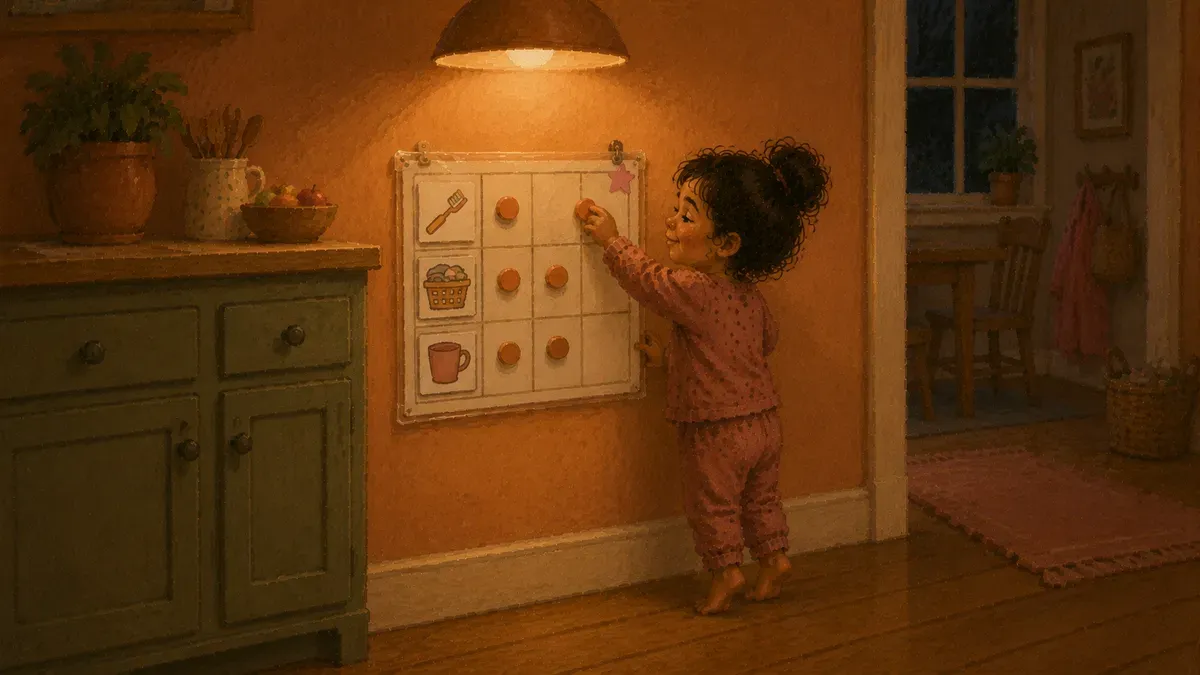
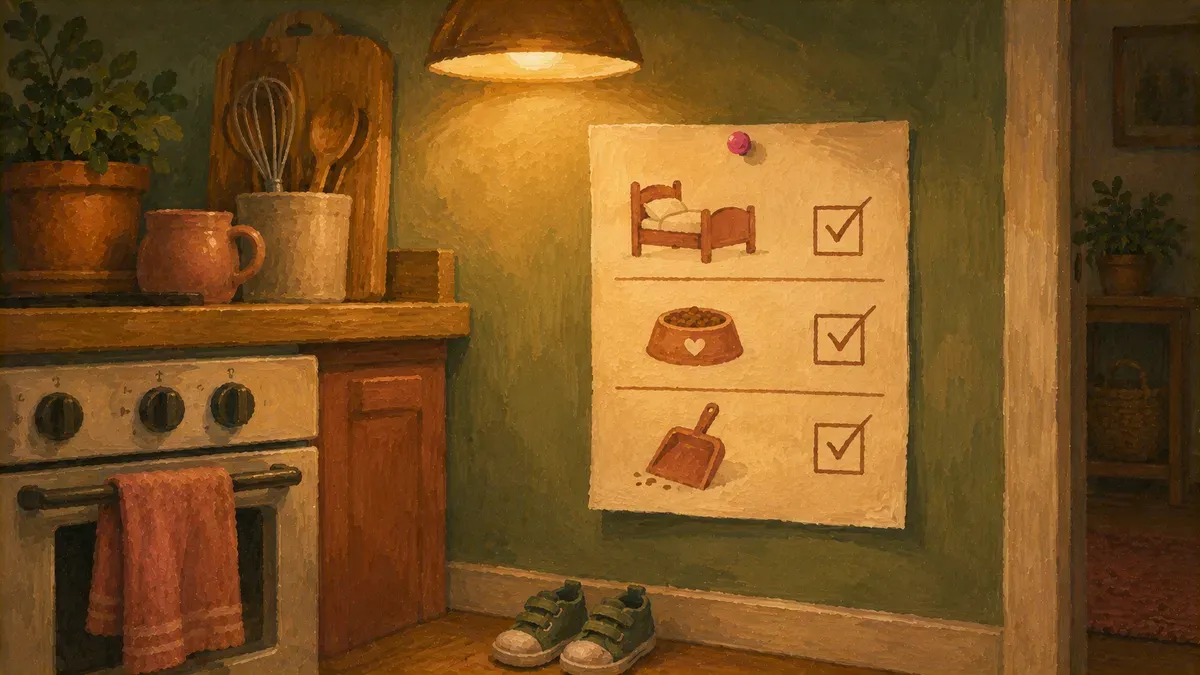
If your kid can’t read yet, words on a chart are wallpaper. Pick a layout built on pictures: a little broom icon, a sock, a watering can, so a pre-reader knows what each row means at a glance. This is where a chore chart with money attached starts to click, because the picture and the coin sit side by side.
You’ve got options for the format itself.
- Laminated sheet with a dry-erase marker: wipe it clean every Sunday.
- Magnetic chore chart with movable tokens: great for the kid who loves to slap a magnet down.
- Dry-erase board on the fridge or a paper money chart taped up: both do the job.
Whatever you pick, the child has to be able to mark it themselves. If you’re the one filling in every box, it’s your chart, not theirs. For a layout little hands genuinely reach for, head over to make reward chart toddler cant wait.
Set a Weekly Payday and Run the First Week
Pick one payday and never move it. Sunday after breakfast is ours, and that fixed payment schedule is half the point.
- Check marks all week: your job is one reminder, not enforcement.
- Payday sit-down: count completions together, pay out exactly what was earned.
That sit-down is the magic. Financial educators point out that money habits start forming young, so the ritual of reviewing the week and dividing the coins is doing quiet work long before your kid can spell the word allowance.
That first week is just a proof of concept. If she only does one chore and earns a quarter, that’s still the work-to-income connection landing for real. Want chart ideas beyond money? Browse our reward chore charts for layouts that track behavior and habits too.
Which Chores Pay and Which Ones Don’t
Before you set a single price, it helps to see what belongs on each side, and why the split matters more than the chart itself.
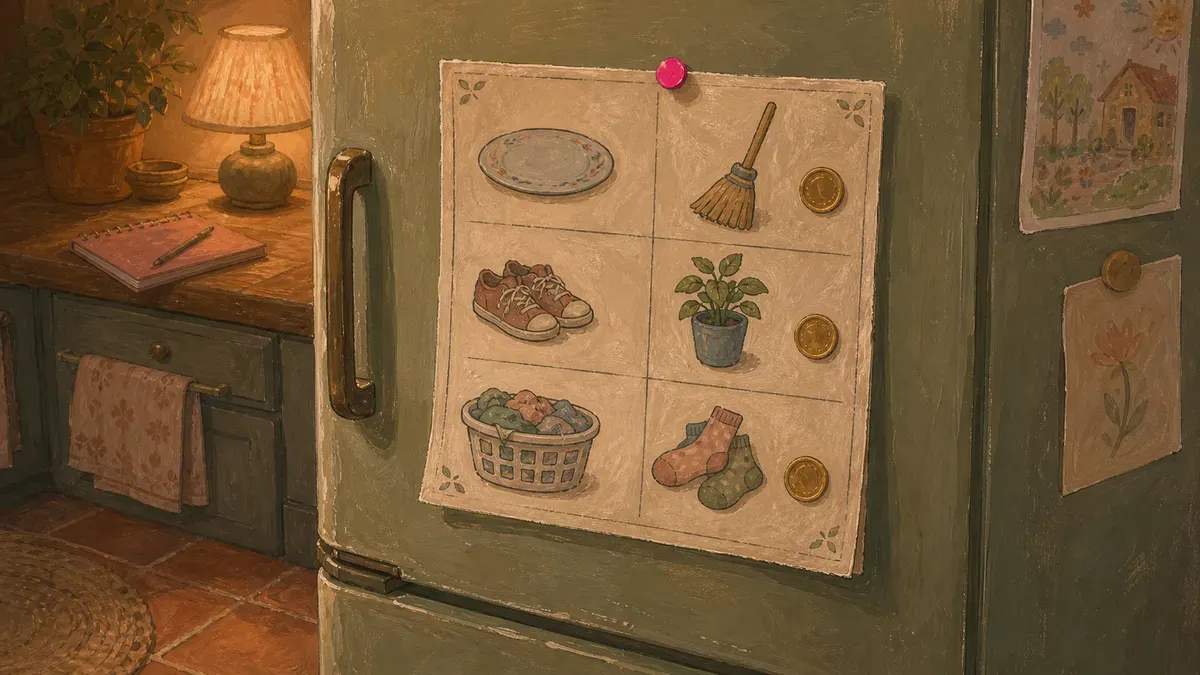
Free Jobs That Build Family Responsibility
Putting your own shoes away isn’t a job, it’s just being a person in this house. That’s the line I hold. Basic self-care and cleaning up your own mess stay on the unpaid side, because allowance for chores should reward going above and beyond, not breathing.
For June, who’s three, the free list looks like this:
- Dishes to the sink after meals
- Dirty clothes in the basket
- Blocks back in the bin before bed
These unpaid chores teach that a family shares the load, and nobody pays you to do your part.
There’s real weight behind treating contribution as its own reward. Research by Marty Rossmann at the University of Minnesota found the strongest predictor of young adults thriving in their mid-twenties was doing household duties starting at three and four, framed as family responsibilities rather than paid labor. So the free side isn’t filler. That responsibility is the part that matters most.
Extra Chores Worth Paying For
The paid side is for above-and-beyond, the stuff that was never theirs to begin with. Wiping baseboards, matching the whole sock pile, hauling recycling to the bin, rinsing the car. Morning chores like feeding the dog or afternoon chores like sweeping the porch can earn too, as long as they’re genuinely extra.
Keep the paid list to three to five options, full stop.
The second your kid sees a menu of twenty earning opportunities, every request turns into a negotiation, and you’ll burn more energy haggling than you ever save. A tight list on the chore chart keeps the money meaningful and the asks rare. Fewer choices, fewer arguments, one clean payday.
How Much to Pay: Prices and Weekly Caps by Age
One payday only works if the numbers make sense, so here are the two you actually need: what each job is worth, and the ceiling on the whole week.
A Simple Per-Chore Pay Scale
Keep it tiny. For a 3-to-6-year-old, 25 cents to a dollar per job is the sweet spot, and that range covers almost everything on a little-kid list. A quarter for feeding the dog, fifty cents for matching socks, a dollar for wiping down the bathroom sink. Done.
When we set up June’s allowance chore chart with prices, I wrote the amount right next to each picture so a 3-year-old who can’t read still gets it: this one is a quarter, this one is a dollar.
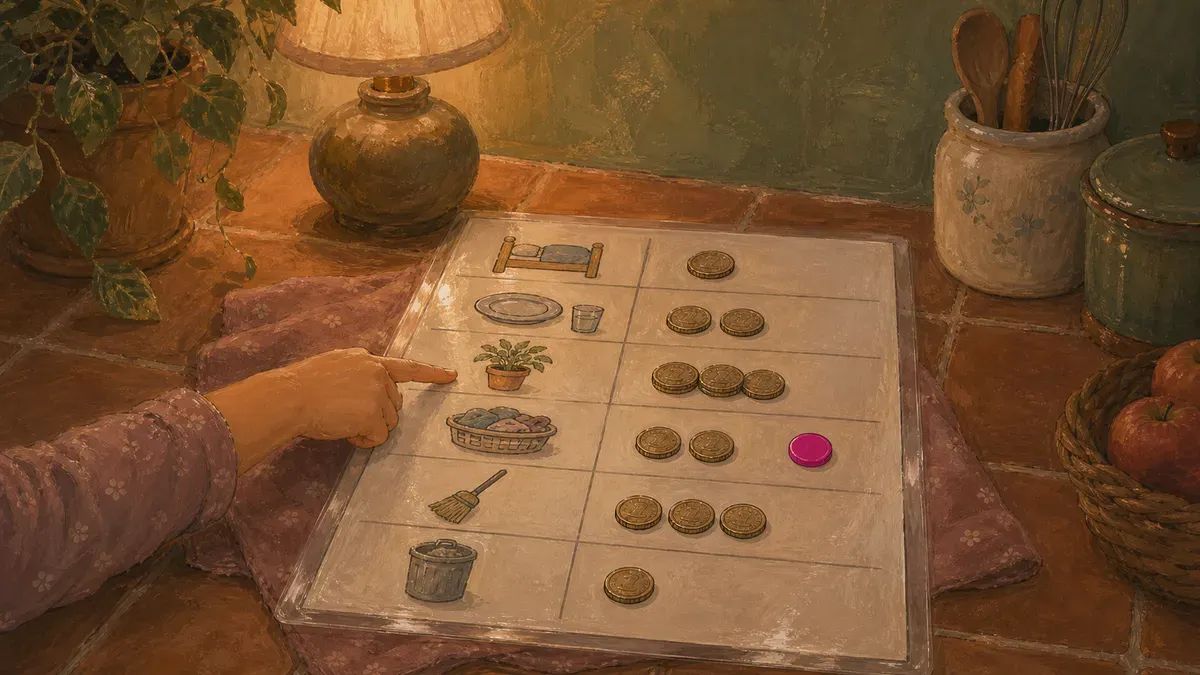
Hate making change? Use a flat base plus extras instead. A small set weekly amount for being part of the family, then a few quarters on top for the bonus jobs. Same money chore chart, less fishing for coins on a Sunday night.
Prices to copy tonight, ages 3-6:
- Quarter jobs: feed the pet, wipe a table, water a plant
- Fifty-cent jobs: sort socks, set the table, dust a shelf
- Dollar jobs: clean the sink, sweep a small floor, wash the car mats
Set a Weekly Earning Cap That Matches Their Age
The per-job pricing only stays sane with a lid on top. The rule I use, and the one most parents land on: their age, in dollars, is the most they can earn in a week. Three years old, three bucks. Six years old, six.
It keeps the pocket money age-appropriate and your family budget boringly predictable.
- Age 3: cap at $3 a week
- Age 4: cap at $4 a week
- Age 5: cap at $5 a week
- Age 6: cap at $6 a week
When they hit the cap, the chart’s done for the week. No lid, and a determined 4-year-old will empty your wallet by Wednesday.
100 Paid Chore Ideas for Little Kids
A hundred ideas sounds like a lot until you realize most of them are the same five rooms times the times of day your kid is actually awake. Here’s how I pull from that pile without staring at a blank chart.
Chores by Room and Routine
The fastest way to find 100 chores to do around the house for money is to walk the house and steal jobs from each room. Kitchen: wipe the table, match the plastic lids, restock napkins. Bathroom: spray and rub the sink, refill the toilet paper basket. Living room: cushions back on, books spine-up, dust the low shelves.
Then split those household duties by routine, because a sleepy kid and a 4pm kid are two different workers.
- Morning chores: make the bed, feed the cat, put pajamas in the hamper
- Afternoon chores: carry in the lighter grocery bags, sweep the porch, wipe the kitchen chairs
- Anytime fillers: sort socks, water one plant, line up shoes by the door
That’s three dozen right there, and you reuse them every week. Chore completion comes easier when the job lives in a room the kid is already standing in.
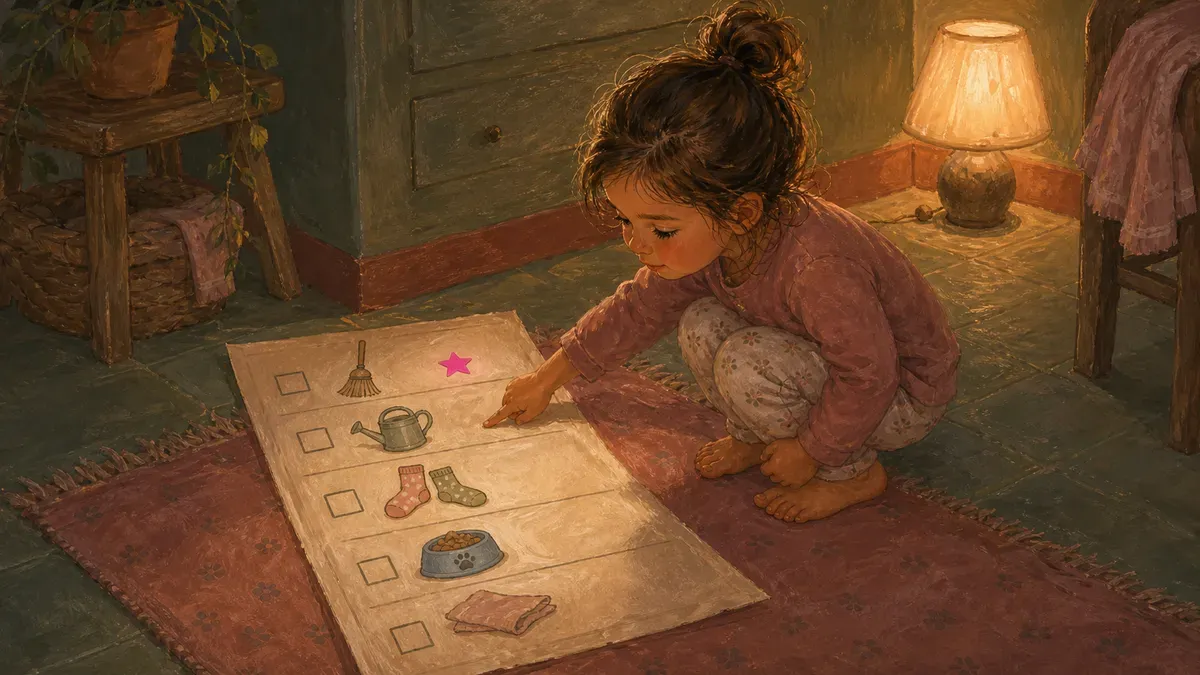
Matching Chores to a 3-to-6-Year-Old
Now shrink the pile to what a preschooler can actually finish alone. The American Academy of Child & Adolescent Psychiatry says kids 2 to 3 can put toys and groceries away, and by 4 to 5 they can feed pets, make their beds, and help clear the table. That gives you an earning-opportunity floor by age group.
My filter at my own table: can June do it start to finish without me hovering? Bed-making, yes. Anything with a spray bottle of real cleaner, the stove, or a sink full of water, no. For what each age can own, see my breakdown of age appropriate chores for threes. Task completion is the whole point, so weight the list toward jobs your kid finishes proud, not frustrated. That’s the responsibility you’re actually building.
Best Chore Charts and Allowance Apps to Run It On
The chart matters less than whether you’ll actually look at it on a Thursday when everyone’s melting down. Two formats win for little kids: a wall chart they can touch, or an app that does the math for you.
Physical Charts vs Allowance Apps
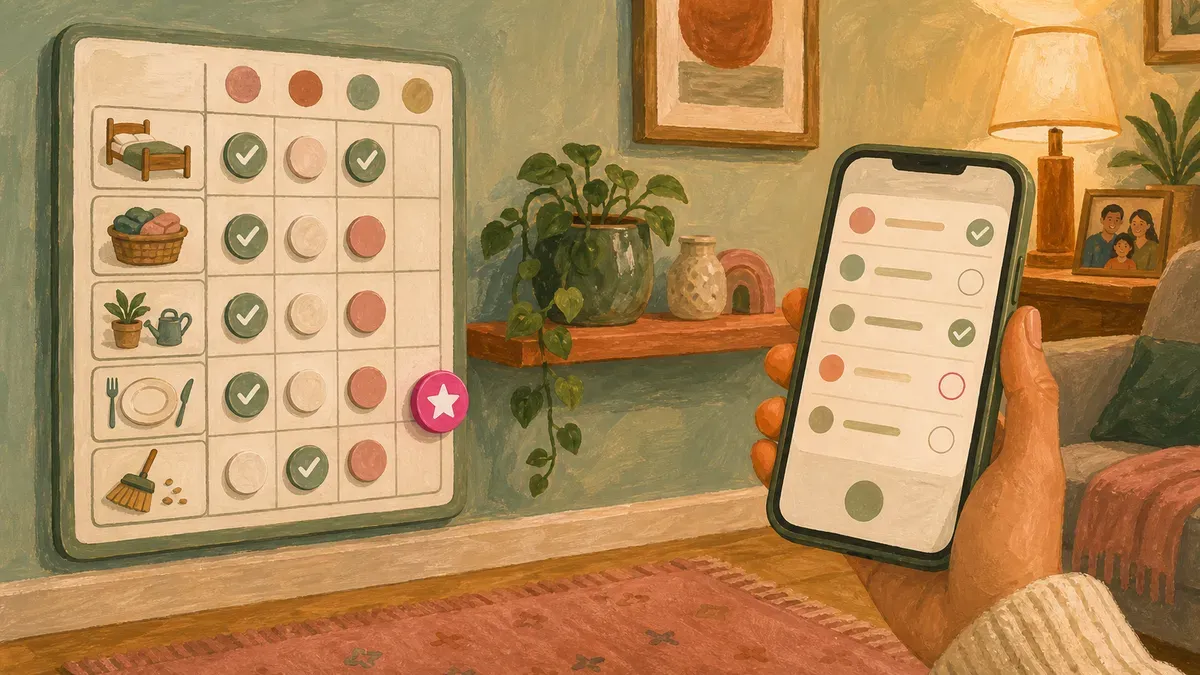
For a kid who can’t read yet, go physical. A magnetic chore chart or a laminated sheet lives at their eye level, and they move a token or check a box themselves, which is the part that makes it feel real. Most families never get even this far. A 2012 Touchstone Research survey found only 29% use any formal tracking system at all, so something on the wall already puts you ahead.
Apps fit the older end. They’re a tidy allowance system: chores in, money tracked, a sub-account for saving. The catch is they live on a phone, and adding screen time to a screen-free goal feels backward when your kid is three. Running both formats side by side across one school year, the wall chart got glanced at ten times more than the app.
Top Picks for Tracking and Paying Allowance
Here’s how the picks I’ve actually run stack up: who each one’s for, what other parents make of it, and the money lesson baked in.
| Pick | Best for | Parents’ rating | Money-learning feature |
|---|---|---|---|
| Magnetic/dry-erase chart | Pre-readers, ages 3-5 | 4.7★, 2,400+ reviews | Cash counted on payday |
| BusyKid | First app, age 5+ | Not sold on Amazon | Save/spend/give sub-accounts |
| Greenlight | Ages 6+, ready for a card | Not sold on Amazon | Debit card plus saving goals |
The board I keep resetting every Sunday is a magnetic dry-erase one with 20 chore lines and its own fine-point markers, so it wipes down and starts fresh each week. It earned Amazon’s Choice for a reason, and it’s a one-time buy, not a monthly app fee. The apps skew pricier and older, per Finder’s mid-2025 roundup, but both bundle saving and spending sub-accounts, which is where the real financial literacy and early financial habits click for a kid.
Start on the wall, move to an app when your child reads and asks for a card. Want the chart first? Grab a childrens chore chart printable and pair it with our full guide to reward charts that motivate kids to keep the whole chore system from going stale.
Keep the Chart Working After the Novelty Fades
The sticker shine wears off by week three at every house, mine included. Two things keep the chart alive past that slump: how you handle the week your kid quits, and turning the money into something more than candy cash.
Handle Refusal Without Threats or Bribes
Some weeks they just won’t. A kid who’d rather dump the blocks back out than pick them up won’t be moved by cheerleading. That’s fine. The system already has a built-in answer: no chores done, no pay that week. Nothing earned, nothing owed, same as the grown-up world.
Say it flat and warm, not as a punishment. “You didn’t feel like helping this week, so there’s nothing to count on payday. We’ll try again next week.” Then drop it.
- No nagging when they skip a week
- No sweetening the deal with extra quarters
- No “just do one and I’ll pay you double”
The second you negotiate, the chart becomes a bargaining table.
The natural consequence does the teaching. The Raising Children Network’s note on why reward charts fade makes the same point: reward charts tend to fizzle unless you pair them with calm, steady follow-through instead of threats. Empty jar one week, full jar the next, and the motivation comes from the kid noticing the difference.
Teach Saving With the Money They Earn
This is where a chore chart with money earns its keep: it becomes a tiny money lesson instead of pocket change to blow on gumballs.
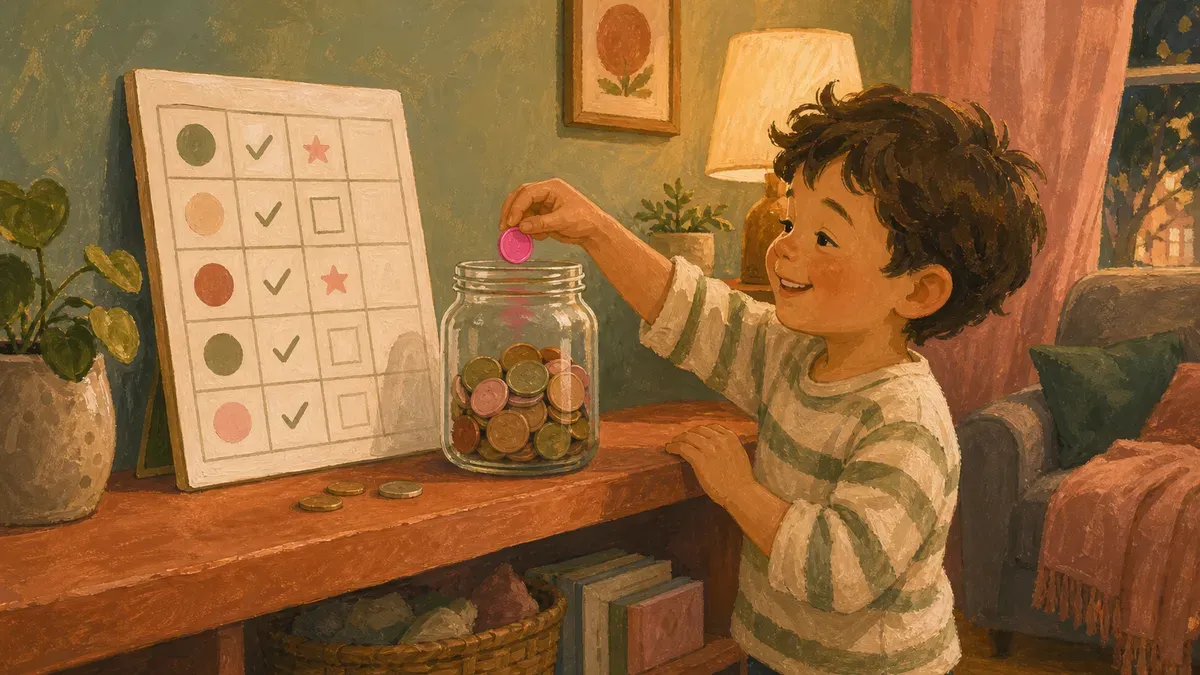
Set up a simple split the day you start. Three jars, divvy each payday into all three:
- Spend: buy a small thing now
- Save: toward something bigger
- Give: share a little
Any three containers work, mason jars, cleaned-out yogurt tubs, whatever’s already in the cupboard. If you’d rather skip the labeling, a set of Save, Spend, Give tins with color-coded lids does the sorting for you, and it’s built for ages three and up, with a 4.7-star average across more than 2,300 families. The jar matters less than the habit, so don’t overthink which one you use.
Most kids will torch the whole pile if you let them. A save jar builds the financial habit early, when the stakes are a couple of dollars instead of a paycheck. For rebuilding momentum when even saving stalls, our childrens reward chart reset guide picks up from here.
Found this useful? Save it for the next rough afternoon.
Questions parents ask me about this
How do I set up an allowance chore chart for young kids?
Split the chores into two piles first: unpaid family jobs your child does just because they live there, and paid extras that are above and beyond. Put both on one chart with a picture beside each chore for pre-readers, and write the price next to every paid job so the connection is instant. Pick one fixed payday each week, count what got done, and pay only what was earned.
What age should kids start getting an allowance for chores?
Most kids are ready to start earning for simple chores around age three or four. At that age they can handle one or two paid tasks, something like carrying their plate to the sink or putting books back on the shelf, and even that small amount of money starts teaching the work-to-income idea. Keep the list short and the jobs genuinely finishable on their own.
Should I pay my child for every chore they do?
No. Self-care and cleaning up their own messes stay unpaid because those are just part of living together as a family. The paid side covers real extras, work that actually helps you and that was not already theirs to do. Mixing the two muddies the lesson and turns basic responsibility into a negotiation every time.
How much allowance should a 5-year-old get?
A useful rule of thumb is a weekly cap equal to the child's age in dollars, so a five-year-old tops out around five dollars on a full week of paid chores. That cap keeps earning realistic and prevents constant negotiating over the list. A five-year-old will not always hit the ceiling, and that is fine.
What do I do if my child stops doing their chores?
No chores done means no pay that week. State that calmly once, skip the negotiation, and let the empty jar do the talking. Most kids reconnect with the chart when they want something specific to save toward. Tying the save jar to a goal they named themselves helps more than any reminder or bribe.
How does an allowance chore chart work with more than one child?
Give each child their own chart matched to their age and ability. A three-year-old and a seven-year-old can coexist on the same system as long as the job list and pay scale are separate. Avoid putting them in direct competition by making each chart self-contained: each kid earns against their own list, not against a sibling's.
How do I clean and reuse a laminated or magnetic chore chart?
A laminated chart wipes clean with a damp cloth between uses. Dry-erase markers work on laminate and erase fully with a soft cloth or tissue. Magnetic charts with tiles are just as easy: pull off the completed tile and reset it for the next day. Either style survives daily use from a three-year-old far better than a paper chart will.
Written by
Nora Hayes
Mom of two and a former preschool aide. I share the screen-free sensory play and calm-down ideas I test at my own kitchen table, plus what the moms in my little meet-up swear by. A parent passing on what works, not a doctor or a therapist.
More about NoraKeep going
All Reward & Chore Charts-
 Reward & Chore Charts
Age Appropriate Chores by Age (Toddler to Teen)
Most kids handle real chores younger than you think. Get age appropriate chores by age, from 3-year-olds to teens, and start building habits today.
-
 Reward & Chore Charts
Childrens Chore Chart Printable with Pictures
Pre-readers can't follow word lists, but they can follow pictures. Free printable chore chart for toddlers and preschoolers, ready to laminate.
-
 Reward & Chore Charts
Chore Chart vs Reward Chart: Which One Your Kid Needs
Chore chart, reward chart, or responsibility chart? Find out which fits your child's age, build one in 5 steps, and snag a free template.
-
 Reward & Chore Charts
Chore Chart for Kids by Age: What Each Age Can Do
A 2-year-old can really help. See what a chore chart for kids should include at every age, plus charts that stick. Start today.