Bedtime Routines for 4 Year Olds That Stick

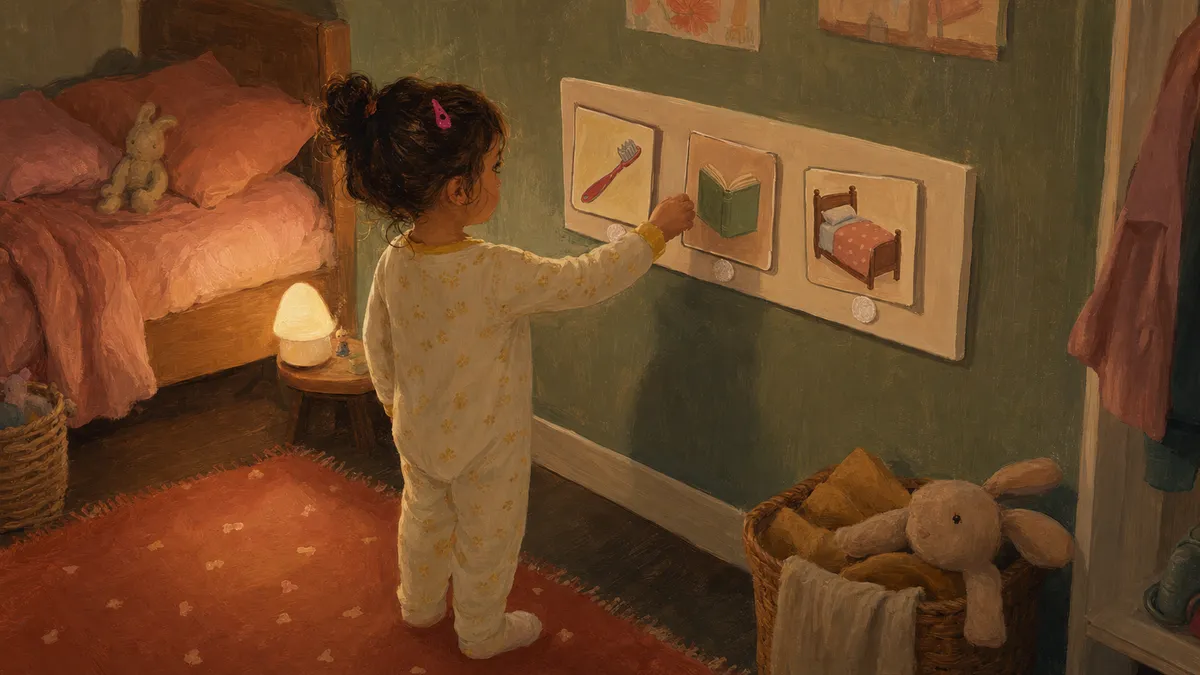
Bedtime routines for 4 year olds fall apart when the fight starts before anyone has brushed their teeth, and nine times out of ten the fix is a visual routine that runs on autopilot. I’m Nora Hayes, a former preschool aide, and the boringly consistent routine is exactly what got my sensory-seeking son to sleep without a fight. This guide walks through the right bedtime, why a picture chart beats nagging, how to build one tonight, and what to do when sleep falls apart.
The plan in brief:
- Run the same 6 steps at the same clock time every night, aiming for lights-out by 7:30 pm
- Cut all screens 60 minutes before bed and dim the lights to trigger melatonin
- Hand control to your child with a picture chart they check off step by step
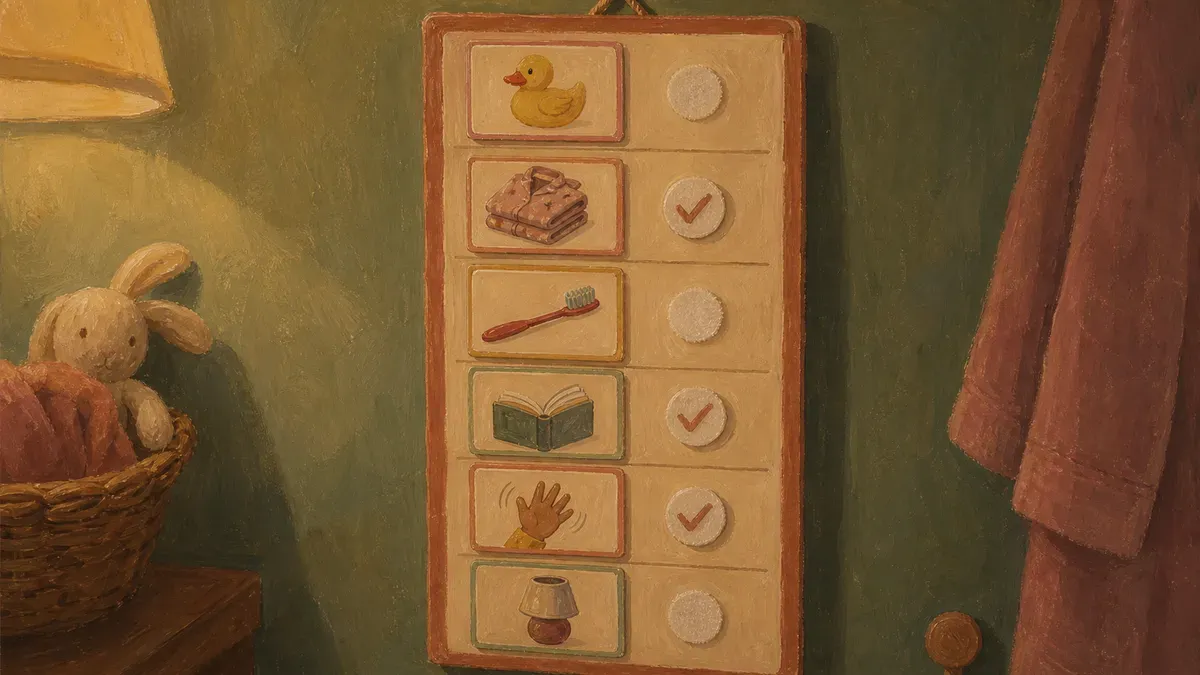
The 6-Step Bedtime Routine That Ends the Battles
Here is the whole thing in one breath: bath, pajamas, teeth, story, goodnight, lights out, in that order, at the same time every night.
- Bath: 10 minutes, calm water, voice low
- Pajamas: on before the warmth fades
- Teeth: non-negotiable, right after
- Story: two books max, number stated up front
- Goodnight: brief, consistent, then you leave
- Lights out: dark room, fixed clock time, done
Three moves carry it, and the first one is the one most of us skip.
Wind down and bath before pajamas
The fight usually starts before pajamas, so start earlier. A warm bath is your wind-down switch, not just a cleanup. A meta-analysis of 17 studies found a warm bath of 40 to 42.5°C, 1 to 2 hours before bed for as little as 10 minutes, significantly shortens how fast kids fall asleep, because the body cools afterward and reads that drop as a sleep cue.
Keep the bath boring. This is the calm-down part, not the splash-the-walls part. No new toys, lights one notch lower, your voice quieter.
Then into pajamas straight from the towel, while the body is still warm and loose. With my own two, the kid who got a slow bath fought bedtime far less than the one I rushed.
Teeth, story, and a single goodnight
Now lock the middle so it never changes. Teeth, then one or two short books, then goodnight. Same three steps, same order, every single night.
Keep the story count fixed out loud before you start. “Two books tonight” ends the negotiation before it begins, which matters because stalling and “one more” requests peak right here.
Then the single goodnight. One hug, one phrase, one walk to the door. That predictable, short sequence is what eases a 3 year old into actual sleep onset, so resist the marathon of water, potty, and one more song. If you want the chart and exact wording I use, here is the bedtime routines for 3 year olds version that actually sticks.
A short, boring, identical ending beats a warm, drawn-out one every time.
Lights out at the same clock time
End on the clock, not on how the day went. Lights out around 7:30, give or take, even on the nights bedtime ran late. A consistent off-switch is what stabilizes the internal sleep clock, usually inside a week.
Go properly dark. A University of Colorado Boulder study found that even dim light suppressed preschoolers’ melatonin by an average of 78%, and it did not bounce back for most kids even 50 minutes later. So dim the hallway, kill the bright nightlight, let the room go quiet and dark.
Same time, same dark, every night. That repetition is doing more for sleep quality than any single thing in the routine.
What Time Should a 3 or 4 Year Old Go to Bed?
The clock matters as much as the order of steps, so here is where the night should actually land. First the bedtime windows and sleep totals by age, then what to do the week the afternoon nap quietly disappears.
Bedtime and sleep totals by age
Start from when your kid wakes up, not from a number you saw on Pinterest. The recommended sleep duration guidelines for preschoolers from the AASM call for 10 to 13 hours per 24 hours for ages 3 to 5, and 11 to 14 hours for the 1 to 2 crowd. Work backward from morning to find lights-out.
With my 3-year-old waking around 6:30 to 7:30 a.m., Huckleberry puts bedtime at 7:00 to 8:00 p.m. if there is still a nap, and 6:30 to 7:30 p.m. once the nap is gone. That answers the question most parents are really asking, what time should a 3 year old go to bed, with a real window instead of a guess.
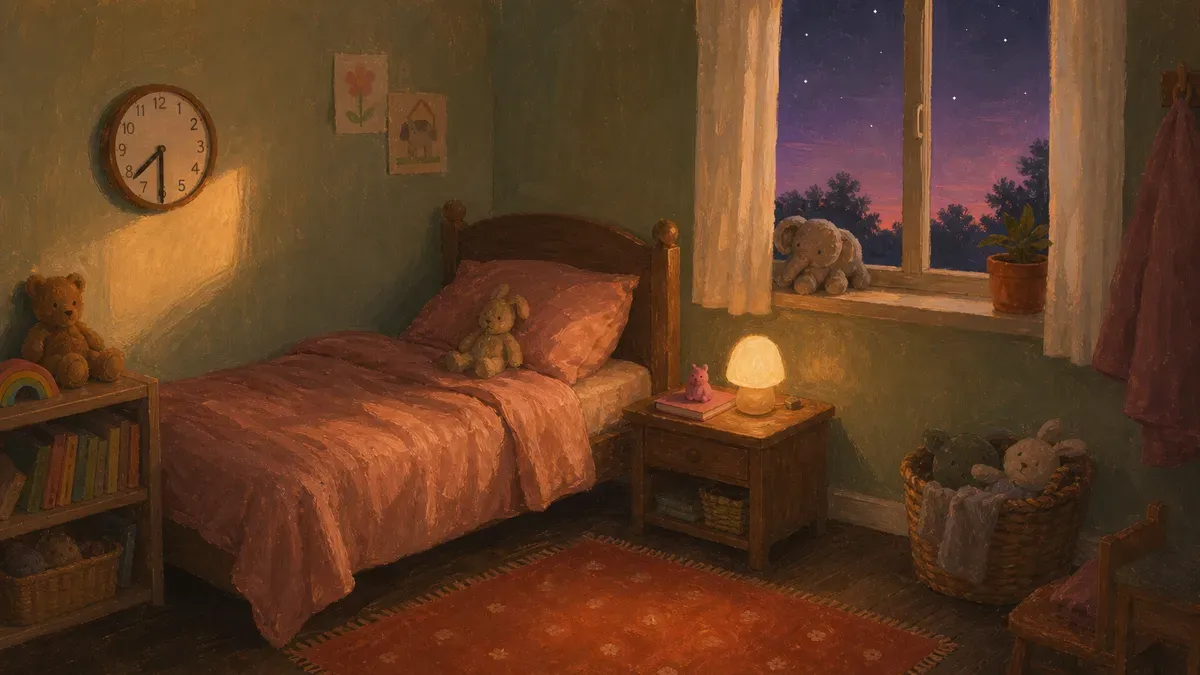
- 2.5 years: roughly 7:00 to 7:30 p.m., still napping most days
- 3 years: 6:30 to 8:00 p.m. depending on the nap
- 4 years: usually 7:00 to 7:30 p.m., nap long gone
If you want the whole day mapped out around that bedtime, the full 3 year old schedule walks through wake windows hour by hour.
When the afternoon nap disappears
Most kids ditch that last nap somewhere between 2.5 and 3.5, and the night it happens, your old bedtime is suddenly too late. A napping 2.5 year old runs on a longer afternoon wake window than a nap-free one, so the sleep schedule math changes overnight.
When the nap drops, Huckleberry advises moving bedtime 30 to 60 minutes earlier for at least the first week or two to head off a sleep deficit. So a 2.5 year old who fought sleep at 7:30 might need to be down by 6:45 for a stretch.
Watch for the tell: cranky, glassy-eyed meltdowns around 4 p.m. mean the wake window is too long. Pull bedtime earlier before the overtired spiral starts, and the routine you built holds together.
Why a Picture Chart Beats Nagging
Nagging puts you in a power struggle every single night. A picture chart moves the authority to the wall, and suddenly you’re both just following the plan.
Pictures put a pre-reader in charge
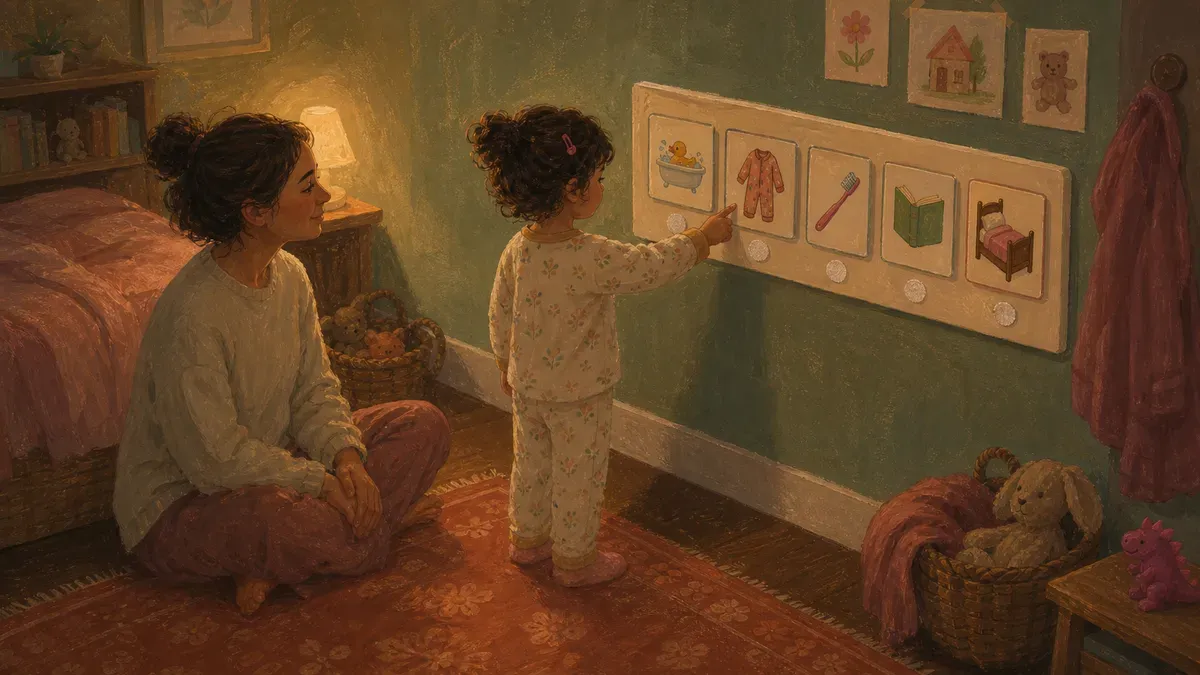
A three-year-old can’t read “brush your teeth,” but she can look at a picture of a toothbrush and know exactly what comes next. That’s the whole trick. When each step in the bedtime chart is a picture, your child doesn’t need you to tell her what to do. She tells herself.
That shift matters more than it sounds. Bedtime stalling is almost always a bid for control, not a bid for later. Give a preschooler visible control over her own routine and the negotiating stops, because there’s nothing to negotiate. She points, she does the step, she checks it off. The chart becomes the authority, not you.
Positive reinforcement is baked in naturally. Every check mark is a small win she did herself. Three-year-olds are wiring their cognitive skills around independence right now, and letting her run her own routine taps straight into that drive.
Predictability calms a dysregulated brain
For a lot of kids, the hardest part of bedtime isn’t being tired. It’s not knowing what comes after this thing. Nighttime fears live in the gap between what just happened and what might happen next.
A fixed visual sequence closes that gap. When your child can see the whole path from bath to lights-out, her brain doesn’t have to brace for surprises. That predictability is real emotional regulation support. Visual schedules routines are built on exactly this mechanic.
A Penn State study of 143 six-year-olds found that children with highly variable bedtimes showed noticeably more impulsivity and less self-control than those whose bedtimes stayed consistent. The chart keeps bedtime consistent even on the nights you’re running on fumes. The sequence never changes, so her nervous system learns: after story comes goodnight, after goodnight comes lights-out, and that’s it.
Make and Use Your Bedtime Chart
Knowing the sequence helps. Actually building the chart and running it the same way every night is what makes it stick. Here’s how to do both.
Choose 5 to 6 steps and no more
A 3-year-old can hold about 6 to 8 minutes of focus on a single activity before attention drifts, according to Happiest Baby. A bedtime chart that matches that window gets finished. One that runs to nine or ten steps gives her room to spiral before she’s even in pajamas.
Pick the five or six steps that matter most and put them in order:
- Bath
- Pajamas
- Brush teeth
- One story
- Goodnight
- Lights out
Don’t add a bonus step just because it sounds like good parenting. If it’s not already part of the routine, it will be the one she stalls on every night.
Each picture card should show one concrete action. “Get ready for bed” is too vague. “Put on pajamas” is age-appropriate and doable. The guide at how to make a visual schedule for toddlers walks you through building your own in about five minutes using index cards or a blank grid.
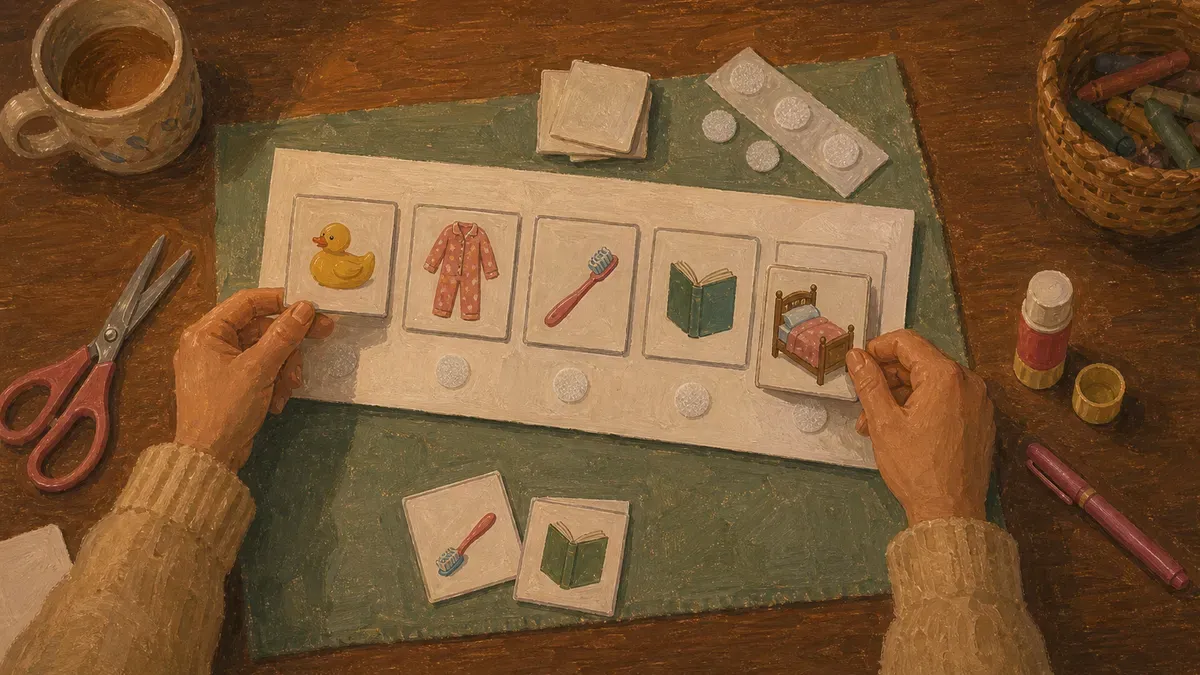
Run it the same way every single night
Consistency is what turns a cute chart into a routine that actually works. Frontiers in Sleep found that a bedtime routine practiced five or more nights a week is linked to better sleep and stronger social-emotional development in toddlers. The chart only delivers that if every caregiver runs the same sequence.
Partners, grandparents, babysitters: everyone follows the same steps in the same order. Post it where anyone walking in can see it.
If bedtime gets disrupted (travel, a late dinner, a sick night), restart the routine where you can rather than skipping steps wholesale. The sequence is the signal. Skip bath, and her nervous system doesn’t get the wind-down cue it’s learned to expect.
When Sleep Suddenly Falls Apart Again
Even a solid routine hits patches. Two culprits show up again and again at this age: a developmental shift that destabilizes sleep, and nighttime fears that turn one goodnight into forty minutes of curtain calls.
Sleep regressions and the screen-time trap
The stretch between 3 and 4 is a genuine regression window. Language explodes, imagination kicks in, naps disappear for good, and the nervous system is running hot. Any of those shifts can unravel a bedtime that was working fine last month.
The fix is almost always the same: tighten the sequence and cut screen time an hour before you start. Research on screen time and children’s sleep confirms that screen light delays sleep onset even at short exposures. Swap the tablet for books, puzzles, or a calm sensory activity in dim light.
If routine disruption is the trigger (travel, a sick week, a big transition at preschool), restart the full sequence the first night you’re home and hold it.
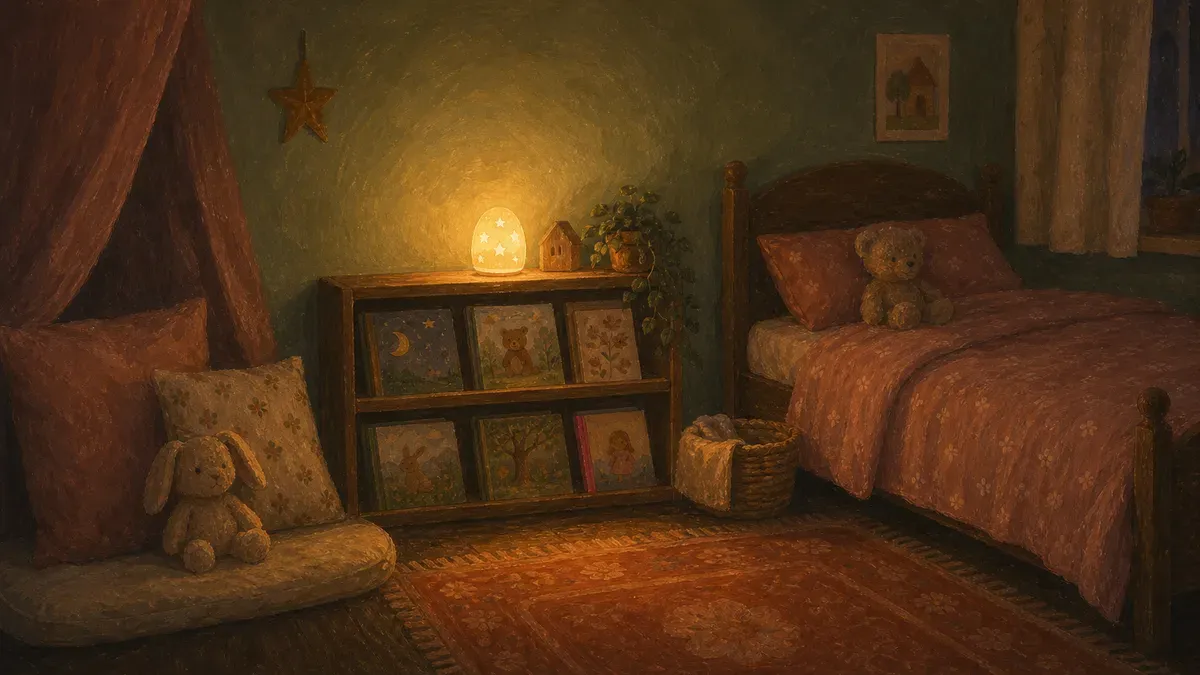
Nighttime fears and the comeback stalling
Nighttime fears are completely normal at this age. Research published via PubMed found that 58.8% of 4-6-year-olds report fears, with about 20% experiencing them severely enough to disrupt sleep. Your 3-year-old is right in the run-up to that window.
Bedtime stalling that looks like manipulation is often genuine fear. A child asking for one more drink, one more hug, one more check of the closet is not trying to break you. They need a predictable, calm response.
Keep these in your back pocket:
- “The door stays open and the nightlight is on. I check on you in two minutes.”
- “Monsters aren’t real. I already checked. You’re safe.”
- “You did every step tonight. Now it’s sleeping time.”
Say the line, follow through on the two-minute check, and leave. Emotional regulation at 3 is still new for them; your consistent response is what teaches the night is safe.
For the times bedtime stalling runs for weeks on end, see what to do when your toddler wont follow visual schedule 9 nights running, or browse our full library of visual routine guides for tools that keep the sequence visible and kid-directed.
Found this useful? Save it for the next rough afternoon.
Questions parents ask me about this
How do you set a bedtime routine for a 4 year old?
Pick five or six steps that happen in the same order every night, at the same clock time. Bath, pajamas, teeth, one or two books, a quick goodnight, lights out. Write them on a picture chart your child can check off themselves so you're not the one doing the nagging. Consistency is what makes it stick, not perfection.
How long should a bedtime routine for a 4 year old take?
Thirty to forty-five minutes covers it for most kids. That's enough time to wind down without leaving a big stretch for stalling. If yours keeps adding requests and dragging it past an hour, tighten the steps and set a firm lights-out target around 7:30.
What should I do if my 4 year old won't stay in bed?
Keep your response the same every time: a short, calm check-in and then you leave. Don't negotiate, don't extend the conversation. Scripting your response ahead of time helps, something like "I love you, it's sleep time, I'll check in two minutes" so you're not improvising at 8:30 pm when you're exhausted. Consistency over three nights or so is usually enough to reset the pattern.
Should a 3 year old still nap during the day?
Most 3 year olds are somewhere in the process of dropping the nap, usually between ages 2.5 and 3.5. Some still need it; some resist it entirely. Watch your child: if they fall asleep in the car or have a meltdown by 4 pm, they probably still need rest time. When the nap goes, pull bedtime earlier. The nap section above has the specifics.
How do I adjust the bedtime routine for a child with sensory sensitivities?
Keep the sequence predictable and the sensory load low. A warm bath can help a sensory-seeker wind down, but if bath is overstimulating, swap it for a weighted blanket or soft music. Dim the lights across the house well before the routine starts and cut screens at least an hour before bed. A picture chart is especially useful here because it gives your child something concrete to follow instead of waiting on verbal cues they may not be ready to process.
How long does it take a new bedtime routine to start working?
Three nights of the same routine in the same order at the same time is usually enough to start seeing a shift. A full week is more realistic for a consistent response. If things derail after a trip or illness, restart the full routine from the beginning rather than improvising, and expect the same three-night reset window.
Written by
Nora Hayes
Mom of two and a former preschool aide. I share the screen-free sensory play and calm-down ideas I test at my own kitchen table, plus what the moms in my little meet-up swear by. A parent passing on what works, not a doctor or a therapist.
More about NoraKeep going
All Visual Schedules-
 Visual Schedules
Visual Schedule Printable: 20 Picture Cards + Free PDF
Visual schedule printable with the 20 picture cards every toddler home needs. Free PDF to download, print, and start using tonight.
-
 Visual Schedules
Visual Schedules: A Beginner's Guide for Parents
Most visual schedules fail before day three. Learn how they work and build your first board in 5 steps your child will actually follow. Start today.
-
 Visual Schedules
Toddler Schedule: Build One With Picture Cards
Your 2-year-old can't read a clock yet. Build a toddler schedule with picture cards in 5 steps that stop nap fights and meltdowns. Start today.
-
 Visual Schedules
Free Printable Daily Routine Chart Kids Will Follow
Grab a free printable daily routine chart your child will actually follow, plus picture cards and tips to make any routine stick. Download now.