Play Dough Creations: 10 Mat Themes Kids Beg to Repeat

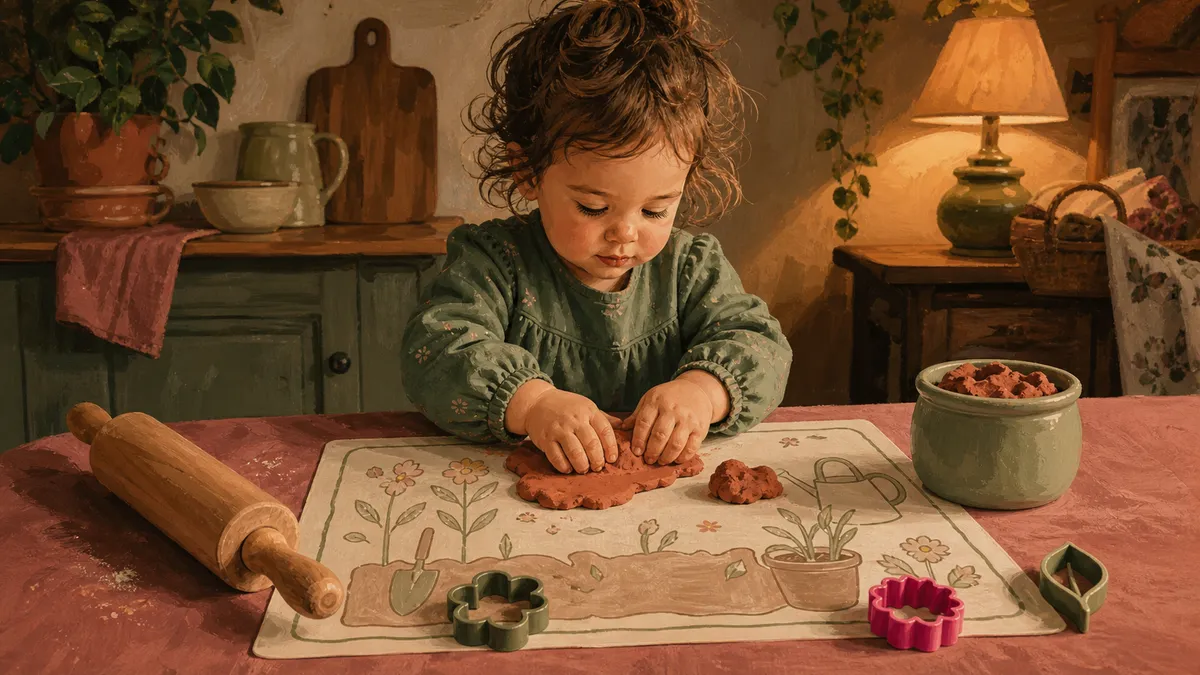
Playdough mat themes give a bored toddler a job: a face that needs hair, a garden that needs flowers, a pizza that needs toppings, ten ready-made starting points for their own small play dough creations.
Ten themes, one tool, twenty minutes of hands-on play.
That’s worth more than it sounds when kids ages 2 to 5 already average 21 hours of screen time a week, and a fresh mat is the cheapest reset I know. I’m Nora Hayes, a former preschool aide who runs these at my kitchen table with my own two kids, and this guide walks you through ten mat themes plus how to pick the right one and set it up so they come back to it.
Why the Same Three Setups Stop Working
Kids stop engaging with play dough when there’s no goal in front of them, just a plain ball and an empty table. The dough hasn’t lost its magic. The prompt has. A blob is open-ended, and an open-ended blob with no picture, no mission, no “make this” is exactly the kind of thing a three-year-old pokes twice and walks away from.
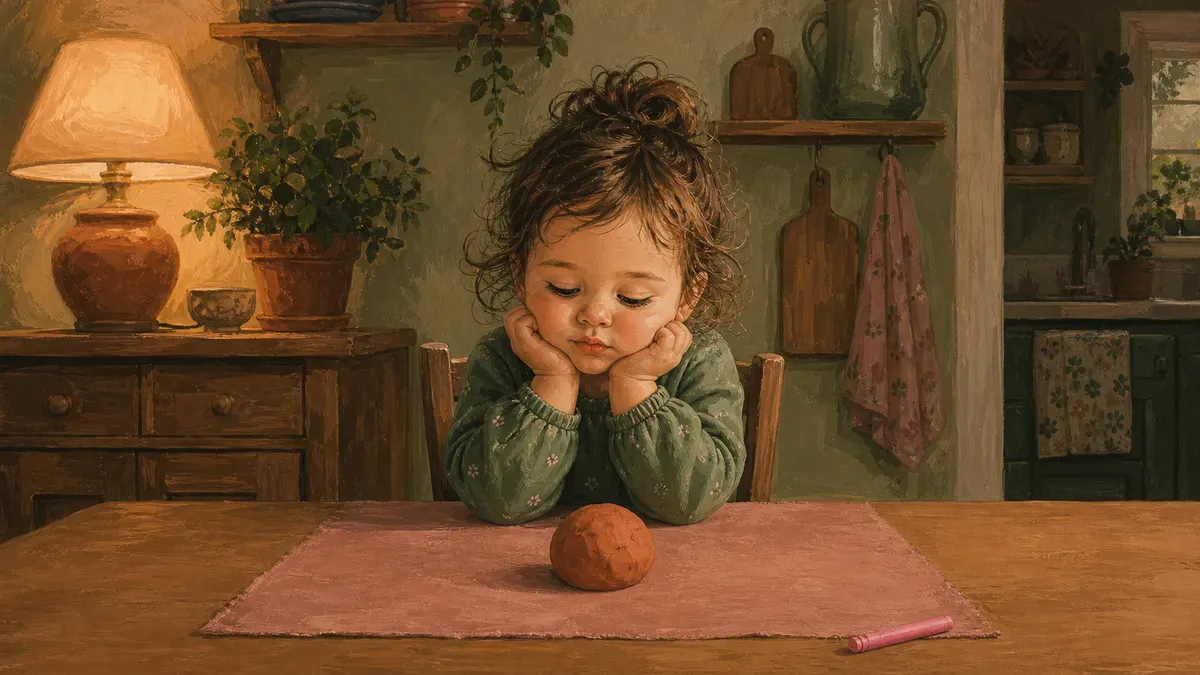
I watched June do this for months. Same tub, same cookie cutters, same five-minute fizzle. The dough was fine. What she’d run out of was a reason to keep her hands in it.
That’s the gap a themed mat fills. A face that needs hair, a garden that needs flowers, a pizza that needs toppings gives the hands-on activities a destination. Suddenly the same dough is imaginative play, not just squishing. The boredom buster isn’t new dough. It’s a new ask.
If you’ve never used one, the basics of play with playdough covers the simple version: a printed scene, some dough, go. And once that clicks, you’ll want variety, because even great sensory play goes stale on repeat. That’s where rotating playdough mats activities by theme earns its keep, and it’s exactly what the next ten ideas are built to do.
10 Play Dough Mat Themes to Break the Rut
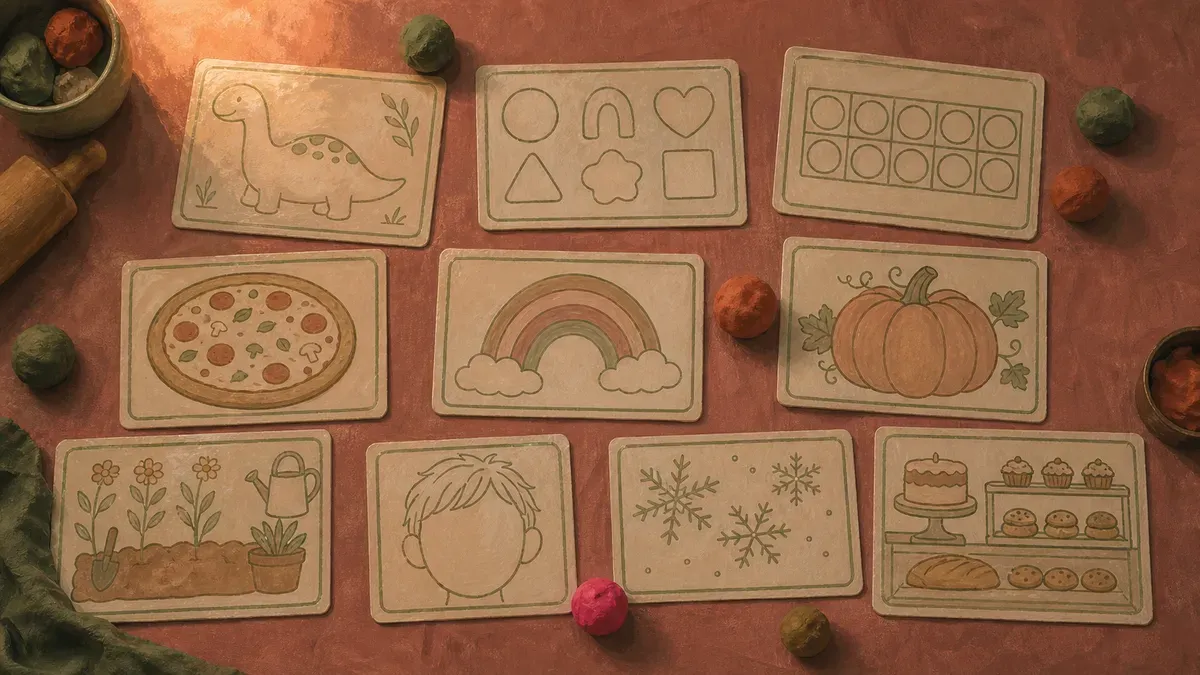
A themed mat works because it hands your kid a job: build the dinosaur, finish the word, fill the ten-frame. The ten themes span two sections, so here are the first three, starting with the one Eli begged to repeat.
Dinosaur Dig and Build Scenes
Give a kid a T-rex outline and a ball of brown dough and watch them get to work. They roll bones, press eggs into a nest, build a swampy landscape, then knock it all down and start over. The pull is simple: dinosaurs are gone, so there are no rules for what one “should” look like, which is exactly what makes them so good for open-ended pretend play.
My dinosaur playdough mats live in a laminated sleeve, and I toss in a handful of loose parts to push the story further. - Small pebbles become eggs.
- A bottle cap is a stomped footprint.
- Dried lentils are dino food.
Eli, my sensory-seeker, will stay with this one for a solid half hour because he gets to smash. June (3) narrates the whole thing. The rolling and pinching is quiet fine motor skills work, but neither of them clocks it as learning. They think they’re running a Jurassic rescue.
Letter and Word Building Mats
Forming an A out of a dough snake feels nothing like worksheet drilling, and that’s the point. Your kid presses dough into the letter shape, traces it, maybe builds their name. Alphabet playdough mats turn letter recognition into something hands-on, so the shape sinks in through the fingers instead of off a flashcard.
- Grip: rolling and pinching dough builds the hand strength a pencil needs later.
- Shape: pressing into the letter outline gives the form somewhere to live in muscle memory, not just on a flashcard.
Both payoffs happen before your kid realizes they’re working on anything. NAEYC notes that playdough play strengthens hand strength, the pincer grasp, and the tripod grasp, the same hold a pencil needs later. That matters more than it used to: a Learning Without Tears survey found 55% of teachers say kids now arrive without basic hand strength or tool experience.
For a preschooler, I start with the first letter of their name, because a kid will chase their own letter before any other. June fills her J every single time. It’s pre-writing dressed up as play, which is the whole win in the early years.
Counting and Number Mats
Number mats fix the thing flashcards miss: counting has to be touched to stick. That rolling-and-placing is the move that teaches one-to-one correspondence, matching one object to one number, which Fort Hays State University lists as a skill that typically emerges around age four.
A few ways to run it:
- Roll one ball per dot on the mat, matching the printed number.
- Drop three balls on the 3, five on the 5, one squish at a time.
- Fill a ten-frame row by row until it clicks.
We run ours 1 to 20, but I cover the top half for June and just work 1 to 5 until she’s solid. No rush. A counting activity is only learning through play when the kid isn’t fighting it, so meet the number they’re at, not the one printed on the mat.
The dough balls double as proof: she can count them, move them, eat one if she’s June. If your kid liked these three, there are plenty more play dough things to make before the dough dries out. The next set goes softer and slower, into pretend worlds you can stretch across a whole rainy afternoon.
Sensory and Pretend-Play Themes That Go Deeper
These are the mats that don’t end when the rolling stops. A bakery, a rainbow, a pumpkin patch that smells like fall: each one hands your kid a story and a job, and that’s where a quiet twenty minutes can stretch into forty.
Bakery and Food Pretend Mats
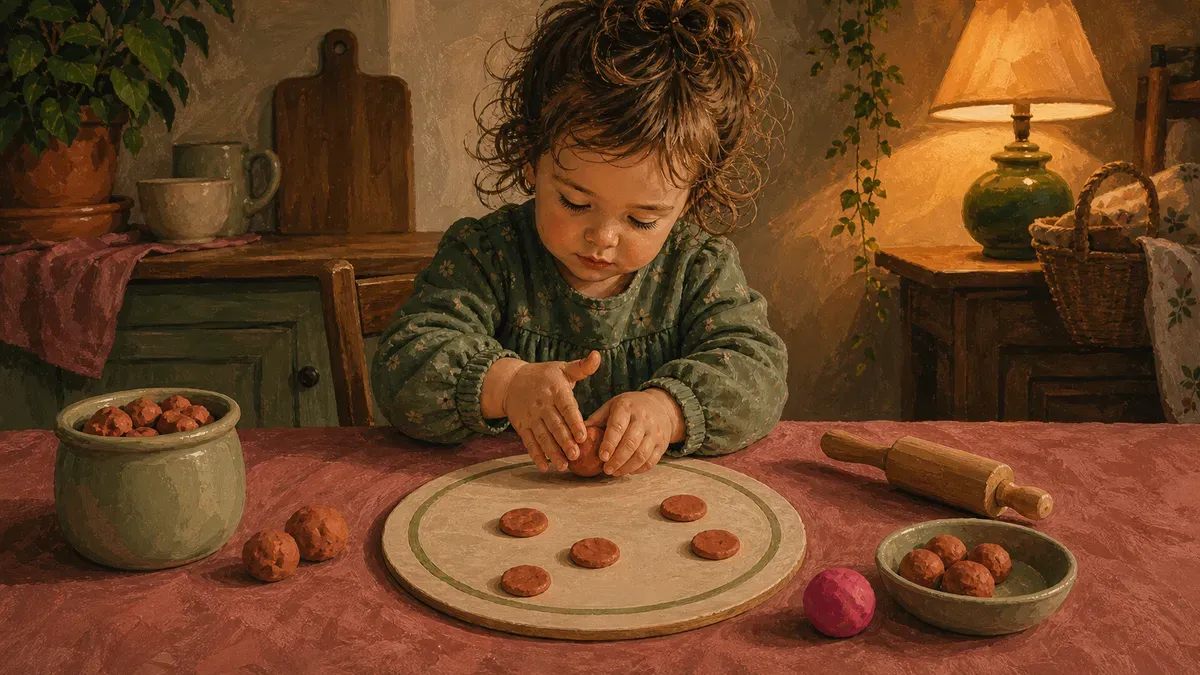
Food is the theme that never flops at my house. June will roll “cookies,” press them flat with the bottom of a cup, then plate them up and make me eat each one with a straight face. The first time I printed our food themed playdough mats, she ran a whole pizza shop off one laminated sheet for the length of a phone call I actually needed to take.
The skills hide inside the pretend play. Snipping a dough “breadstick” with safety scissors builds scissor skills the slow, low-pressure way. Pinching toppings, rolling little meatballs, pressing cookie cutters into a slab: that’s the pincer grip doing reps while she thinks she’s just feeding you lunch.
There’s a reason the made-up dialogue matters too. NAEYC points out that in pretend play, kids reach for higher forms of language than they use in plain conversation, one of the benefits of sensory play for young children worth knowing. Listen to a kid run a bakery and you’ll hear it.
Color-Mixing and Rainbow Art Mats
Hand a kid two colors of dough and a rainbow outline, and the lesson runs itself. Press blue into yellow, knead, and green appears like a small magic trick. June gasped the first time, then spent the rest of the afternoon hunting for what red and blue would do.
A rainbow mat turns into open-ended playdough art the second you stop steering it. The outline gives a starting point; the color matching gives a goal. Most three-year-olds can name a color or two but won’t reliably sort them by category until closer to four, so the mixing is real sensory exploration and a quiet color lesson at the same time.
What I like is that there’s no wrong answer here. Muddy brown from too many colors? That’s a chocolate cloud now. The creative play and the hands-on activities are the same motion, and nobody’s being graded on it.
Scented and Seasonal Sensory Mats
The cheapest way to make a tired mat feel new is to make it smell like something. A few drops of vanilla or a spoon of cinnamon in the dough, and the same pumpkin sheet you’ve leaned on since September lands differently. We did peppermint snowflakes one December and Eli kept lifting the dough to his nose between every snowman.
Scent isn’t just a gimmick. A study of Czech preschoolers found that kids exposed to a wider range of everyday food odors scored higher on smelling tests, the first real evidence that olfactory variety actually sharpens a young child’s sense of smell. Scented playdough is a low-stakes way to widen that range.
Seasonal motifs do the rest of the refresh for you:
- Pumpkins and acorns in fall, with a little cinnamon or pumpkin-pie spice
- Snowflakes and mittens in winter, peppermint or a drop of pine
- Flowers and bugs in spring, a touch of lavender
- Shells and suns in summer, coconut if you’ve got it
Rotating the season keeps the sensory play feeling current without buying a single new thing. Same dough, same mats, a new smell and a new picture, and a kid who forgot she’d ever seen it. On the afternoons you’ve got nothing left, that’s the whole trick: change one small thing and let the dough do the work.
How to Pick the Right Theme for Your Child
Picking the right mat comes down to two questions: what is your kid into this week, and what can their hands actually do yet? Get those two right and the mat gets repeated. Get them wrong and it sits in the drawer.
Start with age. Most kids are ready for dough around two, once they stop trying to eat it and their fingers can squish, roll, and poke with some control. That’s the sweet spot where a simple mat clicks. If your toddler still mouths everything, skip the printables for now and reach for taste-safe edible dough first, no mat required. Our play doh for 2 year olds starter guide walks through that first bin.
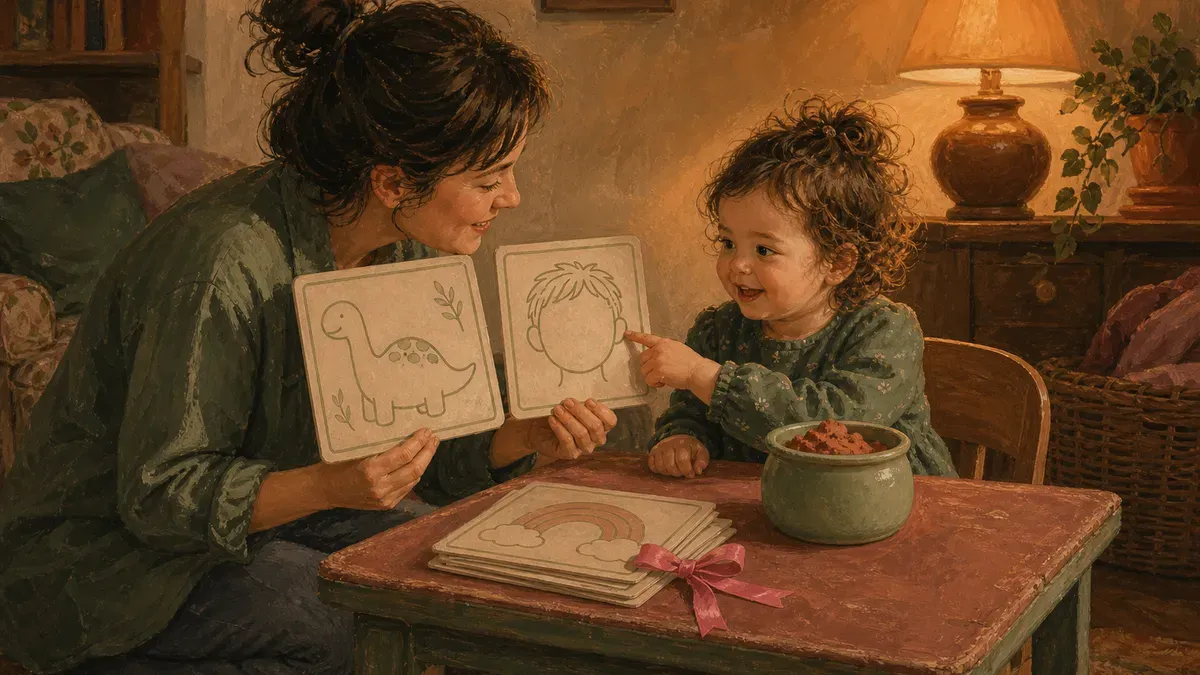
A quick match by where they are right now:
- 2s, new to dough: face or garden mats, large open shapes to fill.
- Loves to smash: dinosaur or construction mats.
- Letters and numbers clicking: name mats and counting mats.
Here’s the real test, and it’s not the printable. It’s the kid. June, at three, ignores anything with too many small steps and lives on her one pizza mat. A friend’s daughter the same age wants every fiddly detail filled in. Same age, opposite mats.
So follow the kid, not the recommended age on the label. Watch what they reach for twice. That second reach tells you more than any milestone chart, and it’s the only sign a theme is going to stick.
Set Up Themes Kids Actually Want to Repeat
A theme that gets one play and then collects dust usually wasn’t a bad theme. It was a bad setup. The mat landed on a cluttered table with nowhere to start, the dough had gone crumbly, and the fun part lived three drawers away. Fix the setup and the same mat earns a second and third reach.
What I do at our house is build a little invitation tray the night before, while the kids are asleep and I actually have my hands free. One tray, everything in it, ready to slide in front of them at the witching hour.
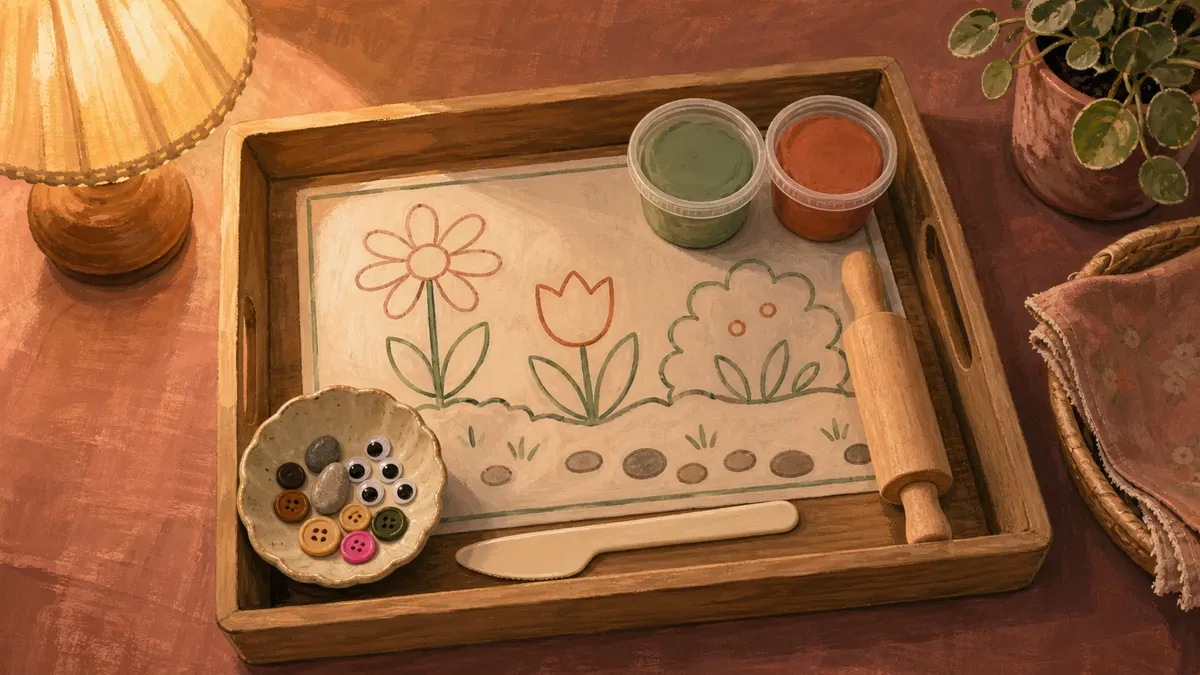
Here’s what goes on the tray:
- A laminated mat, or a printed one slid into a dollar-store sleeve so it wipes clean
- Fresh dough in two colors, in a sealed container so it stays soft
- Two or three playdough tools: a rolling pin, a plastic knife, a garlic press for hair and spaghetti
- A small dish of loose parts that match the theme: googly eyes, buttons, gems, pumpkin seeds
- A tray or placemat under it all, because there will be crumbs
Dough is the thing that makes or breaks the repeat. Store-bought dries out fast once it’s been smashed flat. Homemade playdough stays soft for weeks in a zip bag, costs almost nothing, and you can revive a stiff batch with a few drops of water. If you’ve never made a batch, here’s an easy playdough recipe for preschool that holds up to real toddler hands.
Then rotate. Put this week’s mat out, tuck the rest away, and bring an old one back a month later like it’s brand new. Printable playdough mats make that painless, since reprinting a fresh copy costs you pennies. Pull your next one from our full library of mat themes and let the tray do the heavy lifting.
Found this useful? Save it for the next rough afternoon.
Questions parents ask me about this
What are some fun play dough creations to make with kids?
Themed play dough mats take the guessing out of it: a pizza mat, a dinosaur landscape, a face with crazy hair. Those built-in prompts give the dough a destination so kids aren't staring at a blank lump. Loose parts like googly eyes, pebbles, or dried pasta turn a simple creation into something they want to show you.
What age is play dough appropriate for?
Most kids are ready around age 2, once they've stopped putting everything in their mouth and can squish and roll with some purpose. Under 2, stick to taste-safe edible dough just in case. The goal and the material change, but the play is just as good.
How do I keep my child interested in play dough?
Rotate the mat, not the dough. A fresh theme weekly is all it takes to make the same container of dough feel new. When a mat stops landing, set it aside for a month and bring it back. Kids who ignored it the first time often dig in the second.
Where can I find printable play dough mats?
Printable mats are available on sites like Teachers Pay Teachers, Etsy, and Pinterest boards that link back to printable libraries. Look for sets rather than single mats so you can rotate cheaply. Reprinting a fresh copy costs pennies and takes a minute.
Is homemade play dough safe if my toddler tastes it?
Standard homemade dough (flour, salt, water, cream of tartar) is not toxic, but the salt content is high enough that it is not meant to be eaten. For a child who is still mouthing things, make an edible version with ingredients like flour, water, and food coloring. That is the only version you can feel easy about with a persistent taster.
How do I store play dough so it lasts?
Airtight is everything. A zip-lock bag with the air pressed out, or a sealed container, keeps dough soft for weeks. If it starts to stiffen, knead in a few drops of water and it usually revives.
What tools do I need for themed play dough mats?
You need less than you think. A rolling pin or a smooth cup, a plastic knife, and a handful of cookie cutters cover most mats. The mat itself does the heavy lifting, telling the child what to make, so fancy tools are optional. Loose parts like buttons, toothpicks, or dried beans add texture and extend the play without buying anything new.
Written by
Nora Hayes
Mom of two and a former preschool aide. I share the screen-free sensory play and calm-down ideas I test at my own kitchen table, plus what the moms in my little meet-up swear by. A parent passing on what works, not a doctor or a therapist.
More about NoraKeep going
All Playdough-
 Playdough
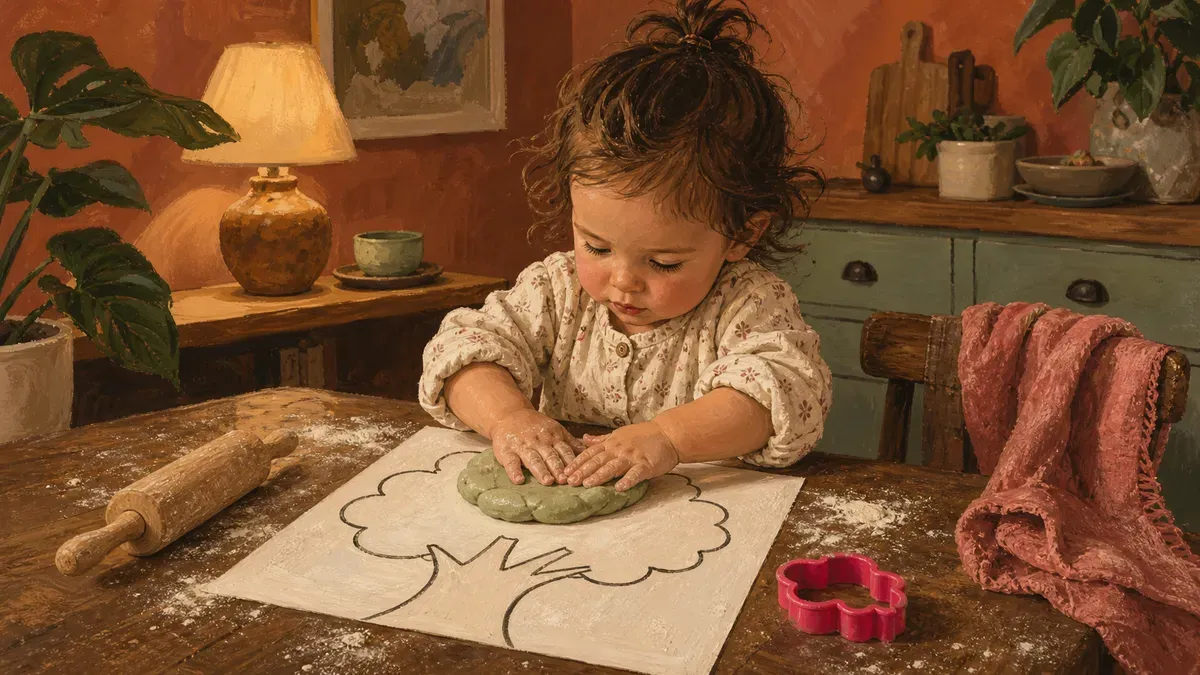
What Is a Play Dough? Beginner's Guide to Mats
What is play dough, and how do mats turn squishing into real learning? Plain-English answers plus age-by-age starter ideas.
-
 Playdough
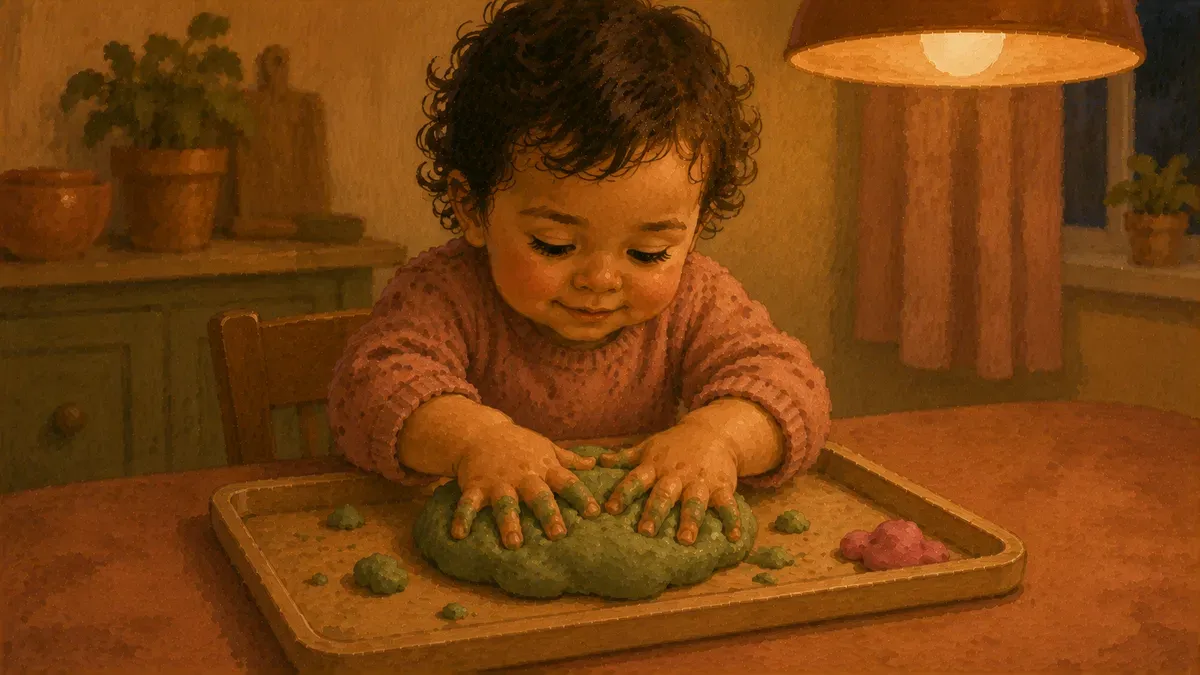
Play Doh for 2 Year Olds: Setups That Run Themselves
Most 2-year-olds eat play doh before they shape it. Here's how to set up play doh for 2 year olds so they play. Start in 3 steps.
-
 Playdough
Playing With Playdough Fine Motor Skills That Last
Playing with playdough fine motor skills do more than entertain - they build the exact hand strength kids need to hold a pencil. See how, and try it.
-
 Playdough
Play Doh Age: Signs Your Toddler Is Really Ready
Most parents wait too long. Play doh age starts at 2, but one readiness sign matters more than the number. Learn when and how to start today.