Play Doh Age: The One Sign Your Toddler Is Ready

Some links here are affiliate links. If you buy through one, I may earn a small commission at no extra cost to you. As an Amazon Associate I earn from qualifying purchases. I only point to things I'd actually use with my own two.
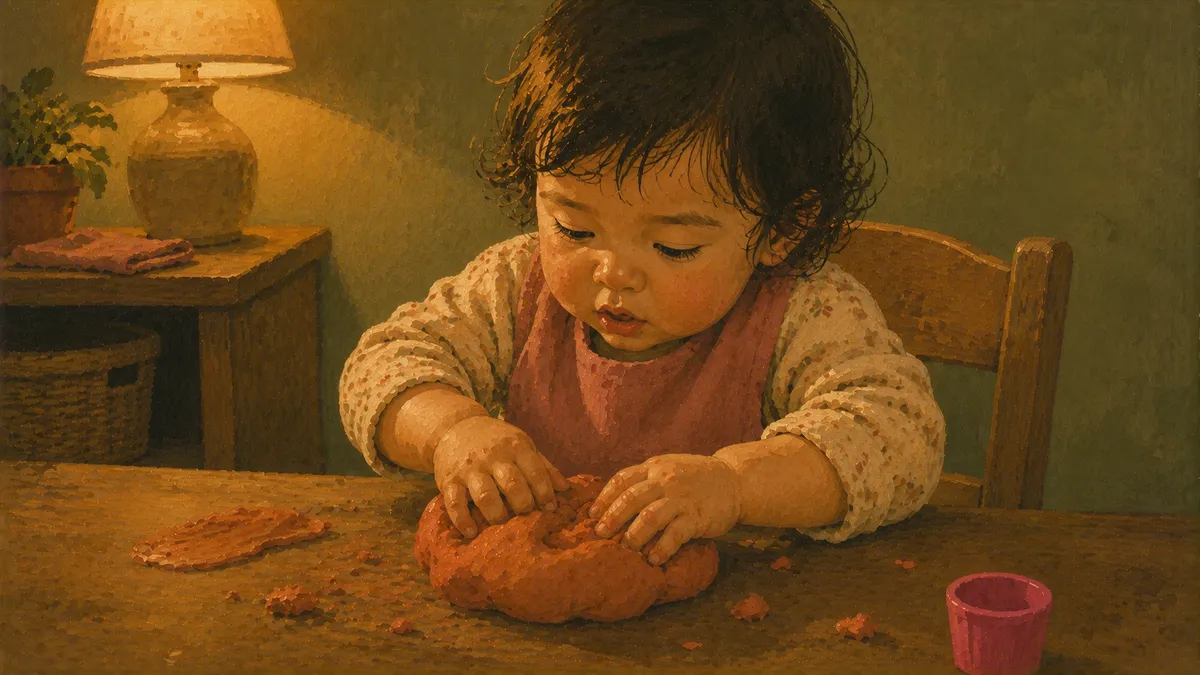
The honest answer on play doh age is around 2, the same age Play-Doh itself is labeled for, per Poison Control. The number on the tub matters less than one thing you can watch for: whether your toddler still puts every toy in their mouth, because dough that gets eaten is no fun for anyone.
I’m Nora Hayes, a former preschool aide who’s run sensory play daily with my own two kids, and below I’ll walk you through the readiness sign that beats the age, how to start, and whether it’s actually safe.
The plan in brief:
- Wait until your toddler is about 2 and no longer mouths every toy.
- Start supervised with a single ball, showing one move: squish, then roll.
- Sit within arm’s reach the whole first session and end it after 10 minutes.
What Age Is Play-Doh Right For?
You know to stay close that first session, but you might still be wondering whether your kid is even old enough to start. The number on the tub gives you a starting point, but your toddler’s actual behavior is what sets the real age range.
The Manufacturer’s Recommended Number
The short answer is two. The recommended age for Play-Doh, printed right on the tub, is 2 and up, and Hasbro lists the same “Ages 2+” and “Non-Toxic” line on every can of the classic Play-Doh Modeling Compound, the ten-pack of 2-ounce cans that’s earned an Amazon’s Choice badge and more than 68,000 reviews at 4.7 stars.
The box draws the line there for one plain reason: choking. Poison Control says Play-Doh is labeled safe for children 2 years and older and is not safe under 2, with choking the main worry for the younger crowd.
- Non-toxic means a lick won’t hurt anyone.
- A fistful pressed into a small mouth is a different problem.
So the manufacturer’s number isn’t a milestone your child unlocks. It’s a floor. Around the second birthday is the earliest most kids are ready, not a starting gun that fires the day they turn two.
Why Age Alone Doesn’t Decide It
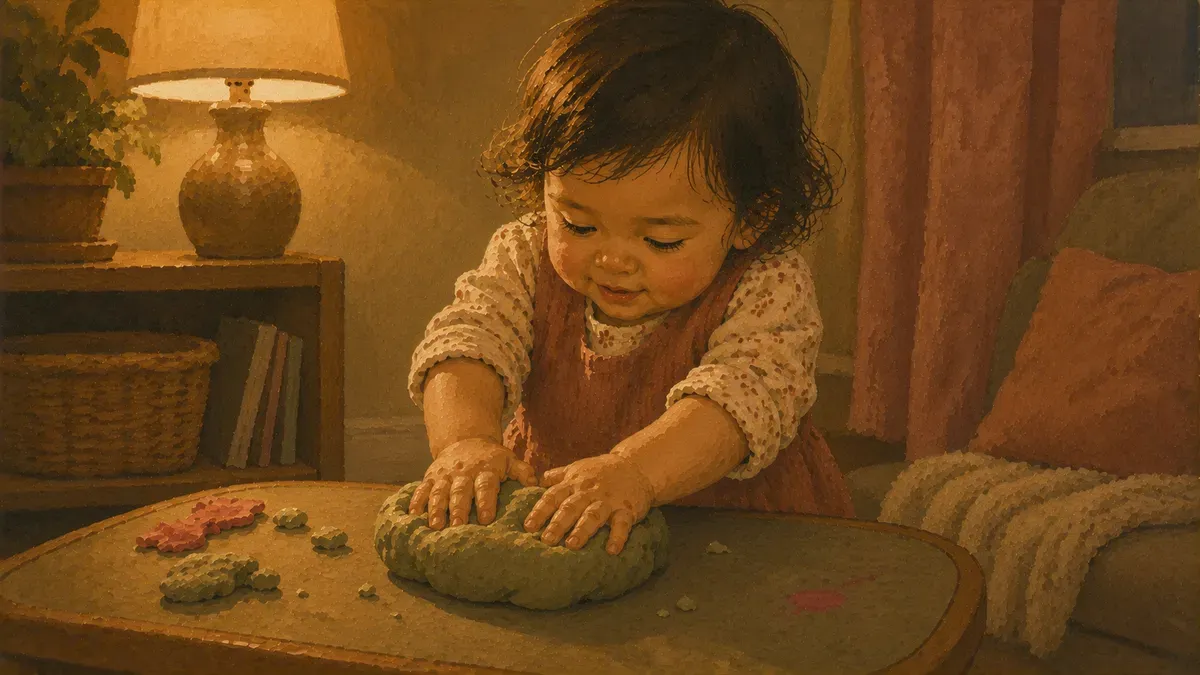
Here’s where the calendar stops being useful. Two toddlers can share a birthday and be nowhere near the same place, because what really matters is whether they still mouth everything and how much fine motor control they’ve got.
Two things give you the real read on readiness:
- Mouthing habit: The taste-everything phase winds down somewhere between 15 months and 2 years, per the Cleveland Clinic, but some kids keep it up past their second birthday. A child still testing objects with their mouth isn’t ready, whatever the tub says.
- Fine motor control: Squishing, pinching, and rolling are real developmental work. A toddler who can press a ball flat with their palm is in a different place than one still figuring out their hands.
This is the heart of early childhood play: follow the kid, not the number. For more setups built around exploration at this stage, see our complete guide to playdough play. Watch yours, not the calendar.
How to Introduce Play-Doh to Your Toddler Step by Step
The first session sets the tone for every one after it, so the goal here is calm, not crafty. Three moves get you there: a contained setup, one action modeled at a time, and a short finish.
- Prepare the space: a wipe-clean surface and one small ball of dough.
- Demonstrate one move at a time, then pause and let them copy.
- Wrap up while they’re still happy, before the session unravels.
Set Up a Safe First Session
Three things to set up before you open the tub:
- Surface: high-chair tray, sealed table, or silicone placemat, anything that wipes clean in one swipe.
- Proximity: sit within arm’s reach so you can catch a fistful headed for the mouth.
- Amount: one small ball, roughly golf-ball size, not the full tub.
The setup is half the battle, because a parent worried about the rug supervises with one eye and dreads the whole thing.
This early, supervision isn’t hovering, it’s being close enough to catch a fistful headed for the mouth before it lands. You’re the spotter.
A toddler facing four colors and a mountain of dough gets overwhelmed and just smashes it all into gray. The whole point of this introduce-it-slowly stage is texture: let them poke it, press it, feel that it’s softer than a toy and firmer than pudding. That first squish is the exploration. Don’t rush past it.
Model One Simple Move at a Time
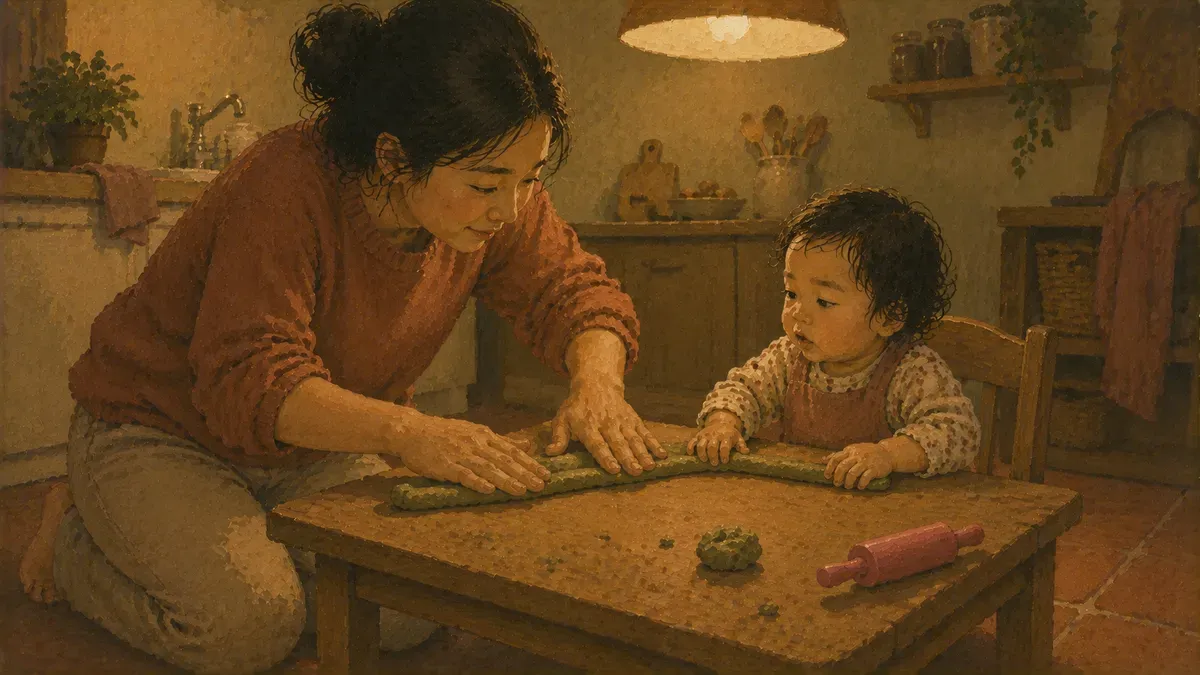
Toddlers learn by copying, so the fastest way to show them how to play with playdough is to do it yourself and pause. Then stop and look at them. Wait. A 18-month-old will often slap their own hand down to copy you, and that slap is the lesson landing.
One move, though. Resist the urge to roll a snake, pinch a pea, and stamp a star all in the first ten minutes. The skill sequence builds slowly:
- Squish: flatten your palm and push it into the ball. That’s the whole lesson for day one.
- Roll: push the ball back and forth under a flat hand until it stretches. Add this once squish feels easy.
- Pinch and mold: later skills that ask for a thumb-and-finger grip a younger toddler is still building.
Stack the moves one at a time and each new one feels like a small win instead of a test.
Keep It Short and End on a Win
Stop while they still want more. Ten minutes is plenty for a first go, and the temptation is to ride a good session until it falls apart into a tired, sticky mess.
Don’t. Ending while the toddler is still grinning is what makes them ask for it again tomorrow. End on a meltdown and the dough becomes the thing that ruined the afternoon.
Watch for these tells that they’re done:
- tossing the dough instead of pressing it
- climbing out of the chair
- eyeing the door
That’s your cue to introduce the wrap-up, not push for five more minutes. Scoop the dough back in the tub together, say “all done, more tomorrow,” and mean it. A short, happy first taste of this kind of open-ended, imaginative play beats a long one that ends in tears. You’re not building a sculptor in one sitting. You’re building a kid who’s glad to come back.
Readiness Signs That Beat the Age Number
The tub’s age label is the last thing worth checking. Three things tell you more than any birthday, and you can spot all of them in an afternoon of just watching your kid play.
Past the Constant-Mouthing Stage
The biggest green light is simple: your toddler stops shoving every object straight into their mouth. While everything still goes in for a taste, dough is a problem, no matter how non-toxic the label sounds.
The shift is real and it’s measurable. A 2001 study in Pediatrics on toddler developmental milestones guidance tracked how plastic-toy mouthing dropped from 17 minutes a day to 2 minutes a day once children passed 18 months.
That drop is your window. You want exploration happening through the hands, not the mouth, even when nothing in the bin is edible.
Watch for a few sessions, not one good moment. A kid who tasted a crayon yesterday isn’t ready, supervision or not.
If your kid keeps treating dough like a snack, that’s normal, and it’s the reason I wrote about kid eats playdough instead playing. It’s a stage, not a fail.
Can Sit and Focus Briefly
The second sign is the one most parents underrate: can your kid sit and stay with one thing for a few minutes? Not an hour. A few minutes.
At this stage of early childhood, a 2-year-old’s attention runs about four to six minutes on a single task, and that’s plenty for a first round of squishing. If your toddler can park at the table and stick with a puzzle, a stack of blocks, or a bowl of water for that long, the developmental wiring for dough is there.
This is also where the age gap shows up. If they can stick with one thing for a few minutes, the wiring for dough is there.
Shows Pincer Grip and Squeeze Strength
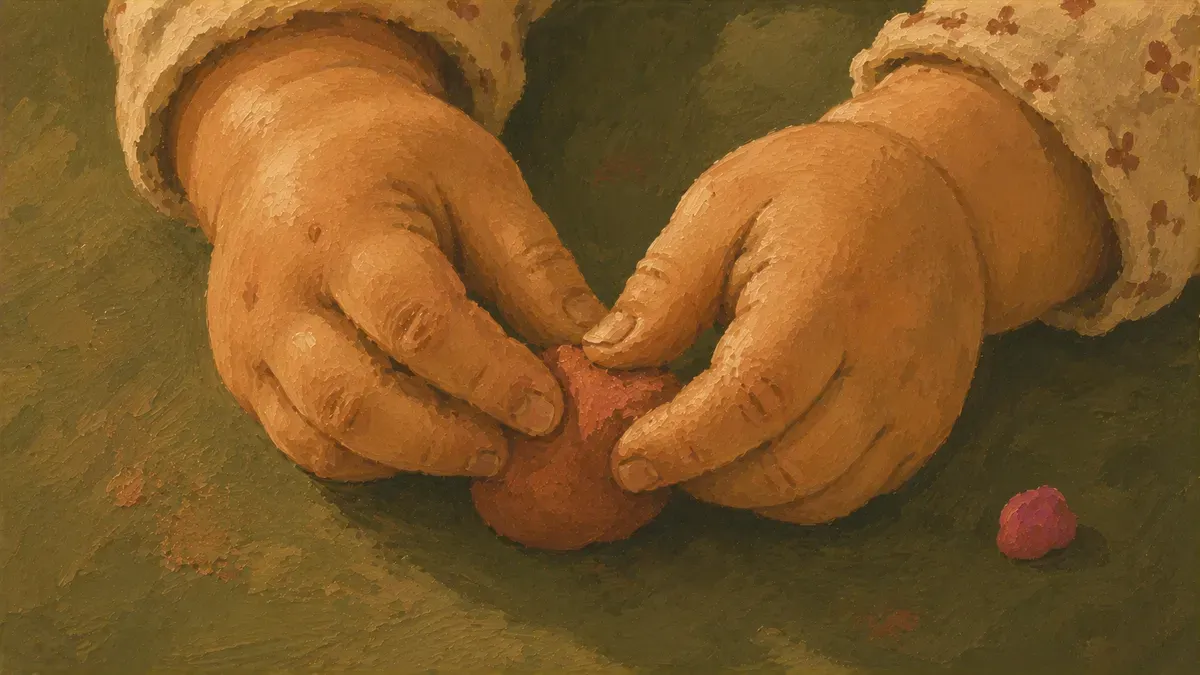
The last sign lives in the hands. Watch how your toddler picks up a cheerio or a small bead. If they’re using the tip of the index finger and thumb instead of a whole-fist grab, the pincer grip is online.
Per NAPA Center, a pediatric therapy clinic, that grip typically lands around 12 months, and it’s exactly the motion dough rewards. Pinch, squish, mold, roll, the playdough both needs that hand strength and builds more of it.
Quick fine motor skills signs your kid is ready:
- Picks up small objects with finger and thumb, not a fist
- Can squeeze a soft toy and let go on purpose
- Pokes, prods, and pulls at textured things
If you want the full picture for the next stage up, here’s our guide to play doh for 2 year olds, where I cover what changes once focus catches up to the fingers.
When the hands, the focus, and the mouthing all line up, that’s your real green light.
Is Play-Doh Safe for Toddlers?
Ready doesn’t mean risk-free, so before that first ball lands in your kid’s hands, it helps to know what’s actually in it and what happens when some ends up in their mouth. Here’s the straight answer, plus a kitchen version for the littlest mouthers.
Non-Toxic, but Not for Eating
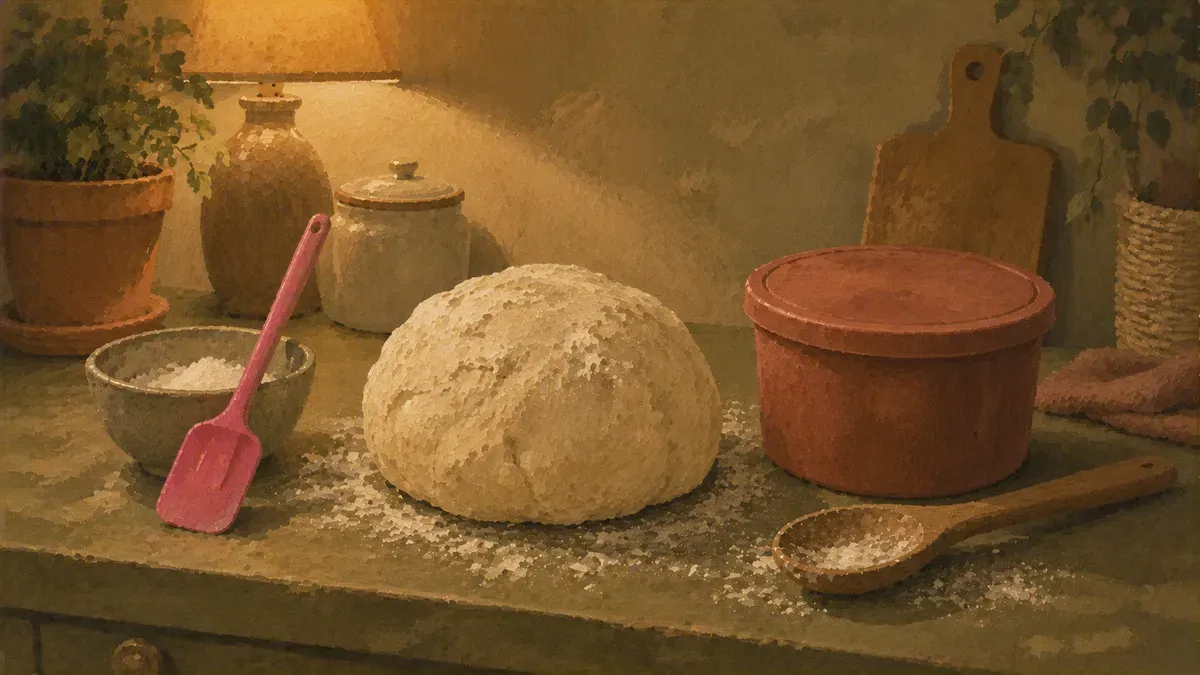
Good news first: the store-bought stuff is non-toxic. According to Hasbro, Play-Doh is made from water, salt, and flour, and a fingertip’s worth won’t poison your kid if it gets swallowed.
The salt is the quiet hero here. It tastes awful, so most toddlers spit it out fast. That bitter mouthful is usually all the deterrent you need.
But Hasbro also notes that eating a real amount can cause mild stomach upset, again from all that salt. So non-toxic is not the same as edible.
That’s why you stay within arm’s reach. Not because the dough is dangerous, but because a determined two-year-old will test the rule, and a pinched-off chunk is still a choking shape. Supervision isn’t optional here; it’s the whole safety plan.
Homemade and Edible Alternatives
If your toddler is still a committed taster, skip the tub for now and make your own. A no-cook dough is flour, salt, a little water, and a splash of oil, kneaded until it stops sticking to your hands.
It’s not truly edible, the salt sees to that, but a stray taste is just flour. For a younger kid who hasn’t grown out of mouthing, that margin matters.
Three pantry staples, five minutes, no special trip:
- Flour and salt, roughly two parts to one
- Warm water, added slowly until it comes together
- A spoonful of oil so it stays soft
Want exact amounts and a version that lasts? I keep this easy playdough recipe for preschool on the fridge. Start here, then graduate to the real Play-Doh once the mouthing phase is behind you.
What Playdough Builds at This Age
While you’re waiting for the mouthing phase to pass, it helps to know what’s actually happening once your toddler starts working the dough. Two things are quietly building at once: the small muscles in their hands and the cognitive wiring that comes from open-ended sensory play.
Fine Motor and Hand Strength
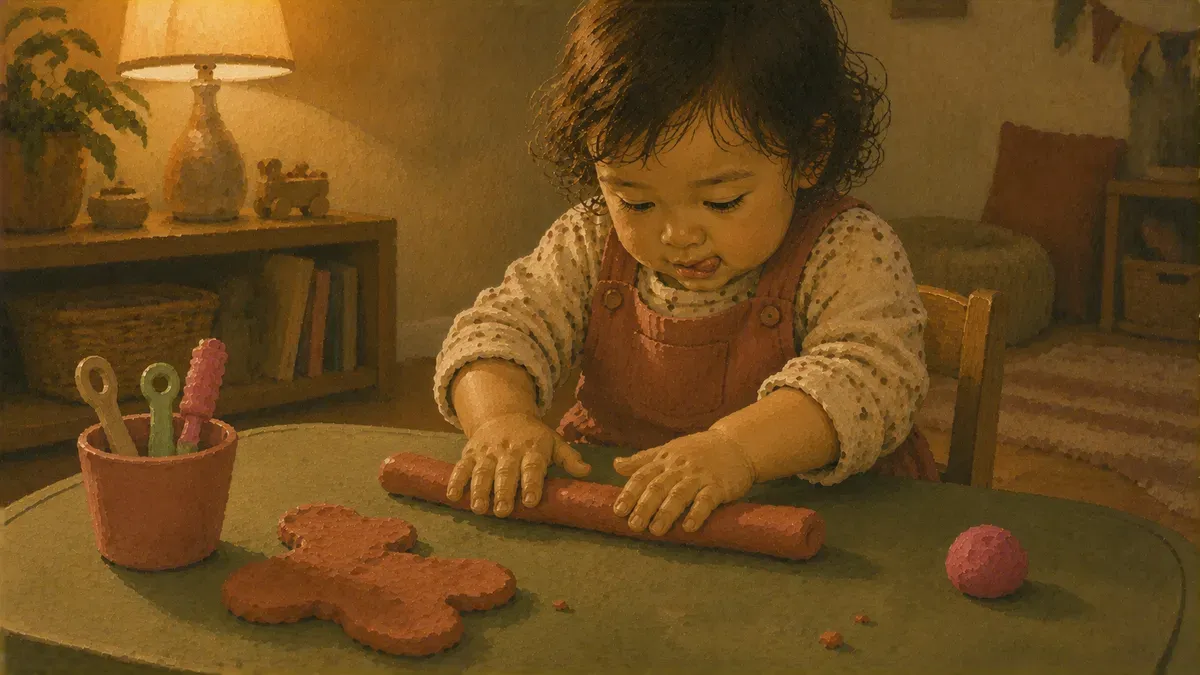
Every time your toddler squishes a ball flat or rolls a snake between their palms, they’re working the tiny muscles and tendons in their hands. The OT Toolbox identifies dough play as building hand strength, precision grasp, finger isolation, and the arches of the hand, all prerequisite skills for holding a pencil and using scissors later on.
The sequence matters. Squish comes before roll, roll before pinch. When you coach your toddler through that order, you’re layering the muscle work. The dough gives natural resistance, and it resets every time, so there’s no frustration when they flatten what they just built.
Knead a chunk yourself and hand it to them warm. That tactile prompt pulls them right in, and you get to watch playing with playdough fine motor skills develop across a few sessions.
Sensory and Cognitive Play
The texture itself is doing work. Smooth, then grainy at the edges, cool when it comes out of the container, warm after a few minutes in their hands. That sensory input isn’t just pleasant; it’s the point. Michigan State University Extension notes that sensory play combining touch with vision and other senses helps build cognitive skills including spatial awareness, pattern recognition, and early math and science foundations.
Open-ended dough feeds imagination and creative expression in a way a puzzle with one right answer never does. There’s no finished product to compare against. A blob is a cake, then a snake, then a hat. That kind of free-form thinking is cognitive development in its least stressful form.
Browse some playdough mats activities when your toddler needs a direction but you don’t want to dictate the whole session.
Found this useful? Save it for the next rough afternoon.
Questions parents ask me about this
What age is Play-Doh appropriate for children?
The manufacturer labels it for age 2 and up, but that number is about choking risk, not readiness. A child who has moved past the mouthing phase and can follow simple "squish it, roll it" prompts is ready, whether that's 22 months or 2 and a half. Age is a floor, not a milestone.
Can a 18 month old play with Play-Doh?
Some 18-month-olds can, and some shouldn't yet. The real question is whether they're still putting everything in their mouth. If the mouthing habit is mostly gone and they're showing basic imitation, you can try it with close supervision. If they're still mouthing toys regularly, start with a homemade flour-salt-water-oil dough that's safer to eat and graduate to commercial Play-Doh once that phase passes.
Is Play-Doh toxic if my toddler eats it?
Commercial Play-Doh is non-toxic. A small taste won't cause harm, and the high salt content tends to deter most kids from going back for more. A large amount can cause mild stomach upset, so it's not something you want them treating as a snack. Supervision is the safeguard, not the ingredient list.
How do I stop my toddler from eating the playdough?
You mostly can't redirect a child who is deep in the mouthing phase, so if that's where you are, switch to a homemade dough made with flour, salt, water, and oil. Everything in that dough is already sitting in your pantry. Once the mouthing phase passes, the urge to eat it usually disappears on its own.
How long should a toddler's first playdough session last?
Around ten minutes is plenty. Toddlers at this age have an attention span of roughly four to six minutes per task, so a session that ends while they still want more is a win. Stop before the whining starts and you build a positive association that makes the next session easier.
When can I stop supervising playdough play?
Stay within arm's reach until you're confident mouthing is done and your child understands not to put it in their mouth. There's no fixed age for this because it depends on the individual child. You're looking for a consistent pattern: squishing, poking, rolling, with no hand-to-mouth movement across multiple sits. Once you consistently see them squishing and rolling without tasting, you can step back to nearby supervision rather than hands-on spotting.
How do I store playdough so it doesn't dry out?
An airtight container or a zip-close bag works well. Press out as much air as possible before sealing. Commercial Play-Doh keeps best in its original tub with the lid snapped shut. Homemade dough lasts a few weeks in the fridge in a sealed bag. If the surface feels dry at the edges, knead in a few drops of water to bring it back.
Written by
Nora Hayes
Mom of two and a former preschool aide. I share the screen-free sensory play and calm-down ideas I test at my own kitchen table, plus what the moms in my little meet-up swear by. A parent passing on what works, not a doctor or a therapist.
More about NoraKeep going
All Playdough-
 Playdough
What Is a Play Dough? Beginner's Guide to Mats
What is play dough, and how do mats turn squishing into real learning? Plain-English answers plus age-by-age starter ideas.
-
 Playdough
Play Doh for 2 Year Olds: Setups That Run Themselves
Most 2-year-olds eat play doh before they shape it. Here's how to set up play doh for 2 year olds so they play. Start in 3 steps.
-
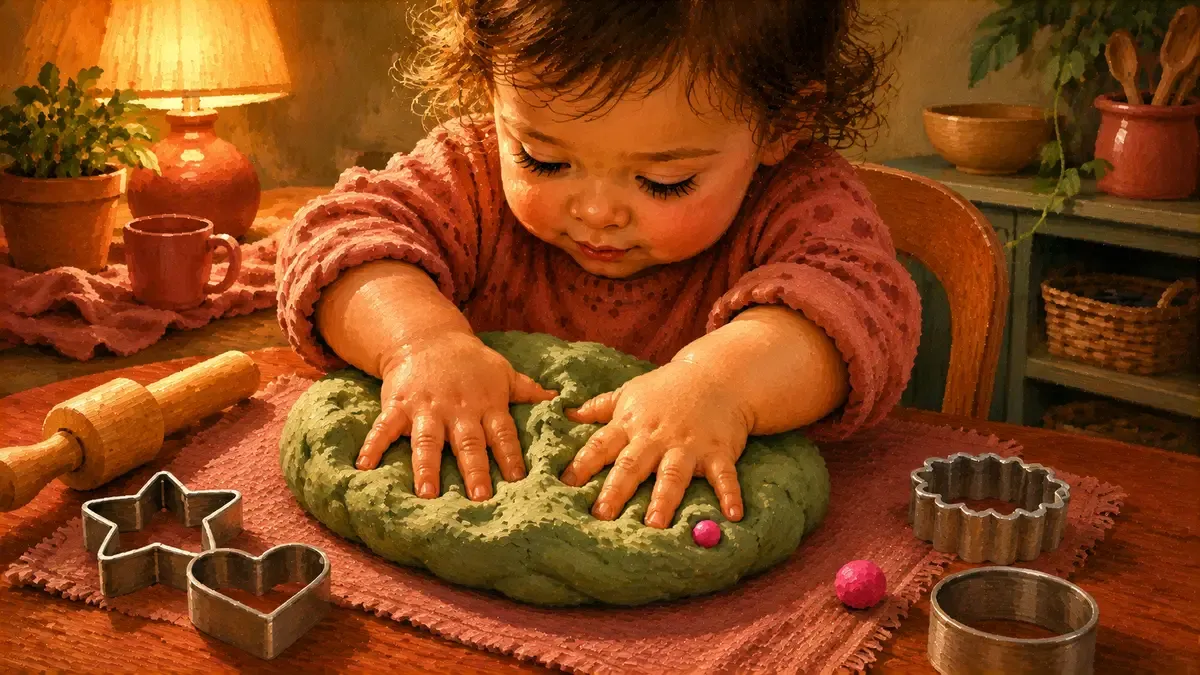 Playdough
Playing With Playdough Fine Motor Skills That Last
Playing with playdough fine motor skills do more than entertain - they build the exact hand strength kids need to hold a pencil. See how, and try it.
-
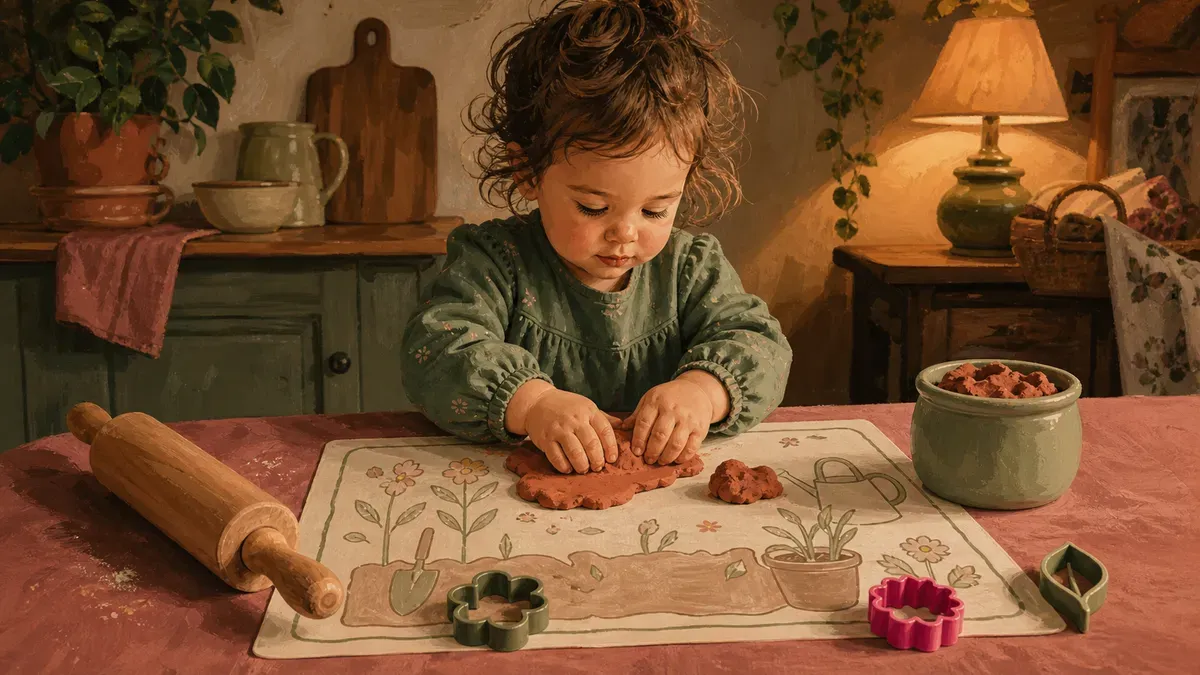 Playdough
Play Dough Creations: 10 Fresh Mat Themes to Try
Bored of the same three setups? These 10 play dough creations and mat themes pull kids back to the table. Pick one and prep tonight.