Playing With Playdough Fine Motor Skills, Built Quietly

Some links here are affiliate links. If you buy through one, I may earn a small commission at no extra cost to you. As an Amazon Associate I earn from qualifying purchases. I only point to things I'd actually use with my own two.
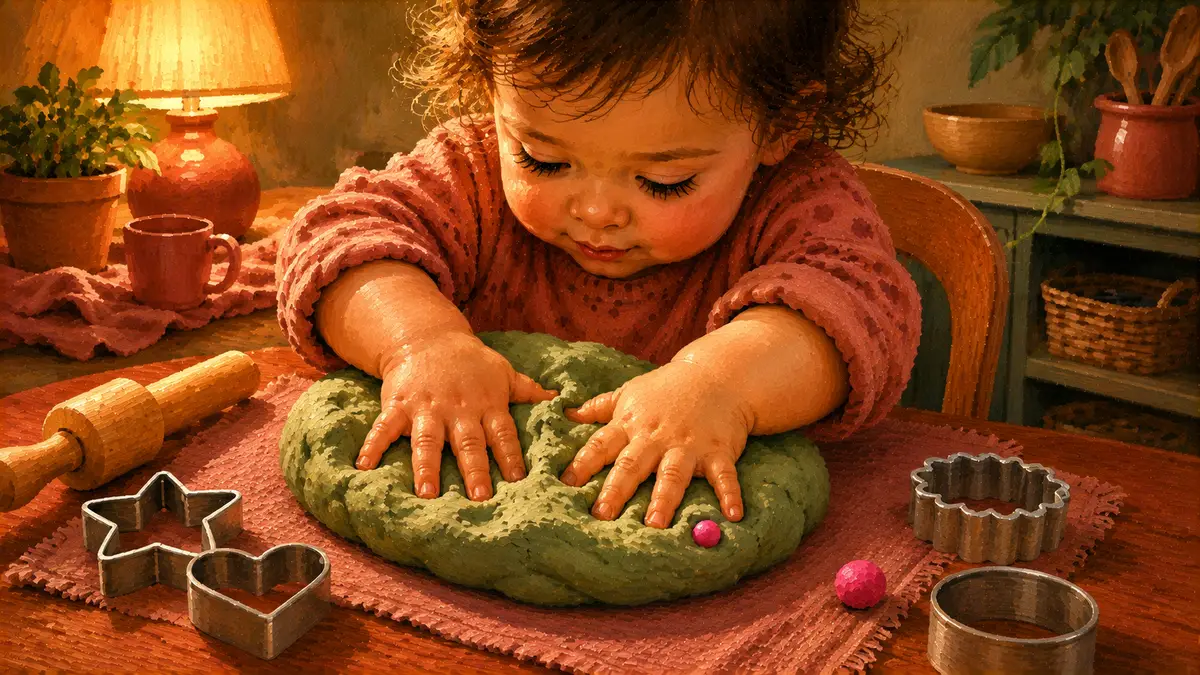
Playing with playdough is one of the simplest ways to build fine motor skills in little kids. Those small muscles doing the poking, rolling, and squishing are the same ones that will later hold a pencil, per NAEYC. I’m Nora Hayes, a former preschool aide, and this guide walks through the activities that grow little fingers, how that strength turns into a real pencil grip, and what to try when a kid hates the texture.
Why Squishing Playdough Builds Real Hand Strength
Playdough isn’t arts and crafts. It’s resistance training for tiny hands.
When a kid squeezes, rolls, or flattens a lump of dough, the muscles in their palm, fingers, and wrist have to push against something that pushes back. That resistance is exactly what builds hand strength. It’s the same principle as a stress ball or a grip strengthener, just in a shape a three-year-old will actually touch.
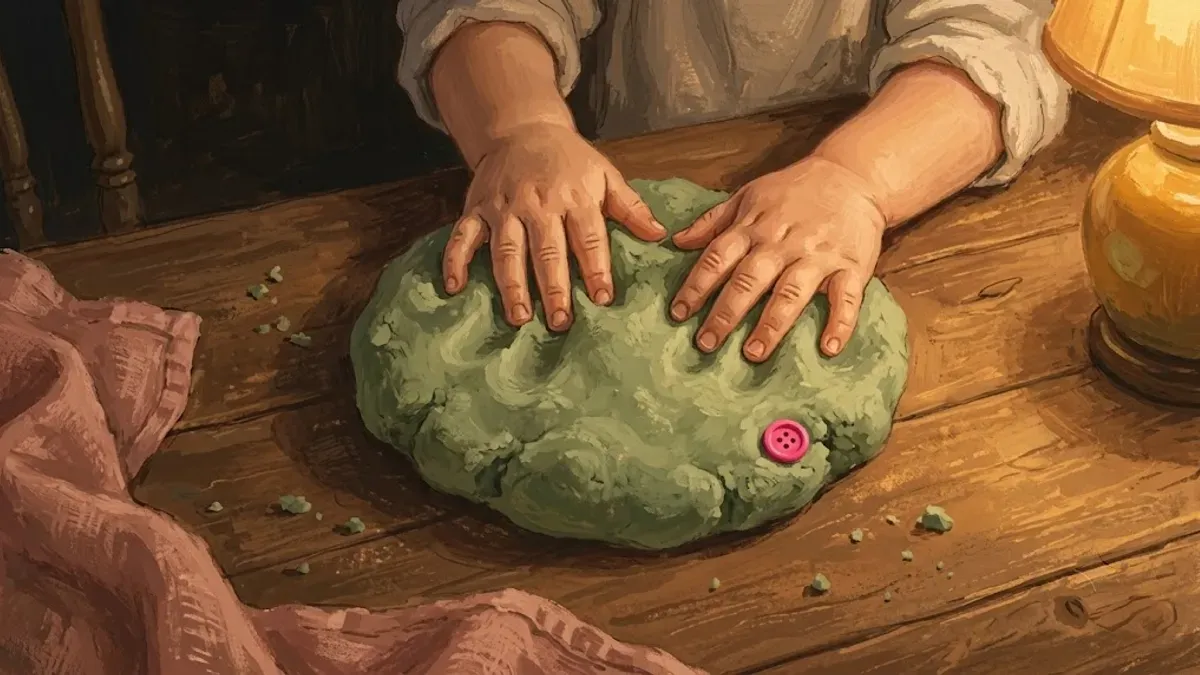
Occupational therapists call this kind of work “heavy work”, and The OT Toolbox explains it well: resistive activities send proprioceptive input through the muscles and joints, which calms and organizes the nervous system. That’s why a kid who was bouncing off the walls ten minutes ago can suddenly sit and poke at dough for a while. The input does something.
For fine motor skills, play dough hits almost every muscle group that matters. Pinching off a small piece works the pincer grasp. Rolling a snake uses the whole palm. Pressing flat with a fist loads the wrist. None of it feels like practice because it isn’t framed that way, but those hand muscles are doing real work.
The grip a child builds at this table is the same grip they’ll use to hold a pencil in two years.
If you want to understand why that connection runs deeper than it looks, the pincer grasp explained breakdown covers the developmental chain. For now, the short version: a stronger squeeze in play dough means a lighter, less effortful grip on a crayon later.
Playdough Activities That Strengthen Little Fingers
The squeeze does the heavy lifting, but a few simple setups turn it into real practice. Here are the three I come back to most, easiest first.
Pinch, Pull, and Hide Small Objects
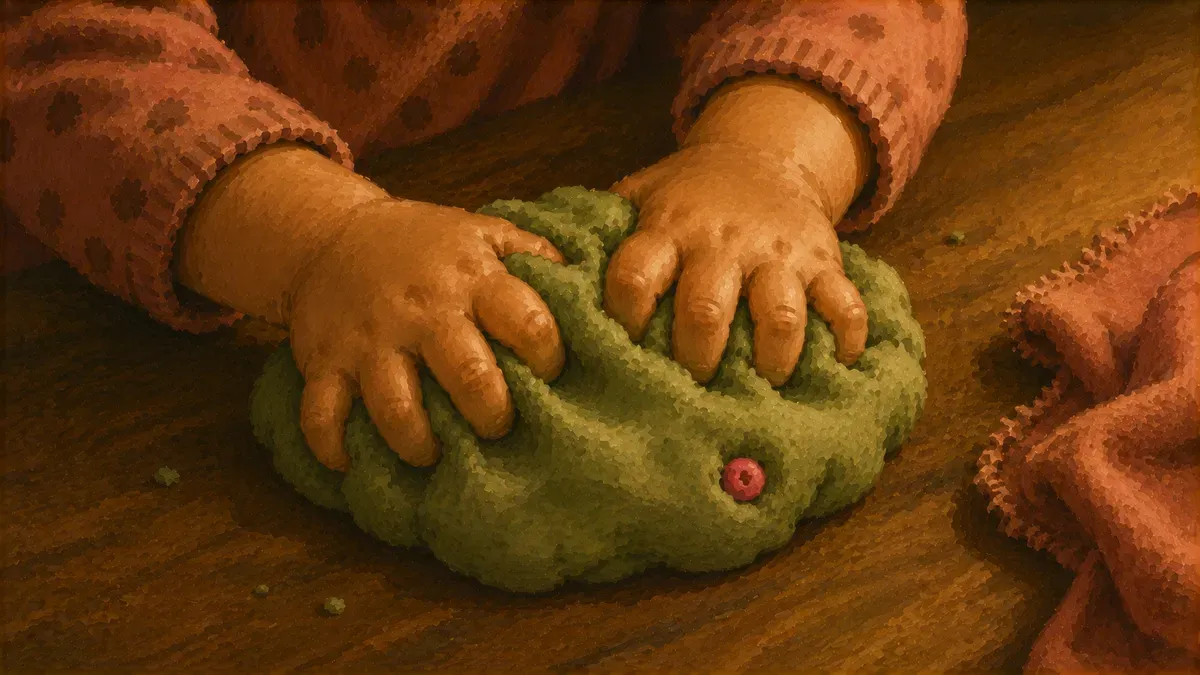
Press a handful of beads or buttons deep into a flattened pancake of dough, then ask your kid to dig them out one at a time. That pinching motion is the pincer grasp in action, the thumb-and-fingertip pinch that, per WebMD, shows up around 9 to 10 months and later becomes the foundation for holding a pencil.
The digging part matters more than the hiding. Wiggling one finger in to pop out a single bead is finger isolation, and The OT Toolbox names that as the same skill behind typing, playing an instrument, and controlled pencil moves.
It builds dexterity and hand-eye coordination without feeling like work. For toddlers, swap beads for dry pasta or large pom-poms so nothing small enough to choke on goes near the dough. Once your kid is past the choking stage and their pinch gets stronger, a set of jumbo fine-motor tweezers turns the same bead dig into a real workout. Rated for ages 5 and up, it holds a 4.7-star average across more than 4,000 reviews.
If it ends in two minutes, that still counts. Try again tomorrow.
Roll Snakes, Balls, and Coils
Rolling looks like nothing and does a lot. Flatten your palms, put a lump between them, and roll a long snake.
That snake is sneaky-good fine motor work for play dough hands, because The OT Toolbox points out it takes the same pressure from both hands moving together. That two-handed teamwork is bilateral coordination, the thing your kid leans on to steady the paper while the other hand writes.
Once the snake’s rolling, switch to fingertip rolling for tiny balls and coils. The proprioceptive feedback of squashing and reshaping wakes up the small hand muscles, and the controlled, even pressure is exactly what a crayon asks for later.
Cut, Stamp, and Press With Tools
Tools are where the whole hand gets stronger. A plastic knife, cookie cutters, and a little rolling pin turn dough into a resistive activity, and North Shore Pediatric Therapy notes that play dough pushes back during tool use to build the muscles kids with handwriting trouble or fine motor delays need. Each one loads the hand a different way:
- Sawing a snake apart with plastic knives. - Stamping shapes and peeling them up. - Pressing a rolling pin flat with both arms.
You can raid the kitchen drawer for all of it, or grab a 9-piece playdough tool set that bundles the rolling pins, plastic knives, and cutters into one bin. It’s an Amazon’s Choice pick with more than 1,000 reviews at 4.7 stars, which is about what you want from something destined to live on the playroom floor.
Child scissors snipping dough is a great early step too. A pair of toddler-safe training scissors with blunt tips does the job without the heart-attack; the set works for righties and lefties, and over 5,000 parents have landed it at 4.4 stars. Kids are usually ready to hold scissors around 1.5 to 2 years and snipping forward by 2.5 to 3, and cutting dough before paper lets them practice safely (scissor skill development checklist).
For printable mats that pair with these tools, browse our full library of playdough mat ideas, or grab a quick list of play dough things to make when you need a setup in five minutes flat.
From Pincer Grasp to Pencil Hold
Grasping a crayon and holding a pencil are not the same skill. The grasp comes first, and playdough is where it gets built.
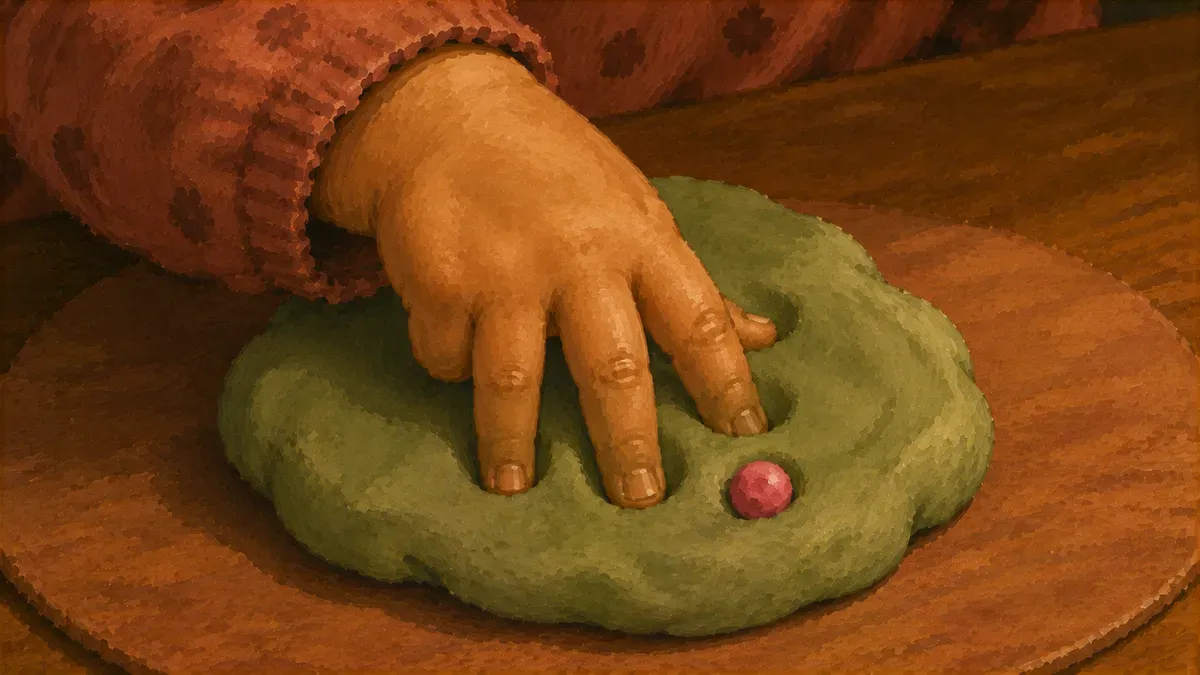
Around ages 3.5 to 4, kids write with the whole wrist moving, not the fingers. That’s a static tripod grasp, three fingers on the tool with the wrist doing the steering. It works, but it tires fast. The shift that actually matters is to a dynamic tripod grasp, where the fingertips move independently and the wrist stays still. According to developmental milestones for pencil grasp, most kids make that shift between ages 4 and 6 and lock it in by age 6 or 7.
Playdough pushes exactly that shift along. That daily dough practice trains the isolated finger movement a pencil later demands.
The dexterity gap is easy to miss. Here’s what it actually looks like:
- Marker in hand, the grip looks fine at first glance
- Fingers fatigue after two minutes
- The grip collapses toward the palm
- More marker time doesn’t close the gap
A 2017 study cited by WebMD found that children with the strongest pencil grip in kindergarten had more fine motor activity at home, and that those fine motor skills are tied to later academic achievement. That’s not a reason to drill a three-year-old. It’s just good to know that the time spent squishing and pinching actually counts.
When you’re ready to add tools that increase resistance as fingers get stronger, the guide to play doh with toys is a natural next stop. Writing readiness looks different in every kid. The activities just make sure the hands are ready when the pencil shows up.
When a Child Resists the Texture
Some kids dive into playdough with both fists. Others won’t touch it at all, and that’s not drama or defiance. It’s a sensory response.
UCLA Health, citing multiple studies estimates sensory processing difficulties affect 5%-16% of children in the general population, a rate that climbs to 60%-90% among kids with neurodevelopmental conditions. If your toddler or preschooler pulls their hands back the moment the dough comes out, they’re probably not alone in your playgroup.
The good news: playdough sits in a useful middle zone. North Shore Pediatric Therapy describes it as a material that bridges the gap between firm, comfortable surfaces and the soft, sticky, mushy textures that can feel overwhelming. You don’t start with mushy. You start at the edge.
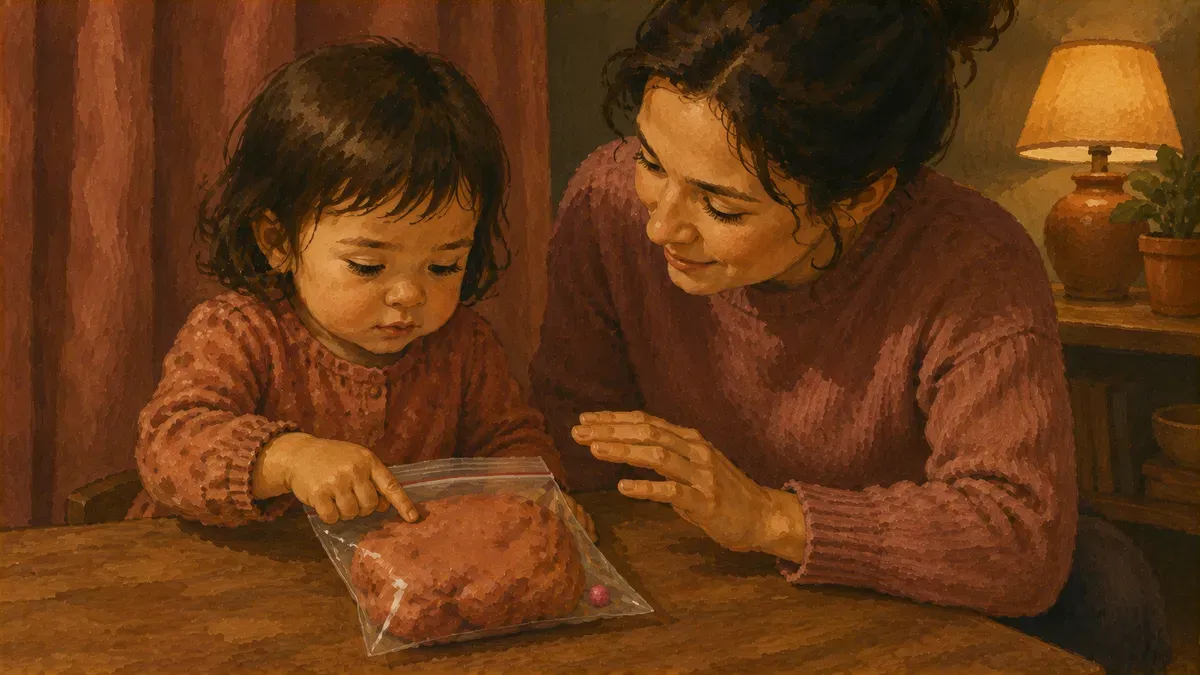
A plastic bag is the classic first step from occupational therapy: seal a chunk of dough inside and let them squish it from the outside. No skin contact, full proprioceptive input. From there, a tool (a rolling pin, a spoon) puts a layer between the hand and the texture. Then a fingertip. Then a palm. The child sets the pace.
For a full walk-through, there’s a dedicated post on texture sensitive kid ease playdough standoff that won’t turn activity time into a battle.
For toddlers and preschoolers on the other end who actively crave input, playdough for sensory play meets a different need: the squeeze, the pound, the satisfying resistance.
Playing with playdough isn’t one-size. The fine motor skills it builds still show up on both ends of the sensory spectrum; it’s just the entry point that changes.
How to Help at Home Without Hovering
The hardest thing to do during sensory play is nothing. Stepping back while your kid presses and rolls and squishes feels counterintuitive, especially when you can see exactly what they “should” be doing. But the fine motor skills that play dough builds happen fastest when children follow their own impulse, not your instructions.
Mostly, your job is to set up conditions and then get out of the way.
If your bin is empty, a 10-pack of non-toxic Play-Doh is the lazy way in; it’s made for ages 2 and up and has piled up more than 68,000 reviews at 4.7 stars, which tells you it holds up to real kids. Homemade dough is cheaper and works just as well, so use whichever gets you to the table faster.
- Sit nearby, don’t direct. Roll your own piece of dough. Let them copy you if they want to. Silence is fine.
- Offer tools without pressure. Put out a rolling pin or a plastic knife. If they ignore them, that’s data. Try again another day.
- Keep sessions short. Ten minutes is plenty at first. Stopping before boredom hits means they’ll want to come back.
- Narrate without evaluating. “You’re pressing really hard” lands better than “Good job.” One describes what’s happening; the other ends the conversation.
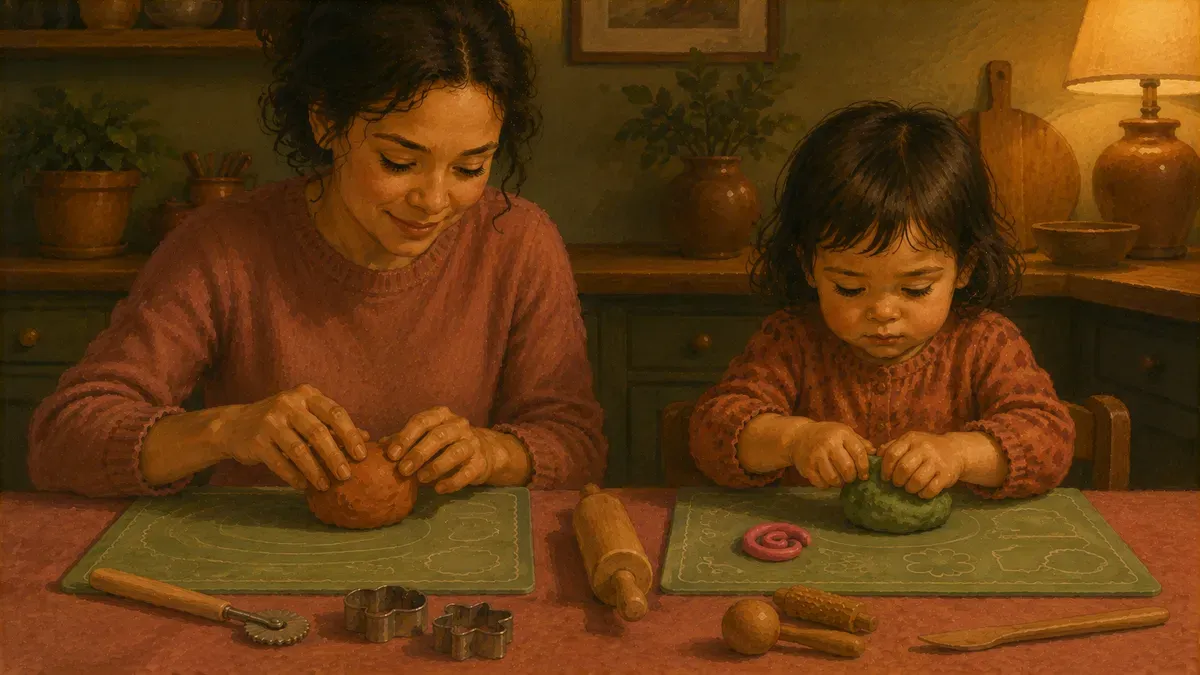
When they’re ready for a bit of structure, try playdough mats activities as a loose prompt. A mat with shapes or letters gives a target to work toward without you hovering over their shoulder.
If occupational therapy is already part of your child’s week, ask the OT what hand strength goals look like for your kid right now. They can point you toward resistance levels and grip patterns that match where your child actually is. You don’t need to replicate the session at home. A relaxed creative play window with dough gets you most of the way there on the days in between.
Dexterity and writing readiness take time. Every session counts, even the two-minute ones.
Found this useful? Save it for the next rough afternoon.
Questions parents ask me about this
How does playing with playdough help develop fine motor skills?
Squishing, rolling, and pinching dough forces the small muscles in the hands and fingers to work against resistance, which is what builds strength and control over time. The same pinching and pressing motions kids use with dough are the ones they'll need to hold a pencil, button a shirt, or use scissors. It's one of the few activities that trains all of those muscles at once without feeling like a drill.
At what age should a child start playing with playdough for fine motor skills?
Most toddlers are ready around 18 months to two years, supervised closely since everything still goes in the mouth at that age. Stick with taste-safe versions for kids under two. By three, children can start using simple tools like rollers and cutters, which adds more challenge and keeps them engaged longer.
Is homemade or store-bought playdough better for building hand strength?
Either works. The main factor for hand strength is resistance: firmer dough gives little hands more to push against, which is the actual workout. Homemade versions tend to be stiffer and cheaper to make in bulk. Store-bought is convenient and consistent. If your child is a texture avoider, some kids do better with one over the other, so it's worth trying both.
How often should kids play with playdough to see fine motor benefits?
A few sessions a week is enough for most kids, even short ones. Ten to fifteen minutes of real squishing, rolling, and pinching adds up quickly. You don't need a structured activity every time. Letting them mess around freely still counts as practice, because they're still working those muscles the whole time.
Which playdough tools are actually worth buying for fine motor practice?
The tools that add resistance or require deliberate grip are the most useful: a rolling pin, plastic knives, and cookie cutters are solid starting points. Anything that makes the child press down, squeeze, or control a tool trains the same muscles writing does. You don't need a specialty kit; a few basics from the kitchen drawer do the job just as well.
When should I ask an occupational therapist about my child's hand strength?
If your child consistently avoids hand activities, gets frustrated or fatigued very quickly with tasks like drawing or cutting, or if their pencil grip looks noticeably different from peers by kindergarten age, those are worth bringing up with a pediatrician or OT. A single evaluation gives you a clearer picture of where they're at and what, if anything, they need beyond regular play.
Can playdough really help my child get ready to hold a pencil?
Yes, and this is one of those cases where the everyday experience matches what occupational therapists point to. The pincer grasp and finger isolation pencil holding requires come directly from those dough movements, which is why the activities above work.
Written by
Nora Hayes
Mom of two and a former preschool aide. I share the screen-free sensory play and calm-down ideas I test at my own kitchen table, plus what the moms in my little meet-up swear by. A parent passing on what works, not a doctor or a therapist.
More about NoraKeep going
All Playdough-
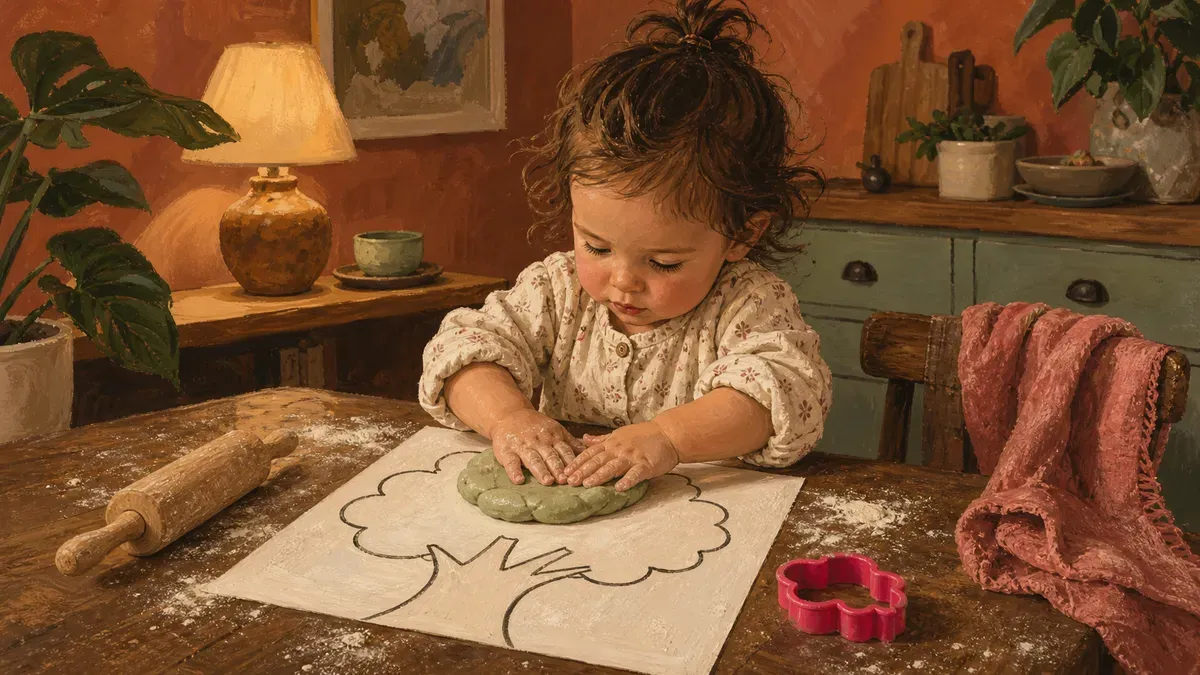 Playdough
What Is a Play Dough? Beginner's Guide to Mats
What is play dough, and how do mats turn squishing into real learning? Plain-English answers plus age-by-age starter ideas.
-
 Playdough
Play Doh for 2 Year Olds: Setups That Run Themselves
Most 2-year-olds eat play doh before they shape it. Here's how to set up play doh for 2 year olds so they play. Start in 3 steps.
-
 Playdough
Play Doh Age: Signs Your Toddler Is Really Ready
Most parents wait too long. Play doh age starts at 2, but one readiness sign matters more than the number. Learn when and how to start today.
-
 Playdough
Play Dough Creations: 10 Fresh Mat Themes to Try
Bored of the same three setups? These 10 play dough creations and mat themes pull kids back to the table. Pick one and prep tonight.