Sensory Play 2 Year Olds: 12 Bins That Hold Attention

Some links here are affiliate links. If you buy through one, I may earn a small commission at no extra cost to you. As an Amazon Associate I earn from qualifying purchases. I only point to things I'd actually use with my own two.
Sensory play for 2 year olds is easiest when there’s a small job built into the bin, and I’m Nora Hayes, a former preschool aide, with hundreds of these tested at my house. A 2026 study in PMC found toddlers absorb hands-on, high-sensory words far more easily than flat ones. Below are 12 bins that work, quick activities for tired days, and the one trick that stops the dumping before it starts.
Why 2-Year-Olds Need Sensory Play (and How Long They’ll Actually Stay)
Before you set up a single bin, two things help: knowing what all that scooping is quietly building, and how short the window really is. Get both right and you stop fighting your toddler’s wiring and start working with it.
What Sensory Play Builds at This Age
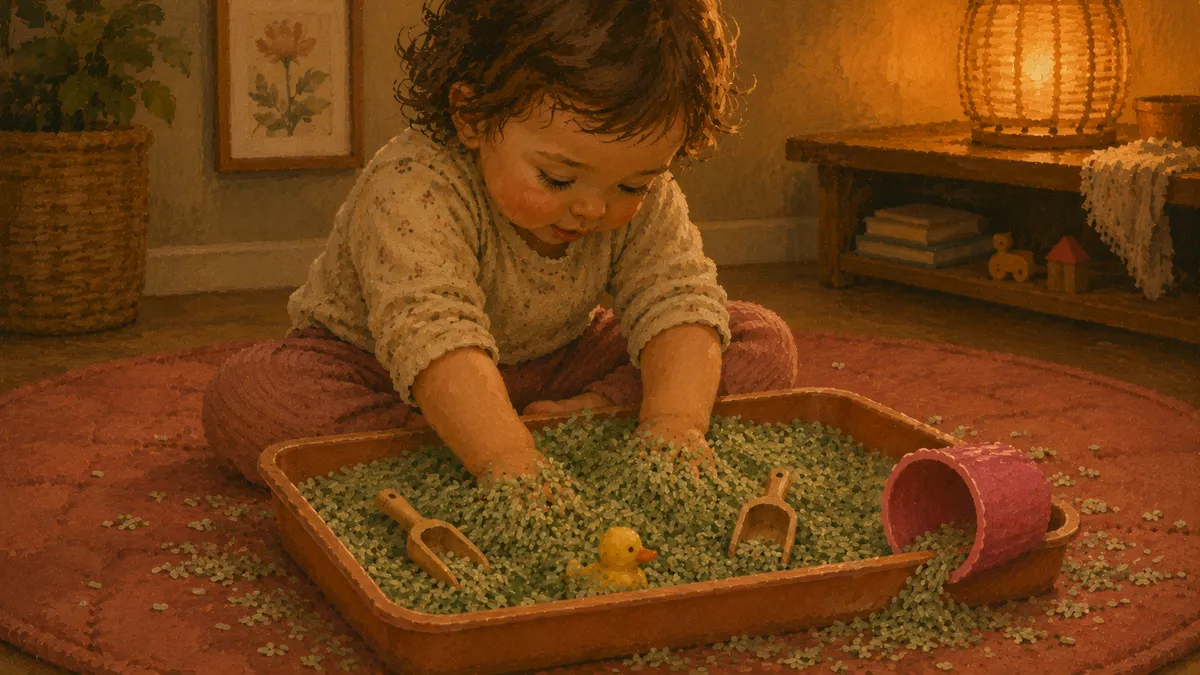
A two-year-old learns through their hands first, words second. When June pinches dry beans into a muffin tin or runs her fingers through dyed rice, she is wiring fine motor skills, the same pincer grip that later holds a crayon. That tactile, hands-on work is real cognitive development, not just something that keeps her busy.
There is a language piece too. A small study on toddler word learning found that letting a two-year-old touch a new object while hearing its name helped them learn the word better than looking alone. So sensory play for 2 year olds is part fine motor, part vocabulary, part body awareness, learning where her hands are and how much pressure a scoop takes. None of it needs explaining to your toddler. She just needs the bin and permission to make a mess.
The Real Attention Span of a 2-Year-Old
Here is the part that saves your sanity: your toddler is not supposed to play for an hour. Child development benchmarks put a two-year-old’s focus on one task at roughly four to six minutes, sometimes pushing eight on a good day. That is normal. A bin that holds them for five minutes is a bin that worked.
Plan for the reset, not the marathon.
So success with sensory play for two year olds is not one long, calm stretch. It is a short burst of real exploration, then a swap. Rotate the contents, hand over a fresh scoop, or move them to water before the dumping starts and you reset the clock. Some days that buys three rounds back to back. Some days you get ninety seconds and a thrown cup, and that still counts.
This is why I keep a few shallow, low-prep sensory bins for toddlers ready to rotate rather than one elaborate setup. Short attention spans aren’t the problem to fix. They’re the thing to build around.
12 Sensory Bins That Keep Them Engaged
Here are the bins I rotate through with June and the group’s toddlers, sorted by how they keep little hands busy: the dry scoopers, the squishy ones, and the ones with a story attached.
Scoop-and-Pour Bins (Rice, Pasta, Beans)
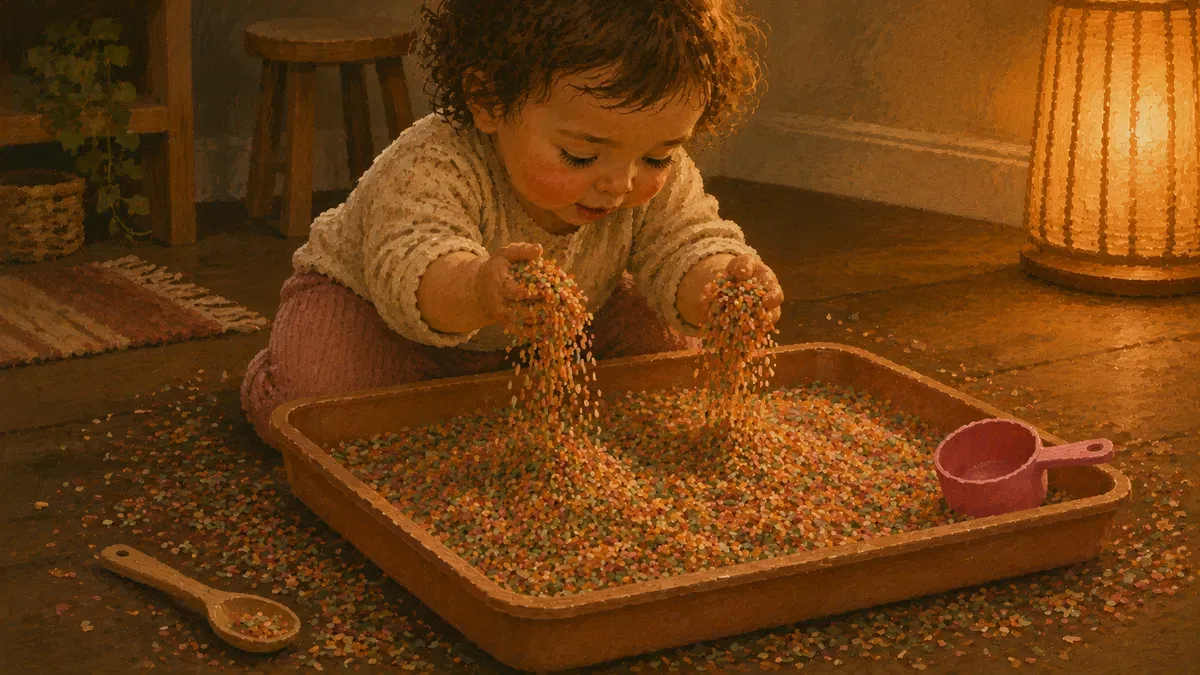
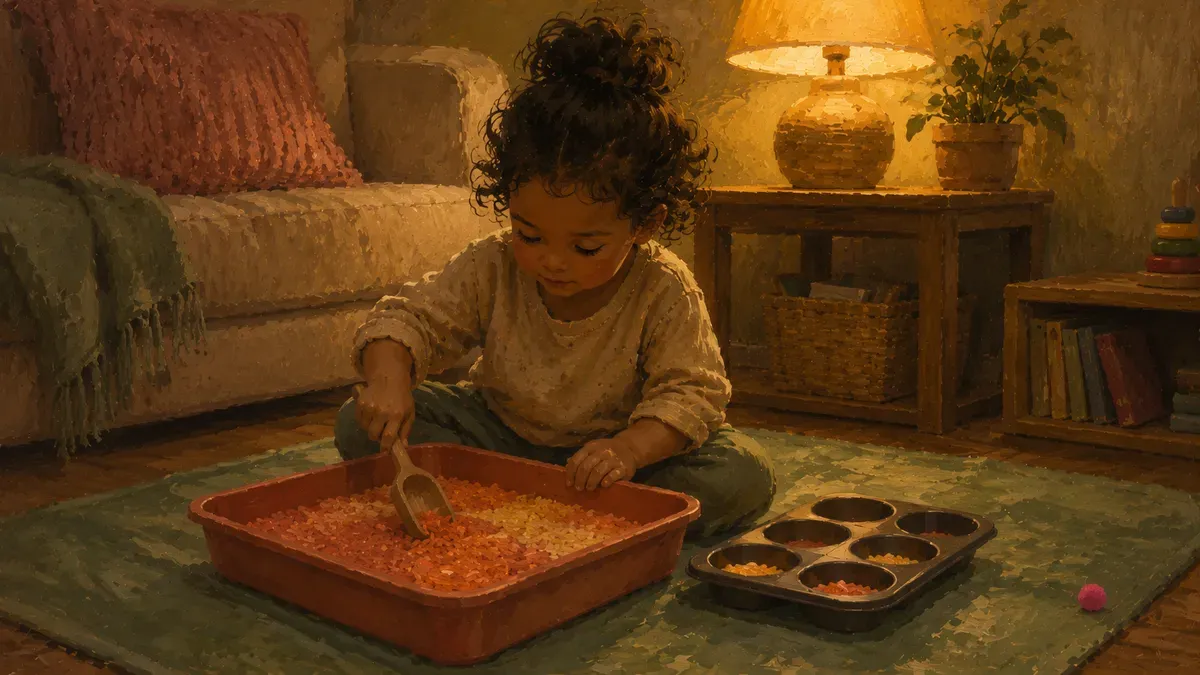
Start here. A dry-filler bin is the easiest win in the house: pour rice into a shallow tub, drop in a few spoons and cups, and a 2-year-old will scoop and dump for ages. These are the sensory bins for 2 year olds I reach for on a no-energy day, because there’s nothing to make and nothing to ruin.
- Rainbow rice: dye dry rice with a splash of vinegar and food coloring, let it dry on a tray, and it keeps for months in a jar
- Dyed pasta: chunkier pieces do the same job and are a safer pick if your toddler still mouths things
- Dried beans: heavier, louder pour that some kids love and some hate, so test before you commit a whole bag
The magic is the small job. Scooping, pouring, and transferring from one cup to another are real fine motor sub-skills, the same grasping and gripping work educators point to with a basic rice table. Toddlers have been observed staying with a rice bin for up to 45 minutes at a stretch, though I’ll be honest, June clocks more like ten on a good day.
Add a funnel and a muffin tin and a plain rice bin suddenly has three new jobs.
For more dry options you probably already have in a cupboard, here’s my running list of sensory bin fillers.
Squishy and Moldable Bins (Cloud Dough, Kinetic Sand, Oobleck)
Dry fillers are great until they’re boring. When June wants resistance, something she can squeeze and watch change, I switch to moldable bins. These hold a toddler longer than rice because the material does something back.
- Cloud dough (flour + oil at an 8-to-1 ratio): packs into a ball when squeezed, crumbles the second you let go
- Kinetic sand: store-bought, moldable and slow-flowing, worth it if you hate the cleanup of homemade. The tub we keep never actually dries out, which is what earns it an Amazon’s Choice tag and 4.7 stars from 19,000-plus parents
- Oobleck (non-Newtonian fluid): runs like liquid when you move slow, turns solid the instant you smack it
PBS notes it’s safe if a toddler tastes it, which under two they absolutely will. These squishy dough and sand bins are the sensory bin ideas for 2 year olds I save for when I’ve got a tarp down and ten free minutes, because they earn their mess.
Water and Themed Pretend-Play Bins
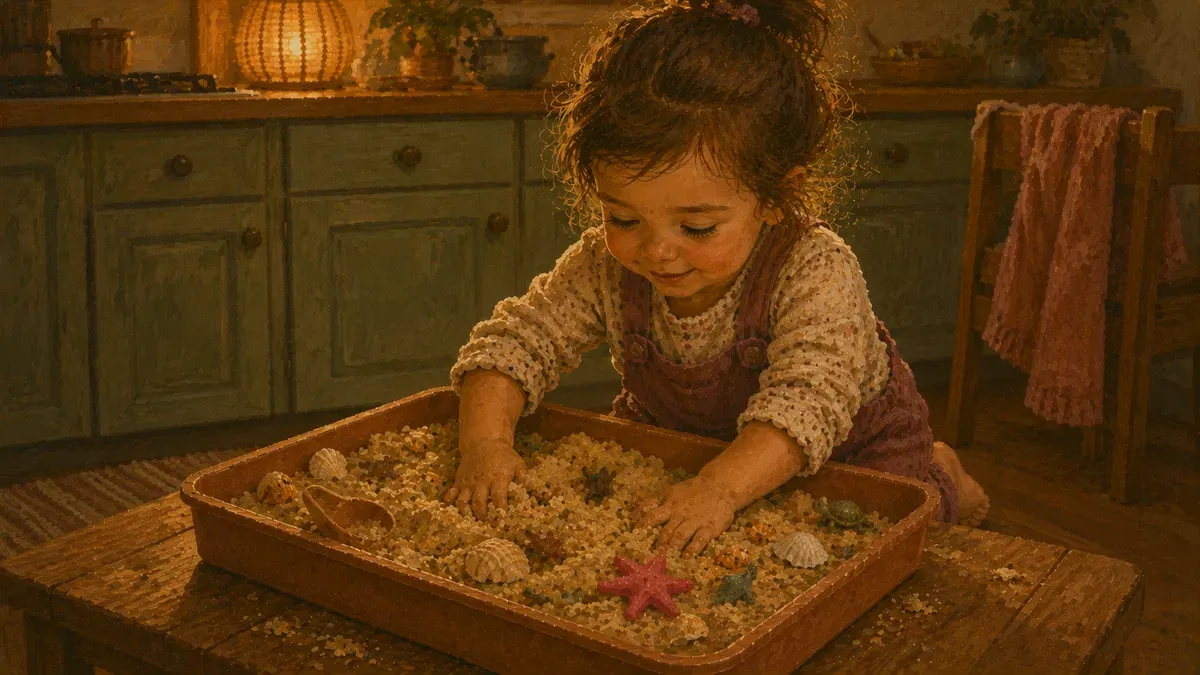
Give a bin a storyline and you buy yourself real time. A plain water table is good. A water table that’s an “ocean rescue” with a few plastic animals to wash off an ice floe is great, because now there’s a point, and a 2-year-old will work a point hard.
Water play does a lot of quiet heavy lifting. The occupational therapists at NAPA Center note water play engages at least four sensory systems at once, tactile, auditory, visual, and that proprioceptive body-awareness piece, while supporting fine motor, gross motor, and language all in one bin. Add a squirt of dish soap and whisk it to bubble foam for a different feel entirely.
Themed bins are where toddlers stop just exploring and start playing pretend. A few sensory ideas for 2 year olds that earn their keep at my house:
- Ocean bin: blue water, plastic sea animals, a net to fish them out
- Farm bin: dry oats or split peas, little animals, a small fence
- Ice rescue: toys frozen in a tub overnight, warm water and a spoon to free them
- Nature bin: leaves, pinecones, and smooth stones from the backyard, no prep at all
Ice play is the sleeper hit. Freezing a few small toys into a block turns a bin into a slow, fifteen-minute mission, and the cold is its own new sensation. These themed sensory bins for two year olds give a tired toddler something to chase.
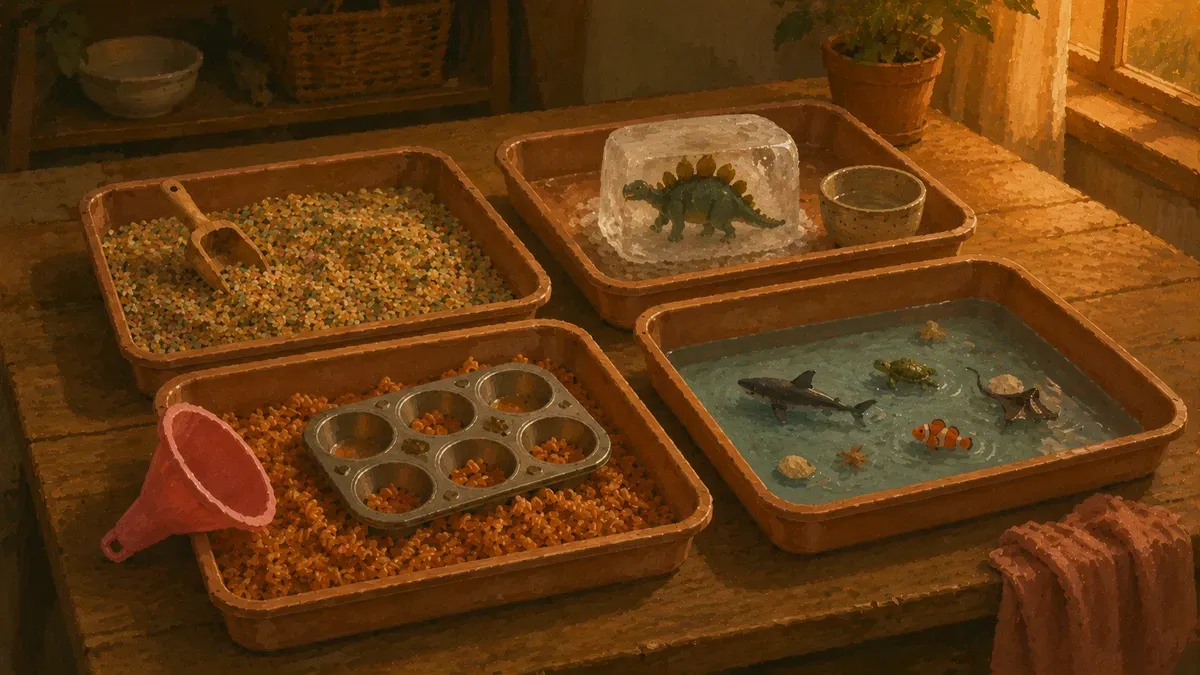
The pattern across all twelve is the same: a job for dry bins, a reaction for squishy ones, a story for themed ones. Pick the kind that matches the kid you’ve got in front of you today. Tomorrow you can rotate to the next.
Quick Sensory Activities Beyond the Bin
A bin is not the only way in. Some of the best wins come from things with no filler to scoop and almost nothing to sweep up after, and this section splits them two ways: mess-free options for the littlest hands, and five-minute setups you can throw together anywhere.
Mess-Free Options for Younger Toddlers
If your kid is closer to one than three, or hates the feel of things on their skin, a bin can be a hard sell. That’s where sealed play earns its keep.
Fill a freezer bag with hair gel and a few buttons, tape it flat to the floor or a low window, and let them squish. They get the squeeze and the cool, slippery push without a single thing on their hands.
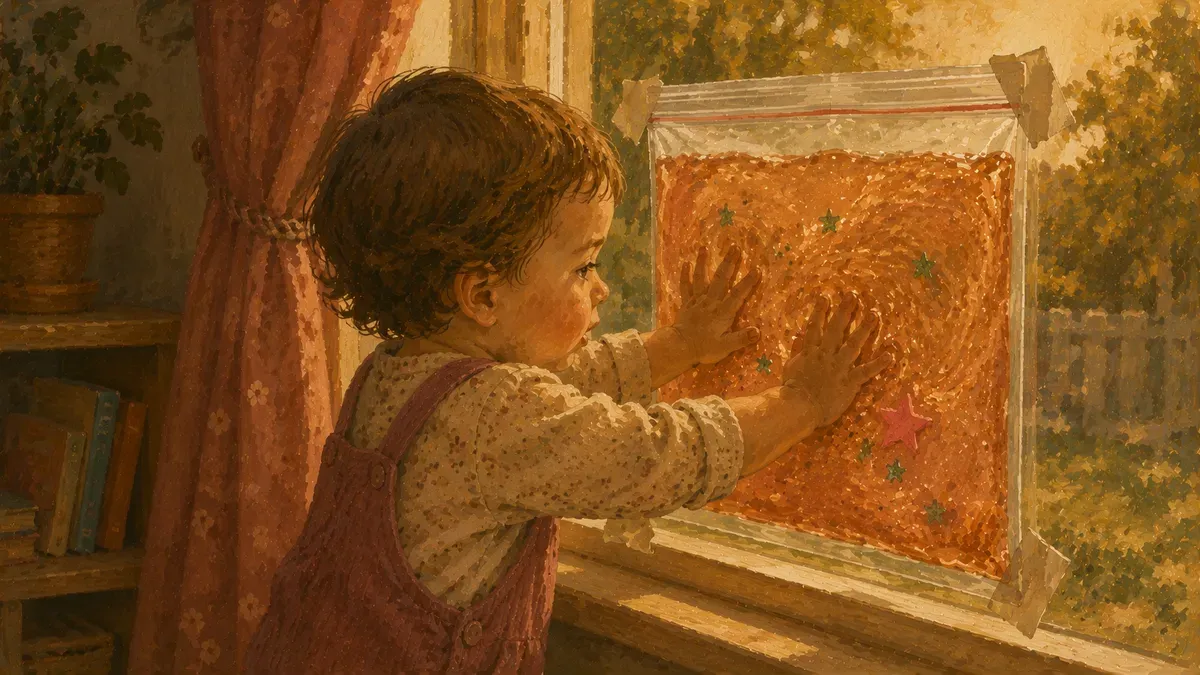
These sensory bags are genuinely useful, not just a shortcut. The Ability Toolbox notes they let texture-averse toddlers meet squishy or cold textures at a ‘just right’ level with no direct skin contact, which is why occupational therapists reach for them with tactile-sensitive kids.
Sensory bottles work the same calming magic for sensory activities for 1-2 year olds who aren’t ready to dig in. Water, a little oil, glitter, and a tight lid, and you’ve made one for free. Not up for the funnel-and-spill of a DIY? There’s a 4-pack of ready-made calm-down bottles, each built around a feeling, an Amazon’s Choice with 4.7 stars from 2,000-plus parents. One honest caveat: they’re rated for ages 3 and up, so save them for once your toddler is past putting everything in their mouth. They shake it, they watch it settle, they shake it again.
- Gel bags taped down for squish-and-press
- Sensory bottles for shake-and-watch
- Contact paper, sticky-side out on the wall, with pom-poms to press on
All three give real tactile input and leave you nothing to mop.
Five-Minute Sensory Activities You Can Set Up Anywhere
The other half of the toolkit is the stuff you pull together in the time it takes to fill a sippy cup. These sensory activities for 2 year olds live in your kitchen and your bathroom, no special run to the store.
Bath time is the cheat code here. Toss in cups, a spray bottle, and a sponge, and you’ve got water play that builds hand strength and hand-eye coordination with zero extra cleanup, because the tub drains it all away. Pathways.org makes the case that the bath is one of the most practical sensory setups you’ve got.
Here’s a five-minute lineup for a rough afternoon:
- Cooked spaghetti in a bowl, room temp
- Frozen peas to spoon between cups
- A spray bottle of water on the back step
- Shaving foam smeared on the high-chair tray
None of these need prep the night before, and most clean up with one wipe. For a few more grab-and-go ideas in this vein, my list of easy sensory activities you can run in ten minutes keeps the same low-effort rule. When the afternoon’s gone sideways, that’s the whole point.
Keeping It Safe and the Mess Under Control
Two things stop most parents from running sensory play: a kid who still mouths everything, and a floor they don’t want to mop. Both are easier to manage than they look, and neither is a reason to skip the bin.
Choking and Taste-Safe Rules for Age Two
At two, assume the filler is going in the mouth at least once.
- Supervision works: dry rice, beans, and oats are fine, but stay in the room the whole time.
- Known mouther: go fully edible (cooked pasta, puffed rice) or seal the texture in a zip bag so nothing loose is within reach. Anything small enough to swallow is the real danger, and there’s a clear line for it. The toddler choking-hazard size guidance tied to CPSC small-parts rules treats any object that fits inside a cylinder 1.25 inches wide and 2.25 inches long as too small for kids under three. Quick test: if a piece disappears into a toilet-paper tube, it doesn’t belong in a two-year-old’s bin.
Containment Tricks That Cut the Cleanup
Mess reduction is mostly about where the bin lives, not how careful your kid is.
Spoiler: they will not be careful.
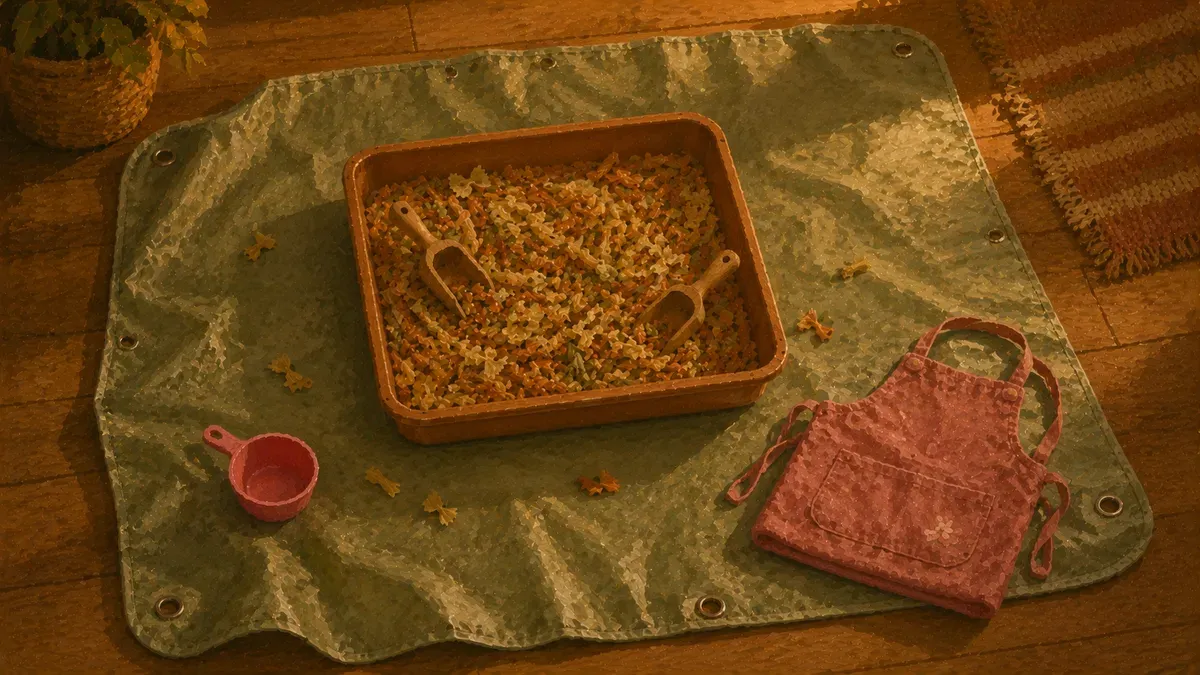
Three setups do the heavy lifting:
- A splat mat under everything. Waterproof mats run from about 42 by 42 up to 51 by 51 inches per Jillian’s Drawers. The one I keep down is a 51-inch anti-slip mat, because the bigger square catches whatever flings off the tray and it grips the floor instead of skating across it. Amazon’s Choice, 4.6 stars from 3,000-plus parents.
- A deep-walled bin indoors. High sides keep half the rice in the box instead of under the couch. A dish tub works, or a deep storage bin with tall walls and a wide 15-inch mouth beats a shallow tray for the dumpers. It’s BPA-free and rated 4.7 stars by 700-plus families.
- The bath or the backyard. When the filler is water, foam, or anything that rinses, set up where cleanup is a drain or a hose.
With a mat down, the whole thing collapses into a 30-second wipe-down. Shake the mat into the trash, swipe it with a cloth, done. The messy play still happens. You just stop dreading the after.
Stop the Dumping: Stretch a Bin From 90 Seconds to 15 Minutes
You set up the bin, they tip the whole thing onto the floor, and they walk off. Here’s why that happens, and how to turn a 90-second flop into a real stretch of quiet, first by reading the dumping right and then by handing the bin an actual job.
Why Toddlers Dump and Walk Away
The dumping is not your kid being done. It’s your kid learning. Tipping a bin out is cause-and-effect exploration: pour it, watch it fall, do it again. Babies start dropping things into containers around 9 months, and by age 2 that same instinct teaches gravity, volume, and where things go when you let go of them.
So scolding the dump misreads the moment. A sensory seeker especially needs that big, satisfying spill before they’ll settle into anything smaller.
The fix isn’t less dumping. It’s giving the dumping somewhere to go.
Think of the tip-out as the warm-up, not the failure. Once they’ve gotten the floor-spill out of their system, the same hands are ready for a tactile job that lasts. That’s the whole pivot, and it’s why the next move is adding a task instead of taking the bin away. If you want the deep-dive on the behavior itself, I wrote a longer piece on how to stop dumping without a fight.
Add a Job, Rotate, and Reset
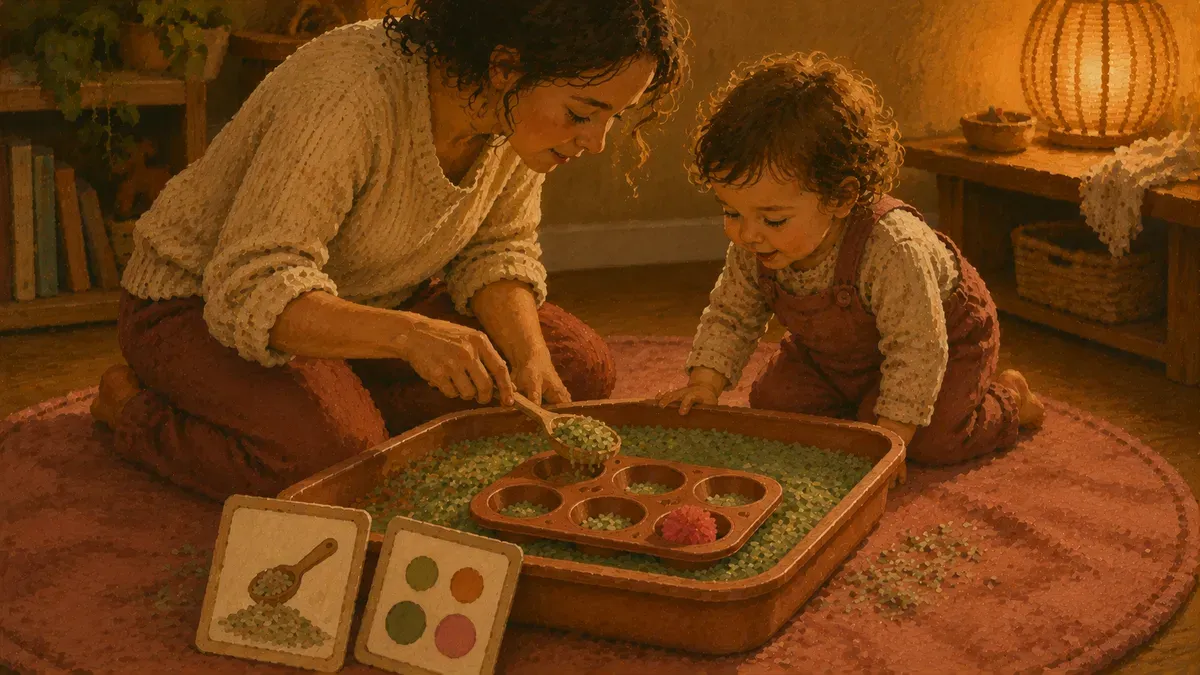
A bin with no job is just a thing to dump. Give it one, and the minutes stretch:
- Sort it. Two cups, red pom-poms in one, blue in the other.
- Transfer it. A spoon, a funnel, an empty bottle to fill.
- Hide and find. Bury ten plastic animals in the rice and send them digging.
A small, repeatable task turns the bin into a calming activity with a beginning and an end. That structure works for the sensory avoider too, since the job gives them a reason to touch the filler instead of being asked to play in it.
Then rotate. Don’t leave every bin out at once. When toddlers in a University of Toledo study on free play were given 4 toys instead of 16, they played longer and explored more ways to use each one. Fewer options, deeper play.
So store each set in its own zip bag, swap the filler weekly, and bring the old one back a month later like it’s brand new. For more setups built around a job, browse our full library of toddler sensory bin guides and rotate through a few. Same bin, new mission, every time.
Found this useful? Save it for the next rough afternoon.
Questions parents ask me about this
What sensory play ideas are best for 2 year olds?
The simplest setups tend to work best: a bin of rice with a few spoons and a muffin tin, a water tray with cups, or a container of dried beans with funnels and scoops. Add a small job (scoop, pour, find, transfer) and a 2-year-old usually stays busy far longer than you expect. Themed bins with a simple story, like ocean animals hidden in blue-dyed rice or toy farm animals in oats, stretch attention even further.
How long should a 2-year-old play with a sensory bin?
Four to six minutes is a normal session for a 2-year-old, sometimes up to eight with a bin they love. That is completely typical, not a sign the activity failed. A short burst of focused play is still a win. Reset the bin, put it away, and try again tomorrow or offer a different one.
What can I use as a sensory bin filler if I don't want to buy anything?
Your pantry covers most of it: dried rice, pasta, or beans for a dry filler; plain flour mixed with a small splash of oil makes a squeezable dough; water in a bowl with a few kitchen cups works just as well as any store-bought kit. Frozen peas, cooked spaghetti, or a handful of cereal also work for quick food-play sessions. No special supplies needed tonight.
Are sensory bins safe if my 2-year-old still puts things in their mouth?
Keep the rule simple: if they can't eat it, it doesn't go in the bin. Stick to taste-safe fillers like cooked pasta, plain rice, oats, cereal, or water, and stay within arm's reach. For dry fillers like dried beans, run them through the toilet-paper-tube test first: if a piece fits inside the tube, it is a choking risk for a child under 3. When you want to introduce something non-edible, a sealed sensory bag keeps the texture accessible without skin contact or mouthing.
How do I introduce a sensory bin to a toddler who hates messy textures?
Start with no skin contact at all: a sealed bag of gel or hair gel gives the squish without any mess on hands. If they warm up to that, try a dry filler like rice or pasta, which most texture-sensitive kids find easier than wet or sticky materials. Let them use a spoon instead of their hands and follow their lead entirely. Pushing tends to backfire; a slow introduction usually gets further.
How do I store and rotate sensory bins to keep them new?
Store each filler set in its own zip bag or small container. Swap what is out weekly and put the old one away for at least a month before bringing it back. A bin that disappeared and reappeared feels completely new to a 2-year-old, which means you get fresh engagement without any extra prep. Three or four sets in rotation is plenty.
What's the difference between a sensory bin, a sensory bag, and a sensory bottle?
A sensory bin is a container of loose filler a child digs into with their hands and tools. A sensory bag is a sealed zip-top bag of gel or paint, letting the child feel the texture through the plastic without any mess or skin contact, making it the go-to for kids who avoid touching things. A sensory bottle is a capped container filled with water, glitter, or small objects that the child shakes, tilts, and watches; it functions more as a calming visual activity than a hands-on one.
Written by
Nora Hayes
Mom of two and a former preschool aide. I share the screen-free sensory play and calm-down ideas I test at my own kitchen table, plus what the moms in my little meet-up swear by. A parent passing on what works, not a doctor or a therapist.
More about NoraKeep going
All Sensory Bins-
 Sensory Bins
Sensory Bin Fillers: 20 Pantry Items You Own Now
Skip the craft store: 20 sensory bin fillers already in your pantry tonight, sorted by texture, mess level, and age. Start one in minutes.
-
 Sensory Bins
sensory integration occupational therapy intervention: ADHD
Turn sensory integration OT into a home calm-down bin for ADHD kids. Task cards, bin ideas, and a setup that works on the hard days.
-
 Sensory Bins
Indoor Sensory Play: 18 Low-Mess Setups That Work
Dreading the cleanup? These indoor sensory play setups stay on the mat, work in apartments, and reset in minutes. Start tonight.
-
 Sensory Bins
Sensory Activities for Preschoolers Bored of Rice
Sensory activities for preschoolers bored of plain rice: fresh fillers, themed bins, and skill-building twists. Try one today.