Sensory Activities for Preschoolers: Beyond Scooping Rice

Some links here are affiliate links. If you buy through one, I may earn a small commission at no extra cost to you. As an Amazon Associate I earn from qualifying purchases. I only point to things I'd actually use with my own two.
If your 3-year-old is bored with their sensory bin, swap the filler, add a theme, or hand them a task instead of just a scoop. Kids crave novelty, and the same bin stops working once it feels familiar. I’m Nora Hayes, a former preschool aide, and below I’ll walk you through sensory activities for preschoolers that go way beyond plain rice, including themed bins, hands-on challenges, and ways to keep it fresh as your kid grows.
Why Your 3-Year-Old Is Bored of the Same Sensory Bin
The bin hasn’t changed. Your kid has. Here’s what’s actually happening in that little brain, and what it’s asking for now.
Repetition Without a Goal Stops Engaging Them
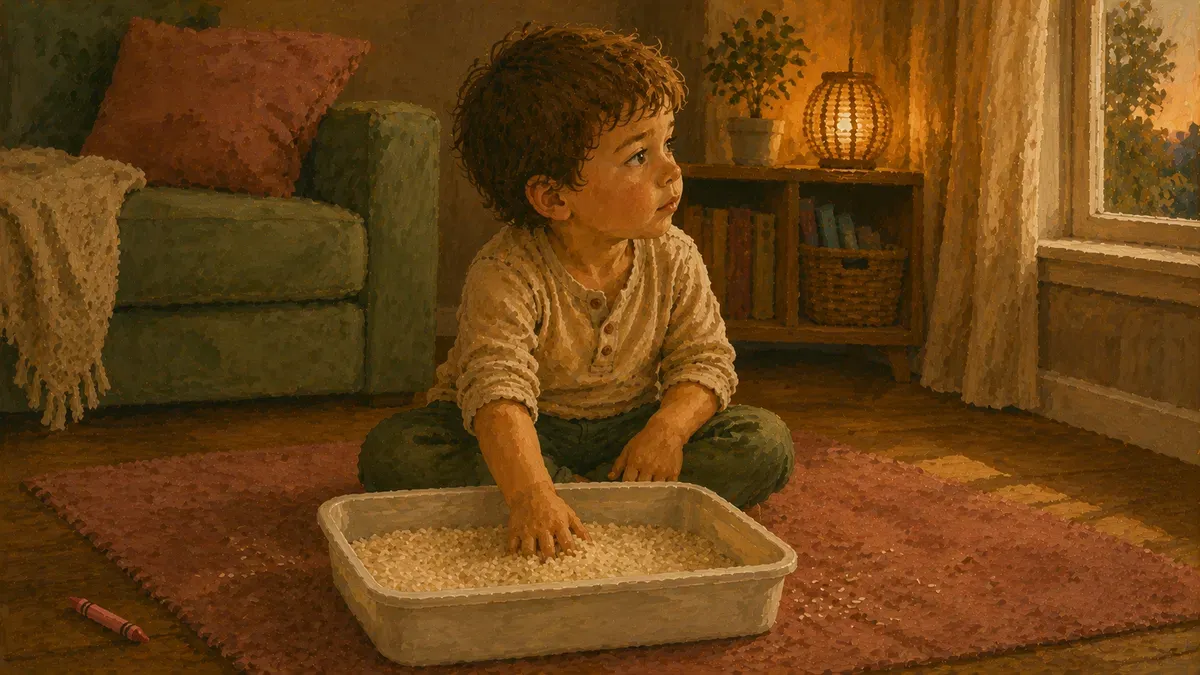
When you first poured rice into a bin, it was magic. Your 3-year-old dug in, scooped, poured, patted. But research on sensory play and child development explains exactly why that fizzles: habituation is the “relatively permanent waning of a response as a result of repeated stimulation.” In plain terms, a brain stops reacting once a stimulus is no longer new.
Sensory play for 3 year olds works the same way.
- First few sessions: rice is genuinely novel, and they dig in and stay there.
- By week three: hands go through the motions while their eyes drift to the window.
It’s not a focus issue and it’s not you. The stimulus just stopped being interesting.
A plain scooping bin with no goal gives a 3-year-old nothing to solve.
Sensory bins for toddlers are a solid starting point in early childhood, but a 3-year-old craving a challenge will stall without some kind of purpose built in. Self-regulation through play requires enough engagement to actually hold attention, and a familiar filler alone rarely gets there.
What Their Growing Brain Now Needs From Play
Sometime around three, the scooping phase gives way to something busier. Preschoolers want to narrate, assign roles, and solve small problems. ECRP research from the University of Illinois found that pretend play develops significantly between ages 3 and 7, building symbolization, imagination, and self-regulation through role coordination and sustained focus.
Your kid wants the bin to be a dinosaur dig or a bakery, not just a container of stuff to move around.
Sensory play for preschoolers that lands at this age gives them a job. - A muffin tin to fill.
- A hidden object to find.
- A character to feed. Fine motor skills are also leveling up fast, so small tools, pincer grip work, and fiddly tasks land much better than they did at two. Cognitive development at this stage runs on pretend scenarios, and a bin can absolutely be the stage for that.
Fresh Sensory Bin Fillers That Beat Plain Rice
The stage is set, but rice gets old fast at this age. Swap the filler and you reset the whole bin, so here are the three kinds I rotate when June won’t touch the rice anymore: new textures, color-rich sorters, and the free stuff already in your cupboard.
Texture Upgrades: Cloud Dough, Oobleck, and Kinetic Sand
A new texture is the fastest way to make an old bin feel new. Cloud dough is the one I reach for first, just flour and a splash of oil mixed until it packs like wet sand but pours dry. It molds, it crumbles, it does both in the same scoop.
Oobleck is the weird one. Cornstarch and water that goes hard when you squeeze it and runs like liquid the second you stop. June pokes it for ages trying to figure out the trick.
Kinetic sand sits in the middle: squishy, slow-moving, holds a shape, never really dries out. This is the one filler I tell people to just buy instead of DIY, since the homemade stuff never moves quite the same; the kinetic sand we keep in rotation has 19,000-plus reviews at 4.7 stars and, true to the box, hasn’t dried out on us yet. Three textures, three completely different jobs for little hands. Any one of them turns a tired preschool sensory bin back into something worth digging into, and the texture exploration alone buys you a solid stretch of quiet.
Color and Sorting Fillers: Dyed Pasta, Pom-Poms, and Beans
When I want the bin to do double duty, I go visual. Dyed pasta is cheap and gorgeous, you just toss dry pasta with a splash of vinegar and food coloring, let it dry, and you’ve got a rainbow that sorts by shape and color.
Pom-poms are the workhorse here. Soft, bright, and grabby in a way that pulls kids into pinching and dropping each one into a muffin tin. Buy them in bulk, because they disappear under couches and into the vacuum at a startling rate; a 900-count bag of craft pom-poms (4.6 stars, 1,700-plus reviews) has outlasted months of sorting at our table. That pinch is real pincer-grip work, the same hand-strengthening that later shows up in holding a crayon and buttoning a coat.
- Dried beans add rattle and weight to the bin
- A few cups and tongs turn scooping into counting and sorting
These are my favorite sensory bin ideas for preschool because the play teaches while it entertains. For a classroom, the same dyed-pasta and pom-pom visual setup scales straight into sensory table ideas for preschool stations without a single new purchase.
Cheap DIY Fillers From Your Pantry
Most of what you need is already in the kitchen. Before you buy anything, raid the pantry, the recycling, and the junk drawer.
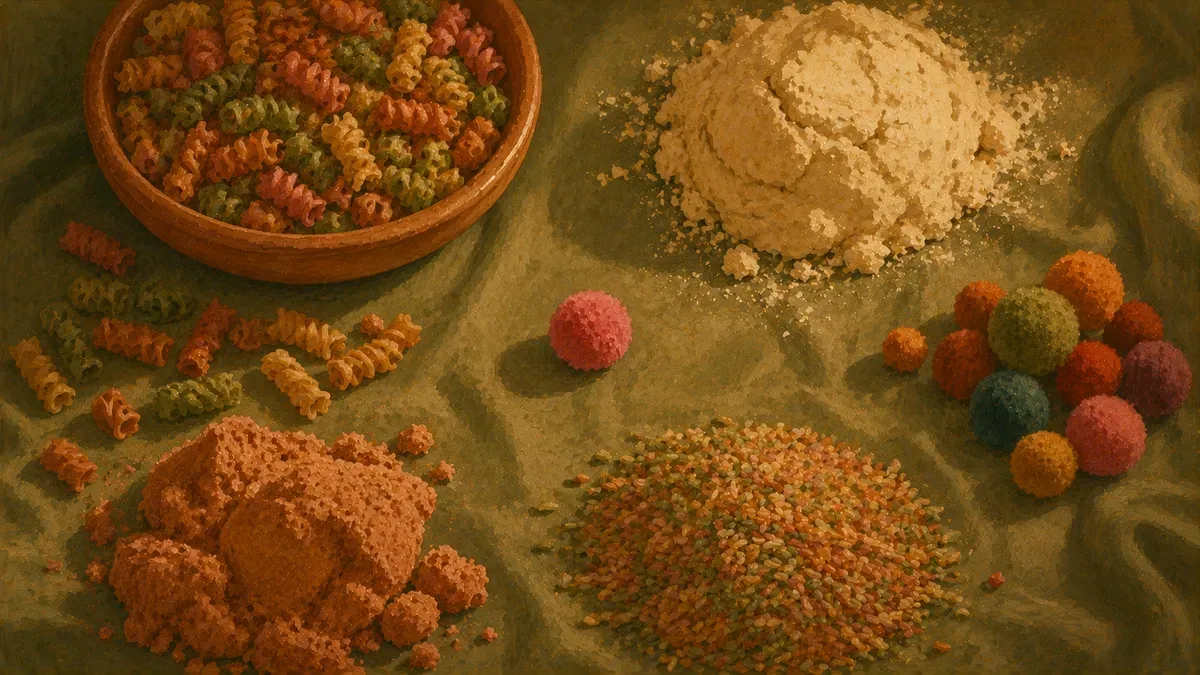
- Dry oats, cornmeal, or split peas for instant scoopable household filler
- Crushed cereal or stale crackers (taste-safe if a younger sibling lurks)
- Shredded paper, cardboard tubes, and bottle caps from the recycling
- Ice cubes, cotton balls, or a sink of soapy water for a no-cost wet bin
That’s the whole point of DIY sensory play: refreshing the bin should cost almost nothing. I keep a running list of household swaps in my roundup of sensory bin fillers you already have, and honestly, recycled materials beat half the pricey kits. Most store-bought fillers are just rice and water with a markup, and the cheapest sensory bins for preschool are the ones you didn’t pay for twice.
Themed Sensory Bins That Spark Pretend Play
A new filler buys you ten minutes, but a theme buys you a whole story. Once your 3-year-old has a reason to dig, scooping turns into rescuing, hiding, and naming, and the same bin pulls them back day after day.
Animal and Habitat Bins: Ocean, Farm, and Bugs
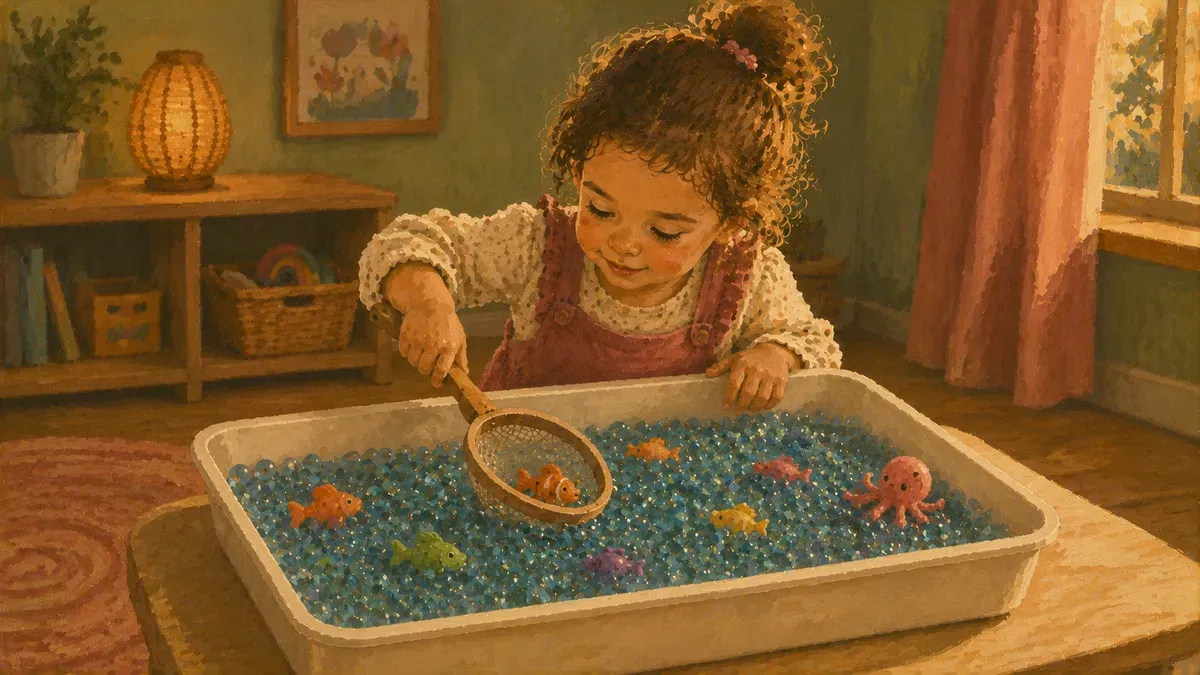
Drop a handful of plastic figurines into a base and you’ve built a tiny world. An ocean bin is the easiest win: blue water beads or dyed pasta, a few rubber fish, a scoop for a net, and suddenly your kid is feeding sharks instead of just stirring.
A farm version works the same way. Brown rice or oats for dirt, a cup for the pond, the dollar-store cows and pigs you already own. June lined up every animal at our kitchen table for a week straight, which is exactly the repeat play a good themed activity earns.
Bugs are the messy-kid favorite. Black beans, plastic spiders, a magnifying glass, maybe green pom-poms for grass. These habitat-style sensory bin ideas for preschoolers give pretend play a clear job, and the storytelling is what keeps a bored kid coming back. Rotate the figurines and the same base becomes three different worlds, the cheapest way I know to stretch one sensory bin.
Seasonal and Holiday Bins All Year Round
The calendar does half your planning. A rotating seasonal menu means the bin always feels new without you reinventing it, and these preschool sensory bin ideas practically theme themselves.
Fall is dyed pasta leaves, pinecones, and a few acorns. Winter is the easy one: cotton balls or white rice for snow, a little plastic snowman, silver scoops. Spring brings fake flowers and green beans for grass; summer goes beachy with sand, shells, and a scoop of water if you’re brave about puddles.
Holidays slot right in. Red and green pom-poms in December, plastic eggs come spring, orange rice for a pumpkin patch in October. The visual sensory swap of color and shape signals “new” to a preschooler before they’ve even touched it. Pick one theme a month and you’ve got a year of bins planned, the kind of multi-sensory learning that costs almost nothing and never goes stale.
Learning-Themed Bins: Letters, Numbers, and Colors
Here’s where themed play sneaks in a little school without anybody noticing. Three quick sensory bin activities for preschoolers cover the whole early-learning checklist without a single worksheet.
- Letters: Bury foam letters in rice; ask your kid to fish out the one their name starts with. Scooping turns into letter recognition.
- Numbers: Hide laminated number cards, then have them scoop that many pom-poms into a cup. Counting becomes a treasure hunt.
- Colors: Toss in colored tiles or buttons, set out matching cups, and color sorting becomes a self-correcting game.
These sensory ideas for preschoolers layer cognitive development onto play your kid already loves, and that multi-sensory learning sticks because it’s fun first. Tie it to your child themselves with an all about me sensory bin and the names and letters mean even more. No drills, no flashcards, just hands in the bin and learning along for the ride.
Hands-On Sensory Games and Challenges Beyond Scooping
Scooping is where most bins stall out. The fix is to give those hands a harder job, take the play off the table when the bin alone runs dry, and keep a few five-minute setups in your back pocket. Here’s what’s worked at my house.
Tools and Tasks That Build Fine Motor Skills
Hand a 3-year-old tongs instead of a scoop and the whole bin changes. Suddenly it’s a challenge: pinch one pom-pom, carry it across the bin, drop it in the cup without spilling. Tongs demand a full-hand squeeze; tweezers shift that to a pincer grip, and rotating between them trains two completely different hand positions. In a Learning Without Tears survey of preschool teachers, 55% said kids show up without basic hand strength or pencil control. Tong-and-tweezer sensory games for preschoolers chip away at exactly that.
Rotate the tools so it stays fresh: chunky tongs for big pom-poms, tweezers for dried beans, a small scoop or turkey baster for water. Each one trains a different grip and sharpens hand-eye coordination. These sensory play activities for preschoolers feel like games to them and hands-on learning to you.
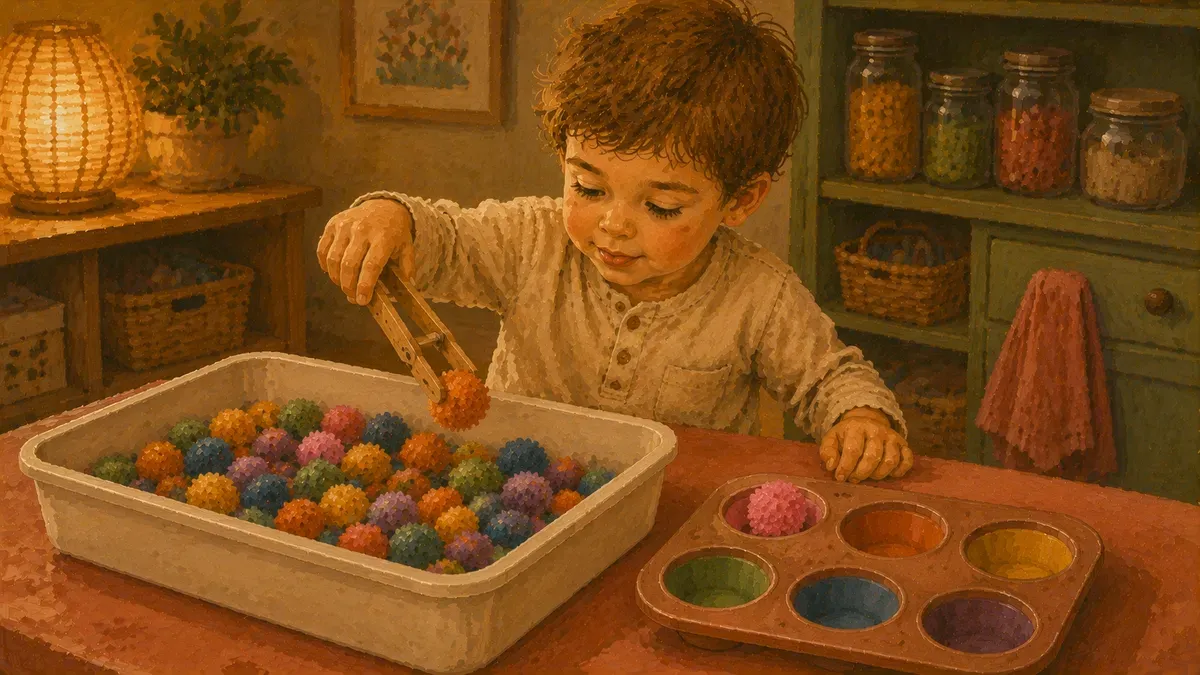
Here are the three grabbers I actually keep in the tool bin, easiest squeeze to fiddliest:
| Tool | What it is | Parents’ rating | Best for |
|---|---|---|---|
| Chunky sensory tongs | Set of 12 plastic tweezers, ages 2+ | 4.8★, 400+ reviews | The youngest hands and the full-fist squeeze |
| Kids tweezers for sensory play | 4-piece fine-motor tool set, ages 3+ | 4.6★, 19,000+ reviews | Pincer work on beans and beads |
| Kids pipette and dropper set | 4-piece dropper and scoop set, ages 3-5 | 4.8★, 1,400+ reviews | Water play and squeeze control |
All three are Amazon’s Choice picks and none cost much, so check the current price and start with whichever grip your kid needs most. For the fuller kit and the reasoning behind each tool, the best sensory play toys roundup goes deeper, though it’s mostly cheap tongs and pipettes anyway.
Whole-Body and Messy-Play Games
Some days a bin is too small a stage. That’s when you go bigger. Water play is my go-to: a tub on the patio, a few cups, a sponge, a pipette. They pour, squeeze, dunk, and splash, which works fine motor and gross motor skills at the same time while quietly calming a wound-up kid.
Oobleck is the other one, and it’s best with both arms in up to the elbows, no tools. This kind of whole-body sensory activity for preschool isn’t tidy, so plan the cleanup before you start. Mess is sometimes the price of a regulated afternoon.
Quick Sensory Lessons You Can Set Up in Minutes
Not every day has a setup in it. On the empty-tank days, you want sensory lessons for preschoolers that take five minutes and still teach something.
- Ice rescue: freeze small toys in a cup of water, hand over a dropper of warm water, and let them melt the animals free. Cause and effect, no prep.
- Sort and count: dump buttons or beans into a muffin tin and call out colors or numbers to fill.
- Texture guess: hide three objects in a sock and let them name what they feel.
Each one packs hands-on learning and a little multi-sensory learning into a window you actually have. If it ends in two minutes, that still counts. Try the next one tomorrow.
Adapting Activities as Kids Grow From 3 to 5
The same bin that wowed your three-year-old will bore a five-year-old in about a minute, so the trick is to keep the base and raise the bar. Here is how to stretch one setup from preschool curiosity all the way to kindergarten skills.
Raising the Challenge for 4- and 5-Year-Olds
A four-year-old wants a problem, not just a place to dig. So give the bin a rule. Instead of “scoop the beans,” it becomes “scoop ten beans into each cup,” or “sort the pom-poms by color, then count which pile won.”
Sensory play for 4 year olds leans hard on counting and grouping. At four, they eat up a sorting twist with two rules at once: red AND round in this bowl, everything else stays out.
For sensory bins for 5 year olds, stack the steps. Hide a number card under the rice, then have them grab that many counting bears, line them up, and tell you how many are left after you take two. The set I reach for comes with sorting cups, tweezers, and activity cards, so it folds three of the jobs above into one box, and it sits at 4.8 stars across 6,000-plus reviews. That multi-step task quietly builds fine motor skills and the cognitive development a preschool curriculum is reaching for anyway.
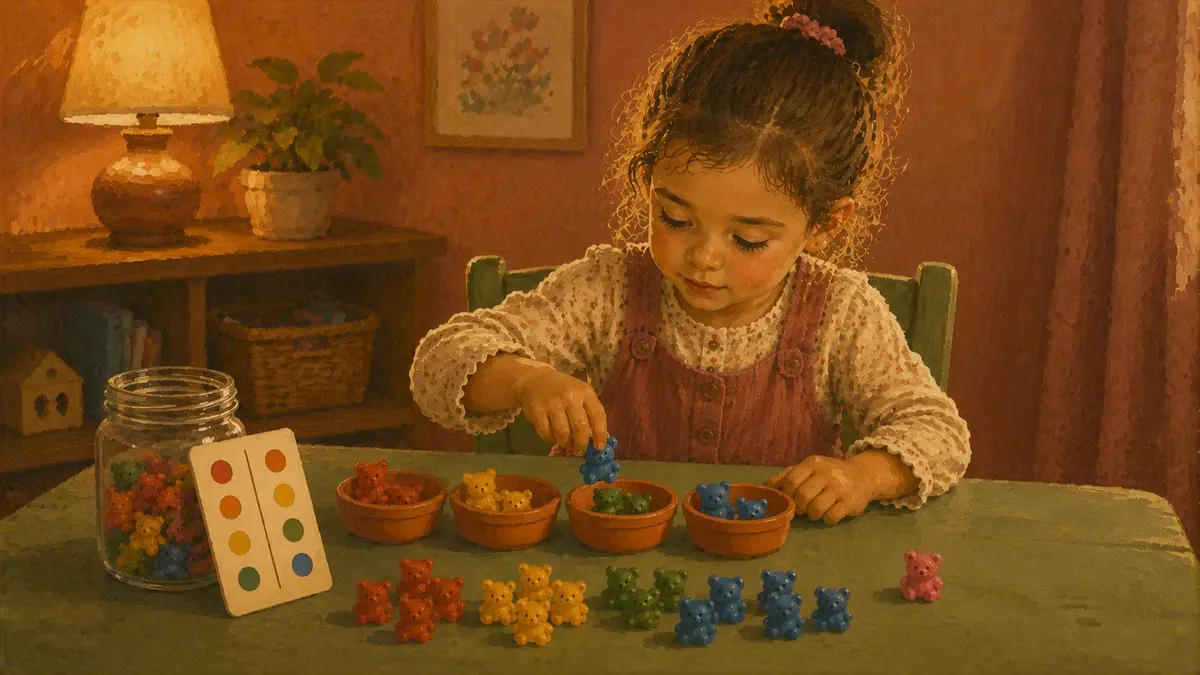
Sensory Ideas That Carry Into Kindergarten
Around this age, the bin becomes a sneaky reading and math station. Bury foam letters in sand and have them spell their name, or fish out letters to match a word card on the side.
Good sensory activities for kindergarteners blur into school work without feeling like it.
- Sight words written on clothespins, pulled out and read one at a time
- Number lines traced directly in shaving cream
- Letter recognition: trace each shape as they pull it from the bin
This is where multi-sensory learning earns its keep. A NIH-published study found that fine motor-enriched letter training lifted children’s letter recognition accuracy from 73.7% at baseline to 96.5% a day later, beating a control group that reached 89.2%. Kindergarten sensory bins do not teach reading on their own, but tracing a letter you pulled out of the rice sticks better than a worksheet.
The span from preschool to kindergarten is wide, and sensory activities for 3-5 year olds should grow right along with it. If you have a younger sibling underfoot, the same logic runs backward, into sensory play 2 year olds love with simpler, taste-safe swaps. One bin, five years of jobs, and almost no new stuff to buy.
Safety, Cleanup, and Keeping Sensory Play Fresh
All the fillers in the world mean nothing if the bin isn’t safe, and none of it stays fresh if cleanup is a disaster. Here’s what actually matters on both fronts.
Choking Hazards and Allergen-Safe Setups by Age
Under three, small parts are the main thing to watch. U.S. federal choking hazard guidance for small children defines a small part as anything fitting into a cylinder 2.25 inches long by 1.25 inches wide (roughly a film canister). Pompoms, dried beans, small figurines, dried pasta: all can fall below that threshold. Stay with larger pieces for the youngest kids and save tiny sorting beads for four and up.
Allergens catch parents off guard more than choking hazards do.
The Kids With Food Allergies Foundation flags wheat and corn as recognized allergens in play materials. Common fillers to check:
- Wheat: cloud dough, playdough, and wheat flour bins can trigger a reaction through skin contact or mouthing
- Corn: cornmeal and corn-based sensory fillers carry the same risk
- In a preschool group, ask about allergies first; if there’s a sensitivity, those materials stay out
For early childhood in general: rice, kinetic sand, and plain dry oats are lower-risk edible sensory options. Coconut flour cloud dough works if wheat is a concern. Read every label.
Storage and a Rotation System That Stops Boredom
The bin that’s always out gets ignored. The one that comes off the shelf once a week feels like a surprise.
Store fillers in labeled containers (zip bags, mason jars, dollar-store bins). Group by type, wet or dry or textured, rather than theme, so you can mix and match. My sensory bin rotation system ended bored post has a printable schedule; the short version is swap the filler every five to seven days and rotate figurines every two weeks.
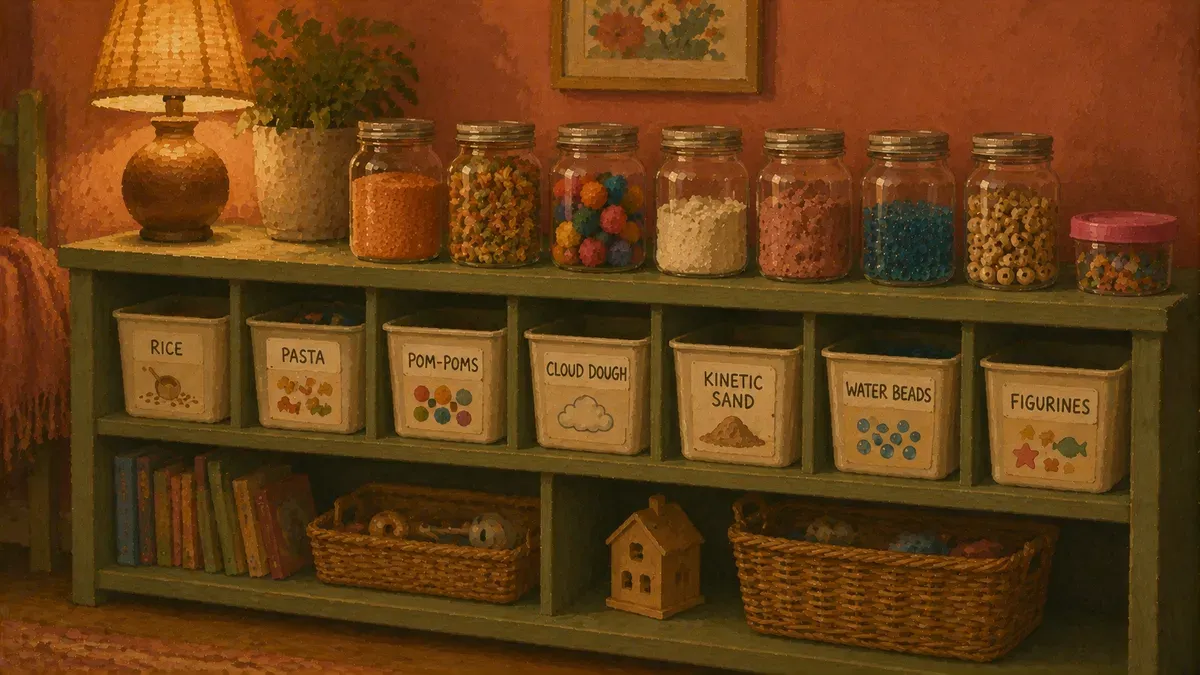
Cleanup is easier when it’s built into the setup: a small broom next to the bin, a beach towel under wet play, a tote bag for figurines. Preschool sensory activities happen more often when reset takes three minutes. DIY sensory setups don’t need to be messy productions. For a full breakdown of building and rotating bins by age, our complete toddler sensory bin guide walks through it from the beginning.
Found this useful? Save it for the next rough afternoon.
Questions parents ask me about this
What sensory activities are best for preschoolers who are bored?
The fastest fix is novelty in the container. Pour a new filler, hide something inside, or hand them a different grabbing tool and the bin feels brand new. Beyond the bin, water play, shaving cream on a tray, and playdough with loose parts all work well because they demand more from little hands than plain scooping does.
How often should I change my preschooler's sensory bin?
Swap the filler every five to seven days, and rotate any figurines or loose parts every two weeks. When your kid starts ignoring the bin after only a minute or two, that's the sign the filler has gone stale. Seasonal or themed rotations are an easy way to keep the schedule without much planning.
Are sensory bins safe for a 3-year-old who still mouths objects?
Yes, with the right filler. Stick to taste-safe materials: dyed rice or oobleck made from cornstarch and water. Skip anything that crumbles into a choking hazard and pull out small figurines until mouthing stops. The rule is simple: if it can't go in their mouth safely, it doesn't go in the bin.
What can I use instead of rice in a sensory bin?
Pantry options cover most of what kids need. Dried beans add weight and a satisfying sound; dyed pasta sorts by shape and color; oobleck turns the whole sensory experience upside down when it hardens under pressure. Cloud dough, flour and oil mixed together, packs into shapes and pours back out, and it's taste-safe if they sneak a bite.
How do I stop my preschooler from dumping the sensory bin everywhere?
Plan cleanup before you set up, not after the mess happens. A dollar-store tablecloth under the bin catches most spills, and keeping the bin on the floor instead of a table means there's less distance for things to travel. If dumping is a consistent pattern, try a smaller bin with less filler so the physics work against a big spill.
Do sensory activities actually help preschool development?
Hands-on play with different textures and materials builds fine motor strength, hand-eye coordination, and focus in ways that worksheets don't replicate. The regulation payoff is real too: a wound-up kid often calms faster after ten minutes of pouring and scooping than after any amount of asking them to settle down.
How long should a preschool sensory play session last?
However long they stay engaged. Many three-year-olds hit their limit at ten to fifteen minutes; a four or five-year-old might stretch to thirty, especially with a theme or a small task built in. Two minutes still counts as a win on a hard day. There's no minimum, and watching for when they naturally drift away is more useful than watching the clock.
Written by
Nora Hayes
Mom of two and a former preschool aide. I share the screen-free sensory play and calm-down ideas I test at my own kitchen table, plus what the moms in my little meet-up swear by. A parent passing on what works, not a doctor or a therapist.
More about NoraKeep going
All Sensory Bins-
 Sensory Bins
Sensory Bin Fillers: 20 Pantry Items You Own Now
Skip the craft store: 20 sensory bin fillers already in your pantry tonight, sorted by texture, mess level, and age. Start one in minutes.
-
 Sensory Bins
sensory integration occupational therapy intervention: ADHD
Turn sensory integration OT into a home calm-down bin for ADHD kids. Task cards, bin ideas, and a setup that works on the hard days.
-
 Sensory Bins
Indoor Sensory Play: 18 Low-Mess Setups That Work
Dreading the cleanup? These indoor sensory play setups stay on the mat, work in apartments, and reset in minutes. Start tonight.
-
 Sensory Bins
Sensory Play 2 Year Olds: 12 Bins That Hold Focus
Most sensory bins lose a 2-year-old in 90 seconds. These 12 sensory play ideas for 2 year olds actually hold attention. Start one tonight.