Feelings Zones: How to Make a Chart Kids Use


I am a parent sharing what worked at my house, not medical advice. For anything to do with your child's development or sensory needs, talk to your OT or doctor.
Feelings zones sort big emotions into four colors so a kid can point to where they are, grab a strategy, and skip the meltdown. I’m Nora Hayes, a former preschool aide and mom to a sensory-seeking autistic 7-year-old, and below I’ll walk you through building a chart your kid actually uses, introducing it so they point to it, and adapting it for their age and wiring.
The plan in brief:
- Sort emotions into 4 colored zones: blue (low), green (calm), yellow (rising), red (out of control)
- Add a real photo of your kid’s face for each zone, not a generic emoji
- Pair every zone with 2 calming strategies your child picks themselves
What Feelings Zones Are and Why They Work
Before your kid can point to where they are, they need a map. Four colors give them that: each one tied to a specific feeling-state, so “I don’t know” becomes “I’m in yellow.”
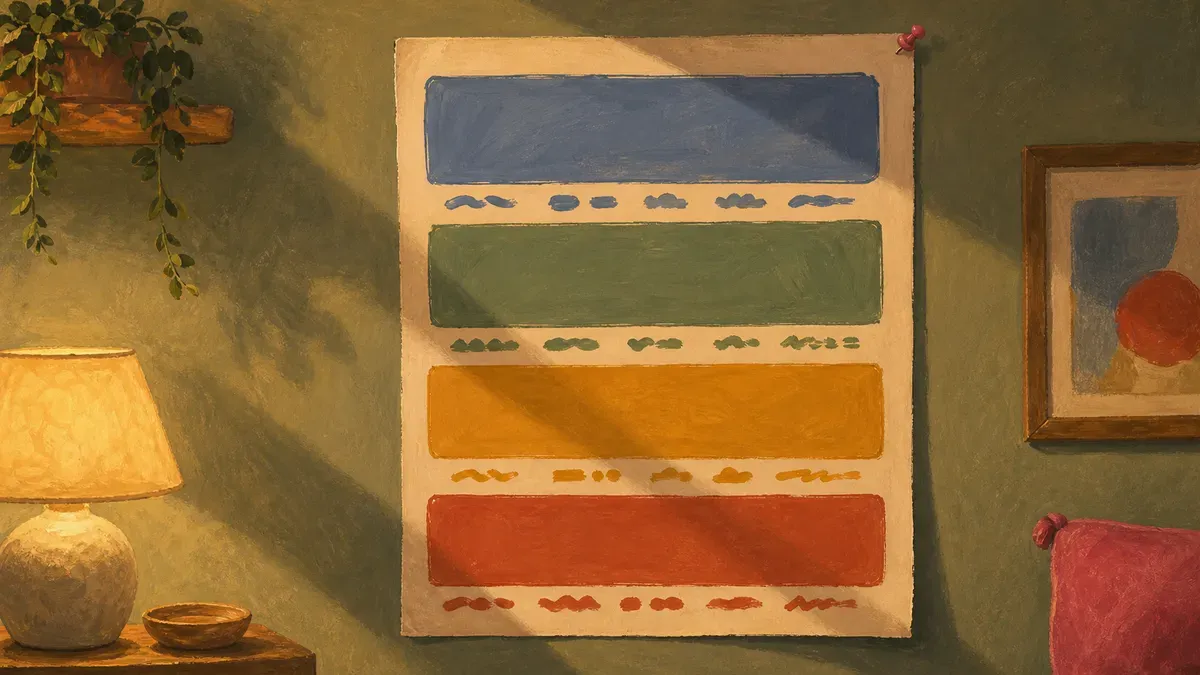
The Four Colors and What Each Means
Occupational therapist Leah Kuypers developed the Zones of Regulation framework, organizing emotional arousal into four color bands. The Blue Zone covers low energy: tired, sad, bored, or sick. The Green Zone is the sweet spot: calm, focused, happy, ready to learn. The Yellow Zone is rising energy: anxious, excited, or frustrated, still in control but getting harder to steer. The Red Zone is the top of the scale: overwhelmed, furious, completely out of control.
None of these are bad zones. Your kid is supposed to feel tired before bed and wired at a birthday party. The chart is not grading feelings. It is naming them so there is something to point to.
Why a Visual Beats a Lecture
Feelings are invisible. A child cannot watch frustration building the way she can watch a tower about to tip. A board gives that feeling a shape she can point to, which is far easier than finding words for it mid-meltdown.
A 2022 peer-reviewed study found that four-year-olds use an average of only 4.4 different emotion words. A board emotion naming routine closes that gap gradually.
Daily feelings check-ins build self-awareness and interoception one low-stakes moment at a time, growing a child’s emotion words alongside real emotional literacy.
That is also why bringing the zones of regulation into a calm down corner emotional regulation setup works so well: the board and the strategies live in the same spot, so when a kid hits red, they look instead of shutting down.
How to Make Your Feelings Chart Step by Step
The quick version: print four colored cards, snap a few photos of your kid’s actual faces, sort the feelings together, then pin one calming move to each zone. Here is how the three steps actually go at the kitchen table.
- Pull out cardstock, four colored markers, scissors, and tape.
- Snap real photos of your child’s face for each feeling and stick them to the matching color.
- Pick two calming moves with your child and tape them beside each color.
Gather Your Materials and Photos
Start with what is already in the house. You need cardstock or a manila folder, markers in your four colors, scissors, and tape or velcro dots so the pieces can move. That is the whole supply list for a working feelings chart.
Now the part most charts skip: the photos. Skip the generic clip-art faces and take real pictures of your own child making each emotion, silly mad, big happy, sleepy, the works. A kid recognizes their own face fast, and a feelings check-in lands harder when the sad picture is them on a rough morning, not a cartoon stranger.

Keep the label under each photo short and simple. This same body mapping habit, pointing to the face that matches, carries straight over to the calming corner where the chart will live.
Sort Emotions Into the Four Zones
Do not pre-fill the chart and hand it over finished. Sit down and work through the cards together, because the kid who places “frustrated” in the right color themselves is the kid who remembers it later.
Lay your four colors out: blue for the slow, sad, tired feelings; green for calm and ready; yellow for the rising stuff like silly or worried; red for the big out-of-control ones. Hand them a card and ask, “where does grumpy go?” Let them decide, even if it surprises you.
Sorting together is how you stretch that thin emotional vocabulary into something useful.
Attach a Strategy to Every Zone
A label tells a kid where they are. It does not tell them what to do next, and that is where most charts stall.
So pair every zone with two calming moves your child actually picks. For Yellow, maybe wall push-ups and a squeeze of the stuffed dog. For Red, a hideout under a blanket and ten slow breaths. Letting them choose turns vague self-regulation into a coping strategy they own.
Tape those moves right beside each color. The mindfulness piece works best as co-regulation early on, you do the breaths with them, in the same calming space. A chart paired with a calm down corner poster now points to an action, not just a mood.
Introducing the Chart So Your Kid Actually Points to It
Building the chart was the easy part. Getting your kid to use it comes down to three things: a calm first introduction, you modeling it out loud, and short check-ins that turn pointing into a habit.
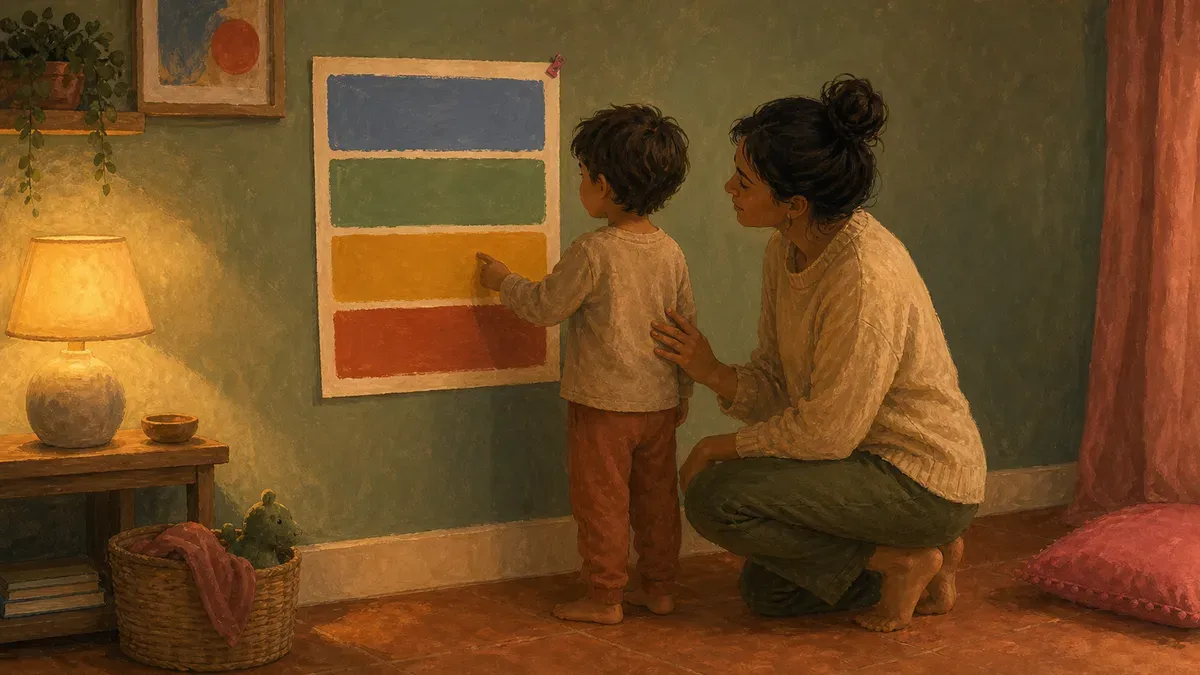
The First Conversation
Whatever you do, do not introduce the chart in the middle of a screaming fit. The first time should land on a boring, regular afternoon when nobody is upset. Sit down together, point to each color, and say what it means in plain words. “Green is calm. Red is when our body feels too big.”
Then hand it over and step back. Let them touch it, flip the cards, point at the faces. This first feelings check-in is just exploring, no quiz, no pressure to get it right. If they wander off after thirty seconds, fine. You planted it.
Keep the calming corner nearby while you do this, so the chart and the cozy spot start to feel like one thing. That early, low-stakes hello builds self-awareness and a little time-in before any feeling ever runs hot.
Model It Yourself Out Loud
Kids learn this by watching you, not by being told. So narrate your own zones, out loud, in the everyday. “Mom is in the yellow zone. I’m getting frustrated, so I’m going to take three breaths.” Then walk over and point to yellow yourself.
This does two jobs. It shows them every feeling is allowed, even yours, and it shows them exactly how the chart gets used. There’s real weight behind it. A 2023 meta-analysis in Clinical Psychology Review found that how parents manage their own emotions directly shapes their children’s regulation skills.
You don’t need precise vocabulary. Plain ones, said often, build their emotional literacy faster than any lecture. When they see naming a feeling as normal grown-up behavior, they copy it.
Make Check-Ins a Daily Routine
You want pointing to a zone to feel automatic before the day you actually need it. So fold tiny check-ins into stuff you already do. Breakfast, after school, bath time. “Where are you right now? Point to your color.”
Ten seconds, no big talk. Research on everyday family routines found that building these small repeated moments into parent-child time directly feeds a young child’s emotion regulation.
These reps quietly grow interoception, that body-awareness of what’s happening inside. Keep one by a calm down corner at home so the calming space stays within reach. Do it on the easy days, and the hard days get easier. By the time a meltdown’s brewing, pointing is already a habit, not a new ask.
Adapting the Chart by Age and for Neurodivergent Kids
A chart that works for June at three would lose Eli at seven, and one built for an autistic sensory-seeker looks nothing like the one a typical preschooler points to. Match it to the kid in front of you, not the kid on the box.
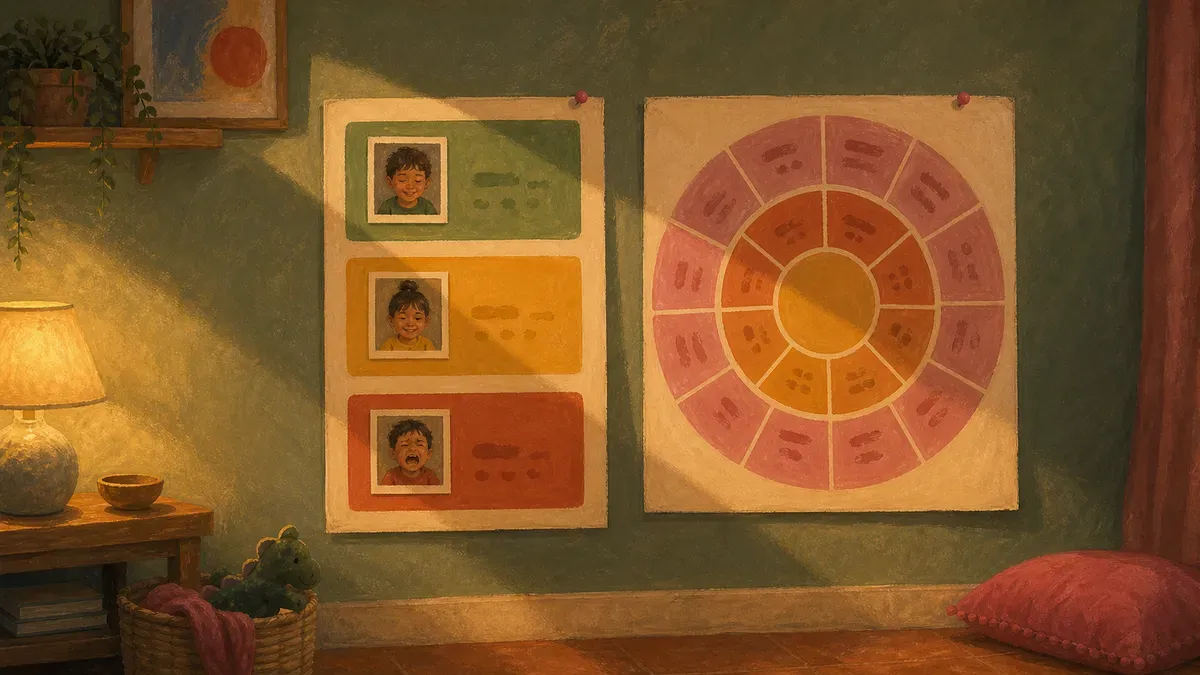
Toddlers Versus Older Kids
For a toddler, three colors is plenty. Green for calm, yellow for wound-up, red for done. Two-year-olds are still building basic emotional vocabulary, so a fuller board just gives them one more thing to get wrong. Pare it down and let them win.
If your little one is closer to three and still working out basic color-zone concepts, the learner zone for younger children is a gentler on-ramp before the full board.
Older kids are a different animal. By six or seven, a flat “yellow” feels too blunt, and that’s where social-emotional development starts asking for nuance.
- Swap the basic board for an emotion wheel, with frustrated, nervous, and embarrassed branching off the same color.
- Add a one-to-five intensity number, so “a little mad” reads differently than “about to lose it.”
- Let them write their own words in. Ownership is half the self-awareness battle.
The goal isn’t more boxes. It’s finer language for what was already happening inside.
Tweaks for Autistic and ADHD Kids
The standard chart assumes a kid can feel the feeling coming. Plenty of neurodivergent kids can’t, not until it’s already a five-alarm fire.
A 2025 Frontiers in Psychiatry meta-analysis of 31 studies found roughly 74% of autistic adults report interoceptive confusion unless a bodily signal becomes extreme. That’s why pure self-awareness boards fall flat here. So you map the body instead.
- Add a body outline beside each color: clenched fists and a hot face for red, fast hands for yellow.
- Cut the visual clutter. One color per card, no busy backgrounds, no glitter.
- Name the physiological responses out loud as you point, so the cue does the work the gut feeling can’t.
Research on emotional development by age also found about 50% of autistic individuals show alexithymia, real trouble naming their own emotions, which is exactly why body mapping beats abstract labels for a dysregulated kid. Eli’s occupational therapy team framed interoception the same way for us. When in doubt, ask the body first.
What to Do When Your Kid Refuses the Chart
Refusal almost always comes down to two things: wrong timing, or a chart that’s lost its novelty. Here’s how to sort out which.
Why Refusal Usually Happens
Mid-meltdown is the worst moment to ask your kid to find the red card. That’s not stubbornness. It’s neuroscience. As Harvard’s Center on the Developing Child explains, the prefrontal cortex (the part handling thinking and decision-making) goes offline during high emotional arousal. Your child isn’t refusing the chart. Their higher brain has simply clocked out, and the lower brain is running the show.
A dysregulated kid can’t point to a zone any more than they can solve a long-division problem in that state. Co-regulation has to come first. Expecting the board to work while they’re already spinning is a timing problem, not a chart problem.
Quick Fixes That Rebuild Buy-In
Start with your own nervous system. Slow your breath, lower your voice, get on their level. That physical calm is co-regulation in action, and their body borrows it from yours before the chart enters the picture at all.
Once they’re settled, run a quick feelings check-in together rather than pointing to the board and asking them to do it solo. Two seconds is enough to remind them the chart is a shared tool, not a test.
If the chart itself is the problem, shrink it to two zones. A simpler board in a visible calming space gets used more than a thorough one that overwhelms.
For ongoing rebuilding, try our full emotional regulation toolkit for parents or browse emotional regulation activities for kids for low-pressure ways to bring feelings practice back into the routine.
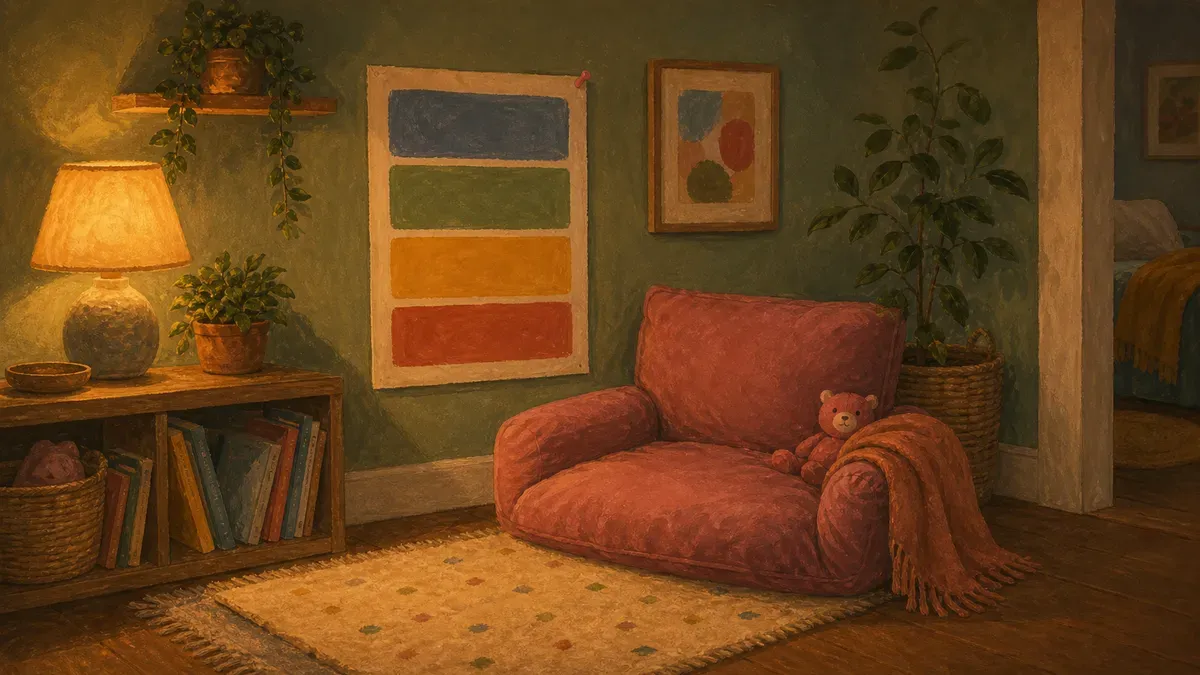
Charts don’t fail kids. They fail when we ask kids to use them at the worst possible moment. Fix the timing first, and the board usually fixes itself.
Found this useful? Save it for the next rough afternoon.
Questions parents ask me about this
How do feelings zones help kids identify and manage emotions?
A feelings zones chart gives kids a concrete, physical way to name where they are emotionally before they have the words to say it. Pointing to a color is faster and less demanding than explaining a feeling, which matters most when a child is already starting to escalate. Once they can locate themselves on the chart, they can look right beside that color and pick a calming strategy, so the board connects the feeling to an action instead of leaving the child stuck.
At what age can a child start using a feelings chart?
Most kids can begin with a simplified version around age two or three, though early use is more about familiarity than independent practice. A toddler board with just two or three colors is enough at that stage. By four or five, many children have enough emotional vocabulary to start using a fuller four-color chart, especially when a parent is checking in alongside them. The goal in the early years is just to make the board a familiar object, not to expect the child to navigate it solo.
What is the difference between feelings zones and the Zones of Regulation?
The Zones of Regulation is a specific, trademarked curriculum developed by an occupational therapist and used widely in schools and therapy settings. Feelings zones, as a general term, refers to any color-coded system that groups emotions by arousal level. The underlying logic is the same: colors map to how regulated or activated a person feels, and the tool helps with self-awareness. If your child's school or therapist uses the Zones of Regulation specifically, it is worth building your home chart to match so they are practicing the same language in both places.
Should I use photos or emoji faces on a feelings chart?
Real photos of your child's own face work best for younger and neurodivergent kids; see the build steps above for how to take them. Emoji faces work for older kids who already understand what they represent.
Are there digital or app-based feelings charts instead of a physical board?
Yes, several apps offer check-in tools and visual emotion boards. The advantage of a physical chart, especially for young children, is that it lives in the room where the hard moments happen and requires no screen to access. A digital version can work well for older kids who already use a device comfortably, and some families keep both: the wall chart for daily check-ins and an app for on-the-go. The format matters less than whether the child actually uses it.
How do I keep a feelings chart clean and where should I hang it?
Laminate the cards or cover the board with contact paper, and use a dry-erase marker if you want your child to circle or mark their zone. Velcro dots let you move strategy cards around without damaging the board. Hang the chart at your child's eye level, not yours, in a low-traffic spot they can reach without asking. Near a calming corner or cozy seating is ideal because the chart is already associated with slowing down, not with being in trouble.
What if my child sorts emotions into the wrong zone?
There is no wrong zone. If a child puts "silly" in the red zone and you would put it in yellow, their version reflects their experience and it belongs there. The sorting process is the point: talking through where a feeling goes builds the same awareness as using the chart later. Gently wondering out loud "what does silly feel like in your body?" is more useful than correcting placement. A chart the child built themselves, even imperfectly, is one they will actually point to.
Written by
Nora Hayes
Mom of two and a former preschool aide. I share the screen-free sensory play and calm-down ideas I test at my own kitchen table, plus what the moms in my little meet-up swear by. A parent passing on what works, not a doctor or a therapist.
More about NoraKeep going
All Calm & Big Feelings-
 Calm & Big Feelings
Emotional Regulation Activities for Kids That Work
Most calming tricks fail mid-meltdown. These emotional regulation activities for kids work when nothing else does. Find the one that fits your child.
-
 Calm & Big Feelings
Calm Corner Ideas: 25 Picks Under Your Coffee Budget
Skip the $200 setups. These 25 calm corner ideas cost less than a latte and soothe big feelings. Build one your kid loves this week.
-
 Calm & Big Feelings
Cozy Corner Preschool: Calm Down Ideas for Throwers
Throwing the calm-down tools? Build a cozy corner preschool space that survives big feelings, with throw-proof tools and steps that work.
-
 Calm & Big Feelings
Calm Corner Classroom Setup for Autistic Kids
Most calm corners fail autistic kids because they skip the sensory profile. Build a calm corner classroom that works in 5 steps. Start here.