Is Montessori Good for ADHD? 3 Years at Home

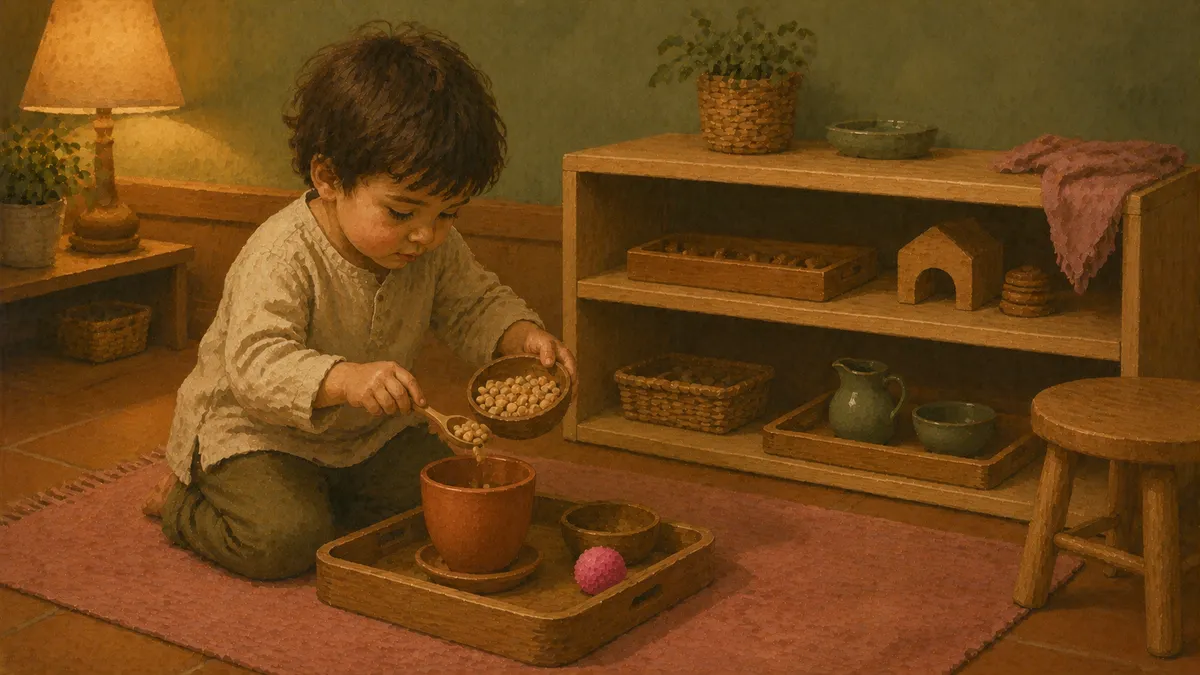
Short version: yes, Montessori has been good for my ADHD kid, and I say that as Nora Hayes, a former preschool aide who’s run sensory and hands-on learning with my own two for years, not as someone selling you a method. It matters because ADHD is common (the CDC reports that 11.3% of U.S. kids ages 5 to 17 have been diagnosed, roughly 1 in 9), and most classrooms are built for the kid who can sit still, which yours may not be.
Below I’ll cover why the traditional classroom and an ADHD brain tend to clash, how the Montessori setup actually helps, what worked and flopped at our house, and the honest questions about cost, religion, and other conditions before you decide if it’s worth trying.
The Short Answer After Three Years at Home
Yes. For Eli, Montessori worked. Not perfectly, not every day, but well enough that I’d choose it again.
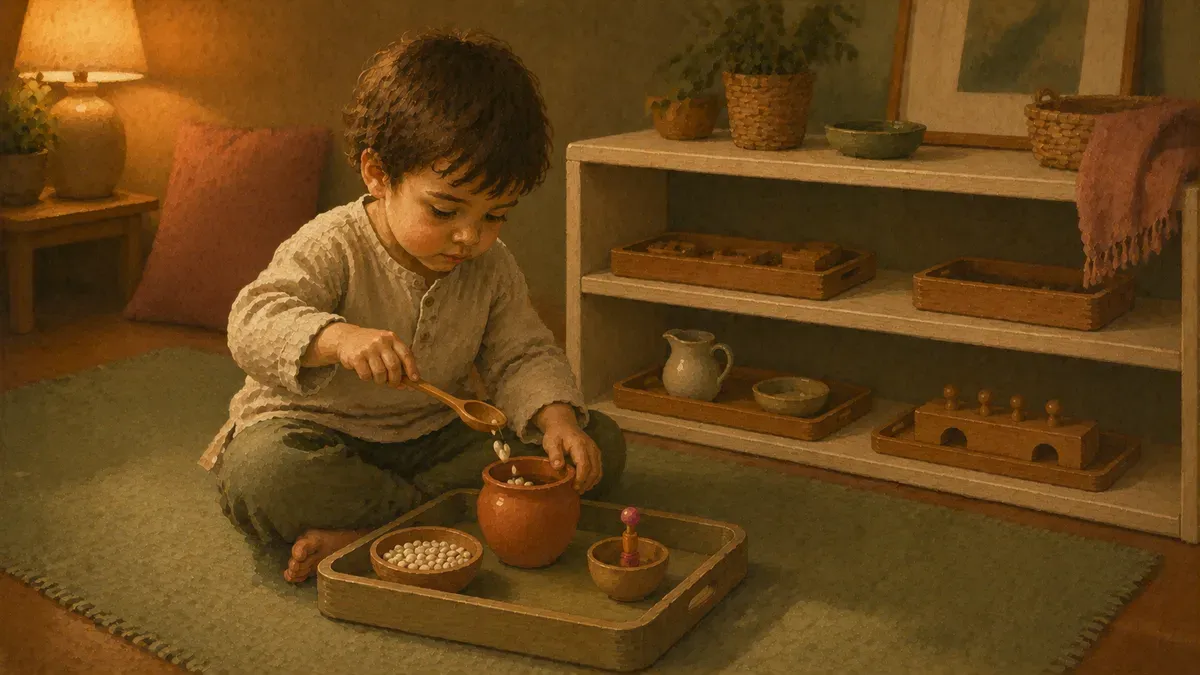
Here’s what three years actually looked like: a kid who couldn’t sit through a ten-minute circle time at preschool was choosing to spend forty minutes transferring dried beans with a small spoon. The ADHD didn’t disappear. He just stayed.
That’s the thing about Montessori that surprised me most. It’s not a therapy and it’s not a cure. It’s a child-centered setup that happens to match how a lot of ADHD kids already operate: move first, then settle. Pick the work, stay as long as you want, walk away when you’re done. The movement is built in, not something you earn.
We did this at home with a few low shelves, some montessori activities for 3 year olds, and a lot of standing back. The wins were real. So were the days it completely fell apart.
Both are worth knowing before you start.
Why ADHD and the Traditional Classroom Collide
Most classrooms are built for the kid who can sit still, track the board, and wait their turn. That works fine for a lot of kids. For a child with ADHD, it’s like running a race with both shoes tied together.
The problem isn’t willpower. ADHD directly affects impulse control, working memory, and sustained attention, and those are exactly what a traditional classroom demands every minute of the day. A child who can’t filter distractions is sitting in a room with 25 other kids, fluorescent hum, a cluttered bulletin board, and a schedule that pivots every 45 minutes.
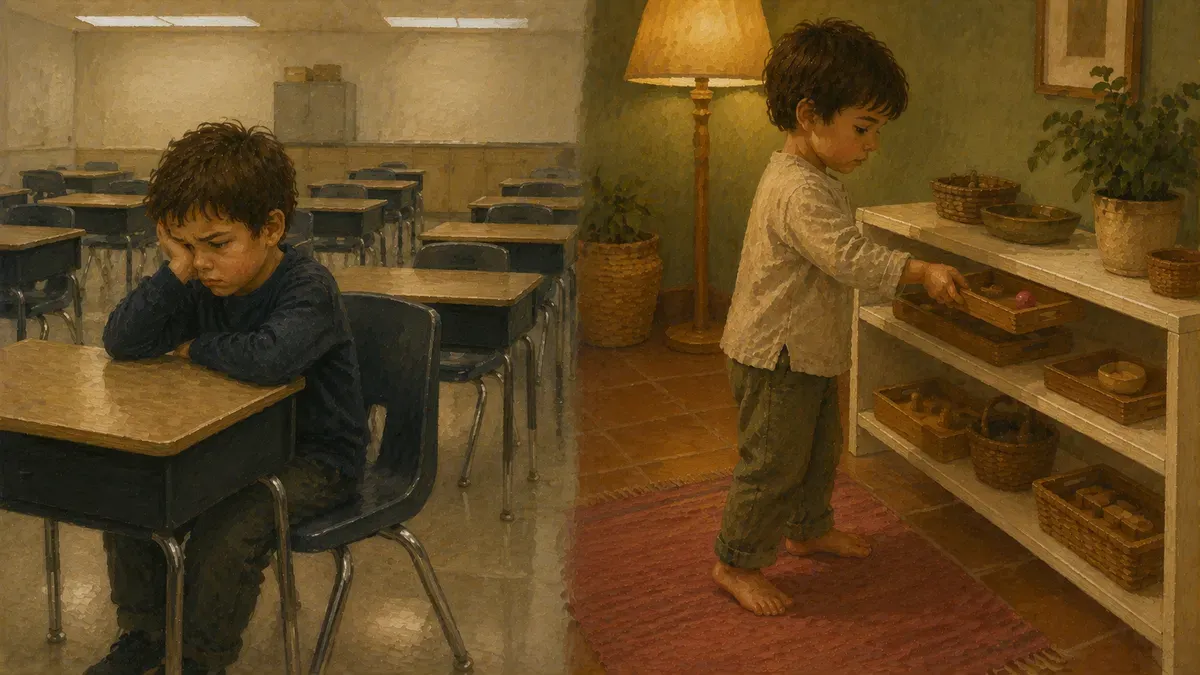
What made this concrete for me was a Florida State University study on movement and working memory in children with ADHD: hyperactive movement (foot-tapping, chair-scooting, leg-swinging) actually improved working memory during demanding tasks in boys with ADHD. Forced stillness may actually interfere more than the movement does.
Traditional school also runs on a compliance model. Sit. Listen. Raise your hand. Wait. Every one of those is a direct hit on impulse control. When a child with ADHD misses those marks repeatedly, not from defiance but from how their brain works, the feedback loop starts fast: redirections, detentions, the creeping sense that something is wrong with them.
That’s the collision. Not bad behavior. A mismatched environment.
How Montessori Works With an ADHD Brain
Fix the environment and a lot of the friction goes away. Here are the three pieces that did the heavy lifting for us: how it handles movement, how it follows a kid’s focus, and how the materials actually hold attention.
- Movement woven into ordinary work so the body stays busy while the brain focuses
- Child-directed, self-paced tasks that let a kid stay in the zone as long as it lasts
- Hands-on materials that isolate one concept at a time, with self-correcting feedback built in
Movement Built Into the Day, Not Banned From It
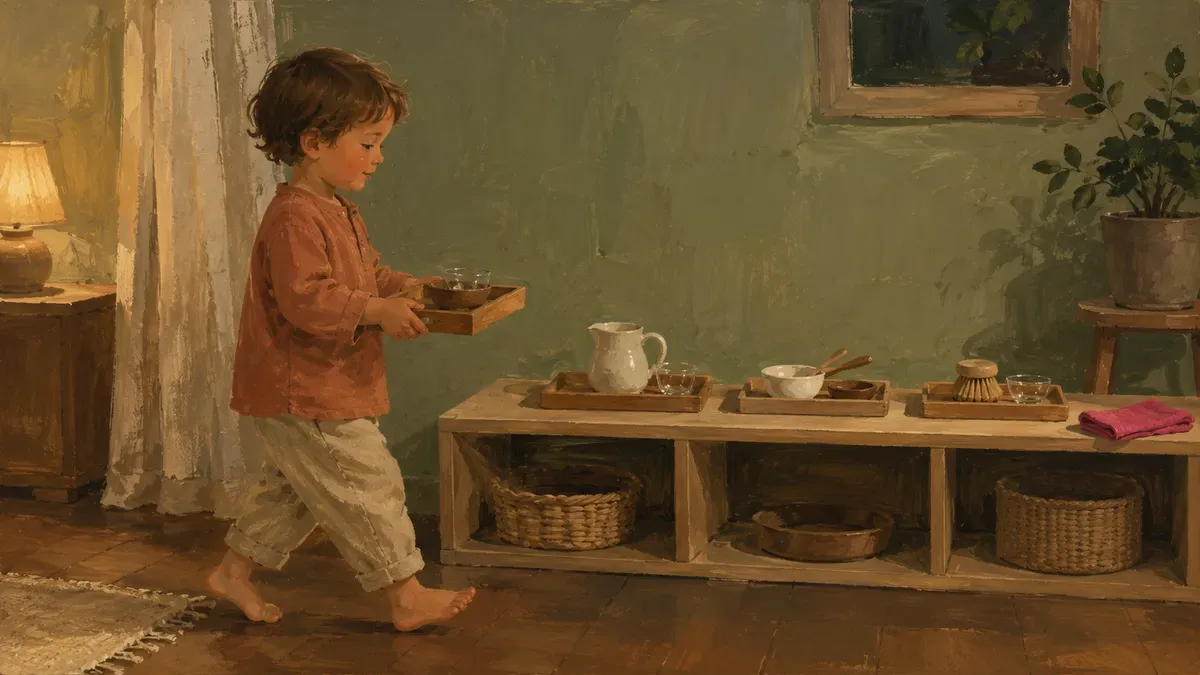
An ADHD kid doesn’t lose the urge to move just because you ask nicely. Montessori never asks. A child can stand to work, walk a tray across the room, carry a pitcher of water, sit on the floor, then get up again. That low-level gross motor activity is woven into ordinary work, not parked at recess and rationed out.
That matches what the research keeps finding. A 2023 review of physical activity and attention in learning pooled ten trials and found exercise produced a moderate positive effect on attention problems in school-age kids with ADHD, and cognitively engaging movement helped even more.
When the body gets what it needs, the impulse to wiggle and bolt quiets down.
Self-Paced Work That Follows the Child’s Focus
Nobody rings a bell mid-flow. Work here is self-paced and self-directed, so a child stays with something as long as the interest holds and steps away before frustration tips into a meltdown.
That freedom did something I didn’t expect. When Eli wasn’t being pulled off a task on someone else’s schedule, the deep dives got longer, not shorter. An ADHD brain can hyperfocus hard when the thing in front of it is genuinely interesting, and child-centered, self-directed learning gives that focus room to run instead of clipping it every twenty minutes.
What I noticed was that those deep dives stretched from a few minutes to most of the morning once nobody was pulling him off a task mid-stream.
Hands-On Materials That Hold Attention
A worksheet is easy to drift away from. A wooden material you have to touch, pour, and slot together is harder to abandon.
That’s by design. The Montessori Foundation notes that each material isolates one concept and builds in its own control of error, so a child gets self-correcting feedback through their hands without a teacher hovering. One idea at a time, nothing else competing for it.
For an easily-distracted kid, that concept isolation is the whole trick. The sensory, hands-on materials, many rooted in montessori practical life tasks like spooning and pouring, keep busy hands and a busy mind pointed at the same small job. Touch holds the attention that a flat page lets slip away.
What Helped Most at Home (and What Didn’t)
Theory is one thing; a Tuesday afternoon with an overstimulated kid is another. Here is what actually moved the needle in our house, what burned off the wiggles, and the handful of Montessori ideals that fell apart the second we tried them.
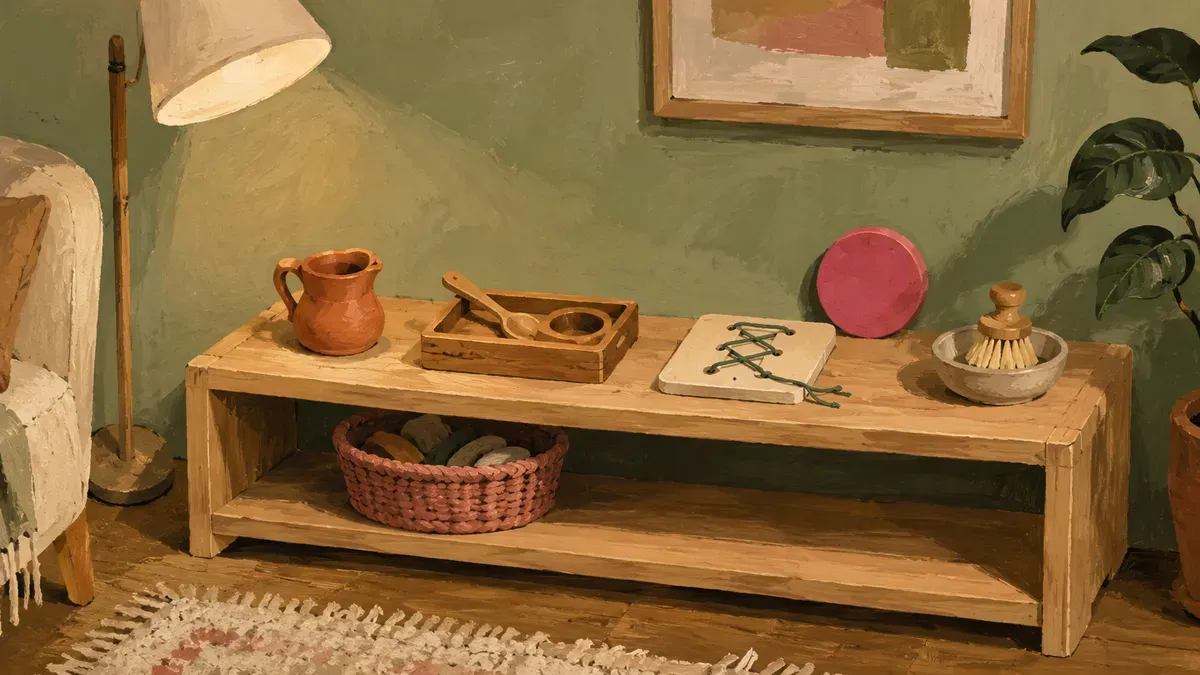
Stripping the Environment Down to Cut Distractions
My first prepared environment was a disaster. Twelve activities crammed on a shelf, every one screaming for attention, and a kid who touched all of them and settled into none. So I pulled most of it off and left four trays.
The difference showed up fast. A Carnegie Mellon study of kindergartners found children in heavily decorated rooms spent more time off-task than those in sparse ones, a 10-percentage-point distraction gap that any parent of a distractible kid will recognize. Less on the shelf meant less to scan past. The quiet learning environment did the heavy lifting; the activities just had to be there.
Practical Life Work That Burned Energy and Built Focus
Pouring water between two pitchers, scrubbing a tiny table, buttoning a dressing frame. Practical life skills sound like chores, but for a wound-up kid they are gold. The movement is purposeful, repetitive, and oddly calming.
The Association Montessori Internationale describes this kind of sustained, purposeful practical life work as something that focuses mental activity and builds concentration. That tracked at home. A few minutes of real pouring took the edge off the constant motion, and once the impulse to wiggle had somewhere to go, attention followed. The heavy, repetitive work is also what I reach for first when someone asks me to recommend things from our full library of printable Montessori activities.
If sensory-seeking is the bigger issue, it’s worth knowing there’s real overlap with the sensorial Montessori activities that calm sensory seekers.
The Adaptations That Flopped
Not everything worked, and pretending otherwise would help nobody. The three-hour uninterrupted work cycle, which the American Montessori Society lists as a requirement for accredited schools, was never happening at our kitchen table.
We got twenty good minutes, sometimes less, and that was the real number. The untouched-shelf ideal flopped too. Left completely alone, the trays just gathered dust. What rescued the self-directed, child-centered approach was rotating the work every few days and sitting nearby. Not directing, just present enough to keep him from drifting off.
Common Worries: Religion, Cost, and Co-Occurring Conditions
Two questions come up constantly when parents start researching Montessori for their ADHD kids. Here’s what the evidence actually says.
Is Montessori Religious or Just Holistic?
Montessori is secular. The American Montessori Society states it plainly: Montessori is not a religion, is not religiously oriented, and is based on scientific observation and evidence. Individual private schools may choose to incorporate religious elements (a Catholic Montessori school is a real thing), but that’s the school’s choice, not the method’s. The child-centered, holistic approach to learning has nothing theological baked into it.
For any school with a faith affiliation, a quick call to ask how religion shows up in the classroom tells you everything you need to know.
When ADHD Comes With Anxiety or Autism
For a lot of kids, ADHD doesn’t show up alone. CHADD’s 2022 national data puts it plainly: 39.1% of children with an ADHD diagnosis also have anxiety problems, and 14.4% also have autism spectrum disorder. That overlap is the norm, not the exception.
The calm, low-clutter environment that defines Montessori tends to reduce the sensory overload that spikes anxiety or overwhelms an autistic child.
Individual pacing means there’s no one watching to see if your kid finishes in time. If you’re navigating all of this at once, there’s a deeper look at supporting a montessori autistic kid that might help you think through the setup.
So Is Montessori Worth It for Your ADHD Child?
Honestly? For Eli, yes. Not perfectly. Not always. But mostly.
For Eli, that first month, the meltdowns before lunch dropped by half. The movement was built in. The shelves were simple enough that he could settle, and the work was hands-on enough that he’d stay with it. None of that fixed anything. It just created fewer daily battles.
The Campbell Collaboration’s studies on the Montessori method and child outcomes found Montessori students performed about one-third of a standard deviation higher on non-academic measures including self-regulation, social skills, and well-being compared to conventionally schooled kids. That’s the holistic approach doing something real, not just something Instagram-friendly.
What I can’t promise is that it works the same for your kid. ADHD is not one thing.
- Some kids need more external structure than a home setup can give.
- Some do better with a co-op, a guide, or a group of peers.
The framework is worth trying, but try it with low stakes: a few trays, a routine, a month of honest observation.
If the work cycle is a fight every single day, the fit isn’t right. That’s not a failure. It’s information.
Start small. Rotate the shelves. Follow the child. And if you need somewhere to begin, there are montessori activities printables that take five minutes to set up and almost nothing to explain.
The honest answer is it’s worth trying. And you’ll know pretty fast if it’s working.
Found this useful? Save it for the next rough afternoon.
Questions parents ask me about this
Is Montessori education actually good for children with ADHD?
For many kids with ADHD, yes. Montessori's built-in movement, self-paced work, and hands-on materials match how an ADHD brain operates better than a sit-still, listen-first classroom does. It won't look the same for every child, and it isn't a substitute for other support, but the structure genuinely fits a lot of ADHD kids well.
Is Montessori a good fit for a 3-year-old with ADHD at home?
A 3-year-old with ADHD at home is one of the best starting points for Montessori ideas. The practical life work, simple trays, and low-shelf setup are easy to begin with, and you'll see quickly whether your child settles into it. You don't need a formal program. Keep the activity count low, stay nearby, and rotate materials before boredom takes over.
Can the freedom of movement in Montessori make ADHD focus worse?
Not typically, and the research points the other way: movement tends to help ADHD kids focus rather than scatter them. The difference is purposeful movement. Montessori work like pouring, transferring, or scrubbing gives the body something specific to do, which often quiets the urge to bolt or fidget. Unstructured free play is a different situation entirely.
Do Montessori schools accommodate IEPs or 504 plans for ADHD?
School by school. There is no blanket Montessori policy on IEPs or 504s, so you need to ask the specific school directly. Some are experienced with both and have staff trained in learning differences. Others are not a good fit. When you visit, ask how they handle dysregulated kids and what happens during transitions.
Is Montessori still helpful if my child takes ADHD medication?
Yes. Medication and environment are not competing choices. Some kids do better with both working together, and Montessori's low-distraction setup can make it easier to see what the medication is doing. The self-paced work and hands-on materials still give focus somewhere to land whether or not medication is part of the picture.
How do I evaluate whether a Montessori school is right for ADHD?
Visit during the work cycle and watch the room, not the brochure. A classroom that is calm, low on wall clutter, and lets kids move with purpose is a good sign. Ask the guide how they support a child who struggles to transition between activities. A school worth trying will have a clear, honest answer. One that gets defensive is telling you something.
Is Montessori too expensive to be worth it for one child?
Private Montessori schools can be a real cost, but the approach itself costs almost nothing at home. Start with what you already own: a low shelf, a few trays, pantry staples for practical life work. A low-stakes home trial tells you more about whether your child responds to it than any school tour will. If it clicks, you can decide from there whether a school setting makes sense.
Written by
Nora Hayes
Mom of two and a former preschool aide. I share the screen-free sensory play and calm-down ideas I test at my own kitchen table, plus what the moms in my little meet-up swear by. A parent passing on what works, not a doctor or a therapist.
More about NoraKeep going
All Montessori-
 Montessori
Montessori Activities for 3 Year Olds That Build Skills
At 3, kids crave real work, not toys. These Montessori activities for 3 year olds build focus, coordination, and independence. Start one today.
-
 Montessori
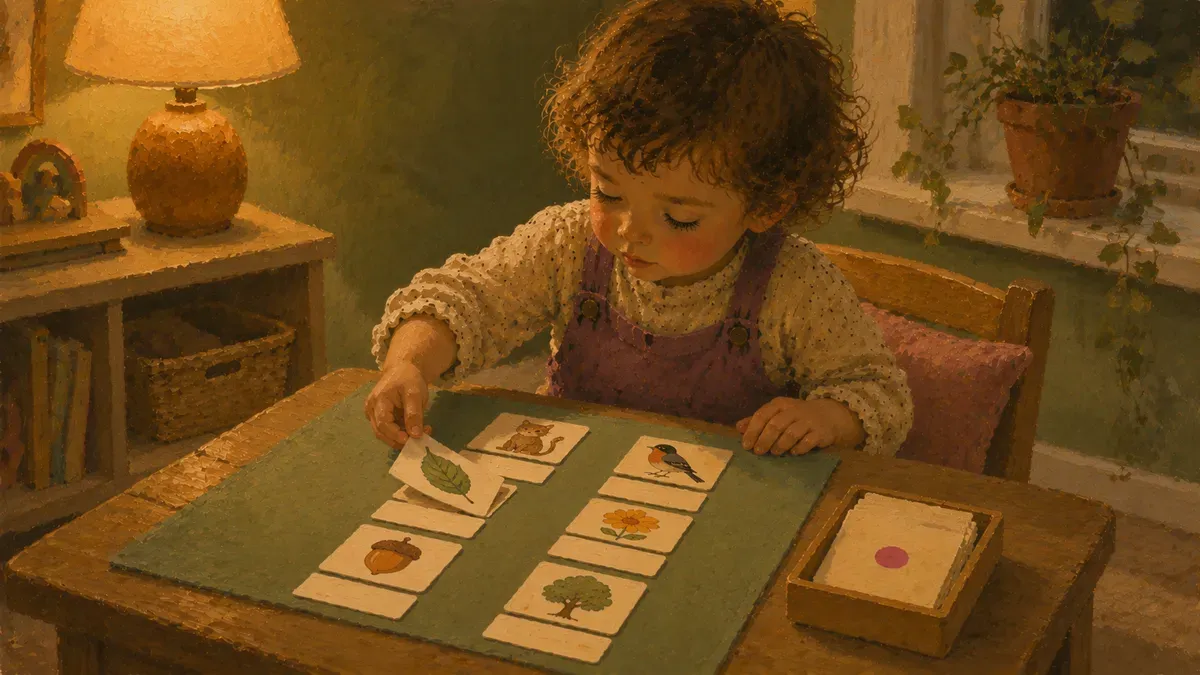
Step by Step Montessori 3-Part Cards Walkthrough
Confused by 3-part cards? This step by step Montessori walkthrough shows the exact order to present them so your child matches and self-corrects.
-
 Montessori
Sensorial Montessori Activities That Calm Toddlers
Sensory-seeking toddler heading for a meltdown? These 10 sensorial Montessori activities calm and refocus little hands fast.
-
 Montessori
Practical Life Montessori: 20 Kitchen Activities
Practical life Montessori starts in your kitchen. Get 20 no-buy activities using spoons, jars, and bowls you own. Set up a tray today.