Train Potty Book Picks and a Calm Plan for 2-Year-Olds

Some links here are affiliate links. If you buy through one, I may earn a small commission at no extra cost to you. As an Amazon Associate I earn from qualifying purchases. I only point to things I'd actually use with my own two.
The right train potty book turns a dreaded chore into a story your 2-year-old asks to read again, and the best ones pair a simple plan with gear you’ll actually use. You’re not behind: a C.S. Mott Children’s Hospital poll found 54% of parents start around age 2, and I’m Nora Hayes, a former preschool aide and mom of two who ran potty training with my own kids in our Ohio kitchen. Here are the six books I’d hand a tired friend, a calm step-by-step plan, and the potty gear worth your money.
What makes a potty training book actually work for a 2-year-old
Two things do most of the work: whether the story actually holds a 2-year-old’s attention, and whether you’ve spotted the readiness signs that mean now is the right time to start.
The traits that hold a toddler’s attention
Short attention spans mean the book has to earn every page.
- Few words per page, type big enough that you’re not reading a paragraph while they squirm
- Bright pictures of a kid actually on the potty, not abstract art
- A character they already love, so the potty feels like their friend’s idea
- Sturdy board books that survive being chewed, thrown, and re-read forty times
Lift-the-flap pages pull toddlers in, though some treat the flaps as the whole game and tune out the story. If they can’t sit at all, that’s worth noticing too, and might be one of the signs your child is not ready for potty training. Timing is half the battle in potty training, as research on typical potty training age backs up.
Reading the readiness signs first
The list the AAP keeps on HealthyChildren.org is the one I trust:
- Staying dry for two hours or more during the day
- Grunting, freezing, or squatting right before a bowel movement
- Walking to the bathroom and helping pull pants down
- Fussing about a wet or dirty diaper
Tick a couple and a story like Potty clicks, because the developmental wiring is there to hook onto. Tick none, and you’re reading at a wall.
The best potty training books for toddlers and tired parents
Ready or getting there, the right book does two jobs at once: it keeps your toddler leaning in, and it hands you a plan you can actually follow at 7am with coffee in one hand.
Picture books your child reads with you
These normalize the potty and name the big feelings around it until the whole thing feels ordinary. There’s even reason to think it sinks in: a PLOS ONE study found 3-year-olds who read picture books showing a coping strategy actually used it more when frustrated.
| Book | Format | Core | Parents’ rating | Best for |
|---|---|---|---|---|
| Potty (Leslie Patricelli) | Board book | 28 pages | 4.7★, 14,000+ reviews | Ages 1-3, funny and relatable |
| P is for Potty! (Sesame Street) | Lift-the-flap board book | 12 pages, 30+ flaps | 4.7★, 32,000+ reviews | Elmo-loving toddlers ages 1-3 |
| Potty Time with Bean (Ms. Rachel) | Board book | 32 pages | 4.8★, 3,400+ reviews | Ms. Rachel fans who learn through songs |
| Daniel Tiger’s Potty Time! | Sound board book | 10 pages | 4.8★, 18,000+ reviews | Routine-driven kids who love the show |
My June asked for P is for Potty! (Sesame Street) every night for weeks, and with 32,000-plus reviews behind it, plenty of other toddlers clearly did too. It’s a lift-the-flap board book with 30-plus flaps, and Elmo makes the whole topic feel safe and silly rather than scary. For toddlers ages 1 to 3, that flap mechanic is the hook: every page is a little reveal, so even wiggly kids stay with it.
Potty (Leslie Patricelli) is the funny one: a chubby baby narrates the should-I-or-shouldn’t-I in short silly lines, and kids who love bodily humor will ask for it on repeat. It’s the book nearly every potty list opens with, and 14,000-plus reviews at 4.7 stars back that up.
- Potty Time with Bean (Miss Rachel): leans on familiar songs; if your toddler already stops whatever they’re doing when she comes on, this one holds them
- Daniel Tiger’s Potty Time!: walks through the steps in order, making it the pick for routine-driven kids who need to know exactly what comes next
If you’re also navigating how to potty train a boy, the character pick matters less than finding one he’ll sit still for.
Parent guides for the method behind the chaos
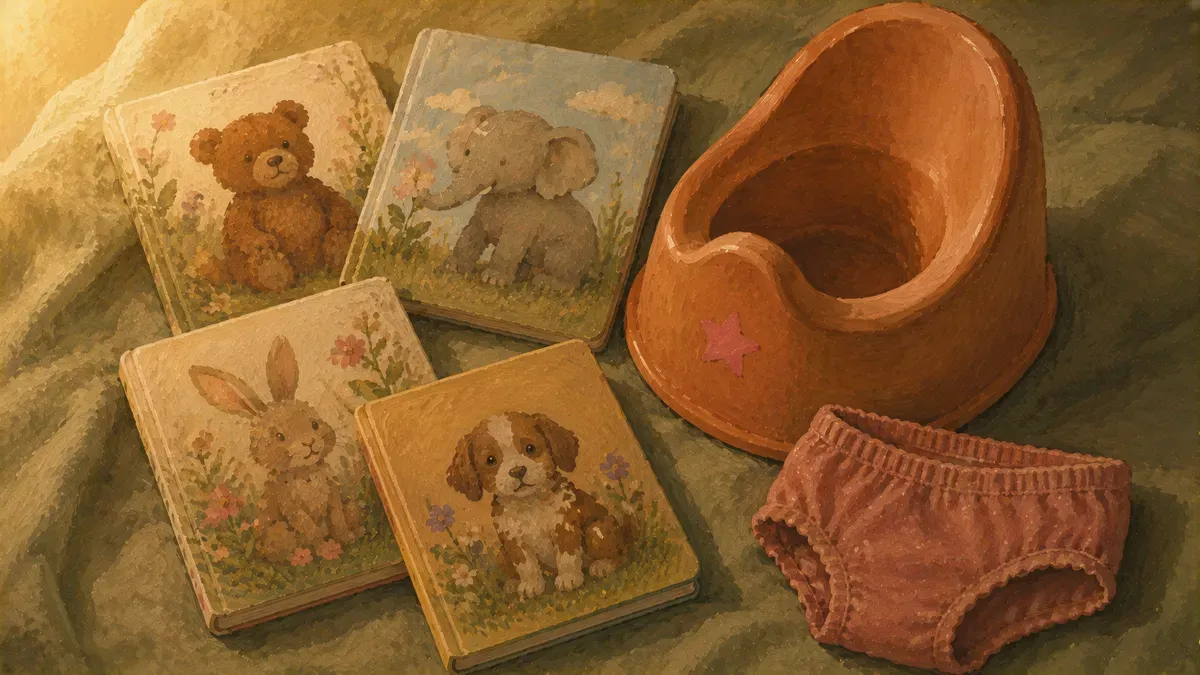
Two parent guides earn the shelf space, and I’ve handed both to friends mid-training. Oh Crap! Potty Training is a structured, six-step method built to do it once and do it right, the one I pass along when a parent wants a real system over vibes, and its 14,000-plus reviews say I’m not the only one handing it out. The First-Time Parent’s Guide to Potty Training is gentler on the nerves: a low-pressure, psychologist-backed three-day plan, lighter at 176 pages versus 304, and the easier first read when a thick method feels like one more thing this week.
| Guide | Method | Length | Parents’ rating |
|---|---|---|---|
| Oh Crap! Potty Training | Structured 6-step | 304 pages | 4.5★, 14,000+ reviews |
| The First-Time Parent’s Guide | Low-pressure 3-day | 176 pages | 4.6★, 1,300+ reviews |
A calm step-by-step plan to start with your 2-year-old
Forget the “average age for potty training” question. Plenty of families start around two, but the average potty training age tells you nothing about whether your own toddler is ready this week. Watch the kid in front of you, not the calendar, and the plan below stays low-pressure either way.
Here’s the rhythm that worked at my house, June at the bathroom door while I pretended I wasn’t nervous:
- Block out a few quiet days at home. No big outings, no babysitter who doesn’t know the routine yet.
- Ditch the daytime diaper and switch to a fast yes. The second she signaled, we went, no negotiating.
- Offer the potty 15 to 30 minutes after meals, per pediatric guidance on toilet training readiness, and keep it to a couple of minutes a sit. That window catches more pee and poop than random check-ins do.
- Make it boring-good, not a party. A tiny cheer, then move on. Big reactions to accidents teach kids to hide.
If sitting still is the battle, a quick potty trainer game buys you the thirty seconds you need. We sang one short song, no screens, no toy that turns the seat into a playground. Potty train games work when they’re tiny, not when they hijack the whole sit.
And skip the infant potty train pressure entirely. A baby on a timer is the parent being trained, not the child, and two is plenty early.
If you want the condensed boot-camp version, the 3 day potty training method walks through it day by day. Pick whichever pace matches your week, then expect a few flops before it clicks.
The potty gear worth buying (and what to skip)
A plan only gets you so far without the right stuff at the bathroom door. The good news: most of what’s marketed at panicked parents is skippable, and the handful that actually earns its spot is cheap. First the hardware, the potties, seats, and those little reminder watches. Then what goes on their bottom half, real underwear versus pull-ups, and when each one helps.
Potties, seats, and watches
Four pieces of gear, and you really only need one or two. Start on the floor. A standalone floor potty lets a toddler plant both feet flat with knees up over the hips, the position that opens the pelvic floor and makes the first poops far less scary. That low, no-climb seat builds confidence fast, which is why I’d hand a beginner a baby potty before anything that clips onto the big toilet. The floor potty I point people to is an Amazon’s Choice, so you’re not gambling on some no-name.
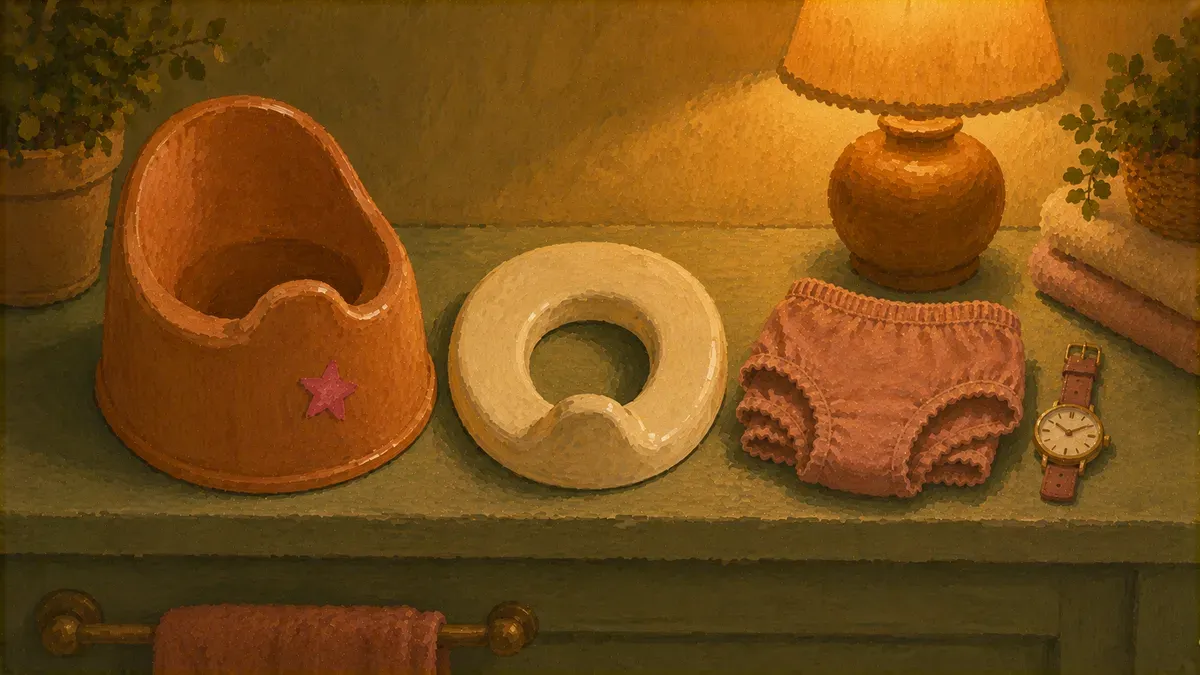
Here’s how the four stack up:
| Gear | What it is | Parents’ rating | Worth it when |
|---|---|---|---|
| Floor training potty | Standalone chair on the ground | 4.7★, 7,800+ reviews | Day one, every beginner |
| Toilet training potty chair | Floor potty with a removable lid step | 4.3★, 200+ reviews | You want one piece that grows |
| Potty training toilet seat insert | Reducer ring on the family toilet | 4.6★, 12,000+ reviews | Your kid already climbs and asks to go like you |
| Potty training watch | Wrist timer that buzzes on a set routine | 4.0★, 14,000+ reviews | Reminders turn into nagging at your house |
The floor potty is the buy; the seat insert and the wrist watch are the upgrade only if your kid asks for them. A timer can carry the routine without you hovering, and so can a potty training sticker chart. More setups live in our complete potty training hub.
Underwear, pants, and pull-ups
The day you ditch the diaper is the day this gets real. Once your 2-year-old has a few wins on the floor potty, take gentle steps toward real cotton training underwear during waking hours. The wet feeling is the whole point. Pull-ups wick moisture away from the skin, so the kid never gets the message that pee belongs in the potty.
A pediatrician at Seattle Children’s, Dr. Wendy Sue Swanson, puts it plainly: move out of pull-ups as soon as you can during daytime, because a diaper-like garment dampens the brain-bladder connection a child needs to stay dry.
Good potty training pants split the difference. They hold a small puddle while still letting the child feel it, so the routine keeps moving without ruining the rug. The cotton set I keep on hand is a best seller for a reason.
What to look for in the best potty training underwear:
- Thick, layered cotton (the absorbent kind contains a dribble, not a full pee)
- A snug, easy-up-easy-down fit your toddler can pull alone
- A character or color they’re proud to keep dry
Keep pull-ups for naps, nighttime, and long car rides. The ones I linked are the safe default, close to 40,000 reviews at a 4.8-star average. Daytime, let them feel it.
Found this useful? Save it for the next rough afternoon.
Questions parents ask me about this
What is the best potty training book for toddlers?
There isn't one best book, there are two kinds, and you probably want one of each. Pick a picture book your 2-year-old actually begs to reread, with a character they already love and short, simple pages, so the potty starts to feel normal and not scary. Then grab one parent guide that gives you an actual plan to follow, so you're not just making it up as you go. The toddler's book holds their attention, the parent's book gives you the plan.
What is the average age for potty training?
Most American families start somewhere around age 2, and plenty start later. Honestly, the average tells you almost nothing about your kid this week. A calendar number can't see whether your toddler stays dry for a couple of hours, hides to poop, or fusses in a wet diaper, and those signs matter far more than a birthday. Watch the child, not the chart.
Is 2 years old too early to start potty training?
No, two is plenty early enough if the readiness signs are there. You're not behind, and you're not pushing too hard. What you want to skip is the infant-training pressure, where you're really the one timing the dashes to the potty instead of the child learning their own body. Wait for the signs, then go. Once a toddler is genuinely ready, starting tends to take less time, not more.
Do you really need a potty training watch, or is it a gimmick?
You don't need one to get started. A potty watch is a little wrist timer that buzzes on a set interval, so it reminds your kid to try without you nagging all day. That's genuinely useful for some families, especially if you're tired of being the human alarm clock. But it's an upgrade, not a starting point. Get the basics working first, then add the watch only if the reminders would actually help.
Should I use a floor potty or a toilet seat insert for a 2-year-old?
Start with the floor potty. It sits low so your toddler's feet are flat on the ground and their knees come up above their hips, which opens things up and makes pooping easier, plus they can climb on by themselves without needing you to lift and hover. A seat insert that clips onto the big toilet is a fine upgrade later, once your kid asks to use the grown-up toilet. For day one with a 2-year-old, the little potty on the floor wins.
How do I handle accidents and regression without losing patience?
Keep your reaction small. Accidents are part of every kid's process, and if you react big, kids learn to hide it instead of telling you, which is the opposite of what you want. Calmly help them change, remind them the pee goes in the potty, and move on. Block some quiet days at home so you can catch the misses early, and remember that a rough day doesn't undo their progress. If it falls apart, it's okay to pause and try again later.
When should I switch from diapers to potty training underwear?
Move to cotton training underwear during waking hours once your toddler has a few wins on the potty. The wet feeling is the whole point, because pull-ups wick moisture away and the child never learns that pee belongs in the potty. Training pants are a reasonable middle ground that holds a small puddle while still letting them feel it. Keep the pull-ups for naps, nighttime, and long car rides, but in the daytime, let them feel it.
Written by
Nora Hayes
Mom of two and a former preschool aide. I share the screen-free sensory play and calm-down ideas I test at my own kitchen table, plus what the moms in my little meet-up swear by. A parent passing on what works, not a doctor or a therapist.
More about NoraKeep going
All Potty Training-
 Potty Training
Potty Training Reward Chart: 20 Ideas Under $3
Skip the toy aisle: build a potty training reward chart with 20 ideas under $3 you already own. Grab the plan that motivates a stubborn toddler.
-
 Potty Training
How to Potty Train a Boy (and How a Girl Differs)
How to potty train a boy in 3 to 6 months: the readiness signs, the step-by-step method, and the small things that differ for girls.
-
 Potty Training
Potty Training Sticker Chart Printable (Free Download)
Free potty training sticker chart printable that survives travel and routine resets. Print, sticker, reward, reuse anywhere. Download now.
-
 Potty Training
Potty Training Certificate: A Just-Do-This Guide
Charts skip the finish line. Make a potty training certificate that gets your toddler over the line for real. Print yours tonight.