Signs Your Child Is Not Ready for Potty Training

Some links here are affiliate links. If you buy through one, I may earn a small commission at no extra cost to you. As an Amazon Associate I earn from qualifying purchases. I only point to things I'd actually use with my own two.
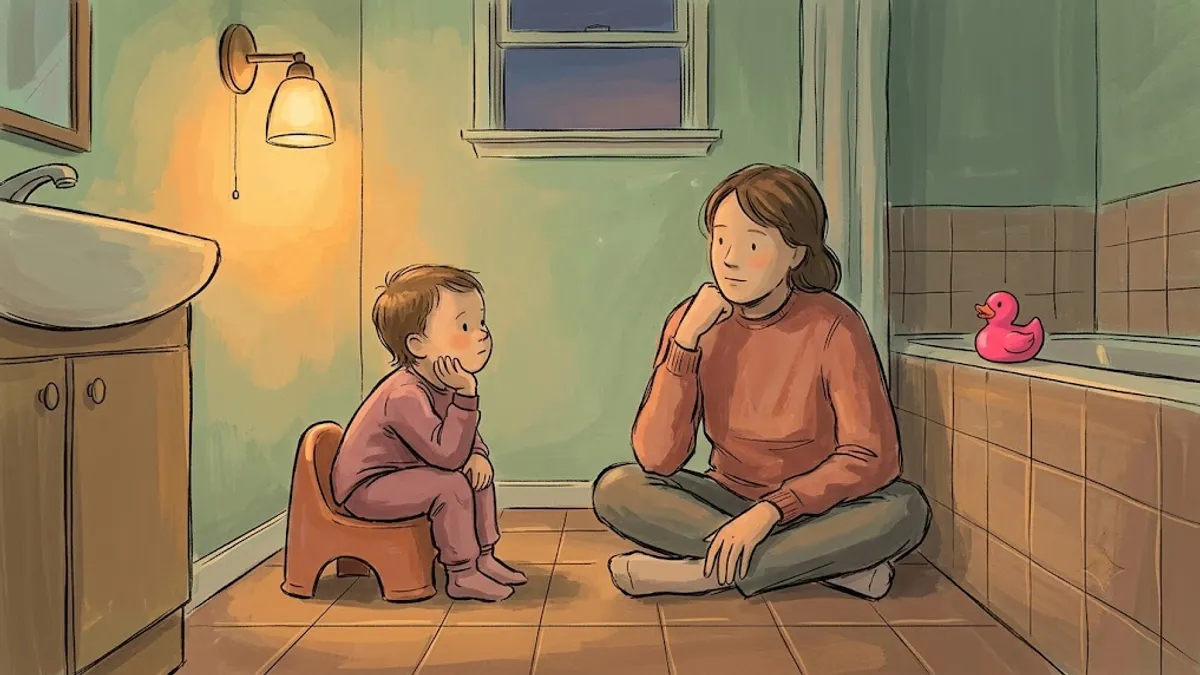
If your kid is fighting the potty every single day and leaving puddles all over the house, the most likely answer is the simplest one: they aren’t ready yet, and that’s not a discipline problem or a thing you broke. I’m Nora Hayes, a former preschool aide raising two kids of my own, and I’ve watched plenty of confident parents (me included) jump the gun, hit a wall, and feel like failures over something that was just timing.
Here I walk through the real signs your child is not ready for potty training, why so many of us end up as potty training dropouts who restart later, and why pressing pause is usually the smart move instead of the white flag it feels like.
How to Tell Readiness Is Missing, Not Willpower
When training stalls, it’s easy to read it as your kid digging in their heels. Usually it’s their body and brain telling you they’re not there yet, and the signs show up in three places.
- Their diaper: no dry stretches means no bladder control yet
- Their words: can they tell you they need to go, or follow a two-step instruction?
- Their face: curiosity about the potty, or meltdown at the sight of it?
Physical Cues: Wet Diapers and No Bladder Control
Start with the diaper, because it doesn’t lie. A toddler with no bladder control soaks through over and over, and never gives you a dry diaper after a nap. That’s the tell.
The American Academy of Pediatrics points to staying dry for at least two hours during the day, or dry after naps, as a sign the bladder has the capacity to hold it. No dry stretches, no capacity yet.
Watch how the accidents happen, too. A kid who’s truly ready feels it coming and tries. A kid who isn’t just releases, no pause, no awareness, the same way bowel control shows up before they can plan for it. Potty training pants won’t speed that timeline up.
Communication and Self-Help Gaps
The body can be ready and the rest still missing. Training leans hard on communication skills and self-help skills, and both arrive on their own developmental clock.
Ask yourself a few plain questions about your toddler. Can they tell you, somehow, that they need to go? Can they follow a simple two-step instruction like “pull down your pants and sit”? Can they actually tug those pants down by themselves?
Mayo Clinic flags exactly these, following “pull down pants, sit on potty” and managing elastic-waist pants, as skills toilet training needs before it can stick. If those milestones haven’t landed, the gap isn’t attitude. It’s timing, and those developmental milestones come when they come.
Zero Interest or Active Refusal
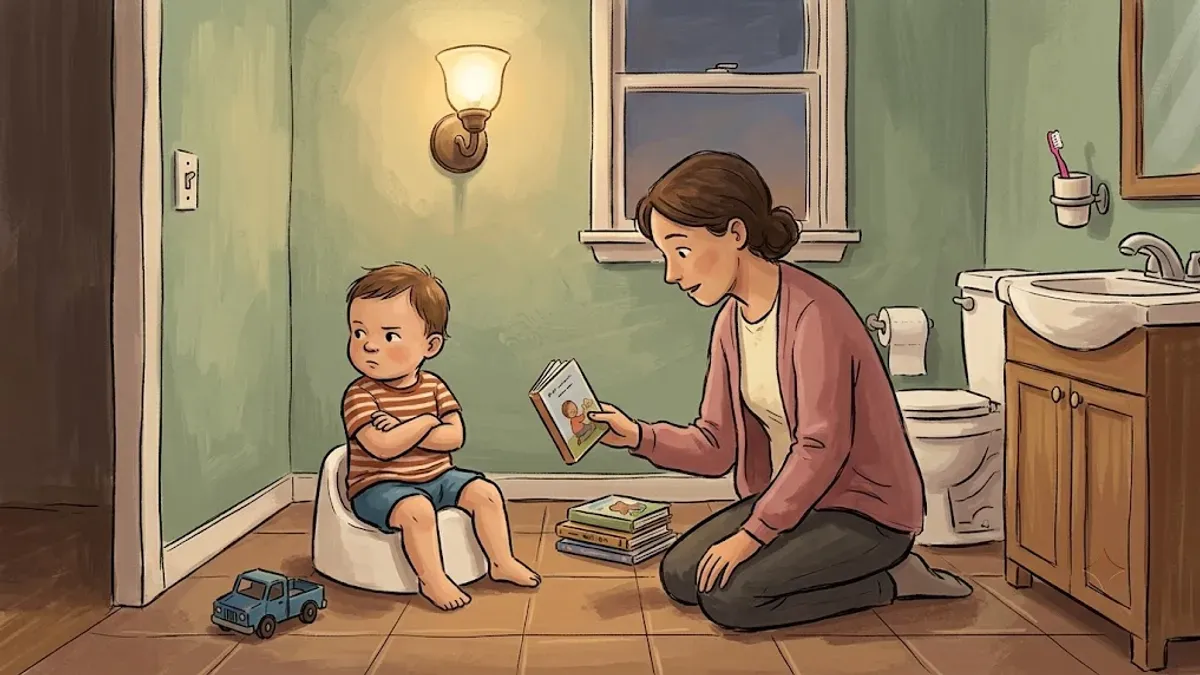
The last piece is emotional, and it’s the loudest. No curiosity about the potty seat, hiding behind the couch to poop, a full meltdown at the sight of the toilet, that’s not defiance.
The AAP notes a toddler’s fear of the toilet often runs on an active imagination and magical thinking, and that hiding accidents is an emotional response, not willful refusal.
Pushing harder against that wall backfires. Emotional readiness is something you wait for, with more parental patience than pressure. The interest comes. Forcing it just teaches them the bathroom is a fight.
When a Stall Is Really a Readiness Problem
Not every stall is a discipline problem. Two things trip up even patient parents: a physical issue the child has no words for, and a life change that knocked them sideways.
Constipation and Withholding Quietly Derail Progress
A child who suddenly refuses the potty or starts having accidents after apparent progress might be in pain, not defiance. Hard stools hurt, and a child learns fast: if going hurts, don’t go. That withholding cycle makes stool consistency worse, bowel control harder to build, and can tip into dysfunctional voiding. Research on constipation and toilet training difficulties found that 22% of 482 children experienced stool toileting refusal during training.
A separate Journal of Pediatrics study found that 93.4% of children with stool refusal and hard stools were already constipated before the refusal began, meaning the pain triggered the withholding, not the other way around. What looks like a potty training dropout is often a bowel control problem in disguise. Read up on potty training constipation before assuming willingness is the issue.
Regression After a Big Life Change
A toddler making real progress who fell apart after a new baby or a move? That’s not failure.
HealthyChildren.org describes regression during upheaval as “a healthy way for a child to meet her emotional needs,” not a step backward in potty training readiness, but a signal that their emotional bandwidth is tapped out.
Pause without drama, follow their lead, and revisit when the dust settles. Potty training regression age 3 is more common than most parents realize, especially after life changes that feel minor to adults but enormous to a toddler.
Why Pausing Potty Training Is Often the Right Call
Stopping feels like quitting. It isn’t. Here’s what the research says, how to actually pause without confusing your child, and when to try again.
What Pushing Too Early Actually Costs
Forcing a not-ready toddler doesn’t speed things up. Wake Forest Baptist Medical Center research on 112 children found that early starters had a 3.37 times increased risk of daytime wetting and were three times more likely to develop constipation than children trained at the normal age.
If that cycle sets in, unwinding it takes months, not weeks. A few weeks of parental patience now costs less than a regression spiral later.
How to Pause Without Confusing Your Child
The script matters more than you’d think. Something calm and blame-free: “We’re taking a break from the potty training for now, and that’s okay.” No disappointment in your voice, no “maybe next time.”
Go back to diapers fully. Potty training pants split the difference in a way that helps no one during a pause: not quite a diaper, not quite underwear. The ambiguity adds pressure. Full diapers remove the daily reminder of a task your child isn’t doing, which lowers the stakes on everyone’s emotional readiness.
How Long to Wait Before Trying Again
Four to six weeks is a reasonable window. AAFP clinical guidance found that returning children to diapers resulted in 24 of 27 spontaneously using the toilet for bowel movements within three months, with no additional pushing required.
Don’t watch the calendar. Watch the toddler. Look for potty training readiness cues coming back: staying dry for a stretch, asking about underwear, showing interest in the toilet. Those signals tell you bladder control and developmental milestones are catching up. When your child leads, toilet training almost always goes faster the second time.
Readiness Looks Different for Some Kids
Two groups in particular get unfairly labeled as stubborn when the real story is biology and neurology.
Sensory and Developmental Differences
For autistic kids and children with ADHD or sensory processing differences, several things need to line up before the bathroom even feels manageable:
- Body awareness and recognizing the urge in time
- Self-help skills like managing clothing
- Sensory comfort with the seat, the flush, and the room
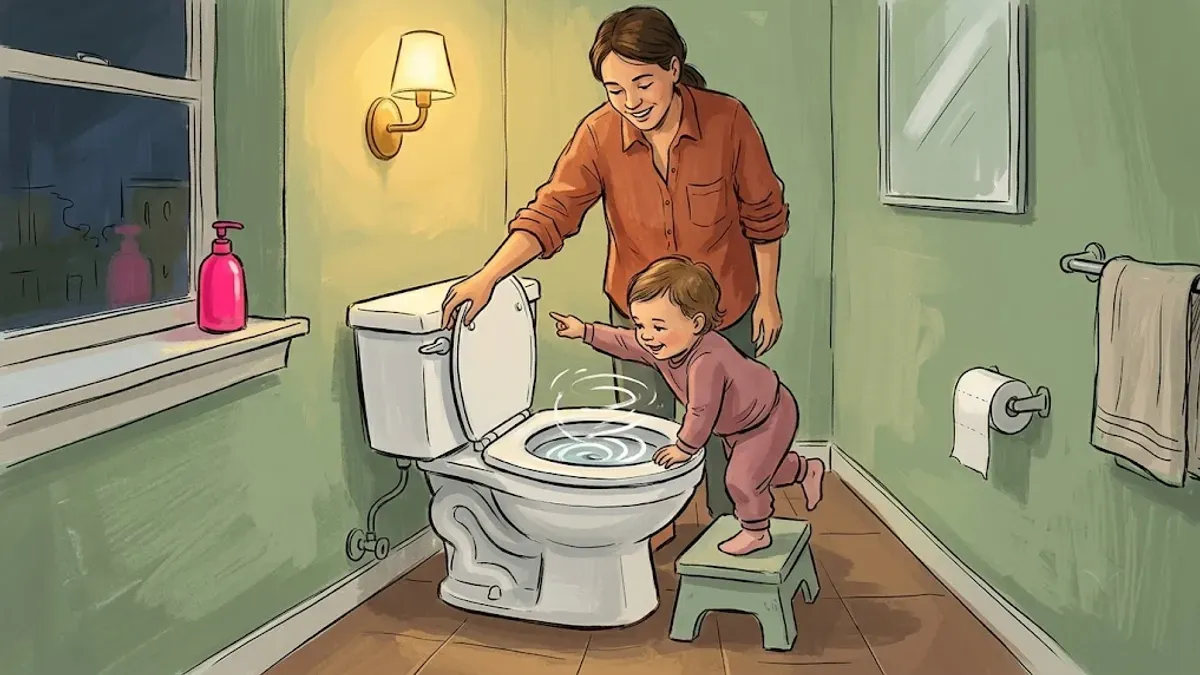
With my son Eli, who is autistic and a sensory-seeker, the flush was the whole battle for months, so we taped a soft cloth over the cold seat and let him flush on his own terms long before we ever asked him to sit.
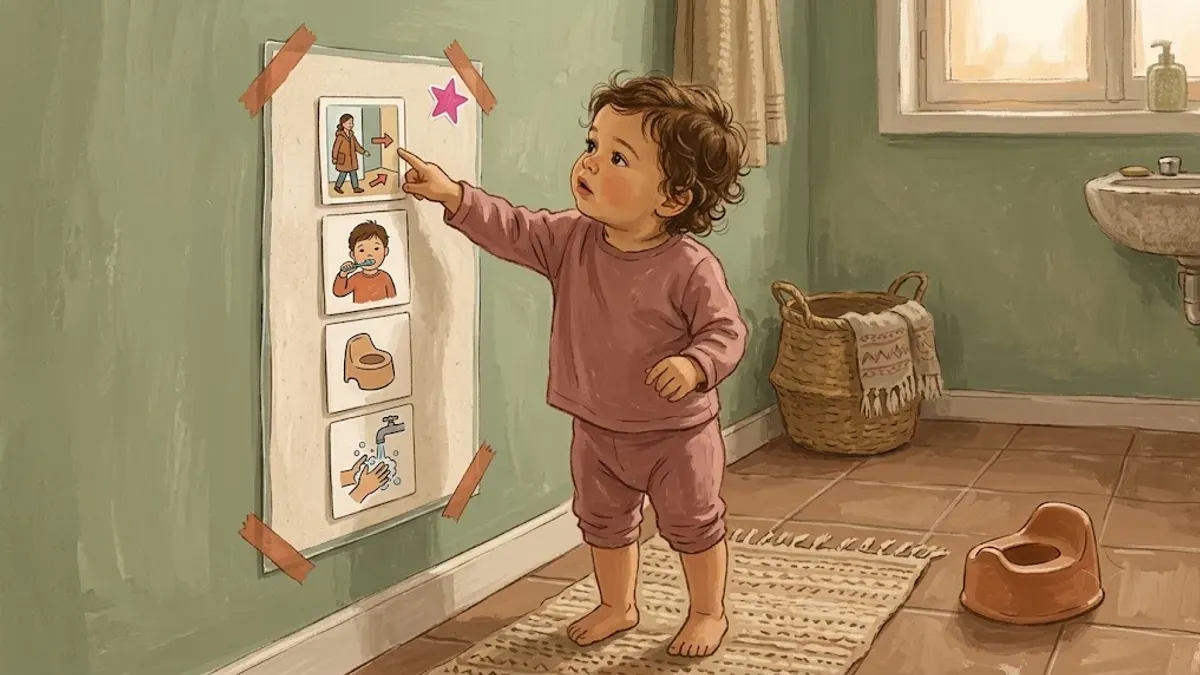
A 2022 study on PubMed found that 49.1% of children with autism showed toileting resistance at 48 months or older, compared to 8.0% of typically developing children. That’s a timeline difference, not a willpower gap, and potty training autism spectrum approaches, including visual supports and sensory accommodations, are what move the needle. A laminated visual schedule with picture symbols hands your kid the whole sequence to follow, no running narration from you, and the PCS symbols on it match the kind Eli’s OT uses on his first-then board. It’s waterproof enough to live in the bathroom, and the 400-plus parents who rated it 4.5 stars mostly landed where I did.
The Older Toddler Who Still Isn’t Trained
Three years old in diapers feels late. An AAP study in Pediatrics puts the median age for daytime dryness at 35.0 months for boys, so a boy who just turned three is barely past the median, not behind it.
Resistance and low emotional readiness trip up more toddlers than any physical gap.
If you’re wondering about a 3 year old not potty trained, patience and waiting for genuine interest will get you further than pressure.
What to Do While You Wait for Readiness
So you’ve hit pause. Now what?
The waiting period is not dead time, and waiting without pressure here pays off more than any training strategy. It’s the window where you set up conditions that make toilet training click when readiness arrives, without pressure on either of you.
A few things that actually help:
- Keep the potty seat visible. Not pushed into a corner, not making a fuss about it. Just there. The cushioned potty seat with grippy handles I leave out is an Amazon’s Choice pick with more than 1,900 parent reviews, so it’s a safe default, though honestly any low seat your kid isn’t scared of does the job.
- Talk about toileting casually. “Daddy uses the toilet too.” Let them watch, ask questions, flush. Kids learn by watching more than by drilling.
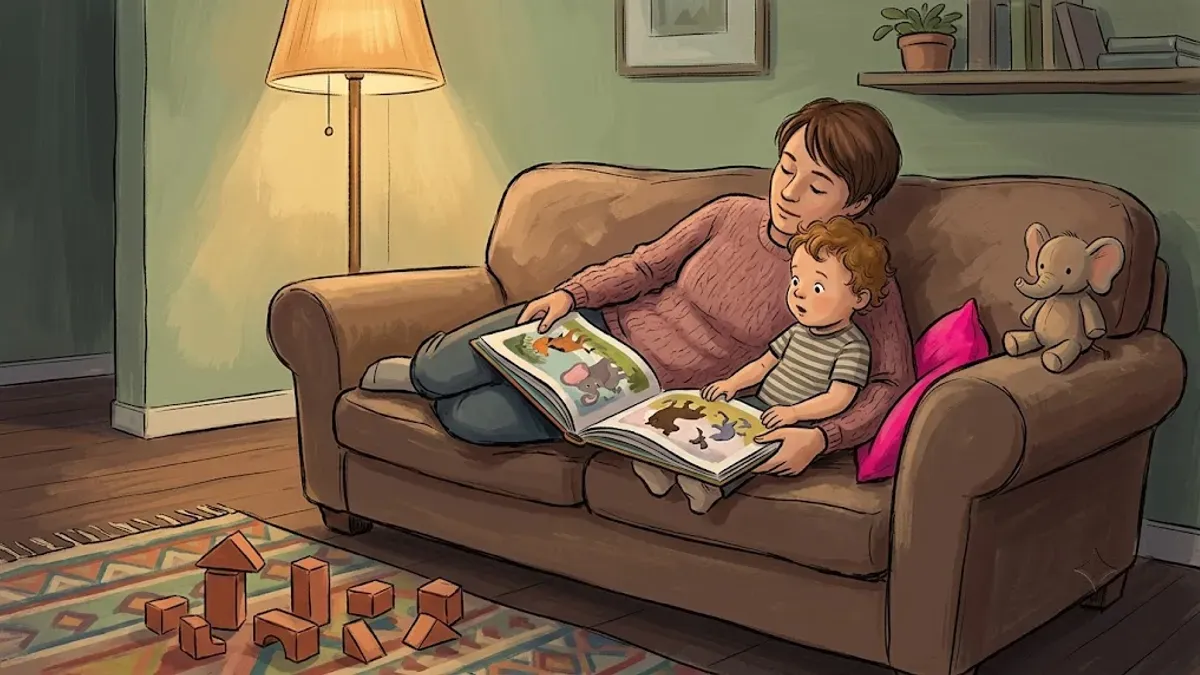
- Read toilet training books at bedtime. Fun ones, not instructional. I Have to Go! is Robert Munsch at his silliest, a longtime favorite with 1,400-plus reviews that lands best once a kid’s about three. For the littler ones, Once Upon a Potty comes as a chunky board book aimed at the 1-to-3 crowd and sits at 4.7 stars across more than 3,100 reviews. They soak up the concept with zero stakes attached.
- Watch for communication milestones. When they start telling you a diaper is wet or dirty, those communication skills are showing up. That’s a developmental milestone, and a genuine readiness signal.
- Skip the rewards chart for now. Save sticker charts and candy for when they’re actually trying. Offering a prize for something they’re not developmentally ready for teaches them nothing.
When the timing feels right, check our complete potty training guide for a full readiness checklist. If you’re considering a quick-launch method, read about the 3 day potty training method first; it works, but only when a child is genuinely ready.
The goal of the pause is a child who wants to use the toilet. That’s a different starting point than one who’s been pushed and learned to resist.
Found this useful? Save it for the next rough afternoon.
Questions parents ask me about this
What are the signs your child is not ready for potty training?
The clearest signs are a diaper that stays wet constantly (no dry stretch of a couple of hours), no words or signals to tell you something is happening, and strong emotional resistance like hiding, freezing, or melting down at the mention of the toilet. Physical signs matter too: a child dealing with constipation or painful stools is unlikely to make progress until that's resolved. If most of those signals are present at once, the timing isn't right yet.
Is it bad to stop potty training once you've started?
Stopping is often the smartest move you can make. Continuing when a child is resistant usually makes things harder, not easier. Pressure tends to increase withholding and avoidance, which can turn a timing problem into a longer standoff. A pause without drama, returning to full diapers and zero pressure, gives everyone a reset. Most children are much quicker to train when they return on their own terms.
How long should you wait before trying potty training again?
A general guideline is four to six weeks minimum, though some kids need longer. The calendar matters less than what you're watching for: consistent dry stretches, the child noticing and naming what's happening in their diaper, and some curiosity or willingness around the toilet. Restarting because it's been a month, rather than because the signs are back, tends to repeat the same stall.
What age is too late to be worried about potty training?
Most children complete daytime training somewhere in the range of two and a half to three and a half years, but the window is genuinely wide. A three-year-old who isn't trained yet is often still within a normal range, especially if readiness signals are still developing. Some children, particularly those who are autistic, have ADHD, or have sensory differences, follow a later and different path, and that's not something to panic over. If you have concerns specific to your child, a pediatrician is the right person to ask.
Can constipation make a child seem not ready for potty training?
Yes, and it's one of the most common reasons training stalls. When stools are painful, children start withholding, and withholding quickly becomes a habit that's hard to break. A child who seems terrified of the toilet or refuses to go at all may not be stubborn, they may be managing real discomfort. Addressing constipation first, before resuming training, tends to make everything else move faster.
Is night-time dryness a sign of potty training readiness?
Night-time dryness is controlled by a hormone that develops on its own timeline, separate from daytime training. Most children achieve daytime dryness well before they stay dry at night, and the two don't need to happen together. It's completely normal to use a diaper or pull-up at night long after a child is reliably using the toilet during the day. Don't hold off on daytime training while you wait for dry nights.
Does pausing potty training cause regression later?
A well-handled pause doesn't cause regression. In fact, it usually prevents the deeper resistance that comes from pushing too hard. Returning to diapers with a calm, matter-of-fact attitude keeps the door open without turning the toilet into a battleground. Children who restart after a genuine pause and real readiness tend to train faster than children who were pushed through early resistance.
Written by
Nora Hayes
Mom of two and a former preschool aide. I share the screen-free sensory play and calm-down ideas I test at my own kitchen table, plus what the moms in my little meet-up swear by. A parent passing on what works, not a doctor or a therapist.
More about NoraKeep going
All Potty Training-
 Potty Training
Potty Training Reward Chart: 20 Ideas Under $3
Skip the toy aisle: build a potty training reward chart with 20 ideas under $3 you already own. Grab the plan that motivates a stubborn toddler.
-
 Potty Training
How to Potty Train a Boy (and How a Girl Differs)
How to potty train a boy in 3 to 6 months: the readiness signs, the step-by-step method, and the small things that differ for girls.
-
 Potty Training
Potty Training Sticker Chart Printable (Free Download)
Free potty training sticker chart printable that survives travel and routine resets. Print, sticker, reward, reuse anywhere. Download now.
-
 Potty Training
Potty Training Certificate: A Just-Do-This Guide
Charts skip the finish line. Make a potty training certificate that gets your toddler over the line for real. Print yours tonight.