Kindergarten Behavior Chart That Builds Calm Habits

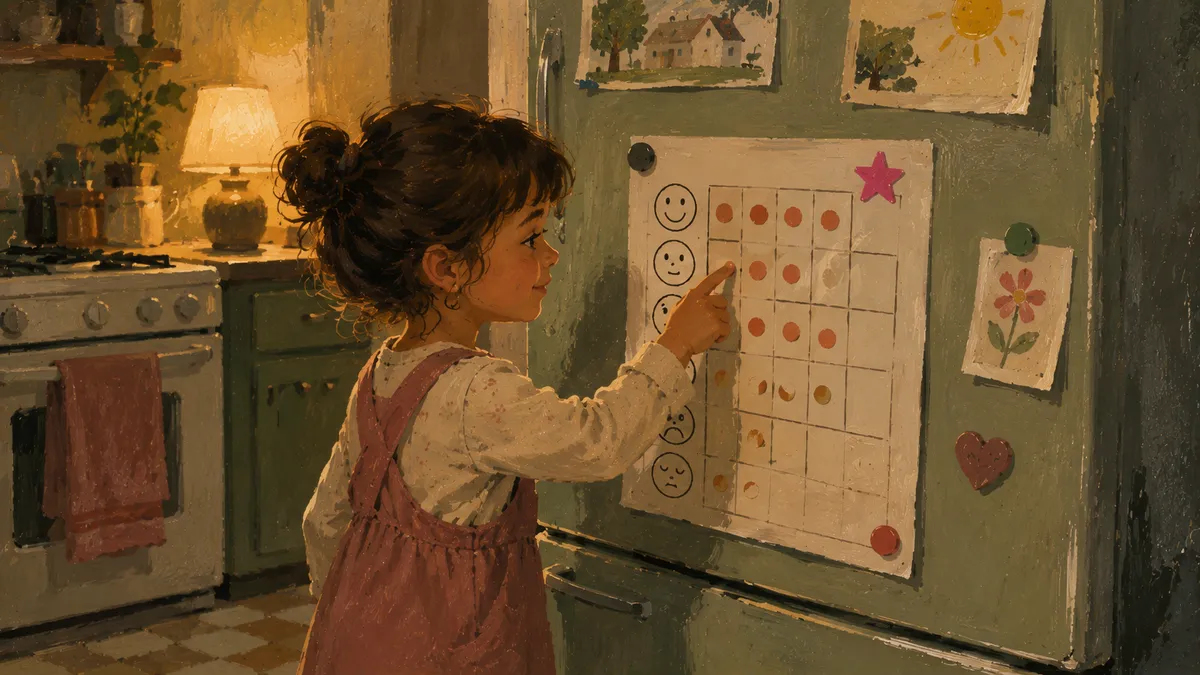
A kindergarten behavior chart teaches calm-down habits when you track the calming step itself, like “took three deep breaths,” instead of rewarding a kid for being quiet and easy. I’m Nora Hayes, a former preschool aide raising a sensory-seeking 7-year-old, and the charts that stuck in our house marked the moment a feeling got handled, not the moment it disappeared.
This guide walks you through setting one up tonight, the daily behavior chart layouts that actually last, how to adapt it for ADHD or extra support, and what to do when the chart quits working.
The plan in brief:
- Pick 1-2 calm-down behaviors to track, like “took 3 deep breaths” instead of “was good”
- Mark the chart the second your child uses the calming step, not at the end of the day
- Reset the chart weekly and swap behaviors as the old habits stick
What a Behavior Chart Does for Big Emotions
Most parents reach for a behavior chart because they want their kid to be quiet. That’s not a criticism; it’s the exhausted-parent reflex. But the chart isn’t a silence switch. It’s a map your child can actually read.
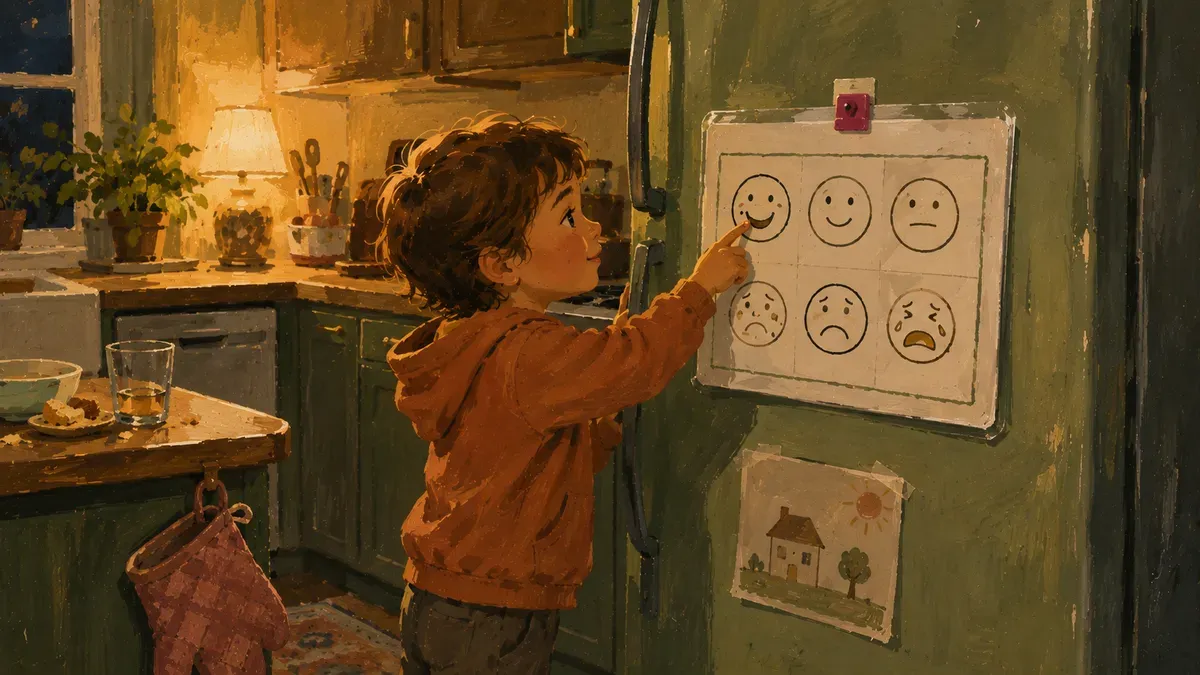
When a kid has a big feeling, the problem isn’t the feeling itself. It’s that they have no idea what to do with it. A good behavior chart built around emotional regulation shows them the step: “feeling big? here’s what to do.” Mark that step when they do it, and the chart becomes a record of something they handled, not something they avoided.
That’s what makes it different from reward chore charts, which track tasks. This is a visual tool tracking a skill.
The positive reinforcement piece is genuinely simple. You’re not bribing your way to calm. You’re showing a kid, visually, that they caught a big feeling and did something about it. That sticker or checkmark lands at the exact moment they need proof they can do hard things.
- Three-year-olds do best with two choices on the chart.
- Five-year-olds can handle three.
- Seven-year-olds are ready for four or five options.
- More than that, and the chart becomes one more thing to melt down about.
Set Up Your Chart in 3 Calm-Down Steps
With the number of choices sorted, the build itself is quick. Three steps, all doable at the kitchen table tonight: pick the behaviors, decide when you mark them, and plan how often you start fresh.
- Pick one or two calming behaviors you can actually see happen.
- Mark them the instant they happen, not at the end of the day.
- Reset weekly and swap in the next behavior once the last one becomes automatic.

Choose Feelings Behaviors, Not Just Quiet Ones
Most charts track the wrong thing. “Good behavior” and “being quiet” reward a kid for vanishing, not for handling a hard moment.
- Took three deep breaths
- Asked for a break
- Used words when frustrated Those are the emotional regulation skills you want more of. They beat any vague expectation because your child knows exactly what earns the mark.
Keep it age-appropriate, whether you have a toddler, a preschooler, or a kindergarten-age child working on bigger targets. A three-year-old gets “I asked for help.” My seven-year-old works on “I walked away before I yelled.” You are not punishing the disruptive behavior. You are catching the calming one and making it visible, so the chart maps a skill instead of demanding silence.
Mark the Moment, Reward the Effort
Here is where most of us mess it up: we wait until bedtime to tally the day. By then the moment is gone and so is the lesson.
Mark it the instant it happens. Kid takes a breath instead of throwing the cup? Sticker goes on right then, with a quick “you stopped and breathed.” That timing is the whole engine of the reward system. The Stanford research on deep breathing and calming in children backs slowing down to breathe, and the NIH StatPearls behavior reference puts the timing plainly: “The more immediate to the behavior the better.”
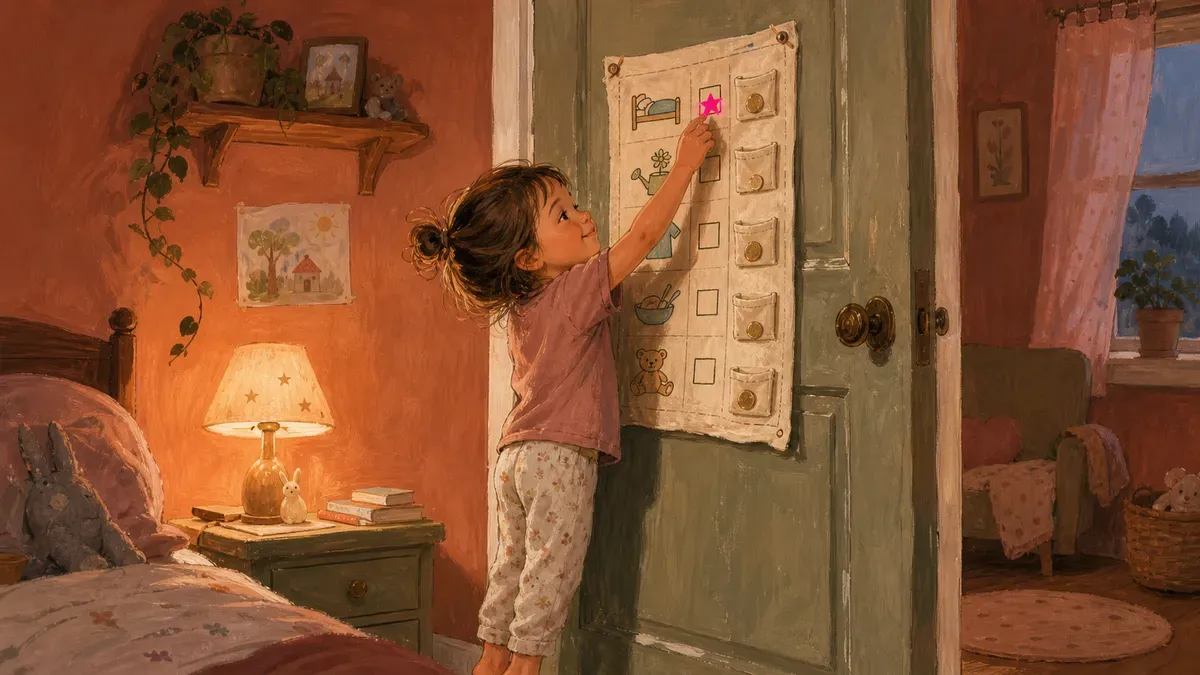
- Keep the chart within reach, on the fridge or by the calm-down corner.
- Mark the moment as it unfolds, not at bedtime.
Reset Weekly and Swap Behaviors
A chart is not a forever monument. Wipe it, restart it, do it weekly. A fresh week gives a stuck kid a clean slate and keeps the progress tracking from turning into a wall of old failures.
Then swap. Once “asked for a break” stops being hard and starts being automatic, that behavior has done its job. Retire it and rotate in the next one. This is the quiet point of behavior modification: the goal is for the skill to outlast the chart.
That steady consistency, same chart, same rhythm, week after week, is what lets the habit stick. Keep the cadence going, keep swapping the targets, and the chart slowly works itself out of a job.
Daily Behavior Chart Layouts That Actually Stick
The layout you pick matters less than how it feels to your kid, but a few formats hold up better with little ones learning to handle big feelings. Here is how the common ones compare, and where to grab one without paying.
Sticker Grid vs Clip Chart vs Color Zones
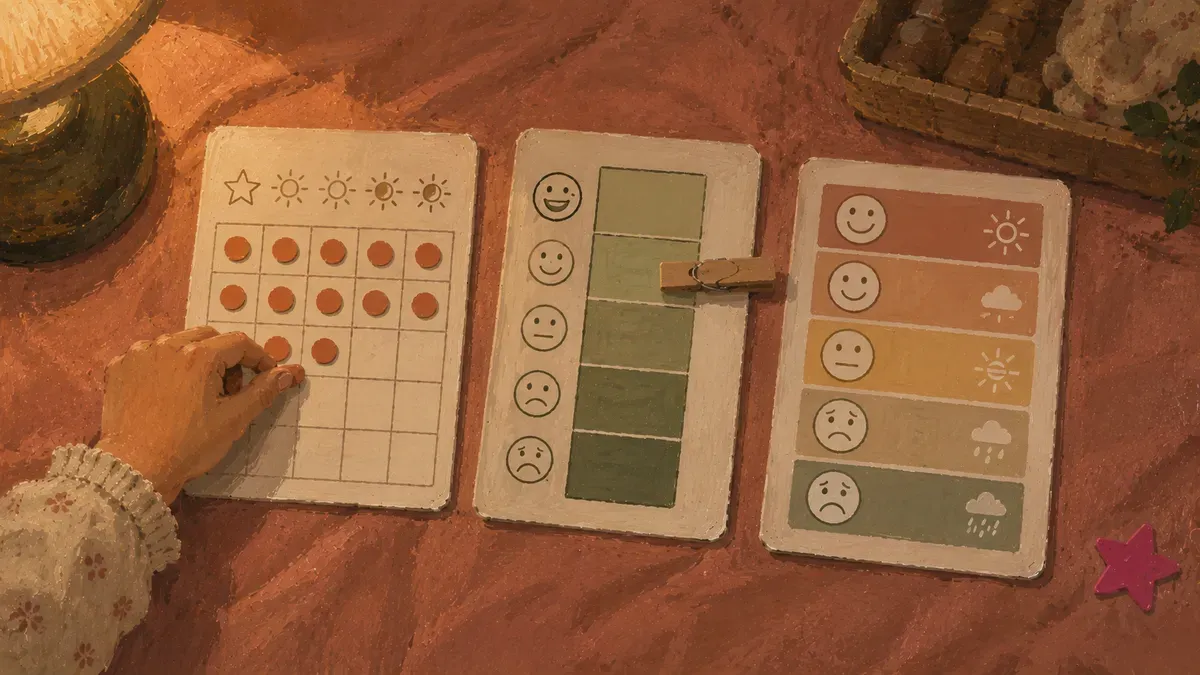
Three formats show up over and over.
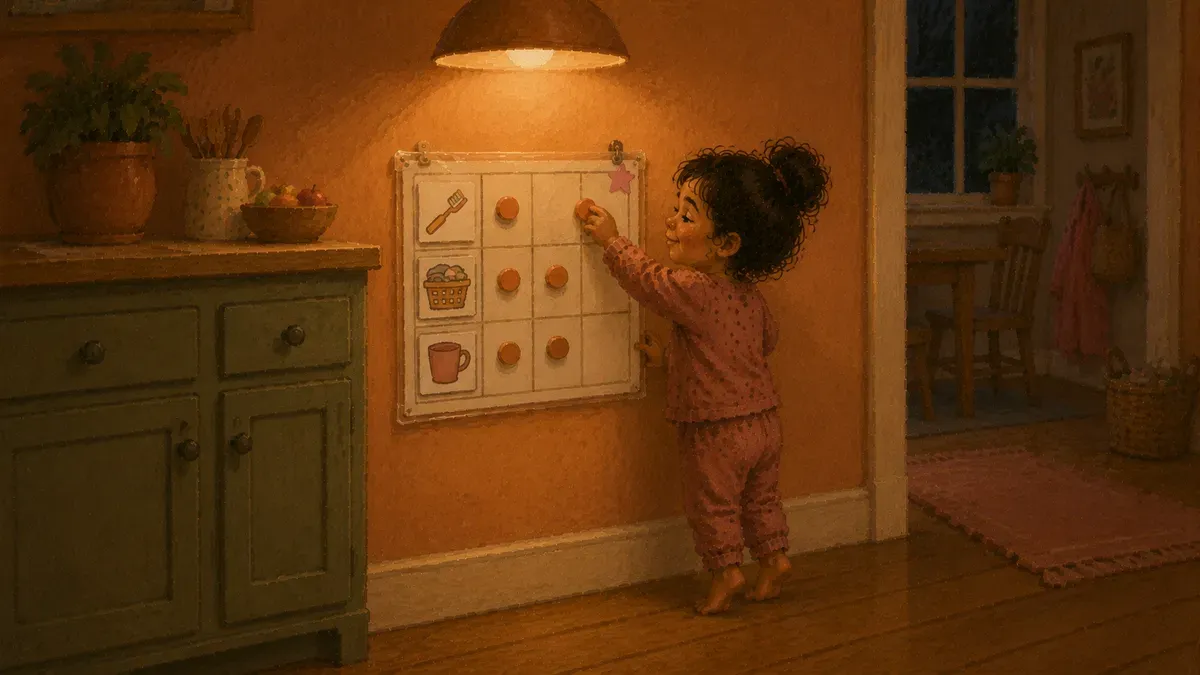
- A sticker grid hands out one mark per win and only ever moves up
- A clip chart slides a clothespin up or down a scale as the day goes on
- A color-coded system sorts feelings into bands a child points to, like a mood meter
For a young child managing big emotions, I lean toward the sticker version. It only ever moves up, so it celebrates the calming step without broadcasting a bad moment to the room. That distinction is real: education researchers writing for Teaching Exceptional Kinders note that clip charts can publicly shame kids who struggle to follow rules, while a sticker chart lets them earn marks for target behaviors without that public comparison.
- The Zones of Regulation (Blue, Green, Yellow, Red) is less a scoreboard and more a feelings map, built by OT Leah Kuypers in 2011
- Under six, fewer moving parts wins; skip the point system for now
This sits right next to the difference between each chore chart type, so peek there if you are torn.
Where to Find Free Printable Charts
You do not need to buy anything to start tonight. Plenty of free printable charts for behavior float around, and the good ones share a few traits worth hunting for.
Look for a daily behavior chart printable that is:
- Plain and uncluttered, so the target behavior is the only thing on the page
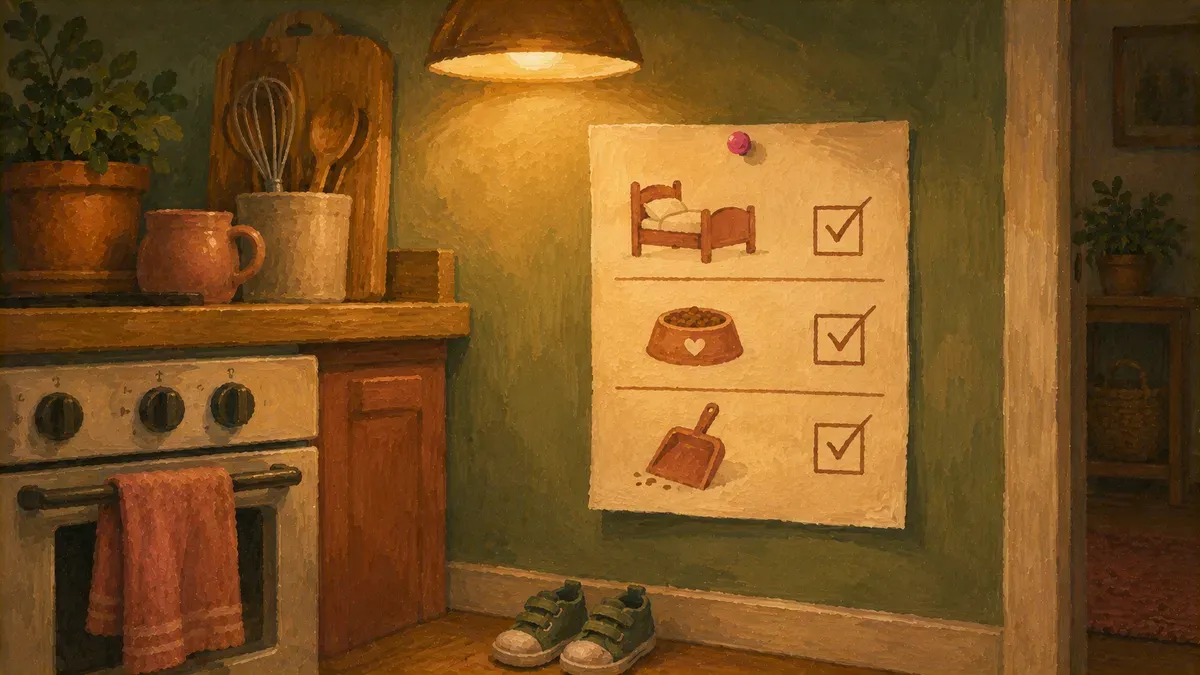
- Picture-based, not word-heavy, for a pre-reader
- Daily or weekly, not a month-long grid that feels endless to a three-year-old
Search “behavior chart printables” and you will find templates as a visual tool you can print on regular paper and refresh every Sunday. Laminate one if you want to reuse it with a dry-erase marker. Start with a free template, watch what your kid actually responds to, and only pay for something prettier once you know the format sticks.
Adapting the Chart for ADHD and Extra Support
A standard chart design is a starting point, not a finish line. ADHD changes what “workable” looks like, and the same visual structure you set up for a five-year-old can carry you much further than you’d expect.
Shorter Steps and Stronger Visual Cues
The biggest mistake I see with an ADHD behavior chart is too much on one card. Six steps, small text, a point system that requires mental math: it’s a setup for the child to tune out before they get to step two.
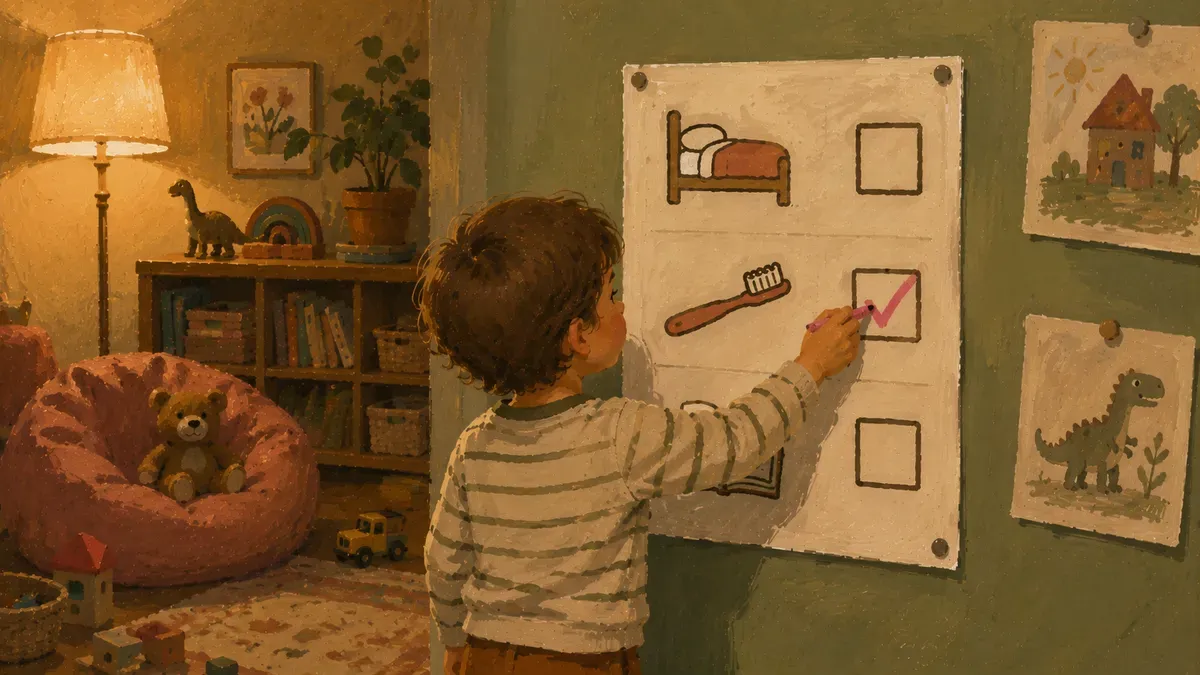
Cut it down. - Two or three calming actions per card, not six
- Icons big enough to see from across the room
- High-contrast colors so nothing blends together
- Bold outlines instead of subtle pastels A checklist with three items and clear pictures holds attention longer than a paragraph of instructions.
The reason this matters more for an ADHD brain is reinforcement sensitivity. Research on ADHD and behavior support for kids found a significantly larger effect of reward on cognitive performance in children with ADHD compared to typically-developing controls, which means the immediate payoff of marking that sticker carries real weight.
Searching for an ADHD cleaning checklist PDF turns up ready-made layouts already stripped to the essentials.
Individual variation is real, but the principle holds: fewer moving parts and clearer visuals make the habit stick faster.
The Same Idea Grows With Your Child
Before you retire this system when your kid hits school age: the structure doesn’t have to go away.
An ADHD chore chart for adults uses the same effort-based tracking: a visible list, a mark per completed task, a small reward at the end. External structure does the job that the ADHD brain’s internal activation system can’t always manage on its own. Progress tracking stays concrete instead of depending on memory. The reward system shifts from “I took a breath” to “I started the laundry,” but the chart logic is identical.
See our guide to the chore chart for kids by age when you’re ready to shift the behaviors on the chart as your child grows. The habits you’re building now travel with them.
When the Chart Stops Working
Every chart has a shelf life. Sometimes it’s two weeks. Sometimes three months. Knowing when a childrens reward chart stops working is half the fix.

The most common reason: the behavior you’re tracking got easy. That’s actually good news. When a kid no longer needs a sticker to remember to ask for a break, the skill is theirs.
Two patterns cause most chart failures.
- Skill is automatic: swap to a new target behavior before the whole chart loses its pull.
- Reward stopped landing: ask your kid what feels worth earning right now and change it before the chart turns into wallpaper.
For ADHD kids, inconsistency hits harder than it does for other children. ADDitude magazine reports that under partial reinforcement, kids with ADHD show poorer sustained attention and less predictable responses, while continuous positive reinforcement helps them learn tasks more quickly. If your sticker delivery got spotty, that’s likely the culprit. Rebuild the routine before you scrap the chart.
Parental involvement is the part no printable can replace. A chart on the wall with zero follow-through is just paper. You’re the one who notices, marks, and says “I saw you do that.” That moment of individual recognition is what makes behavior modification stick.
Building Calm Habits Beyond the Chart
The goal was never a perfect chart. It was a kid who reaches for a deep breath before the meltdown takes over, without you pointing at the wall first.

That shift happens gradually. You’re tracking “asked for a break” on the sticker grid for six weeks, and then one Tuesday your kid just… asks. No prompt, no reward system waiting on the other side. They did the thing because they’ve done it enough times that it’s theirs now. That’s what behavior modification is actually building toward: a skill your child owns, not a behavior they perform for a mark.
When you notice that happening, start pulling back:
- Skip a day of tracking and see if the behavior holds
- Stop offering the sticker without phasing it out dramatically
- Watch for the behavior to happen unprompted before you fully step away
There’s no ceremony needed. The parental involvement just gets quieter, and the motivation shifts inward.
The chart is scaffolding. You take it down when the wall can hold itself.
For what comes next, whether that’s a new skill to track or a different visual support for emotional regulation, see our complete chart guide for options so you’re not starting from scratch.
Found this useful? Save it for the next rough afternoon.
Questions parents ask me about this
How does a kindergarten behavior chart help manage big emotions?
The chart gives a child a visual record of the moments they handled a hard feeling. Instead of tracking quiet or good behavior, you mark the calming step they took: the deep breath, the walk away, the words they used. Seeing those marks adds up to real evidence that they can do it, and that evidence is what builds the skill over time.
What age is a kindergarten behavior chart appropriate for?
Most kids can start around age three with a stripped-down version, once they can connect a mark on the chart to something they just did. The key is simplicity: one or two behaviors, clear pictures instead of words, and a short tracking window like a single day rather than a full week.
Should I take stickers away for bad behavior on the chart?
No. A chart that only moves forward works. One that removes stickers for hard moments teaches a child that earned progress can be taken from them, which undermines the whole point of building self-trust. Mark only the wins, reset weekly, and let the hard moments pass without touching what they already earned.
How long does it take for a behavior chart to work?
Most families see a shift within two to three weeks when the chart is consistent and the marking happens in the moment rather than at the end of the day. The chart is a skill-builder, not a quick fix. If three weeks pass without change, look first at whether the tracked behavior is concrete enough and whether follow-through has been consistent.
What rewards work best with a kindergarten behavior chart?
Rewards that land immediately and feel meaningful to the child work better than delayed or generic ones. Extra time at a favorite activity, choosing dinner, or a few minutes of one-on-one attention tend to outperform toys or candy. Match the reward to what your specific kid actually values, not what sounds good on paper.
Can the same behavior chart be used at home and at school?
Yes, and the consistency often helps. A shared chart means the child sees the same expectations and the same system in both places, which reduces confusion. The tracked behavior and the reward do not have to be identical at home and school, but the structure should look similar so the child recognizes it instantly in either setting.
Written by
Nora Hayes
Mom of two and a former preschool aide. I share the screen-free sensory play and calm-down ideas I test at my own kitchen table, plus what the moms in my little meet-up swear by. A parent passing on what works, not a doctor or a therapist.
More about NoraKeep going
All Reward & Chore Charts-
 Reward & Chore Charts
Age Appropriate Chores by Age (Toddler to Teen)
Most kids handle real chores younger than you think. Get age appropriate chores by age, from 3-year-olds to teens, and start building habits today.
-
 Reward & Chore Charts
Allowance Chore Chart: How to Start With Little Kids
Set up an allowance chore chart that ties money to effort: paid-vs-unpaid rules, prices by age, 100 chore ideas, and the best charts. Start today.
-
 Reward & Chore Charts
Childrens Chore Chart Printable with Pictures
Pre-readers can't follow word lists, but they can follow pictures. Free printable chore chart for toddlers and preschoolers, ready to laminate.
-
 Reward & Chore Charts
Chore Chart vs Reward Chart: Which One Your Kid Needs
Chore chart, reward chart, or responsibility chart? Find out which fits your child's age, build one in 5 steps, and snag a free template.