Picture Schedule for Toddlers: 25 Cards Worth Printing

Some links here are affiliate links. If you buy through one, I may earn a small commission at no extra cost to you. As an Amazon Associate I earn from qualifying purchases. I only point to things I'd actually use with my own two.
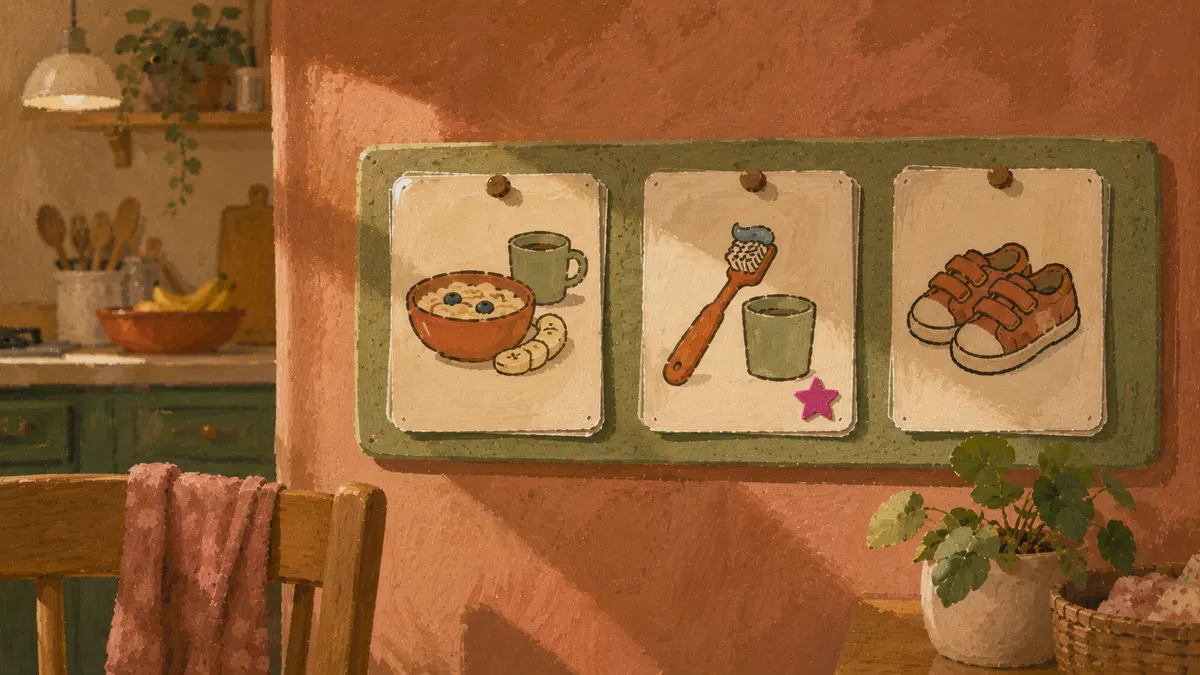
A picture schedule is a row of simple cards, one photo or icon per step, that shows your toddler what happens next so the whole routine stops being a guessing game. It works because little kids can’t hold “breakfast, then shoes, then car” in their heads, but they can follow pictures they point to, and a predictable order means fewer of those out-of-nowhere meltdowns at the door.
I’m Nora Hayes, a former preschool aide raising one autistic kid and one very busy three-year-old, and below I’ll walk you through what goes on a toddler daily routine chart plus the 25 everyday moments worth turning into a card.
The plan in brief:
- Pick 5 to 8 everyday moments your toddler struggles with most
- Print one clear photo or icon card per step and laminate it
- Point to each card together right before that moment happens
What a Picture Schedule Is and Why Toddlers Need One
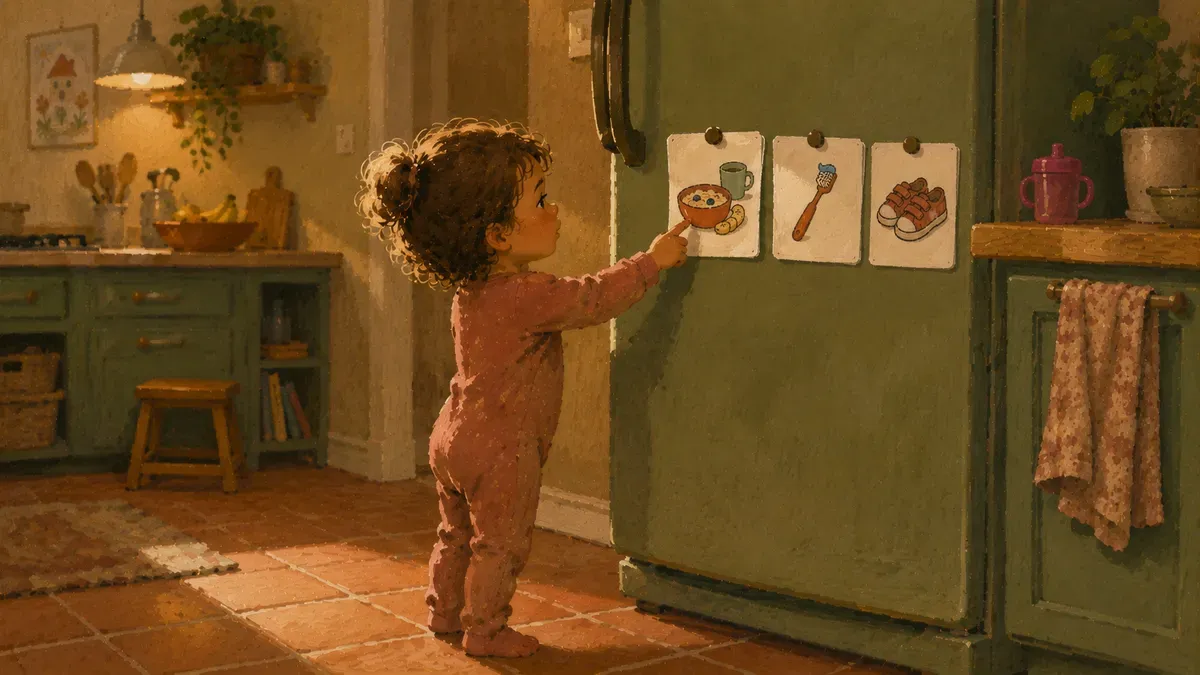
The reason it works is developmental, not decorative.
- Toddlers can’t hold a spoken sequence long enough to act on it
- “Get dressed, eat, find your shoes” becomes “get dressed” and then a blank
- Each picture card gives the next step somewhere to land
- The card is the reminder, so you don’t have to be
Research on visual supports and child routines from the CDC confirms that following a routine is a standard 30-month milestone, which means sequenced cards are developmentally appropriate right around age two and a half. Head Start’s guidance on visual supports puts it plainly: they help children understand what to do and when, which builds independence over time.
For kids who struggle with transitions, a picture on the wall answers “what’s next” before they even ask.
You can find a full beginner’s guide to visual schedules if you want the deeper setup, or browse visual schedules routines for card ideas sorted by time of day.
The pictures do the talking. You get to stop repeating yourself.
How to Set Up a Picture Schedule in 5 Steps
Building one takes an afternoon and a laminator, and it breaks down into three real jobs: pick the right moments, make cards that survive toddler hands, and put the board where your kid can actually use it.
- Watch two ordinary days and note where the wheels come off.
- Card only the five to eight transitions that trip your toddler up.
- Make or print cards (photos of your own kid work best for little ones).
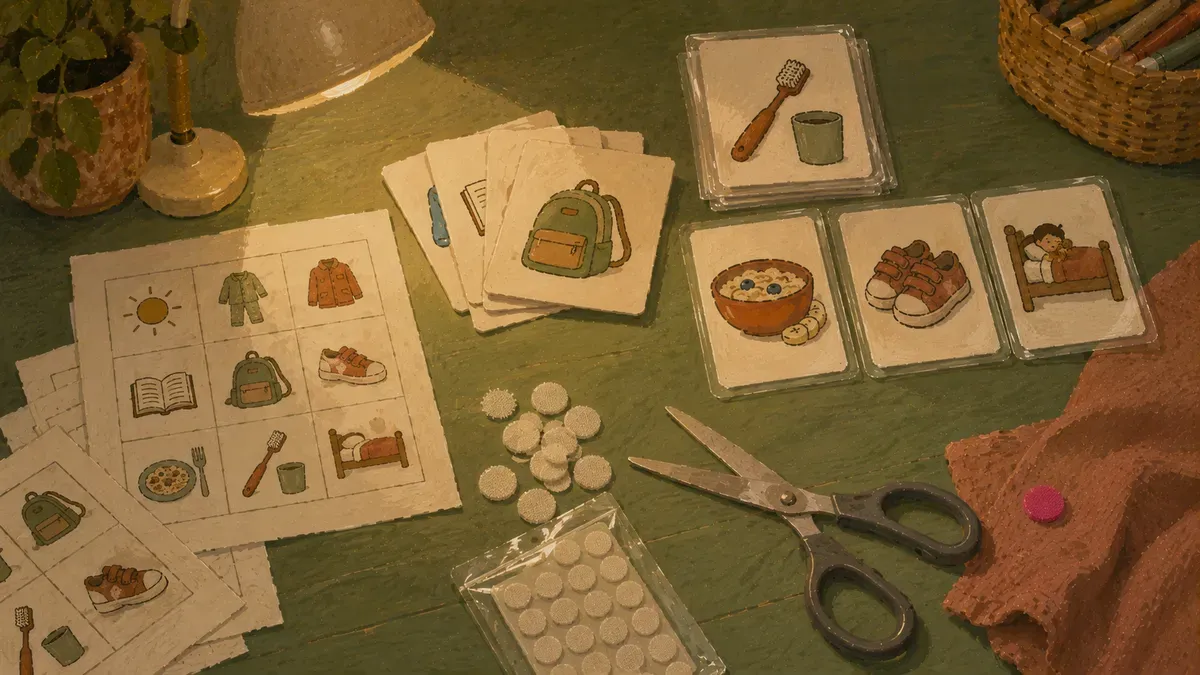
- Laminate, cut, and stick a velcro dot on the back of each card.
- Hang the board at eye level and point to each card right before the transition.
Choose the Moments That Trip Your Toddler Up
Start with the hard parts of the day, not the whole day. You don’t need a card for every minute. You need cards for the five to eight transitions where your toddler digs in, because those switch-points are exactly where things fall apart. The NAEYC found that moving from one activity to the next is when kids are most likely to melt down, and preschoolers spend a full third of the school day in those routines and transitions.
Leaving the park. Getting out of the bath. Shoes on, into the car. Those are your cards.
Card the behavior you dread, not the moments that already go fine.
Make or Print the Cards
Now turn that list into something on the wall. You have two roads: snap a photo of your own kid doing each step, or grab simple icons from a printable PDF. For little ones, lean toward photographs. Use a photo of your child’s actual boots, not a clip-art shoe.
Keep each card to one moment and one clear image. Then make them tough, because a card gets grabbed, chewed, and dropped in the yogurt about forty times before lunch. Laminating turns a paper card into one that survives the year. The Scotch home laminator I use warms up in about five minutes, takes a full 9-inch sheet, and has earned Amazon’s Choice off more than 61,000 reviews. A couple of self-adhesive Velcro dots on the back of each finished card let your kid peel it off and move it, which is the whole trick behind a schedule that actually changes. One bag runs to 500 pairs, so you’ll be dotting cards long after they’ve outgrown the chart. If you’d rather skip the design work, a ready-made visual schedule template gives you printable cards you can have laminated by tonight.
Place the Board and Use It at Eye Level
Hang the board low, at your toddler’s eye level, somewhere they pass all day: a hanging pocket chart by the door, a whiteboard on the fridge. If they can’t see it, it isn’t a cue. The pocket chart I keep by our back door holds 13 cards, flips to a blank side when we outgrow a routine, and comes with a set of dry-erase cards so you’re not starting from a blank wall. Parents give it 4.6 stars across 700-plus reviews, which tracks with how little ours has frayed after two years of daily yanking. CSEFEL, the early-learning center at Vanderbilt, recommends posting picture schedules right where children grow familiar with them and more independent.
The board alone won’t do it. The cue lands when you point. Right before each transition, crouch down, tap the card, and name it. “First shoes, then car.” Same words, same finger, every time. Vanderbilt’s guidance is to walk the child through any changes at the start of the day so the day stays predictable. Be consistent and the pictures start carrying the load you used to carry with your voice.
25 Everyday Routine Cards Worth Putting on a Schedule
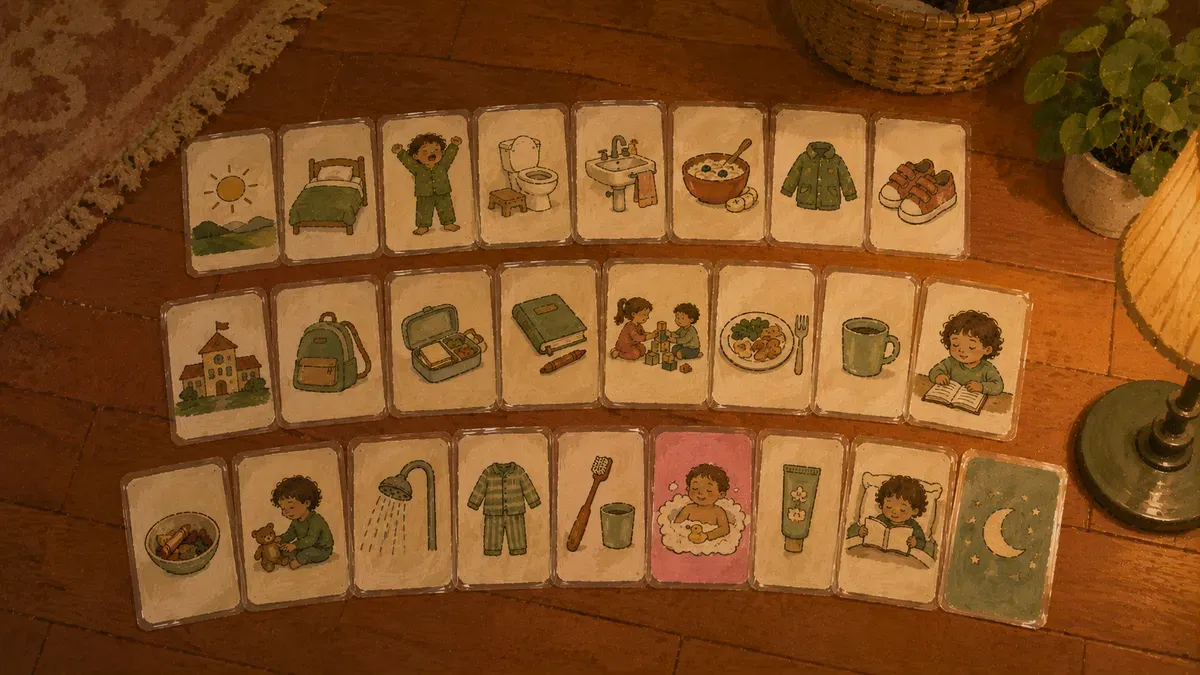
Wondering which moments actually earn a spot on the wall? Here’s a working list, split into the three stretches of the day where a toddler tends to fall apart.
Morning and Getting-Out-the-Door Cards
The morning is a relay race, and every handoff is a chance for a stall. Card the whole sequence so your kid can see the finish line before they’ve even rubbed their eyes.
- Wake up
- Potty (or diaper change)
- Get dressed
- Breakfast
- Brush teeth
- Wash face
- Shoes on
- Pack bag
That’s six cards, one per step, in the order they actually happen at your house. Swap them around if your kid eats before they dress, nobody’s grading you. The point is that each little activity gets its own picture, so “we’re not done yet” stops being your job and starts being the chart’s. June used to dig in at shoes every single morning. Once “shoes on” was the last card she could point to, she knew the door came next, and the fight mostly left.
Mealtime, Play, and Daytime Cards
The middle of the day is the wild west. No school bell, no hard deadline, just a long stretch of hours where structure goes to die. This is exactly where a few cards earn their keep.
- Wash hands
- Snack
- Lunch
- Clean up toys
- Outside play
- Drink water
- Independent play
- Quiet time
- Screen time
The quiet ones are the workhorses here. “Clean up toys” as a card turns a nag into a step, one transition your kid expects instead of resents. “Outside play” and “screen time” do something sneaky too: when screen time is a card with a clear card after it, the screen has an off-ramp built in. No card is open-ended. Something always comes next, and the wall says so before you do.
Wind-Down and Bedtime Cards
If any stretch deserves a fixed sequence, it’s this one. The American Academy of Pediatrics says all children thrive on a regular bedtime routine, and a row of evening cards is just that routine made visible.
- Bath
- Pajamas
- Brush teeth
- Use the potty
- Put on lotion
- Story
- Lights out
- Calm down
Run the same cards in the same order and bedtime stops being a negotiation. The predictability is the sedative. Your kid sees “story” and knows “lights out” is one card away, so the goodbye to the day arrives gently instead of as an ambush.
That’s the working twenty-five, give or take your own house. If you’d rather not draw a single one, grab our free printable daily routine chart and start with cards that are already done. Build the row that fits your day, then let it carry the load.
Which Card Format Works Best: Photos, Icons, or Symbols
Now that the cards are on the wall, the question is what should actually be printed on them, and how many your kid can take in at once. Get those two right and the schedule does its job without overwhelming anybody.
Matching the Format to Your Child’s Age and Needs
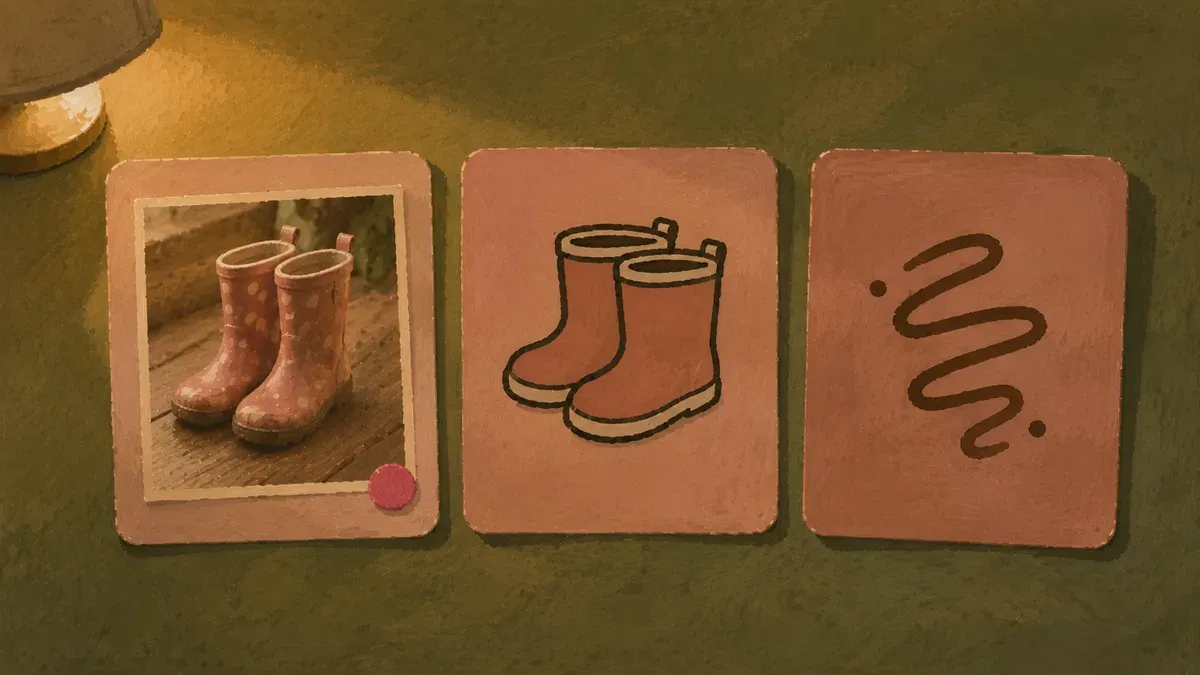
Here’s how the three formats stack up for a toddler:
| Format | Easiest for | Best when |
|---|---|---|
| Real photo | Youngest toddlers, nonverbal, autistic kids | Picture-reading is still new. A 2024 Nature Communications study found 3-year-olds matched photos at 90 to 93% accuracy vs. 25% for line drawings |
| Simple icon | Fluent preschoolers | You want a tidy, swappable set |
| Abstract symbol | Older kids only | A child already reads symbols well |
With a younger or neurodivergent child, photos win. The data on visual supports for autistic children backs photo-based schedules as a tested practice, and our visual schedule printable gives you a photo set ready to go.
How Many Cards to Show at Once
Fewer than you’d think. A toddler holds maybe two to three things in mind at a time, so show two to three cards, no more, even when your full sequence runs longer. Post just the morning, then swap the row when you hit lunch.
Around four and up, a preschooler can track a longer string, so a fuller four-to-six card row or a first-then board works fine. The rule of thumb: show the next step, not the whole day.
When Your Toddler Refuses to Follow the Cards
Some days the cards mean nothing. She yanks them off the board, throws shoes across the hallway, or freezes at the door like you asked her to walk into traffic. That’s not the schedule failing. That’s a two-year-old.
Start by checking the transition, not the card. A few things to try:
- If she resists every announced switch, the problem is the change itself, not which card she’s looking at.
- Point to the card while naming it out loud, then give a two-minute heads-up before you actually move.
CSEFEL’s guidance on managing toddler transitions and behavior recommends the First/Then board specifically for kids who resist routine changes: shrink the whole sequence to one trade she can hold in her head. First bath, then story. That’s it.
For separation anxiety around drop-off or naptime, try putting a photo of you on the card that triggers the meltdown. A picture of her face next to yours, with an arrow to the reunion moment, makes the wait feel less like forever.
If the whole routine collapses, pull back and rebuild in order:
- Start with two cards only: one thing she just finished, one thing coming next.
- Hold that pair consistently for a few days before adding more.
- Add one card at a time, only once the two-card sequence feels settled.
Consistent beats perfect every time. Cards that appear three days and disappear for four stop meaning anything to a toddler still figuring out what a schedule is. For more on specific resistance patterns, our guide on what to do when your toddler wont follow visual schedule 9 times in a row walks through it step by step.
Adapting Routine Cards for Seasons and Special Days
The schedule that works in October falls apart in December. Holidays, travel, school breaks, and seasonal shifts all knock out the predictability your toddler has come to count on, and that’s exactly when the cards earn their keep.
You don’t need to rebuild from scratch. Keep your core cards (wake up, meals, bedtime) exactly where they are and swap only the slots that actually change. A card that usually says “school” becomes “Grandma’s house.” A “quiet time” card becomes “drive in the car.” The bones of the routine stay consistent; the changing pieces get flagged visibly, ahead of time.
CSEFEL at Vanderbilt recommends walking through any schedule changes with your child at the start of the day so they feel secure before the transition happens, not mid-activity when it’s too late.
A few things that help during disruptions:
- Make one or two “special day” cards (birthday party, dentist visit, airplane) to sub in when needed
- On travel days, clip a small set of cards to a 1-inch binder ring so the sequence rides in a diaper-bag pocket. It’s an Amazon’s Choice that comes sixteen to a pack, enough for a car set, a grandma’s-house set, and the two you’ll lose under a seat
- After the holiday, put the usual cards back first thing, and the return to routine lands faster than you’d expect
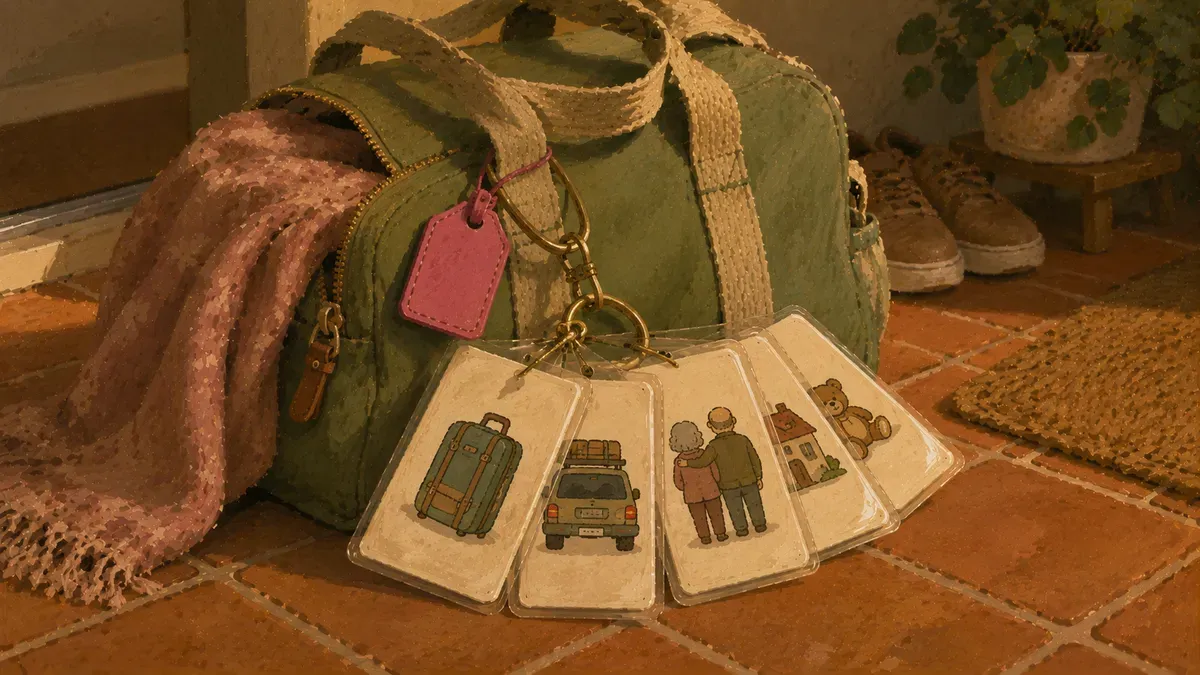
For a deeper look at building and maintaining the whole system, check out our full guide to visual schedules and routines. The cards don’t have to be perfect to do their job. They just have to be there.
Found this useful? Save it for the next rough afternoon.
Questions parents ask me about this
How do picture schedules help toddlers follow daily routines?
Toddlers can't hold a sequence of verbal instructions in their heads, but they can follow a row of pictures. A picture schedule puts the day's steps on the wall in a form they can actually process, so "what's next" stops being a negotiation and becomes something they can see. The predictability lowers anxiety around transitions, which is usually where the meltdowns live.
At what age can a toddler start using a picture schedule?
Most kids can start benefiting from a simple 2-3 card schedule around 18 to 24 months, especially for repeated routines like bedtime or getting dressed. Younger toddlers do best with real photographs of their own belongings and spaces rather than icons. By preschool age, many kids can follow a 4-6 card row and start checking off or flipping cards themselves.
How many cards should a toddler's picture schedule have?
2-3 cards for toddlers, 4-6 for preschoolers. If a child stops engaging, pulling back to 2 cards resets the habit faster than pushing forward.
Should I use real photos or cartoon icons on the cards?
For younger toddlers, nonverbal kids, and autistic children, real photographs work better. Abstract icons require a child to make a mental leap that many kids under 4 aren't ready for. Once a child is verbally fluent and familiar with the routine, simple icons work fine. Symbols and abstract graphics come last, usually for kids who can already read or are close to it.
What is the best way to laminate and store routine cards?
Laminating the cards protects them from spills and constant handling. Velcro dots on the back of each card and on a strip of ribbon or foam board let you rearrange the sequence easily. Store backup or seasonal cards in a small binder sleeve or a labeled ziplock so you can swap them in when the schedule changes without hunting for the right card.
Do picture schedules work for nonverbal or autistic toddlers?
Yes, and they're especially useful for kids who are nonverbal or minimally verbal. A visual schedule removes the need to process a verbal instruction in real time and gives a child something concrete to reference independently. Photo-based visual supports are a well-researched strategy for autistic children specifically, and many families find the schedule becomes a communication tool the child uses on their own to show what they want or what comes next.
How do I keep the picture schedule from being ignored over time?
Point to each card and name it together right before the transition happens, every time. When kids get comfortable with a routine, it's easy to stop using the cards and then wonder why behavior deteriorates. Keep the physical routine of referring to the schedule, even when things are going smoothly. If a child starts ignoring the schedule, try pulling back to just 2 cards for a few days to reset, or swap in a fresh photo if the old one no longer looks familiar.
Written by
Nora Hayes
Mom of two and a former preschool aide. I share the screen-free sensory play and calm-down ideas I test at my own kitchen table, plus what the moms in my little meet-up swear by. A parent passing on what works, not a doctor or a therapist.
More about NoraKeep going
All Visual Schedules-
 Visual Schedules
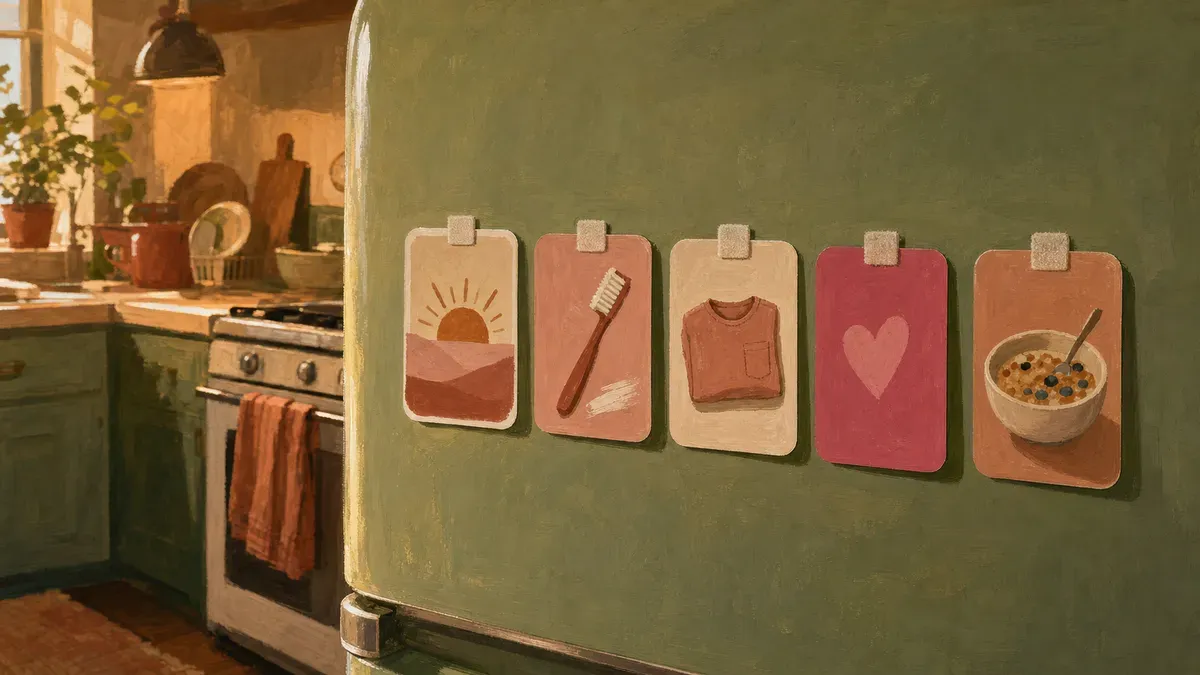
Visual Schedule Printable: 20 Picture Cards + Free PDF
Visual schedule printable with the 20 picture cards every toddler home needs. Free PDF to download, print, and start using tonight.
-
 Visual Schedules
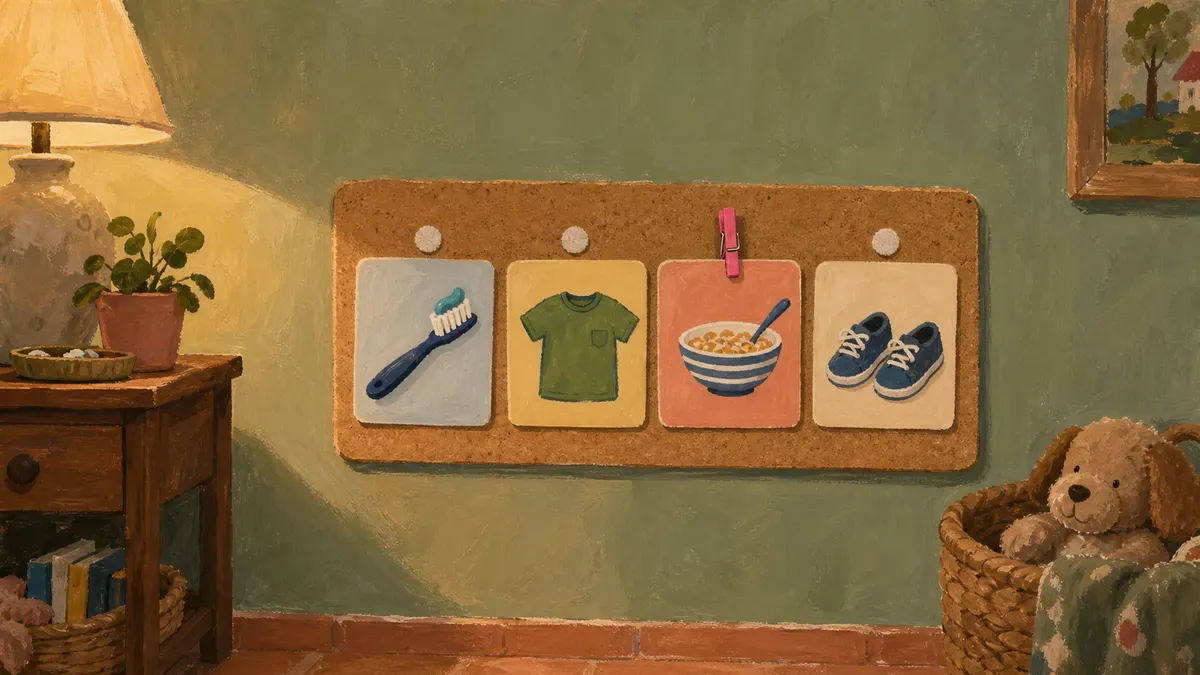
Visual Schedules: A Beginner's Guide for Parents
Most visual schedules fail before day three. Learn how they work and build your first board in 5 steps your child will actually follow. Start today.
-
 Visual Schedules
Toddler Schedule: Build One With Picture Cards
Your 2-year-old can't read a clock yet. Build a toddler schedule with picture cards in 5 steps that stop nap fights and meltdowns. Start today.
-
 Visual Schedules
Free Printable Daily Routine Chart Kids Will Follow
Grab a free printable daily routine chart your child will actually follow, plus picture cards and tips to make any routine stick. Download now.