Fine Motor Skills Activities for Preschoolers Before Writing

Some links here are affiliate links. If you buy through one, I may earn a small commission at no extra cost to you. As an Amazon Associate I earn from qualifying purchases. I only point to things I'd actually use with my own two.
Pre-k handwriting readiness starts in the hands, not on paper, and play that builds grip and finger strength gets kids there faster than any pencil drill. I’m Nora Hayes, a former preschool aide, and I’ve seen how skipping this foundation makes the pencil stage harder than it has to be. This guide covers the readiness signs to look for, fine motor skills activities for preschoolers that build a writing hand, and what to do when your kid just isn’t there yet.
Why Hand Skills Have to Come Before the Pencil
The pencil is the finish line, not the starting block. Before a child can hold one, their hands need to do a lot of groundwork first.
What Fine Motor Skills Actually Are
Fine motor skills are the small-muscle coordination that lets a hand grip, pinch, press, and maneuver with precision. According to research on early childhood fine motor development, occupational therapists define them as the ability to efficiently use the complex musculature of the hand with appropriate strength, dexterity, and coordination to grasp, manipulate, and accomplish functional tasks, covering both force gradation and the precision of each finger.
That covers a lot of ground. Buttoning a coat is fine motor. So is picking up a raisin, snipping with scissors, and eventually steering a pencil across a page. These are not separate skills that need separate lessons. They all draw on the same pool of hand strength and control. Occupational therapy targets this foundation early because children who miss these precursor skills tend to develop poor pencil grasp and illegible handwriting later.
The Hidden Link Between Play and Handwriting
The ordinary stuff your kid does every day already trains the exact muscles writing later demands. None of it looks like handwriting practice, which is part of why parents miss it.
Pinching playdough builds the finger strength needed for a tripod grasp. Pouring water between cups develops wrist stability. Squeezing a wet sponge trains force gradation, the ability to press hard or soft on command, and that’s exactly what controls a pencil’s line weight. These are pre-writing skills hiding inside play.
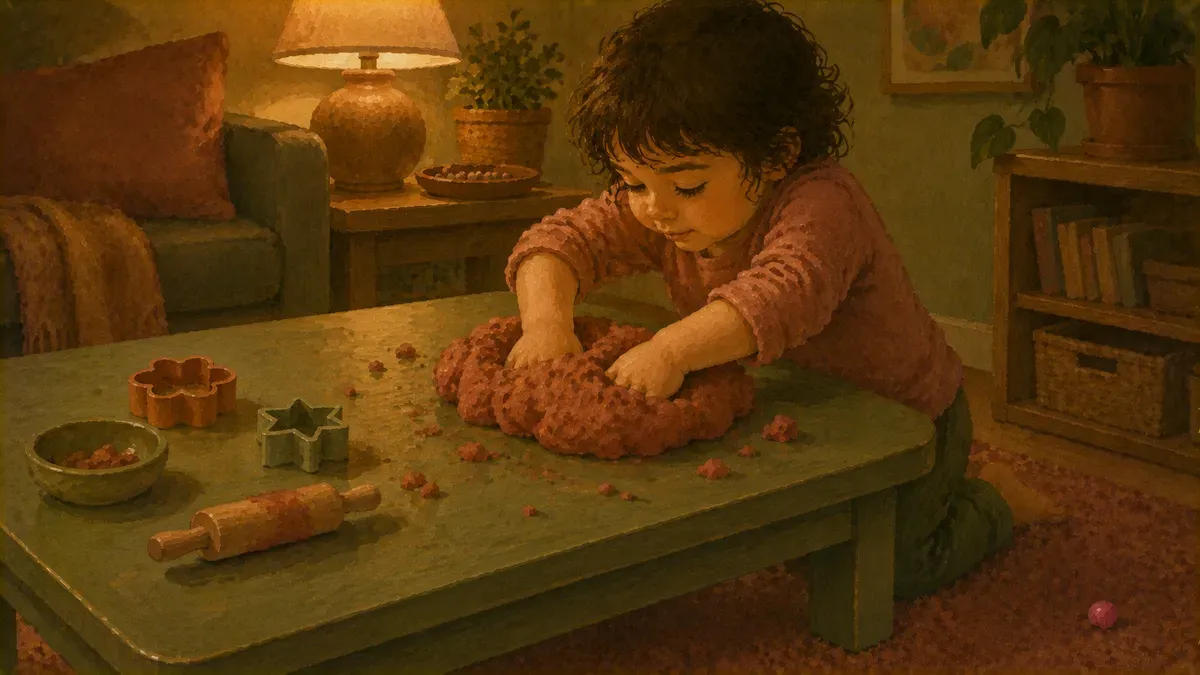
The hands don’t know the difference between play and practice. Tearing paper, threading beads, crumpling foil: all of it deposits into writing readiness. None of it requires a workbook or a pencil. For a deeper look at how these activities layer into actual mark-making, fine motor tracing handwriting scissor skills walks through the progression from hand strength to letter formation.
12 Signs Your Preschooler Is Ready to Write
Nobody hands you a checklist at the pediatrician, so here’s the one I keep in my head. They split into two groups: hand skills and coordination.
Grasp and Hand-Strength Signs to Watch For
Most kids don’t settle into a true dynamic tripod or quadrupod grip until age 5 or 6, so if your three-year-old is fisting the marker, that’s normal, not late.
Hand dominance is the other big sign: when a child reaches with the same hand, meal after meal, they’ve picked a lead hand and are ready to practice with it. That typically settles between 4½ and 6 years, per OT Marianne Gibbs.
- Wrist lifts slightly off the table during drawing instead of dragging flat
- Can rotate or shift a small object in one hand without switching to the other (in-hand manipulation)
Coordination and Attention Signs
A strong hand still needs a brain and eyes, and the activities below show whether both are ready. Crossing midline solidifies somewhere in the 3 to 4 year range.
- Eyes follow a crayon or finger smoothly across the page without drifting (visual tracking)
- Sits with feet flat and body still enough to stay focused on a task (trunk stability)
By ages 4 to 5, most kids copy a cross, square, triangle, and letter X. Attention rounds out the list: staying with a coloring page for a few minutes is the simplest test.
- Tripod or quadrupod grasp (fingertips, not fist)
- Hand dominance (same hand, consistently)
- Hand strength (crayon without tearing)
- Pincer grasp (picks up a Cheerio or small bead)
- Bilateral coordination (one hand steadies, other draws)
- Wrist stability (lifts off the table while drawing)
- In-hand manipulation (rotates object in one hand)
- Crossing midline (reaches across, no switching hands)
- Visual tracking (eyes follow without drifting)
- Trunk stability (still enough at the table to focus)
- Shape copying (cross, square, triangle, X)
- Sustained attention (stays with a page a few minutes)
Most of these appearing together is a strong green light. Missing a few isn’t a problem, and we’ll look at that next.
Fine Motor Activities That Build Writing Hands
If the signs are showing up, you don’t need worksheets, you need a stronger, smarter little hand. These three buckets of play build the grip, the two-handed teamwork, and the wrist control a pencil quietly demands.
- Playdough, putty, and pinch tools to build the muscles that hold a pencil
- Bead-threading and lacing to develop bilateral coordination and hand-eye teamwork
- Water and rice transfer work to build wrist control, plus copying shapes to connect hand to eye
Squeeze and Pinch Activities for Hand Strength
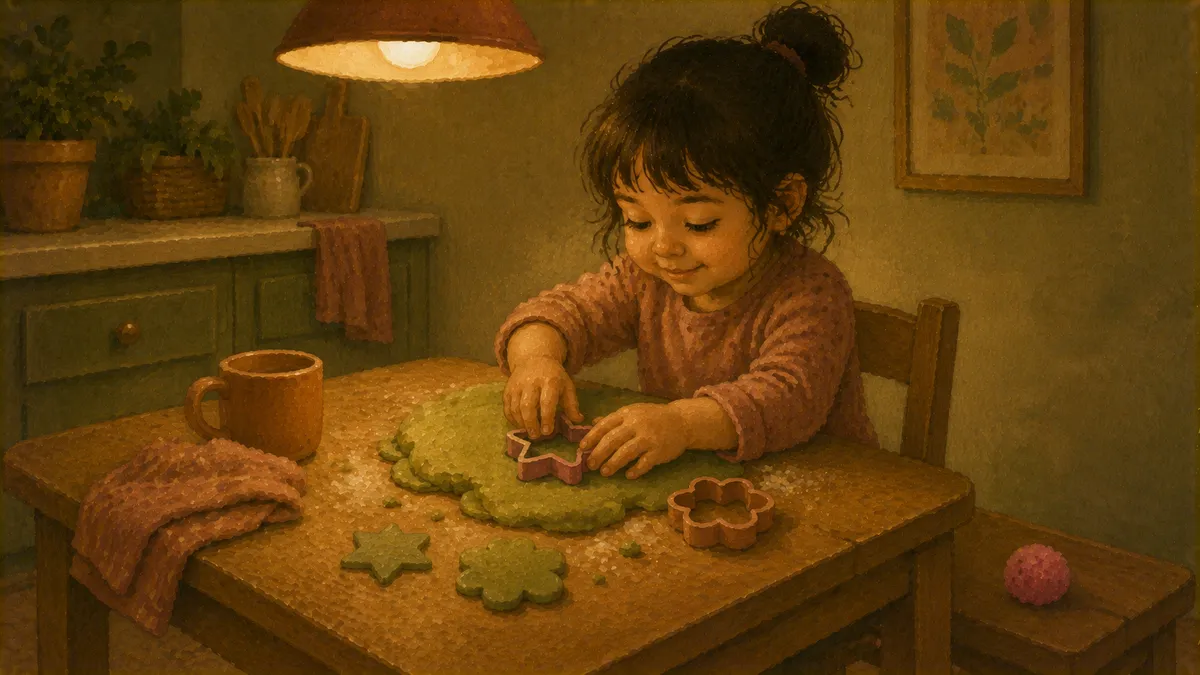
Start with the muscles that hold a pencil. A ball of playdough does more than keep a kid busy at the kitchen table:
- Rolling it into snakes
- Pinching off little pieces
- Flattening it with one finger at a time
Per the OT Toolbox, playdough strengthens the pincer grasp, tripod grasp, and hand strength all at once, which are direct prerequisites for pencil control. Homemade dough is free and does the job. Once a kid’s hands get strong enough that soft dough stops fighting back, stiff therapy putty gives them something to actually push against. It comes in four resistance levels, so you start soft and move up as the hand gets surer, and a 4.7-star rating across 11,000-plus reviews tells you how many OTs and parents keep a tub of it in the drawer.
Raise the stakes further with tools:
- Clothespins clipped onto the rim of a cup
- Plastic tweezers picking up pom poms
- An eyedropper squeezing colored water into an ice cube tray
Every one of these makes the thumb and first two fingers work as a team. That pinch is the pincer grasp, the same three-finger pattern a pencil rides on. You can rig it from the junk drawer, or skip the hunt with a tweezers-and-pom-pom set that boxes up the chunky tweezers, scoopers, and droppers together. It’s an Amazon’s Choice pick with more than 19,000 reviews behind it, which is a lot of transfer games run at a lot of kitchen tables.
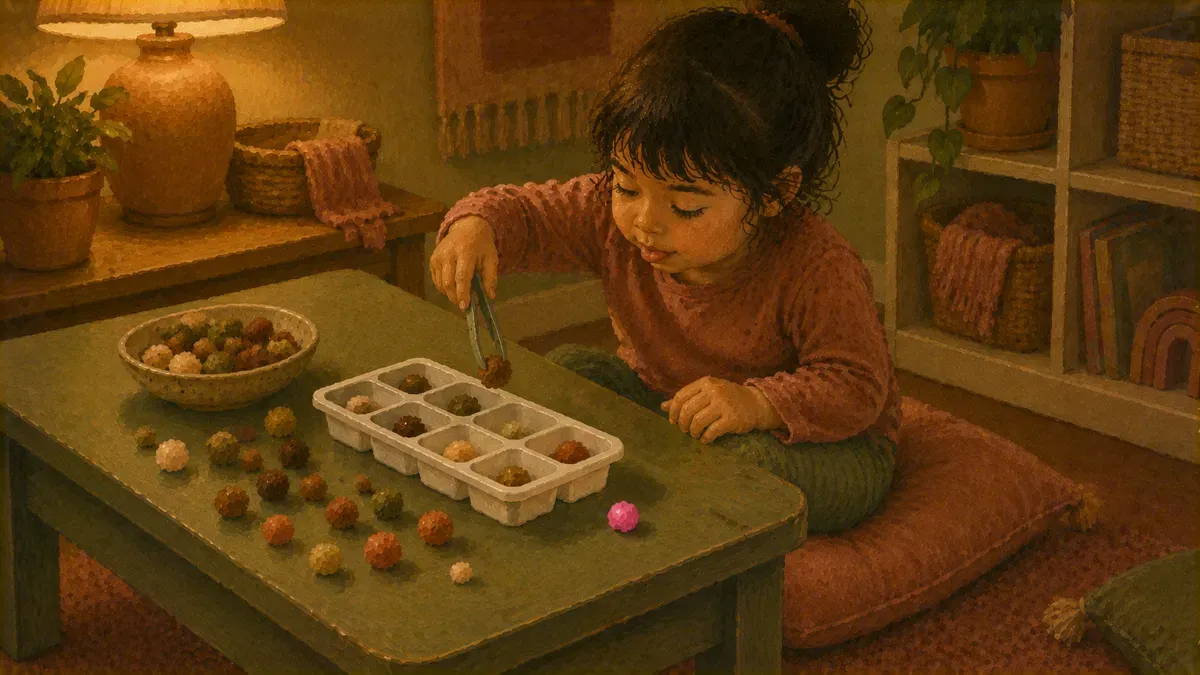
For more no-prep ideas like these, our roundup of fine motor skills games for preschoolers keeps a tired parent stocked.
Threading, Lacing, and Stringing Beads
Writing isn’t a one-hand job. Bilateral coordination (both hands working as a team) is exactly what bead-threading trains, and it shows up in every pencil stroke too. Stringing beads trains it beautifully. One hand pinches the bead, the other guides the string through the hole, and the two have to cooperate or the bead drops.
Lacing cards do the same thing with a shoelace and a punched-out shape. So does threading pasta onto a pipe cleaner when the beads go missing, which they will.
There’s a real reason this works. By age 4 to 5, kids can thread large beads on a thick string, and bead-threading shows up in validated fine motor assessments for preschoolers precisely because it measures bilateral coordination and hand-eye coordination together. Start with chunky wooden beads and a stiff string. A wooden lacing beads set saves you the rummaging: thirty fat beads in five shapes, plus two stiff laces a small hand can actually steer. Parents have left it 20,000-plus reviews at 4.8 stars, and the shapes double as a sorting game once the lacing gets old. Shrink the beads as the hands get surer.
Pouring, Scooping, and Pre-Writing Lines
Now bridge the play over to the paper.
Scooping rice from one bowl to another and pouring water between cups looks like a mess waiting to happen, and sometimes it is.
But that little lift of the wrist is exactly what a pencil needs.
Scooping and pouring build wrist control and reinforce the hand arches and intrinsic muscles behind a pencil grasp, and they nudge a child toward using one steady dominant hand.
From there, hand them a crayon and let them copy lines before letters.
- Vertical lines
- Horizontal lines
- Circles
- Crosses
This is the whole reason I lean on play first. If you want a deeper, themed set of fine motor activities for preschoolers, they slot right into a rainy afternoon. Stack a few of these on an ordinary week and the pencil stops feeling like a fight, because the hand is finally ready to hold it.
Adding Scissors and Tracing as Readiness Grows
Once the hand is strong from all that play, two tools earn a spot at the table: a pair of safety scissors and a tracing page. Both ask for more control than a sensory bin, and both quietly rehearse the exact grip a pencil will need.
Scissor Skills That Strengthen the Writing Hand
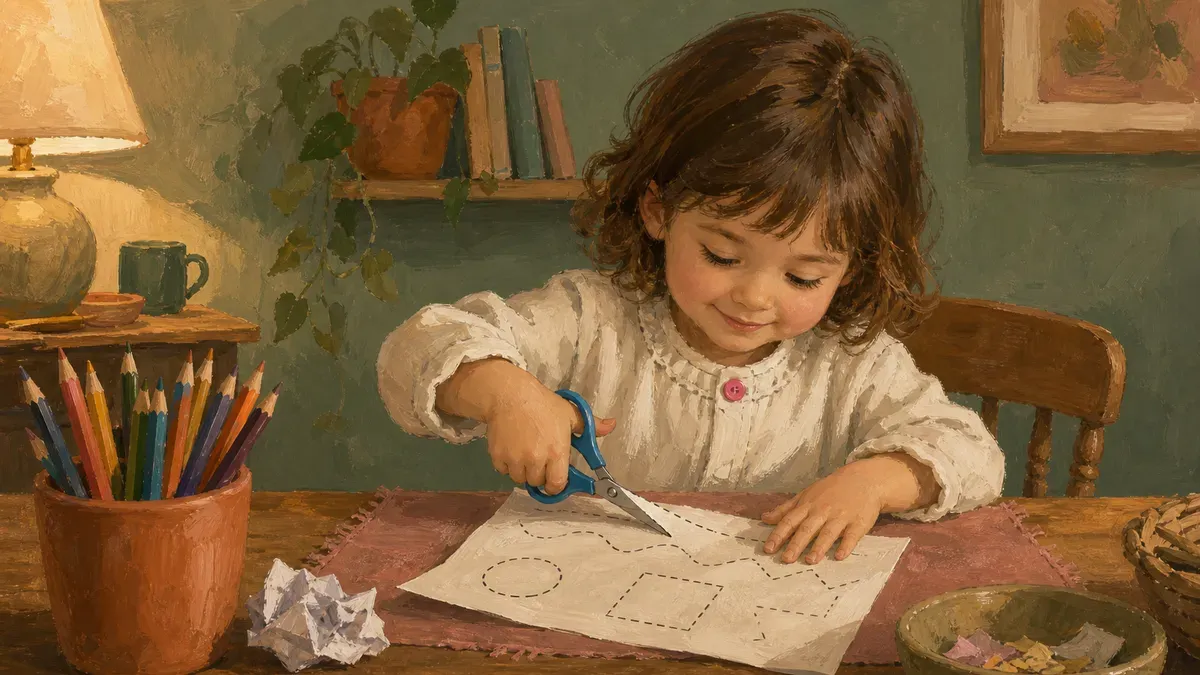
Cutting looks like a craft thing. It is actually one of the sneakiest grip workouts a preschooler can do. To open and close scissors, the thumb sits up on top while the fingers do the pull, the same open-thumb hand position a mature pencil hold relies on.
Cutting also brings in something the sensory bin didn’t: one hand snips while the other holds and rotates the paper, adding a rotation layer to the bilateral coordination the hand has already been practicing. That thumb-up grip and that two-handed teamwork tend to show up together somewhere around ages 3 to 3.5, per Growing Hands-On Kids’ scissor development checklist.
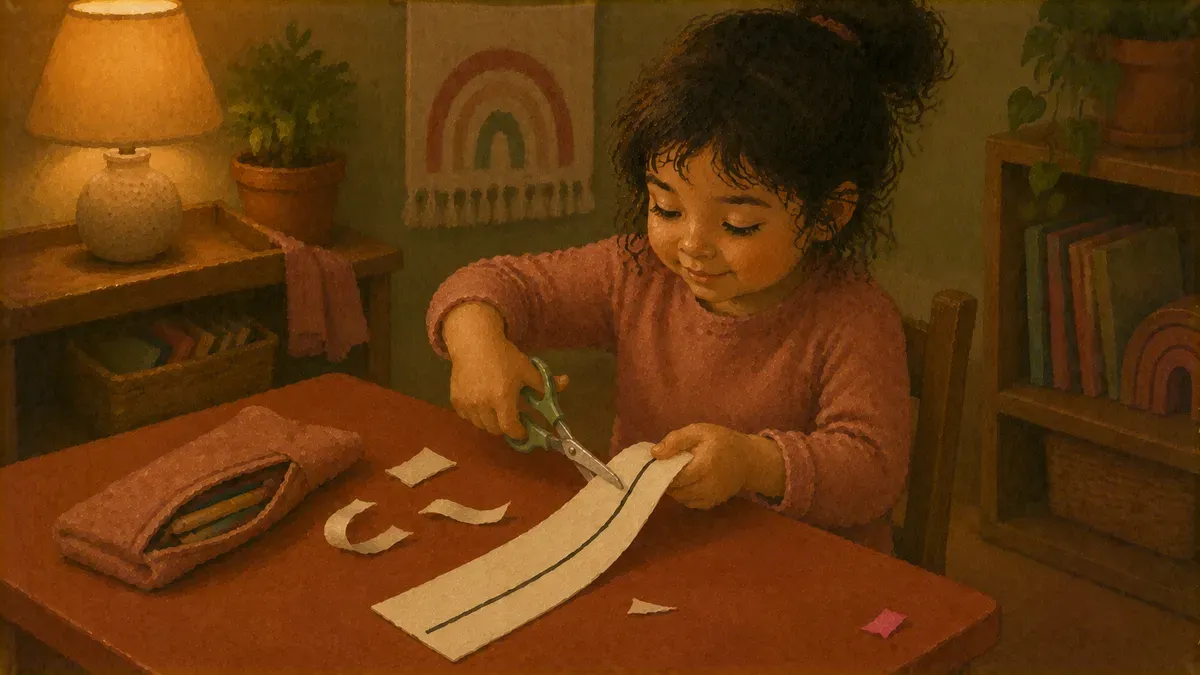
Start fat and simple. Snipping the edge of a thick paper strip, then cutting along a bold straight line, builds hand strength before you ever ask for a curve. If you want the milestones laid out by age, here is a longer look at when scissor skills usually click into place. The pair itself should be blunt-tip safety scissors sized for small hands, stainless steel so they cut paper instead of chewing it; the set I point parents to comes three to a pack in different colors, 4.8 stars and counting from 6,000-plus reviewers. Always supervised, and a flop is fine. Try again next week.
Tracing as the Step Toward Letters
Tracing is the bridge, not the destination. Once the hand has strength from cutting and all those free-play precision activities, tracing gives it a track to run on: lines, shapes, then the letters of a name.
The rails matter here. Free fine motor play is loose and open-ended, while a traced line tells the hand exactly where to go, which is why it sits between messy play and independent writing on the readiness ladder. It trains visual motor coordination, eyes guiding the hand, without the pressure of a blank page. Any of these do the job:
- Stencils
- Dot-to-dots
- Chunky tracing manipulatives
Here is the honest catch. A 2012 study by Karin James and Laura Engelhardt found that free-form printing of letters lit up the brain’s reading circuit, while tracing did not. Tracing builds the motor control. Free printing is what wires the letters to reading, so trace plenty as a warm-up with toddlers and threes, then let go of the rails and let them write it themselves.
What to Do When a Child Isn’t Ready Yet
Some kids hit four and the readiness signs just aren’t there, and that is fine. Here’s how to ease off the pencil without losing ground, plus the tweaks that help when a kid can’t sit still, melts down at certain textures, or writes with the left hand.
Back Up to Play, Don’t Push the Pencil
If the signs aren’t there, put the worksheets away. Pushing handwriting before the hand is ready tends to backfire, leaving sore hands, a cramped grip, and a kid who decides writing is the worst part of the day. Threes and young fours should still be elbow-deep in manipulatives, not tracing rows of letters.
So back up to the play that builds the foundation. That’s the same play covered in the earlier section: the work that builds hand strength and a real pincer grasp. Everyday tasks count just as much:
- Zipping a coat
- Peeling a sticker
- Breaking pretzels in half
No pencil required. It’s still pre-writing skills work.
And if your kid writes a backwards b or a flipped 3, breathe. Letter reversals stay developmentally normal up until around age seven, and most kids grow out of them on their own, per occupational therapy guidance for handwriting readiness. Writing readiness comes on its own clock. Our full fine motor and handwriting guide walks through the play that gets there.
Adapting for ADHD, Sensory, and Left-Handed Kids
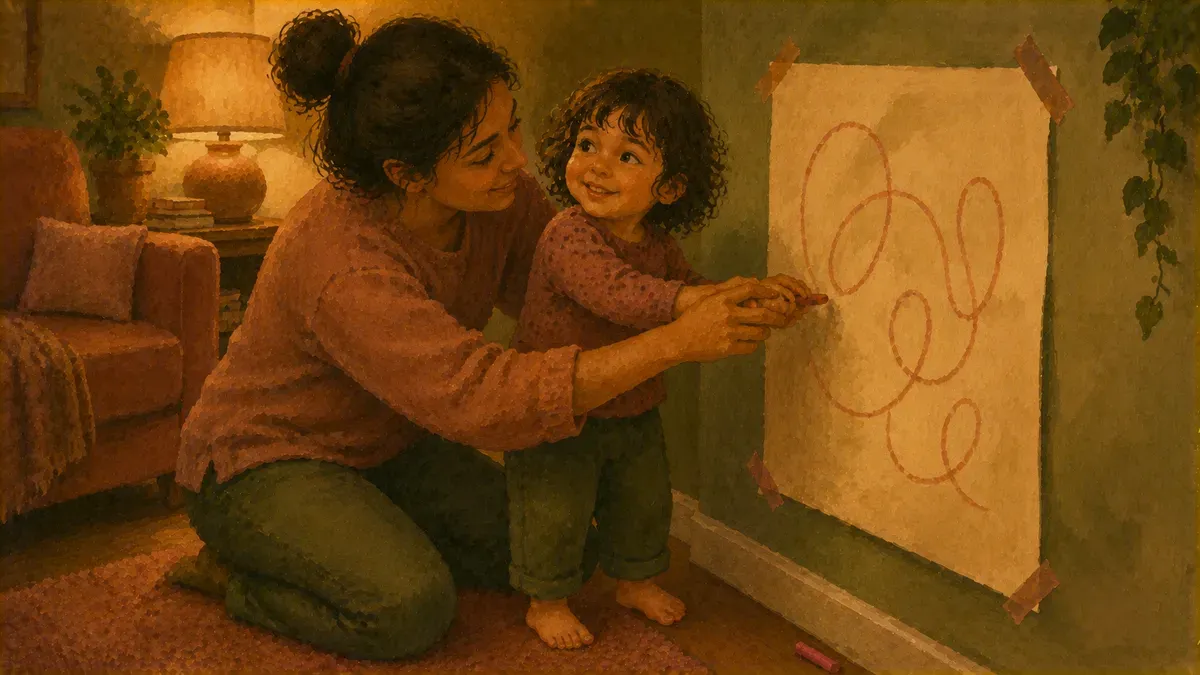
For the kid who physically cannot sit, stop fighting the chair. Move the paper to the wall or an easel. Vertical work wakes up the shoulder and wrist, and standing lets a wiggly body burn off steam while the hand still practices. Short bursts beat one long session every time.
For a sensory-sensitive or autistic kid, these swaps can make a real difference:
- Slick crayons or pencils: slide a chunky pencil grip onto whatever they’ve already got
- A weighted lap pad for a body that won’t settle
- A quiet corner before starting, not after the meltdown hits
- If a material triggers a shutdown, swap it. No letter is worth it.
Neither is a splurge. The grips come six to a pack in different colors, and kids have loud opinions about which one is theirs; the set holds 4.6 stars from 9,000-plus buyers. The lap pad is a two-pound weight sized for a toddler, nothing clinical, and its 4.7-star average across 4,500-plus reviews comes from parents whose kids finally sat still long enough to finish a page.
Lefties deserve their own setup. Tilt the paper roughly 30 to 45 degrees clockwise and slide it left of center so they can see their work and stop dragging a hand through wet marker. A good pencil grip toddlers can adopt early saves a world of correction later.
Most of this is patience plus the right tweak. But if a kid is still struggling with bilateral integration, hand-eye coordination, or everyday functional tasks well past their peers, ask an occupational therapist. Sensory processing and motor development aren’t always things you can play your way around alone, and an OT spots what a parent can’t.
Found this useful? Save it for the next rough afternoon.
Questions parents ask me about this
What fine motor skills activities prepare preschoolers for handwriting?
The best preparation happens through play, not pencil drills. Squeeze, pinch, thread, and pour activities all build the grip strength, pincer control, and bilateral coordination that handwriting actually requires. Scissors practice and tracing come last, bridging the hand to letters once the strength is already there from earlier play.
At what age should a preschooler start handwriting?
Most kids are ready to work on letter formation somewhere between four and six, but the hand leads the timeline, not the birthday. Grip strength, pincer control, and the ability to copy basic shapes like a cross, square, or triangle are better readiness signals than age alone. Pushing pencil work before those foundations exist tends to lock in a compensating grip pattern that takes much longer to undo than simply waiting.
How can I tell if my child has a weak pincer grasp?
Watch how your child picks up small objects. A child with a developing pincer grasp uses the whole hand or rakes items in rather than pinching with just the thumb and index finger. They may also struggle to peel stickers, squeeze a dropper, or pick up a single pom pom cleanly. Clothespins, bead stringing, and small transfer activities are the everyday way to build that strength.
Are tracing worksheets helpful or a waste of time for preschoolers?
Tracing works well once a child already has some hand control and can copy basic pre-writing lines. Used too early, before the hand is ready, it mostly produces frustration. Let fine motor play build the foundation first. Tracing lands better when the hand is already capable of staying on a guided track, and it leads more naturally into free printing.
How many minutes a day should a preschooler practice fine motor skills?
Short and frequent beats long and occasional. Most preschoolers do best with two or three brief play-based sessions scattered through the day rather than one dedicated sitting. Five to ten minutes of clothespins, playdough, or bead stringing counts as real practice. Kids with shorter attention spans often make the most progress in quick bursts with movement breaks in between.
Is it normal for a preschooler to reverse letters when writing?
Yes. Letter reversals are developmentally normal through age seven. A four- or five-year-old writing a backwards B or flipping a lowercase d is not a red flag. The brain is still building the visual processing that tells mirrored shapes apart. If reversals persist consistently past seven, that is worth mentioning to a teacher or occupational therapist, but in the preschool years it is genuinely expected.
What everyday household items build fine motor skills?
Your kitchen and junk drawer are already a fine motor gym. Dry rice or beans for scooping and pouring, a muffin tin as a sorting target, clothespins, a turkey baster or eyedropper, sponges to squeeze, and a colander with dry pasta for threading all work. You do not need specialty toys. The pinching, pouring, squeezing, and transferring are what build the hand, not the material itself.
Written by
Nora Hayes
Mom of two and a former preschool aide. I share the screen-free sensory play and calm-down ideas I test at my own kitchen table, plus what the moms in my little meet-up swear by. A parent passing on what works, not a doctor or a therapist.
More about NoraKeep going
All Fine Motor-
 Fine Motor
Cutting Worksheets: 15 Activities Beyond Straight Lines
Bored of straight lines? These cutting worksheets and 15 activities build scissor skills fast. Grab the free printables and start today.
-
 Fine Motor
Activities to Build Fine Motor Skills With Pom Poms
The hand strength behind neat handwriting starts with play. Try 20 pom pom activities to build fine motor skills your kid will actually beg to do.
-
 Fine Motor
Fine Motor Skills Activities for 3-4 Year Olds
Worried your 4-year-old still scribbles? These fine motor skills activities for 3-4 year olds bridge scribbles to real letters. Start today.
-
 Fine Motor
Scissor Practice Worksheets: 10 Steps to Cutting
Most kids snip before they cut shapes. Use these scissor practice worksheets and 10 activities to build the skill step by step. Start today.