Fine Motor Skills Activities for 3-4 Year Olds That Build Writing

Some links here are affiliate links. If you buy through one, I may earn a small commission at no extra cost to you. As an Amazon Associate I earn from qualifying purchases. I only point to things I'd actually use with my own two.
Fine motor skills activities for 3-4 year olds build the pinch and grip strength kids need to hold a pencil. Those muscles grow through play, through pinching, squeezing, and tracing, and skipping that stage shows up as a shaky grip later. I’m Nora Hayes, a former preschool aide and mom to two kids, and below I cover what 3- and 4-year-old hands can do, the activities that build strength, and how tracing bridges scribbles to real letters.
Why These Skills Matter Before a Pencil Ever Touches Paper
Most preschoolers can hold a crayon long before they can control one. Here’s why that gap exists, and what actually closes it.
What Hand Strength Has to Do With Handwriting
The fine motor muscles your 4-year-old builds squeezing playdough or threading beads are the exact ones they’ll recruit to hold a pencil. Specifically, the lumbricals (small intrinsic hand muscles in the palm) handle the pencil grip and the upward motion that forms letters. Teach Handwriting notes that these small intrinsic muscles develop slower than the larger muscle groups in the arm and shoulder, which is why hand strengthening can’t be skipped.
Finger dexterity and grip strength aren’t preparation for writing. They ARE writing, just without paper. Every time a child tears, pinches, twists, or snips, they’re building motor control without ever touching a letter. The play is the training.

The Difference Between Big-Body and Small-Hand Skills
Before the fine motor work can land, the bigger picture has to be stable. A child still figuring out how to sit upright without bracing is asking their hands to do precision work while their core is busy managing balance. That’s a real conflict.
Occupational therapy is built on the principle that proximal stability leads to distal mobility, meaning core and shoulder stability must be in place before fingers can manage graded control and object manipulation. A wobbly trunk creates resistance that no amount of hand practice can work around.
Understanding the real order fine motor activities develop in helps you see why rushing to letters skips steps that actually matter.
What 3 and 4 Year Olds Can Actually Do With Their Hands
Knowing why foundations matter is step one. Knowing what’s actually realistic for your kid’s age is what lets you stop second-guessing the activity.
Milestones to Expect at Age 3
A 3-year-old’s hands are capable of more than most parents expect, but in a very specific way.
- Pincer grasp: thumb and index finger work together cleanly now, no fumbling.
- Scissors: most kids this age land within half an inch of a straight cut on a 6-inch line, per scissor skill development research.
- Pre-writing shapes: drawing a circle when shown how is a CDC milestone at age 3.
The CDC also recommends playdough squishing and pinching to build the hand and finger strength behind writing, buttoning, and cutting. Finger dexterity is real, but the whole arm is still doing a lot of the work. Wobbly lines are exactly right for this age.
How Things Shift by Age 4
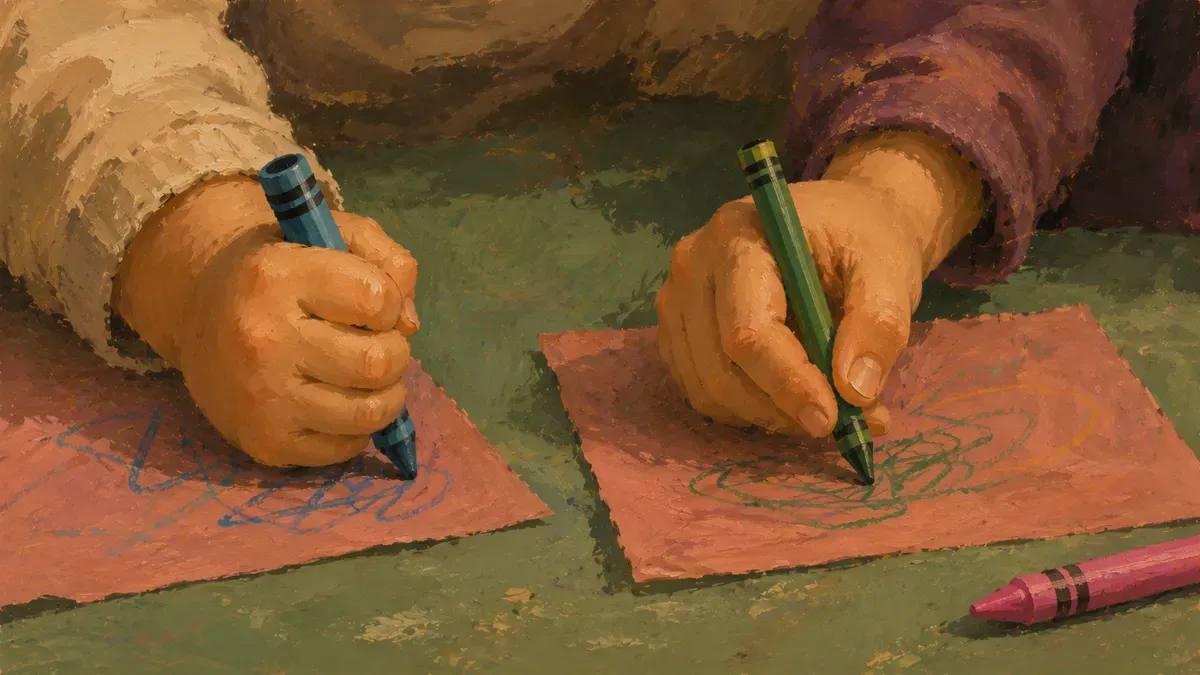
Four is where things start to click. The CDC’s developmental milestones for 4-year-olds note that kids this age hold a crayon between fingers and thumb rather than in a fist, which is the moment real pencil control becomes possible.
What’s happening underneath that shift is pencil grasp maturation.
- Static tripod (ages 3.5-4): writing tool rests on the middle finger, thumb and index pinch it steady, per Growing Hands on Kids.
- Dynamic tripod (ages 4-7): the fingers move the pencil rather than the whole hand.
For fine motor activities suited to kids ages 3 and 4, this grasp shift changes what the activity is training. Motor control becomes precise enough to trace shapes, and eventually letters. Learning more about how to support pencil grip toddlers develop naturally helps you choose the right tools at each stage.
Hands-On Activities That Build the Skills
The grasp shift only sticks if the muscles behind it get worked, and you can do almost all of it with stuff already in your kitchen. Three buckets cover most of what a 3 or 4 year old needs: squeeze-and-pinch play, everyday household tasks, and a little guided cutting.
- Squeeze, pinch, and pull play (play dough, tweezers, clothespins)
- Everyday household tasks (zipping, button sorting, threading pasta)
- Cutting and scissor play (guided snipping on straight and curved lines)
Squeeze, Pinch, and Pull Play
Start here, because this is where grip strength actually gets built. Play dough is the workhorse: rolling snakes, squishing pancakes, and pinching off little balls all hit the arches of the hand. Occupational therapists lean on it for exactly this reason, the rolling and pinching deliver proprioceptive “heavy work” that targets the same muscles a tripod pencil grip uses, as the OT Toolbox explains. You can boil up a batch on the stove, or grab a basic play dough set and skip the cornstarch mess. It’s an Amazon’s Choice pick sitting at 4.7 stars across 3,200+ reviews. If you want more setups, my fine motor activities for preschoolers round-up has a pile of them.
Pom pom transfers with tweezers are the next easy win. Hand a kid a set of chunky toy tweezers and a tray, and the pinch-and-release forces a real pincer grasp every single time. The pair I keep in the busy-bag drawer has 19,000+ reviewers behind it at 4.6 stars, another Amazon’s Choice. Clothespin clipping does the same job, the open-close squeeze strengthens the exact fingers a pencil leans on.
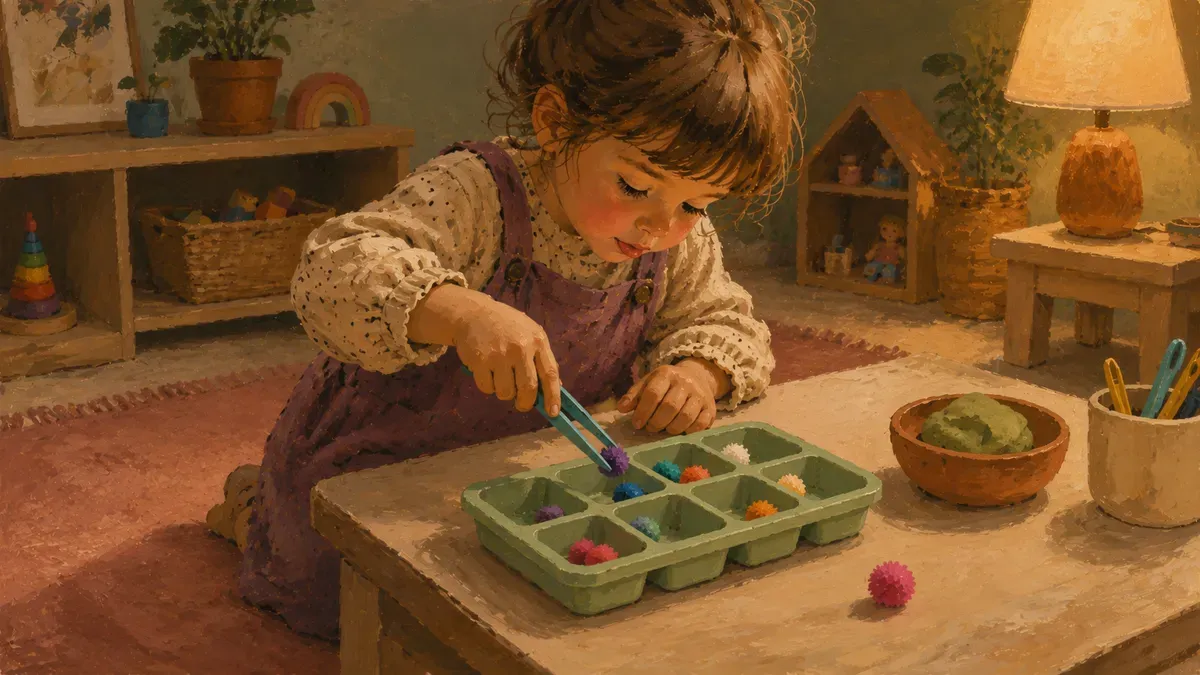
This is manipulative play and sensory exploration rolled into one, and most of it costs nothing.
Everyday Household Activities
You do not need a craft bin for any of this. Half the best object manipulation practice is already sitting in your junk drawer.
Zipping and unzipping a sandwich bag works the same pincer pull as a coat zipper, which is why it doubles as a self-help skill. Button sorting into muffin tins builds finger dexterity while a kid is busy deciding which cup the blue one goes in. Threading dry penne onto a shoelace is the sneaky favorite, it demands a steady pinch and a patient hand at the same time.
The point of leaning on household items is simple: free, repeatable, no setup. Manipulative play does not care whether the beads cost twelve dollars or came off your pasta shelf.
Cutting and Scissor Play
Scissors are their own kind of strength training. The open-close motion is graded control in its purest form, and it builds the hand muscles that later steady a pencil.
Start with guided snipping on short straight lines, thick marker tracks the kid can chase. Any blunt-tip training scissors sized for small hands will do, no need to overthink the brand, and the 3-pack I grab sits at 4.4 stars across 13,000+ reviews. By age 4, that control sharpens fast: a child can cut a 6-inch straight line within a quarter inch of it, up from a half inch at age 3, per Growing Hands-On Kids. Curved lines come next.
That motor control is the same refinement that carries over to the page. Clean snipping and pencil control draw on the same graded hand movement.
How Tracing Bridges Scribbles to Real Letters
Cutting a clean line and tracing a letter pull from the same well. Here’s the progression.
Start With Lines and Shapes, Not Letters
Before a child touches a letter, they need the strokes that build it. Research on pre-writing skill development identifies nine strokes learned in order: vertical line, horizontal line, circle, cross, square, diagonal right, diagonal left, X, and triangle. Every letter is built from some combination of those nine. Skip the sequence and a child is trying to write in a language they’ve never heard.
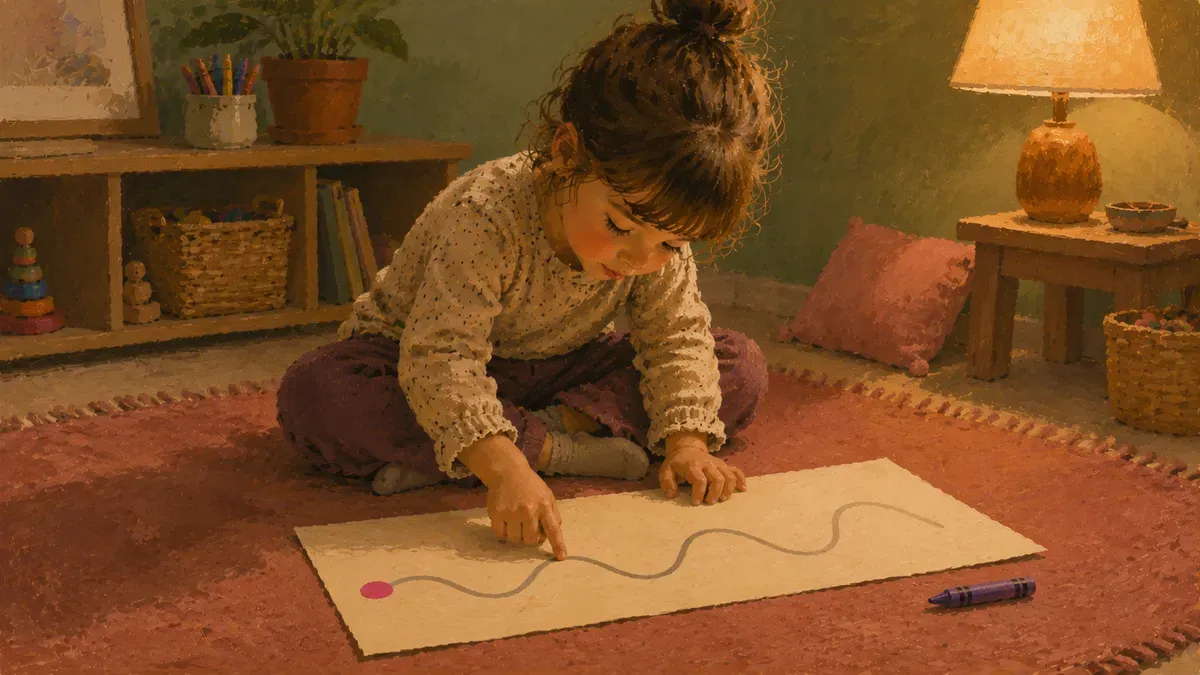
Fine motor activities for 3 and 4 year olds land better when tracing starts simple: a straight line, a gentle wave, a big open circle. Finger tracing comes first, crayon second. The finger gives honest graded control feedback without the added demand of holding a tool. Once the path is familiar, the pencil is the next layer. Our pre-writing line and visual motor activities follow this sequence if you want a ready-made order.
When a Child Is Ready to Trace Their Name
Four signs tend to arrive together. The grip has shifted toward a tripod. The child can copy a circle and a cross independently, not just trace over them. They stay with a pencil task for two or three minutes. And they ask about their name, point to it, want it on their drawing.
When those four land, the name is the right first word because it’s theirs. Lurie Children’s Hospital places letter formation as a milestone across ages 2.5-5, with no single target birthday. A child hitting those markers at 4 is right on track.
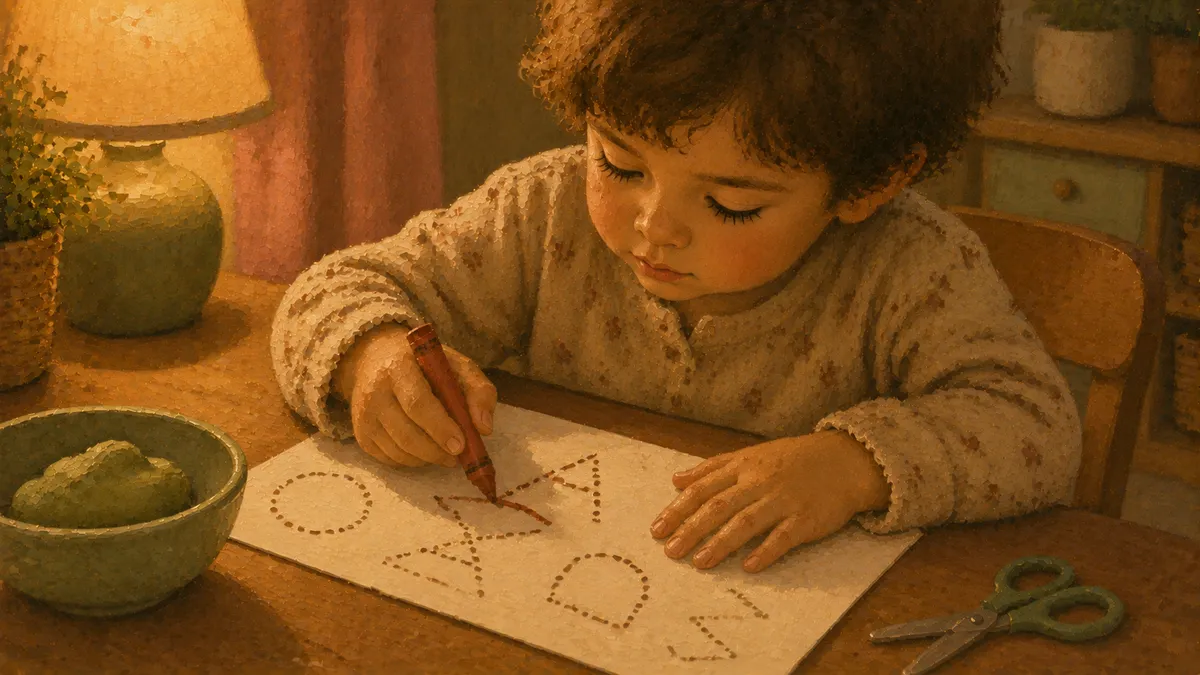
Start with the name in large dotted letters on unlined paper. Large letters give the hand room to move without cramping, and motor control builds faster without the added demand of tiny strokes. A triangular pencil helps here too, the three flat sides drop the fingers into a tripod without you fixing the grip every two minutes. It’s the highest-rated tool on this whole list, 4.8 stars from 24,000+ reviewers. Our fine motor tracing handwriting scissor skills guide has templates sized for little hands.
Tailoring Activities for Lefties, Sensory Needs, and Reluctant Kids
Most tracing setups are built for a right-handed kid at a tidy table. A few small changes make the same activities work for everyone else.
Small Tweaks for Left-Handed Kids
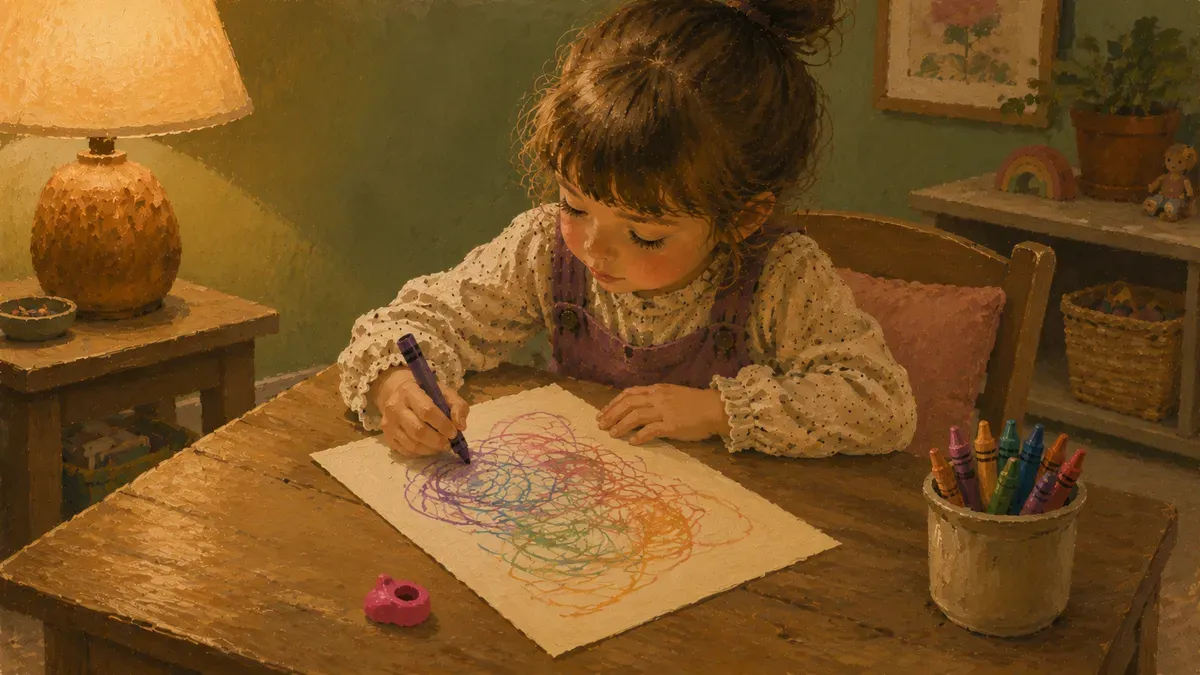
The biggest problem for a left-handed preschooler is smearing. Paper position fixes most of it. Specialists in handwriting recommend angling the paper 30-45 degrees clockwise and placing the lower right corner to the left of the child’s midline. That keeps the hand, wrist, and elbow below the pencil tip so they can see what they’ve written.
Seating matters too. A left-handed child sitting to the right of a right-handed child at a shared table will constantly bump elbows. Give them the left seat.
For pencil grasp and graded control, the same large-letter practice applies. Bigger letters give the hand room to move and help motor control develop without crowding. Skill refinement is the same work for age-appropriate activities, just set up differently.
Sensory-Friendly and Low-Pressure Options
Some kids find crayon-on-paper uncomfortable before their hand strength is ready. Start somewhere else.
- Finger-trace letters in a tray of sand or rice
- Spread shaving cream on a tray: as Growing Hands on Kids notes, tracing in foam gives tactile reinforcement with zero pencil pressure
- Trace over raised-line tracing cards with a fingertip before any tool comes out, the ridge gives the finger a track to follow, and 170+ reviewers rate the set I use 4.8 stars (Amazon’s Choice)
- Try a paintbrush dipped in water on dark construction paper, where the letter appears and fades
These lower the sensory demand enough that a reluctant kid will engage. For simpler starting points, the activities in tracing 3 year olds are a good step back when the four-year-old version feels like too much.
If a child avoids all mark-making, struggles with pencil grasp past age five, or shows real distress, it’s worth talking to an occupational therapist. Our complete guide to fine motor and handwriting readiness covers the signs that early intervention is a smart next step.
Found this useful? Save it for the next rough afternoon.
Questions parents ask me about this
How long should a fine motor activity last for a 3-4 year old?
Five to ten minutes is plenty. Most preschoolers will push past that on their own if they're engaged, and that's fine, but don't expect or require it. The moment they signal done, let them stop. Short sessions done consistently beat long sessions that end in frustration.
Are tracing worksheets worth it, or are hands-on activities better?
Hands-on activities build the muscle strength and coordination that make tracing possible in the first place. Worksheets have a place once those foundations are there, but dropping a worksheet on a kid who hasn't yet developed hand arch strength or a working grip mostly produces scribbles and resistance. Think of play dough, tweezers, and snipping as the prep work, and tracing as the payoff.
What pencil grip is normal for a 4-year-old?
A static tripod grip (where the fingers hold the pencil but don't move independently) is typical around age three and a half to four. The more refined dynamic tripod, where the fingers do the fine movement, develops between four and seven. If your four-year-old is holding the pencil with their whole fist, that's worth watching, but a static grip at this age is completely normal.
Should my child write letters or trace lines first?
Lines first, always. Trace lines and shapes until they're smooth, then move to letters.
How do I keep my preschooler from pressing too hard with the pencil?
Pressing hard is usually a sign they're compensating for a grip that isn't quite stable yet. Switching to a shorter crayon or a triangular pencil naturally limits the grip and tends to reduce pressure. You can also try having them practice on a vertical surface (a wall-mounted paper or a window), because the angle makes pressing hard much more difficult.
When should I worry about my 4-year-old's fine motor skills?
Most variation at this age is normal, so the bar for concern is specific: avoidance of all mark-making, real distress around hand tasks, or difficulty that isn't moving at all by age five. If your child can't yet snip with scissors or draw a rough circle, that's worth noting but not panicking over. Persistent struggle or regression is when an occupational therapist is the right call.
Written by
Nora Hayes
Mom of two and a former preschool aide. I share the screen-free sensory play and calm-down ideas I test at my own kitchen table, plus what the moms in my little meet-up swear by. A parent passing on what works, not a doctor or a therapist.
More about NoraKeep going
All Fine Motor-
 Fine Motor
Cutting Worksheets: 15 Activities Beyond Straight Lines
Bored of straight lines? These cutting worksheets and 15 activities build scissor skills fast. Grab the free printables and start today.
-
 Fine Motor
Activities to Build Fine Motor Skills With Pom Poms
The hand strength behind neat handwriting starts with play. Try 20 pom pom activities to build fine motor skills your kid will actually beg to do.
-
 Fine Motor
Fine Motor Skills Activities for Preschoolers
Ready to write? Spot the 12 readiness signs and the fine motor skills activities for preschoolers that build the hand. Start now.
-
 Fine Motor
Scissor Practice Worksheets: 10 Steps to Cutting
Most kids snip before they cut shapes. Use these scissor practice worksheets and 10 activities to build the skill step by step. Start today.