Potty Training Prizes: The Dollar Store Prize Box

Some links here are affiliate links. If you buy through one, I may earn a small commission at no extra cost to you. As an Amazon Associate I earn from qualifying purchases. I only point to things I'd actually use with my own two.
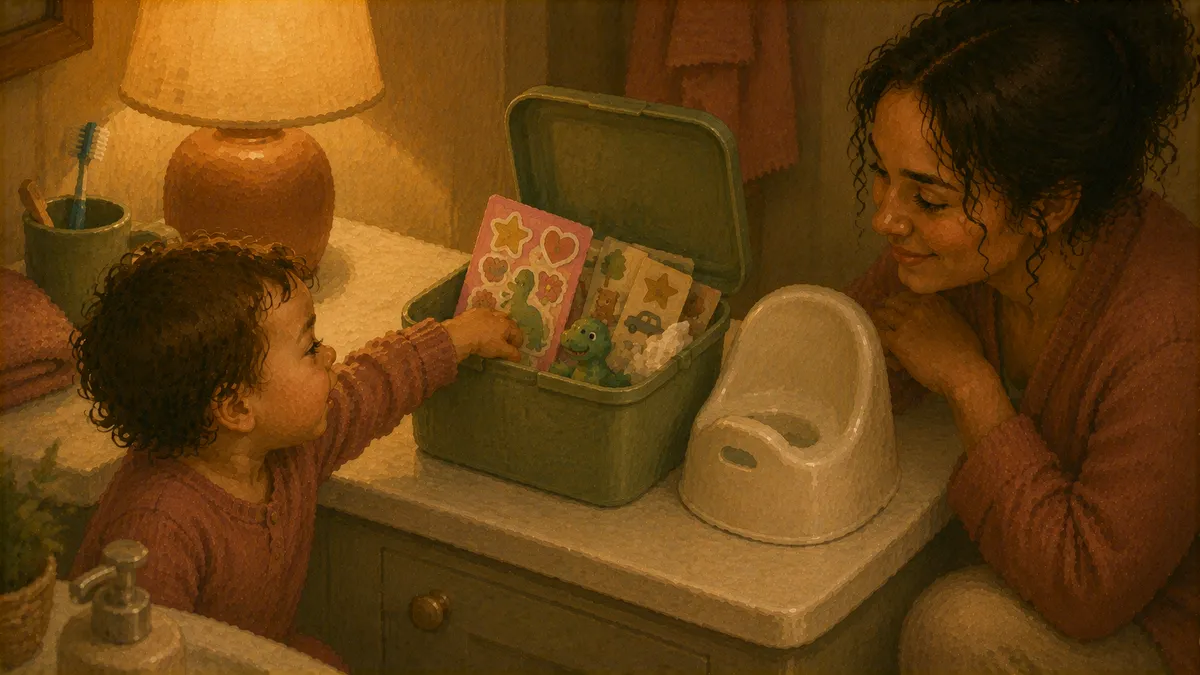
A potty training prize box is a shoebox of tiny dollar-store treasures your kid digs into the second they actually use the toilet, and it beats handing out M&Ms because the thrill of a new sticker or bouncy ball lasts longer than a sugar hit (and doesn’t leave you bribing with candy at every transition).
I’m Nora Hayes, a former preschool aide who potty trained two kids of my own, and I’ve watched a dollar-store box of trinkets accomplish what a bag of chocolate never could: get a stubborn three-year-old genuinely excited to run for the bathroom. This guide walks you through building one cheaply, stocking it with prizes kids actually want, matching rewards to pee, poop, and the trickier holdouts, and knowing when to quietly retire the whole thing.
What a Potty Prize Box Is and Why It Beats Sweets
Small Toys Over Candy and Snacks
Reach for the candy jar every time a kid pees, and you teach two lessons at once: the toilet worked, and sweets are the prize worth chasing. The first is the goal. The second follows them around for years.
- Deprivation mindset: when treats only appear as payment, kids learn to grab and graze for them later.
The American Academy of Pediatrics names using food as a reward as one of three parenting practices tied to excess weight gain in toddlers, and a 2020 cohort study in Appetite linked food-as-reward at age 4 to more emotional overeating by age 9.
A small toy sidesteps all of it. The kid still gets an instant, hold-it-in-your-hand win, the part that makes potty training click. Letting them pick the prize themselves adds a little child autonomy on top. Non-food rewards land the same dopamine hit without teaching your three-year-old that sugar is the goal.
How the Prize Box Builds Real Motivation
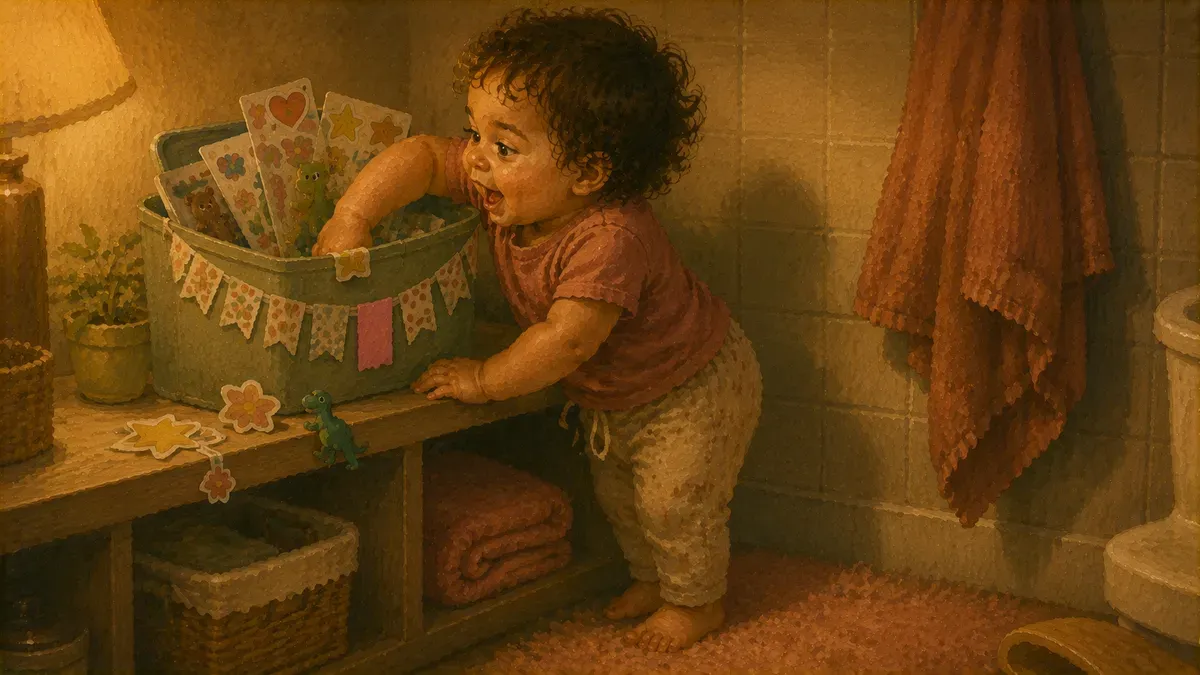
The worry I hear most: won’t they only go for the prize? Fair. But used for one defined milestone, the box isn’t a permanent crutch. It’s a bridge.
Each time they pick a prize, they link “I went potty” with “good things happen,” and that loop is exactly the positive reinforcement the AAFP’s review of toilet training evidence credits with raising the odds of success.
What you’re really building underneath is internal motivation. The dry-undies pride, the “I did it myself” grin, the new confidence in their own body. After a couple of weeks, most kids chase that feeling more than the dollar-store trinket. The box did its job. It got them started, then quietly handed over the wheel.
Building the Box From the Dollar Store
You almost certainly own the hardest piece already. First, the container has to survive a three-year-old who will dig through it forty times a day.
Choosing a Container That Won’t Fall Apart
Skip the pretty gift box. A toddler digging in five times a day will crush flimsy cardboard by day three.
Go sturdy and lidded instead. A shoebox-sized bin with a snug lid is the sweet spot: deep enough to hide the good prizes near the bottom, tough enough to take sticky hands and daily digging. If you’d rather skip the hunt, this lidded bin is a foldable fabric cube that’s earned Amazon’s Choice with a 4.6-star average across 1,800-plus reviews, and it’s sized about right to stash the good stuff at the bottom where little hands can’t graze it.
Most of what you need is one dollar store trip:
- A small lidded bin or a hard plastic shoebox
- Stickers, washi tape, or foam letters to dress it up
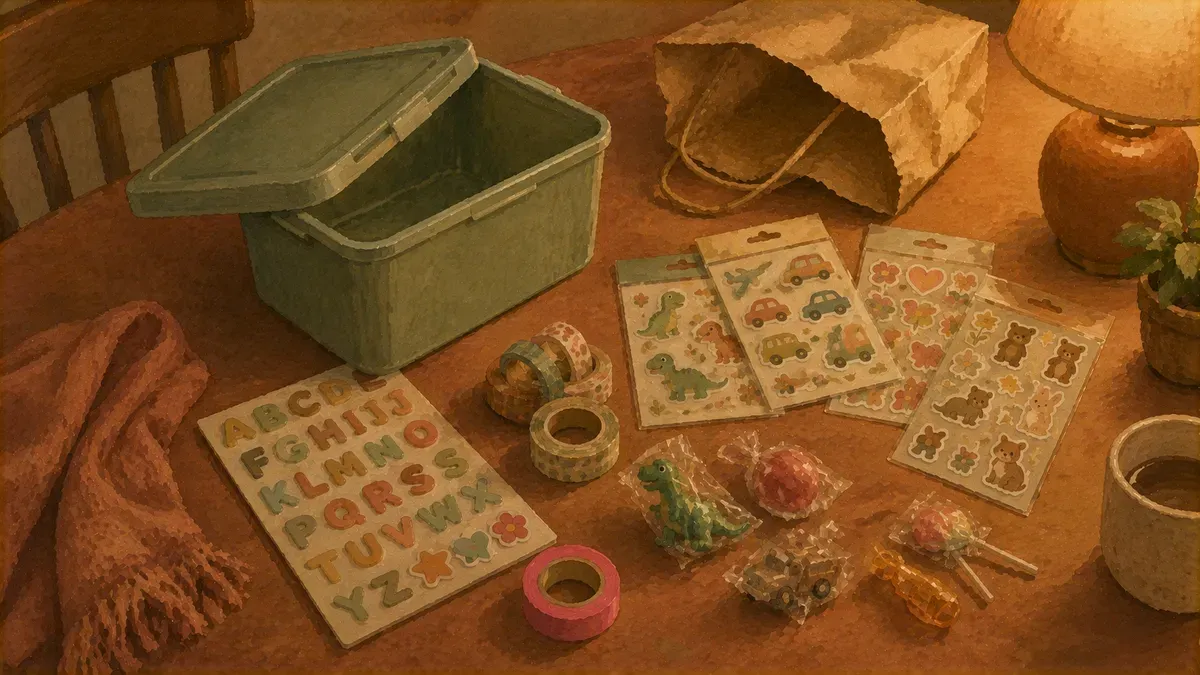
Let your kid decorate it with you. Ten minutes of stickers and their name on the lid turns a plain box into their box, and that buy-in matters more than the prizes inside.
How Many Prizes to Stock and When to Refill
Enough that the box feels full, few enough that one dollar store trip covers it.
Keep most of it out of sight. A child who can flip the lid whenever they want will graze the box like a snack drawer, and a pawed-through prize stops being a reward. Stock a handful on top, hide the better stuff underneath, and bring the box out only after a potty win.
A child-reward study in Appetite found kids’ wanting of a reward drops faster than their liking once the novelty wears off, which is exactly what prize fatigue looks like at home. A quick swap every few days keeps the box exciting straight through the milestone you’re working toward.
Cheap Prize Ideas Kids Actually Want
A refilled box only works if the kids actually want what’s inside, and a trinket they shrug at is just clutter you paid a dollar for. Below, the prizes that earn a genuine “ooh” without breaking ten bucks.
Toys, Stickers, and Character Favorites
Walk a dollar store aisle like you’re four years old.
Here’s what disappears fastest from the box at my house and the group’s:
- Stickers. Sheets of them, peeled and stuck on hands, the toilet lid, you. Cheapest reliable thrill there is, and a bulk sticker pack runs 64 sheets deep, past 1,800 stickers, with more than 10,000 parents rating it 4.6 stars, so one buy outlasts the whole training stretch.
- Mini figurines and small toys. A single dinosaur, a tiny car, one rubber duck. They want the one, not the set, which is why a 160-piece assortment earns its keep, handed out one at a time and rated 4.3 by over 1,100 buyers (save it for the over-three crowd, those pieces are small).
- Bubbles. A travel-size bottle blown right there in the bathroom turns a pee into a party. Grab a twelve-pack of mini bottles, which 2,100-plus reviews keep at 4.4 stars, and you’re never caught empty mid-celebration.
- Temporary tattoos. Two minutes of effort, a whole day of showing it off.
- Character trinkets. This is where you cheat. A Paw Patrol pencil topper or a princess ring beats a generic toy every time, and that ten-pack is the highest-rated thing on this list, 4.8 stars from 3,600-plus reviews.
A Paw Patrol potty training fan will run for a Chase sticker.
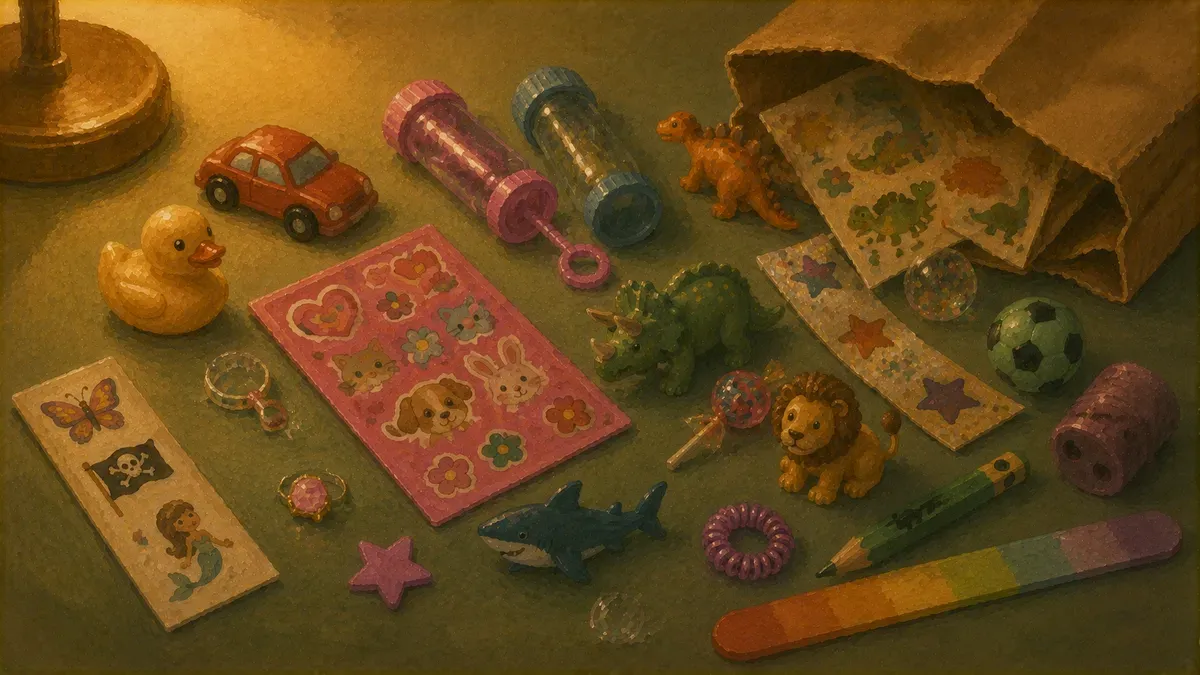
Keep small parts away from anyone under three, and check current toy safety guidance on small parts and choking hazards before you stock the bin.
Experience Prizes and Choking-Hazard Safety
Not every prize fits in a hand. Some of the best cost nothing.
An experience prize is a treat your kid gets to do, not hold:
- One extra book at story time tonight
- A two-song kitchen dance party
- They pick the playground after lunch
- Ten minutes of your full attention, phone down
For a sensory-seeker who’s been holding it together all day, “we dance” beats any trinket.
If your child is under three, anything in that box has to clear the choking-hazard rule. Federal law, 16 C.F.R. Part 1501, bans small parts at that age, defined as anything fitting inside a cylinder 1.25 inches across and 2.25 inches deep. If a piece slips through a toilet-paper tube, it’s out.
Matching Prizes to Pee, Poop, and Tricky Kids
Not every potty win is the same size, so not every prize should be either. A pee in the potty and a hard-won poop are worlds apart for a kid, and the kid who fights you on the whole thing needs a different play altogether. Below I’ll sort prizes by the size of the win, then by the kind of kid you’re working with.
Bigger Prizes for Poop Wins
Peeing in the toilet clicks for most kids pretty fast. Pooping is the wall a lot of them hit, sometimes for weeks. So save your best trinkets for the bigger job.
A study of 482 children published in Pediatrics found 22% had at least a month of stool toileting refusal, which often shows up as withholding and the constipation that follows.
Keep pee prizes small and steady: a sticker, a temporary tattoo, the everyday stuff. When poop in the toilet finally happens, the kid reaches deeper in the box for the figurine you’ve been hiding.
If getting poop in the toilet is your sticking point, that’s its own battle. For an autistic kid, potty training autism spectrum needs its own playbook too.
Prizes for Sensory-Sensitive and Resistant Kids
Some kids dig in their heels harder than others, and that’s not stubbornness so much as wiring. A 2022 study found that 49.1% of preschoolers with autism showed toileting resistance, against 8.0% of the general population. So if the standard box isn’t landing, you’re not doing it wrong.
For a sensory-sensitive or autistic kid, predictable beats exciting. Loud, flashing, sticky prizes can backfire. Reach for quiet wins: a smooth stone, a favorite sticker, the same little figurine every time. Sameness is the reassurance here, not the boredom.
Pair the box with a visual schedule so the reward isn’t a surprise but the last step in a known sequence. Sit, wipe, flush, wash, pick a prize. When the kid sees what’s coming, the power struggles tend to shrink, because nobody’s fighting the unknown.
When to Phase Out the Prize Box
Every prize box has an expiration date, and the good news is your kid writes it. Once the potty stops feeling like a battle and starts feeling like a habit, the trinkets matter less than the routine itself.
Stretching the Rewards as Success Sticks
Don’t yank the box the moment things click. Loosen your grip slowly. Once your kid is hitting the toilet reliably, stop handing out a prize for every single win and switch to every other one. Then space it further: a prize for a dry morning, a prize after a few good days in a row. Rewards that show up a little unpredictably hold a behavior longer than rewards that arrive like clockwork, which is exactly what you want as the habit settles in.
The trinket fades and the pride fills in, and your kid starts chasing the “I did it” feeling over the toy. Watch their face after a win, not the box. When the prize barely registers anymore, you’re basically done. For the bigger picture, see our complete potty training guide.
Pairing the Box With a Chart or Sticker System
A chart is what makes the fade feel like progress instead of loss. Every potty success earns a sticker, and a row of stickers builds visibly toward a bigger reward the child can see coming.
The box hands the trinket; the chart handles the tracking. Together they shift the kid’s eye off the immediate prize and onto the streak, which is half the point of phasing out at all. Psychology Today notes reinforcement charts work best on one or two behaviors at a time, with intrinsic motivation taking over once a kid succeeds about 85% of the time.
For setting one up, see a potty training sticker chart guide.
Found this useful? Save it for the next rough afternoon.
Questions parents ask me about this
How do I set up a potty training prize box?
Grab a sturdy lidded bin, decorate it with your kid (their name on the lid does the trick), and stock it with ten to fifteen small prizes. Keep most of them hidden so the box stays a reward and not something they pick through all day. Bring it out only after a potty win, let your child pick one prize, and swap in fresh items every few days so the novelty doesn't wear off.
What age should I start using a potty training prize box?
A prize box works once your child is actually potty training and old enough to understand "sit, then pick." For most kids that lands somewhere in the toddler-to-preschool window, whenever you're already starting. The bigger rule is safety: if your child is under three, every prize has to be too big to choke on, so skip tiny figurines until they're older.
How much should I spend on potty training prizes?
Not much. One dollar store trip covers the bin and a starter set of prizes, and you can keep the whole thing running for pocket change. The prize doesn't need to be expensive, it needs to be wanted. A sticker your kid loves beats a pricier toy they shrug at.
Should my child get a prize every single time they use the potty?
At the start, yes. Every potty success earns a pick, because that's what builds the link between using the toilet and a good outcome. Once it's clicking, you stretch it out: reward every other success, then save prizes for milestones like a dry morning or a few solid days in a row. That gap is where your kid starts chasing the pride instead of the trinket.
What do I do when the prizes stop motivating my toddler?
First, refresh what's inside. A box of stuff they've already grabbed loses its pull fast, so swap in new prizes they'd actually want. If your child still shrugs at the box but keeps using the potty, that's not a problem, that's the signal it's time to wind it down. Stretch the rewards or hand the box off to a sticker chart so the daily prize fades gradually.
Are prize boxes a good idea for daycare or preschool potty training?
They can be, as long as the prizes stay safe for the youngest kids in the room and the setup is simple enough to run a dozen times a day. The same rules apply: keep small parts away from the under-three crowd, hide the better prizes, and keep it predictable. Loop in your child's teacher so the routine matches between home and the classroom, since consistency is what makes it stick.
What can I use as a prize instead of toys or candy?
Experience prizes, which cost nothing and leave zero clutter. They give the same instant win without putting candy on a pedestal or filling a drawer with plastic.
Written by
Nora Hayes
Mom of two and a former preschool aide. I share the screen-free sensory play and calm-down ideas I test at my own kitchen table, plus what the moms in my little meet-up swear by. A parent passing on what works, not a doctor or a therapist.
More about NoraKeep going
All Potty Training-
 Potty Training
Potty Training Reward Chart: 20 Ideas Under $3
Skip the toy aisle: build a potty training reward chart with 20 ideas under $3 you already own. Grab the plan that motivates a stubborn toddler.
-
 Potty Training
How to Potty Train a Boy (and How a Girl Differs)
How to potty train a boy in 3 to 6 months: the readiness signs, the step-by-step method, and the small things that differ for girls.
-
 Potty Training
Potty Training Sticker Chart Printable (Free Download)
Free potty training sticker chart printable that survives travel and routine resets. Print, sticker, reward, reuse anywhere. Download now.
-
 Potty Training
Potty Training Certificate: A Just-Do-This Guide
Charts skip the finish line. Make a potty training certificate that gets your toddler over the line for real. Print yours tonight.