How to Night Train Potty for Dry Nights


Some links here are affiliate links. If you buy through one, I may earn a small commission at no extra cost to you. As an Amazon Associate I earn from qualifying purchases. I only point to things I'd actually use with my own two.
Here’s the part nobody tells you: how to night train potty isn’t a method you drill, it’s a developmental milestone you wait for, and most kids hit it months or even years after they’re dry all day. The American Academy of Pediatrics notes that the brain-bladder signals for overnight control run on a separate, later timeline than daytime control, which is why a kid who nails the potty by lunch can still soak through by 3am. I’m Nora Hayes, a former preschool aide who night-trained two of my own (one of them my autistic sensory-seeker), and this guide walks you through the real readiness signs to look for, the exact sequence to follow once they show up, and when to quietly wait instead.
The plan in brief:
- Wait for 5 to 7 dry overnight diapers in a row before you start
- Cut fluids 1 to 2 hours before bed, then do a double void at lights-out
- Layer a waterproof mattress pad and stay calm about accidents, no waking a kid to punish
Is Your Child Actually Ready to Night Train?
Night training readiness isn’t something you schedule on a calendar. It shows up as several dry overnight diapers in a row, and that’s the only signal worth watching for.
Dry Diapers Are the Signal That Matters Most
Forget the wall calendar. When you start pulling off five to seven dry or barely-damp overnight diapers in a row, that’s your kid’s body telling you the ADH hormone has matured enough to slow urine production overnight.
You can’t coach it, and you can’t schedule it.

What I’m watching for each morning:
- A diaper that’s dry, or so light it barely registers
- The same result several nights running, not one lucky Tuesday
- A kid already nailing daytime bladder control
Diapers still soaked nightly is one of the signs your child is not ready for potty training yet, and waiting beats forcing it. Real toilet training readiness shows up in the laundry, not on a schedule, which the research on potty training readiness signs backs too.
The Other Green Lights to Look For
Watch for these:
- Waking dry from naps. A dry nap diaper means that same body readiness is showing up.
- Asking to go. A kid who heads to the toilet on their own is noticing the full-bladder signal.
- Pants down solo. They can pull pants and undies down and back up. Half-asleep at 2am, that matters.
- Daytime training is solid. Few or no daytime accidents for a stretch of weeks.
The AAP lists staying dry through a nap and noticing a full bladder among its toilet training markers too. You don’t need every box checked, just most of them trending the right way.
How to Night Train Potty Step by Step
So the diapers are drying up and your kid keeps ticking the boxes. Now what? The method below breaks into three moving parts: how you set the room and the bedtime routine before lights-out, the optional dream pee plus what to do when they wake, and how to ride out the first few messy weeks without losing the plot.
Set Up the Night Before
Night training starts hours before the lights go off. Get the prep right and you cut down on 2am wake-ups before they happen.
- Ease off drinks an hour or two before bed. Let them have water with dinner, then taper. One honest caveat: NICE’s bedwetting guideline found the evidence for fluid restriction very weak and warns hard cutoffs can backfire on a kid still learning to feel a full bladder. So gentle, not a drought.
- Do a double void at bedtime. Have them pee, brush teeth and read a book, then pee again right before climbing in. Two trips empty the bladder better than one.
- Set up a lit potty station. A nightlight, a potty or step stool by the bed, nothing to fumble for in the dark.
- Go bottomless or skip the pull-up if you can. A bare bottom or loose undies wakes up the urge faster than a thick absorbent layer.

This setup works the same whether you’re learning how to potty train a boy or a girl. The plumbing differs, the prep doesn’t.
The Dream Pee and Wake-Up Routine
Some parents swear by the dream pee. You scoop up your half-asleep kid right before your own bedtime, walk them to the toilet, let them go, and tuck them back in. It can stretch overnight dryness while their body catches up. The catch: it only helps if they resettle fast. If your kid wakes all the way up and stays up for two hours, skip it. A broken night for you isn’t worth one less wet sheet.
The morning half of this routine matters just as much.
- First stop, toilet. The bladder is fullest after a long sleep, so walk them straight there before breakfast or clothes.
- Keep it automatic. Same sequence every morning. The more robotic it feels, the faster it sticks.
- Pair it with the dream pee. Together, these two bookends are how a lot of families get to consistent dry nights.
Handling the First Few Weeks
The first stretch isn’t a straight line. Some nights stay dry, others soak through, and that’s the rhythm of nighttime potty training early on. Hold your routine steady for a few weeks before you judge it.
Keep the night trips boring on purpose. Dim light, no talking, back to bed. A wide-awake chat at 2am trains a kid to wake, not to hold it.
Read the morning diaper, not last night’s accident. A run of drier mornings means overnight dryness is catching up to daytime bladder control. Steady nighttime accidents mean the body isn’t there yet.
If dry nights stop after a good start, the AAP suggests you go back to training pants and try again later. Sometimes the body just needs a few more months, and starting again later gets you there faster than grinding through now.
Why Nights Are a Different Game Than Days
Daytime training is something you can coach. You catch the pee dance, run to the potty, cheer, repeat. A kid learns the routine in days, which is the whole promise behind the 3 day potty training method. Nights run on completely different rules.
Asleep, your child can’t read the signal. There’s no pee dance to catch, no awake brain to send to the toilet. Overnight dryness depends on the bladder holding more and on the ADH hormone telling the kidneys to make less urine while the body sleeps. That’s plumbing and brain-bladder communication maturing on their own clock, not a habit you drill into place.
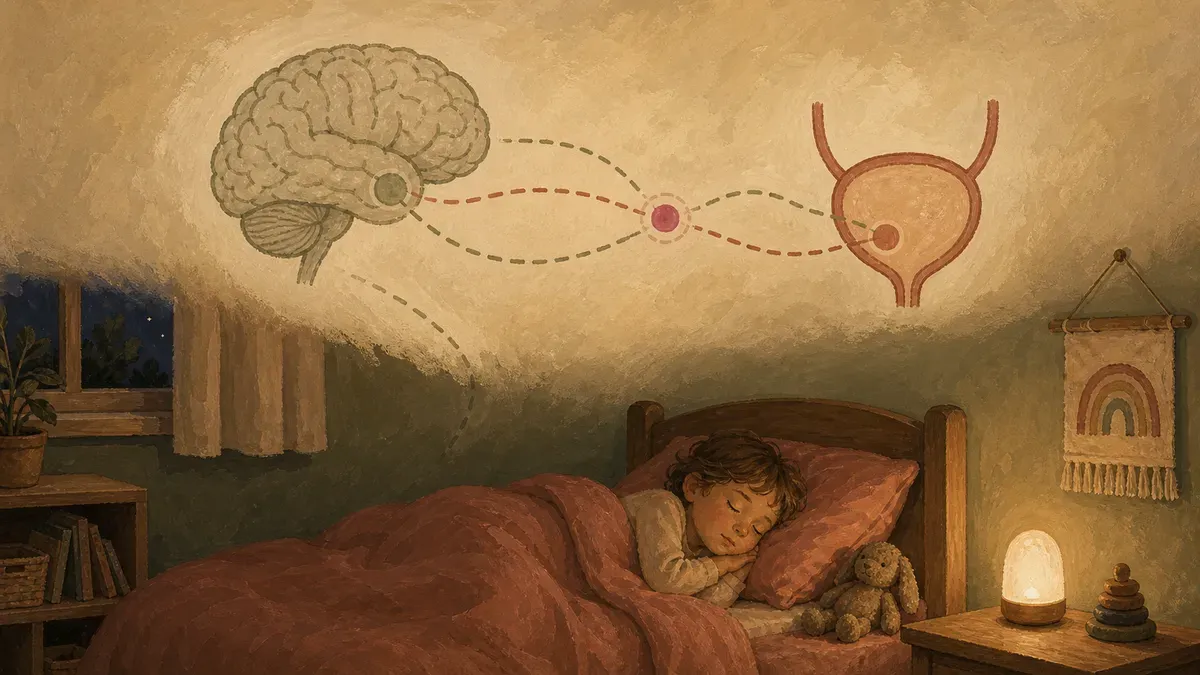
This is why the AAP notes daytime control usually comes first, with nighttime arriving later as those connections finish wiring. You can lay all the groundwork in the world and still wait on the hormone.
Most of the work happens without you. Time is doing something real here. A PMC review through the NIH found bedwetting resolves on its own in about 15% of affected kids every year, no method required. So if you’ve got a four year old still soaking through at night, that’s a body on its own potty training timeline, not a parenting fail.
Plenty of regular potty training wins by repetition. Night dryness you wait out and gently support. Same kid, two different games.
Gear That Makes Accidents No Big Deal
The right gear takes the panic out of a 3 a.m. wet sheet. Set the bed up so an accident means peeling one layer and going back to sleep.
Protect the Bed in Layers
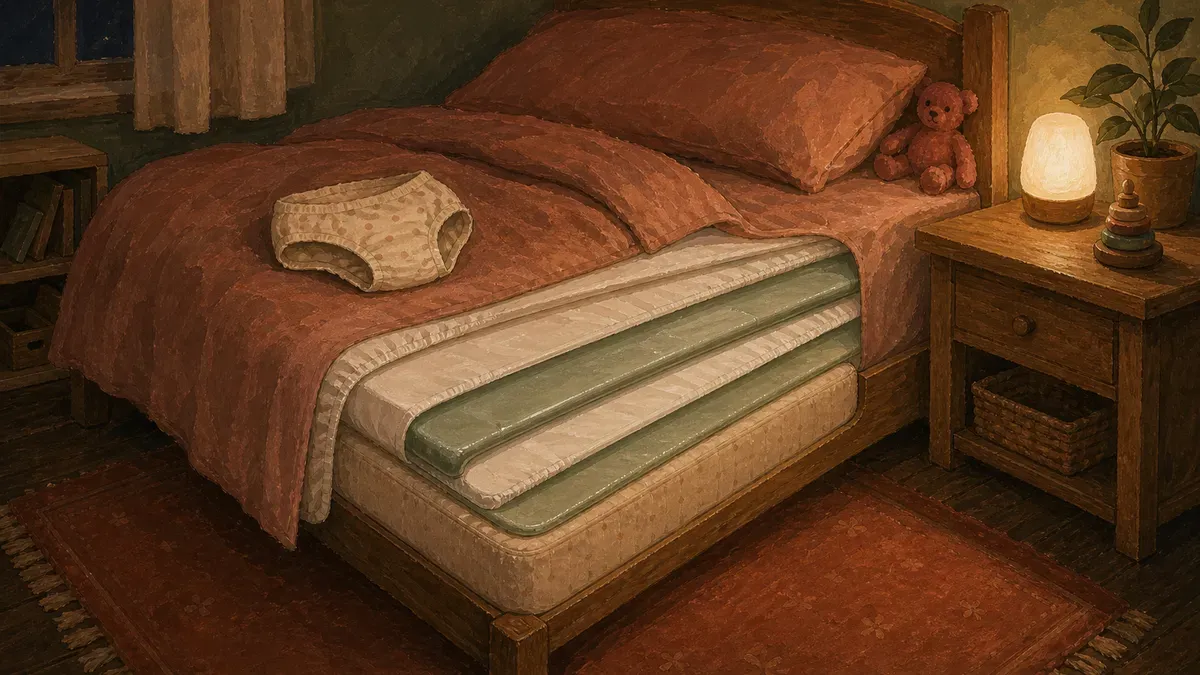
The trick is building the bed in layers before anyone goes to sleep. When the top one gets wet, you peel it off and the dry layer is already made underneath.
From the bottom up:
- Waterproof mattress pad
- Fitted sheet
- Second waterproof mattress pad
- Second fitted sheet
You don’t need a fancy pad for this. The waterproof mattress pad I keep on hand is a soft microfiber one that earned Amazon’s Choice, and it’s quiet, no crinkle to wake a light sleeper. More than 3,700 parents rate it 4.8 stars, and it’s cheap enough that grabbing two for the double-layer stack didn’t sting (check the current price on Amazon). One heads-up: it runs crib-and-toddler-bed sized at 28 by 52 inches, so measure before you order for a twin.
A wet bed becomes a 30-second pull-and-toss, no fumbling in the dark. Stack a couple of small bed mats on top for spot protection, and save the praise for morning with a potty training reward chart.
Absorbent Underwear vs. Pull-Ups
Here’s where most parents stall: pull-ups or the padded undies. Pull-ups are the easy reach, but they wick moisture away so well that your kid stays feeling dry even after an accident. That comfort is the problem. If they can’t feel the wet, they don’t connect the sensation to needing the toilet, and that connection is the whole point of night training.
Absorbent training underwear flips it. They hold enough to spare the mattress, but your child still feels the wetness, so the body starts learning the cue.
| Option | How it works | Parents’ rating | Reach for it when |
|---|---|---|---|
| Absorbent potty training underwear | Soaks the small stuff, but your kid still feels the wet | 4.7★, 11,000+ reviews | You want the body to learn the nighttime cue |
| Nighttime pull-ups | Heavier overnight absorbency that hides the wet for a full sleep | 4.8★, 7,900+ reviews | Travel nights, or when you both just need to sleep |
Both wear an Amazon’s Choice badge, so neither one’s a gamble at 2am. Whichever you grab, keep the waterproof layer underneath; nighttime underwear handles a trickle, not a full bladder.
I’d start in the absorbent pair and save the pull-ups for the nights you can’t afford a strip-down.
When to Wait, Pause, or Call the Pediatrician
Gear buys you patience, but it can’t tell you when to stop trying. Some nights the right move is backing off for a while, and a few cases are worth a call to your pediatrician.
Signs It’s Too Soon to Push
Pull the brakes if you see any of these:
- Soaked every morning. Diapers still heavy night after night means the hormone hasn’t caught up. There’s no right night potty training age to override that.
- Regression. Dry stretches that suddenly fall apart, often around a new sibling or a move (the same pattern behind potty training regression age 3).
- Resistance or stress. Tears at bedtime, fighting the routine, dreading the trip.
Pausing for a few months isn’t failure, it’s timing. Put the training pants back on and try again in a few months, the way our complete potty training guide lays out. For pediatric guidance on bedwetting and when to seek help, your doctor is the next call.

When Bedwetting Warrants a Doctor’s Visit
Most wet nights are just a young bladder catching up. A few patterns, though, mean the next conversation is with your pediatrician, not another waterproof pad.
Per NIH StatPearls, nighttime wetting isn’t even diagnosed as a condition until a child is 5 or older and it’s happening at least twice a week for three months, and the NICE guideline echoes that same line.
Call the pediatrician when you see:
- Wetting that starts again after six months of dry nights
- Pain or burning when they pee
- Unusual thirst or sudden frequent peeing
- Bedwetting that just won’t budge well past kindergarten
Found this useful? Save it for the next rough afternoon.
Questions parents ask me about this
How do you night train a toddler for potty?
Wait until you spot the readiness signs, then keep it simple: taper fluids in the hour or two before bed, have them sit on the potty right before lights-out, and put a waterproof layer on the mattress so a wet night is no big deal. You're not really teaching anything here the way you do with daytime training; the body has to mature enough to hold or wake on its own, so your job is mostly setting the stage and staying calm while you wait it out.
At what age should a child be fully potty trained at night?
There's no age a kid is supposed to be dry by, and plenty of them aren't there until well into the school years. Daytime control comes first, sometimes long before nights catch up. Dry nights run on a hormone that matures on its own clock, so a child who's bone-dry by day can still soak a diaper every night for a good while. That gap is normal, not a sign anything's wrong.
Should I wake my child up at night to use the toilet?
You can try one gentle trip before your own bedtime, carrying a drowsy child to the toilet without fully waking them. It works best when they stay mostly asleep and settle right back down. If they pop wide awake and you're both up for the night, it's not worth it. It doesn't move the body's timeline forward either way, so let your sleep be the deciding factor.
How long does nighttime potty training usually take?
Longer than daytime, and on a timeline you don't get to set. Some kids click into dry nights in a few weeks once their body's ready; others need months, and a stretch of soaked diapers just means the wait isn't over. Hold your routine steady for several weeks before you judge how it's going, and watch the trend in morning diapers rather than any single wet one. Drier mornings creeping in is your real progress.
Is it normal for a 4 year old to still wet the bed at night?
Yes, completely. A four-year-old wetting the bed is almost always a body still waiting on the hormone that keeps a bladder quiet overnight, not a discipline problem or a parenting miss. Most kids who wet at this age grow out of it on their own with no special method at all. If they're dry by day and the nighttime diapers are slowly trending drier, you're right on track.
Can certain foods or drinks trigger nighttime accidents?
The biggest driver is simply how much fluid is in the system at bedtime, which is why easing off drinks in the hour or two before bed can help. A big cup of anything right before sleep gives the bladder more to handle while your child is out cold. Don't go to hard cutoffs or send them to bed thirsty, though. Restricting fluids too aggressively can backfire, and a sip of water is fine.
Do reward charts help with nighttime potty training?
Not really, and it's not your child's fault if a chart that worked for daytime does nothing here. Daytime training rewards a choice your kid is awake to make; nighttime dryness happens while they're asleep with no cue to act on, so there's no behavior to reward. Praise a dry morning if it feels good, sure, but never hand out a consequence for a wet one. A child can't earn a sticker for something their sleeping body isn't ready to do yet.
Written by
Nora Hayes
Mom of two and a former preschool aide. I share the screen-free sensory play and calm-down ideas I test at my own kitchen table, plus what the moms in my little meet-up swear by. A parent passing on what works, not a doctor or a therapist.
More about NoraKeep going
All Potty Training-
 Potty Training
Potty Training Reward Chart: 20 Ideas Under $3
Skip the toy aisle: build a potty training reward chart with 20 ideas under $3 you already own. Grab the plan that motivates a stubborn toddler.
-
 Potty Training
How to Potty Train a Boy (and How a Girl Differs)
How to potty train a boy in 3 to 6 months: the readiness signs, the step-by-step method, and the small things that differ for girls.
-
 Potty Training
Potty Training Sticker Chart Printable (Free Download)
Free potty training sticker chart printable that survives travel and routine resets. Print, sticker, reward, reuse anywhere. Download now.
-
 Potty Training
Potty Training Certificate: A Just-Do-This Guide
Charts skip the finish line. Make a potty training certificate that gets your toddler over the line for real. Print yours tonight.