Preschool Potty Training: A Gentle Timeline

I’m Nora Hayes, a former preschool aide, and yes, you can do potty training before preschool starts without a frantic boot camp the week before school. That deadline is real pressure: 22% of parents in a C.S. Mott Children’s Hospital poll said needing their child trained for daycare or preschool is exactly what pushed them to start.
This guide walks you through reading your child’s readiness signs, a calm week-by-week countdown to the first day, and what to do when accidents show up after preschool starts.
Do Preschools Actually Require Potty Training?
Mostly, yes, but the rule is softer than the panic around it suggests. Most private preschools want kids out of diapers and reasonably reliable in underwear by the first day. A few accidents are expected. A kid still living in pull-ups full-time usually isn’t.
That’s the private side. Public programs play by different rules. Care.com points out that in states like New Jersey, California, and Illinois, state-funded preschool programs can’t make being toilet trained a condition of enrollment, while private programs set their own bar.
So before you spiral, read the handbook. Every school spells out its program requirements somewhere, and the language matters.
- “Fully potty trained” is a stricter bar than “working on it”
- Some programs quietly allow pull-ups at nap time
- A few will enroll kids in diapers and work with you on the rest
You won’t know until you ask.
The school sets the expectation. You do the training at home, before the first day.
The phrase that trips parents up is “potty training schools,” as if the school will handle it for you.
If you haven’t begun yet, start with the basics of potty training and build from there. The preschool deadline is a nudge, not a cliff.
Is Your Child Ready, or Are You Just Watching the Calendar?
A date on the calendar tells you nothing about whether your kid is ready, and that gap cuts both ways. So is the harder situation, when start day is barreling toward you and your child is nowhere close.
The Green-Light Signs
Watch for these:
- Staying dry for two hours or through a nap. Bladder control is the big one. An AAFP clinical review found roughly 75% of kids hold their dryness for two hours by 24 to 26 months. A soaked diaper at every check means the plumbing isn’t there yet.
- Telling you before they go, not after. When they read their own bodily signals and announce it, the brain is catching up to the bladder.
- Pulling pants up and down without a wrestling match. That same review puts dressing independence around 30 months. No help, no meltdown.
- Real interest in the toilet. Following you in, asking questions, wanting the big-kid underwear. That intrinsic motivation does more heavy lifting than any sticker chart.
You don’t need all four. Two or three pointing the same way is enough. If you’re seeing the opposite, here are the signs your child is not ready for potty training yet.
When the Deadline Beats Readiness
The first day is three weeks out and your kid still fights every bathroom trip. Pulling back is the smart move, not the failure it feels like.
The harder you push, the harder they dig in. A toddler controls this one completely. A case-control study of 4,332 children found that kids pressured with rewards and punishments during training had more incontinence trouble later than kids who were simply encouraged to try again another time.
When the calendar’s winning, here’s what actually helps:
- Tell the school you’ve started and you’re close. Most expect a few accidents.
- Drop the pressure, keep the routine. Same potty times, no drama.
- Wait out a regression instead of fighting it. Patience beats a power struggle every time.
Meet the kid where they are.
Your Week-by-Week Potty Training Timeline Before Day One
Readiness signs are pointing the right way and you’ve got a start date on the calendar. The weeks ahead are your runway: build the home routine first, practice real-world conditions next, then rehearse the actual preschool rhythm before it counts.
Weeks 6 to 4 Out: Build the Routine
Pack away the daytime diapers and put real underwear on. This early stretch is about teaching the body a rhythm at home, where a puddle on the kitchen floor costs nothing but a paper towel and a sigh.
- Offer the potty about every two hours at first, then anchor it to natural beats of the day. Zero to Three suggests wake-up, before lunch, and after nap as good standing times.
- Add a few extra bathroom breaks around snacks and before you head out, the spots where accidents like to sneak up.
- Skip the pressure cooker. This isn’t the 3 day potty training method, and warm weather makes the whole thing easier, so if you’re starting in June or July, lean on a relaxed summer potty training toilet routine.
A flop on day one means nothing right now.
Weeks 3 to 2 Out: Practice Real-World Conditions
Home is the easy mode. The real test is a strange bathroom, a public stall, a toilet that flushes like a jet engine.
Work in a few of these:
- Hit the bathroom on outings. Library, grocery store, the park restroom. Unfamiliar school toilets and loud auto-flushers throw a lot of kids, and a couple of practice runs take the surprise out.
- Pack a travel potty seat if a big open bowl makes your kid freeze. It folds in the diaper bag and buys instant familiarity.
- Dress for independence. Elastic waistbands, no buttons or overalls, so they can pull pants down on their own.
- Add a short outing that mimics the school rhythm, and stash extra clothes in the bag. Accidents away from home happen. Pack two of everything and move on.
The Final Week: Rehearse the School Day
This week, stop training and start rehearsing.
Three things to practice:
- Run a drop-off-length stretch. Pick the hours your child will actually be at school and hold the potty routine through them, snack and all. Make it without a meltdown and your dress rehearsal passed.
- Pack the accident bag together. Let them choose which spare outfit goes in, drop it in the wet bag, and zip it shut. That small bit of ownership builds independence.
- Talk through the bathroom. Walk them through asking a grown-up, the smaller toilet, the line at the sink. Preschool teachers expect that question, so practice the words at home first.
Set Up the Classroom Handoff
The last piece is the part you can’t be there for: the actual school day, with someone else running the routine. One conversation gets the adult in the room on the same page as you, and one packed bag means an accident is a quick change instead of a phone call home.
What to Tell the Teacher
Walk in with the specifics, not “she’s potty training.” A teacher juggling a room of three-year-olds can’t read your kid’s signals the way you do, so hand them the cheat sheet.
Tell the teacher:
- Where your child actually is: dry most of the day, still figuring out poop, whatever’s true that week.
- The exact cue words your kid uses. “Potty,” “pee-pee,” the little dance they do. Same words at home and school so nothing gets muddled.
- Your accident protocol: where the spare clothes live, how you talk about it, who handles the wet stuff.
North Shore Pediatric Therapy recommends parents pass along the precise words and signals their child uses, and that everyone use the same vocabulary so the kid isn’t decoding two systems. It’s the same reason daycare potty training stalls when home and the classroom drift apart.

What to Pack in the Spare Bag
Now stock the bag that does the heavy lifting when you’re not there.
A wet accident at 10am shouldn’t trigger a phone call, just a quiet change in the corner.
- Two full changes of clothes (kids manage two accidents on a rough day more often than you’d think)
- A wet bag or a couple of gallon zip bags for the soggy stuff
- A small pack of wipes for the quick cleanup
- Three or four pairs of underwear, every set labeled with your kid’s name
- A spare pair of socks, because wet socks ruin everybody’s morning
Label everything, because classroom bins swallow unmarked clothes whole. Restock the bag each Friday so Monday starts full.
When Accidents and Regression Hit After Preschool Starts
The call from school comes anyway. You packed the labeled bag, you rehearsed the morning, and three weeks in your reliably-dry kid is soaking through outfits like none of it happened. That backslide is regression, and it’s one of the most normal things in the world of preschool and potty training.
A new classroom is a lot, and it lands on kids in specific ways:
- A bathroom that isn’t home, with strangers in the stalls
- Rules about when you’re even allowed to ask to go
- New faces to read before they can relax enough to think about anything else
The American Academy of Pediatrics calls starting preschool a common trigger for regression, and frames it as a healthy way a kid adapts to an overwhelming change, not a sign you did something wrong.
It’s also more common than most parents expect. The C.S. Mott Children’s Hospital poll found that 33% of parents reported their child seemed fully trained, then started having accidents again, and 19% saw potty anxiety show up along the way.
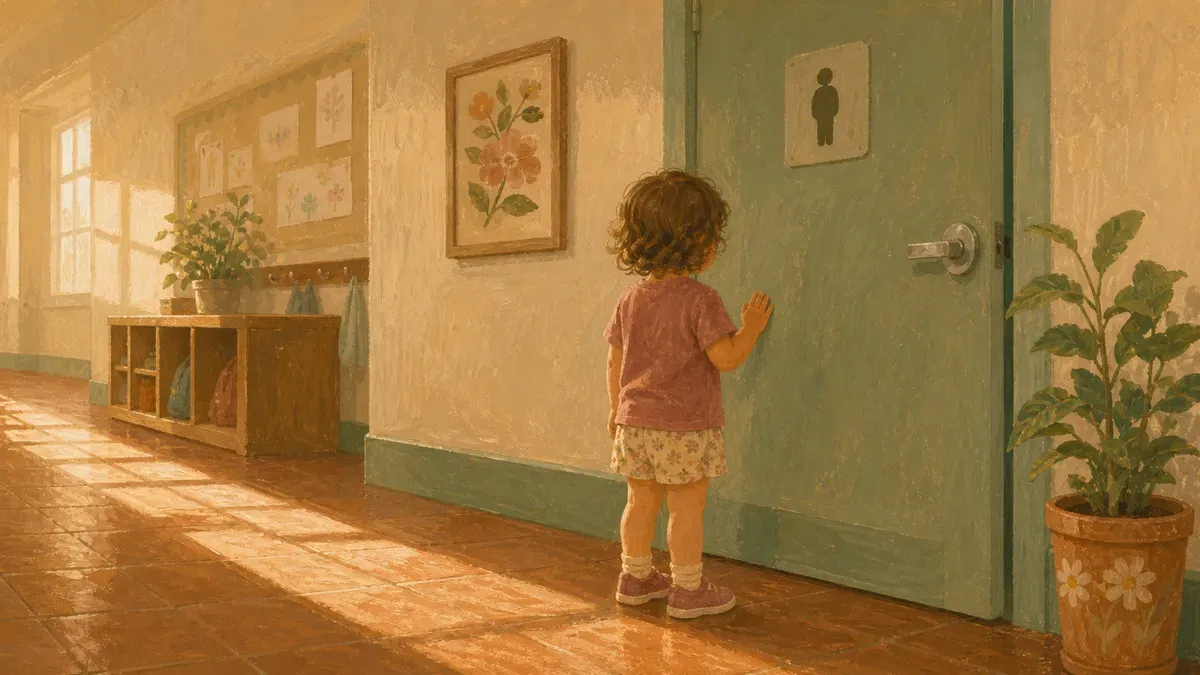
So when it happens, don’t restart boot camp. Pulling out the rewards and the pressure is exactly what backfires. Keep the routine boring and steady. Three things that hold it together:
- Same cue words, every time
- Potty trips on the usual schedule
- Spare bag in the cubby, no announcement needed
Name it for your kid without making it a thing. “New school, new bathroom, that’s a lot. We’ll figure it out.” Most accidents fade in a week or two once the newness wears off.
If the slide drags on past a few weeks, or you’re seeing the kind of stall that’s common with potty training regression age 3, it’s worth a longer look. Start with our complete potty training guide to reset the basics, and give it the same patience you gave day one. The accidents are temporary. The trust you build by staying calm through them is not.
Found this useful? Save it for the next rough afternoon.
Questions parents ask me about this
How do I potty train my child before preschool starts?
Start at home weeks ahead, not the night before. Switch to real underwear, offer the potty at predictable times like wake-up and after nap, and keep accidents low-stakes while you build the rhythm. The goal isn't a perfect kid by orientation day, it's a kid who knows the routine and can mostly manage it. School expects you to have started, not finished.
How many weeks before preschool should I start potty training?
Give yourself about six weeks if you can. The first stretch is for ditching daytime diapers and building a home routine, the middle weeks practice real-world bathrooms like the library or a store, and the final week rehearses an actual school morning. If you've got less time, you've still got runway, just compress the phases and lean harder on the spare-clothes bag.
What if my child isn't potty trained when preschool starts?
Tell the teacher exactly where your child is and what cue words you use, then pack a generous spare bag so an accident becomes a quiet change instead of a phone call. Don't launch a last-minute boot camp, pressure right before a big transition usually backfires. Keep the home routine steady and let school become more practice, not a deadline you failed to hit.
Do preschools accept kids in pull-ups?
It depends on the program, so read the handbook before you assume. Many private preschools want kids reliably in underwear by day one and treat a few accidents as normal, but full-time pull-ups are usually a no. Public and state-funded programs often can't require training at all. When the language says "fully trained," they mean it differently than "working on it," so ask if you're unsure.
Should I potty train a boy and a girl differently before preschool?
The timeline and the readiness signs are the same regardless. Some families find boys take a little longer to show interest, but that's a child-by-child thing, not a rule you should plan around. Follow the kid in front of you, watch for the same green-light signs, and dress them for independence with elastic waistbands either way. The preschool prep doesn't change.
Does my child need to be night trained before preschool?
No. Preschool is a daytime program, and staying dry overnight is a separate skill that often lags daytime training by months or even years. Nobody at drop-off is checking nighttime status. Focus on daytime confidence before the first day, and treat nights as their own slow project on their own timeline.
How do I keep potty training consistent between home and daycare?
Use the same words in both places so your child isn't decoding two systems. Tell the teacher your exact cue phrase, your current stage, and where the spare clothes live, then keep your home potty times steady so the rhythm matches. Restock that spare bag weekly and label everything. Consistency is the whole game here, a kid who hears "do you need to go potty?" at home and something different at school has to translate before they can answer.
Written by
Nora Hayes
Mom of two and a former preschool aide. I share the screen-free sensory play and calm-down ideas I test at my own kitchen table, plus what the moms in my little meet-up swear by. A parent passing on what works, not a doctor or a therapist.
More about NoraKeep going
All Potty Training-
 Potty Training
Potty Training Reward Chart: 20 Ideas Under $3
Skip the toy aisle: build a potty training reward chart with 20 ideas under $3 you already own. Grab the plan that motivates a stubborn toddler.
-
 Potty Training
How to Potty Train a Boy (and How a Girl Differs)
How to potty train a boy in 3 to 6 months: the readiness signs, the step-by-step method, and the small things that differ for girls.
-
 Potty Training
Potty Training Sticker Chart Printable (Free Download)
Free potty training sticker chart printable that survives travel and routine resets. Print, sticker, reward, reuse anywhere. Download now.
-
 Potty Training
Potty Training Certificate: A Just-Do-This Guide
Charts skip the finish line. Make a potty training certificate that gets your toddler over the line for real. Print yours tonight.