3 Year Old Not Potty Trained: Stop the Power Struggle

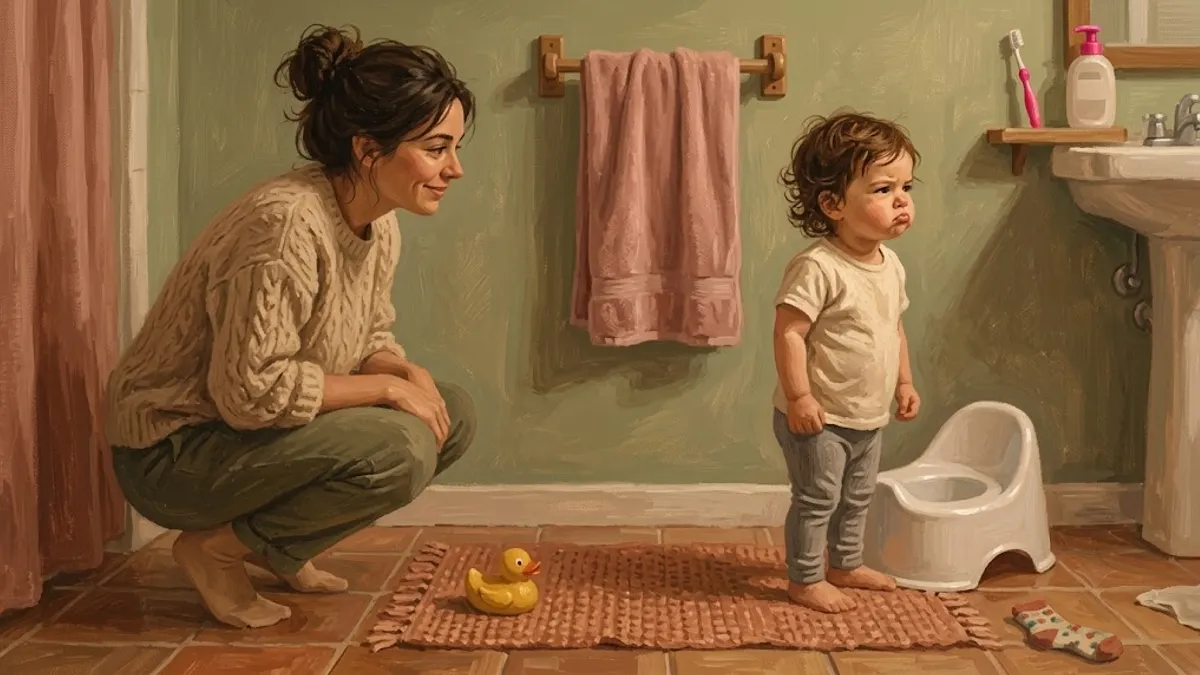
If your 3 year old is not potty trained yet, you are not behind and nothing is broken. The harder you push on a stubborn toddler, the harder they dig in, and breaking that cycle is what actually moves things forward. I’m Nora Hayes, a former preschool aide who’s trained two strong-willed toddlers of my own, and I’ll cover why they stall, how to reset things, what to say when they refuse, and what to do near age 4.
The plan in brief:
- Drop all pressure and rewards for 1 week to reset the power struggle.
- Hand your child control: let them pick the potty, the underwear, and when to sit.
- Switch to a calm offer-don’t-ask script every 60-90 minutes.
Why Your 3-Year-Old Is Refusing (and Why It’s Usually Normal)
Before you change a single thing about your routine, it helps to know what’s actually going on in that little head. Two things are in play when your toddler refuses: a kid grabbing for control, and a hidden trigger nobody’s named yet.
Control, Not Defiance: What Refusal Really Means
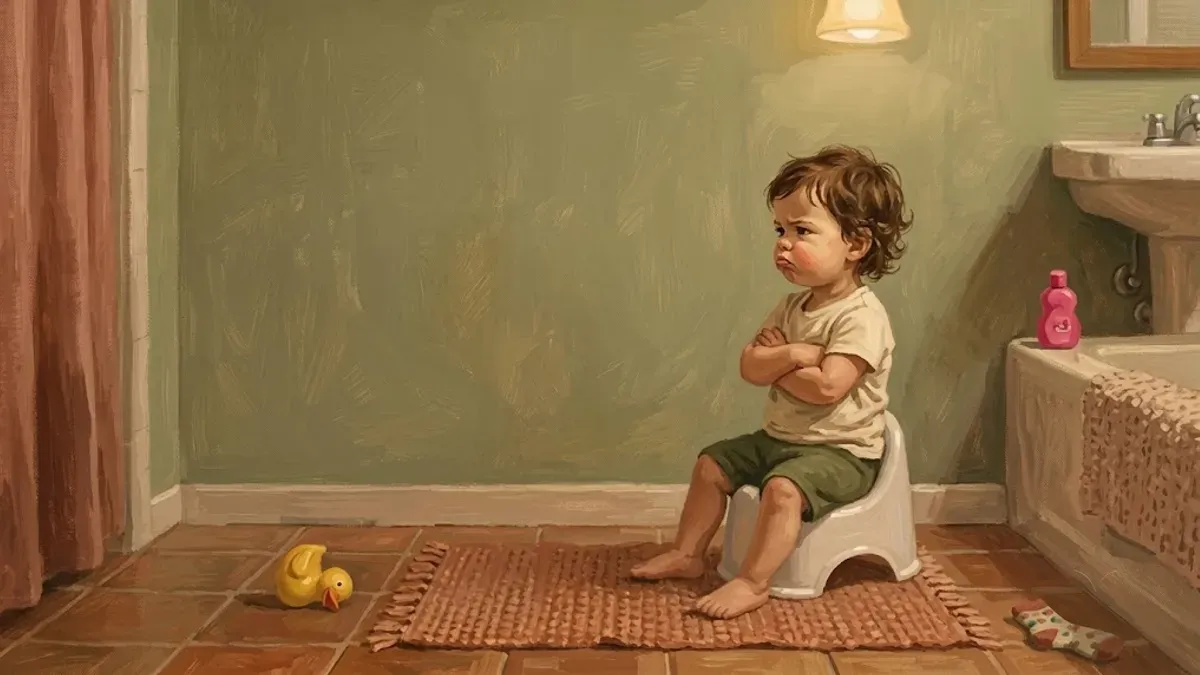
Here’s the reframe that changed everything for me: your three-year-old isn’t being bad. They’re being three. Around this age, kids are wired to assert control over their own bodies, and the toilet is one of the last things still fully theirs. Erikson called this the autonomy stage, where a strong-willed child either gains confidence or learns shame, and toileting sits right in the middle of it. You can read more about Erikson’s autonomy vs. shame-and-doubt stage and why it shapes so much at this age.
So what looks like defiance is usually child agency doing exactly what it’s supposed to do. When you push, you hand them a power struggle they can win just by clenching. That’s the trap of potty training resistance: the harder you press, the more there is to resist.
Drop the rope. The fight only exists if you’re holding the other end.
Hidden Triggers: Constipation, Sensory, and Life Changes
Sometimes it isn’t a battle of wills at all. It’s a body saying no for a reason you can’t see, and the most common one is pain. Research on stool toileting refusal found that most toddlers who go through it had constipation first, and the potty training challenges that follow make a lot more sense once you know that.
There are a few hidden triggers worth checking before you blame stubbornness:
- Pain (a hard, painful bowel movement teaches a kid fast that holding it feels safer than the potty)
- Sensory overload (the cold seat, the loud flush, or the sensation of letting go into open air can stop a sensitive child completely)
- Life disruptions (a new baby, a move, or switching to underwear before they showed readiness can stall things out)
So before you push harder on the potty training routine, check for a root cause. If the difficulty keeps showing up no matter what you try, look at the signs your child is not ready for potty training before you blame stubbornness.
The Calm No-Fight Potty Plan, Step by Step
The whole method fits in one line: stop asking, hand your kid the controls, and let their own body do the teaching. Here’s how that breaks down over a week, one calm step at a time.
Reset First: A One-Week Pressure-Free Pause
For seven days, you do nothing. No “do you need to go,” no sticker chart or reward system, no praise marathon, no marching anyone to the bathroom. Put the diaper back on if you’d taken it off, and let the whole topic go quiet.
This feels backward, I know. But a reset is how you defuse the power struggle, because your child suddenly feels the pressure lift off and realizes the fight was never theirs to win. Dr. Becky Kennedy argues that the very idea of “training” pulls us into shaping behavior, so we punish accidents and spiral when it isn’t going our way. A week with forced training off the table tells your child the fight is over.
The reset isn’t quitting. It’s clearing the table so your kid can come back to it as their own idea.
Hand Over Control: Let the Child Lead Each Step
When the week is up, you restart by giving everything away. This is the heart of how to potty train a stubborn toddler: every decision that used to be yours becomes theirs.
Let them pick the little potty at the store, or choose the chair over the big-toilet seat. Let them pick the underwear, the louder the print the better. Then you offer instead of order. “Your potty’s right here if you want it,” not “go sit, now.”
Dr. Becky frames your whole job as one quiet message: pay attention to your body, and let me know when you feel the I-have-to-go feeling. That single shift hands the child agency back. You’re pantsless-stage support, not the boss of their bladder.
Go Pantsless and Keep a Loose 60-90 Minute Rhythm
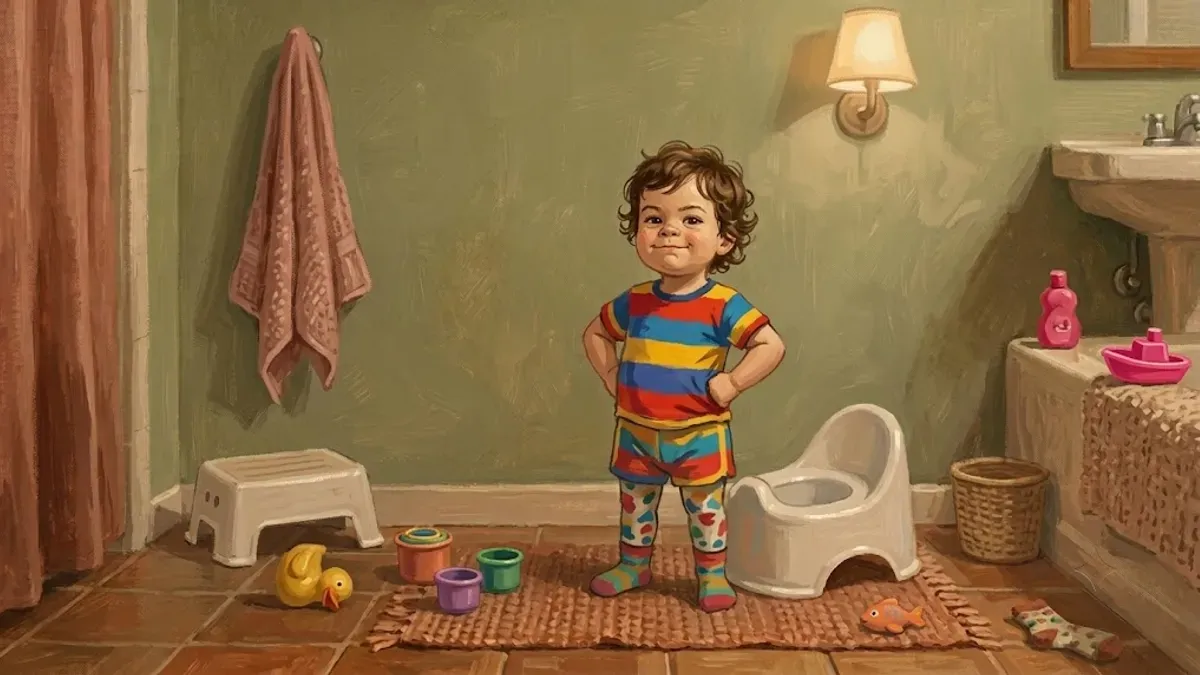
Now strip them down. Potty training a 3-year-old who refuses to move forward often turns around here, because a diaper hides the very sensation you want them to catch.
The Cleveland Clinic describes the bare-bottom approach as helping kids feel what’s happening and connect the dots before clothing masks it. No undies, no pants, waist-down free at home for a few days. It’s the engine behind the 3 day potty training method too.
Pair it with a loose rhythm, not a strict schedule:
- Every 60 to 90 minutes, mention the potty once, then drop it
- Keep them playing near the potty so it’s an easy choice
- Treat accidents as information, not failure, and just wipe up
The quiet stretch is the point: no pressure, no marching, just your kid noticing their own signals.
The method in three moves:
- Seven days off: diapers back on, total silence on the topic.
- Their choices everywhere: which seat, which underwear, when to try.
- Bare bottom at home with a loose 60-to-90-minute rhythm, child-led from there.
Exact Words to Use: Dr. Becky-Style Scripts for a Refusing Toddler
Once the pressure’s off, what you actually say in those moments matters. Here are the phrases that keep things moving without sparking a standoff.
Offer, Don’t Ask: Scripts That Sidestep a ‘No’
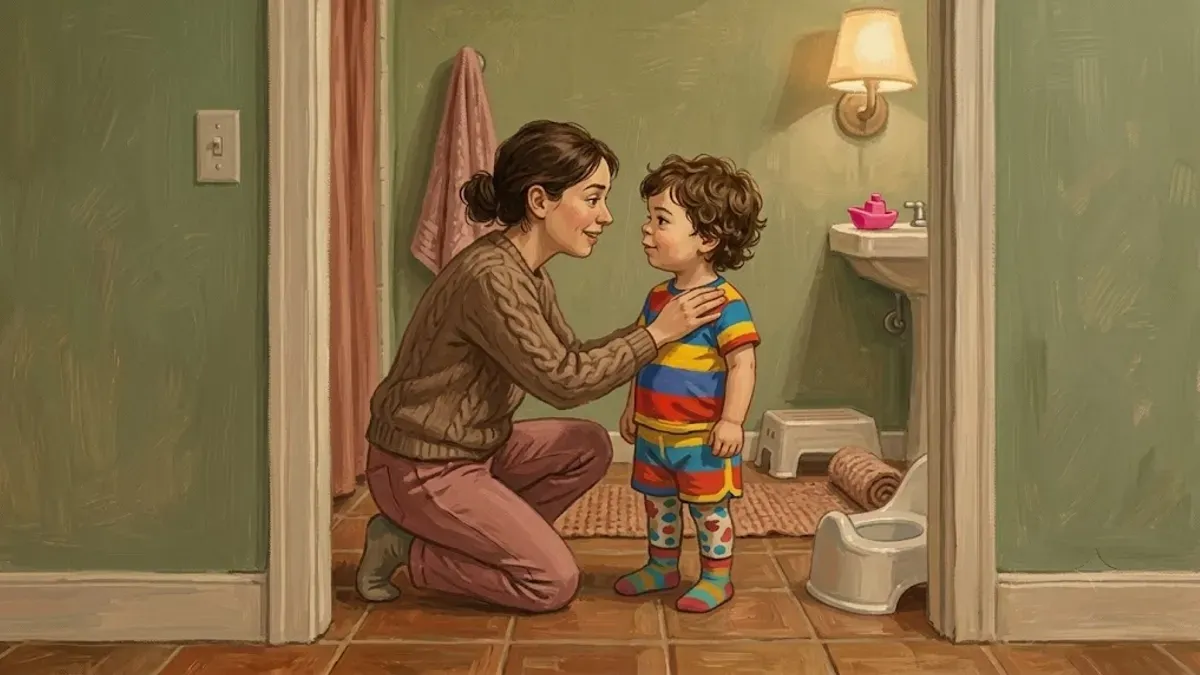
The fastest way to get a hard “no” is to ask a yes-or-no question. “Do you need to go potty?” is practically an invitation to refuse. Good Inside founder Dr. Becky Kennedy’s approach flips this: the parent narrates their own body signals out loud rather than interrogating the child. You become the demonstrator, not the enforcer.
Try saying it like this:
- “Oh, I’ve got that feeling. My body is telling me it needs the bathroom. I’ll be right back.”
- “I’m heading to the potty. Want to come watch, or stay here?”
- “It’s potty check-in time. You can use it or skip it, your call.”
None of these hand the child a straight yes-or-no. You’re offering, not ordering, which keeps child agency intact without turning the bathroom into a power struggle. For kids where adhd and potty training adds another layer, that shift away from direct demands can make an especially big difference.
What to Say After an Accident or a Flat Refusal
Your reaction in the two seconds after an accident teaches your child whether it’s safe to keep trying. Shame closes that door fast.
For accidents, keep it factual and calm:
- “Your body went before you made it to the potty. That happens. Let’s get you cleaned up.”
- “Oops, your underwear is wet. Come on, we’ll sort it out.”
For a flat refusal, don’t negotiate or escalate:
- “Okay, I hear you. We’ll check in again later.”
- “No potty right now, got it. Come find me if you feel like you need to go.”
Neutral is the goal. Toilet training resistance drops when every outcome, the try and the skip, gets the same low-key response. No reward theater for going, no visible frustration for not going. That flatness pulls the drama out of the whole thing, and once it’s gone, most kids just quietly start going.
Winning the Poop Battle Without a Standoff
Pee usually clicks first. Poop is its own thing, and for a lot of toddlers, it’s where the whole process stalls.
Why Poop Withholding Happens and How to Soften It
Most poop refusal isn’t stubbornness. It’s fear. One painful bowel movement is enough to start the cycle: Mayo Clinic explains that stool sitting too long in the colon gets harder and more painful to pass, so the child holds it, which causes more constipation, which causes more pain. A toddler boy who refuses to poop on the potty (or any 3-year-old stuck in this loop) is usually reacting to that pain history, not running a power play.
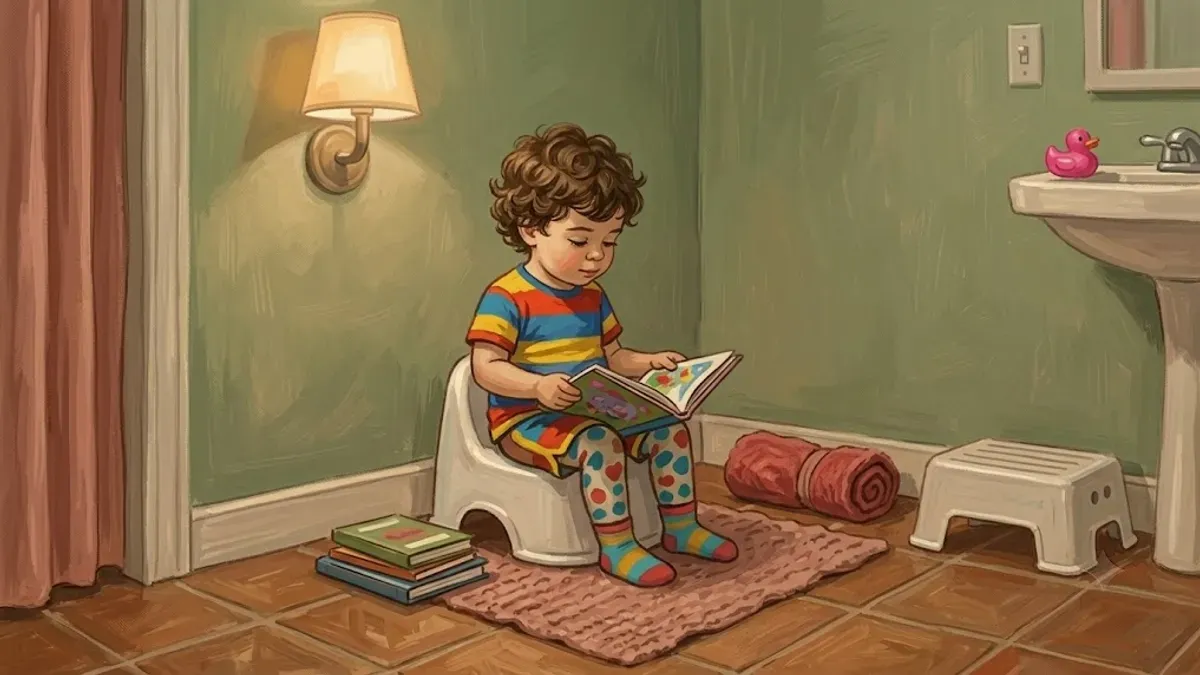
The fix starts with softening the stool, not the standoff. Talk to your pediatrician about constipation first. Once bowel movements are comfortable again, offer a diaper near the potty. Let them use it standing right next to the toilet if that’s where they feel safe. That’s not giving up; it’s the on-ramp. Over days, the training moves forward by slowly shifting proximity and comfort, working toward getting them to poop in the toilet. No pressure, just presence.
When Refusal Lasts: Regression, Age 4, and the Pediatrician
Sometimes the slow-and-steady approach works beautifully, and then life happens. This section covers what to do when progress reverses, and when it is time to stop waiting and call your pediatrician.
Handling Regression and Daycare or Preschool Pressure
Regression usually has a clear trigger. Pediatric guidance on toilet training readiness from the American Academy of Pediatrics names the most common ones:
- A new baby or pregnancy in the house
- A switch in childcare or preschool
- A move or other big disruption to routine
It is not a sign something broke. Your child is managing a lot, and their nervous system let the lower-priority skill slide.
For more on potty training regression age 3 tied to a new sibling specifically, that pattern is worth its own read.
Preschool and daycare timelines add a separate layer. A program with age-based expectations around training puts pressure on you, which flows straight to your kid. Have an honest conversation with the teacher: explain you are following a child-led approach, ask how they handle accidents, and tell them exactly what your child does and does not need help with. Most early childhood teachers have seen every variation. Peer modeling at preschool often moves things along faster than any sticker chart you run at home.
Still Stuck at 4? When to Call the Pediatrician
Being a 4 year old not yet fully trained is more common than the Pinterest version of toddlerhood suggests. Still, there is a real difference between a late bloomer and a child who needs support. The American Academy of Family Physicians reports that 98% of children are continent by 48 months with a child-oriented approach, so persistent difficulty at that age is worth a conversation with your doctor.

Call sooner if you see clear red flags. Chronic constipation running for weeks needs medical treatment, not more patience. Pain during urination or bowel movements lasting more than a day or two is another reason to pick up the phone. A child showing no daytime dryness at all by age 4 despite low-pressure, consistent effort also warrants a visit.
A pediatrician can rule out a physical cause, address constipation medically, and take the guesswork out of your next step. Once you know what you are actually working with, revisit our complete potty training guide and go from there.
Found this useful? Save it for the next rough afternoon.
Questions parents ask me about this
What do I do if my 3-year-old is still not potty trained?
Start by stepping back, not pushing harder. Drop all pressure for at least a week, let your child pick their own potty and underwear, and offer bathroom trips instead of requiring them. Most kids this age are refusing because the training turned into a standoff, and removing that pressure is what breaks the cycle.
Is it normal for a 3-year-old to refuse potty training?
Yes, it is very common. Three-year-olds are deep in the autonomy stage, where any external push tends to produce pushback. Refusing doesn't mean something is wrong with your child or that you've missed a window. The vast majority of kids are fully continent well before kindergarten.
Should I use rewards or sticker charts for a strong-willed toddler?
With a child who digs in when they feel controlled, reward charts often backfire because they feel like another adult agenda to resist. Keeping the tone neutral and removing the drama around potty attempts tends to work better. If a sticker chart feels fun to your child and low-stakes to you, it's fine to try, but don't make the chart the pressure point.
How long should I pause potty training when there's a power struggle?
A week is a solid starting point. During that time, diapers come back without comment and you skip all reminders. You're clearing the air so your child can start seeing the potty as their idea rather than your demand. After the pause, re-introduce gently with options and offers, not requirements.
Can I send my child to preschool if they aren't potty trained?
Policies vary widely by program. Call and ask directly before enrolling. Many preschools, especially for 3-year-olds, accommodate kids still in training or have a flexible approach. If your child's classroom has potty-trained peers, peer modeling often does more for reluctant trainers than anything a parent can orchestrate at home.
When should I worry that my child isn't potty trained yet?
For most 3-year-olds, there's nothing to worry about yet. The time to call your pediatrician is if your child shows no daytime dryness at all by age 4, has signs of chronic constipation or pain with bowel movements, or was previously trained and regressed significantly without a clear trigger. Your doctor can rule out physical causes and tell you whether anything actually needs attention.
Why does my toddler pee in the potty but refuse to poop?
Almost always fear from a painful experience, and Section 4 walks through exactly what's happening and how to work through it gradually.
Written by
Nora Hayes
Mom of two and a former preschool aide. I share the screen-free sensory play and calm-down ideas I test at my own kitchen table, plus what the moms in my little meet-up swear by. A parent passing on what works, not a doctor or a therapist.
More about NoraKeep going
All Potty Training-
 Potty Training
Potty Training Reward Chart: 20 Ideas Under $3
Skip the toy aisle: build a potty training reward chart with 20 ideas under $3 you already own. Grab the plan that motivates a stubborn toddler.
-
 Potty Training
How to Potty Train a Boy (and How a Girl Differs)
How to potty train a boy in 3 to 6 months: the readiness signs, the step-by-step method, and the small things that differ for girls.
-
 Potty Training
Potty Training Sticker Chart Printable (Free Download)
Free potty training sticker chart printable that survives travel and routine resets. Print, sticker, reward, reuse anywhere. Download now.
-
 Potty Training
Potty Training Certificate: A Just-Do-This Guide
Charts skip the finish line. Make a potty training certificate that gets your toddler over the line for real. Print yours tonight.