Infant Sensory Play: What Age Babies Can Start

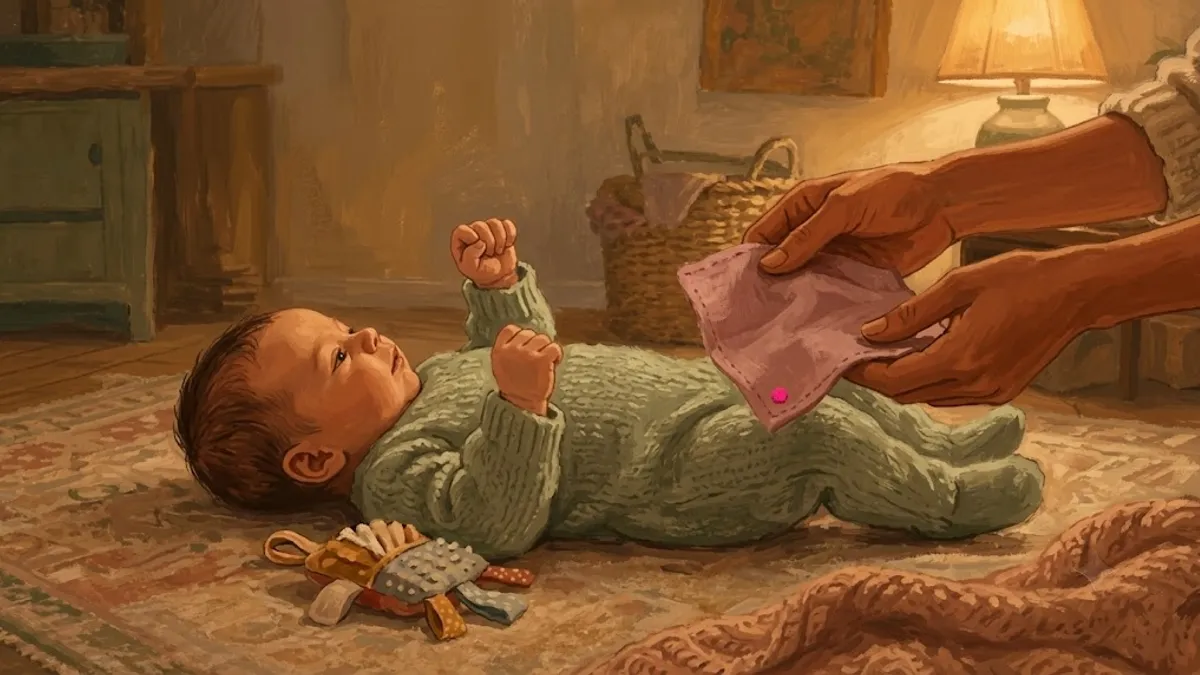
I’m Nora Hayes, a former preschool aide and mom of two, and your baby can start sensory play the day you bring them home from the hospital, far earlier than most parents picture.
The earliest play looks nothing like Pinterest: it’s a few minutes of tummy time, a soft texture against the cheek, your face up close.
Below I’ll walk through what counts as sensory play for an infant, when it’s safe to begin each stage, and exactly what to put in front of a baby who isn’t sitting up yet.
What Infant Sensory Play Actually Means
Before you start putting things in front of a baby, it helps to know what actually counts. Here’s the short version: sensory play is any moment you deliberately give a baby something to look at, hear, touch, taste, or smell, and for the littlest ones it almost never involves a bin.
The Five Senses, From a Baby’s Point of View
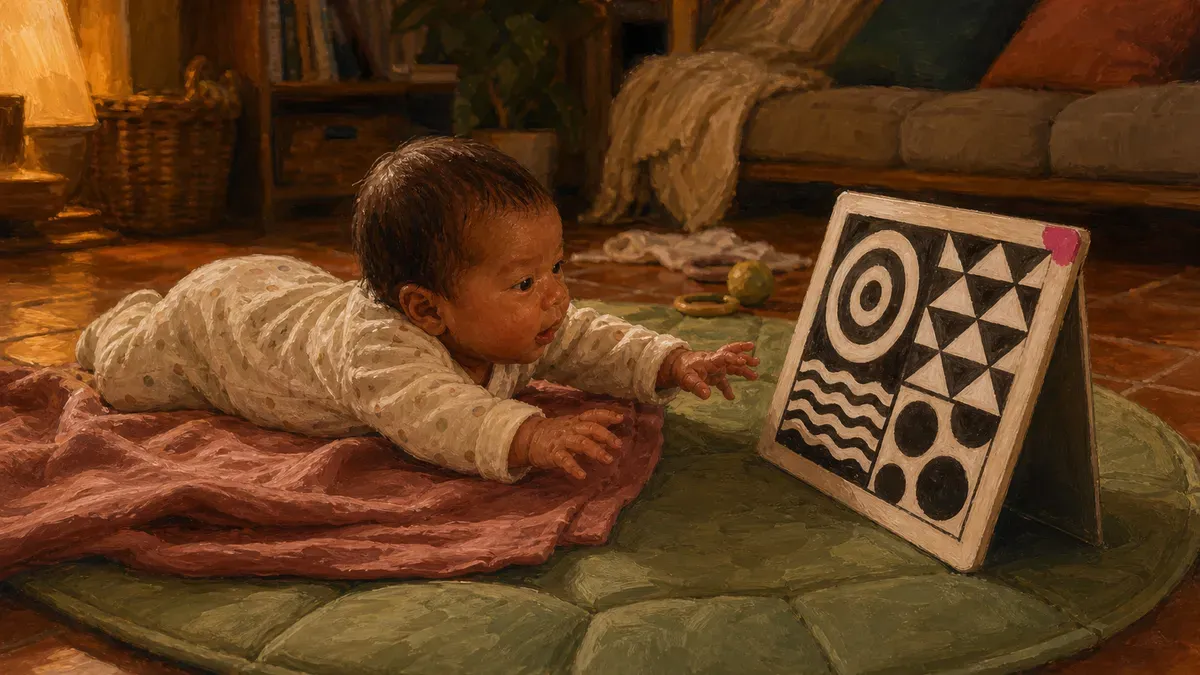
Think of sensory play as feeding the senses on purpose. A mobile that turns and clicks is auditory play. A black-and-white card propped where a newborn can stare at it is visual stimulation, and high-contrast patterns are about all a brand-new baby can really make out. Run a soft brush across a foot, let them grip your finger, lay a cool spoon on a palm, that’s tactile.
The difference between this and passive toy time is the word deliberately. A baby parked under a play gym they’re ignoring isn’t getting much. A baby you’ve turned toward the window so the light and shadow catch their eye is. Real sensory stimulation has a person in it, narrating, moving the toy, following where the eyes go.
Why It’s Not the Same as a Sensory Bin
When most people picture sensory play, they picture a sensory bin: a tub of rice, scoops, little hands digging in. For a baby who can’t sit up or close a fist around a spoon, that’s months away and beside the point.
Infant sensory play is the wide, early version that comes first. It’s tummy time on a crinkly mat. It’s mirror play, where a baby studies the face looking back. It’s texture exploration done your way, dragging a satin ribbon or a knit blanket lightly over their arms. None of it needs special sensory materials or a Pinterest setup.
The bins come later, once they’re sitting and grabbing. Right now the whole job is smaller and easier: give the senses something honest to do, one at a time, and watch what they reach for.
The Real Answer: What Age Babies Can Start
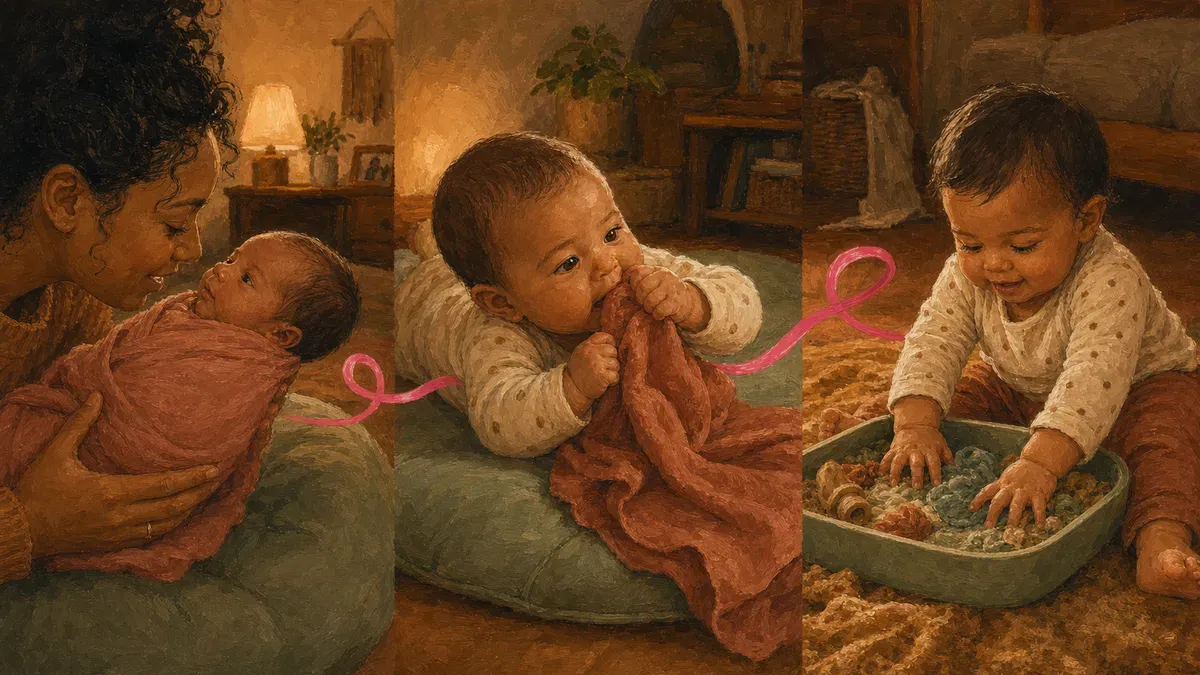
So here’s the part you actually came for. Sensory play starts the day you bring them home, but what it looks like shifts hard across the first year, moving from skin and sound to grabbing and finally to real bins.
Birth to 3 Months: Sight, Sound, and Skin
A newborn can’t reach for anything yet, so the play comes to them. A high-contrast card held close, maybe eight to twelve inches from their face, will get those eyes tracking and locking on. According to the American Academy of Ophthalmology, newborns are most interested in objects very close to them and mostly see large shapes, with central vision still developing in those first weeks, which is exactly why high-contrast patterns land so well this early.
Sound counts too.
- Your voice humming a song
- A soft rattle shaken off to one side
- The crinkle of paper near their ear
The biggest one is skin. A study published in the National Library of Medicine found that skin-to-skin contact from birth led to better regulation of temperature, heart rate, and breathing, and those babies showed an early marker of social awareness a full month sooner than the others. That’s the science for infants in brief: bare-chest cuddles do real work on neural connections, not just keep them warm. This stage is one input at a time, nothing stacked.
4 to 8 Months: Reaching, Grasping, and Mouthing
Now the play talks back. Somewhere in here a baby starts reaching to grab the toy they want and dragging it straight to their mouth, and both are wins. The CDC names “reaches to grab a toy she wants” and “puts things in her mouth to explore them” as cognitive milestones expected by six months, which tells you mouthing is a feature, not a habit to break.
It’s also the main way they read a new texture. Mouthing peaks somewhere around the middle of this window, and the babbling babies do while chewing carries more consonant sounds, so a teether is quietly feeding early speech.
Texture exploration opens up for real now.
- A cool spoon
- A knobbly silicone teether
- A damp washcloth
Everything stays taste-safe, because everything goes in the mouth. They’re also building fine motor skills and catching on to cause and effect and object permanence, so a scarf that disappears and comes back is suddenly the best trick in the house.
9 to 12 Months: First True Sensory Bins
This is the milestone the bins have been waiting on. Two things need to line up: sitting steady on their own, and the pincer grasp, that thumb-and-fingertip pinch most babies pick up between nine and twelve months. Once both click, a shallow, supervised bin makes sense, and their sharpening fine motor skills finally have something to dig into.
Keep it boring on purpose. Grab one thing from what you already have.
- A few inches of plain water and a couple of cups
- A tray of taste-safe oat flour
- A handful of large fabric scraps
Sit on the floor and stay within arm’s reach the whole time, every time, because at this age supervision is the activity.
What you’re building toward is the chunkier, hands-deep play that comes next. If you want a starting point sized for this exact stage, my guide to sensory play for 1 year olds walks through setups that survive a wobbly sitter, and the broader collection of sensory bins for toddlers picks up once they’re steady on their feet. Start age-appropriate, follow their lead, and let the developmental milestones set the pace instead of a calendar.
What Sensory Play Does for a Baby’s Brain
Two things are going on when a baby digs their fingers into cooked spaghetti or fixes on a black-and-white card. They split neatly: one is about wiring and movement, the other is about language and paying attention.
Building Neural Connections and Motor Skills
A baby’s brain is laying track at a pace it will never match again, and sensory play hands it the raw material. Every time a hand meets a new texture, sound, or weight, the input fires the same circuits over and over. Repetition is what turns a loose signal into a solid neural pathway. Do it enough, and the wiring sticks.
The motor side builds right alongside it:
- Squeezing a soft fabric square develops grip strength
- Raking at a spoon sharpens early hand control
- Dropping a block and reaching again trains the pinch-and-grab
The bigger movements matter just as much.
Tummy time is the workhorse here. The American Academy of Pediatrics recommends it from birth, building to 15 to 30 minutes a day by around seven weeks, and that daily floor work is what drives early gross motor skills and the strength to lift, push, and eventually sit. It’s repetitive on purpose. That repetition is the cognitive development, not a break from it.
Language, Focus, and Later School Readiness
Here’s the part most “when can babies start” guides skip entirely: sensory play is early language work, long before a first word shows up.
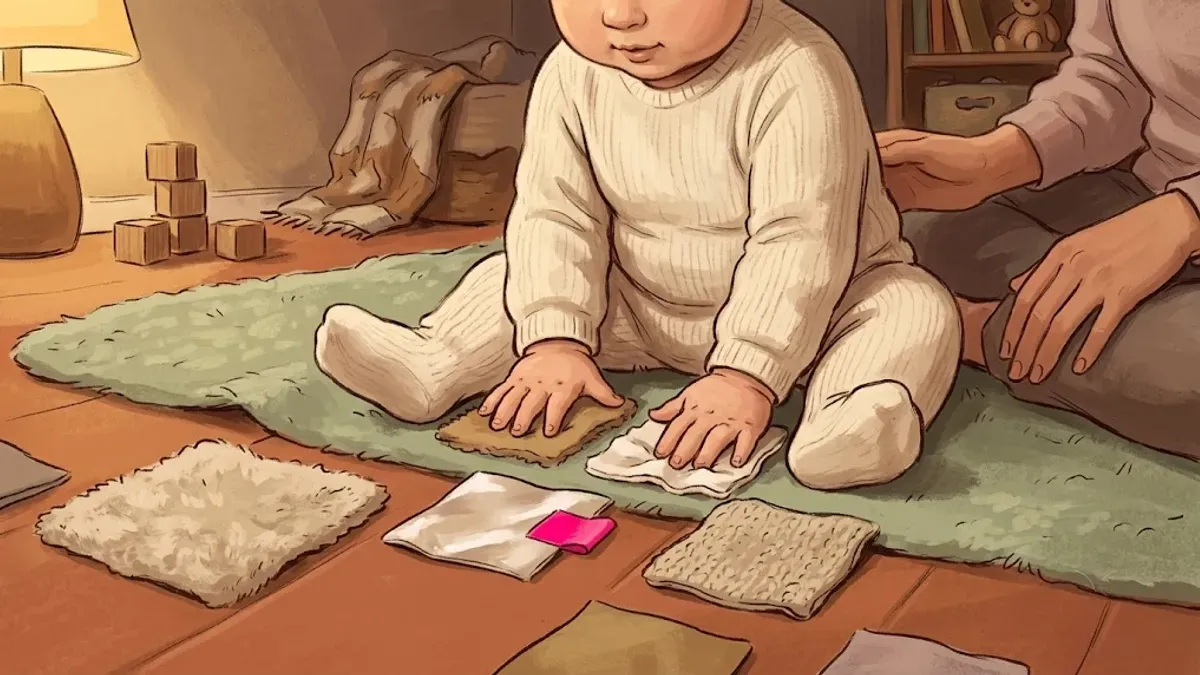
When you narrate what a baby touches, “that’s cold, that’s bumpy, that’s wet,” you’re pairing a sensation with a sound, and that pairing is the groundwork for language development. A baby exploring with their hands is also building cause and effect (I shake it, it rattles) and object permanence (the spoon didn’t vanish, it’s under the cloth). Those are real cognitive milestones, not filler.
The focus piece is the quiet payoff. A baby who sits with a single bin of textures, turning a thing over and over, is practicing attention in small doses, and that stretch of staying-with-something is one of the developmental milestones that later feeds school readiness.
- Naming what they feel loads vocabulary in before speech
- Repeated actions teach cause and effect: I do this, that happens
- Focused exploration stretches the attention span class time asks for
None of it needs a worksheet. It needs your hands, their hands, and stuff from the kitchen. The brain does the rest.
Safe Sensory Materials by Stage
Once hands and gums get involved, the only question that matters is whether what’s in the bin is safe to eat. Here’s how to pick fillers your baby can mouth, and which ones to keep far away until they’re older.
Taste-Safe and Edible Bases for Mouthers
Under one, plan for everything to end up in the mouth, because it will. So the rule is simple: if they can’t eat it, it doesn’t go in the bin. Build your early setups around taste safe sensory play and you stop policing every grab.
My favorite easy bases, all things you probably already have:
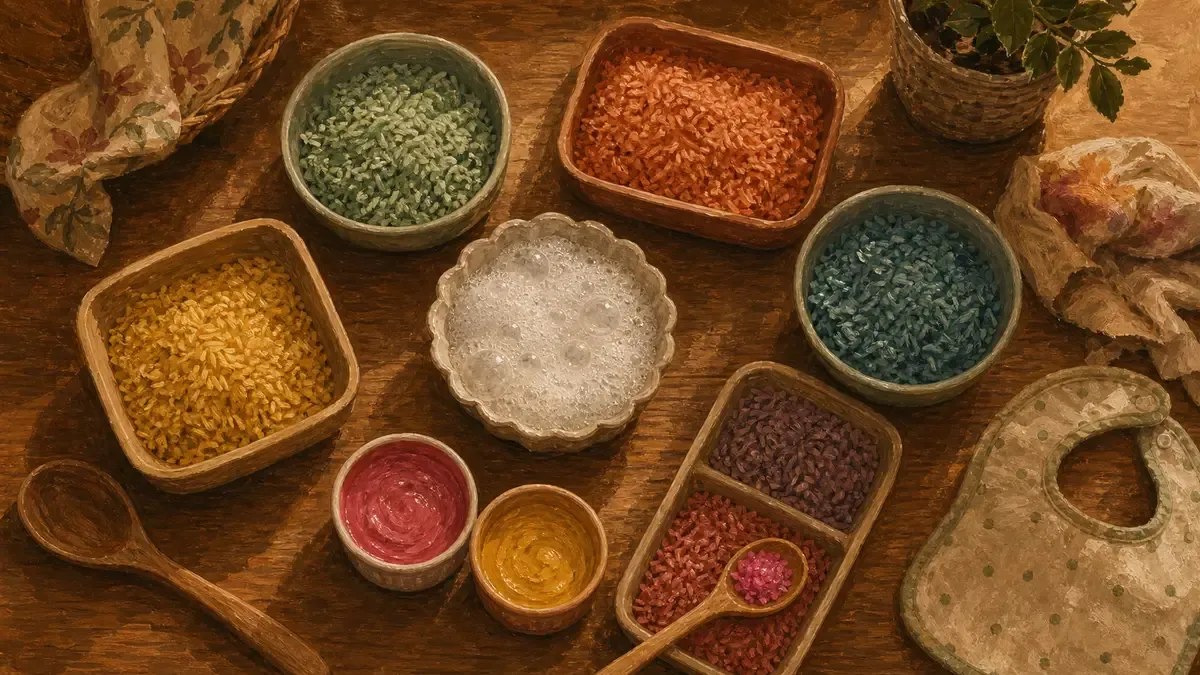
- Rainbow rice, dyed taste-safe with a splash of vinegar and food coloring (best for older sitters who aren’t full-on chewing it)
- Bubble foam, whipped from a drop of baby wash and water, light and lickable
- Edible finger paints from plain yogurt and food coloring, or cooled cornstarch “goop”
- Plain cooked, cooled spaghetti or oatmeal for the youngest mouthers
For a five-month-old, skip the rice entirely and go straight to yogurt paint on the high-chair tray. The edible options carry zero panic, and that’s the whole point: you get to sit down too.
Choking Hazards and Supervision Rules
The edible stuff buys peace of mind. The hazards are everything firm, small, and round. Dried beans, popcorn kernels, whole pasta, water beads, pom-poms, small buttons, and coins all belong nowhere near a baby’s bin.
Here’s the test that takes the guessing out of it. The infant choking hazard safety guidance from the CPSC defines a small part as anything that fits inside a tube 1¼ inches wide and 2¼ inches deep, roughly the throat of a child under three. If a piece disappears into that space, it’s out.
Pack it all away the second play ends. No exceptions.
None of this needs a fancy kit. The cheapest, safest sensory materials come from your kitchen, and you can browse plenty more sensory bin fillers you already have without spending a dime. For the under-ones, pick the age-appropriate, taste-safe ones and watch every minute.
Sensory Play for Babies With Extra Needs
Not every baby arrives ready to dive in. Premature babies, highly sensitive infants, and babies with developmental differences need a slower, quieter version of everything above.
Reading Cues From Sensitive or Premature Babies
A full-term baby who has had weeks to adjust to the outside world is not the same as a baby who arrived early and still has developing senses. What feels like a gentle touch or mild sound to you can land as overwhelming input for a preemie. Watch for the small signals before they escalate: eye aversion, a sudden yawn mid-session, hiccuping, an arched back, or drifting off to sleep without a gradual wind-down. Any of those means stop, not push through.
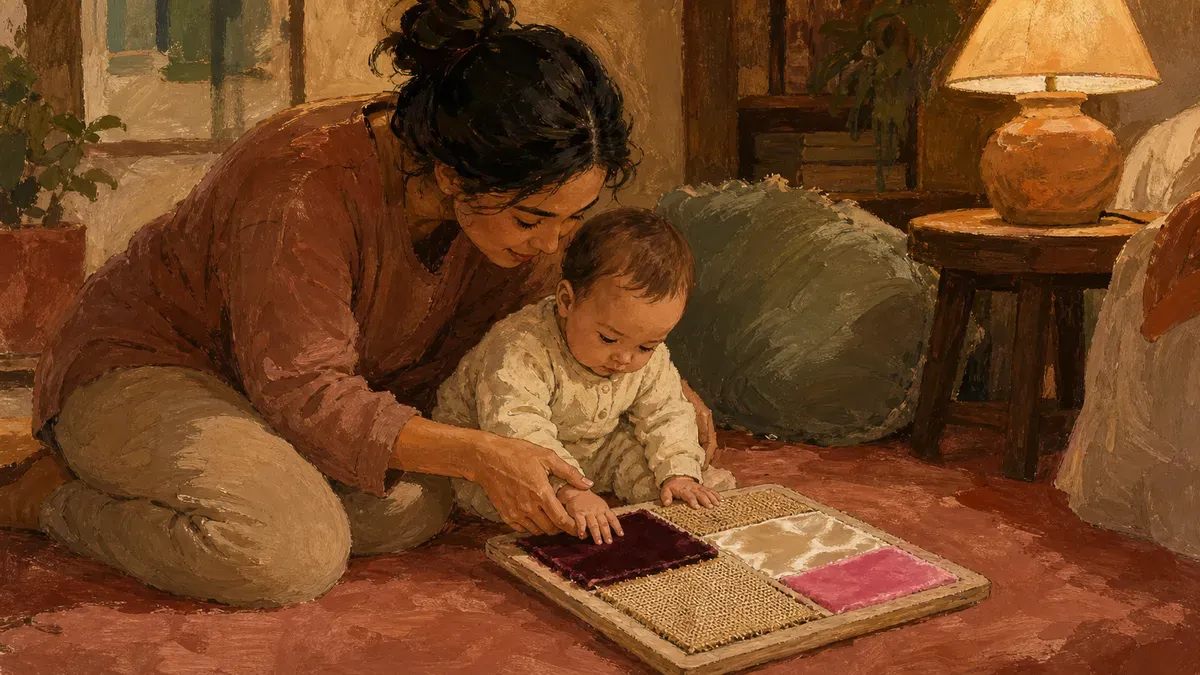
For sensitive infants or babies with extra developmental considerations, the rule is less, slower, shorter. One texture at a time. One minute, not ten. A single soft cloth instead of a full bin. Follow the baby’s face first; their body tells you the truth before any schedule does.
The same careful pacing applies when you’re exploring sensory bins for autism and sensory differences later in toddlerhood. The starting point is always the same: watch more than you plan, and let the child set the pace. If the bin ends after thirty seconds because they’ve had enough, that was still a real sensory experience. Enough is enough.
How to Start Sensory Play This Week
You don’t need a plan, a Pinterest board, or a single thing you don’t already own. You need about five minutes and a baby who’s awake and content. Here’s a week you can actually pull off between naps and dinner.
Pick one thing a day. Skip a day when the day is too much. Nobody’s grading this.
- Monday: tummy time, leveled up. Lay your baby on a blanket and slide a few textures under their hands: a fuzzy sock, a crinkly bag, a cool wooden spoon. Same tummy time you already do, now with stuff to grab.
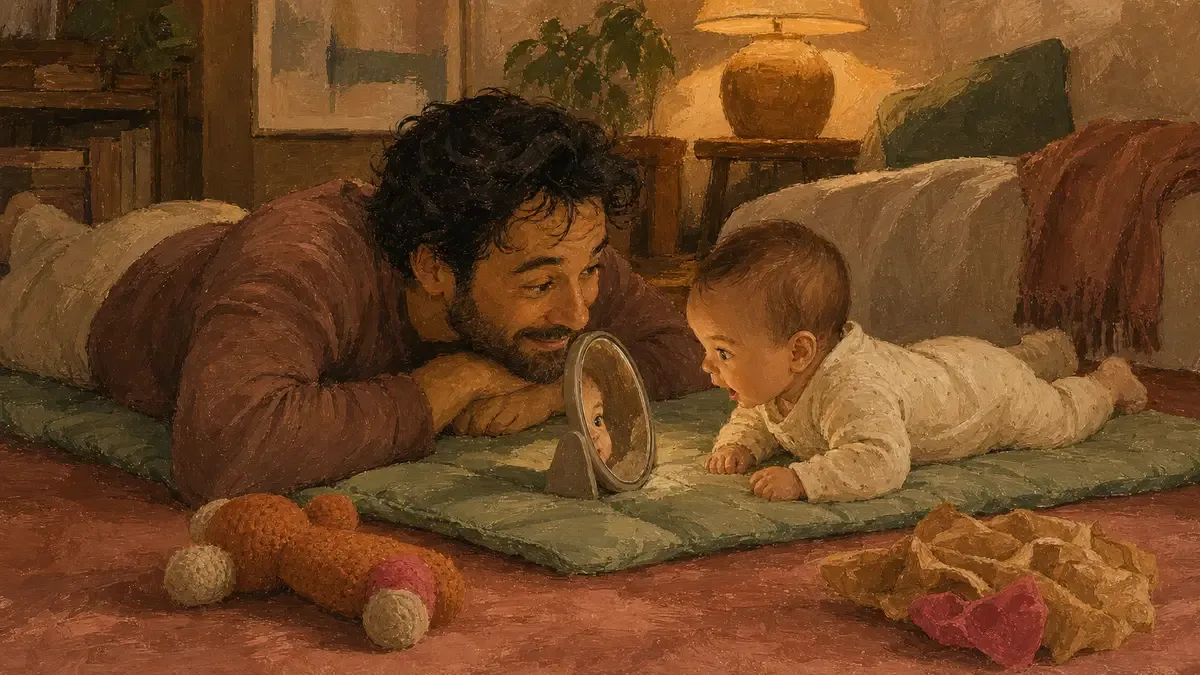
- Tuesday: mirror play. Prop an unbreakable mirror in front of them and let them stare at that fascinating baby. Narrate what you see. This is the whole activity, and it counts.
- Wednesday: a texture tray. No bin yet. A cookie sheet, a smear of plain yogurt, and their bare hands. For older mouthers, a spoonful of cooked oatmeal to push around.
- Thursday: water play. A shallow bowl of warm water on a towel, one cup, one floating toy. Sit close, keep a hand free. Two inches is plenty.
- Friday: a sound walk. Carry them room to room and let them touch what’s safe: the cold fridge, a soft towel, a wind chime by the door.
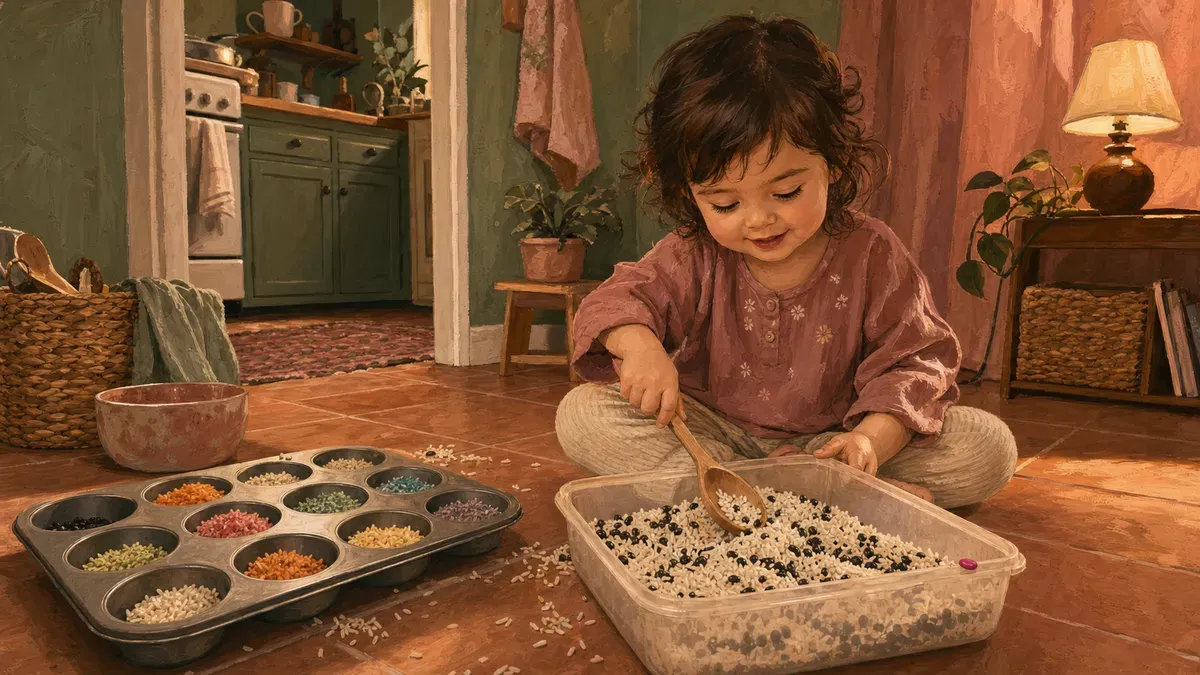
Notice that none of these is a bin. For a baby who can sit and rake at things, your first real bin is the natural next step, and it doesn’t take much. - A shallow container (a baking pan or storage bin works fine)
- A kitchen filler they can’t choke on: oats, large pasta, or puffed rice
- Big chunky scoops or spoons to fill and dump
That’s the heart of setting up diy sensory bins for the youngest crowd: shallow, safe, supervised, short. The bin matters less than the sensory materials inside it and the fact that you’re sitting right there.
If you want every age laid out in order, from these first trays up through real toddler scoop-and-pour, our complete guide to sensory bins by age walks the whole timeline.
Start small this week. One tray, one bowl of water, one minute of staring in a mirror together. If it flops, you’ve lost nothing but a paper towel, and tomorrow you try the next one.
Found this useful? Save it for the next rough afternoon.
Questions parents ask me about this
When can infants start sensory play safely?
Sensory play starts at birth. In the first few months, that looks like high-contrast cards, skin-to-skin time, and soft sounds. Bins with fillers come later, once a baby can sit with support and is developing a pincer grasp, generally around 9 to 12 months. The activity changes shape across the first year, but there is no age that is too early to begin.
Is it safe for a baby to put sensory materials in their mouth?
Mouthing is normal and expected, especially under two. The rule is simple: if it cannot be safely eaten, it does not go in the bin. Yogurt, cooked oatmeal, and pureed foods are fair game for the youngest babies. Anything small enough to choke on (beans, kernels, water beads, loose pieces) waits until mouthing is genuinely behind them, and even then you stay close.
How long should an infant sensory play session last?
A few minutes is a real session for a young baby. Newborns and young infants tire quickly, and you will see it in their face: eye aversion, yawning, or looking away are signs they are done. Follow their cues rather than a clock. Even a two-minute yogurt tray counts. Sessions get longer naturally as babies get older and their focus builds.
Can newborns benefit from sensory play before they can sit up?
Absolutely. Tummy time, mirror play, textured fabrics, and a caregiver narrating what they feel are all sensory play, and all of them work from day one. Bins are not the starting point. Deliberate engagement with touch, sound, and sight is, and a newborn can access all of that without ever sitting up.
What are the cheapest sensory materials for babies at home?
The pantry is your best starting point. Cooked pasta, yogurt, oatmeal, and water cost almost nothing and are safe for mouthers. For older babies past heavy mouthing, rainbow rice is a classic low-cost filler. The bin itself can be a baking dish or a salad bowl you already own. You do not need a specialty product to get started.
How do I do sensory play with twins or two babies at once?
Give each baby their own small tray or shallow container. Sharing one bin leads to grabbing and frustration. Keep the setups identical to reduce conflict. The same simple material, one tray per child, side by side, is easier to supervise and easier to clean than one big shared bin with two babies reaching into it at the same time.
Can fathers and other caregivers lead sensory play too?
Sensory play has no required caregiver. Anyone sitting on the floor with a baby and a tray of safe materials is doing it right. What matters is being present, narrating what the baby is touching or seeing, and watching their cues. The caregiver who sticks around is the whole point, regardless of who that person is.
Written by
Nora Hayes
Mom of two and a former preschool aide. I share the screen-free sensory play and calm-down ideas I test at my own kitchen table, plus what the moms in my little meet-up swear by. A parent passing on what works, not a doctor or a therapist.
More about NoraKeep going
All Sensory Bins-
 Sensory Bins
Sensory Bin Fillers: 20 Pantry Items You Own Now
Skip the craft store: 20 sensory bin fillers already in your pantry tonight, sorted by texture, mess level, and age. Start one in minutes.
-
 Sensory Bins
sensory integration occupational therapy intervention: ADHD
Turn sensory integration OT into a home calm-down bin for ADHD kids. Task cards, bin ideas, and a setup that works on the hard days.
-
 Sensory Bins
Indoor Sensory Play: 18 Low-Mess Setups That Work
Dreading the cleanup? These indoor sensory play setups stay on the mat, work in apartments, and reset in minutes. Start tonight.
-
 Sensory Bins
Sensory Play 2 Year Olds: 12 Bins That Hold Focus
Most sensory bins lose a 2-year-old in 90 seconds. These 12 sensory play ideas for 2 year olds actually hold attention. Start one tonight.