Story Social Guide for Beginners: What They Are

I am a parent sharing what worked at my house, not medical advice. For anything to do with your child's development or sensory needs, talk to your OT or doctor.
A social story is a short, plain script that walks a kid through a tricky moment ahead of time, so a haircut or a fire drill stops being a surprise that tips into a meltdown. I’m Nora Hayes, a former preschool aide raising an autistic 7-year-old, and these little narratives have saved more rough mornings at my house than any reward chart ever did.
This covers what a social story is, who it tends to help, the beginner mistakes I made first, and how to write one before bedtime tonight.
What a Social Story Actually Is
Strip away the jargon and the idea is small enough to fit on an index card. Here’s the plain definition first, then where it stops and the other tools take over.
The Plain-English Definition
It uses your kid’s name, your kid’s situation, written in first person as if they’ve already lived through it once, calmly. What is a social story doing, really? It says what will occur, who’s there, how it might feel, and what to try, so a confusing situation stops being a surprise.
Think of it as a social learning tool that trades guesswork for predictability. Instead of “be good at the dentist,” it sounds like: “At the dentist, I sit in the big chair. The chair goes back. That is okay.” Short sentences. The kid’s name. Behavioral expectations stated kindly, never barked.
What are social stories good at? Lowering the temperature on the unknown. When Eli was four, the school fire drill wrecked him every single time, until a six-line story about the loud bell turned the next one into a non-event.
The paper itself isn’t doing anything. Your kid stops walking into the unknown, and that’s the whole point.
How They Differ From Social Scripts and Narratives
This is where beginners reach for the wrong tool, so let me sort the family out. A story is the wide-angle view of a situation. Social scripts are tighter: they hand a child the exact words or steps for one behavior, like what to say when joining a game, often as a written conversation or visual aid.
Social narratives is the umbrella term for the whole category, and a genuine Social Story is one specific kind under it. Per Carol Gray’s own framing in an overview of social narratives as a teaching tool, a true Social Story follows her ten defining criteria so the content stays “descriptive, meaningful, respectful, and physically, socially, and emotionally safe.” Miss those criteria and what you’ve written is a social script or a plain narrative, not the trademarked thing.
Developmental stories are a looser cousin again, more about a child’s stage than a single moment.
- Social story: the full situation, what happens, how people feel, what to do
- Social script: the lines for one specific exchange, built for communication on the spot
- Social narrative: the parent category that holds them all
- Developmental stories: keyed to where your kid is, not one event
You don’t need the labels memorized. You need the right shape for tonight’s problem, and most nights, the broad social story is where I start. Want the deeper background? Our guide to social stories walks through the method itself.
Where Social Stories Came From: Carol Gray’s Method
The broad story I start with isn’t something I made up at my kitchen table. It comes from a specific person, with specific rules, and knowing them is what separates a story that works from a story that just sounds sweet.
Who Carol Gray Is and Why It Matters
Carol Gray was a consultant for autistic students in Michigan when she wrote the first one. She built carole gray’s method to hand a kid accurate social information before a confusing moment, not a lecture after it.
She developed the first one in 1990, and a few years later co-authored the first peer-reviewed article on the approach, published in the original social story criteria in 1993. That’s the part most Pinterest versions skip.
Here’s why it matters to you. Carol Gray didn’t just invent a cute format. She set the Social Story Criteria, a checklist that keeps authors honest about who the audience really is.
A story written without those rules is just a nice paragraph; a story written with them actually shifts how a kid walks into the hard moment.
The criteria are the reason I trust the format with Eli. They keep me from writing what I want him to do and push me toward describing what’s actually going to happen.
The Sentence Types That Make It Work
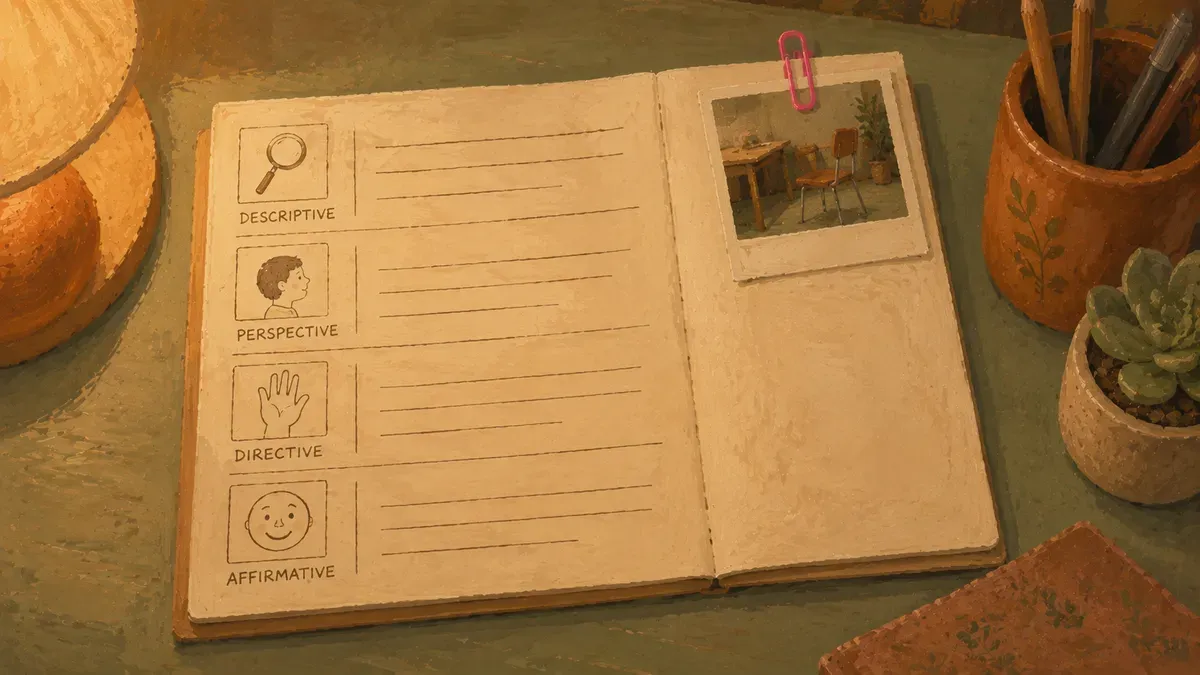
The whole method rests on four kinds of sentences, and once you see them, you can’t unsee them.
- Descriptive sentences state the plain facts. “At circle time, friends sit on the carpet.”
- Perspective sentences name how people feel or think. “My teacher feels happy when everyone finds a spot.”
- Directive sentences gently suggest what to try. “I can try to sit on my square.”
- Affirmative sentences reinforce a shared value. “Sitting together is a good idea.”
The magic is in the mix, not any single line. Gray recommends one directive sentence for every two to five descriptive or perspective ones, which keeps the story from reading like a behavior checklist.
That ratio is the whole trick. Lean too hard on directives and you’ve written a list of commands, the exact bossy tone that makes a wound-up kid dig in.
Mostly describe, occasionally suggest. That’s positive framing doing its quiet work: the kid feels informed, not cornered.
When one of my stories flops, this is almost always why. I got impatient, stacked up the “I will sit, I will listen, I will wait,” and turned a calm preview into a to-do list. Pull the directives back out and it breathes again.
When to Reach for a Social Story (and Who They Help)
Reach for one when a moment is predictable, recurring, and a little scary for your kid. The trick is matching the story to the right situation, and knowing it isn’t only autistic kids who get something out of it.
Situations Where They Shine
The best moments for a story are the ones you can see coming. Four situations come up again and again:
- Transitions: leaving the park, stopping a game, switching from one routine to the next. These are the exact spots where my kids melt down; a quick preview takes the surprise out.
- New routines: a first day at preschool, a new bedtime, the first bath in an unfamiliar tub.
- Doctor and dentist visits: laying out what happens first, next, and last shaves off a real chunk of the dread.
- Social skills: sharing a toy, taking a turn, keeping hands to yourself. A story walks through it without you having to nag in the moment.
This matches what the research on social stories and autism from the Indiana Resource Center for Autism describes, where social narratives target things like anxiety reduction and demonstrating classroom expectations. They also note the story lands best when you read it right before the activity, at the same time and place each time.
The pattern: if you can predict the rough moment, you can preview it.
Who Benefits Beyond Autistic Kids
This is the part people miss. Social stories were built with autistic children in mind, and that’s still where they help most. A 2024 systematic review confirmed they work across a wider range (per pmc.ncbi.nlm.nih.gov):
But the benefit doesn’t stop there. - Autistic kids get real relief from a script that spells out what’s coming.
- Kids with developmental delays or ADHD benefit from the same preview structure, with 86% of the 21 studies in the review reporting behavioral improvements (per pmc.ncbi.nlm.nih.gov).
- Typically developing preschoolers calm right down when a new thing gets explained before it happens.
The social skills a story rehearses don’t check for a label first.
That said, autism social stories carry the deepest track record, and if that’s your reason for being here, my roundup of social stories for kids with autism gives you ready-made examples to start from.
The takeaway for social stories for preschoolers and anyone else: you don’t need a diagnosis to use one. You need a kid, a tricky moment, and a few plain sentences to walk them through it.
The 5 Beginner Mistakes I Made First
Nobody nails the first one, and I wrote some real clunkers before anything clicked. Here are the five errors I kept making, then the small handful of fixes that turned my flops into stories my kids actually used.
- Pure commands with no warmth or context: he checked out by sentence three.
- Generic characters he couldn’t see himself in.
- Pages of explanation that lost him by sentence two.
- Vocabulary pitched too old for where he actually was.
- Reaching for the story only after a meltdown was already in progress.
Mistakes One Through Five
My first story for Eli read like a list of orders. “Sit still. Be quiet. Keep your hands down.” All directive sentences, no warmth, nothing describing what was happening or why. He shut down before the third line. All he got was instruction. Nothing about what the dentist’s office would look like, feel like, or how it would end.
Second mistake: I kept it generic. “A boy goes to the dentist.” Which boy? Not mine, apparently, because Eli didn’t see himself in it at all. Personalization is the whole engine.
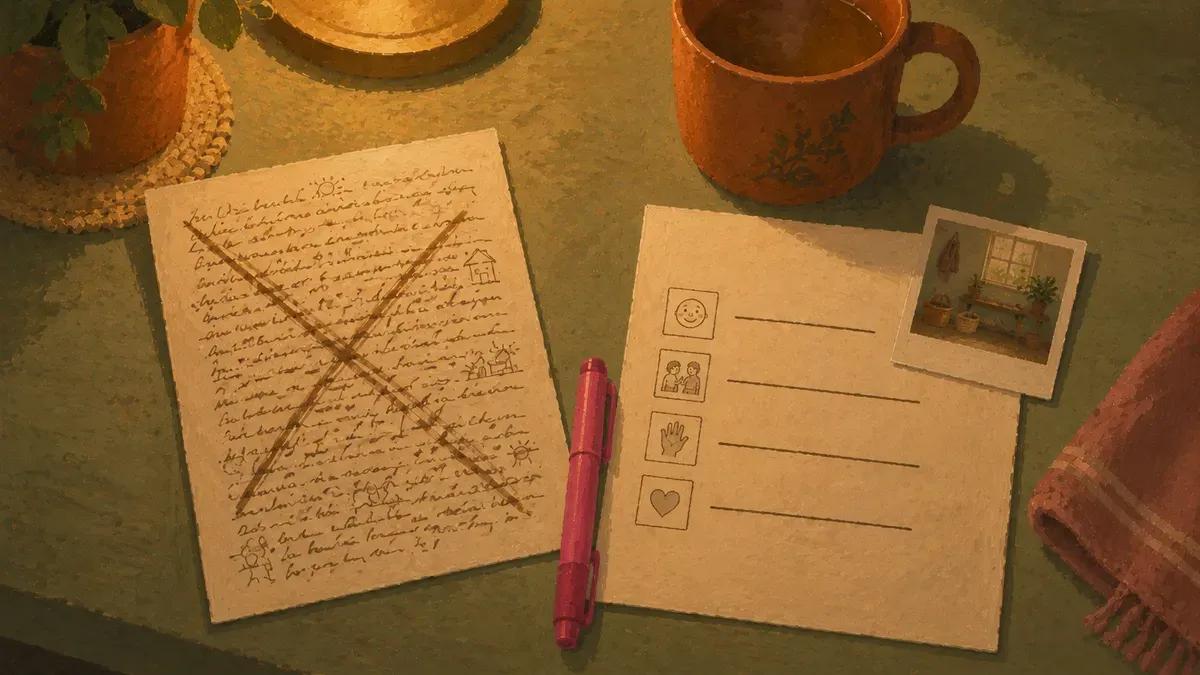
Third, I wrote a novel. Paragraphs of careful explanation that lost a four-year-old by sentence two. Too much text drowns the point.
Fourth, the reading level was off. Words like “appropriate” and “frustrated” when he needed “mad” and “that’s okay.” Age-appropriate wording isn’t dumbing it down. It’s meeting the kid where they actually are.
Fifth, and this one stung, I only read the story mid-meltdown. Pulling out a calm script when a kid is already past category five is like handing someone a map after they’re lost. Stories work on repetition and quiet, not crisis.
The thread through all five: I was writing for the situation instead of for my kid.
What I Changed That Finally Worked
The fixes were almost embarrassingly simple. I put Eli’s name in every story and slipped in a photo of him, the actual dentist’s chair, his backpack. Suddenly it was his story, not a stranger’s.
- Cut to four or five short lines. If you can’t read it aloud in under a minute, it’s still too long.
- Move the timing. Read it the night before and again on the way there, calm and unhurried, so the words are already familiar when the real moment arrives.
Instead of reading at the worst moment, we read the story the night before and again in the car, calm and unhurried, so the words were familiar before the real thing showed up.
If you’d rather start from a clean structure than build from scratch, these done-for-you social story templates bake in the short, personalized format so you can drop in your kid’s name and photo. Read it before the moment, not during, and let those simple visual supports carry the rest.
Writing and Introducing Your First Story
You’ve got the rules and a template open. Here’s how that turns into a story your kid will actually sit through, and what to do when they fold their arms and walk off.
A Simple First Draft From a Template
Start with a template and one situation. Just one. Pick the moment that’s been wrecking your week, the haircut, the drop-off, the dentist chair, and write only about that.
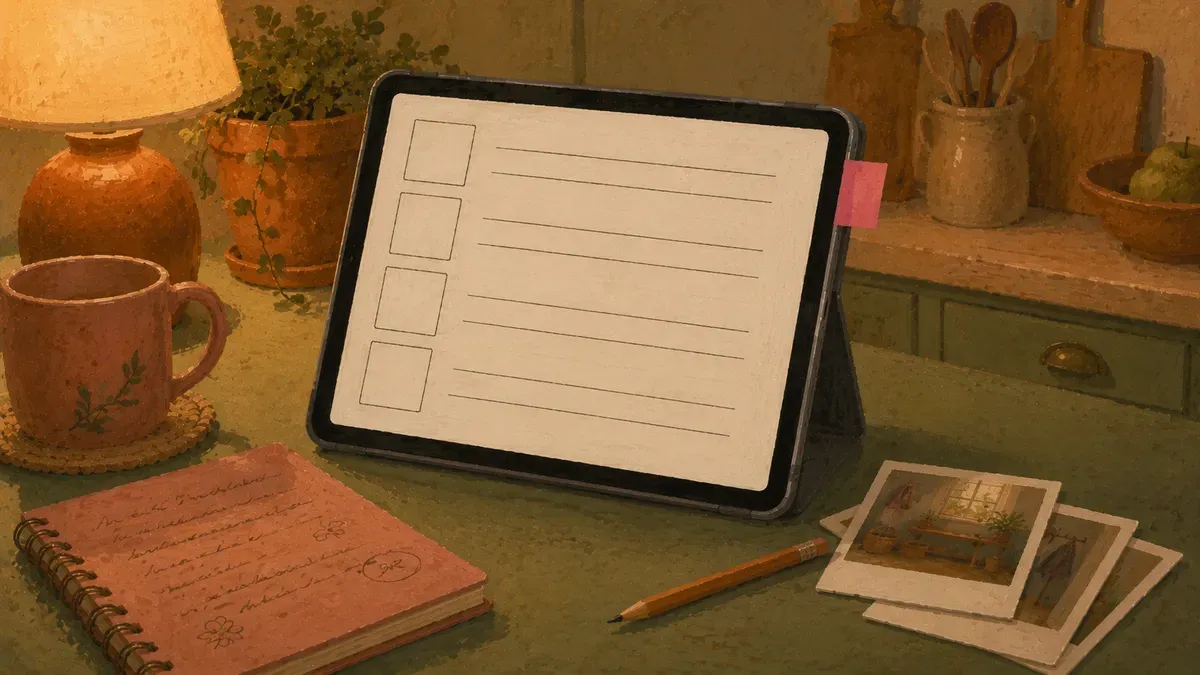
A template hands you the bones, so you’re filling blanks instead of staring at a cursor. Work in this order:
- Name the situation in one calm line. “Sometimes I get a haircut.”
- Describe what happens, the friendly version. “The barber sprays my hair. It feels cool.”
- Add one gentle directive near the end, not five. “I can hold my toy while I wait.”
- Close with a kind line. “Mom is proud when I try.”
That positive framing matters more than the wording. You’re showing the moment as doable, not warning them about it. Some templates double as social scripts with a line of dialogue to rehearse, which helps a kid who freezes on what to say.
Then personalize it, and this is the part that earns the buy-in. Their name. A real photo of your barber, your dentist, your car door. Pictures pull more weight than any sentence I write, so let those visual supports do the heavy lifting. If you want a worked example before drafting your own, a personal space social story shows the whole shape on a familiar topic.
Introducing It to a Resistant Child
Now the harder part. You wrote a lovely little story and your kid wants nothing to do with it. Normal.
- Don’t push. It becomes one more thing to refuse.
- Read it cold, well before the actual event happens.
- Bedtime or after lunch works well, when nobody’s wound up.
- First read is just a read: no quiz, no agenda.
Then let repetition do its quiet work. The Indiana Resource Center for Autism suggests reading the story consistently at the same time and place, with their case examples reading it three to four times before the target moment. That sameness is the point. Folded into your routines, the story stops being a demand and starts feeling familiar, and familiar is what lowers the anxiety underneath the resistance.
Leave it where they can grab it. Some kids reread it themselves once the pressure’s off. If yours still says no, set it down and try again tomorrow, the predictability builds either way. Want more topics to work through? Browse our full library of social stories and pick the next one together.
Found this useful? Save it for the next rough afternoon.
Questions parents ask me about this
What is a social story and how do you use one?
A social story is a short, personalized narrative your child hears before a tricky moment, not during it. Read it together three to four times in the days leading up to the event so the script has time to settle. Keep it to four or five sentences, written in the first person with your child's name and real details from their life. The goal is to trade guesswork for predictability.
What is the bees to the beehive social story about?
The bees to the beehive story is a classroom social narrative that uses the image of bees returning home to help young children understand expected group transition routines, like lining up or gathering on the carpet. It frames the behavior as something the whole group does together rather than singling any one child out. It is widely used in early childhood settings as a gentle way to preview what "coming together" looks and feels like.
How long should a social story be for a preschooler?
Four to five short lines, readable in under a minute. Too many pages and you lose them before you reach the part that matters. One situation, a few descriptive lines about what usually happens, one gentle suggestion for what your child might do, and you're done.
Do social stories only work for autistic children?
No. They were developed with autistic children in mind, but any child facing something unfamiliar can benefit. Preschoolers heading to a new school, kids prepping for a dentist visit, or a child watching an older sibling's routine can all use them. The strategy works whenever a child needs a preview of what to expect so the moment itself feels less like a surprise.
How often should you read a social story?
Aim for three to four readings before the target moment, spread over the days leading up to it. A consistent time and place helps, like before bed the night before or in the car on the way. Reading it right before the moment, in the middle of the chaos, tends to land too late. Repetition is where the benefit lives.
What do you do when a social story does not seem to work?
First, check the ratio of directive sentences to descriptive ones. If most lines are telling your child what to do, cut them back. Count your directive sentences and make sure descriptive ones outnumber them. Second, make sure it is personalized: a generic story lands softer than one with your child's name and a photo of the actual place. If it still gets refused, set it down without pressure and try again tomorrow.
Written by
Nora Hayes
Mom of two and a former preschool aide. I share the screen-free sensory play and calm-down ideas I test at my own kitchen table, plus what the moms in my little meet-up swear by. A parent passing on what works, not a doctor or a therapist.
More about NoraKeep going
All Social Stories-
 Social Stories
Social Stories for Kids With Autism: 20 Essentials
Social stories for kids with autism, made simple. Master the 6-step method and build the 20 essentials every autistic child needs.
-
 Social Stories
Social Story Templates: Edit Them to Truly Fit Your Kid
Free PDF social stories rarely fit your child. Learn to edit social story templates in minutes so every word, photo, and step is truly yours.
-
 Social Stories
No Hitting Social Story for Hands That Won't Listen
Hands that hit, bite, and push aren't bad, they're overwhelmed. This no hitting social story teaches safe hands and what to do instead.
-
 Social Stories
Personal Space Social Story: Teach Hugs & Asking First
Hug by rule or by choice? This personal space social story teaches kids to ask first, say no, and read body bubbles. Start using it today.