Personal Space Social Story: Hugs and Asking First

I am a parent sharing what worked at my house, not medical advice. For anything to do with your child's development or sensory needs, talk to your OT or doctor.
A personal space social story is a short, gentle script you read with your child to teach them to ask before hugging and to keep a little bubble of room around other people. It matters because the squeeze-everyone phase that feels sweet at three lands very differently with a classmate or a relative who didn’t want it, and the story hands your kid the words to ask first instead of just grabbing.
I’m Nora Hayes, a former preschool aide and mom to an autistic seven-year-old, and below I cover what the story teaches, how to use it day to day, a sample you can copy, and how to handle the harder parts like hearing no.
The plan in brief:
- Read the social story together once a day for at least two weeks before you need it.
- Teach one script, ‘Can I have a hug?’, and wait for a yes before any touching.
- Right after each read, role-play three quick scenes: a friend, a familiar grown-up, and a ‘no thanks’.
What a Personal Space Social Story Teaches
Role-play gets your kid practicing the ask. But before the practice sticks, they need to understand why the ask matters at all. That’s the job this kind of story does.
Social stories were created by Carol Gray in 1991 as a way to break down social situations that feel confusing into something a child can actually picture.
- The original social story framework and its defining criteria describes them as short, first-person narratives written to the child’s perspective, not rules handed down, but a gentle walk-through of what’s happening and what other people might feel.
- The National Autism Center classifies them as an established evidence-based procedure for building social skills and reducing problem behaviors in autistic children.
For personal space specifically, the story does something a direct instruction can’t: it puts the other person in the picture. “My friend has a space bubble. When I get too close without asking, it might feel like I popped it.” That sentence reaches a kid who genuinely doesn’t know the hug felt like a surprise. It’s not blame. It’s information.
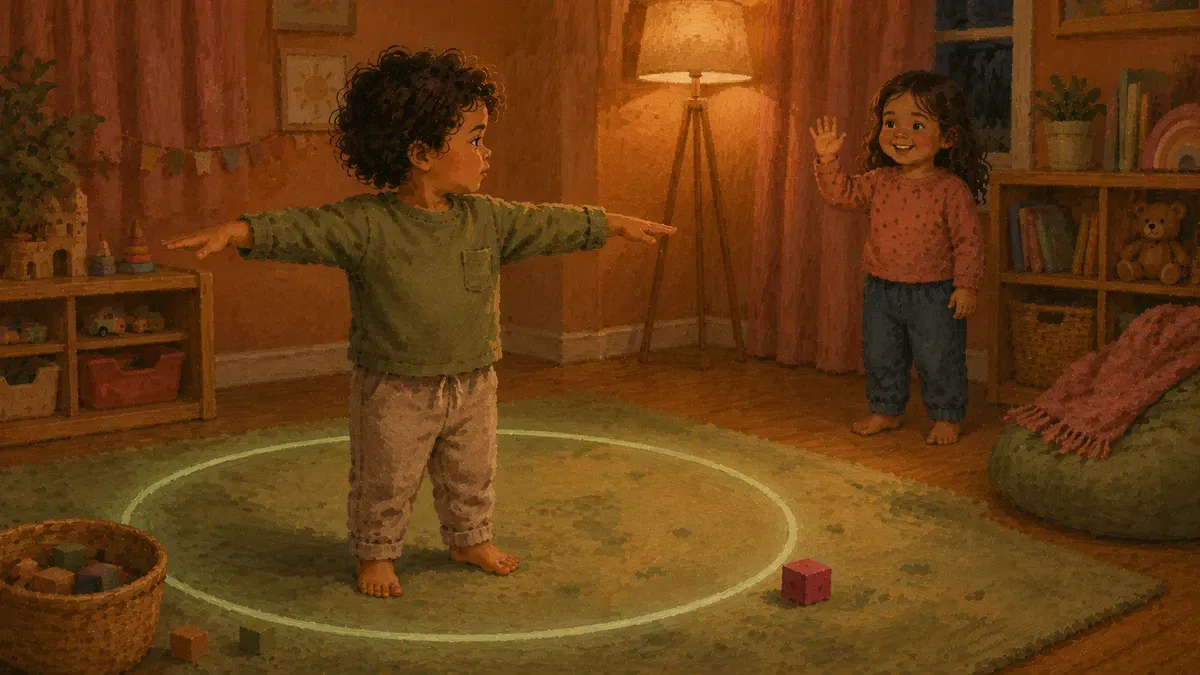
What personal space social stories teach, at their core, is perspective. Your child starts to see that other people have feelings about being touched, feelings they couldn’t read before. The space bubble gives that invisible thing a shape.
The story also gives your child a concrete, repeatable phrase to use the next time they want to squeeze someone.
“Can I have a hug?” is social-emotional learning made concrete: not a lesson about consent in the abstract, but one sentence your kid can reach for the next time they want to squeeze someone. That’s the whole point of the format. Not rules. A playbook.
For sensory-seekers especially (kids who want the input and go for it fast), a social story for personal space offers a pause point. It names the moment before the grab.
How to Use the Story to Teach Hugs and Asking First
The story does nothing sitting in a folder. Three small habits turn it into something your kid actually reaches for: read it before you need it, give them one line to say, then rehearse it on the spot.
- Read the story during a calm moment every day until your child knows it cold.
- Give them one asking line and practice it the same way each time.
- Run three quick rehearsal turns with them right away, before moving on.
Read It Daily Before You Need It
Read it together once a day, every day, for at least two weeks. Calm moments only.
- After breakfast, before the day picks up speed
- Right before nap or at bedtime
- Never mid-playdate when everyone’s already close to melting down
The point is that your kid knows the words cold before a real hugging situation ever shows up. You want it boring. You want them finishing your sentences.
There’s good reason to keep it short and steady. In a pilot study on personalized social stories, researchers read them to autistic children once a day for two weeks, about five minutes a session, and the gains were still holding six weeks later. The same work found stories run for under three weeks produced the biggest effects. So a tight daily stretch beats dragging it out for a month.
Keep your language plain when you read. Skip the lesson voice. Short, concrete language and a little daily reinforcement do more than any long talk about feelings.
Give One Clear Asking Script
Give your kid exactly one line. “Can I have a hug?” is all they need. Simple enough to pull up when their brain goes blank mid-playdate. One script, said the same way every time, so it’s there when they need it instead of a blank.
Then comes the part that matters most: they ask, and they wait. No reaching, no leaning in, no hands until they hear a yes. The waiting is the whole lesson. That pause is where consent lives, and it’s how a kid starts to feel that other bodies have a say too.
Write the script into the story as a plain directive sentence, the kind that tells your child precisely what to do. “I ask first. Then I wait for my friend to say yes.” Read it the same way each time so the line and the action stick together.
Asking, then waiting for a yes, is the difference between a sweet hug and one that makes a friend pull away.
This is how kids start to understand personal space, one answered question at a time. Their friend gets to answer, and so do they. If the script feels stiff at first, that’s normal. Keep it. The stiffness fades once it’s been said a hundred times.
Want your script to land cleanly inside the story itself? The carole gray framework is worth reading there so the asking line lands as a clear directive, not a vague hope.
Practice With Role-Play Right After
Close the book and act it out immediately. This is the step most people skip, and it’s the one that makes the words real. Kids often learn a line on the page and still freeze in the moment, because reading a story and doing the thing are two different skills.
Research on social skills interventions points to exactly this gap: autistic children frequently don’t carry a learned skill into real behavior without enough rehearsal, and that work recommends practicing inside everyday routines to help it transfer. Role-play right after reading is that practice.
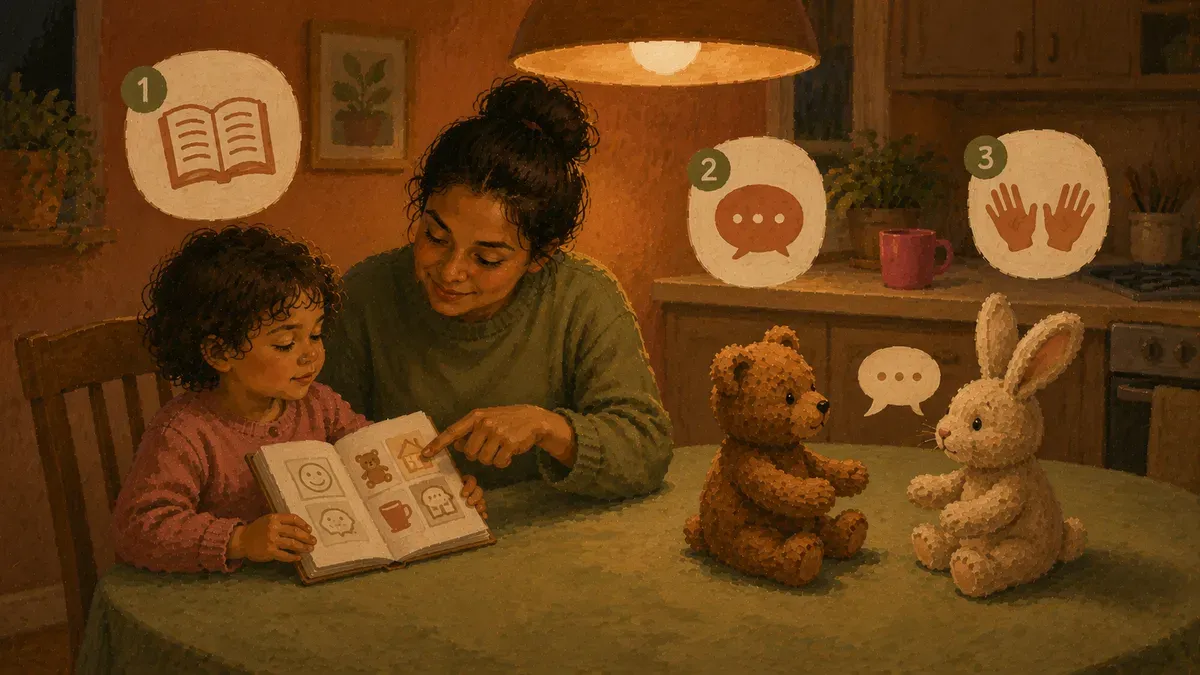
Run three quick scenarios:
- Asking a friend (a sibling or a stuffed animal works fine)
- Asking a familiar grown-up, like Grandma
- Saying “no thanks” when they don’t want a hug
That third one matters as much as the first two. Zero To Three suggests offering a real choice, “Do you want to give Grandma a hug, a high-five, or a wave?”, and they’re clear that caregivers should always honor a child’s no.
Keep it light. Trade roles, let them ask you, be a little silly. If it lasts ninety seconds before they wander off, that still counts. The visual supports in the story plus a quick run-through are doing the quiet work of turning a page into a habit.
A Sample Story You Can Read or Adapt
Here is a social story about personal space you can read tonight. Copy it word for word, swap names, or cut anything that doesn’t fit your kid.
My name is [Child’s Name]. I like being close to people I love.
*Everyone has a space bubble around their body. My space bubble is mine. The space around a friend’s body belongs to them.
So if I want a hug, I say, “Can I hug you?”
Then I listen for what they say. If they say yes, I can hug. If they say no, I keep my hands to myself and that’s okay too.*
Asking first makes my friend feel safe. It makes me feel good.
I am learning to ask before I touch. That is something to be proud of.
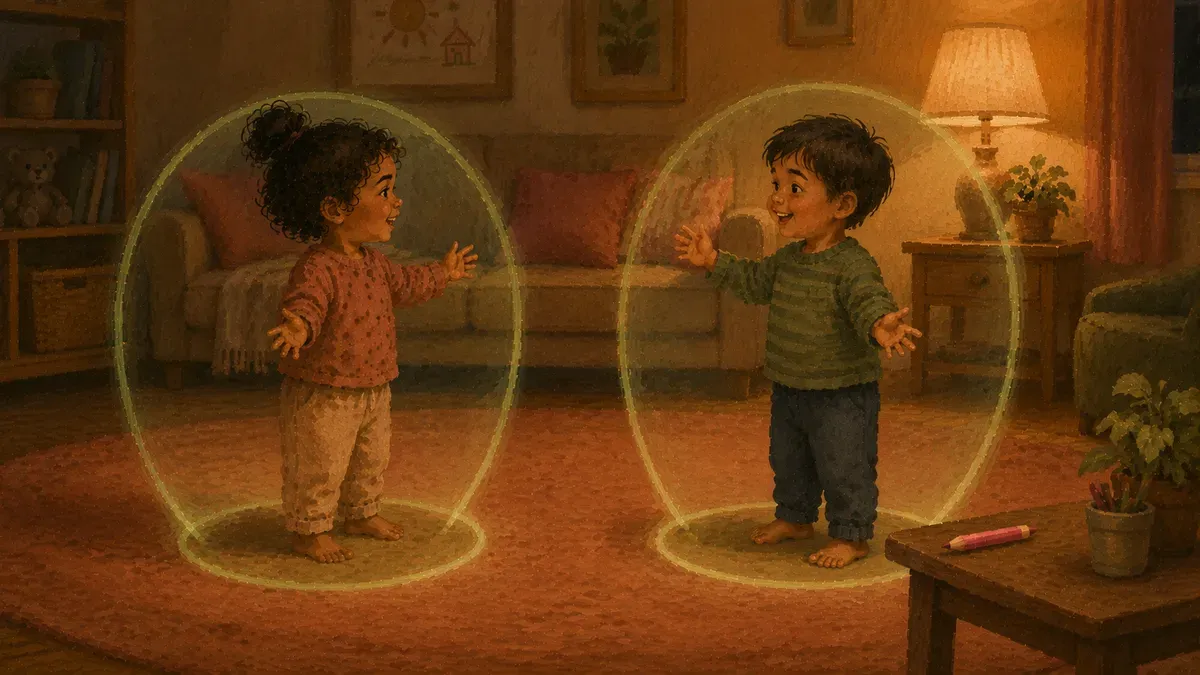
Those six descriptive sentences are enough. They cover the bubble, the script, keeping hands to myself as the backup, and a win for everyone. Long stories lose the audience around sentence four, so don’t add more just because you could.
A small tweak adapts this for your kid’s specific sensory style:
- Sensory-seeker (craves touch): add one line: “A hug is warm and tight and close.”
- Sensory-avoider: shift the center to the no: “It’s okay if I don’t want a hug. I can wave instead.”
Personalizing takes three swaps:
- Use their actual name in place of [Child’s Name]
- Change “friend” to a specific person: Maya, a cousin, their classmate Ben
- Name the spot where things usually go sideways
A story that says “at school with Ben” instead of “with a friend” is one they actually picture themselves in. That’s the difference between a story they recognize and one they tune out.
If you’re new to story social supports, read the sample as-is for the first week before you start personalizing. Let them get used to the rhythm and finish your sentences first. The details can come once the structure is boring to them.
Saying No and Respecting a Friend’s Answer
Asking first only works if both sides of the answer are real, so this part of the story teaches your child to say no when they don’t want a hug, and to take a no gracefully when someone else gives one.
Helping a Child Decline an Unwanted Hug
Grandma leans in, arms wide, and your kid freezes. That moment is where bodily autonomy stops being an idea and starts being a skill, and most kids need the words handed to them before they can use them.
So give them a line they can actually say, something that refuses and offers a swap in one breath, which feels safer to a child than a flat no.
Dr. Shalon Nienow of Rady Children’s Hospital is blunt about this in her guidance on teaching children consent and bodily autonomy: teach kids it’s okay to say no, even to an adult, and offer a physical alternative to the hug.
Put that permission inside the story, not just in your reminders.
- “My body is mine. I get to decide who hugs me.”
- “I can say, ‘No thank you, a wave instead?’”
- “A grown-up I trust will help if someone won’t stop.”
That last line matters. Consent and boundaries cut both ways, and a child who only hears “ask before you hug” can come away thinking the rule is about other people’s bodies, never their own.
Accepting When a Friend Says No
Now flip it. Your kid does the brave thing, asks for the hug, and the friend says no. What happens next is the part that actually sticks with peers.
The story needs to make a no feel ordinary, not like a door slamming. Keep the script short so it’s easy to remember:
- “If my friend says no, I stop and say okay.”
- “Sometimes no feels sad. I can find something else fun to do.”
This is the social skill that protects friendships. A kid who hears no and keeps grabbing learns the lesson the hard way, as a lost playdate instead of a calm sentence in a story, and the part about hands belonging to themselves never sinks in. If grabbing and pushing is the real pattern at your house, pair this with our no hitting social story so the boundaries reinforce each other.
Respecting a no is the same muscle as giving one. Both come down to one rule: the answer belongs to the person whose body it is, and you honor it either way.
Adjusting Bubbles for Different People and Senses
One bubble size for everyone doesn’t hold up in real life. The right distance shifts with who’s standing in front of your kid, and so does the right greeting.
Family, Friends, and Strangers
Grandma gets a different bubble than the mail carrier, and your kid needs to hear that out loud. There’s real structure under that gut feeling. Anthropologist Edward Hall’s proxemics research maps four distance zones we use without thinking: intimate space (0 to 18 inches) for family and embracing, personal space (about 1.5 to 4 feet) for friends, social space (4 to 12 feet) for acquaintances, and public distance (12 feet and up) for strangers.
You don’t teach it in inches, though. You teach it in people.
- Trusted family (mom, dad, grandma): close-up hugs are usually fine, if both people want one
- Friends and classmates: about an arm’s length, a wave or a high-five before you move in
- New adults and strangers: more room, and you check with a grown-up you trust first
The point isn’t memorizing a chart. It’s that closeness is earned by relationship, and the same boundaries apply to everyone, even the person they love most. Social skills like this land faster when you name the person, not the number.
When Touch Feels Like Too Much
For some kids, a hug isn’t warm. It’s loud. Touch can register as overwhelming, even painful, and that has nothing to do with manners. A peer-reviewed review estimates that about 80% of autistic children have sensory processing differences, with roughly 60% showing altered tactile sensitivities, per research on sensory sensitivities and touch in autistic children.
So when your kid pulls back from a squeeze, read it as information, not rudeness.
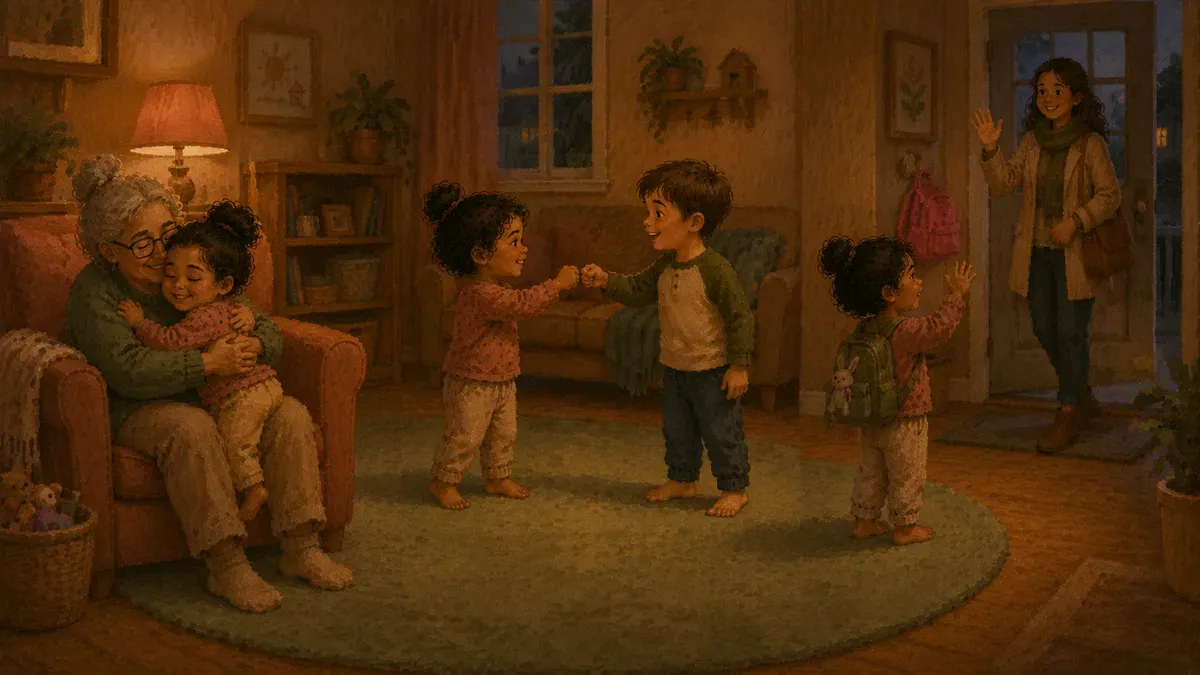
- A wave
- A fist bump or thumbs-up
- A kiss blown across the room Build the swap right into the story so it reads as a real choice, not a consolation prize: “I can wave instead of hugging.” That line protects their bodily autonomy and hands the adult a clear cue to follow.
The harder job is usually the grown-ups.
- A neurodivergent kid offering a high-five isn’t being cold; Aunt Linda needs to hear that
- Brief the relatives beforehand and the whole moment goes smoother
For more scripts that handle these everyday standoffs, our roundup of social stories for kids with autism is a good next stop. The greeting changes. The respect underneath it doesn’t.
Making the Story Personal and Where to Find More
A generic story gets the concept across. A story with your child’s name, their best friend’s name, and the living room couch in it? That one sticks.
Personalized narratives work because the child doesn’t have to do the mental work of translating “the boy in the story” into “me.” Swap in your kid’s name from the first read. Add the specific people they’ll encounter: Grandma Rosa, the boy in their class named Theo. Name the real place: “At Sunday dinner” instead of “at a party.” That level of detail moves a concept off the page and into their actual life faster than any amount of repetition with a generic script.
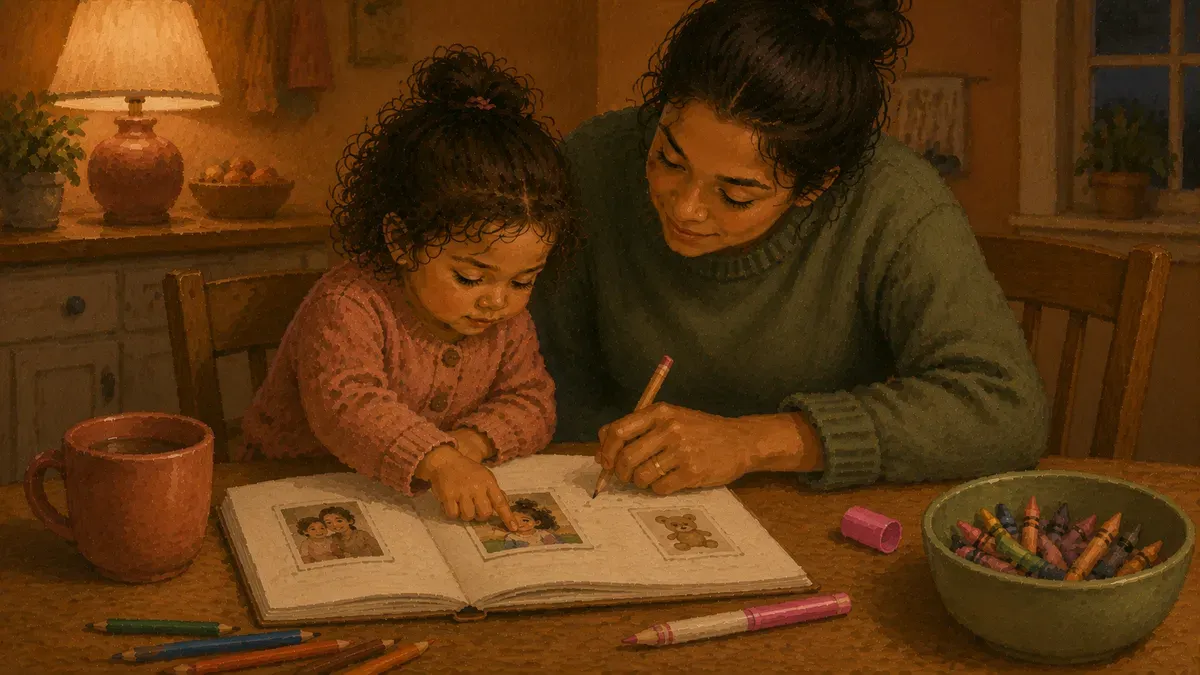
Personal space social stories land better when kids see themselves in the illustrations.
- If your child is Black, biracial, or uses a wheelchair, look for options with diverse representation.
- No matching illustrations? Cut and paste a photo of your child onto the page. Low-tech works fine.
- For early readers, tape a small headshot of each named person beside their name so the words connect to real faces they know.
If you want a starting point you can edit tonight, our editable social story templates let you drop in names, photos, and places without building anything from scratch. Some families print and laminate; others just pull up the PDF on a tablet each night.
For a broader range of scripts covering more situations, browse our full library of social stories to find what matches where your child is right now.
Found this useful? Save it for the next rough afternoon.
Questions parents ask me about this
How do I teach my child about personal space?
Start with the space bubble idea: your child has an invisible bubble around them, and so does every other person. A social story gives that concept a name and a repeatable phrase before the moment of contact happens. Two minutes of role-play with that ask script turns the concept into something they've actually done, not just heard. They've actually practiced it.
At what age should I start using a personal space social story?
Most children are ready between three and five, when they can follow a short narrative and hold a two-step sequence (ask, then wait for yes). That said, the story works whenever your child is bumping into this concept in real life, whether that's at preschool, at family gatherings, or with a sibling. Earlier is fine if the story is short and the language is concrete.
How often should we read the social story for it to work?
Read it daily for at least two weeks, in a calm moment before the situation arises, not during one. Daily repetition is what builds the habit; a single read rarely transfers to real behavior. Most families see the biggest shift in the first three weeks when they stay consistent.
What if my child still hugs without asking after reading the story?
That's normal, especially early on. The story plants the idea; role-play is what moves it into muscle memory. Add a quick two-minute practice after each reading: take turns being the person who asks and the person who answers. Prompt gently in the moment and give it a few more weeks before worrying that it isn't working.
Do personal space social stories only work for autistic children?
No. Social stories were developed with autistic children in mind, but the format works for any child who benefits from having a situation explained in clear, step-by-step language before it happens. Kids with ADHD, anxiety, or no diagnosis at all can use them just as effectively. The story meets the child where they are; it doesn't require a particular profile to land.
How do cultural differences affect personal space and hugging?
They matter, and they're worth naming out loud for your child. Some families and communities greet with hugs or kisses; others prefer a wave or a handshake. The goal of the story isn't to set one universal rule but to teach your child that they can ask before touching and that different people have different preferences. Frame it as curiosity, not correction: in our family we hug, but some of our friends prefer a high-five.
Can I use a personal space social story for teens, not just young kids?
Yes, with adjustments. The language needs to match the teen's reading level and feel age-appropriate, so swap the bubble imagery for more direct framing around consent and respect. The core mechanics stay the same: name the situation, give a script for what to do, rehearse it. Teens navigating new social settings or bigger peer groups often find that kind of structure genuinely useful.
Written by
Nora Hayes
Mom of two and a former preschool aide. I share the screen-free sensory play and calm-down ideas I test at my own kitchen table, plus what the moms in my little meet-up swear by. A parent passing on what works, not a doctor or a therapist.
More about NoraKeep going
All Social Stories-
 Social Stories
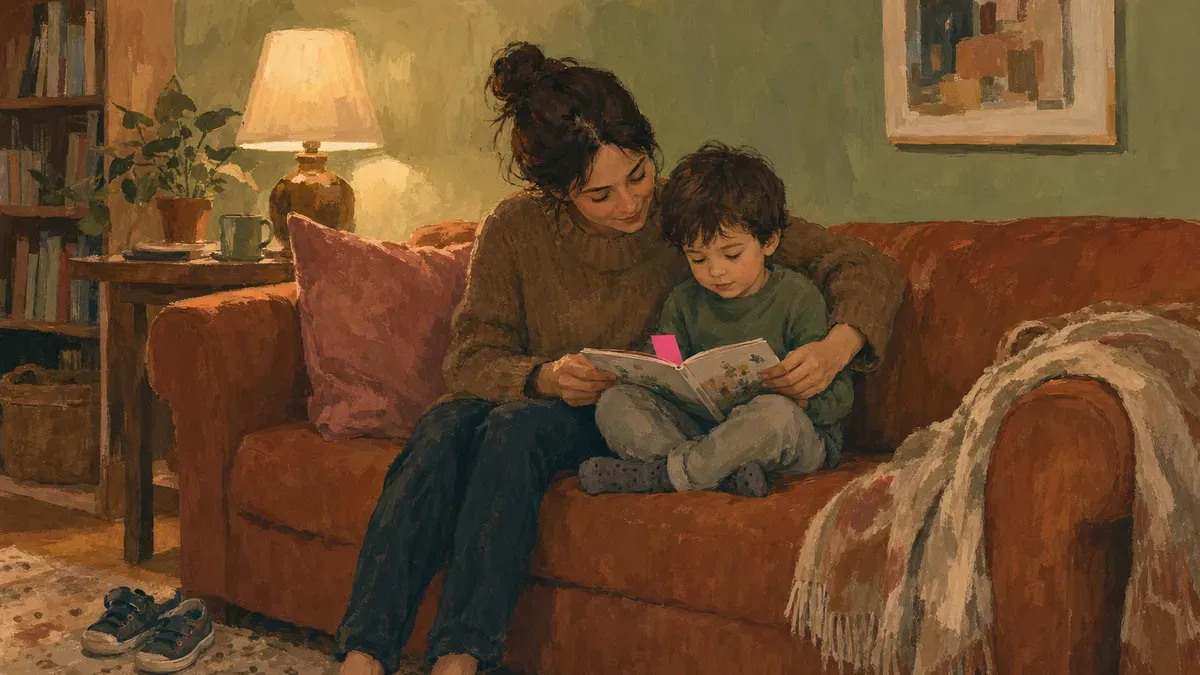
Social Stories for Kids With Autism: 20 Essentials
Social stories for kids with autism, made simple. Master the 6-step method and build the 20 essentials every autistic child needs.
-
 Social Stories
Social Story Templates: Edit Them to Truly Fit Your Kid
Free PDF social stories rarely fit your child. Learn to edit social story templates in minutes so every word, photo, and step is truly yours.
-
 Social Stories
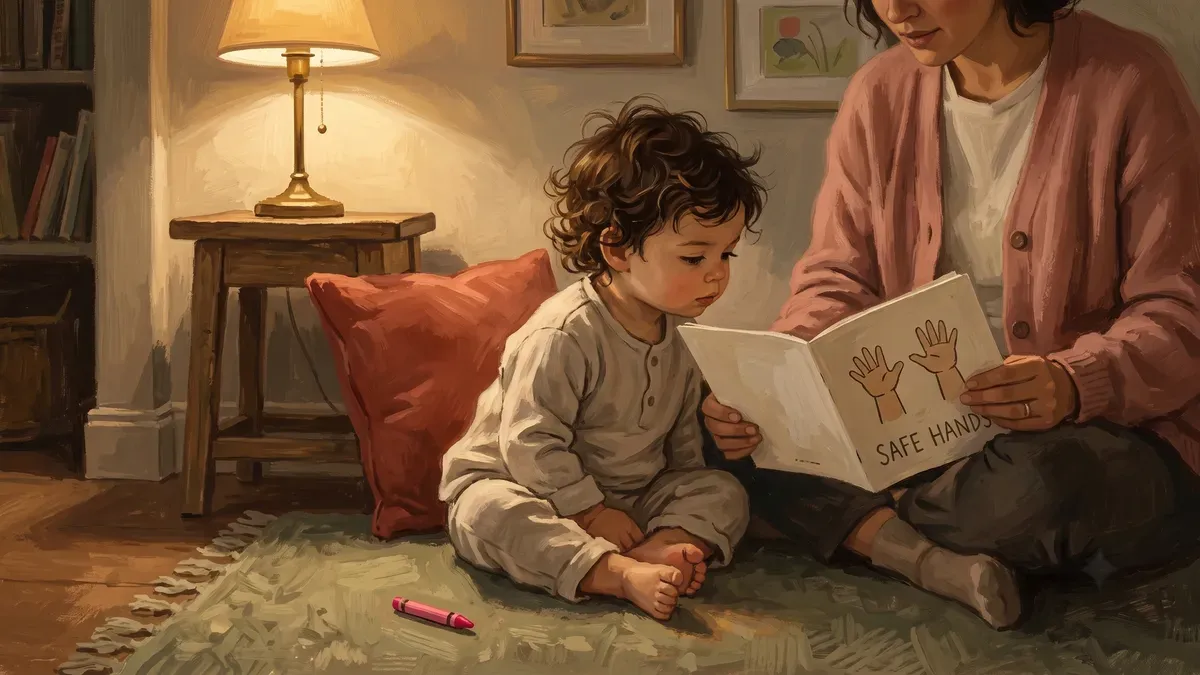
No Hitting Social Story for Hands That Won't Listen
Hands that hit, bite, and push aren't bad, they're overwhelmed. This no hitting social story teaches safe hands and what to do instead.
-
 Social Stories
Potty Training Social Story: The Script That Worked
We read this potty training social story 40 times before it clicked. Get the full script, why it works, and make it yours. Grab it now.