Zone of Regulation: What Each Zone Looks Like at Home

I am a parent sharing what worked at my house, not medical advice. For anything to do with your child's development or sensory needs, talk to your OT or doctor.
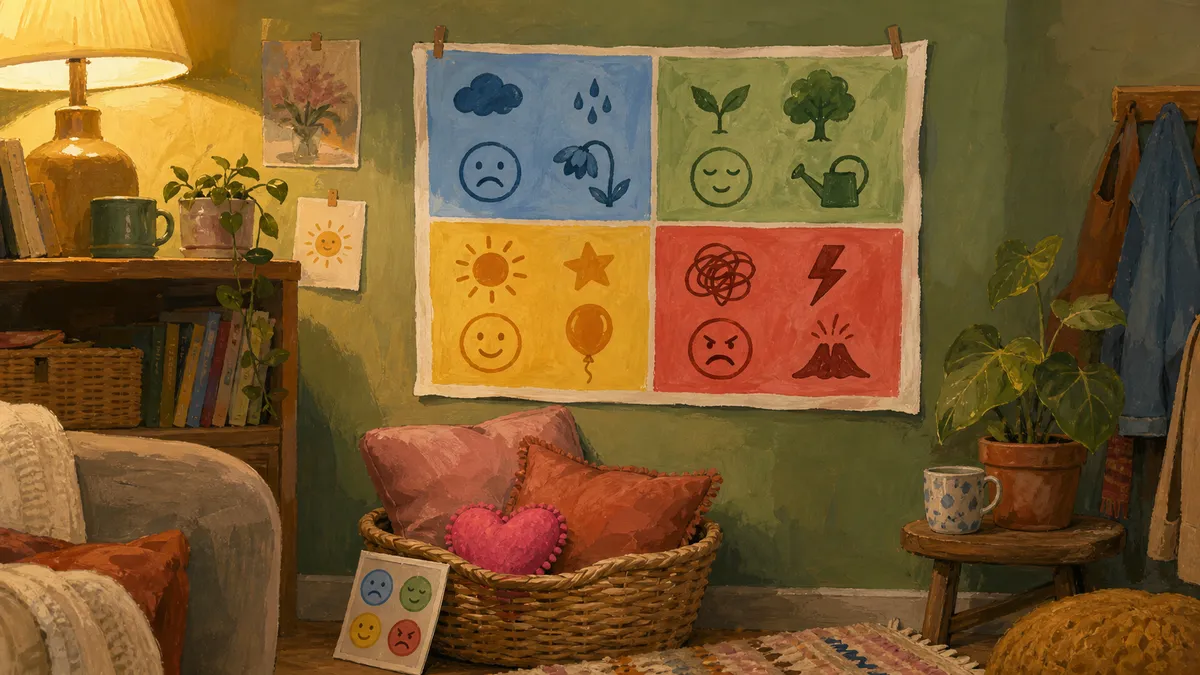
The zone of regulation is just a color-coded way to name how your toddler’s body and mood are running right now: blue when they’re slow or shutting down, green when they’re calm and ready, yellow when the wobble starts, red when the big feelings take over.
I’m Nora Hayes, a former preschool aide and mom to an autistic sensory-seeker, and naming the zone out loud has caught more meltdowns before they land than any other trick I know.
This walks you through what each of the four emotional zones actually looks like in a real toddler’s day, so you can spot the shift on the couch or in the car, not just on a chart.
The Four Zones, Translated for Real Toddler Life
Think of it as a body-state map. Each zone is a color, and each color describes where your kid’s arousal level is sitting right now.
The zones of regulation framework sorts feelings into four buckets by energy level, not by whether the feeling is “good” or “bad.” Blue is low and slow.
| Zone | Energy | What it looks like |
|---|---|---|
| Blue | Low | Sad, sleepy, withdrawn |
| Green | Calm | Happy, focused, ready |
| Yellow | High | Anxious, giddy, wound up |
| Red | Overflow | Furious, panicked, out of control |
The emotion zones don’t tell you what a child is feeling, exactly. They tell you how much their nervous system has to work with right now.
For a toddler, that matters more than the label.
- Green zone: they can hear “no” and handle it
- Yellow zone: one wrong snack away from a meltdown
- Blue zone: low and slow, needs something to wake the system up
That changes what you offer. Your calm down corner emotional regulation setup for a yellow-zone kid barreling toward the couch looks nothing like what a blue-zone kid needs.
This framework gives you a shared language with your child before they have the words for it. The zones of self-regulation become a tool your whole household can use, not just a chart on the wall.
Blue Zone: When Your Toddler Slows Down or Shuts Down
Shared language matters, but only if you can spot what you’re looking at. The blue zone is the quiet end of the feeling spectrum, and the one parents most often misread.
What It Looks Like at Snack Time or Bedtime

You sit down for snack and your toddler rests their head on the table. They push the crackers around but don’t eat. You ask what’s wrong and get a blank stare, or a slow whine with nothing behind it.
That’s blue zone: low energy, sad, withdrawn, can’t get going. It shows up after a long morning at the park, right before a nap they’re fighting, or on sick days when everything feels heavier. Some kids go blue when they’re understimulated and bored, not just when they’re tired. Not defiance. A body running low.
Gentle Ways to Bring Energy Back Up
The instinct is to push through the schedule. But ZERO TO THREE puts it plainly: regulation comes first, understanding follows. A blue-zone toddler needs to come back up before they can participate in anything.
- A cup of water or a light snack
- Five minutes sitting close without demands
- A short walk, jumping on a cushion, or a different room Co-regulation tools work here because your calm presence is the fastest route back. If they need rest, let them rest. Not every blue zone needs fixing. Sometimes it just needs witnessing.
Green Zone: What a Regulated, Ready Toddler Looks Like
Blue zone is about noticing the low. Green is about noticing the good before it slips away, and knowing what it looks like helps you protect it.
The Everyday Signs of a Green-Zone Toddler
The Zones of Regulation framework describes this as the “just right” state: calm, happy, focused, content, able to make good decisions. In toddler terms, that looks pretty ordinary, and ordinary is exactly what you want.
- Says yes when you say it’s time to go
- Sits with a puzzle for more than thirty seconds
- Moves through a transition without melting down
- Plays alongside a sibling without immediately grabbing the toy

This is the calm, ready learner zone, the state where new skills land and the fun actually happens. “You found a way to wait. That’s what calm feels like in your body.”
How to Help Your Toddler Stay Green Longer
A full belly matters more than most parents expect. So does a predictable morning rhythm, a nap that isn’t blown past, and a day that stays somewhere between too-busy and too-empty. A 2024 systematic review by Selman et al., published in the Journal of Family Theory & Review, found that 16 of 18 studies examining daily routines and self-regulatory skills reported positive associations. Routine scaffolds regulation.
Name the state when you see it. “Right now you’re feeling calm and your body knows what to do.” Over time, your toddler learns to recognize green from the inside and name their own emotions, and that’s what self-regulation actually looks like. That’s the whole point of self-regulation.
Yellow Zone: Catching the Wobble Before the Meltdown
Green is great while it lasts. Yellow is what happens when the wheels start to loosen, and catching it before red takes over is the whole game.
The Wiggles, Whines, and Warning Signs
Yellow Zone isn’t meltdown territory yet. It’s the wobble that comes right before.
Watch for these tells: your toddler gets wiggly and can’t hold still, the voice climbs a pitch, the humor tips into silly-out-of-control, or they get frustrated over something minor (the cracker broke, the sock seam feels wrong). They might look anxious, start pacing, or jump from one thing to another every 30 seconds.

The body is speeding up. Breathing quickens. That energy has to go somewhere, and if it doesn’t find an exit, red zone is next.
Yellow is early enough to turn around. That’s the whole opportunity.
Co-Regulating Your Way Back to Green
The fastest route out of yellow is co-regulation. ZERO TO THREE connects strong co-regulation in early childhood to lasting coping strategies, emotional awareness, and resilience, which means your steady presence is doing more than just surviving the moment.
The fastest exits from yellow run in two steps:
- Burn the body energy first. A few big jumps, a lap around the yard, or any heavy movement that gives the body an exit.
- Then wind down. Deep breathing together, a squeeze pillow, or a quiet spot with a sensory bottle.
For a longer list of what works, our emotional regulation activities for kids cover a range of tools by age and situation.
Yellow caught early stays yellow. Let it run and you’re managing red instead.
Red Zone: When Big Feelings Take Over
Red is what happens when yellow doesn’t get caught. Here’s what it looks like, and what to actually do when you’re already there.
What a Red-Zone Meltdown Really Looks Like
Screaming. Hitting. Throwing. Angry, out-of-control behavior that seems to come from nowhere. That’s the red zone: the nervous system hit its limit and the body took over, no choice involved.

A full red-zone meltdown isn’t your toddler choosing bad behavior. Under that level of stress, the thinking part of the brain goes offline and the body enters full fight-or-flight. They can’t calm down on command any more than you can stop hiccupping by deciding to. The behavior is a symptom, not a strategy.
That shift in framing matters: knowing when your kid is in the zones of regulation red zone changes how you respond. Less “stop it right now,” more “ride it out.”
Staying Calm and Safe Until It Passes
Your only job in red is safety and presence.
- Move anything breakable out of reach
- Get down low, stay quiet, create space
- No questions, no threats, no lecture mid-meltdown
A toddler in the red zone can’t process words. What they can feel is whether you’re calm next to them.
Harvard Health Publishing calls this co-regulation: a calm caregiver staying present alongside a dysregulated child is the mechanism through which kids gradually build self-regulation. You don’t fix the red zone. You validate that it’s hard, you wait, and you stay. The talk comes after the body settles and they feel safe again. That’s when the calm-down space, if you’ve built one, earns its keep.
Building a Daily Zone Check-In at Home
The red zone is survivable. But you don’t want to live there. These two moves, a chart your toddler can point to and a check-in tucked into moments you already have, turn zone awareness into something that runs in the background instead of something you grab in a crisis.
Using a Simple Zone Chart Toddlers Understand
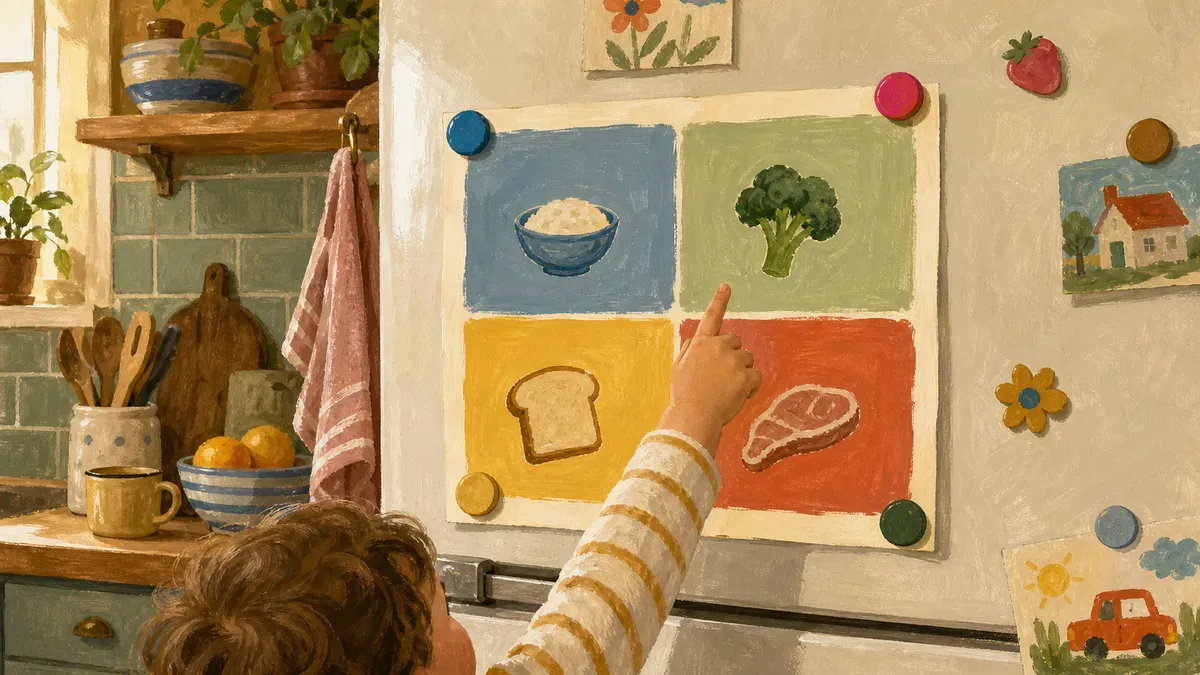
A zones of regulation chart does one thing: makes the invisible visible. Toddlers can’t always say “I feel anxious and my body is revving up.” They can point to yellow.
Print a simple color-coded thermometer or four-square grid at their eye level and keep the feelings words short. Body cues work better than abstract labels for a three-year-old: “heavy body” lands before “withdrawn.” A zone of regulation thermometer on the fridge, labeled with icons they can identify, handles the visual learning for you.
You can find a feelings zones chart your kid will actually use if you’d rather not start from scratch.
Making the Check-In Part of the Daily Routine
The zones of regulation check-in doesn’t need its own slot in the routine. Three moments already work:
- Morning: Before the day kicks off, point to the chart. “Where’s your body right now?” You model it first (“I’m a little tired, so I’m blue”), and they start to mirror. That 30-second exchange gives you a read on who might need extra co-regulation before anything goes sideways.
- After a big transition: Pickup is almost always yellow. A quick name-and-label catches the wobble before it tips.
- Before bed: A calm check-in pulls the day into focus and starts building the habit of self-reflection. These are the regulation examples that stick because they’re attached to something real.
For more on weaving this into your day, our full guide to building calm-down routines at home covers the tools that hold it all together.
Found this useful? Save it for the next rough afternoon.
Questions parents ask me about this
Talking about zones with toddlers: what actually works
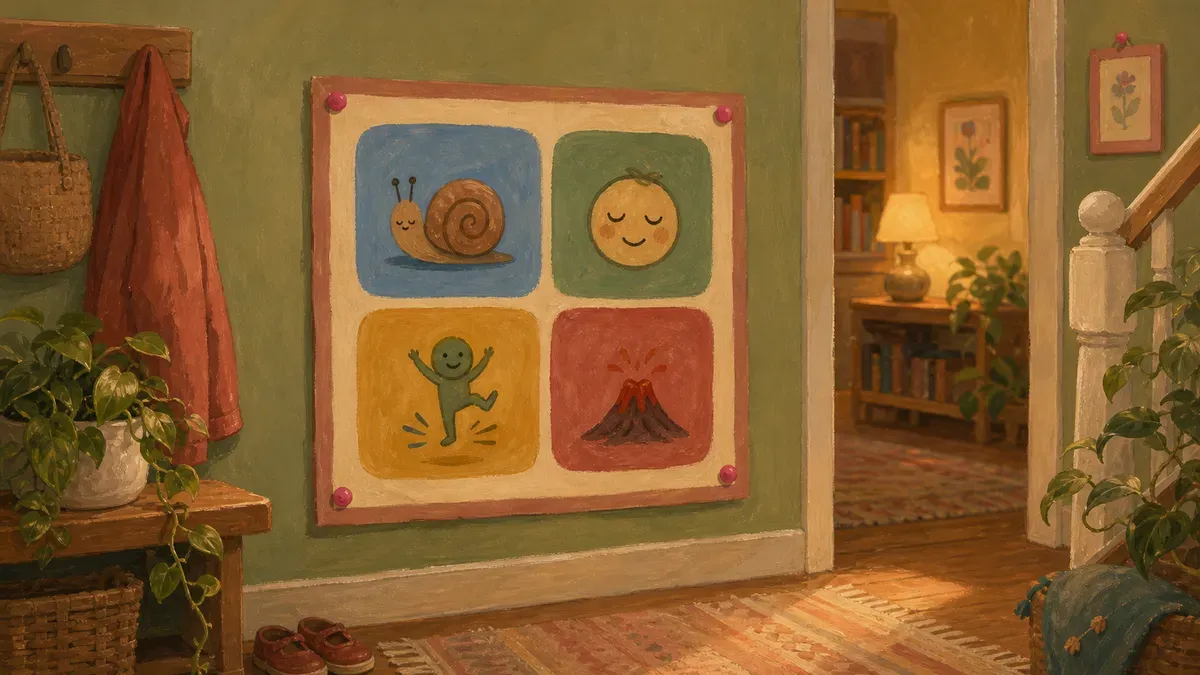
Keep it body-first. Instead of "you're in the yellow zone," try "your body is getting really fast right now" and point to a color on your chart. Three-year-olds understand colors and body sensations before they can talk about feelings in the abstract. A picture of a slow snail for blue, a happy face for green, a bouncy kid for yellow, and a volcano for red lands better than any explanation.
What if my toddler is non-verbal and can't name their zone?
Naming is your job, not theirs. Point to the zone on a visual chart, say it out loud calmly, and move straight into the support. A non-verbal child benefits from the framework exactly as much as a verbal one because it gives the adults around them a shared language for responding consistently. Over time, many kids start pointing to the chart themselves before speech catches up.
Is the red zone the same as a tantrum?
Not exactly. A tantrum can start as a bid for attention or a test of limits and ramp up if it gets a reaction. The red zone is a nervous system state: the child's body is genuinely overwhelmed and their thinking brain has gone offline, so logic and consequences don't reach them in that moment. The practical difference matters because the response changes: red zone asks for safety and calm presence first, not a consequence or a lecture.
Can a toddler be in two zones at once?
Not simultaneously, but they can move between zones very quickly, which can look like being in two at once. A child who's laughing and then crying three seconds later isn't in yellow and green at the same time. They just transitioned fast. Toddlers shift zones more rapidly than older kids because their regulation system is still developing, so catching the yellow window before it tips to red is often a matter of seconds.
What age can children start using the zones of regulation?
Most kids can start recognizing and naming body states around three or four, though they'll need adult support and a visual to make it concrete. Under three, the framework still serves the caregiver: you use it to read your child's state and respond, even if your child can't use the language yet. By five or six, many kids can start checking in independently when the routine is consistent.
Should I punish my child for being in the red zone?
A consequence delivered in the red zone won't land: the child's brain can't process it in that state, and it tends to extend the meltdown rather than end it. Safety first, then calm presence. The conversation about what happened and what to do differently belongs after the body has settled and the child can actually hear you.
Written by
Nora Hayes
Mom of two and a former preschool aide. I share the screen-free sensory play and calm-down ideas I test at my own kitchen table, plus what the moms in my little meet-up swear by. A parent passing on what works, not a doctor or a therapist.
More about NoraKeep going
All Calm & Big Feelings-
 Calm & Big Feelings
Emotional Regulation Activities for Kids That Work
Most calming tricks fail mid-meltdown. These emotional regulation activities for kids work when nothing else does. Find the one that fits your child.
-
 Calm & Big Feelings
Calm Corner Ideas: 25 Picks Under Your Coffee Budget
Skip the $200 setups. These 25 calm corner ideas cost less than a latte and soothe big feelings. Build one your kid loves this week.
-
 Calm & Big Feelings
Cozy Corner Preschool: Calm Down Ideas for Throwers
Throwing the calm-down tools? Build a cozy corner preschool space that survives big feelings, with throw-proof tools and steps that work.
-
 Calm & Big Feelings
Calm Corner Classroom Setup for Autistic Kids
Most calm corners fail autistic kids because they skip the sensory profile. Build a calm corner classroom that works in 5 steps. Start here.