Christmas Fine Motor Activities for Little Hands

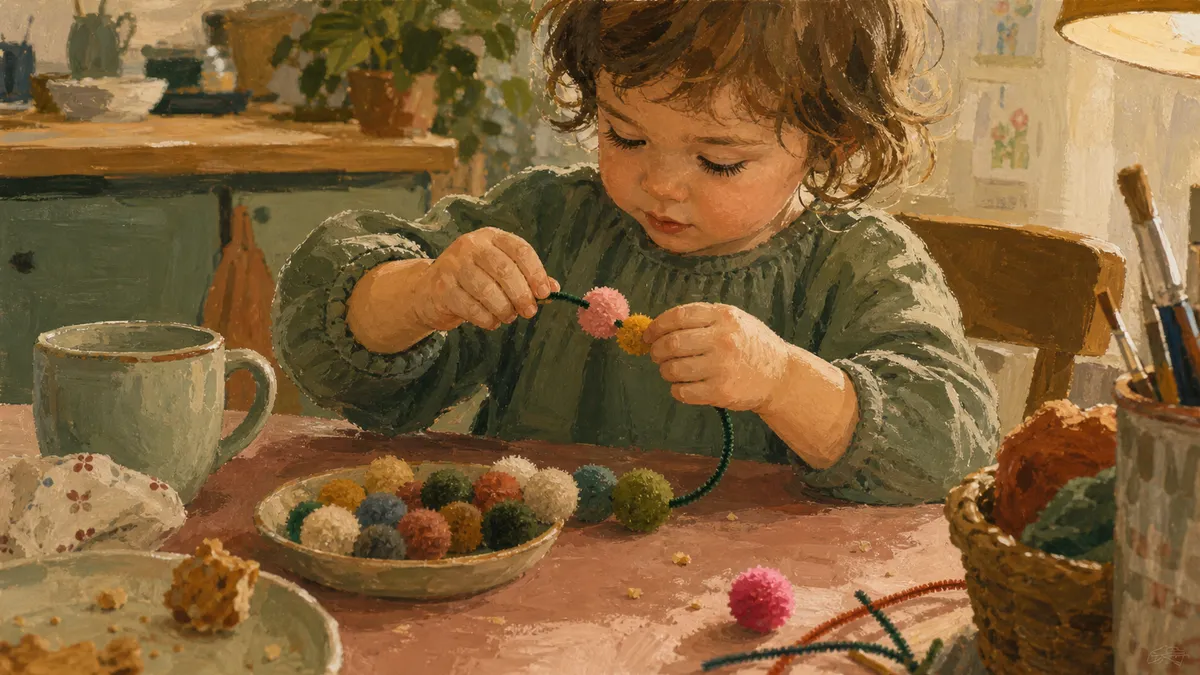
Christmas fine motor activities are holiday crafts that sneak real hand strength into the fun, like pinching pom poms onto a paper tree, snipping paper chains, or rolling play dough snowmen. That pinch-and-snip work matters more than it looks, because handwriting trouble shows up in 10 to 30% of school-aged kids and is one of the most common reasons children get sent for occupational therapy.
I’m Nora Hayes, a former preschool aide and mom to a sensory-seeker, and below I’ll walk you through threading, snipping, tracing, and squeeze setups you can pull together with stuff already in your pantry and craft drawer.
Why Christmas Themes Make Fine Motor Practice Stick
Holiday crafts look like decorating. What they’re actually doing is building the hand skills that handwriting depends on, and they do it in a way that keeps kids coming back for more.
The Hand Skills Hiding in Holiday Play
When a child presses a pom pom onto a paper tree, that tiny pinch is a pincer grasp at work. Threading a bead onto a pipe-cleaner garland demands eye-hand coordination, bilateral coordination (one hand holds, the other feeds), and in-hand manipulation all at once. These are the same skills that solid fine motor activities build toward handwriting readiness, and per NHS occupational therapy guidance, bilateral coordination is an outright prerequisite for writing.
Snipping a paper snowflake adds finger isolation too.
None of this requires a worksheet. A roll of ribbon and a bowl of buttons get there just as well.
Why Festive Repetition Beats Worksheets
Here’s the problem with handwriting drills: kids quit. The hand strength and dexterity that a decent pencil grip demands come from sustained, repetitive action, and drilling the same letter over a workbook page bores most preschoolers in under two minutes.
A Christmas theme changes the math. Kids who won’t trace a single letter will thread thirty beads onto a necklace because it’s a necklace.
The OT Toolbox points out that kids naturally repeat an action they’re working to master, and play is what keeps that repetition going.
The holiday wrapping is the motivation. Muscle development follows.
Pom Pom and Threading Activities for a Festive Pinch
Both setups here cost almost nothing and skip the cleanup dread. One works the pinch; the other builds the bilateral reach that writing needs.
- Pom pom Christmas tree decorating: tweezers and a laminated tree outline, sharpens pincer grip while they think they’re decorating
- Lacing garlands and beaded ornaments: yarn with a taped tip and pony beads or pasta, one hand holds while the other threads
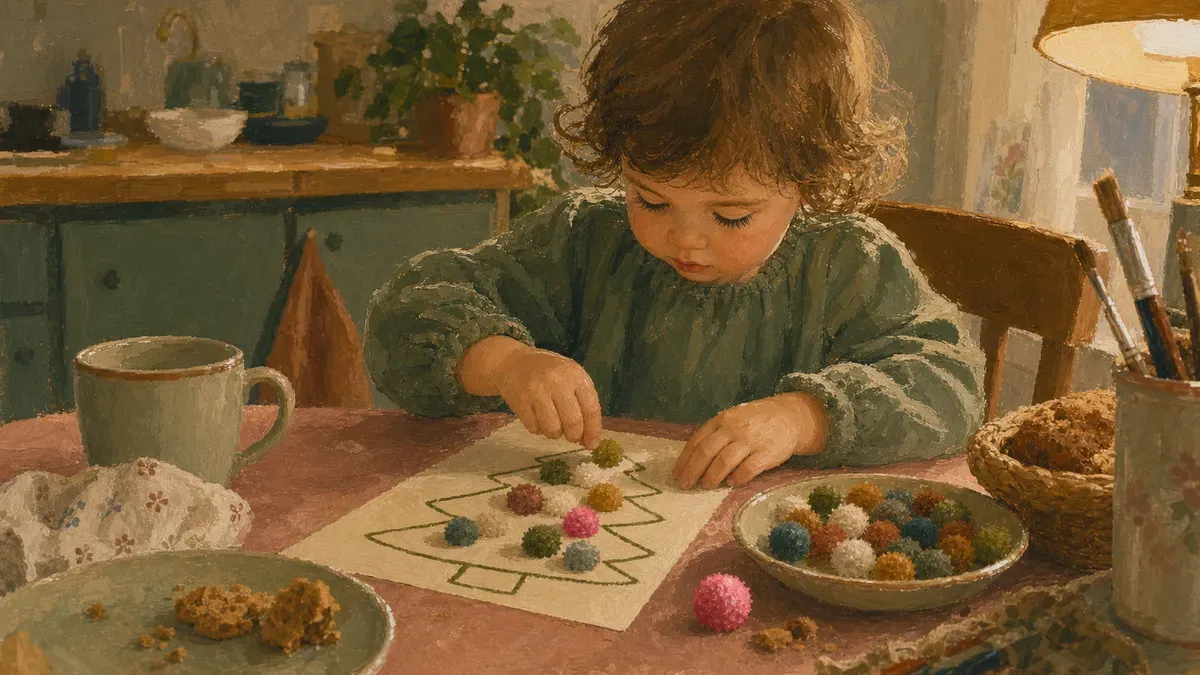
Pom Pom Christmas Tree Decorating
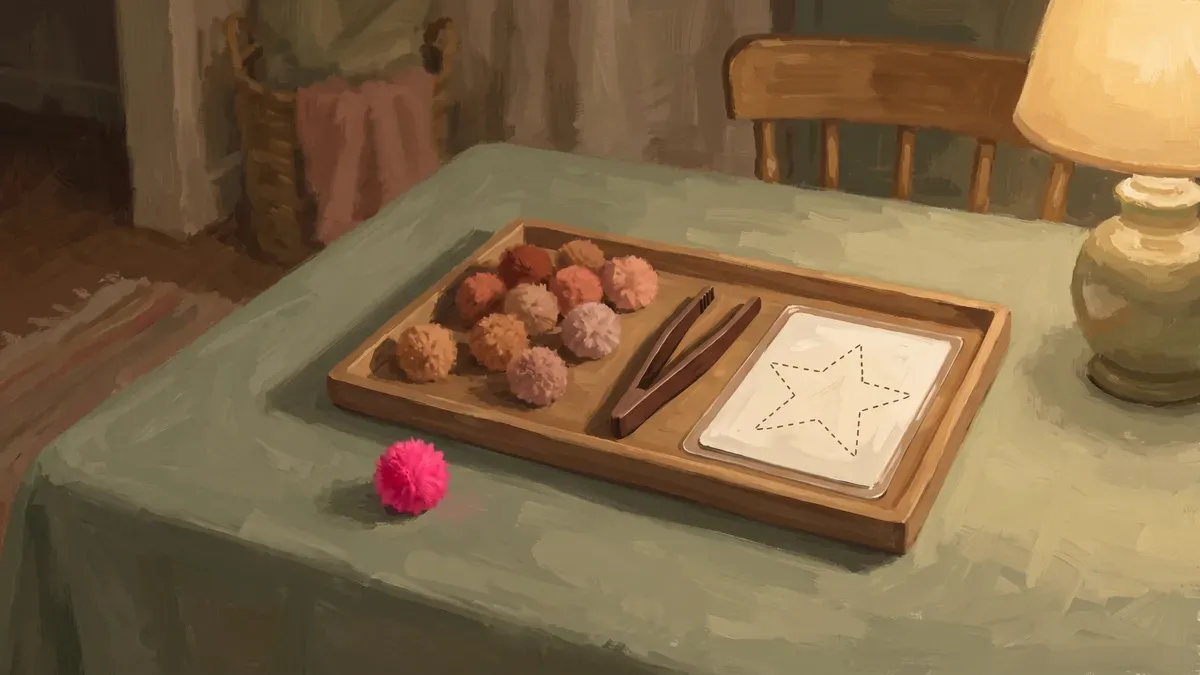
Print a simple Christmas tree outline and laminate it so it survives repeated use. Scatter a bowl of red and green pom poms nearby and hand your kid a pair of tweezers. The real work is in the fingers, not the tree.
NAPA Center points to tweezers as a tool OTs use to sharpen precision and finger isolation during pincer grasp practice for preschoolers. Younger toddlers skip the tweezers and use fingers; the pincer motion still fires.
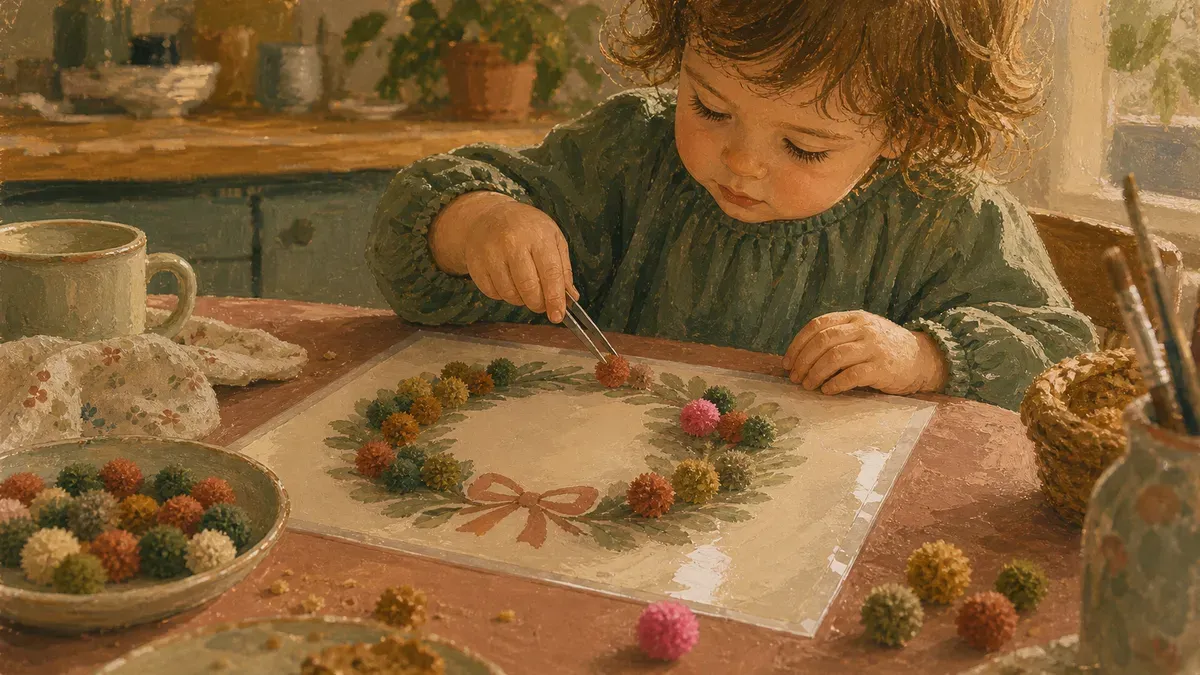
These 20 pom pom activities quietly build the same grip strength across different setups, so you can keep rotating when this one gets old.
Lacing Garlands and Beaded Ornaments
Give your child a piece of yarn with a stiffened tip (wrap the end in tape) and a pile of pony beads or tube pasta. These lacing crafts build bilateral coordination and eye-hand coordination at the same time, without asking a toddler to sit still for a worksheet.
Skill Point Therapy notes that threading beads helps children establish a dominant hand and a helper hand, a key step toward writing readiness. For a festive twist, swap in jingle bells with wide holes at the end of the string. It sounds like Christmas, and they will thread it fifteen times before they’re bored.
Snipping and Cutting Crafts That Build Scissor Control
Threading asks the hands to work together. Snipping asks them to do something with purpose. Both matter, and scissors are a more complex skill than most parents expect.
Snip-Fringe Trees and Paper Tearing
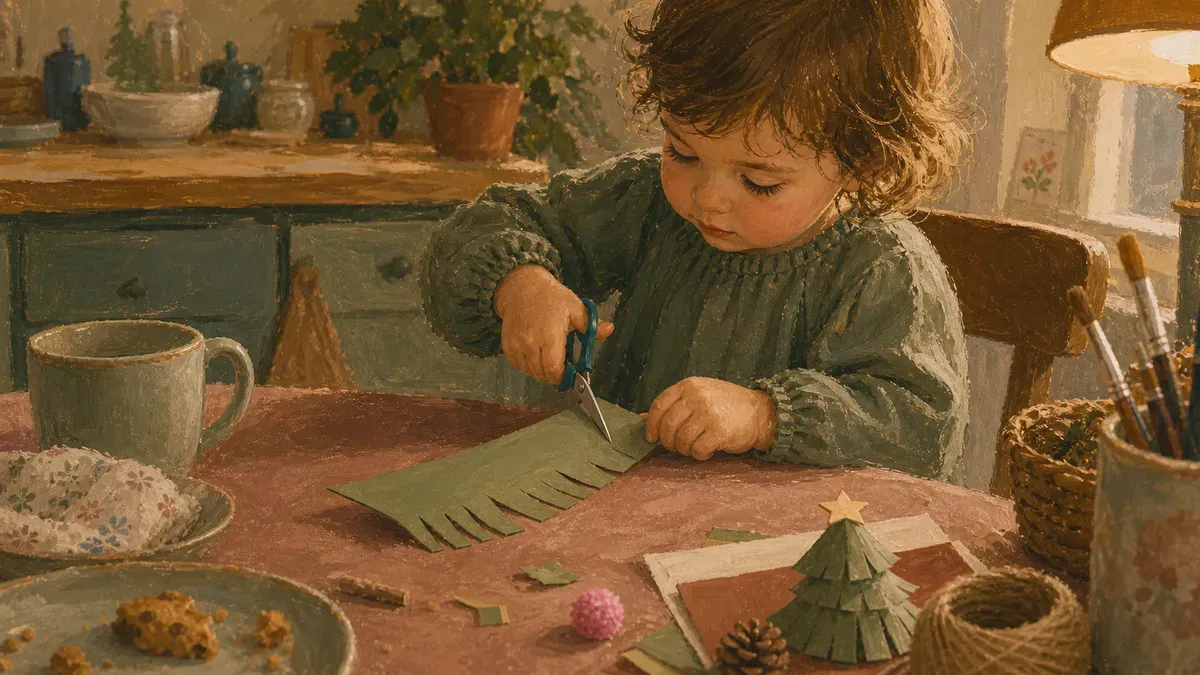
- Cut a strip of green paper about an inch wide. 2. Let your child snip straight down from one edge, stopping short of the other side. 3. Repeat across the strip, roll into a cone, tape it closed. 4. You’ve got a Christmas tree. The snipping is the whole point.
For kids who aren’t ready for scissors, tearing tissue paper into small squares works just as well. Pinch, pull, tear. Same hand strength, same finger control, no blades needed.
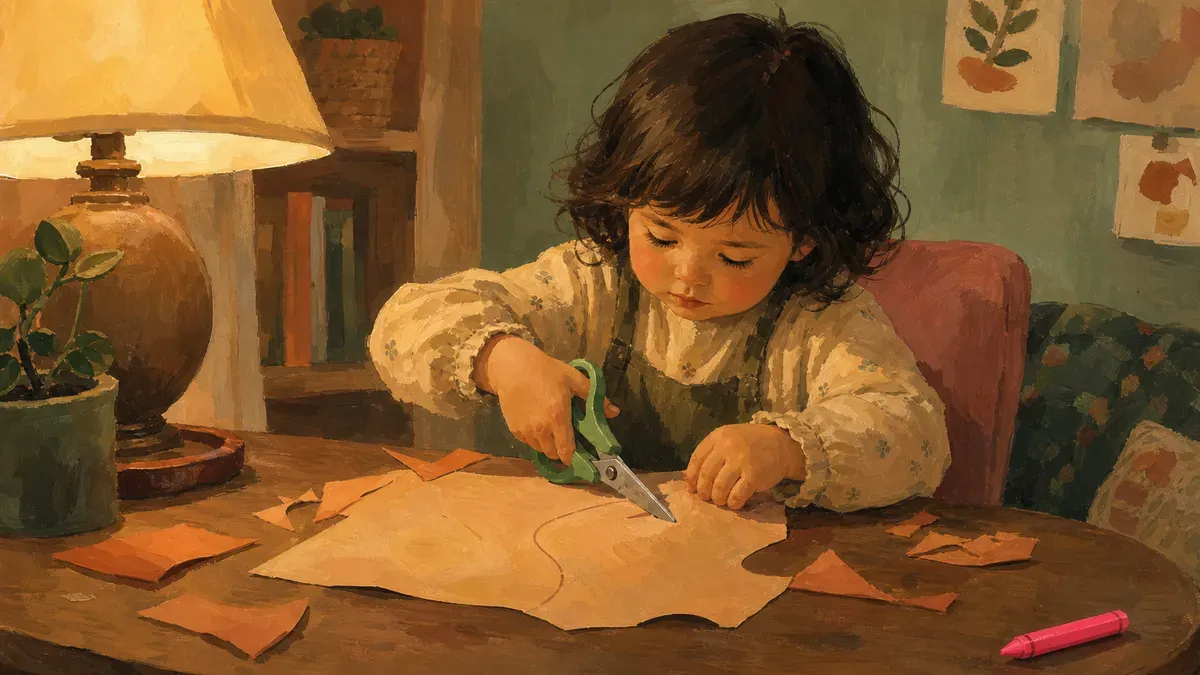
Outcomes Therapy’s cutting skills developmental timeline puts it clearly: a 3-year-old is expected to cut within half an inch of a line, and a 4-year-old to cut basic shapes like circles and squares. Scissors themselves are a complex Christmas craft tool, pulling together hand strength, bilateral coordination, hand-eye coordination, sequencing, and focus all at once. Our guide to cutting worksheets has printable templates you can laminate and reuse.
Carrying Snipping Into Halloween and Fall
The setup doesn’t have to live in December. Swap the green strip for orange paper and the same cuts make pumpkin spines. Use black felt and you’ve got bat wings with fringe edges. Tear brown tissue squares and glue them into leaf collages. Halloween fine motor activities don’t need new skills or new materials.
In a Halloween session, bats and spiders give kids a reason to repeat the scissor motion dozens of times without feeling like practice. That’s how scissor skills actually get stronger. Fine motor activity builds through repetition, not through perfect cuts.
One rule: name the shape before they start. “We’re making a bat wing, snip down to here.” A concrete target keeps the work intentional, which is what separates these Halloween crafts from a drill.
Tracing and Pre-Writing Practice With Holiday Shapes
Cutting builds dexterity; tracing builds the visual-motor bridge that turns that dexterity into actual letters.
Tracing Ornaments and Candy Cane Lines
Before a child can write letters, they need to copy basic shapes: curves, diagonals, circles. Physiopedia’s overview of visual motor integration puts it plainly: shapes come before letters, not after. A candy cane is a long curve with a hook. An ornament is a circle with a short straight line. Trace those and you’re practicing the strokes that become B, D, and P.
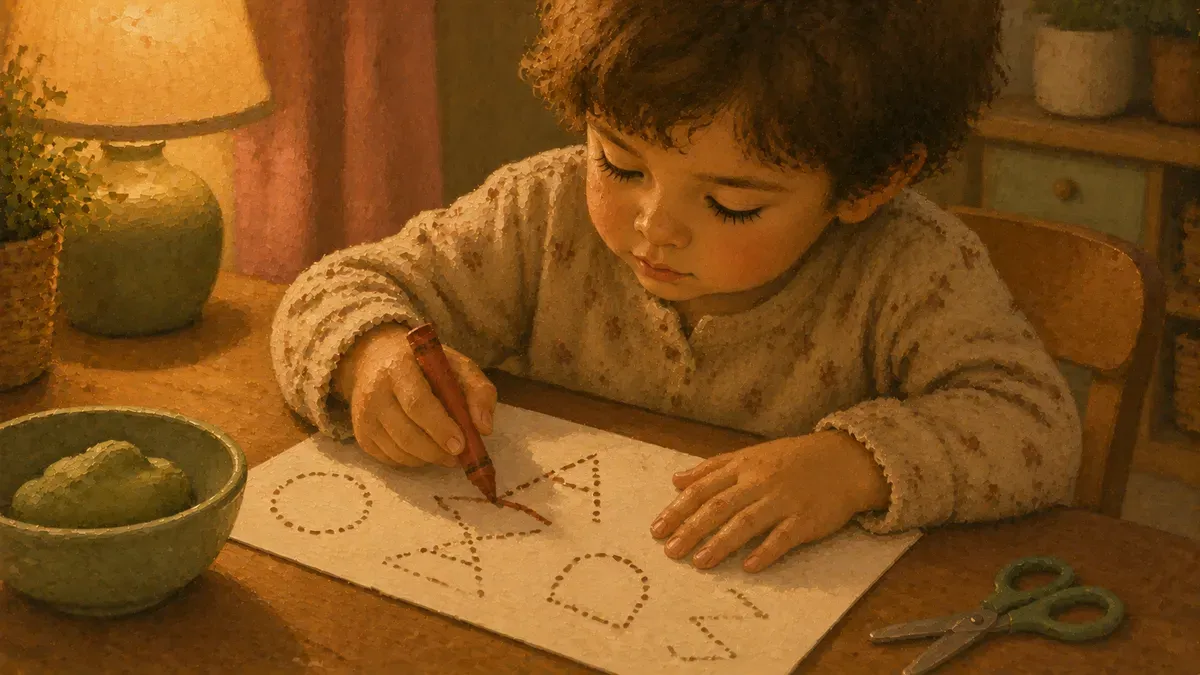
Print a Christmas tree template with a dotted outline. Chunky crayons for the younger ones, a regular pencil for four-and-ups. The dotted line gives them a target without the blank-page freeze and builds eye-hand coordination as they track the line while controlling the tool. That connection matters: guidance on pre-writing readiness links strong visual motor integration scores to better handwriting legibility in kindergarteners.
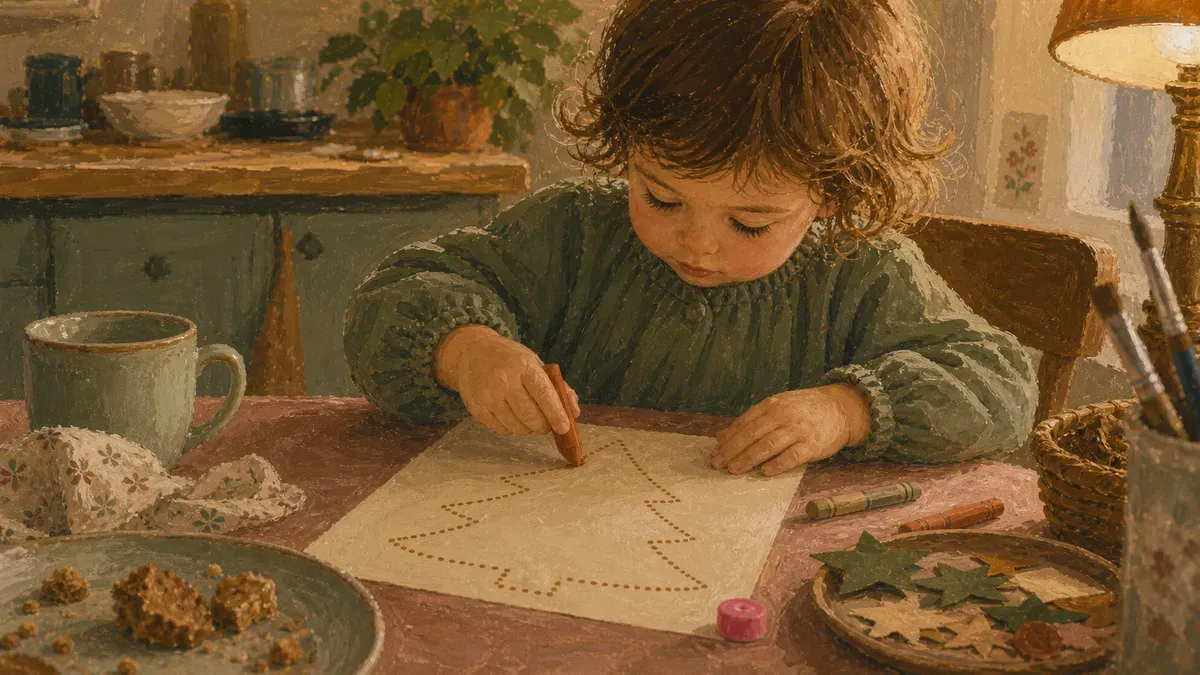
For sequencing these skills by age, the visual motor activities guide breaks it down stage by stage. For the full skill arc, fine motor tracing handwriting scissor skills shows how tracing, cutting, and writing connect.
Festive Art That Strengthens the Grip
Not every fine motor activity needs a pencil, and these festive crafts prove it. Three festive crafts build hand strength through pinching, squeezing, and pressing:
- Sponge painting a wreath: squeeze and dab, builds arch development
- Foil balls: scrunch tight then stamp onto paper, works finger isolation
- Dot-marker stamping along a candy cane: controlled push-down for grip strength
The OT Toolbox notes that mixing up hand movements targets different fine motor muscles and supports overall dexterity.
If a child resists pencil tracing, dot markers get the same grip work in with zero complaint.
Play Dough and Squeeze Activities for Hand Strength
Tracing builds the strokes; play dough builds the hands that make those strokes possible. These two setups work the small muscles inside the palm that most other activities skip.
Rolling Dough Ornaments and Bells
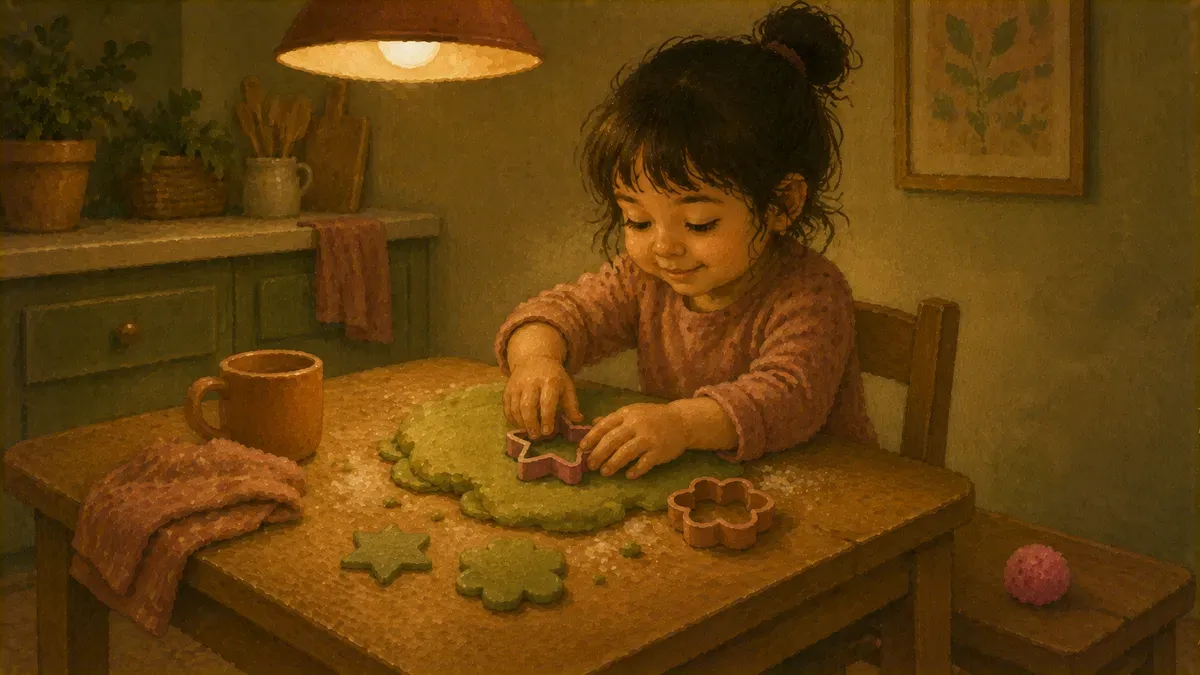
Give a child a marble-sized ball of dough and ask them to roll it between two fingers into a tiny ornament. Pinching and rolling dough is one of the simplest fine motor activities for preschoolers you can set up: the fingertips work against resistance, the palm stays stable, and the intrinsic muscles of the hand get a genuine workout.
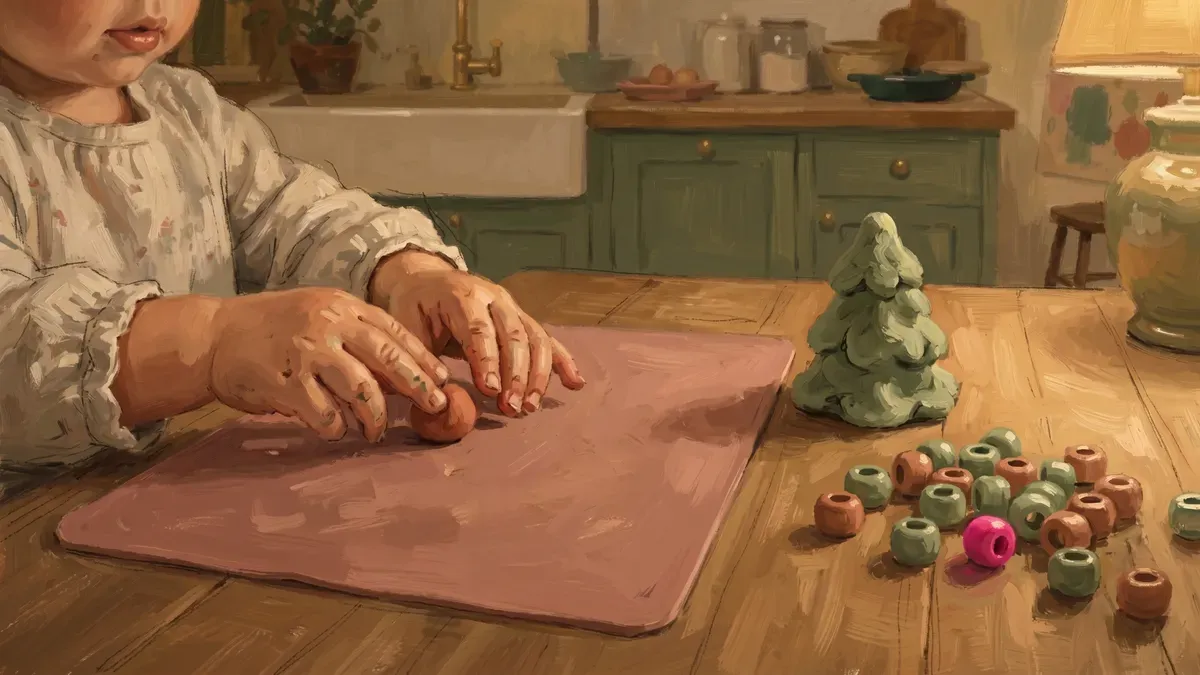
The OT Toolbox names intrinsic muscle strength as a major factor in fine motor skill and endurance, and rolling small dough balls targets exactly those muscles. Once the child rolls three or four balls, press a bead into the center of each one. That push isolates the index finger and nudges the hand toward the same tripod grasp position a pencil requires. Modeling clay works too, though play dough stays easier for younger or weaker hands.
Squeeze, Hide, and Find Fall Treasures
Press toothpicks or small beads into a flat slab of dough, cover them over, then hand it to your child and ask them to squeeze everything out. The squeezing motion is resistive work that targets hand strength and wrist extension together.
For fall, swap the theme: hide little pom poms and call them “acorns buried in mud.” A few minutes of digging and squeezing develops the arch of the palm in a way that flat activities simply cannot reach.
- Press beads into dough and push them out with one finger
- Roll balls between index finger and thumb only
- Flatten and re-roll repeatedly (repetition is the point)
Arch development is unglamorous work, but a child whose palm arch is still flat will tire out fast in any writing or cutting task.
Adapting These Activities by Age and Ability
Here’s how to shrink or grow each one depending on where your child is right now.
Simplifying for Toddlers and Building Up for Older Kids
For a toddler, keep the task big and precision low. That means swapping out anything that demands accuracy they don’t have yet:
- Fingers instead of tweezers
- Giant pom poms instead of small ones
- A wide-mouthed container for dropping beads, not threading them
The pincer grasp is still developing at this stage, so anything that encourages a pinch without demanding accuracy supports the muscle development they need. A busy bag with two or three items is enough.
Once preschoolers are around three or four, start tightening the target. Smaller pom poms, narrower containers, threading a lace through a card instead of a tube. That layering builds real dexterity without turning practice into a worksheet. Older kids who need a bigger challenge can try the same activity with their non-dominant hand, which slows them down and forces attention without changing any materials.
Sensory-Friendly Tweaks for Special Needs
For a child with sensory needs or motor delays, the goal is staying in that “just-right” zone, which is exactly what occupational therapy guidance on hand skill development is built around.
If you’re seeing persistent struggles, a referral to an OT is the right call. Some kids need more occupational therapy support than any home activity can offer.
Our complete fine motor skills guide has more ideas for bridging home practice and the therapy table. For daily practice between professional sessions, these setups slot in well. See our complete fine motor skills guide for more ideas that travel easily from a therapy table to the kitchen counter.
Found this useful? Save it for the next rough afternoon.
Questions parents ask me about this
What Christmas fine motor activities keep kids busy during the holidays?
Hide pom poms in a bowl of dry pasta and have kids pick them out with tweezers. Lace jingle bells onto ribbon or pipe cleaners. Set out scissors and paper strips for snip-fringe garlands. Roll play dough into balls and press in toothpicks. Any of these can run 10 to 20 minutes with minimal setup and supplies you already own.
What age should kids start fine motor Christmas activities?
Toddlers around age two can start with the simplest versions: large pom poms, wide containers, tearing tissue paper, and stamps with dot markers. Preschoolers (three to five) are ready for tweezers, scissors, and tracing shapes. Older kids can add challenges like sorting by size, switching to the non-dominant hand, or using smaller beads and tighter targets.
Which fine motor skills do these holiday crafts actually build?
Pincer grasp from picking up small objects, bilateral coordination from threading and lacing tasks where both hands work together, scissor control from cutting and snipping, pre-writing strokes from tracing curves and diagonals, and intrinsic hand muscle strength from squeezing and rolling play dough. Most activities target more than one skill at once.
What cheap supplies do I need for Christmas fine motor crafts?
The most useful items are pom poms, craft scissors, pipe cleaners, play dough (homemade or store-bought), tweezers or tongs, and tissue paper. Jingle bells, ribbon, and pony beads add variety for lacing. You likely already have most of this at home or can find it at a dollar store for a few dollars total.
Are there free printable Christmas fine motor worksheets?
Yes. A quick search turns up dot-to-dot outlines, tracing sheets with holiday shapes like candy canes and ornaments, and cutting practice pages. Laminating a tracing sheet lets your child use a dry-erase marker and repeat it as many times as they want, which is where the real skill-building happens.
How do I adapt these activities for a child with motor delays?
Scale the target size up, reduce the number of pieces, and shorten the session before frustration sets in. Swap squishy or wet materials for dry ones if texture sensitivity is a factor. A flat tray adds visual boundaries. For kids with significant delays, these activities work well as daily practice between occupational therapy sessions, but persistent struggles are worth flagging with an OT.
Can I reuse these ideas for Halloween and fall fine motor activities?
Absolutely. The mechanics are the same, just swap the seasonal theme. Snip-fringe becomes a bat wing or a shaggy pumpkin instead of a tree. Lacing works just as well with orange and black beads. Pom pom sorting uses fall colors. The activity itself is the skill-builder; the holiday wrapping just keeps kids willing to sit down and do it again.
Written by
Nora Hayes
Mom of two and a former preschool aide. I share the screen-free sensory play and calm-down ideas I test at my own kitchen table, plus what the moms in my little meet-up swear by. A parent passing on what works, not a doctor or a therapist.
More about NoraKeep going
All Fine Motor-
 Fine Motor
Cutting Worksheets: 15 Activities Beyond Straight Lines
Bored of straight lines? These cutting worksheets and 15 activities build scissor skills fast. Grab the free printables and start today.
-
 Fine Motor
Activities to Build Fine Motor Skills With Pom Poms
The hand strength behind neat handwriting starts with play. Try 20 pom pom activities to build fine motor skills your kid will actually beg to do.
-
 Fine Motor
Fine Motor Skills Activities for Preschoolers
Ready to write? Spot the 12 readiness signs and the fine motor skills activities for preschoolers that build the hand. Start now.
-
 Fine Motor
Fine Motor Skills Activities for 3-4 Year Olds
Worried your 4-year-old still scribbles? These fine motor skills activities for 3-4 year olds bridge scribbles to real letters. Start today.