Calm Down Corner Planner: What to Put In It, Using What You Have
Tell me about your child and your space. You get what the corner needs, and an easy way to make or get each thing.

Calm down corner planner
A calm corner for a 4‑ to 5‑year‑olda 4–5-year-old in a corner of a rooma room corner. They settle best with squeezing and quiet.
Tap the pink words to change them
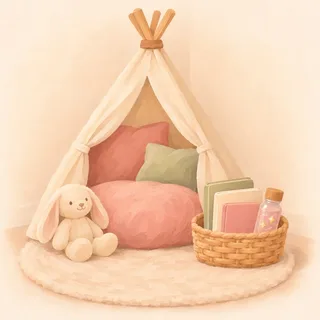
Your calm corner
0 of 8 ready
Somewhere soft to sit
Something for their body
Something to calm down with
Weight on the lap: sitting and awake only, never for sleep.
Affiliate links. As an Amazon Associate I earn from qualifying purchases.
rosyandhush.com/resources/calm-down-corner-planner
How to use it
- Set the three pink words at the top: your child’s age, where the corner will go, and what seems to help them settle. Pick anything you’ve noticed. There’s no wrong answer.
- Look at the drawing. Every numbered dot is one thing on the list, and tapping a dot shows what it’s for.
- Tick Have it? on whatever you already own. The drawing fills in, and the count at the top goes up.
- What’s left is your list. Every line gives you the free way first, and a product only when buying is worth it.
- Print it for the fridge, Copy list for your phone, or Share it with whoever is helping you set up.
What actually goes in a calm down corner
Less than the pictures online suggest. I spent three years as a preschool aide before my own kids, and the corners that got used had three things: somewhere soft, something for the body, something for the feelings.
Somewhere soft is a bean bag, a pile of pillows or a folded duvet. It should be low and always in the same spot. Something for the body is whatever gives their hands or legs a job: a rolled towel to squeeze, a push against the wall, a bottle of slow glitter to watch. Something for the feelings is a card, a few drawn faces or a book you’ve read together on a good day.
That’s the whole corner. Everything else is decoration, and decoration is fine, but it won’t be the thing that gets used.
Three house rules
- It’s never a punishment. Nobody gets sent there. You can go together. The CDC calls staying with your child during a hard moment “time-in”, and it’s the opposite of sending them away.
- Practice when everyone is calm. Visit it on good days, so it’s familiar on hard ones. A tool your child has never tried won’t be the thing they reach for mid-meltdown.
- They can leave when they’re ready. No timer, no “think about what you did.” When they come out, a hug is enough.
Safety, by age
The planner adds a note when one applies, and here is the reasoning.
- At 2 to 3, stay close and keep out anything small enough to fit through a toilet-paper tube. The federal small-parts rule covers toys meant for children under 3, and children’s hospitals suggest a toilet-paper tube as a rough size check. I use it the cautious way: if it fits through the tube, treat it as a choking risk. If it doesn’t, that doesn’t make it safe.
- Weighted items are for sitting and awake only, never for sleep. The CPSC and the AAP say not to use weighted blankets or other weighted objects for a baby’s sleep. I couldn’t find an official minimum age for older children, so the planner suggests the lap pad from age 4 as my own choice, with no number behind it. If your child has an OT, ask them.
- If things get thrown, soft or plastic only, and no lamp within reach.
- Earmuffs are an option the AAP lists for kids who are bothered by loud noise. They don’t replace finding out what’s loud, and I’d let your child try them on before the hard day.
For anything to do with your child’s development or sensory needs, your OT or doctor leads.
Make it your own
The planner starts from a calm corner for a 4- to 5-year-old in the corner of a room. Change the age and the list changes: playdough instead of a rolled towel at 2 to 3, a weighted lap pad from 4. Choose a tent, a travel basket or a classroom and the first line changes too.
If you want more ideas, my longer list of corner ideas is a good next stop, and the post about what really gets used has a free checklist you can print. If your child throws things, read the advice for preschoolers who throw before you buy anything.
If you'd rather buy than make
Every item on the list has a free way to do it first. These are the things I'd actually pick up, and only when the free version didn't work for you.
- a bean bag chair: a low seat they can sink into. Look for a zipper that locks, so the filling stays inside
- a small weighted lap pad: for sitting and awake only, never for sleep. A rolled towel across the lap does the same job for free
- a pair of kids' earmuffs: soft earmuffs that turn the room down a notch. They're passive, not electronic, and some kids find them snug at first, so let your child try them on before the hard day
- a set of four sealed calm-down bottles: for the days you don't want to glue a lid shut yourself
- a set of breathing cards for kids: pictures to follow when words are hard. Drawing your own with your child works just as well
- The Color Monster: a picture book about naming feelings by color, easy to read together before anyone needs it
Some links here are affiliate links. If you buy through one, I may earn a small commission at no extra cost to you. As an Amazon Associate I earn from qualifying purchases.
I am a parent sharing what works at my house, not medical advice. For anything to do with your child's development or sensory needs, talk to your OT or doctor. Medical disclaimer
Sources
- AAP: Handling big emotions (ages 2 to 6) (read 2026-11-10)
- CDC: Time-in for toddlers (read 2026-11-10)
- 16 CFR 1501.2: small parts (children under 3 years) (read 2026-11-10)
- CPSC: Safe Sleep, no weighted blankets or swaddles for babies (read 2026-11-10)
- AAP HealthyChildren: A Parent's Guide to Safe Sleep (read 2026-11-10)
- CHOP: Choking and suffocation prevention (read 2026-11-10)
- AAP HealthyChildren: How noise affects your child (read 2026-11-10)
Pictures: Phosphor Icons (MIT license).
Questions parents ask me about this
What should I put in a calm down corner?
Somewhere soft to sit, something for the body to do (squeeze, push, move or watch), and something to calm down with, like a breathing card, a few drawn faces or a favorite book. This planner turns that into a list for your child's age and your space, and none of it has to be bought.
How do I make a calm down corner for a toddler?
Keep it small, soft and close to you. At 2 to 3, a calm corner is a place you visit together, so put it where you can sit beside it and leave out anything small enough to fit through a toilet-paper tube. Choose 'a 2- to 3-year-old' at the top of the planner and the list changes to match.
Is a calm down corner a time-out?
No. A time-out is something an adult decides. A calm down corner is somewhere your child can go, and you can go with them. The CDC describes staying with a child during a hard moment ('time-in') rather than sending them away, and the AAP suggests creating a calm down corner together as a safe space.
Can I make a calm down corner in a small space or a classroom?
Yes. Pick 'a basket that travels' and the list becomes a cushion and a basket you can unpack anywhere. Pick 'a classroom' and it adds a low divider, so the space feels private while an adult can still see in.
Is a weighted lap pad safe for my child?
I only suggest one for sitting, awake and with you nearby, never for sleep. The CPSC and the AAP both say weighted blankets and other weighted objects don't belong in a baby's sleep space, and I couldn't find an official age for older kids, so I don't put a number on it. Ask your child's OT or doctor if you're unsure.
What if my child throws things in the calm down corner?
Tick 'Things sometimes get thrown' in the planner. The list asks for a plastic bottle with the lid glued shut, and the note under it reminds you to keep everything soft or plastic with no lamp within reach.
Keep reading
The routines behind this tool, from the blog.
Calm Corner Ideas: 25 Picks Under Your Coffee Budget
Skip the $200 setups. These 25 calm corner ideas cost less than a latte and soothe big feelings. Build one your kid loves this week.
Calming Center Checklist: What Actually Belongs
Most calming center stuff just becomes clutter. Here's the exact checklist of tools that actually help kids regulate. See what to keep.
Calm Down Corner Kit: DIY vs Pre-Made, No Guilt
DIY a calm down corner kit for under $30 or buy the printable pack? Honest cost-and-effort breakdown so you can pick the right one today.
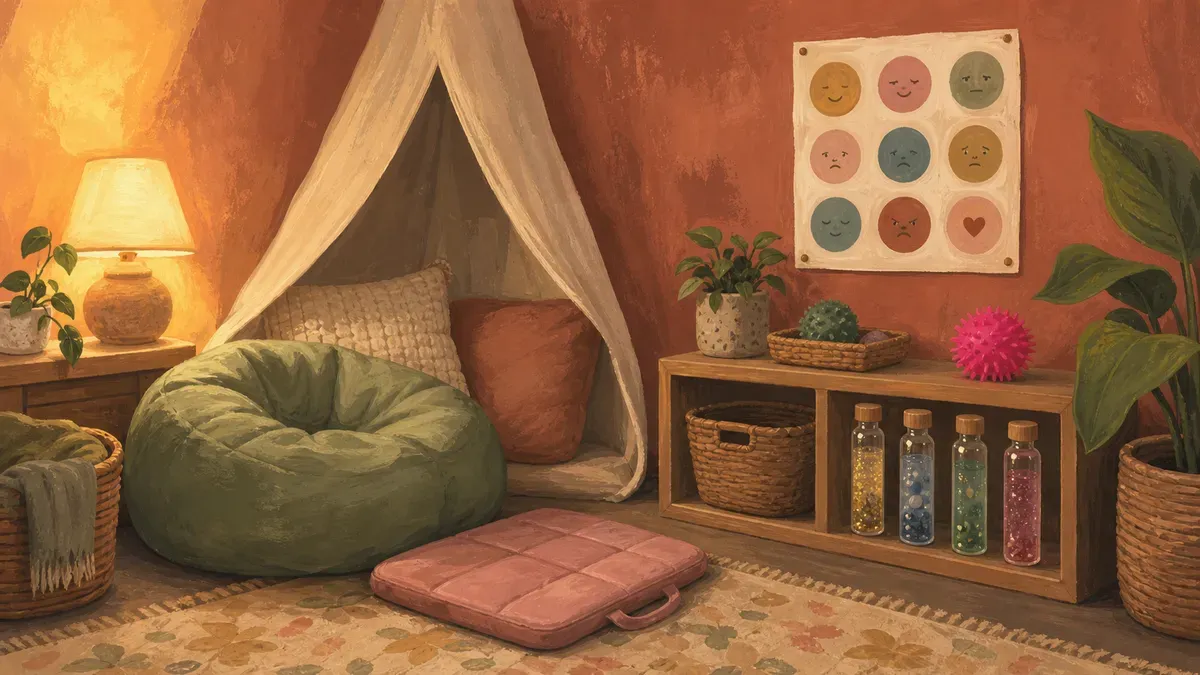
Calm Corner Classroom Setup for Autistic Kids
Most calm corners fail autistic kids because they skip the sensory profile. Build a calm corner classroom that works in 5 steps. Start here.
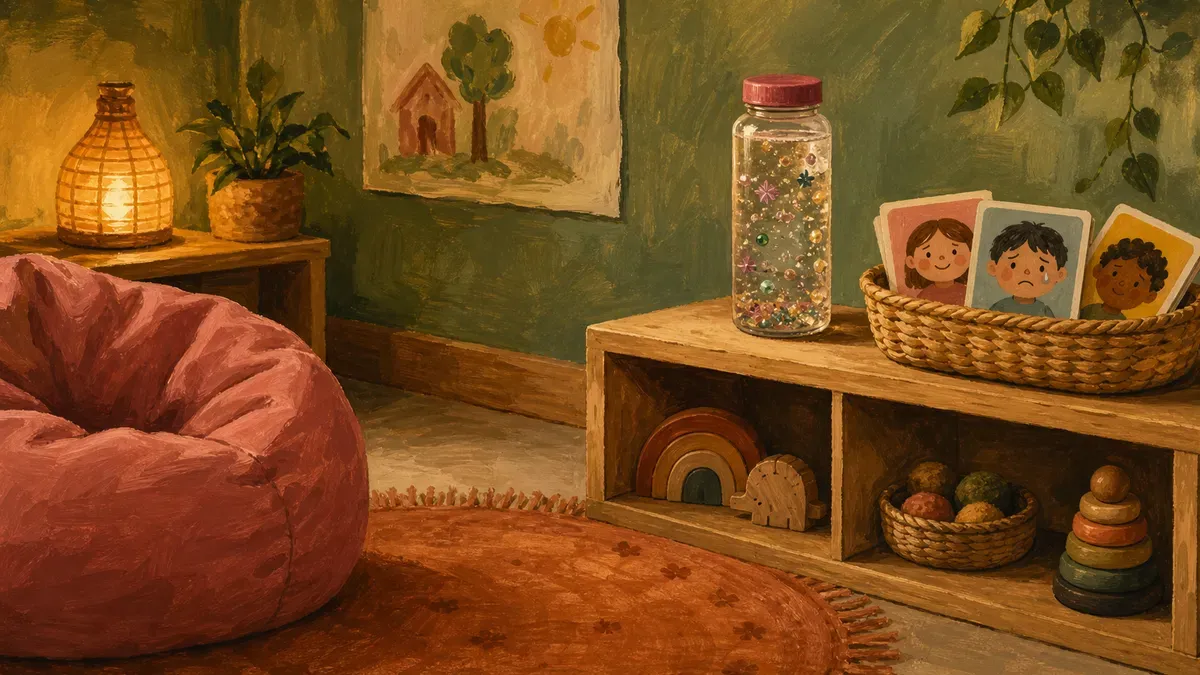
Cozy Corner Preschool: Calm Down Ideas for Throwers
Throwing the calm-down tools? Build a cozy corner preschool space that survives big feelings, with throw-proof tools and steps that work.
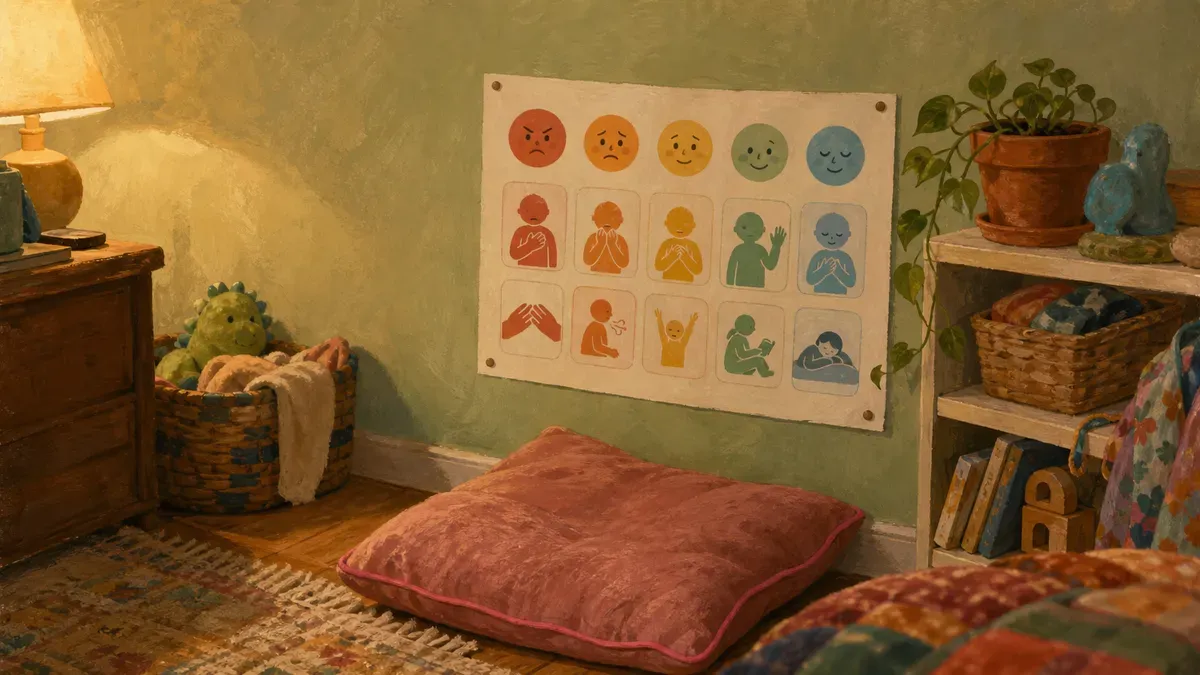
Calm Down Corner Poster: What to Hang at Eye-Level
A calm down corner poster only works if kids can read it. Learn what to hang, at what height, and how to make it stick. Start with these steps.
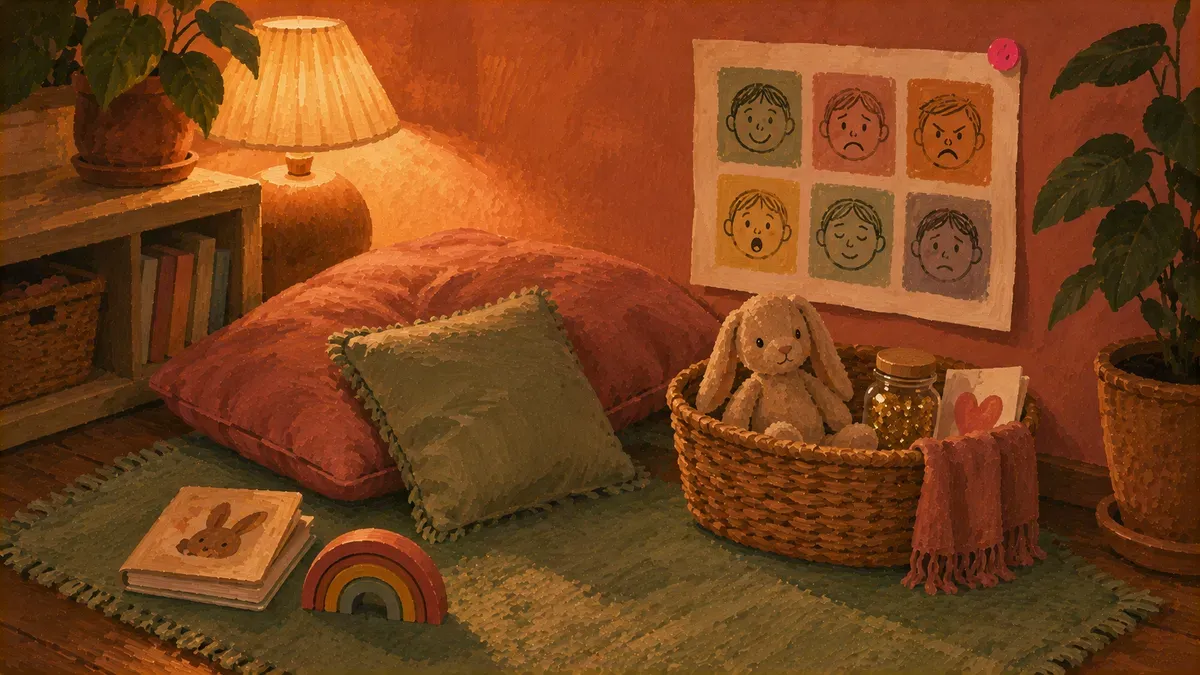
Calm Down Corner: Set One Up at Home for Free
No bean bag, no budget? Build a calm down corner with stuff you already own. Five steps, five minutes, and your kid has a space that works.

Written by
Nora Hayes
Mom of two and a former preschool aide. I share the screen-free sensory play and calm-down ideas I test at my own kitchen table, plus what the moms in my little meet-up swear by. A parent passing on what works, not a doctor or a therapist.
More about Nora