Sensory Bin Planner: How Much Filler, and What's Safe by Age
Tell me who the bin is for and what bin you have. You get safe fillers, exact amounts and a shopping list.

Sensory bin planner
I'm setting up a bin for a toddler, 18 months to 3a toddler who sometimes mouths thingsmouths some things, in a 12‑quart bina 12-quart bin.
Tap the pink words to change them
More options
Rolled oats, 2 inches deep
18 cups
3¼ lb
Fillers that suit this age
5 of 10Skip these 5 for now
What else you need
Affiliate links. As an Amazon Associate I earn from qualifying purchases.
Set it up in 3 steps
rosyandhush.com/resources/sensory-bin-planner
Two inches looks skimpy when you pour it. It's plenty: deeper bins mostly end up on the floor.
— NoraHow to use it
- Tap the pink words and say who the bin is for. The age comes first, then whether things still go in their mouth, then the bin you have.
- Look at the big number. That is how much of the filler you need to fill the bin to the depth shown, with the weight under it.
- Pick a filler from the cards. Only fillers that suit that age and that mouthing stage are there. The amount changes with each one.
- Tick what you already own in “What else you need”. Whatever you leave unticked is your shopping list.
- Print it or copy the list to your phone, then set the bin up in the three steps.
What the numbers are based on
The volume is plain arithmetic: length times width times depth, divided by the 14.4375 cubic inches in a US cup. The weights come from how much a cup of each dry filler weighs in USDA’s food database: 81 grams for rolled oats, 28 for O-shaped cereal, 185 for white rice, 95 for penne, 193 for pinto beans. The units come from NIST. The sources are listed at the bottom of this page.
Two fillers have no weight. Crinkle paper and pom-poms are light and don’t pack, so I only give you a volume, loosely packed. Cooked pasta and water get volume too. I’d rather say less than make up a number.
The bin sizes in the list are rounded, typical sizes. Tubs vary a lot from one brand to the next. If the amount matters to you, measure the inside of yours.
Fillers to skip under 3
The planner keeps a “Skip these for now” list for every choice you make, and each item comes with the reason. The reason is almost always one of two: the filler is small enough to choke on, or your child still puts things in their mouth.
For the choking part I use three references together. The federal small-parts rule covers toys for children under 3. The CDC lists whole beans, nuts and seeds among the foods that can choke a baby or toddler. And nothing here comes from a rule about bins: applying them to dried beans and dry rice in a bin is my reading, and I say so in the list.
Water beads are always on the skip list. The CPSC’s page is clear on them, and I’d rather you never had to wonder.
A bin I’d start with
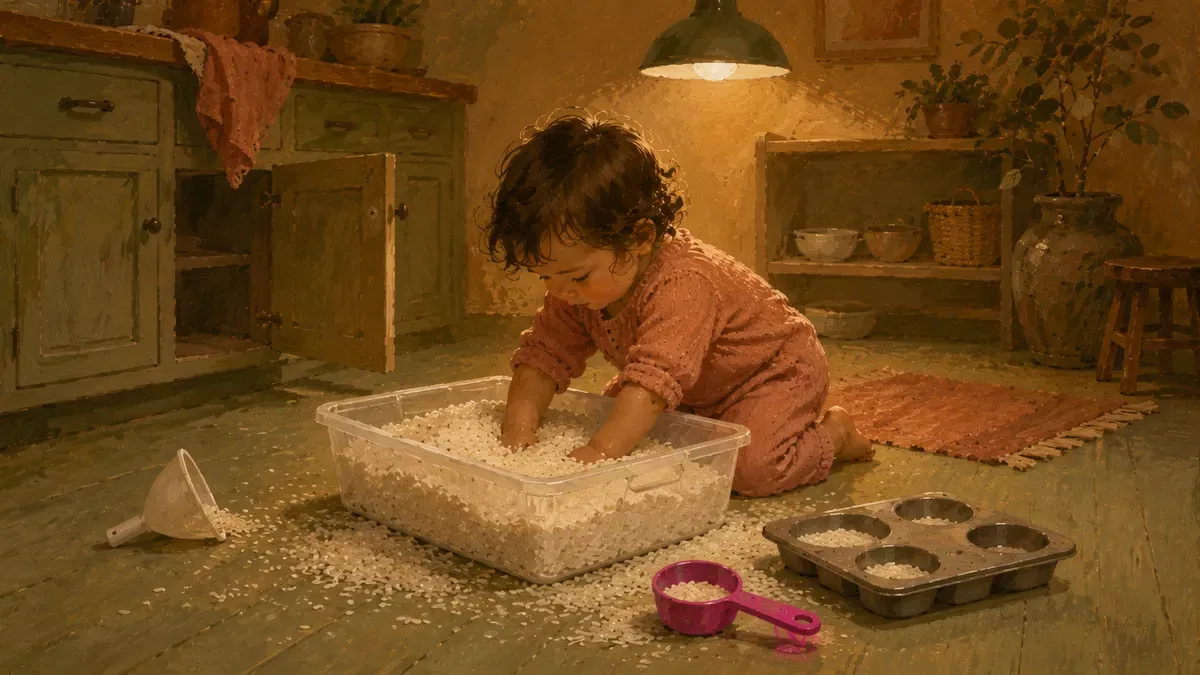
When my oldest was little, I dumped a bag of rice into a storage tub with a few measuring cups, and he poured and buried them for ten quiet minutes. That bin started this whole site. These days my youngest pours rice and oats for long stretches.
If you aren’t sure where to begin, start with rolled oats at an inch or two, one scoop and one cup, in the bin you already own. See taste-safe sensory bins for more fillers that go in the mouth, and sensory bins for 2-year-olds once pouring has replaced tasting.
Stay in the room. A sensory bin is play you sit beside, not play you leave running.
Gear for the bin
You can make a bin with a kitchen tub and measuring cups. These are the pieces I'd buy if I were starting over, and the planner above only suggests them when the setup calls for one.
- shallow lidded bins: a clear, low tub with a lid, about the size of the 12-quart bin in the planner. The lid is the best part: the bin goes on a shelf and the oats stay in it
- snap-lid bins: smaller tubs for a shoebox-size setup, or for one filler per bin if you like to rotate
- a toddler sensory table: two bins on legs at standing height, for the kid who dumps everything over the edge of a low tub
- silicone sensory scoops: big scoops with fat handles for small hands. Scoops come before tweezers, so these are the first tool I'd hand a toddler
- a kid-size tweezers set: for the 3-and-up bin, when sorting pom-poms is the whole game. It's a fine-motor job, so give it a few weeks of scooping first
- a wipeable splash mat: goes under the bin and catches the rice. Shake it outside and wipe it down
Some links here are affiliate links. If you buy through one, I may earn a small commission at no extra cost to you. As an Amazon Associate I earn from qualifying purchases.
Sources
- NIST Guide to the SI, Appendix B.8: cup, inch and pound conversions (read 2026-11-10)
- USDA FoodData Central: rolled oats, dry (read 2026-11-10)
- USDA FoodData Central: O-shaped cereal (read 2026-11-10)
- USDA FoodData Central: white rice, raw (read 2026-11-10)
- USDA FoodData Central: dry pasta (penne) (read 2026-11-10)
- USDA FoodData Central: pinto beans, dry (read 2026-11-10)
- CPSC: water beads information center (read 2026-11-10)
- CDC: choking hazards for babies and toddlers (read 2026-11-10)
- 16 CFR 1501.4: small parts for toys for children under 3 (read 2026-11-10)
Pictures: Phosphor Icons (MIT license).
Questions parents ask me about this
How much filler do I need for a sensory bin?
Multiply the bin's length by its width by how deep you want the filler, in inches, then divide by 14.4. That is the number of cups. A 12-quart bin about 14 by 9½ inches with a 2-inch layer takes about 18 cups. The planner does the math for your bin and your filler, and shows it in cups, pounds, liters or kilograms.
How deep should the filler be?
One to two inches is plenty. Two inches looks skimpy when you pour it, but a deeper bin mostly ends up on the floor. Use one inch for a first bin or for a kid who dumps everything.
What is a safe sensory bin filler for a 1-year-old?
For a baby who still mouths things, pick fillers that are safe to taste, like rolled oats or O-shaped cereal, and stay within arm's reach the whole time. Dry rice, beans and small pieces wait until they stop putting things in their mouth. Choose the age and mouthing in the planner and the list narrows to what fits.
Are water beads safe in a sensory bin?
No, and the planner never offers them. They swell inside the body if swallowed, and the CPSC asks families with young children to remove them from the home. There are plenty of fillers that do the same job without that risk.
Can I use dry rice with a toddler who still tastes things?
I wouldn't. Rice is for the child who has stopped mouthing toys. If yours still tastes everything, use oats or cereal and save the rice for later. Be honest about it: plenty of 3-year-olds still taste things.
What if my bin is a different size?
Pick "I'll measure mine" in the bin list and type the inside length and width in inches. Close enough is fine. The amounts update right away.
Keep reading
The routines behind this tool, from the blog.
Sensory Bin Fillers: 20 Pantry Items You Own Now
Skip the craft store: 20 sensory bin fillers already in your pantry tonight, sorted by texture, mess level, and age. Start one in minutes.
Taste Safe Sensory Play: 14 Fillers for Mouthy Toddlers
Your toddler eats everything? These 14 taste safe sensory play fillers turn pantry staples into safe mess. Grab the recipes and start today.
Water Sensory Bin Ideas Safer Than Water Beads
Water beads send thousands of kids to the ER. Set up a water sensory bin that feels just as cool minus the choking risk. Start in 5 minutes.
Sensory Play for 1 Year Olds: Safe, Taste-Safe Ideas
Worried about choking? Taste-safe, big-piece sensory play for 1 year olds that keeps exploring fun, never scary. See the safe ideas now.
Sensory Play 2 Year Olds: 12 Bins That Hold Focus
Most sensory bins lose a 2-year-old in 90 seconds. These 12 sensory play ideas for 2 year olds actually hold attention. Start one tonight.
Infant Sensory Play: When Babies Can Safely Start
Infant sensory play can start at birth, not 6 months. A former preschool aide breaks down what's safe at every stage and how to begin today.
All About Me Sensory Bin + 22 More Toddler Themes
Out of ideas? The all about me sensory bin starts 23 themed setups toddlers actually play with. One a week, never wing it again.

Indoor Sensory Play: 18 Low-Mess Setups That Work
Dreading the cleanup? These indoor sensory play setups stay on the mat, work in apartments, and reset in minutes. Start tonight.
DIY Sensory Bins: A Toddler-Proof Setup Guide
Build a DIY sensory bin in 15 minutes with stuff you already own. Get the filler, container, and mess-proof setup that buys you quiet. Start now.

Written by
Nora Hayes
Mom of two and a former preschool aide. I share the screen-free sensory play and calm-down ideas I test at my own kitchen table, plus what the moms in my little meet-up swear by. A parent passing on what works, not a doctor or a therapist.
More about Nora