Playdough Recipe Calculator: Exact Amounts for Any Number of Kids
Pick a recipe and say how many kids. Every amount scales, in cups and in grams, with the safety notes that apply.

Playdough recipe calculator
Make classic cooked playdoughclassic playdough for kids, a tennis ball each, in rose.
Tap the pink words to change them
Makes about
3 cups
1½ batches: a tennis ball for each of 4 kids
Ingredients
- All-purpose flour1½ cups190 g
- Salt¾ cup220 g
- Cream of tartar1 tbsp9 g
- Water1½ cups355 g
- Vegetable oil1½ tbsp20 g
Salt and pets. A pet that eats salty dough can get salt poisoning. Keep it off the floor, put it away after play, and call your vet right away if a pet eats some. Source: Pet Poison Helpline
Steps
Also handy
Affiliate links. As an Amazon Associate I earn from qualifying purchases.
Make one ball per kid before they sit down. Sharing one lump is where playdough fights start.
— Norarosyandhush.com/resources/playdough-recipe-calculator
How to use it
- Pick the recipe first. Cooked on the stove, no-cook, or one of the bin-style ones like oobleck and moon sand. The safety notes change with it, so it’s worth a look before you start.
- Say how many kids with the little minus and plus. Then choose the size of ball each one gets. The tool works out how many cups you need and rounds up to the next half batch.
- Tap the pink words to change the color, then use the ingredient list. Switch between cups and grams with the buttons above it. Weighing flour on a kitchen scale is the easiest way to get the same dough every time.
- Tick the steps off as you go, or press Cook mode to see one step at a time in big letters. Your screen stays on while it’s open, where the browser allows it.
- Print it, copy the list to your phone, or share it with whoever’s helping.
A ball for each kid
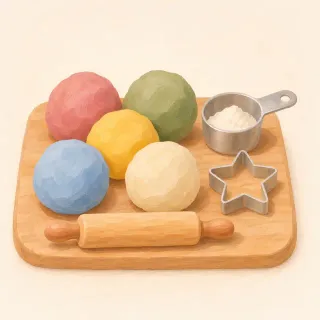
Most playdough fights start when two kids want the same lump. I make one ball per kid before anyone sits down, which is what the picture shows.
The sizes are things you can hold in your hand. A regulation golf ball is at least 1.68 inches across, and a large orange is about 3 inches across, so those two are easy to picture. The tennis ball is the size I go by for a toddler who wants something to squish, about ⅔ cup of dough.
Doing a group? Make the batches one at a time. The tool tells you how many batches a group needs, because one giant pot is harder to stir than two small ones.
Cups and grams
Cups are fine for dough, and grams are better if you have a scale. A cup of flour can weigh quite a bit more or less depending on how you scoop it, and the difference shows up as sticky or crumbly dough.
The grams on this page are worked out from the weights the USDA publishes for each ingredient, then rounded: to the nearest gram for small amounts, and to the nearest 5 grams above 50 g. Salt is the surprise. A cup of table salt weighs more than twice what a cup of flour does, so it’s the one place a cup measure matters most, and one more reason this dough is for play and not for little mouths. The play sand in moon sand has no gram weight here, because sand varies too much. Measure that one in cups.
Which recipe?
- Classic cooked playdough is the soft, stretchy one and my default. It takes about 15 minutes on the stove, and the flour is cooked.
- No-cook playdough is ready in 10 minutes with boiling water from the kettle. It’s the quickest, and it uses raw flour, so I only pick it for kids who don’t put things in their mouth.
- Without cream of tartar uses lemon juice, for the day you reach for the jar and it’s empty.
- Gluten-free uses rice flour and cornstarch.
- For tasters is cooked and has far less salt. It’s still for playing, not eating, but it’s the one I make when my toddler was in the “everything goes in the mouth” stage. If you want more on that stage, I wrote a plain guide to playdough for toddlers and what to do with playdough at age two.
- Cloud dough, oobleck and moon sand are for a bin, a sheet outside, and a lot of mess. They’re a different kind of play from rolling and cutting.
Raw flour and salt
Two safety notes matter enough that the tool shows them whenever they apply.
Raw flour. The CDC says not to let kids play with or eat dough made with raw flour, because flour can carry germs and only cooking kills them. That’s why the no-cook and cloud dough recipes show a note, and why the cooked ones don’t.
Salt and pets. Homemade playdough has a lot of salt, and a pet that eats it can get salt poisoning, according to Pet Poison Helpline. Put the dough away after play and keep it off the floor. If a dog or cat does get some, call your vet right away.
Please stay close for any sensory play. Small pieces of dough and little cutters are a choking risk for babies and toddlers.
Once it’s made
Playing with the dough is the fun part. Once you have a few batches, you can try the ideas in 20 playdough activities that actually hold toddlers. For little hands, rolling, pinching and poking are real work, and these fine motor playdough activities and these hand-strength ideas put that to use.
A few things that make it easier
You can make every recipe here with what's in the kitchen. These are the extras that save a little hassle once the dough is made.
- airtight jars: a lid that screws shut keeps a batch from drying out between play sessions, and a few of them let each kid keep their own color
- a playdough tool set: a rolling pin, cutters and shape tools in one box, handy if you don't want to raid the kitchen drawers every time
- sensory scoops: small scoops for cloud dough, oobleck and moon sand, where a spoon is the whole game
Some links here are affiliate links. If you buy through one, I may earn a small commission at no extra cost to you. As an Amazon Associate I earn from qualifying purchases.
Sources
- USDA FoodData Central: all-purpose flour (read 2026-11-10)
- USDA FoodData Central: table salt (read 2026-11-10)
- USDA FoodData Central: cornstarch (read 2026-11-10)
- USDA FoodData Central: white rice flour (read 2026-11-10)
- USDA FoodData Central: canola oil (read 2026-11-10)
- USDA FoodData Central: water (read 2026-11-10)
- USDA FoodData Central: lemon juice (read 2026-11-10)
- USDA FoodData Central: cream of tartar (read 2026-11-10)
- USDA FoodData Central: oranges, raw (read 2026-11-10)
- USGA Equipment Rules: golf ball size (read 2026-11-10)
- CDC: Do not eat raw dough or batter (read 2026-11-10)
- Pet Poison Helpline: homemade play dough (read 2026-11-10)
Pictures: Phosphor Icons (MIT license).
Questions parents ask me about this
Is homemade playdough safe for kids?
For play, a cooked recipe is the one I reach for. It's not food, though, and nobody should be eating it. The CDC says kids shouldn't play with dough made from raw flour, because raw flour can carry germs that only cooking kills. If your child still puts things in their mouth, choose a cooked recipe, like the low-salt one for tasters, and stay close.
How much playdough do I need for each kid?
Think of a ball they can hold. A golf-ball portion is about 3 tablespoons of dough, a tennis-ball portion about ⅔ cup, and a big orange about 1 cup. The calculator multiplies that by the number of kids, then rounds up to the next half batch so you never come up short.
How many grams are in a cup of flour?
The USDA lists 125 grams for a cup of all-purpose flour. A cup of table salt is much heavier, 292 grams, and a cup of cornstarch is 128 grams. That's why the grams column here is worked out from each ingredient's own weight, not from one number for everything.
Can I make playdough without cream of tartar?
Yes. Pick the no-cream-of-tartar recipe: it swaps in lemon juice. You cook it on the stove like the classic one.
Is the gluten-free playdough safe if my child can't have gluten?
It's made without wheat, using rice flour and cornstarch. If gluten matters for your child's health, buy flour and cornstarch labeled gluten-free, and check with your child's doctor about anything that goes near their mouth or hands.
How long does homemade playdough keep?
I don't give a number, because I couldn't find a source I trust for one. Keep it in an airtight box or a zip bag, and toss it if it smells off or looks funny. Dough with less salt is the one to watch.
Why does the tool say "about" when it tells me how much I'll get?
Because a batch is never exactly the same twice. How long you cook it and how dry the flour is both change the amount, so the yield for each recipe is an estimate. The ingredient amounts are exact; the total is a guide.
Keep reading
The routines behind this tool, from the blog.
Play Doh Age: Signs Your Toddler Is Really Ready
Most parents wait too long. Play doh age starts at 2, but one readiness sign matters more than the number. Learn when and how to start today.
Play Doh for 2 Year Olds: Setups That Run Themselves
Most 2-year-olds eat play doh before they shape it. Here's how to set up play doh for 2 year olds so they play. Start in 3 steps.
20 Play Dough Things to Make With Toddlers Today
20 play dough things to make that actually hold a toddler's attention for 30-plus minutes. Quick setups, zero fuss, real engagement every time.
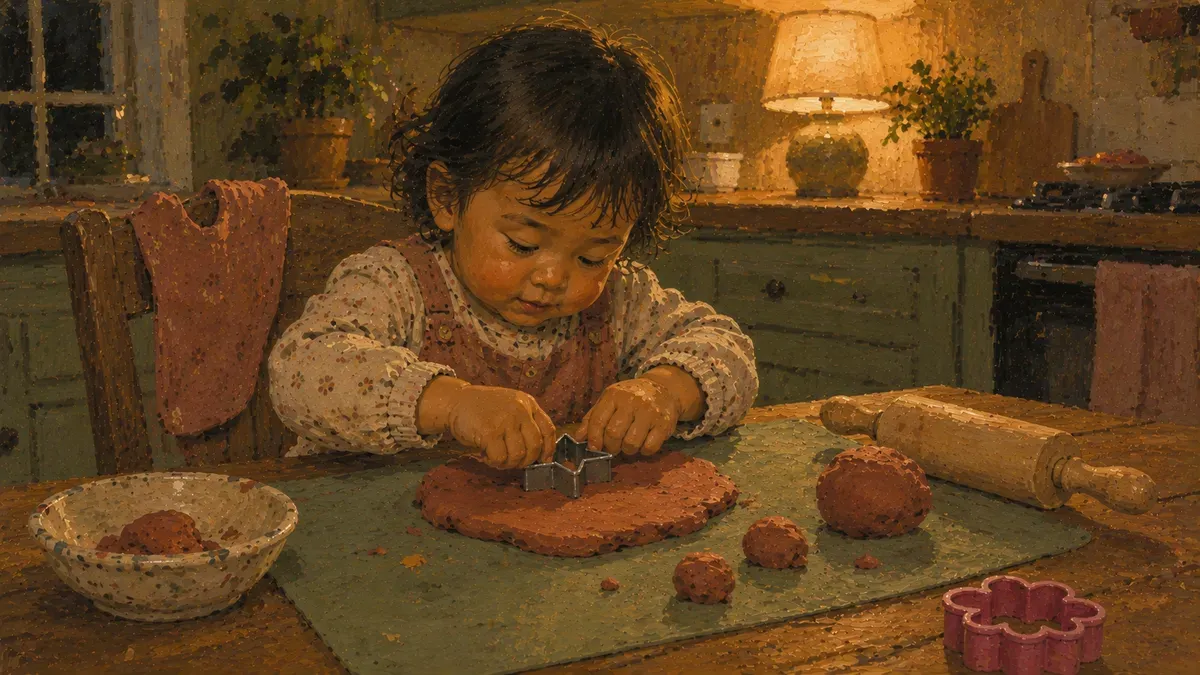
Fine Motor Activities for Preschoolers: Play Dough Guide
Play dough beats worksheets for building little hands. 12 fine motor activities for preschoolers, a no-cook recipe, and tool tricks. Start today.
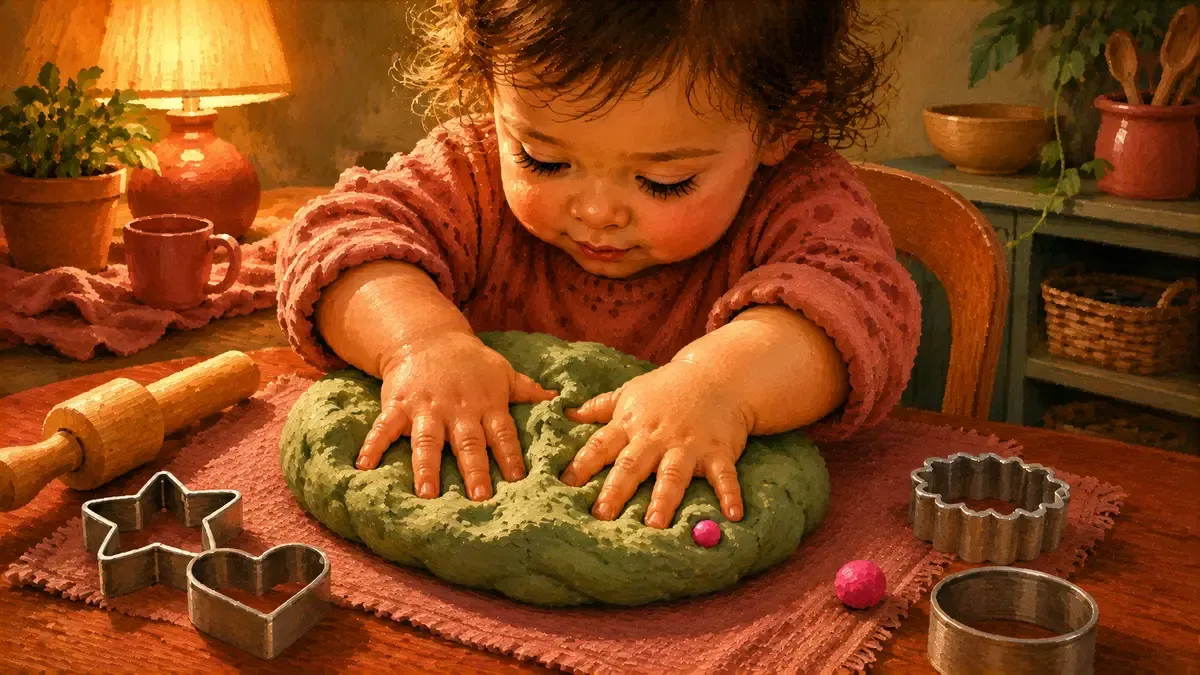
Playing With Playdough Fine Motor Skills That Last
Playing with playdough fine motor skills do more than entertain - they build the exact hand strength kids need to hold a pencil. See how, and try it.

Written by
Nora Hayes
Mom of two and a former preschool aide. I share the screen-free sensory play and calm-down ideas I test at my own kitchen table, plus what the moms in my little meet-up swear by. A parent passing on what works, not a doctor or a therapist.
More about Nora