Feelings Check-In for Kids: Tap a Face, Pick What Helps
Your child taps the face that fits, says where they feel it, and picks what would help. Nothing they tap is saved.

Feelings check-in
A feelings check-in with 6 feelings, offering a hug and breathing.
Tap the pink words to change them
More options
How are you feeling?
Also handy
Affiliate links. As an Amazon Associate I earn from qualifying purchases.
Name the feeling, do not fix it: "It looks like you feel sad." Then wait. A check-in is not a test, and there is no wrong face.
— Norarosyandhush.com/resources/feelings-check-in
How to use it
- Set it up first. Pick how many feelings to show and what you can really offer when your child picks one. The tool only offers what’s in the list you choose.
- Hand over the screen, or hold it between you. Your child taps the face that fits. Say the word back to them, in a soft voice.
- If you turned on the body question, they tap where they feel it. Some kids point to a tummy before they have a word for anything.
- Last, they pick what would help. The tool shows what they chose in one short sentence, like “I feel sad. A hug would help.”
- Then do it. A tool that asks “what would help?” and gets no answer teaches kids that asking is pointless.
Name it, don’t fix it
The point of a check-in is not to make the feeling go away. It’s to give the feeling a name. When my kids are upset I try to say it once, plainly (“You look mad”), and then wait.
Notice that the tool never tells your child what they should feel. There’s no happy-face-is-best order, and all the faces look alike except for the face. A child who says “mad” gets the same warm screen as a child who says “happy.”
The note under the tool changes with the face your child taps. It gives you a line to say, so you aren’t searching for words while a toddler is melting down in front of you.
When to bring it out
Not in the middle of a meltdown. A child in a big feeling can’t use a screen. Try it on an ordinary morning, after school or at bedtime, so the faces are familiar before a hard day.
If you’re building a place for big feelings, the calm down corner planner is the next stop, and how to make a feelings chart your kid will actually use is a good offline cousin of this tool. For little ones with few words, a feelings chart for toddlers who don’t have the words yet shows how to start with pictures. And 20 calming strategies that work when nothing else does covers what to do after your child picks “I need help.”
What this tool is not
It isn’t a screening, a diagnosis or a mood diary. It doesn’t tell you what your child’s feelings mean, and it doesn’t keep a record. I’m a parent and a former preschool aide, not a therapist, so I kept it simple on purpose.
If you want to talk with someone about how your child feels, your pediatrician or your child’s therapist can help. You’ll find my medical disclaimer at the bottom of this page.
Print the faces
The print button makes a one-page poster of the faces you chose, without the rest of the page. Stick it on the fridge and point to a face at the table. It’s the same check-in with no screen at all.
For after the check-in
The check-in needs nothing but the screen. These two are for the quiet part afterward, and the tool only mentions them when it's useful.
- The Color Monster: a picture book about a monster whose feelings are all tangled up, until he sorts them into jars. It gives a child words for feelings on a calm day, long before you need the check-in
- breathing exercise cards: a deck of wipe-clean cards, each with a breathing exercise like bee breath or bunny breath. Keep it in the calm down corner for when breathing is what your child picks. The tool's breathing option works fine without it
Some links here are affiliate links. If you buy through one, I may earn a small commission at no extra cost to you. As an Amazon Associate I earn from qualifying purchases.
I am a parent sharing what works at my house, not medical advice. For anything to do with your child's development or sensory needs, talk to your OT or doctor. Medical disclaimer
Pictures: Phosphor Icons (MIT license).
Questions parents ask me about this
What is a feelings check-in for kids?
A short moment where a child shows how they feel, usually by pointing at a face, and a grown-up says the feeling back. This one does it on a screen: one question at a time, big faces, no reading needed.
How many feelings should I start with?
Start with four: happy, sad, mad and tired. Those are the words most toddlers get first. Add worried and excited when they use those words, and calm and silly after that. You change the number with the pink words at the top.
Does my child need to read?
No. Every face has a picture and one word. Turn on the option to read the words aloud and the tool says each one with your device's own voice, so nothing leaves the device.
Is anything saved or sent anywhere?
What your child taps is never stored and never sent. When the check-in ends, it is gone. Only your own settings, like how many faces to show, stay in this browser, and you can clear them with the link under the tool.
Can this tell me if something is wrong?
No, and it isn't built to. It's a way to start a conversation, not a screening or a record of your child's moods. If you're worried about how your child feels, talk with your pediatrician or your child's therapist.
What if my child taps a different face every time?
That's normal. Little kids tap what looks fun, or what they tapped last time, and that's fine. There's no wrong face. Say the word back and move on, and the answers get more honest with practice.
Keep reading
The routines behind this tool, from the blog.

Feelings Zones: Build a Chart Your Kid Will Use
Most feelings charts gather dust. Learn how feelings zones map emotions to colors so your kid can name what they feel and pick a fix. Start today.
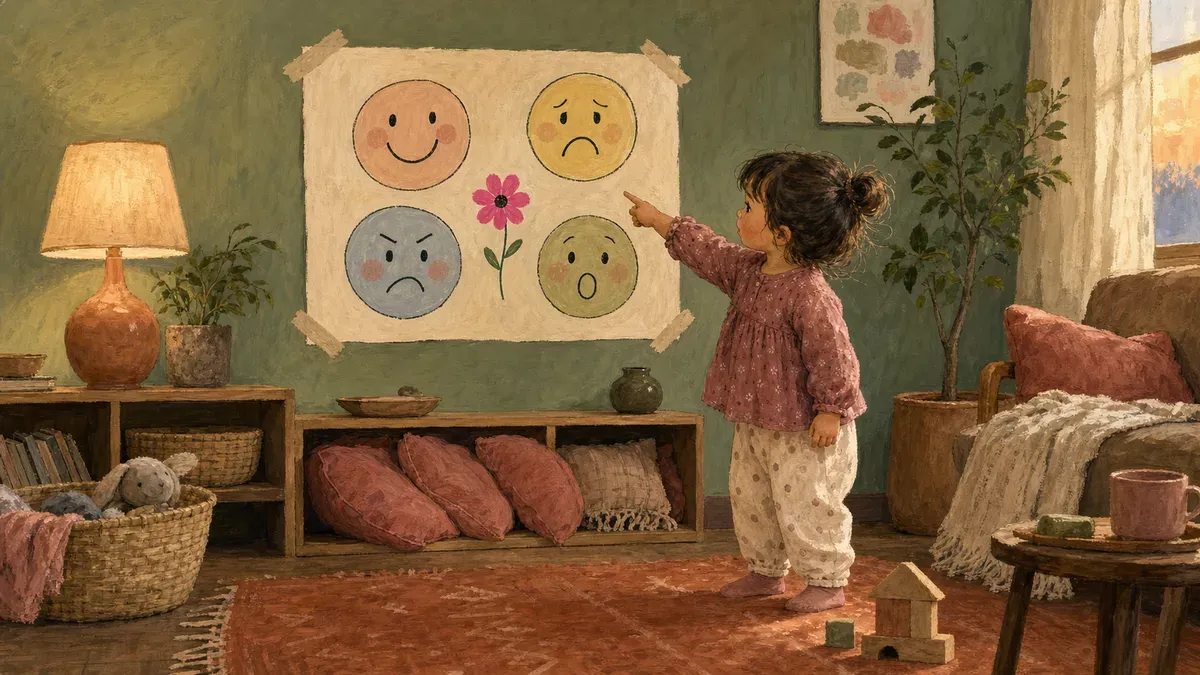
Feelings Chart for Pre-Verbal Toddlers (What Actually Works)
Toddlers feel big emotions before they can name them. A feelings chart bridges that gap. Here's how to make one and use it today.

Emotional Regulation Activities for Kids That Work
Most calming tricks fail mid-meltdown. These emotional regulation activities for kids work when nothing else does. Find the one that fits your child.
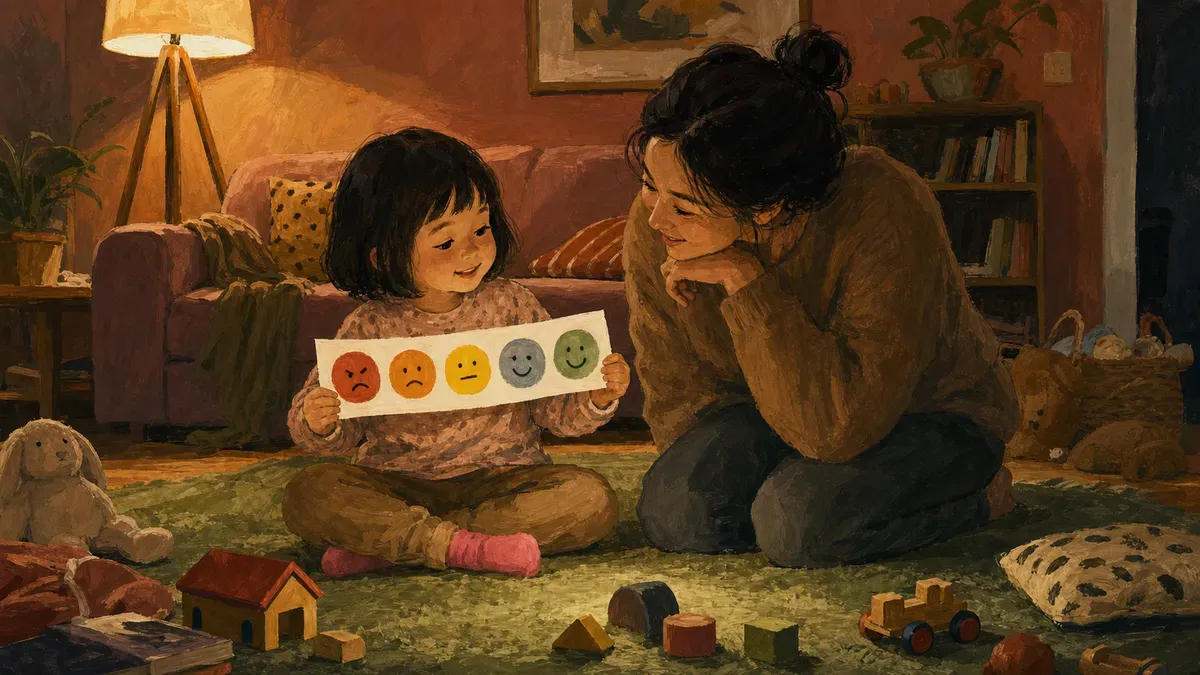
ADHD Speech Delay and the Big-Emotion Connection
ADHD speech delay and meltdowns often go together. See why, and use a feelings-scale card to help kids name big emotions before they boil over.
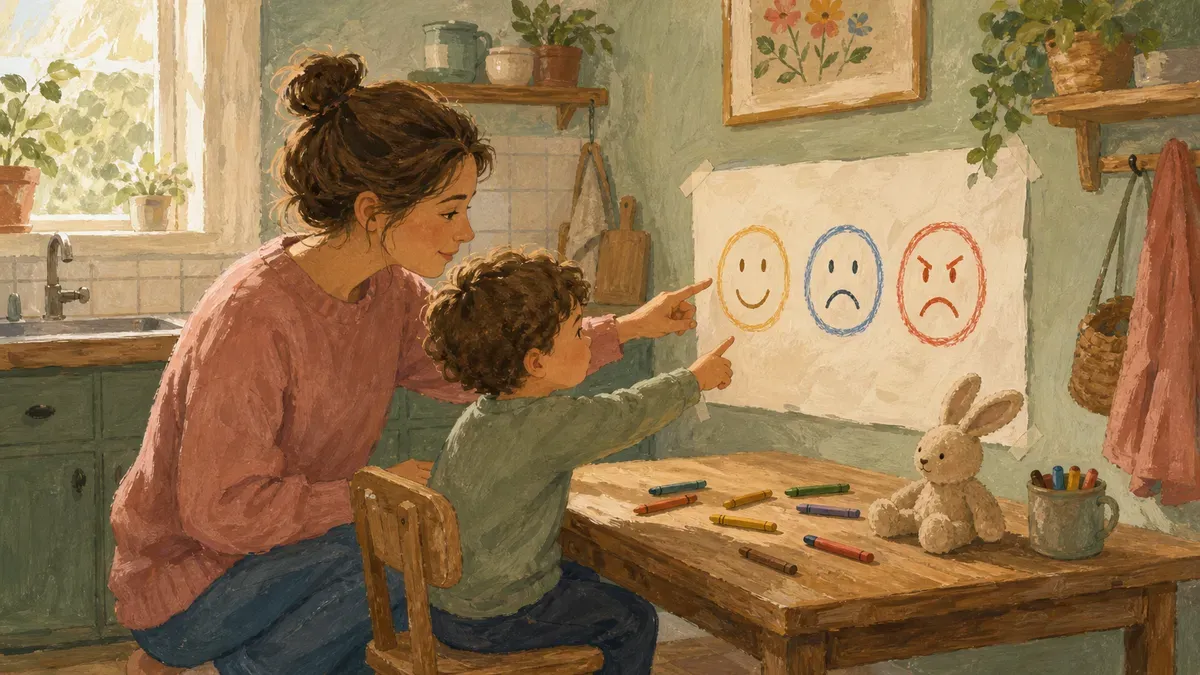
Second Step at Home: Teach Kids Big Feelings Daily
Second Step skills don't need a classroom. Turn 15 everyday moments at home into social-emotional learning that sticks. Start tonight at dinner.

Written by
Nora Hayes
Mom of two and a former preschool aide. I share the screen-free sensory play and calm-down ideas I test at my own kitchen table, plus what the moms in my little meet-up swear by. A parent passing on what works, not a doctor or a therapist.
More about Nora